




earlier
12 months elapsed
2,800 grafts
FUE method
City Medical Centre
Free quote
Free consultation and cost estimate.
Real story
earlier
12 months elapsed
FUE method, no incisions or stitches. Grafts and outcome forecast assessed with no fee at all — before you decide.
At no cost to you, no surgery booking required
Message our coordinator
Free online consultation · Reply within 15 minutes
Message us on TelegramMessage us on WhatsAppBy messaging us, you agree to our Privacy Policy
results
All of the cases are real CMC patients.
earlier
12 months elapsed
2,800 grafts
FUE method

earlier
12 months elapsed
3,500 grafts
FUE method

earlier
12 months elapsed
2,600 grafts
FUE method

earlier
12 months elapsed
3,000 grafts
FUE method

earlier
12 months elapsed
2,700 grafts
FUE method

earlier
12 months elapsed
3,300 grafts
FUE method

earlier
12 months elapsed
2,900 grafts
FUE method

earlier
12 months elapsed
2,500 grafts
FUE method

earlier
12 months elapsed
3,400 grafts
FUE method

earlier
12 months elapsed
2,500 grafts
FUE method

earlier
12 months elapsed
3,100 grafts
FUE method

earlier
12 months elapsed
3,600 grafts
FUE method

earlier
12 months elapsed
4,000 grafts
FUE method

earlier
12 months elapsed
3,200 grafts
FUE method

earlier
12 months elapsed
3,000 grafts
FUE method

earlier
12 months elapsed
3,700 grafts
FUE method

earlier
12 months elapsed
2,700 grafts
FUE method

earlier
12 months elapsed
3,800 grafts
FUE method

earlier
12 months elapsed
3,300 grafts
FUE method

earlier
12 months elapsed
2,800 grafts
FUE method

earlier
12 months elapsed
2,500 grafts
FUE method

earlier
12 months elapsed
3,900 grafts
FUE method

earlier
12 months elapsed
3,500 grafts
FUE method

earlier
12 months elapsed
3,800 grafts
FUE method

earlier
12 months elapsed
2,900 grafts
FUE method

earlier
12 months elapsed
3,600 grafts
FUE method

earlier
12 months elapsed
2,600 grafts
FUE method

earlier
12 months elapsed
2,700 grafts
FUE method

earlier
12 months elapsed
3,700 grafts
FUE method

earlier
12 months elapsed
3,200 grafts
FUE method

earlier
12 months elapsed
3,000 grafts
FUE method

earlier
12 months elapsed
2,800 grafts
FUE method

earlier
12 months elapsed
4,000 grafts
FUE method

earlier
12 months elapsed
3,400 grafts
FUE method

earlier
12 months elapsed
2,900 grafts
FUE method

earlier
12 months elapsed
3,100 grafts
FUE method

earlier
12 months elapsed
2,600 grafts
FUE method

earlier
12 months elapsed
3,300 grafts
FUE method

earlier
12 months elapsed
3,900 grafts
FUE method

earlier
12 months elapsed
3,500 grafts
FUE method

earlier
12 months elapsed
2,700 grafts
FUE method

earlier
12 months elapsed
3,800 grafts
FUE method

earlier
12 months elapsed
3,200 grafts
FUE method

earlier
12 months elapsed
3,000 grafts
FUE method

earlier
12 months elapsed
2,800 grafts
FUE method

earlier
12 months elapsed
3,100 grafts
FUE method

earlier
12 months elapsed
3,600 grafts
FUE method
Comparison
Three graft transfer technologies are on the table: classic FUE, suture-free DHI and a combined protocol. Implantation technique, tissue trauma and graft survival are what you compare when choosing.
Classic technique without incisions or stitches

On request
Graft implantation technique
ForcepsGraft trauma
MinimalNatural hair growth angle
NaturalGraft survival
98–100%Suitable for
Androgenetic alopeciaSuture-free implantation with a Choi pen

On request
Graft implantation technique
DHI pen (Choi implanter)Graft trauma
MinimalNatural hair growth angle
NaturalGraft survival
98–100%Suitable for
DensificationFUE extraction, DHI pen implantation

On request
Graft implantation technique
FUE extraction + DHI implantationGraft trauma
MinimalNatural hair growth angle
NaturalGraft survival
98–100%Suitable for
Androgenetic alopecia and densificationThe survival and trauma numbers are averaged per method and act as a guide: exact values depend on the transplant area and the patient's individual features, and the doctor specifies them at the consultation.
Seek expert guidance


















about the clinic
Good equipment, pleasant rooms and attention to each patient

Ask us anything, we will reply.
Message us on Telegram Message us on WhatsApp Submit a requestThe doctor speaks plainly at the consultation when an operation is unnecessary, so your budget stays intact. Set out below are the situations where a transplant genuinely delivers.
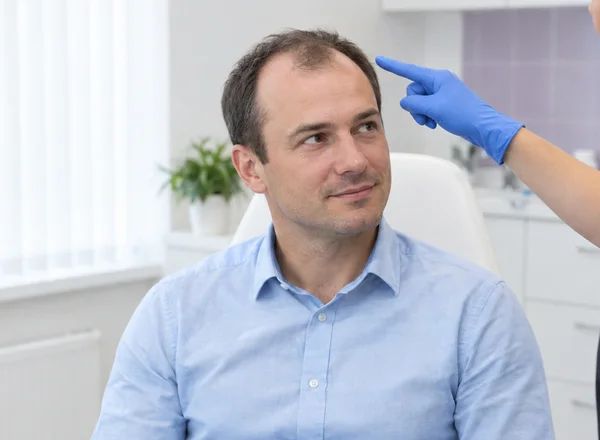

Start by writing to us in WhatsApp or Telegram. A coordinator will ask, through a messenger, for close-up pictures of the thinning, and a doctor will tell you whether a transplant would help you. No charge, no operation scheduled.

services
After the grafts are counted at the free consultation, the cost is named and fixed in the contract.
| Talking to a doctor | Free |
|---|---|
| Eyebrow transplant, FUE | On request |
| Beard transplant, FUE | On request |
| Hair trichopigmentation | On request |
| PRP therapy / session | On request |
all included
From pre-surgery preparation to 12-month follow-up.
Unforeseen sums do not appear on surgery day.
another two zones
For areas other than the scalp, the donor grafts and the FUE method are the same; only the area differs.
FUE method, no incisions or stitches

Grafts are taken from the donor area at the back of the head and moved through micro-punctures of about 1 mm — no scars are left. The doctor discusses the shape with you before the operation, taking your facial features into account. Transplanted hair grows for life: the beard can be trimmed and styled as usual.
On request
Claim this priceFUE method, no incisions or stitches

The first appointment is when the surgeon draws the brow contour, compares references with you and matches the design to your facial proportions. Each hair takes the natural growth angle, giving brows that hold up to a close look. It also helps where years of plucking stopped growth.
On request
a day procedure done under local anaesthetic
Claim this priceThe doctor works through your donor zone, establishes a graft number and shows the outcome it supports. The consultation gives you the figure, and the contract keeps it fixed.

Message our coordinator
Free online consultation · Reply within 15 minutes
Message us on TelegramMessage us on WhatsAppBy messaging us, you agree to our Privacy Policy
Process
From consultation to going home — all in one day

For patients in El Jadida, the journey starts with a free consultation that covers FUE and DHI, answers questions, and produces an individual surgical plan.

Nothing is booked until a deposit is made; you may hand it over by bank card on the premises or transfer it online.

You are given the full set of test requirements by the clinic, with directions attached, so preparation is straightforward.

Local anaesthesia numbs the area before surgery starts, keeping the entire procedure painless.

Extraction is done from behind the head or from the temples, and stitches play no part in it.

For patients in El Jadida, surgeons set the harvested grafts into the bald area.
The clinic gives out what is needed after surgery and explains, in full, how recovery should proceed.

Crusts fall off, swelling goes down, the area heals step by step

It looks worse than it is: shafts shed, roots remain

New hairs show up step by step, the result begins

The hair gains body; the volume and hairline are clear

Here the final density and natural hairline form

Free, before surgery and with no obligation at all.
Seek expert guidancedoctors

Hair transplant doctor, trichologist, surgeon
10 years of experience

Dermatovenereologist, trichologist, surgeon
11 years of experience

Plastic surgeon
9 years of experience

Plastic surgeon
9 years of experience

Assistant
9 years of experience
The doctor assesses the donor zone, counts the grafts and explains the outcome you can expect.
Seek expert guidancecoordinators
No hand-offs: one coordinator handles your case from first contact to recovery.

Patient support lead
Will see you through before and after surgery
Sorts out all your paperwork and bookings
Patient support lead
Will see you through before and after surgery
Sorts out all your paperwork and bookings

Patient support lead
Will see you through before and after surgery
Sorts out all your paperwork and bookings
Patient support lead
Will see you through before and after surgery
Sorts out all your paperwork and bookings













What gets asked

Yes. The centre's list runs across numerous cities and several countries, and a preliminary talk online is always possible.
The exact amount is confirmed at a free consultation after your grafts are counted, and it is fixed in the contract.
The whole thing wraps up in a day, after which you're home.
You stay numb the whole time, so pain is never an issue.
FUE is the classic method: grafts are harvested with tweezers, with no cuts or stitches. DHI implants grafts without channels, using a Choi pen. A combined method harvests grafts by FUE and implants them with the DHI pen.
No two patients need the same number; the doctor calculates yours free of charge from the donor zone.
The recovery window is 0–10 days. Transplanted hairs falling out by 2–4 weeks is normal behaviour. Growth begins around 3–4 months, density is clear at 6–9 months, while 12–18 months is the final stage.
A lifetime guarantee of hair growth is included, confirmed in your contract.
The clinic holds a medical licence and care meets the standards and clinical guidelines
of the Ministry of Health.
A patient in El Jadida will find the requirements modest: FUE and DHI ask for no cuts, no stitches and no more than local anaesthesia, and the whole operation is behind you by the end of one day.
If you are in El Jadida, the first step is a free online consultation: photographs of the thinning area go to the doctor, who looks at them and counts the grafts. Daily contact is open 24/7, so nothing depends on a lucky moment.
Healing 0-10 days, normal shedding of the transplanted hairs 2-4 weeks, first growth 3-4 months, real density 6-9, final result 12-18: that is the whole calendar. Check-ups at 1, 3, 6, 9 and 12 months with photo tracking by a personal coordinator, and a growth guarantee that lasts a lifetime.
The cost is calculated individually after a free online consultation. Write to us on WhatsApp or Telegram.
By messaging us, you agree to our Privacy Policy
El Jadida is a major port city on the Atlantic coast of Morocco, in the province of El Jadida, Casablanca-Settat, 96 kilometres south of Casablanca. The city has a population of 237,564 as of 2024. It is a place where the sea, the old fortified city and the working life of a large province meet, and people here tend to care about how they look in a very practical way: at the beach in summer, at family celebrations, at the university and at work.
Hair loss is a common reason for people in the city to start asking questions. Some notice a receding frontal hair line, others a thinning crown, and men often want a fuller beard or gaps filled in the beard line. FUE and DHI are the two techniques most often discussed, and this text explains how the planning, the operation and the recovery fit into life in El Jadida.
The procedure itself is carried out at the clinic in Rabat, Morocco. Everything before it, including the first consultation, happens online and free of charge from your own home in El Jadida, with coordinators available around the clock (24/7) on Telegram and WhatsApp.
In both methods, grafts are taken from the back of the head, the donor area, and moved through micro-punctures of about 1 mm, so nothing scars over. The doctor discusses the shape with you before the operation, taking your facial features into account. That conversation matters more than the name of the technique, because the design of the frontal hair line decides how natural the result looks in everyday light.
Patients in El Jadida often ask which of the two is better. A fair answer is that the choice depends on your donor area, the size of the zone to be covered and the surgeon's assessment. Ask the doctor to explain, with photographs of your own scalp, why one method suits you more than the other.
The same logic applies to the beard. Transplanted hair grows for life: trim and style the beard as usual. Many men plan a beard transplant to fix patchy cheeks or a thin chin line, and the shape is agreed beforehand in the same way.
El Jadida has a hot-summer Mediterranean climate. The average annual temperature is 17.4 °C, and about 372 mm of rain falls in a year. August is the warmest month, averaging 23.5 °C, while January is the coldest at around 13.6 °C. Humidity stays high all year, and January is the most humid month. The Arabic-language description of the city also stresses its mild weather in winter and summer and temperatures that rarely pass 24 degrees.
For recovery this is a gentle setting. You are unlikely to face the extreme dry heat of inland cities, but the sun on the Atlantic coast is still strong, and the sea breeze carries salt and fine sand. In the first days, protect the treated area from direct sun, wind and dust, and follow the surgeon's instructions on headwear: a loose, clean cap or head covering that does not rub the grafts is the general rule.
Humid air can make a scalp feel sticky and tempt you to touch it. Keep hands off the grafts, keep the area clean exactly as the clinic teaches you, and ask the coordinator if anything looks different from what you were told to expect.
Because winters here are mild and rainy, with December the rainiest month, and summers are warm but not extreme, no season is closed to the procedure. The real question is what your calendar looks like. Summer is the high season in El Jadida: it is a popular holiday resort for Moroccan families, the beaches fill up, and the corniche and the old port are crowded.
If you want to be on the beach or in the sea during the early weeks, summer is a hard time to be careful. Sea water, sand and strong sun are all things to avoid while the scalp is healing, so ask your surgeon when the pool and sea become acceptable. Autumn and late winter often suit people who prefer quiet weeks with less sun and fewer social events.
Think also about the timeline: 0–10 days for healing, 2–4 weeks for normal shedding of transplanted hair, 3–4 months for new growth to start, 6–9 months for real density, and 12–18 months for the final result. Count backwards from a wedding, a graduation or a summer holiday and you will see why starting early gives the best chance of looking settled by the date you care about.
The city's economy is varied. The industrial complex at Jorf Lasfar, about 20 kilometres to the south, is the main processing centre for the region's phosphate, and the city also has tourism, hotels and agriculture around it. People who work in industry, in hotels, in offices or on farms have different needs after surgery, and you should describe your job precisely to the coordinator.
Outdoor and dusty work calls for extra care in the early days, so ask the surgeon when you can safely return to it. Office or hotel work is easier to combine with recovery, although you should expect visible redness or small scabs for a short time and plan how you will present yourself to colleagues and guests.
El Jadida also has a large student community: Chouaib Doukkali University with its faculties, the National School of Applied Sciences, the National School of Business and Management, OFPPT institutes and a hotel and tourism institute. Students often choose a break between terms, so that shedding of the transplanted hair, which is expected, does not coincide with exams or presentations.
Football is part of the identity of the city, with Difaâ Hassani El Jadidi in the Botola Pro 1. Many local men play on neighbourhood pitches or with teammates after work. Ask your surgeon when running, heading a ball and contact play are acceptable, since sweat, impact and heat all matter in the first period.
Walks along the corniche and the old port are pleasant and low in effort, and they are usually a comfortable way to stay active early on, with a cap suited to the surgeon's advice and shade from midday sun. Swimming in the Atlantic and in pools is different: the date for returning to the sea or the pool should come from your doctor, not from friends.
Anyone who trains in a gym should ask about lifting, heavy sweating and tight headgear. Clear answers given in advance help you plan, so write your questions down before the consultation.
Weddings, engagement parties, Eid gatherings and summer family visits shape the calendar in El Jadida. Many people want to look their best at such events, and many also dislike being asked about their appearance at a long table of relatives. Think about when the first weeks of recovery will fall and whether you are comfortable being seen.
Food culture here is built on fish and seafood from the Atlantic, tagines, couscous and shared meals. Eating normally is rarely a problem, but ask the doctor about anything that concerns you, such as smoking, alcohol or very heavy meals in the first days. Hot, crowded kitchens and steam from cooking are worth discussing too, especially if you cook for a large family.
If you live with parents, a spouse or children, tell them in advance what you are doing and what you must not touch or disturb. Family support at home makes the first days calmer, and children or pets should be kept from brushing against the grafts.
You do not need to leave the city for the first step. Send photographs of your scalp or beard through Telegram or WhatsApp, describe your history of hair loss, medicines you take and any health conditions, and speak with the coordinator and the doctor by video or message. The consultation is free, and the coordinators answer around the clock. A coordinator will be on the phone 24/7.
During the conversation the doctor evaluates the donor area, the zone to cover, the density you can realistically expect and the shape of the line, taking your face into account. You can ask for the plan in writing and take your time to decide. No one should push you to book.
The operation takes place at the clinic in Rabat, Morocco. After that, we stay with you from pre-op planning to 12 months later, with check-ups at months 1, 3, 6, 9 and 12, so you can show progress from your own home in El Jadida.
Patients from El Jadida tend to start with practical questions rather than technical ones. How visible will the first weeks be at work or at the university? Will relatives notice at a family lunch? Can the plan be arranged around a wedding or a summer holiday on the coast? These are fair questions, and a good coordinator will answer them with your own calendar in front of you.
Another frequent question is about expectations. Many people picture the result they see in photographs and want to know whether their own hair type can reach it. The honest answer comes from the doctor after looking at your donor area in clear, well-lit pictures. Take them in daylight, from the front, both sides, the crown and the back of the head, with dry, clean hair.
Some patients also ask whether a Casablanca-based friend's experience applies to them. Every scalp is different, so use other people's stories only as a prompt for questions, not as a forecast. What matters is the plan made for your head and your face.
Preparation begins in El Jadida, long before the operation in Rabat, Morocco. Write down every medicine and supplement you take, any allergies, earlier operations and chronic conditions, and send the list to the coordinator. The doctor will tell you what to continue and what to stop, so do not change anything on your own.
Think about the practical side of the first days: a clean pillowcase, a place to sleep with your head comfortably raised if the doctor advises it, loose shirts that can be taken off without pulling over the head, and a clean cap or head covering approved by the surgeon. In a coastal, humid city, dust and salty air settle on fabrics, so keep these items fresh and stored away from the open window.
Arrange your time as well. Tell your employer or your faculty early, agree who will help at home, and avoid placing the operation next to an exam, a big presentation or a family occasion. A calm week around the procedure is part of a good outcome.
The long timeline is the part that surprises people most. Within 2-4 weeks the transplanted hairs let go, as expected, and for a while the area can look thinner than before. This is a normal stage and not a failure. Hair comes back at 3-4 months, looks visibly thicker at 6-9 months and reaches a settled look at 12-18 months.
In a city where people meet often on the corniche, in cafes and at the beach, it is tempting to judge progress in the mirror every day. A better habit is to take photographs under the same light once a month and compare them at the check-ups at months 1, 3, 6, 9 and 12. The coordinator and the doctor use those pictures to tell you whether things are on course.
One patient who had a beard transplant described it this way: from about the 4th month active, even growth began, the transplanted hair took very well, the beard looks natural, no bald patches are left, and it became much thicker and denser with the shape he had thought about for a long time. Your own pace may differ, so keep asking questions during the follow-up.
Hair surgery is not a substitute for general health. Good sleep, balanced meals, no smoking and steady physical activity all support healing, and they matter for people at any stage of life. WHO treats excess weight as a public health topic worldwide, and it is a reasonable reminder that overall health should be looked at before any elective operation.
In El Jadida, where fish, vegetables, grains and shared family meals are familiar, a balanced diet is within reach. If you have diabetes, high blood pressure or another chronic condition, say so clearly during the online consultation so that the doctor can assess whether the plan needs adjusting.
In general terms, good candidates have stable hair loss, enough healthy hair in the donor area and realistic expectations. Very young patients whose hair loss is still changing quickly may be advised to wait or to start medical treatment first. People with active scalp disease, uncontrolled chronic illness or certain blood conditions may need further evaluation or may not be suitable at all.
Be honest about smoking, medicines and previous procedures. The doctor can only plan safely if the information is complete. If the donor area is limited, the surgeon may suggest covering a smaller zone well rather than spreading grafts too thin.
Do not compare yourself with photographs from other people. Your hair type, skin colour, curl and density affect what is possible, and a clear conversation before the operation saves disappointment later.
Yes. The first consultation is online and free, through Telegram or WhatsApp, and coordinators are available around the clock (24/7). You send photographs and your medical details, and the doctor gives an assessment and a plan.
The procedure is done at the clinic in Rabat, Morocco. Only the preparation and the follow-up take place remotely from your own city.
The climate is mild: the average annual temperature is 17.4 °C and humidity is high. Even so, protect the treated area from direct sun, wind, dust and sand, and follow the surgeon's advice on headwear and washing.
New growth: 0–10 days for healing, 2–4 weeks for normal shedding of transplanted hair, 3–4 months for new growth to start, 6–9 months for real density, and 12–18 months for the final result.
Yes. At 2-4 weeks the transplanted hairs let go, as expected. At 3-4 months hair comes back, and at 6-9 months it looks visibly thicker.
Grafts are taken from the back of the head, the donor area, and moved through micro-punctures of about 1 mm, so nothing scars over. Ask the doctor to show you what the donor area typically looks like during recovery.
Yes, many men ask about it. The doctor discusses the shape with you beforehand. Transplanted hair grows for life: trim and style the beard as usual.
Sea water, sand, sweat and impact are all reasons to be careful. Ask the surgeon for exact dates for the sea, the pool, sport and contact play, and follow them closely.
We stay with you from pre-op planning to 12 months later. There are check-ups at months 1, 3, 6, 9 and 12, and a coordinator will be on the phone 24/7.
Ask which technique suits you and why, how many grafts the plan involves, how the line will be designed for your face, what the donor area will look like, when you can go back to work and sport, and what to do if something worries you.
Send clear pictures in daylight: front, both sides, the crown and the back of the head, with clean dry hair. For a beard, add close-ups of the cheeks, chin and jaw line. The doctor uses them to judge the donor area and plan the shape.
It helps to plan ahead. Redness or small scabs can be visible for a short time, and the expected shedding at 2-4 weeks may also make you want a quieter period. Agree time off or lighter duties early, and choose dates away from exams or key events.
Yes. The result unfolds slowly: 3-4 months for hair to come back, 6-9 months to look visibly thicker and 12-18 months for the settled look. If anything worries you, message the coordinator, who is available on the phone 24/7.

 Forceps
 Minimal








