




Before
12 months by now
2,800 grafts
FUE method
City Medical Centre
Free quote
Free consultation and cost estimate.
Our patient
Before
12 months by now
FUE, without a single cut or stitch. Graft count and forecast counted without any fee — before you decide.
Nothing is owed, no surgery booking required
Message our coordinator
Free online consultation · Reply within 15 minutes
Message us on TelegramMessage us on WhatsAppBy messaging us, you agree to our Privacy Policy
results
All the cases are real CMC patients.
Before
12 months by now
2,800 grafts
FUE method

Before
12 months by now
3,500 grafts
FUE method

Before
12 months by now
2,600 grafts
FUE method

Before
12 months by now
3,000 grafts
FUE method

Before
12 months by now
2,700 grafts
FUE method

Before
12 months by now
3,300 grafts
FUE method

Before
12 months by now
2,900 grafts
FUE method

Before
12 months by now
2,500 grafts
FUE method

Before
12 months by now
3,400 grafts
FUE method

Before
12 months by now
2,500 grafts
FUE method

Before
12 months by now
3,100 grafts
FUE method

Before
12 months by now
3,600 grafts
FUE method

Before
12 months by now
4,000 grafts
FUE method

Before
12 months by now
3,200 grafts
FUE method

Before
12 months by now
3,000 grafts
FUE method

Before
12 months by now
3,700 grafts
FUE method

Before
12 months by now
2,700 grafts
FUE method

Before
12 months by now
3,800 grafts
FUE method

Before
12 months by now
3,300 grafts
FUE method

Before
12 months by now
2,800 grafts
FUE method

Before
12 months by now
2,500 grafts
FUE method

Before
12 months by now
3,900 grafts
FUE method

Before
12 months by now
3,500 grafts
FUE method

Before
12 months by now
3,800 grafts
FUE method

Before
12 months by now
2,900 grafts
FUE method

Before
12 months by now
3,600 grafts
FUE method

Before
12 months by now
2,600 grafts
FUE method

Before
12 months by now
2,700 grafts
FUE method

Before
12 months by now
3,700 grafts
FUE method

Before
12 months by now
3,200 grafts
FUE method

Before
12 months by now
3,000 grafts
FUE method

Before
12 months by now
2,800 grafts
FUE method

Before
12 months by now
4,000 grafts
FUE method

Before
12 months by now
3,400 grafts
FUE method

Before
12 months by now
2,900 grafts
FUE method

Before
12 months by now
3,100 grafts
FUE method

Before
12 months by now
2,600 grafts
FUE method

Before
12 months by now
3,300 grafts
FUE method

Before
12 months by now
3,900 grafts
FUE method

Before
12 months by now
3,500 grafts
FUE method

Before
12 months by now
2,700 grafts
FUE method

Before
12 months by now
3,800 grafts
FUE method

Before
12 months by now
3,200 grafts
FUE method

Before
12 months by now
3,000 grafts
FUE method

Before
12 months by now
2,800 grafts
FUE method

Before
12 months by now
3,100 grafts
FUE method

Before
12 months by now
3,600 grafts
FUE method
Comparison
We use three technologies to transfer grafts: classic FUE, suture-free DHI and a combined protocol. Compare the implantation technique, the tissue trauma and the graft survival, and choose knowingly.
Classic technique without incisions or stitches

On request
Graft implantation technique
ForcepsGraft trauma
MinimalNatural hair growth angle
NaturalGraft survival
98–100%Suitable for
Androgenetic alopeciaSuture-free implantation with a Choi pen

On request
Graft implantation technique
DHI pen (Choi implanter)Graft trauma
MinimalNatural hair growth angle
NaturalGraft survival
98–100%Suitable for
DensificationFUE extraction, DHI pen implantation

On request
Graft implantation technique
FUE extraction + DHI implantationGraft trauma
MinimalNatural hair growth angle
NaturalGraft survival
98–100%Suitable for
Androgenetic alopecia and densificationThe survival and trauma numbers are averaged per method and act as a guide: exact values depend on the transplant area and the patient's individual features, and the doctor specifies them at the consultation.
Ask a hair expert


















about the clinic
Care for the person, a comfortable room, modern equipment

Ask us anything, we will reply.
Message us on Telegram Message us on WhatsApp Drop us a lineWhen a non-surgical route exists for you, the doctor names it during the consultation and your budget is untouched. Set out below are the situations where a transplant is genuinely effective.
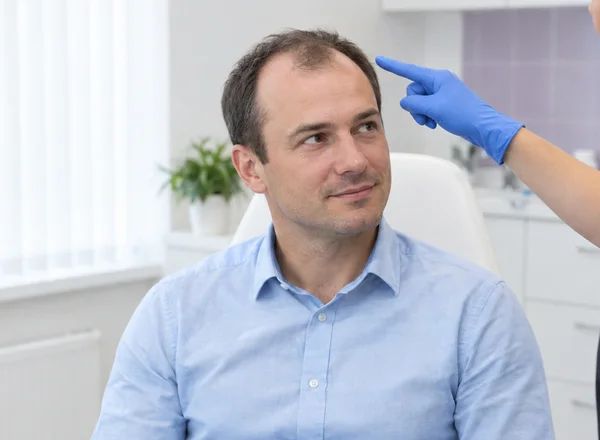

Write to us in WhatsApp or Telegram. Photos of the thinning area go to a coordinator, a doctor assesses them and answers whether a transplant would help. No cost, no obligation.

services
The free consultation gives you a graft count and a firm figure that the contract records.
| The first assessment | Free |
|---|---|
| Eyebrow transplant, FUE | On request |
| Beard transplant, FUE | On request |
| Hair trichopigmentation | On request |
| PRP therapy / session | On request |
all included
From preparation for surgery to the 12-month check.
No extra charges appear on the day of surgery.
two more sites
Nothing is reinvented for other zones: grafts from the back of the head, the FUE method, only the location differs.
FUE method, no incisions or stitches

Grafts are harvested from the donor area at the back of the head and moved through micro-punctures of about 1 mm, without leaving scars. Before the operation the doctor settles the shape with you, taking your facial features into account. Transplanted hair grows for life and the beard is styled as usual.
On request
Secure this rateFUE method, no incisions or stitches

The initial consultation is where the surgeon draws the eyebrow shape: you look through references together and the design takes your facial features into account. The hairs are implanted at the right angle, so the eyebrows look natural. It also helps where plucking stopped hairs growing.
On request
one-day procedure under local anaesthesia
Secure this rateThe doctor will look over the donor zone, count how many grafts it yields and show the outcome that follows. The price is quoted at the consultation and the contract locks it.

Message our coordinator
Free online consultation · Reply within 15 minutes
Message us on TelegramMessage us on WhatsAppBy messaging us, you agree to our Privacy Policy
Process
From consultation to going home — all in one day

The doctor explains the FUE and the DHI procedure, answers what you ask about them, and examines the donor zone before any decision is made.

Placing a deposit takes the date out of circulation. Card at the clinic and online payment are both accepted.

Preparation for the surgery includes a set of tests, and the clinic makes the process easy with a full list and instructions.

Surgery happens under local anaesthetic; pain simply is not part of it.

The surgeon takes grafts from the donor area, either the back of the head or the temples, leaving no stitches behind.

Implantation takes place here, with the grafts placed into the area of hair loss.
This last step is about recovery, and the clinic provides everything needed along with full instructions.

The crusts clear away, the puffiness fades, the skin repairs itself

Only the visible part goes. The root stays in place

New hairs arrive gradually, the result starts to show

The hair looks fuller, and the volume and hairline are visible

The hair comes to full volume with a natural front line

Free, before the operation while you owe nothing.
Ask a hair expertdoctors

Hair transplant doctor, trichologist, surgeon
10 years of experience

Dermatovenereologist, trichologist, surgeon
11 years of experience

Plastic surgeon
9 years of experience

Plastic surgeon
9 years of experience

Assistant
9 years of experience
The doctor sizes up the donor zone, calculates the grafts and describes what outcome is within reach.
Ask a hair expertcoordinators
Your own coordinator takes you through every step, right up to full recovery.

Your care specialist
Is in touch on the day and long after
Covers the paperwork and the scheduling
Your care specialist
Is in touch on the day and long after
Covers the paperwork and the scheduling

Your care specialist
Is in touch on the day and long after
Covers the paperwork and the scheduling
Your care specialist
Is in touch on the day and long after
Covers the paperwork and the scheduling













Usual things asked

Yes, of course. People with homes in various cities and countries are part of everyday practice, and an online discussion with the doctor opens the process.
The precise cost is determined at a free consultation and graft count, then fixed in your contract.
Surgery is done in one day, and patients go home the same day it's finished.
Comfort is maintained by local anaesthesia; nothing hurts at all.
With FUE, grafts are taken by tweezer with no incisions. With DHI, grafts are implanted directly using a Choi pen, without pre-made channels. The combined method mixes FUE harvesting with DHI implantation.
Only the doctor's count is reliable, and it costs nothing once the donor zone has been checked.
The wounds are gone in 0–10 days. Losing the transplanted hairs at 2–4 weeks is no cause for concern. Regrowth is under way at 3–4 months, density is visible at 6–9 months, and the result is final at 12–18 months.
A lifetime guarantee of hair growth is included, confirmed in your contract.
The clinic has a medical licence and provides care to the standards and clinical guidelines
of the Ministry of Health.
A patient in Guelmim keeps an ordinary schedule: FUE and DHI are carried out without cuts or stitches, under local anaesthesia, in one day.
The first conversation for a resident of Guelmim is free and takes place online: the doctor looks at photos of the thinning area and counts the grafts. Every day the clinic is reachable 24/7, so you choose the hour, not the clinic.
Count on 0-10 days of healing, a normal shedding of the transplanted hairs at 2-4 weeks, growth from 3-4 months, noticeable density at 6-9 and the completed result at 12-18. Check-ups happen at 1, 3, 6, 9 and 12 months, a personal coordinator follows the photos, and the growth guarantee is lifelong.
The cost is calculated individually after a free online consultation. Write to us on WhatsApp or Telegram.
By messaging us, you agree to our Privacy Policy
Guelmim is a city in southern Morocco, often called the Gateway to the Desert. It is the capital of the Guelmim-Oued Noun region and sits where the N1 and N12 highways cross. For many residents the decision about a hair transplant is made quietly, over months, in conversations with family and friends and in long evenings of reading and comparing. This text is written for people in Guelmim who are at that stage and want a clear picture of what FUE and DHI involve and how the process fits into local life.
The city has a young, active population, and many people in their twenties, thirties and forties notice thinning at the temples, a retreating frontal hair line or a patchy beard. They ask practical questions: will it look natural, how long until it grows, when can I go back to work, and what happens in summer heat. The sections below answer these questions with Guelmim in mind.
The procedure itself is carried out at the clinic in Rabat, Morocco. Everything before it, from the first conversation to planning and follow-up, starts online and free of charge from your own city. Coordinators are available around the clock (24/7) on Telegram and WhatsApp, so you can write at any hour, including after work or late in the evening.
The first step is a free online consultation. You send a few clear photos of the front, the temples, the crown and the back of the head, and tell the coordinator about your age, how long the loss has been going on, any medicines you take and any chronic conditions. The doctor reviews this and discusses the shape of the hair line with you before the operation, taking your facial features into account.
Because Guelmim is a regional capital with a mix of Tachelhit and Hassaniya speakers, many people prefer to talk in the language they feel most comfortable in. You can write to the coordinators in the way that suits you and ask the same question as many times as you need. Nothing is decided in a hurry.
We stay with you from pre-op planning to 12 months later. That means the same people who helped you plan are the ones you contact when something in the healing looks unfamiliar. A coordinator will be on the phone 24/7, which matters when you are at home in Guelmim and a question comes up in the middle of the night.
In both methods, grafts are taken from the back of the head, the donor area, and moved through micro-punctures of about 1 mm, so nothing scars over. FUE and DHI differ in how the grafts are placed, and the doctor explains which one suits your case after reviewing your photos. The choice depends on the area to be covered, the density you want and the condition of your donor hair.
The same logic applies to the beard. Many men in Guelmim wear a beard as a normal part of their appearance, and gaps in it can be corrected in the same way. Transplanted hair grows for life: trim and style the beard as usual. One patient described it this way: from about the 4th month active, even growth began, the transplanted hair took very well, the beard looks as natural as possible, with no bald patches left, and it became much thicker and denser, in the shape he had thought about for a long time.
Ask the surgeon to show how the hair line will be drawn, how many sessions may be needed in your case, and which area is the priority. A good plan is built around the face, not around a number of grafts.
Guelmim has a hot desert climate. The area lies between the Sahara and the Souss, with a long dry season and little rain. This shapes recovery more than most people expect. Strong sun, dry air and dust are the main factors to think about in the first days after the operation.
During healing, the scalp and the treated area should be kept clean and protected from direct sun and dust. Loose, clean headwear approved by the doctor is a sensible choice when you go out, and a tight cap that rubs the grafts is not. Avoid sweating heavily in the early days, and ask the team exactly when you can wash and how. The healing period is 0–10 days, and during it you should follow the written instructions you receive rather than local habits or advice from friends.
The hot months are demanding because heat, sweat and sun exposure are hard to avoid outdoors. Cooler months of the year are usually easier for people who want to spend the first days resting at home. Pools and the sea, including the beaches of the Atlantic coast that many families in the region enjoy, should wait until the doctor confirms that it is safe, and your coordinator will tell you the exact timing from your plan.
Guelmim has a lively calendar. The annual Camel Week festival brings races, horse displays and evening performances, and family events, weddings and religious holidays fill the year. Many patients want to be at their best for such occasions, which makes timing important.
Count backwards. Transplanted hairs let go after 2-4 weeks, as expected, and this shedding is normal. Hair comes back at 3-4 months, becomes visibly thicker at 6-9 months, and reaches a settled look at 12-18 months. If there is a wedding or an important event, plan the operation well ahead, so that the early phase of redness, crusts and shedding is over before the day. Do not expect the final look within weeks.
Talk to the coordinator about your calendar before choosing a date. Tell them about work shifts, exams, family gatherings and anything where you cannot cover your head or avoid crowds. A date chosen with these in mind removes a great deal of stress.
Guelmim is a city of public administration, trade, agriculture in the surrounding oases, crafts and services, and it has a growing student population with many schools in the city. Office and study routines are easier to resume than outdoor or physical work. Ask the surgeon how many days to rest, when you can return to a desk, and what to do if your job is outdoors in the sun or involves dust.
Sport needs a plan as well. Football, running and gym sessions raise heart rate and sweat, so ask exactly when each can restart and which are riskier for the grafts. Do not return on the basis of how you feel; follow the timeline you were given.
Food culture matters too. Shared meals are a central part of social life here, with tea, tagine, couscous and large family tables. Eating normally is fine, but ask about anything that affects healing, such as smoking, alcohol and sleeping position. Avoid hot, crowded kitchens and heavy sweating in the first days, and sleep with your head slightly raised if the team advises it.
In general terms, a good candidate has enough healthy hair in the donor area, realistic expectations and stable general health. Hair loss should preferably have settled or be under medical control so that the plan does not become outdated in a year.
Some conditions call for caution or a delay: uncontrolled chronic illness, skin diseases of the scalp, active infection, very limited donor hair, or unrealistic wishes about density. Excess weight can complicate general health and surgical planning, and WHO describes obesity and overweight as a major health concern, so be open about your health when you speak with the doctor.
Tell the coordinator about every medicine and supplement you take. Honest answers allow the doctor to say clearly whether to go ahead, to wait, or to choose another approach.
The overall picture is this: 0–10 days for healing, 2–4 weeks for normal shedding of transplanted hair, 3–4 months for new growth to start, 6–9 months for real density, and 12–18 months for the final result. Knowing this in advance prevents panic when the hair falls out, which is a normal stage.
Follow-up is built in: check-ups at months 1, 3, 6, 9 and 12. Because you live in Guelmim, these are done remotely, with photos and conversation. Take pictures in the same light and from the same angles each time so that progress is easy to see.
If you notice unusual pain, swelling that increases, discharge or fever, write to the coordinator immediately. There is always someone on the phone 24/7.
Guelmim is called the Gateway to the Desert, and anyone who lives here knows what that means for daily life: dry air, strong light and dust that can arrive with the wind. For a person with fresh grafts these are practical matters, not details. The treated area and the donor area should stay clean, and in the first days it is better not to stand in open, dusty places.
When you must go out, ask the team which headwear is acceptable and how to put it on without touching the grafts. Many men here are used to a scarf or a cap, but a fabric that rubs or traps sweat is a poor choice during early healing. Ask the coordinator to describe, step by step, how to wash the scalp and when you may start.
The oases around the city and the long drives on the main highways are part of local life. In the first days, avoid long hours outdoors, open car windows with blowing dust and dusty work. A quiet week at home, with the head protected, is the simplest way to support healing.
In a city where families are close and news travels fast, many patients ask how visible the first days will be. Redness and small crusts are normal in the early phase, and then the transplanted hairs let go after 2-4 weeks, as expected. Plan for this period: decide in advance whom you will tell and how you will explain a few quiet weeks.
Some people prefer to say nothing and simply let the hair come back. Hair returns at 3-4 months, becomes visibly thicker at 6-9 months and reaches a settled look at 12-18 months, so the change is gradual and looks natural to the people around you.
Talk with your spouse or a close relative if you wish. Support at home helps with practical things: keeping to the washing routine, sleeping position, avoiding crowded kitchens and heat, and reminding you to take photos before each check-up.
Good photos make the online consultation faster and more precise. Take them in daylight, with the hair dry and the camera at eye level: front, both temples, the top, the crown and the back of the head. For a beard, add straight-on and both side views, with the face relaxed.
Write down your history before you contact the coordinators: when the thinning began, whether relatives have the same pattern, which medicines or supplements you use, previous treatments, allergies and chronic conditions. Short, honest notes help the doctor judge whether you are a candidate and how to plan the hair line.
Keep your photos in a folder on your phone. The same angles will be needed at months 1, 3, 6, 9 and 12, when the check-ups take place and the team compares your progress with the original plan.
Patients often ask whether the result will look dense from the first month. It will not. The early weeks show shedding, and real density builds at 6-9 months. Another common worry is the donor area: grafts are taken from the back of the head and moved through micro-punctures of about 1 mm, so nothing scars over.
Some ask if the method suits a very dry, hot climate. The procedure is the same; what changes is the care, with more attention to sun, dust and sweat. Others ask whether they must keep visiting a clinic for follow-up. Not from here: the check-ups are remote, and a coordinator will be on the phone 24/7.
Finally, people ask whether it is too early or too late. Age alone does not decide this. The doctor looks at your donor hair, the pattern of loss and your general health, and tells you plainly whether to go ahead, wait or choose another route.
Prepare a short list before the consultation. Ask which technique is recommended for you and why, how the hair line will be designed, how the donor area will be protected, and what the plan is if more density is needed later. Ask what the first week looks like and what you can wear.
Ask about the practical details of your life in Guelmim: how to protect the scalp from sun and dust, when to wash, when you can go back to your job, and when you can swim or play sport. Ask who you contact and how fast you will get a reply.
A calm, specific answer to each question is a good sign. If something is unclear, ask again; the free online consultation exists exactly for this.
Yes. The first consultation is online and free. You send photos and details through Telegram or WhatsApp, and coordinators are available 24/7.
The procedure is done at the clinic in Rabat, Morocco. Planning and follow-up are handled remotely from your own city.
Transplanted hairs let go after 2-4 weeks, hair comes back at 3-4 months, looks visibly thicker at 6-9 months and settles at 12-18 months.
Yes. The shedding of transplanted hairs at 2-4 weeks is expected and is part of the cycle.
Grafts are taken from the donor area and moved through micro-punctures of about 1 mm, so nothing scars over.
It can. Sun, heat, sweat and dust should be limited in the early days, and the doctor will tell you what to wear and when to wash.
Yes. The beard can be treated and, once grown, transplanted hair grows for life, so you can trim and style it as usual.
At months 1, 3, 6, 9 and 12, and we stay with you from pre-op planning to 12 months later.
This depends on your job and your case. The first healing phase is 0–10 days; the surgeon will give exact guidance for work and sport.
People with uncontrolled illness, scalp disease, infection or very limited donor hair may need to wait. The doctor decides after reviewing your photos and history.
Heat, sweat and sun make the first days harder. Many people choose a cooler period, but the team can advise on protection if your date falls in summer.
Clear daylight photos of the front, temples, crown and back of the head, plus notes on your health, medicines and how long the loss has lasted.
Redness and crusts fade early, and the shedding at 2-4 weeks is normal. Many people plan a quieter period at home for this phase.

 Forceps
 Minimal








