





















Rhinoplasty6 min read
Can rhinoplasty fix breathing problems, snoring and poor sleep?
A blocked nose affects more than comfort: it can lead to mouth breathing, snoring, poor sleep and daytime tiredness. When the cause is a crooked septum or another structural problem, surgery can help. This guide explains when rhinoplasty improves breathing, what septorhinoplasty involves, how recovery goes and what you can realistically expect for snoring and sleep.

The main points in 30 seconds
- Rhinoplasty can improve breathing when the cause is structural, such as a deviated septum.
- A blocked nose leads to mouth breathing, snoring and poorer sleep.
- Septorhinoplasty corrects the septum and the shape of the nose in one operation.
- Nasal breathing usually returns within one to two weeks after surgery.
- City Medical Centre plans rhinoseptoplasty individually at a free consultation.
Key facts about the procedure
- Operation time1.5–3 hours
- Main healing4 months
- Stay in clinic1 day
- Price
$6,000from $4,200
Can rhinoplasty fix breathing problems?
Often, yes, if the cause is in the structure of the nose. A crooked septum, collapsed nasal valves, the effects of an old injury or a nose that was over-reduced in an earlier operation can all narrow the airway. Surgery that straightens and supports these structures can make breathing through the nose much easier.
It is important to separate structural problems from other causes. A blocked nose can also come from allergies, chronic rhinitis, enlarged turbinates or nasal polyps, and some of these are treated without surgery. That is why a proper examination comes first: the surgeon checks the inside of the nose and, if needed, orders a scan of the sinuses. If your breathing can be improved without an operation, a good surgeon will say so. The operations we perform are described on our rhinoplasty page.
Why nasal breathing affects sleep and health
The nose warms, moistens and filters the air before it reaches the lungs. When nasal breathing is blocked, people switch to breathing through the mouth, especially at night. Over time this can lead to:
- a dry mouth and sore throat in the morning;
- snoring, because the soft tissues of the mouth and throat vibrate more;
- broken, less restful sleep and daytime tiredness;
- headaches and difficulty concentrating;
- more frequent sinus problems, because the sinuses drain less well;
- shortness of breath during exercise.
Snoring is not always harmless. It can be a sign of sleep apnoea, a condition in which the airway repeatedly closes during sleep. If you snore loudly, wake up gasping or feel exhausted despite a full night's sleep, you should be assessed for sleep apnoea, because this needs its own treatment.
Medical reasons for nose surgery
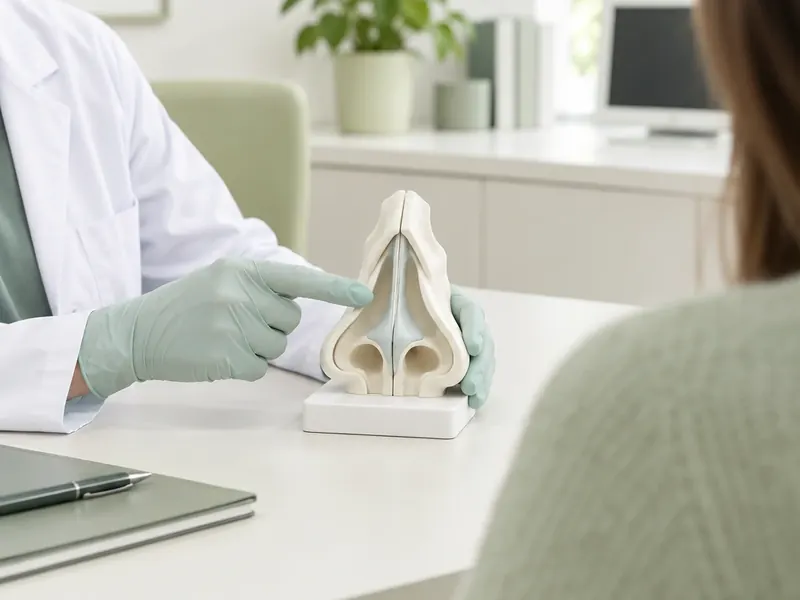
The most common structural causes of poor nasal breathing are:
Deviated septum
- What happens
- The wall between the nostrils is bent and narrows one or both sides
- Usual surgical approach
- Septoplasty, often combined with rhinoplasty
Nasal valve collapse
- What happens
- The side walls of the nose fall inward when you breathe in
- Usual surgical approach
- Cartilage grafts that support the side walls
Consequences of injury
- What happens
- A broken nose heals crooked and the airway is narrowed
- Usual surgical approach
- Straightening of bone and cartilage
Over-reduction in a previous operation
- What happens
- Too much cartilage was removed and the nose lacks support
- Usual surgical approach
- Revision surgery with cartilage grafts
Enlarged turbinates
- What happens
- The ridges inside the nose are swollen and block airflow
- Usual surgical approach
- Reduction of the turbinates, often by an ENT specialist
In many patients several of these factors are present at once, so the plan is built around the whole nose rather than one detail.
Septorhinoplasty: improving shape and airflow
Septorhinoplasty, also called rhinoseptoplasty, combines two operations: straightening the septum to improve breathing and reshaping the outside of the nose. It suits people who have both a functional problem and aesthetic concerns, for example a deviated septum together with a hump or a crooked nose.
Doing both at once has clear advantages:
- one anaesthetic and one recovery period instead of two;
- the septum is a key support of the nose, so correcting it together with the shape gives a more stable result;
- cartilage removed from the bent part of the septum can often be reused as grafts to support the nose;
- the surgeon can make sure that aesthetic changes do not narrow the airway.
If the outer shape of the nose is fine and only the septum is bent, septoplasty alone may be enough. It is done through incisions inside the nose and does not change the appearance.
How the operation and recovery go
Before surgery the patient has a set of tests and, when needed, a CT scan of the sinuses. The operation is usually performed under general anaesthesia and most often takes one to three hours, depending on the extent of the work.
- First day
- Observation in hospital; breathing through the mouth with splints in the nostrils
- Days 1–7
- Swelling and nasal congestion; splints are removed on day 7
- Days 7–14
- The outer nasal cast is worn; stitches and cast come off at about two weeks
- Weeks 1–2
- Nasal breathing gradually returns as internal swelling goes down
- Months 1–1.5
- Slight congestion may remain, especially in the mornings
- Up to 1–1.5 years
- The final shape and function settle
During recovery you should sleep on your back with your head raised, avoid bending over and heavy exertion, not blow your nose hard and not wear glasses on the nose. Saline rinses, if your surgeon recommends them, help keep the nose clean.
What to expect for snoring and sleep
If snoring is caused mainly by a blocked nose, freeing the nasal airway often makes it quieter or less frequent, and many patients report more restful sleep and less morning tiredness.
However, snoring usually has several causes at once, including the tongue, soft palate, throat, body weight, alcohol and sleeping position, so nose surgery alone does not always stop it.
The same applies to sleep apnoea. Better nasal breathing can make other treatments easier to use, but it rarely cures the condition on its own. A realistic goal is easier breathing through the nose during the day and at night; any effect on snoring is discussed individually at the consultation.
Getting a personal plan at City Medical Centre
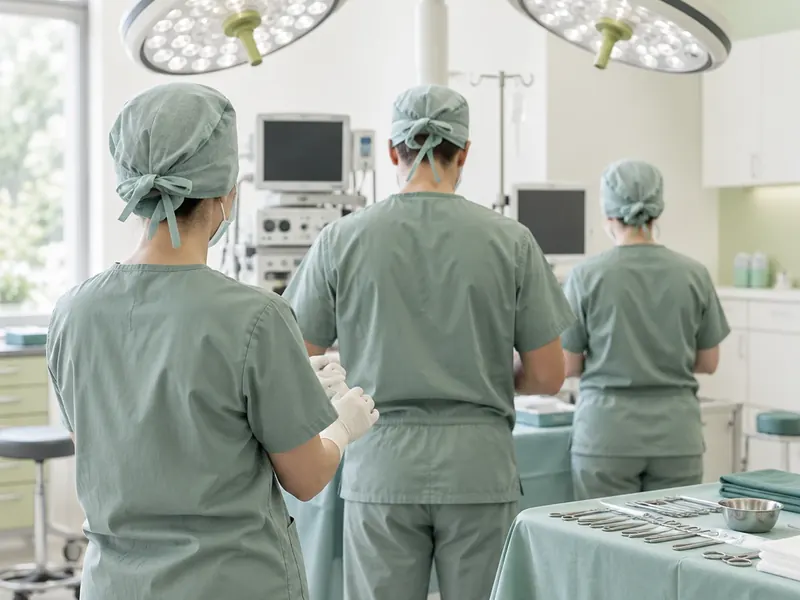
City Medical Centre welcomes patients from abroad and performs primary rhinoplasty, revision rhinoplasty, rhinoseptoplasty and reconstructive rhinoseptoplasty. City Medical Centre does not treat allergies and does not perform separate turbinate or sinus surgery. A deviated septum, marked breathing problems and the consequences of a nose injury are among the problems the clinic treats.
At the consultation the surgeon examines the septum and nasal lining, reviews your scans and uses 3D modelling to show the planned shape. The operation is performed with a one-day hospital stay. Treatments of other causes such as allergies or enlarged turbinates, and the sleep assessments described above, are general information and are discussed at the consultation.
The first consultation is free and can take place online: send photos of your nose and describe your breathing problems by Telegram. The cost is named after the assessment and fixed in the contract. A personal coordinator supports you from your first message to the end of recovery, and consultations with your surgeon are free for a year after surgery. Learn more on our rhinoplasty page.
Sources
Frequently asked questions
Will rhinoplasty help me breathe better?
It can, if your breathing problem is caused by the structure of the nose, such as a deviated septum, collapsed nasal valves or an old injury. Surgery that straightens and supports these structures often makes nasal breathing much easier. If the cause is allergy or chronic rhinitis, surgery alone may not help, so an examination comes first.
Can nose surgery stop snoring?
Sometimes. If snoring comes mainly from a blocked nose, opening the airway often makes it quieter or less frequent. But snoring usually has several causes, including the throat, tongue, weight and alcohol, so nose surgery does not always stop it. Loud snoring with pauses in breathing should be checked for sleep apnoea.
Is septorhinoplasty a complex operation?
It is a more extensive operation than septoplasty alone, because it corrects both the septum and the outer shape of the nose. It is usually done under general anaesthesia and takes one to three hours, with a short hospital stay. Combining the two corrections means one anaesthetic and one recovery period instead of two.
How long until breathing improves after surgery?
In the first days the nose is blocked by splints and swelling. The splints come out after about a week, and nasal breathing usually returns within one to two weeks as swelling goes down. Slight congestion can last for a month or so, and the final result is judged after a year to a year and a half.
At what age can breathing surgery be done?
Surgery on the nose is usually done in adults, once the nose has finished growing. The optimal age for primary rhinoplasty is often given as 18 to 45, but adults older than this can also have surgery if they are in good general health. The surgeon assesses each case individually.
Have a question about your case? Get a free consultation
Message a coordinator on Telegram: we reply right in the chat, and you can send photos and questions there too.
- The first consultation is free, online consultations are available
- The doctor names the cost after the assessment, and it is fixed in the contract
- A personal coordinator guides you from the first message to recovery
Message our coordinator on Telegram
We reply right in the chat — you can send photos
Message us on TelegramBy sending a message, you agree to the privacy policy
Read also
 Rhinoplasty
Rhinoplasty myths vs facts: what is really true about nose surgery
Common rhinoplasty myths checked against the facts: fragility, pain, when the result shows, what shapes are possible and how to choose a surgeon.
 Rhinoplasty
Rhinoplasty pros and cons: an honest look before you decide
The real benefits and drawbacks of rhinoplasty: appearance, breathing, recovery, swelling, risks and revision, surgery versus fillers and who should wait.
 Rhinoplasty
Cosmetic and medical rhinoplasty: indications and contraindications
The difference between medical and cosmetic nose surgery, the main indications and contraindications, operation types, recovery and possible complications.