










Rhinoplasty6 min read
Rhinoplasty pros and cons: an honest look before you decide
Rhinoplasty can change the shape of the nose for good and often improve breathing too, but it also means surgery, weeks of recovery and a long wait for the final result. This guide sets out the real benefits and drawbacks, the risks, how surgery compares with fillers and who should wait or reconsider.
The main points in 30 seconds
- Rhinoplasty gives a permanent change in shape and can improve breathing.
- The drawbacks are recovery time, long-lasting swelling at the tip and cost.
- The final result is judged after one to one and a half years.
- Fillers can disguise a small hump but cannot make the nose smaller or improve breathing.
- City Medical Centre discusses pros and cons for your case at a free consultation.
Key facts about the procedure
- Operation time1.5–3 hours
- Main healing4 months
- Stay in clinic1 day
- Price
$6,000from $4,200
Rhinoplasty pros and cons at a glance
Rhinoplasty is one of the most common facial operations, and for many people it brings lasting satisfaction. It is still surgery, with a recovery period, a long wait for the final result and real risks. Weighing both sides honestly helps you decide whether it is right for you and when.
- A lasting change in the shape of the nose
- Surgery under anaesthesia with a recovery period
- Can improve breathing at the same time
- Swelling, especially at the tip, takes up to 1–1.5 years to settle fully
- Better facial balance and often more confidence
- Several weeks of restrictions on sport, sun, saunas and glasses
- Can correct the effects of injury or a previous operation
- A risk of complications and the possibility of revision
- Planned in advance with 3D modelling
- A significant cost that insurance usually does not cover for cosmetic reasons
The types of operation we perform are described on our rhinoplasty page.
Benefits: appearance, breathing, confidence
The main reason people choose rhinoplasty is appearance. Surgery can remove a hump, narrow a wide bridge, refine a bulbous tip, straighten a crooked nose, correct asymmetric nostrils or change the angle between the nose and the upper lip. The result is permanent, unlike temporary injectable treatments.
A second benefit is function. If a deviated septum, weak nasal valves or an old injury narrow the airway, septorhinoplasty can improve nasal breathing in the same operation. Many patients notice better sleep, less mouth breathing and easier breathing during exercise.
A third benefit is psychological. When the nose fits the face better, many people feel more confident in photos and everyday life. This benefit is greatest when the motivation comes from the patient and the expectations are realistic.
Drawbacks: recovery, swelling, cost
Rhinoplasty requires time. For the first week the nose is blocked with splints and a cast, and breathing is through the mouth. Bruising and swelling around the eyes are common for one to two weeks.
Most people return to office work after two to three weeks, but for about a month they should avoid sport, saunas, hot baths, sun exposure and resting glasses on the nose.
The biggest drawback for many patients is patience. The nose looks better once the main swelling goes down, but the tip can stay slightly swollen for months, and the final result can only be judged after one to one and a half years. Cost is another factor: rhinoplasty for cosmetic reasons is usually paid privately, and revision or reconstructive surgery costs more than a first operation.

Risks and the chance of revision
Serious complications are uncommon, but every operation has risks. After rhinoplasty they include:
- prolonged swelling and bruising;
- bleeding in the first days;
- infection, which is rare;
- irregularities of shape or asymmetry;
- impaired breathing;
- thick scarring in people prone to it;
- dissatisfaction with the result.
Some patients need a revision to correct small irregularities or breathing problems. It is usually planned no earlier than a year after the first operation, once the tissues have settled. The risk is lower when the surgeon is experienced, the plan is realistic and the patient follows all aftercare instructions.
Surgery vs fillers: an honest comparison
Injectable fillers are sometimes marketed as a "non-surgical nose job". They can help in a few situations, but they are not a replacement for surgery.
What it can do
- Surgical rhinoplasty
- Reduce, narrow, straighten, lengthen or shorten the nose; improve breathing
- Fillers
- Disguise a small hump or slightly lift the tip by adding volume
What it cannot do
- Surgical rhinoplasty
- Give a final result immediately
- Fillers
- Make the nose smaller, straighten the septum, improve breathing
How long it lasts
- Surgical rhinoplasty
- Permanent
- Fillers
- Temporary; needs repeating
Recovery
- Surgical rhinoplasty
- Several weeks
- Fillers
- Minimal
Main risks
- Surgical rhinoplasty
- Surgical risks and the possibility of revision
- Fillers
- Lumps and, rarely, serious complications if a blood vessel is affected
Who should wait or reconsider
Rhinoplasty is not the right step for everyone. It is better to wait or reconsider if:
- you are under 18 and your nose is still growing;
- you have an acute infection or inflammation of the nose, ears, throat or eyes;
- you have a blood clotting disorder, an uncontrolled chronic disease or cancer;
- the decision is driven by pressure from others rather than your own wish;
- you expect surgery to solve problems that are not about the nose;
- you cannot set aside time for recovery and follow-up visits;
- less than a year has passed since a previous nose operation.
Getting a personal plan at City Medical Centre
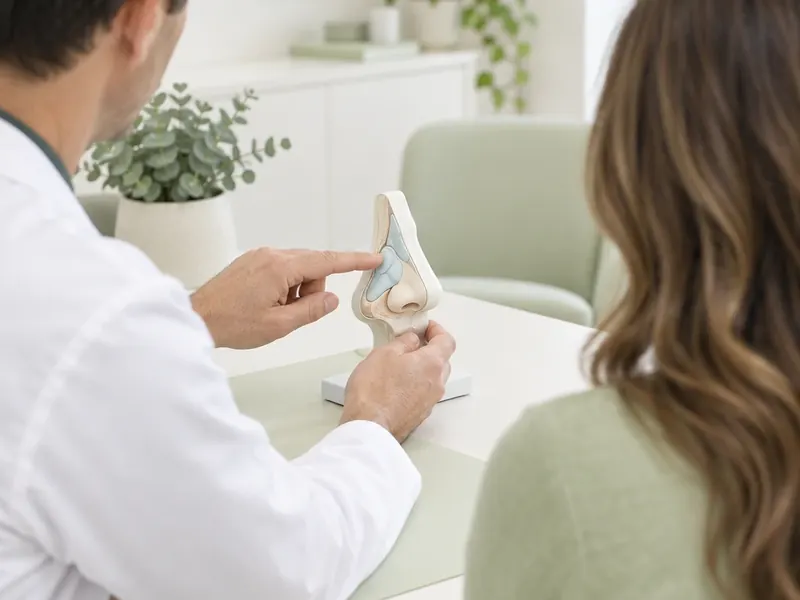
City Medical Centre welcomes patients from abroad and performs primary rhinoplasty, revision rhinoplasty, rhinoseptoplasty and reconstructive rhinoseptoplasty for adults aged 18 and over. City Medical Centre does not perform non-surgical nose correction with fillers. At the consultation the surgeon examines your nose, discusses the benefits and limitations for your case and uses 3D modelling to show the planned result.
The operation is performed under general anaesthesia with a one-day hospital stay. Non-surgical options such as fillers are general information and are discussed at the consultation.
The first consultation is free and can take place online: send photos of your nose from several angles by Telegram. The cost is named after the assessment and fixed in the contract. A personal coordinator supports you from your first message to the end of recovery, and consultations with your surgeon are free for a year after surgery. Learn more on our rhinoplasty page.
Sources
Frequently asked questions
Is rhinoplasty worth it?
For many people it is, especially when the goal is clear and the expectations are realistic. Rhinoplasty gives a permanent change in shape and can improve breathing at the same time. It is worth it when you understand the recovery, the long wait for the final result and the risks, and when the decision is your own.
Can rhinoplasty be done without stitches?
Not completely. In closed rhinoplasty all incisions are inside the nose, so no stitches are visible, but they are still closed with fine sutures. In open rhinoplasty there is also a small incision across the columella, which is stitched and usually becomes hard to see. External stitches are removed at about two weeks.
When can the final rhinoplasty result be judged?
The first improvement is visible after two to three weeks, when the main swelling goes down. Residual swelling, especially at the tip, takes much longer to settle. The final result is usually judged after one to one and a half years.
Is it true you cannot wear glasses after rhinoplasty?
Only temporarily. For about a month after surgery you should not rest glasses on the nose, because the pressure can affect the healing bones and cartilage. During this time you can use contact lenses or ask your surgeon how to support the glasses without pressing on the nose.
What is the minimum age for rhinoplasty?
Rhinoplasty is usually done from the age of 18, when the nose has finished growing. Operating on a nose that is still growing can affect the final result. The optimal age for a first operation is often given as 18 to 45, but healthy adults can have surgery at an older age too.
Have a question about your case? Get a free consultation
Message a coordinator on Telegram: we reply right in the chat, and you can send photos and questions there too.
- The first consultation is free, online consultations are available
- The doctor names the cost after the assessment, and it is fixed in the contract
- A personal coordinator guides you from the first message to recovery
Message our coordinator on Telegram
We reply right in the chat — you can send photos
Message us on TelegramBy sending a message, you agree to the privacy policy
Read also
 Rhinoplasty
Rhinoplasty risks and complications: what can go wrong and how to lower the risk
What can go wrong after rhinoplasty, how to tell normal healing from a real complication, why problems happen and what lowers the risk before and after surgery.
 Rhinoplasty
Rhinoplasty, septoplasty or septorhinoplasty: which nose surgery do you need?
Rhinoplasty changes the shape of the nose, septoplasty straightens the septum, septorhinoplasty does both. Compare goals, technique, recovery and who each suits.
 Rhinoplasty
After rhinoplasty: recovery in the first 7, 14 and 30 days
What rhinoplasty recovery looks like at day 7, day 14 and day 30: swelling, splint and stitches, return to work, exercise and the warning signs to watch.