
























Liposuction5 min read
Massage and lymphatic drainage after liposuction: when to start and why it helps
After liposuction the body needs time to clear fluid and settle into its new contour. Gentle massage and lymphatic drainage are often recommended to make this stage more comfortable. This guide explains when massage is usually allowed, how lymphatic drainage differs from deeper techniques, what it can and cannot do for firm areas, and why starting too early or too hard can do more harm than good.
The main points in 30 seconds
- Massage supports recovery but does not replace compression garments and walking.
- Gentle lymphatic drainage often starts around the end of the first week, with the surgeon's approval.
- Deep or hardware massage is too strong for the first weeks after liposuction.
- Most firm areas soften over months; massage may help but cannot fix uneven fat removal.
- Starting too early or too hard can increase pain, swelling and the risk of fluid collections.
Key facts about the procedure
- Operation time1–4 hours
- Back to work7–10 days
- Final result3–6 months
- Pricefrom $1,200
Why massage is recommended after liposuction
Liposuction removes fat through small tunnels under the skin. In the weeks that follow, the treated areas fill with tissue fluid, and the body gradually absorbs it. Swelling, a feeling of tightness and firm patches under the skin are a normal part of healing.
Gentle massage aims to support this natural process. Many surgeons recommend it because patients often report:
- less feeling of heaviness and tension in the treated area;
- swelling that settles more comfortably;
- softer, more even skin as healing progresses.
Massage is an addition to recovery, not a replacement for compression garments, walking and following your surgeon's instructions. Research on post-operative massage is still limited, so the plan is always individual.
When it is safe to start
The timing depends on the scope of surgery, the areas treated and how your incisions are healing. Your surgeon decides when massage can begin, and the general pattern looks like this:
- First days
- Rest, short walks and compression; no massage of the treated areas
- From about the end of the first week
- Very gentle lymphatic drainage, if the surgeon agrees and the incisions are closed
- Weeks 2 to 6
- A course of lymphatic drainage sessions; light self-massage if taught
- After about 6 weeks
- Firmer techniques for persistent firm areas, only with the surgeon's approval
Do not start any massage while incisions are still open or leaking, or if the area is red, hot or increasingly painful.

Lymphatic drainage vs deep massage
These are two very different approaches, and after liposuction the difference matters.
Lymphatic drainage
Manual lymphatic drainage uses light, slow, rhythmic strokes that move the skin in the direction of the lymph nodes. The pressure is gentle, similar to stroking a cat. The aim is to help tissue fluid leave the area, not to work on muscles or fat.
Deep and hardware massage
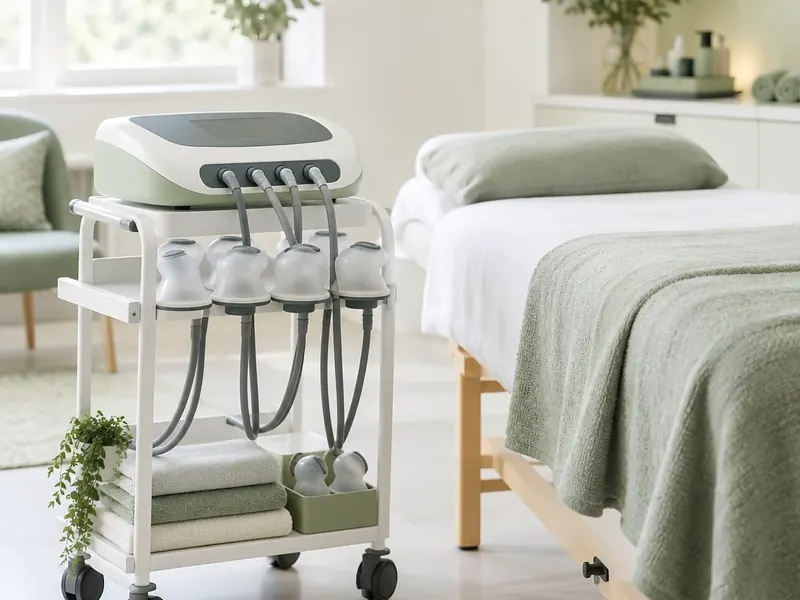
Deep tissue massage and devices that combine suction and rollers apply much stronger pressure. In the first weeks after liposuction this can be painful and may disturb healing tissue. Such techniques, if used at all, belong to a later stage and only after the surgeon has examined the result.
How massage helps prevent fibrosis
As the tissues heal, the body forms new connective tissue. Sometimes this creates firm areas or small uneven patches under the skin, often called fibrosis. Most of these soften by themselves over several months.
Gentle, regular massage may help the tissues stay mobile and make firm areas feel softer, especially when combined with compression and a gradual return to movement. It cannot guarantee a perfectly smooth result, and it cannot correct irregularities caused by uneven fat removal. If a firm area persists or grows after the first months, the surgeon should assess it.
How many sessions you may need
There is no fixed number. It depends on the size of the treated areas, how much swelling you have and how quickly your body heals. A common approach is a short course of lymphatic drainage in the first weeks, followed by fewer sessions as swelling settles.
- Small areas, such as the chin or knees, often need fewer sessions.
- Large or combined areas, such as the abdomen, flanks and back, may need a longer course.
- Stop or pause if a session causes lasting pain, new bruising or increased swelling.
The typical recovery timeline, from compression garments to the final result, is described on the liposuction page.
Risks of starting too early or too hard
Massage that is too early, too strong or done by someone without experience after surgery can slow recovery. Possible problems include:
- more pain, bruising and swelling;
- a fluid collection under the skin that may need draining;
- irritation or infection of healing incisions;
- damage to fragile tissue that leaves uneven areas.
Tell the therapist exactly which operation you had and when. Contact your surgeon if you notice increasing pain, redness, warmth, fever or a swelling that feels like a fluid-filled bag.

Aftercare plan at City Medical Centre
City Medical Centre performs tumescent liposuction and VASER ultrasound-assisted liposuction. After surgery patients wear compression garments for 30 to 45 days, and the recovery plan includes recommendations on lymphatic drainage massage, pressotherapy and a gradual return to activity. Follow-up visits are planned after 7 days and 3 months, and consultations with the surgeon remain available until the end of the first year.
City Medical Centre does not offer deep or hardware body massage, such as vacuum-roller devices, as part of the liposuction programme; the surgeon advises when such techniques are appropriate. The first consultation is free and can take place online: you can send photos and questions on Telegram. The price is given after the surgeon's assessment and is fixed in the contract, and a personal coordinator supports you from the first message to the end of recovery. Book a consultation on the liposuction page.
Sources
Frequently asked questions
When can I start massage after liposuction?
Very gentle lymphatic drainage is often allowed from about the end of the first week, once the incisions are closed and the surgeon agrees. Firmer techniques usually wait until around six weeks. The exact timing depends on the areas treated and on how you are healing.
Is lymphatic drainage necessary after liposuction?
It is not strictly required for everyone, but many surgeons recommend it because it can make swelling settle more comfortably. Compression garments, walking and following your surgeon's instructions remain the basis of recovery. The surgeon decides whether sessions are useful in your case.
Can massage fix lumps after liposuction?
Gentle massage may help firm areas feel softer, and most of them soften by themselves over several months. Massage cannot correct unevenness caused by the amount of fat removed. If a lump persists, grows or hurts, the surgeon should examine it before any further treatment.
How many massage sessions are needed?
There is no fixed number. Small areas often need only a few sessions, while large or combined areas may need a longer course in the first weeks. The plan is adjusted to your swelling and healing, and sessions are paused if they cause pain or new bruising.
Can I massage at home?
Light self-massage can be helpful if a surgeon or therapist has shown you the correct technique and the incisions have healed. Use gentle strokes towards the lymph nodes and avoid deep pressure. Stop and contact your surgeon if the area becomes more painful, red or swollen.
Have a question about your case? Get a free consultation
Message a coordinator on Telegram: we reply right in the chat, and you can send photos and questions there too.
- The first consultation is free, online consultations are available
- The doctor names the cost after the assessment, and it is fixed in the contract
- A personal coordinator guides you from the first message to recovery
Message our coordinator on Telegram
We reply right in the chat — you can send photos
Message us on TelegramBy sending a message, you agree to the privacy policy
Read also
 Liposuction
Swelling After Liposuction: How Long It Lasts and How to Reduce It
How long swelling lasts after liposuction, why the compression garment matters, what helps it go down faster and which signs mean you should call your surgeon.
 Liposuction
Liposuction recovery week by week: from the first day to the final result
Liposuction recovery week by week: first day, compression garments, swelling and lumps, lymphatic drainage, work, sport, flying home and warning signs.
 Joint treatment
Meniscus tear without surgery: when conservative treatment works and when it does not
Many meniscus tears are managed without surgery. Learn about symptoms, why MRI matters, rehab, PRP and SVF injections, and when an operation is needed.