
























Breast augmentation6 min read
Breast Reconstruction After Mastectomy: Options and Timing
Breast reconstruction recreates the shape of a breast after it has been removed, most often because of cancer. It is a personal choice: some women want it, some prefer an external prosthesis, and some decide on neither. This article explains why and when reconstruction is done, the difference between immediate and delayed reconstruction, how implant-based reconstruction works, how the nipple and areola can be restored, why the other breast is sometimes adjusted, and what recovery involves.

The main points in 30 seconds
- Reconstruction is optional and can be done at the time of mastectomy or months or years later.
- Timing is agreed with the treating oncology team, especially if radiotherapy is planned.
- Implant-based reconstruction often uses a tissue expander first, then a permanent implant.
- The nipple and areola are usually restored at a later stage, once the shape has settled.
- Surgery on the other breast may be offered to improve symmetry.
Key facts about the procedure
- Operation time1.5–3 hours
- Back to work7–14 days
- Stay in clinic1 day
- Fixed price$4,700
Breast reconstruction: why and when
After a mastectomy, many women feel that the loss of a breast affects how they see their body, how clothes fit and how they feel in everyday life. Reconstruction aims to restore a natural breast shape under clothing and, for many, a sense of wholeness. It does not restore normal sensation or breastfeeding, and it does not change the course of cancer treatment or the need for follow-up.
Reconstruction can be considered by most women who have had or will have a mastectomy, provided their general health allows another operation. It is a decision that can be made at any time, and there is no deadline. For an overview of breast operations, see our breast augmentation page.
Immediate vs delayed reconstruction
When
- Immediate reconstruction
- In the same operation as the mastectomy
- Delayed reconstruction
- Months or years after mastectomy and cancer treatment
Advantages
- Immediate reconstruction
- One anaesthetic; the skin envelope can often be preserved; no period without a breast shape
- Delayed reconstruction
- Time to finish treatment, recover and decide calmly
Points to consider
- Immediate reconstruction
- Planning must fit the oncology schedule; radiotherapy afterwards may affect the result
- Delayed reconstruction
- The skin may be tighter or affected by radiotherapy; more stages may be needed
The right timing depends on the type and stage of cancer, whether chemotherapy or radiotherapy is planned, and personal preference. The decision is always made together with the oncology team; the plastic surgeon plans the reconstruction around the cancer treatment, not the other way round.
Implant-based reconstruction
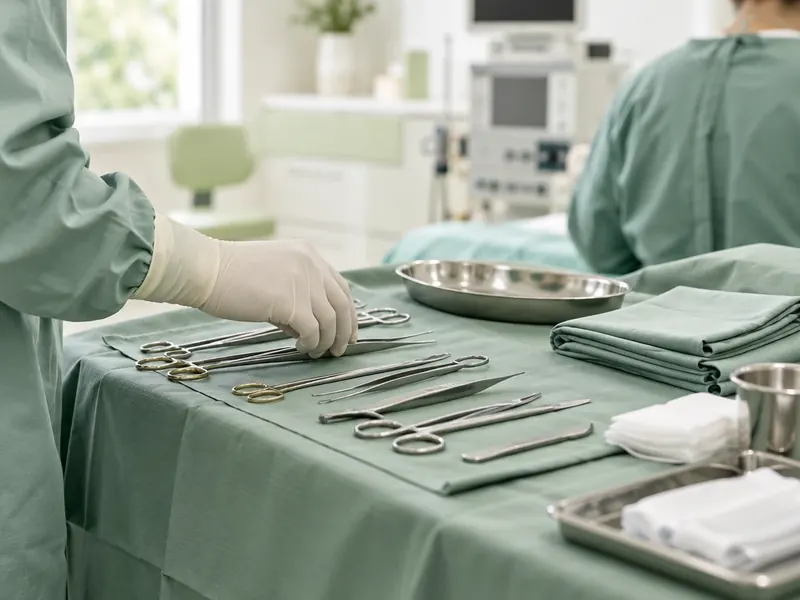
Implant-based reconstruction is the most common approach. It usually happens in two stages:
- Tissue expander. A temporary, adjustable implant is placed under the skin and chest muscle. Over several weeks it is gradually filled with saline through a small valve to stretch the tissues.
- Permanent implant. Once the tissues have expanded, the expander is replaced with a permanent silicone implant in a shorter second operation.
In some cases, when enough skin has been preserved, a permanent implant can be placed directly in one stage. Implant reconstruction avoids scars elsewhere on the body and has a shorter recovery than methods using your own tissue. Its limitations include possible capsular contracture, the need to replace the implant in the future, and a higher risk of problems after radiotherapy.
Other methods, such as reconstruction with a flap of your own tissue from the abdomen or back, or fat grafting, are general information here; which option is suitable is discussed at consultation.
Nipple and areola restoration
The nipple and areola are usually restored as a final step, a few months after the breast mound has settled, so that they can be placed symmetrically with the other side. Common options include:
- creating a nipple from a small local skin flap on the reconstructed breast;
- medical tattooing to recreate the colour of the areola, sometimes with a three-dimensional effect;
- in selected cases, preserving the patient's own nipple during mastectomy if the oncology team considers it safe.
Some women choose not to restore the nipple at all or prefer adhesive nipple prostheses. This is a personal choice.
Symmetry surgery on the other breast
A reconstructed breast rarely matches the natural breast exactly, and the natural breast changes with age and weight while the reconstructed one changes less. To improve balance, surgery on the other breast may be offered: a lift if it sags, a reduction if it is larger, or augmentation if it is smaller. This can be done at the same time as the second stage of reconstruction or separately. The aim is balance in clothing and in a bra, not perfect identity.
Recovery and emotional support
- First days
- Pain, tightness and drains; short walks; help with daily tasks
- 2–3 weeks
- Light daily activity; expander filling visits begin if an expander was used
- 4–6 weeks
- Support garment; gradual return to work and exercise as advised
- Several months
- Exchange to a permanent implant, symmetry surgery, then nipple restoration
Reconstruction is a process that often takes several months and more than one operation. Emotional adaptation matters as much as the surgical result: talking to the surgical team, a psychologist or a patient support group helps many women. It is normal to need time to accept the new breast.

Discussing reconstruction at City Medical Centre
City Medical Centre works with international patients and performs breast reconstruction to restore breast shape and volume after surgery or injury, as well as breast augmentation with implants, breast lift with or without implants, breast reduction and implant removal, which can be used for symmetry. City Medical Centre does not perform flap reconstruction with your own tissue or fat grafting to the breast.
The surgeon reviews your medical documents and treatment history, examines both breasts and proposes a staged plan; the timing is agreed with your treating oncologist.
The first consultation is free and can be held online: send photos and your medical documents by Telegram, and the doctor will review your case and name the cost of each stage, which is then fixed in the contract. Operations are performed under general anaesthesia in an inpatient setting, and dressings and check-ups continue for a full year. A personal coordinator supports you throughout. Learn more on our breast augmentation page.
How recovery usually goes
- 7–14 daysReturn to work without physical exertion
- 3 weeksPost-op swelling disappears; scars form; no lifting over 3 kg, no raising arms above shoulder level
- 1 monthThe swelling subsides and the breasts take on a natural shape and softness
- 4–6 weeksFitness, swimming, pool and sea; compression garments worn for 4–6 weeks
- 3 monthsDiscomfort disappears; inflammatory changes resolve and a pocket forms around the implant; strength training
Sources
Frequently asked questions
How soon after mastectomy can I have reconstruction?
Reconstruction can be done in the same operation as the mastectomy or at any time later, even many years afterwards. If chemotherapy or radiotherapy is needed, delayed reconstruction is often planned several months after treatment ends. The timing is always agreed with your oncology team, based on your treatment and recovery.
Can breast reconstruction be done with implants?
Yes, implant-based reconstruction is the most common method. It often starts with a tissue expander that is gradually filled over several weeks and later replaced with a permanent implant. When enough skin is preserved, a permanent implant can sometimes be placed in one stage. The surgeon explains which option suits your situation.
Will the reconstructed breast match the other one?
It can come close, but rarely matches exactly, because a reconstructed breast differs from natural tissue in feel and in how it changes with time. To improve balance, surgery on the other breast, such as a lift, reduction or augmentation, may be offered. The aim is symmetry in clothing and in a bra.
Is reconstruction possible after radiotherapy?
Often yes, but radiotherapy makes the skin and tissues less elastic and increases the risk of problems with implants, such as capsular contracture. After radiotherapy, the surgeon assesses the skin carefully and may suggest waiting longer or considering other methods. The decision is made individually after examination.
How long is recovery after reconstruction?
After the first operation, most women return to light daily activity within two to three weeks and to work and exercise gradually over four to six weeks. The whole process, including expander filling, exchange to a permanent implant and nipple restoration, usually takes several months to a year.
Have a question about your case? Get a free consultation
Message a coordinator on Telegram: we reply right in the chat, and you can send photos and questions there too.
- The first consultation is free, online consultations are available
- The doctor names the cost after the assessment, and it is fixed in the contract
- A personal coordinator guides you from the first message to recovery
Message our coordinator on Telegram
We reply right in the chat — you can send photos
Message us on TelegramBy sending a message, you agree to the privacy policy
Read also
 Breast augmentation
Breast reduction surgery: who it helps and what to expect
Who breast reduction helps, symptoms of macromastia, contraindications, how the operation is done, scars, recovery and whether breasts can grow back.
 Breast augmentation
Breast surgery after pregnancy and breastfeeding: when to have it and which option to choose
Breast surgery after pregnancy and breastfeeding: how the breasts change, lift or implants, when to operate, contraindications, recovery and cost factors.
 Breast augmentation
Breast reduction recovery: timeline, aftercare and when you see the result
Breast reduction recovery week by week: the first days, restrictions in weeks 1–6, scar care and compression, warning signs and when the final result appears.