
















Breast augmentation6 min read
Breast augmentation scars: incision options and how scars fade
Scars are one of the most common worries before breast augmentation. Every implant operation leaves one, but its size, position and final look vary a lot. This guide compares the three main incision sites, explains what affects how a scar heals, shows how scars change over the first year and gives practical tips on scar care.

The main points in 30 seconds
- Every breast augmentation with implants leaves a short scar, usually about 4–5 cm.
- Incisions are placed under the breast, around the areola or in the armpit.
- Scars often look redder at 1–3 months and fade to a pale line by 6–12 months.
- Sun protection, no smoking and silicone care help scars mature well.
- City Medical Centre closes wounds in layers with cosmetic self-absorbing stitches.
Key facts about the procedure
- Operation time1.5–3 hours
- Back to work7–14 days
- Stay in clinic1 day
- Fixed price$4,700
Will breast augmentation leave scars?
Yes. Any operation that places an implant through the skin leaves a scar, and breast augmentation is no exception. The good news is that the incision is short, usually around four to five centimetres, and surgeons place it where it is naturally hidden: in the fold under the breast, at the edge of the areola or in the armpit.
In most women the scar becomes thin and pale over time and is hard to notice under a bra or swimsuit. How it looks in the end depends on the incision site, the surgical technique, your skin type and how the wound is cared for while it heals. No surgeon can promise an invisible scar, but good planning and aftercare make a real difference.
Incision options: under the breast, around the areola, armpit
There are three main access points for placing breast implants. The surgeon chooses one based on your anatomy, the size and type of implant and the planned implant position.
Where the scar is
- Under the breast (inframammary)
- In the fold beneath the breast
- Around the areola (periareolar)
- Along the lower edge of the areola
- Armpit (transaxillary)
- In a natural crease of the armpit
Advantages
- Under the breast (inframammary)
- Good view for the surgeon, suits most implant sizes, the scar is hidden by the breast and a bra
- Around the areola (periareolar)
- The scar follows the colour border and often blends in well
- Armpit (transaxillary)
- No scar on the breast itself
Limitations
- Under the breast (inframammary)
- May be seen when lying down or with very small breasts
- Around the areola (periareolar)
- Not suitable for a small areola or large implants; may affect nipple sensation more often
- Armpit (transaxillary)
- Less direct access; may be visible in sleeveless clothes
The fold under the breast is the most widely used route because it gives the surgeon the best control over implant placement. Whichever incision is chosen, the breast tissue itself is disturbed as little as possible. The procedures we offer are described on our breast surgery page.
What affects how a scar looks
Two women who have the same operation can end up with very different scars. The main factors are:
- Genetics and skin type. Some people tend to form thick, raised scars. Darker skin is more prone to hypertrophic scars and keloids.
- Tension on the wound. A large implant in tight skin puts more strain on the incision, which can widen the scar.
- Surgical technique. Closing the wound in layers and using fine, absorbable stitches reduces tension on the skin surface.
- Healing problems. Infection, bleeding or delayed healing can lead to a wider or more visible scar.
- Smoking. Nicotine reduces blood flow to the skin and slows healing.
- Sun exposure. Ultraviolet light can darken a fresh scar for a long time.
- Your own care. Heavy lifting and stretching too early put strain on the healing wound.
How scars mature over 12 months
A scar is not finished when the stitches come out. The skin keeps remodelling for many months, and its appearance changes a lot along the way.
- First 2–3 weeks
- The wound closes; the line is thin but pink or red
- 1–3 months
- The scar may look redder, firmer and slightly raised; this is a normal phase
- 3–6 months
- Redness starts to fade and the scar softens
- 6–12 months
- The scar usually becomes flat, pale and much less noticeable
- After a year
- Changes continue slowly; the final appearance is judged at 12–18 months
Many people worry during the second and third months, when the scar can look worse than it did at first. This is part of normal healing, and in most cases it settles without treatment.

Scar care after surgery
Good aftercare helps the scar mature well. Your surgeon will give personal instructions, which usually include:
- keeping the wound clean and dry and following the dressing schedule;
- wearing the compression bra as advised, often for one to one and a half months;
- avoiding lifting heavy objects and raising the arms above shoulder level in the first weeks;
- not smoking during healing;
- protecting the scar from the sun for at least a year with clothing or high-factor sunscreen;
- once the wound has fully closed, using silicone gel or silicone sheets if the surgeon recommends them, and gentle massage.
Do not apply creams or oils to an open wound. If the scar becomes very red, itchy, painful or keeps growing, show it to your surgeon rather than waiting.
If a scar thickens
Some scars become raised and firm (hypertrophic scars), and a small number grow beyond the original incision (keloids). Both can be treated. Options include silicone products, pressure, injections prescribed by a doctor, laser treatment and, in some cases, surgical revision of the scar. The earlier a problem scar is assessed, the more options there usually are.
Is scarless breast augmentation possible?
Breast augmentation with implants always requires an incision, so a completely scarless operation does not exist. What is realistic is a short scar placed in a hidden area that fades to a thin, pale line.
The armpit approach avoids a scar on the breast itself, but leaves one in the armpit instead. Methods that do not use implants, such as fat grafting, also need small punctures and do not increase volume in the same way. If someone promises augmentation with no scar at all, ask exactly where the incision will be.
Minimising scars at City Medical Centre
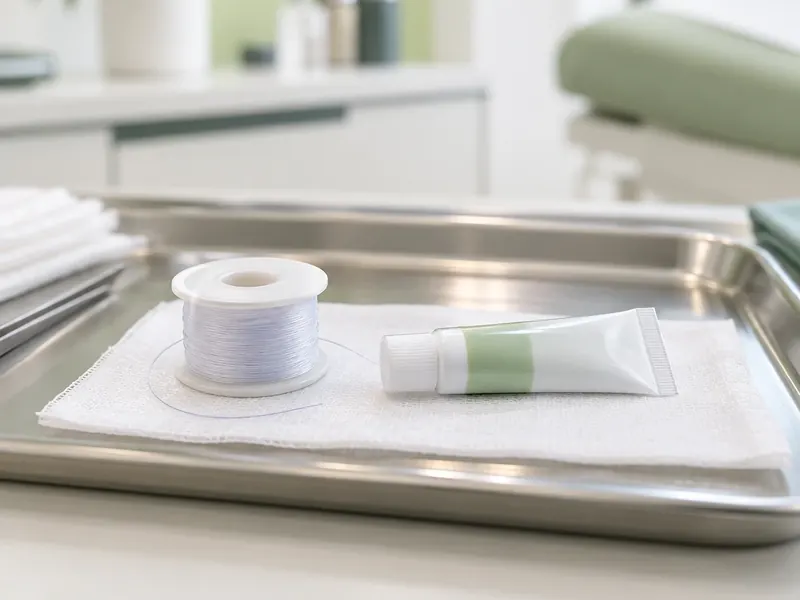
City Medical Centre works with international patients and performs breast augmentation with implants, breast lift with or without implants, breast reduction and implant removal. The surgeon chooses the incision based on your individual anatomy, places it in a hidden area and closes the wound in layers with cosmetic self-absorbing stitches to reduce the risk of rough scars. Other approaches mentioned in this article are general information and are discussed at the consultation.
The first consultation is free and can be held online: send photos by Telegram, and the surgeon will explain which incision suits you and what the scar is likely to look like. The cost is named after the assessment and fixed in the contract. A personal coordinator supports you from your first message to the end of recovery, and follow-up check-ups with the plastic surgeon continue after surgery. Learn more on the breast surgery page.
How recovery usually goes
- 7–14 daysReturn to work without physical exertion
- 3 weeksPost-op swelling disappears; scars form; no lifting over 3 kg, no raising arms above shoulder level
- 1 monthThe swelling subsides and the breasts take on a natural shape and softness
- 4–6 weeksFitness, swimming, pool and sea; compression garments worn for 4–6 weeks
- 3 monthsDiscomfort disappears; inflammatory changes resolve and a pocket forms around the implant; strength training
Sources
Frequently asked questions
Where are breast augmentation incisions made?
There are three main options: in the fold under the breast, along the lower edge of the areola, or in a natural crease of the armpit. The surgeon chooses the incision based on your anatomy, the implant size and type, and the planned implant position, and places it where it is naturally hidden.
How long do breast implant scars take to fade?
The wound closes in about two to three weeks, but the scar keeps changing for much longer. It often looks redder and firmer in the second and third months, then gradually softens and fades. By six to twelve months most scars are flat and pale, and the final result is judged at twelve to eighteen months.
Which incision leaves the least visible scar?
It depends on your anatomy. A scar under the breast is hidden by the breast and a bra, a periareolar scar follows the colour border of the areola, and an armpit scar leaves the breast itself untouched. The surgeon recommends the option that gives the best balance of access, safety and scar position for you.
Can scars be treated if they thicken?
Yes. Raised or thickened scars can be treated with silicone gel or sheets, pressure, injections prescribed by a doctor, laser treatment and, in some cases, surgical correction. It is best to show a problem scar to your surgeon early, because treatment usually works better while the scar is still maturing.
Is there breast augmentation without scars?
No. Placing an implant always requires an incision, so some scar is inevitable. The realistic goal is a short scar in a hidden area that fades to a thin, pale line. The armpit approach avoids a scar on the breast but leaves one in the armpit instead.
Have a question about your case? Get a free consultation
Message a coordinator on Telegram: we reply right in the chat, and you can send photos and questions there too.
- The first consultation is free, online consultations are available
- The doctor names the cost after the assessment, and it is fixed in the contract
- A personal coordinator guides you from the first message to recovery
Message our coordinator on Telegram
We reply right in the chat — you can send photos
Message us on TelegramBy sending a message, you agree to the privacy policy
Read also
 Breast augmentation
Breast implant rupture: signs, diagnosis and what to do
How to tell if a breast implant has ruptured, why it happens, how silent rupture is found with ultrasound or MRI, and what removal or replacement involves.
 Breast augmentation
Breast implant types, shapes and sizes: how to choose the right implants
How to choose breast implants: round or teardrop, silicone or saline, smooth or textured, profile, size, placement, incision, lifespan and BIA-ALCL.
 Breast augmentation
Breast fillers vs implants: why surgeons advise caution
Breast fillers vs implants: how filler enlargement is done, its possible complications, why many surgeons and regulators advise against it and what implants offer.