




beginning
12 months elapsed
2,800 grafts
FUE method
City Medical Centre
Free quote
Free consultation and cost estimate.
Real patient
beginning
12 months elapsed
FUE: no incisions, no stitches. Graft count and forecast reckoned up without paying — before you decide.
No fee at all, no surgery booking required
Message our coordinator
Free online consultation · Reply within 15 minutes
Message us on TelegramMessage us on WhatsAppBy messaging us, you agree to our Privacy Policy
results
Genuine people treated at City Medical Centre.
beginning
12 months elapsed
2,800 grafts
FUE method

beginning
12 months elapsed
3,500 grafts
FUE method

beginning
12 months elapsed
2,600 grafts
FUE method

beginning
12 months elapsed
3,000 grafts
FUE method

beginning
12 months elapsed
2,700 grafts
FUE method

beginning
12 months elapsed
3,300 grafts
FUE method

beginning
12 months elapsed
2,900 grafts
FUE method

beginning
12 months elapsed
2,500 grafts
FUE method

beginning
12 months elapsed
3,400 grafts
FUE method

beginning
12 months elapsed
2,500 grafts
FUE method

beginning
12 months elapsed
3,100 grafts
FUE method

beginning
12 months elapsed
3,600 grafts
FUE method

beginning
12 months elapsed
4,000 grafts
FUE method

beginning
12 months elapsed
3,200 grafts
FUE method

beginning
12 months elapsed
3,000 grafts
FUE method

beginning
12 months elapsed
3,700 grafts
FUE method

beginning
12 months elapsed
2,700 grafts
FUE method

beginning
12 months elapsed
3,800 grafts
FUE method

beginning
12 months elapsed
3,300 grafts
FUE method

beginning
12 months elapsed
2,800 grafts
FUE method

beginning
12 months elapsed
2,500 grafts
FUE method

beginning
12 months elapsed
3,900 grafts
FUE method

beginning
12 months elapsed
3,500 grafts
FUE method

beginning
12 months elapsed
3,800 grafts
FUE method

beginning
12 months elapsed
2,900 grafts
FUE method

beginning
12 months elapsed
3,600 grafts
FUE method

beginning
12 months elapsed
2,600 grafts
FUE method

beginning
12 months elapsed
2,700 grafts
FUE method

beginning
12 months elapsed
3,700 grafts
FUE method

beginning
12 months elapsed
3,200 grafts
FUE method

beginning
12 months elapsed
3,000 grafts
FUE method

beginning
12 months elapsed
2,800 grafts
FUE method

beginning
12 months elapsed
4,000 grafts
FUE method

beginning
12 months elapsed
3,400 grafts
FUE method

beginning
12 months elapsed
2,900 grafts
FUE method

beginning
12 months elapsed
3,100 grafts
FUE method

beginning
12 months elapsed
2,600 grafts
FUE method

beginning
12 months elapsed
3,300 grafts
FUE method

beginning
12 months elapsed
3,900 grafts
FUE method

beginning
12 months elapsed
3,500 grafts
FUE method

beginning
12 months elapsed
2,700 grafts
FUE method

beginning
12 months elapsed
3,800 grafts
FUE method

beginning
12 months elapsed
3,200 grafts
FUE method

beginning
12 months elapsed
3,000 grafts
FUE method

beginning
12 months elapsed
2,800 grafts
FUE method

beginning
12 months elapsed
3,100 grafts
FUE method

beginning
12 months elapsed
3,600 grafts
FUE method
Comparison
We transfer grafts by three technologies: classic FUE, suture-free DHI and a combined protocol. Compare them by implantation technique, tissue trauma and graft survival, and pick your method knowingly.
Classic technique without incisions or stitches

On request
Graft implantation technique
ForcepsGraft trauma
MinimalNatural hair growth angle
NaturalGraft survival
98–100%Suitable for
Androgenetic alopeciaSuture-free implantation with a Choi pen

On request
Graft implantation technique
DHI pen (Choi implanter)Graft trauma
MinimalNatural hair growth angle
NaturalGraft survival
98–100%Suitable for
DensificationFUE extraction, DHI pen implantation

On request
Graft implantation technique
FUE extraction + DHI implantationGraft trauma
MinimalNatural hair growth angle
NaturalGraft survival
98–100%Suitable for
Androgenetic alopecia and densificationEach method has averaged survival and trauma figures, given for orientation: the exact numbers depend on the transplant area and the patient's individual features, and the doctor clarifies them at the consultation.
Plan the next step


















about the clinic
Comfort in the rooms, modern equipment, care for every patient

Ask us anything, we will reply.
Message us on Telegram Message us on WhatsApp Write to usShould your case be solvable without surgery, the doctor says so right at the consultation — and you spend nothing in vain. Below are the conditions in which a transplant really works.
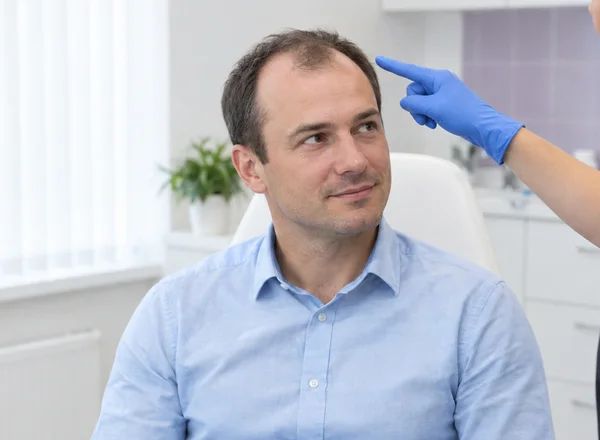

Write to us in WhatsApp or Telegram. A coordinator asks for photos of the thinning area in a messenger, then a doctor answers whether a transplant would help you. No charge, no booking made.

services
The free consultation ends with a graft count: the cost is named and fixed in the contract.
| Opening appointment | Free |
|---|---|
| Eyebrow transplant, FUE | On request |
| Beard transplant, FUE | On request |
| Hair trichopigmentation | On request |
| PRP therapy / session | On request |
all included
From the first pre-op steps to 12 months of aftercare.
You are not charged again on surgery day.
two more sites
There is nothing special about the scalp here. The grafts come from the back of the head, the method is FUE, the zone varies.
FUE method, no incisions or stitches

The grafts come from the donor area at the back of the head and go in through micro-punctures of about 1 mm, leaving no scars. Before the operation the doctor discusses the shape with you and takes your facial features into account. Transplanted hair grows for life: trim and style the beard as usual.
On request
Keep this priceFUE method, no incisions or stitches

Drawing the brow is part of the first consultation: the surgeon does it, sample images are examined with you, and the design follows the proportions of your face. Angled to match natural growth, the hairs make the brows look natural. Growth stopped by years of plucking is no barrier.
On request
a procedure done with local anaesthesia only
Keep this priceFirst your donor zone is checked and the grafts counted, then you are shown a realistic forecast. You hear the cost during that same appointment, and the contract confirms it.

Message our coordinator
Free online consultation · Reply within 15 minutes
Message us on TelegramMessage us on WhatsAppBy messaging us, you agree to our Privacy Policy
Process
From consultation to going home — all in one day

An opening conversation with the doctor covers the way FUE and DHI are carried out, leaves room for every question, and includes an assessment of the donor area.

Once the deposit is paid — in person by card or online — the surgery date is booked and confirmed under a medical services contract.

Ahead of surgery, a series of tests is required, and the clinic hands you the exact list along with instructions on how to complete it.

The operation brings no pain, because a local anaesthetic is used for it.

The back of the head or the temples serve as the donor area, from which grafts are collected without stitches.

This is where the grafts are implanted into the affected, balding area.
The clinic hands you all the essentials and complete instructions to help you recover quickly.

Crusts come off and swelling goes down while the area recovers

A normal stage. Hairs fall out, the follicles stay where they are

New hairs come up gradually, the result is showing

Fullness comes through, with the volume and hairline visible

The picture completes: full volume, a natural front line

Free, before the surgery, with no commitment.
Plan the next stepdoctors

Hair transplant doctor, trichologist, surgeon
10 years of experience

Dermatovenereologist, trichologist, surgeon
11 years of experience

Plastic surgeon
9 years of experience

Plastic surgeon
9 years of experience

Assistant
9 years of experience
The doctor examines the donor zone, works out how many grafts are needed and explains the likely outcome.
Plan the next stepcoordinators
You are assigned a personal coordinator: with you from the first enquiry to recovery.

Recovery care manager
Is there from preparation through to recovery
Sees your papers through and books slots
Recovery care manager
Is there from preparation through to recovery
Sees your papers through and books slots

Recovery care manager
Is there from preparation through to recovery
Sees your papers through and books slots
Recovery care manager
Is there from preparation through to recovery
Sees your papers through and books slots













Asked most often

That is fine. People living some distance away are seen all the time, and everything begins with a consultation held online.
The precise cost is determined at a free consultation and graft count, then fixed in your contract.
It takes a day, and afterwards everyone goes back home.
No. Local anaesthesia is administered and the session is painless.
FUE is cut-free graft extraction by tweezer. DHI is direct implantation with a Choi pen, skipping channel-making. The combined technique takes grafts by FUE and places them using the DHI method.
Donor hair volume drives the figure, and the doctor calculates it at a consultation that costs you nothing.
Healing runs 0–10 days, followed by normal hair shedding at 2–4 weeks. Growth kicks in at 3–4 months, thickens by 6–9 months, and reaches its final result at 12–18 months.
You get a lifetime hair growth guarantee, written into the contract.
There is a medical licence, and care is provided to the standards and clinical guidelines
of the Ministry of Health.
For a patient from Oued Zem the procedure is one day long: FUE and DHI use no scalpel cuts and no stitches, only local anaesthesia.
Nothing is signed and nothing is paid at the start in Oued Zem. The online consultation is free: the doctor sees pictures of the affected zone and tells you if a transplant helps. The clinic is in touch 24/7.
Recovery is short: 0-10 days. The transplanted hairs shed at 2-4 weeks, a normal step, growth begins at 3-4 months, density fills by 6-9 and the final result stands at 12-18. Check-ups at 1, 3, 6, 9 and 12 months, photo tracking with a personal coordinator, growth guaranteed for life.
The cost is calculated individually after a free online consultation. Write to us on WhatsApp or Telegram.
By messaging us, you agree to our Privacy Policy
Oued Zem lies in Khouribga Province, in the Béni Mellal-Khénifra region of central Morocco. The 2014 census recorded 95,267 inhabitants, and the city is known for its phosphate, iron and marble. It is a working city with a long industrial history, and many people here plan their year around shifts, school terms and family obligations. A hair transplant (FUE or DHI) fits into this kind of life best when the dates are chosen in advance and the first conversation with a doctor happens before any decisions are made.
The first consultation does not require you to leave Oued Zem. It is held online and is free, and coordinators answer on Telegram and WhatsApp around the clock, 24/7. You can send photos of your hair line and the back of your head from home, ask about the technique and agree a timetable without taking time off work.
The operation itself is performed at the clinic in Rabat, Morocco. Because this is within your own country, you can discuss the logistics of the procedure and the recovery period calmly with your family and employer before fixing a date.
You start by writing to a coordinator on Telegram or WhatsApp. You describe your situation, send clear photographs of the frontal hair line, the crown and the donor area at the back of the head, and say what worries you most. The doctor then looks at the material and discusses the shape of the hair line with you, taking your facial features into account, before any operation is planned.
This is the stage to ask every practical question: whether FUE or DHI suits your case, how many sessions may be needed, and what the plan looks like for the beard or eyebrows if you are considering them. Nothing is decided in a hurry, and you can come back to the conversation as many times as you need.
We stay with you from pre-op planning to 12 months later. For someone living in Oued Zem this matters, because most of the follow-up happens by message and photo from your own home, and a coordinator will be on the phone 24/7.
The climate is continental. The period from October to April is humid, and May to September is dry. Annual rainfall is about 400 mm and the average temperature is 18 degrees. Winds are weak, coming from the north in summer and from the north and northeast in the wet seasons.
Dry summers mean strong sun and dust, which are the main things to think about in the early days after a transplant. Grafts are placed through micro-punctures of about 1 mm, and the treated area should be protected from direct sun and dusty air while it heals. Follow your surgeon's instructions on headwear: what to wear, when, and how loose it should be, so that nothing rubs against the grafts.
The humid months are gentler on the skin, but they bring their own routine: keep the head clean and dry as advised, avoid crowded wet places where you might be bumped, and do not touch the area with unwashed hands. Neither season rules out an operation. Both can work well if you follow the aftercare plan.
Many people think first of autumn or winter, since the sun is weaker and a cap or light headwear attracts less attention. That is a sensible reason, but it is not the only one. In a dry summer the main task is simply to keep the head out of strong sun and dust during the first days.
The healing stage is short: 0–10 days for healing. After that the normal shedding begins, and this is the part patients most often worry about. Transplanted hairs let go 2-4 weeks after surgery, as expected. If you have a wedding, a family celebration or an important meeting in the following weeks, plan the date of the operation with this in mind.
Think about work as well. If your job is in the open air or in a dusty environment, discuss with the surgeon how long you should stay away from it. Do not choose a date on your own guess; agree it with the coordinator, who will take your schedule into account.
Oued Zem has an active football culture. The local club, Rapide Club Oued Zem, was founded in 1926 and plays in the Botola Pro 2. If you play or train with friends, ask the surgeon exactly when you can return to running, ball games and contact situations, and when it is safe to sweat heavily. Follow the pool and sport instructions you are given and do not shorten them because you feel well.
Students and office workers usually find a quiet return easier than people in physical jobs. Still, in the first days the treated area needs care, so plan lighter duties if you can. A shift worker should tell the coordinator about the schedule, so that the recovery plan is realistic.
Family life matters too. Gatherings in Oued Zem are often large, and shared meals and visits are a big part of the week. Decide beforehand how you will explain your absence or the redness, and who in the family will help you in the first days at home.
Hospitality is part of life in Moroccan cities, and invitations come often. In the early days it is wise to limit large gatherings, smoky or dusty rooms and anything that means close contact with the head. Tell relatives in advance that you need a calm period; most understand.
Eat regular, balanced meals and drink enough water. Heavy exertion or crowded events are best postponed until the surgeon confirms you can return to them. If you are planning a family event, a wedding or a holiday, count the weeks backwards from it and leave enough time for the shedding stage to pass.
Sleep is part of recovery as well. Ask the doctor how to position your head at night and what to use as a pillow. Small preparations like these make the first days at home much easier.
The timeline is the same for everyone and it is worth learning before the operation. 0–10 days for healing, 2–4 weeks for normal shedding of transplanted hair, 3–4 months for new growth to start, 6–9 months for real density, and 12–18 months for the final result.
One patient described it this way: 'But now the result truly makes me very happy) From about the 4th month active, even growth began. The transplanted hair took very well, the beard now looks as natural as possible, no bald patches are left. The beard became much thicker and denser, with the shape I had thought about for a long time.'
Check-ups are held at months 1, 3, 6, 9 and 12. You send photos from Oued Zem, the doctor compares them with the earlier stage, and the coordinator tells you whether anything needs adjusting. Be patient in the first months; a result that looks thin at month two is normal and does not show the final picture.
Oued Zem is a city in Khouribga Province whose economy is tied to phosphate, iron and marble. Many households here organise their week around shifts, early starts and physical work. Before booking a date for FUE or DHI, write down your real schedule for the next two months and send it to the coordinator. A plan built around your timetable is easier to follow than one you have to improvise.
Dust and heavy lifting are the two things a person in a working city should discuss openly with the surgeon. Ask which tasks you can resume quickly and which must wait, and ask whether a short break from the job is sensible. An honest answer about your duties lets the doctor give practical advice instead of general rules.
Your employer does not need medical details. A short, calm explanation that you need a few quiet days for a minor procedure is usually enough, and you can use the 0–10 days healing stage as your planning reference.
Oued Zem has a strong sense of its own history, and the city is sometimes called the city of martyrs. People here know each other, and family and neighbours often have views on personal decisions. A hair transplant is easier to live with when the closest relatives know about it and support it, so talk to your spouse, parents or brothers before you fix a date.
The name of the city is said to join the Arabic word for river with an Amazigh word for lion. Moroccan Arabic and Amazigh are both spoken in the wider region, and you can write to the coordinators in the language you are most comfortable with. Describing your concerns in your own words helps the doctor understand what you actually want.
Agree in advance who will be your point of contact at home during the first days. Someone who knows the aftercare plan can remind you about washing, headwear and rest when you are tired or distracted.
Gather clear photographs in daylight: the frontal hair line, the temples, the crown and the donor area at the back of the head. Prepare a short list of medicines you take and past illnesses. Decide what you want most, whether it is a lower hair line, more density or a fuller beard, and be ready to hear what is achievable.
Look at the full timeline before saying yes: 2-4 weeks of normal shedding, 3-4 months for hair to come back, 6-9 months to look visibly thicker, and 12-18 months for the settled look. If you cannot accept a long wait, discuss that frankly.
Finally, check that the follow-up suits you. We stay with you from pre-op planning to 12 months later, with check-ups at months 1, 3, 6, 9 and 12, and a coordinator will be on the phone 24/7. For a person in Oued Zem, this means you can ask a question at any hour without leaving home.
A good candidate has enough healthy hair in the donor area at the back of the head and realistic expectations. Some conditions call for caution or for a delay: unstable chronic illness, skin problems in the scalp, bleeding disorders, or hair loss that is still progressing quickly. The doctor decides this individually after looking at your photos and medical history, so be honest about medicines and past illnesses.
Prepare your questions before the call. Ask which technique, FUE or DHI, is proposed and why. Ask how the hair line shape will be chosen, what the donor area will look like afterwards, how the first washing is done, and what to do if something looks unusual. Grafts are taken from the donor area and moved through micro-punctures of about 1 mm, so nothing scars over.
Also ask what to avoid in the first days, and how the doctor will judge the final outcome. Transplanted hair grows for life, so the planning of the shape deserves time. The same applies to a beard: trim and style the beard as usual.
No. The first consultation is online and free, and you can reach coordinators on Telegram and WhatsApp 24/7. The operation itself takes place at the clinic in Rabat, Morocco.
The 2014 census recorded 95,267 inhabitants in the city.
Both can work. Autumn and winter have weaker sun, while dry summers require more care with sun and dust. The choice depends on your work, family events and the surgeon's advice.
Transplanted hairs let go 2-4 weeks after surgery, as expected. This is normal shedding and not a loss of the result.
3-4 months — hair comes back. 6-9 months — visibly thicker. 12-18 months — settled look.
The healing stage is 0–10 days. Follow the aftercare instructions on washing, headwear and sun protection.
Grafts are taken from the donor area and moved through micro-punctures of about 1 mm, so nothing scars over.
Ask the surgeon for exact timing. Do not return to heavy sport, pools or contact games earlier than you are told.
Check-ups are at months 1, 3, 6, 9 and 12. You send photos and talk to the coordinator, who stays in touch with you from pre-op planning to 12 months later.
Yes, a beard can be treated as well. The shape is discussed in advance, and afterwards you can trim and style the beard as usual.
Yes. Send your shift schedule to the coordinator during the free online consultation, and the date can be chosen to fit it. Healing takes 0–10 days, so plan lighter duties for that stage.
It is wise to. Relatives who know about the plan can help with aftercare at home and understand why you may avoid crowded gatherings in the first days.
Yes. You can write on Telegram or WhatsApp in the language you find easiest, and describe your concerns in your own words.

 Forceps
 Minimal








