




beginning
12 months along
2,800 grafts
FUE method
City Medical Centre
Free quote
Free consultation and cost estimate.
Honest case
beginning
12 months along
FUE method, neither scalpel nor sutures. Grafts counted, result forecast counted without any fee — before you decide.
No bill for it, no surgery booking required
Message our coordinator
Free online consultation · Reply within 15 minutes
Message us on TelegramMessage us on WhatsAppBy messaging us, you agree to our Privacy Policy
results
Actual patients of City Medical Centre, all of them.
beginning
12 months along
2,800 grafts
FUE method

beginning
12 months along
3,500 grafts
FUE method

beginning
12 months along
2,600 grafts
FUE method

beginning
12 months along
3,000 grafts
FUE method

beginning
12 months along
2,700 grafts
FUE method

beginning
12 months along
3,300 grafts
FUE method

beginning
12 months along
2,900 grafts
FUE method

beginning
12 months along
2,500 grafts
FUE method

beginning
12 months along
3,400 grafts
FUE method

beginning
12 months along
2,500 grafts
FUE method

beginning
12 months along
3,100 grafts
FUE method

beginning
12 months along
3,600 grafts
FUE method

beginning
12 months along
4,000 grafts
FUE method

beginning
12 months along
3,200 grafts
FUE method

beginning
12 months along
3,000 grafts
FUE method

beginning
12 months along
3,700 grafts
FUE method

beginning
12 months along
2,700 grafts
FUE method

beginning
12 months along
3,800 grafts
FUE method

beginning
12 months along
3,300 grafts
FUE method

beginning
12 months along
2,800 grafts
FUE method

beginning
12 months along
2,500 grafts
FUE method

beginning
12 months along
3,900 grafts
FUE method

beginning
12 months along
3,500 grafts
FUE method

beginning
12 months along
3,800 grafts
FUE method

beginning
12 months along
2,900 grafts
FUE method

beginning
12 months along
3,600 grafts
FUE method

beginning
12 months along
2,600 grafts
FUE method

beginning
12 months along
2,700 grafts
FUE method

beginning
12 months along
3,700 grafts
FUE method

beginning
12 months along
3,200 grafts
FUE method

beginning
12 months along
3,000 grafts
FUE method

beginning
12 months along
2,800 grafts
FUE method

beginning
12 months along
4,000 grafts
FUE method

beginning
12 months along
3,400 grafts
FUE method

beginning
12 months along
2,900 grafts
FUE method

beginning
12 months along
3,100 grafts
FUE method

beginning
12 months along
2,600 grafts
FUE method

beginning
12 months along
3,300 grafts
FUE method

beginning
12 months along
3,900 grafts
FUE method

beginning
12 months along
3,500 grafts
FUE method

beginning
12 months along
2,700 grafts
FUE method

beginning
12 months along
3,800 grafts
FUE method

beginning
12 months along
3,200 grafts
FUE method

beginning
12 months along
3,000 grafts
FUE method

beginning
12 months along
2,800 grafts
FUE method

beginning
12 months along
3,100 grafts
FUE method

beginning
12 months along
3,600 grafts
FUE method
Comparison
Our work relies on three graft transfer technologies: classic FUE, suture-free DHI and a combined protocol. Compare implantation technique, tissue trauma and graft survival, then choose knowingly.
Classic technique without incisions or stitches

On request
Graft implantation technique
ForcepsGraft trauma
MinimalNatural hair growth angle
NaturalGraft survival
98–100%Suitable for
Androgenetic alopeciaSuture-free implantation with a Choi pen

On request
Graft implantation technique
DHI pen (Choi implanter)Graft trauma
MinimalNatural hair growth angle
NaturalGraft survival
98–100%Suitable for
DensificationFUE extraction, DHI pen implantation

On request
Graft implantation technique
FUE extraction + DHI implantationGraft trauma
MinimalNatural hair growth angle
NaturalGraft survival
98–100%Suitable for
Androgenetic alopecia and densificationEach method has averaged survival and trauma figures, given for orientation: the exact numbers depend on the transplant area and the patient's individual features, and the doctor clarifies them at the consultation.
Start with advice


















about the clinic
Good equipment, pleasant rooms and attention to each patient

Ask us anything, we will reply.
Message us on Telegram Message us on WhatsApp Send us a noteIf your case can be solved without surgery, the doctor says so right at the consultation — and you keep your money. Below are the conditions in which a transplant really works.
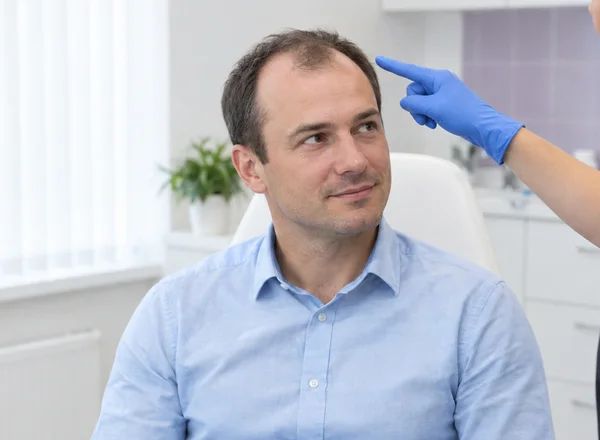

A coordinator asks for photos in a messenger, the doctor tells you whether a transplant will help. Just write to us in WhatsApp or Telegram. Free of charge.

services
The free consultation gives you a graft count and a firm figure that the contract records.
| The doctor's first look | Free |
|---|---|
| Eyebrow transplant, FUE | On request |
| Beard transplant, FUE | On request |
| Hair trichopigmentation | On request |
| PRP therapy / session | On request |
all included
Covered ahead of surgery and for 12 months beyond.
The figure stays the same on surgery day.
two added areas
The scalp is not the only option. Same grafts from the back of the head, same FUE method — only the area changes.
FUE method, no incisions or stitches

From the donor area at the back of the head the grafts are taken and moved through micro-punctures of about 1 mm; no scars remain. The doctor discusses the shape with you before the operation and takes your facial features into account. Transplanted hair grows for life: the beard is trimmed and styled as usual.
On request
Keep the cost as isFUE method, no incisions or stitches

Everything starts with a drawing: the surgeon marks out the brow at the first consultation, reference images are considered one against another, and the proportions of your face steer the design. Hairs are set in at the angle they should follow, so nothing looks drawn on. Brows that quit growing under years with the tweezers respond well too.
On request
a day-case operation done under local anaesthesia
Keep the cost as isThe doctor goes over the donor zone, puts a number on the grafts and shows what outcome that allows. The consultation also ends with a price, and the contract fixes it.

Message our coordinator
Free online consultation · Reply within 15 minutes
Message us on TelegramMessage us on WhatsAppBy messaging us, you agree to our Privacy Policy
Process
From consultation to going home — all in one day

During the first consultation the methods are described in detail, questions about FUE and DHI are dealt with, and the donor zone is assessed.

The clinic holds your chosen day once the deposit arrives, by card at the desk or as an online payment.

Getting ready for surgery means completing the required tests, and the clinic supplies the list and instructions to make it straightforward.

Local anaesthetic is part of the procedure, and pain is not.

Grafts are extracted from behind the head or from the temple area, and no thread touches the skin.

Surgeons transfer every collected graft into the area that has gone bald.
Nothing about healing is left vague: the clinic provides the supplies and explains their use in full.

Scabs disappear, the swelling goes down, the skin returns to normal

Not a failure. The shafts fall away, the roots remain in place

Little by little the area fills in, and the difference shows

The hair is thicker now, the main volume and contour are visible

Everything is in place: volume and a natural hairline

Free, before the operation while you owe nothing.
Start with advicedoctors

Hair transplant doctor, trichologist, surgeon
10 years of experience

Dermatovenereologist, trichologist, surgeon
11 years of experience

Plastic surgeon
9 years of experience

Plastic surgeon
9 years of experience

Assistant
9 years of experience
Your donor zone is looked over, the grafts are calculated and the outcome is described plainly.
Start with advicecoordinators
The coordinator assigned to you is the person you write to at any time until recovery ends.

Recovery care manager
Will be with you before and after surgery
Takes care of the forms and of scheduling
Recovery care manager
Will be with you before and after surgery
Takes care of the forms and of scheduling

Recovery care manager
Will be with you before and after surgery
Takes care of the forms and of scheduling
Recovery care manager
Will be with you before and after surgery
Takes care of the forms and of scheduling













Things people ask

Yes — the centre treats people whose home is in another city or another country, and online consultations are offered at the outset.
The precise cost is determined at a free consultation and graft count, then fixed in your contract.
Surgery is done in one day, and patients go home the same day it's finished.
It isn't painful: local anaesthesia is used throughout the surgery.
FUE is the classic method: grafts are harvested with tweezers, with no cuts or stitches. DHI implants grafts without channels, using a Choi pen. A combined method harvests grafts by FUE and implants them with the DHI pen.
You get the exact number once the doctor has counted, free, from your donor hair supply.
Healing takes up to 0–10 days, after which a 2–4 week shed follows, and that is normal. Growth begins in earnest at 3–4 months, density arrives near 6–9 months; the whole result comes at 12–18 months.
The clinic provides a lifetime guarantee on hair growth, stated in the contract.
The clinic holds a medical licence; care meets the standards and clinical guidelines
of the Ministry of Health.
FUE and DHI both work for a patient in Khemisset. The skin is not cut open, there is nothing to stitch, local anaesthesia covers the session on its own, and the operation ends on the same day it began.
Everything starts online for a patient in Khemisset: a free consultation, photos of the thinning area, and a graft count made by the doctor from those photos. The clinic is available 24/7, so there is no guessing when to write.
The 0-10 days of healing pass first. What follows at 2-4 weeks, the shedding of the transplanted hairs, is normal and temporary. Growth appears at 3-4 months, when the waiting finally pays off.
The cost is calculated individually after a free online consultation. Write to us on WhatsApp or Telegram.
By messaging us, you agree to our Privacy Policy
Khemisset is a city in northern Morocco and the capital of Khémisset Province. It lies on the main highway between Rabat and Meknès, 81 km from Rabat and 57 km from Meknès. Many people in the city think about a hair transplant for the same reasons as anywhere else: receding temples, a thinning crown, or a beard with gaps that does not grow the way they want. What matters is to approach the decision calmly, with a clear plan and realistic expectations.
The city is known for its Amazigh carpets, its fantasia displays and its moussems, and for a mix of people who have settled here from many regions of the country. Hair and beard are part of how people present themselves at weddings, festivals, in the workplace and in the café. That is why the questions patients from Khemisset ask are practical: how will I look in the first weeks, when can I go out, and when will the result be settled?
The first conversation with City Medical Centre is an online consultation, free of charge, held from your own city. Coordinators are available around the clock (24/7) on Telegram and WhatsApp. You can send photos of the hair line, the crown and the donor area, describe your goals, and receive a first assessment without leaving Khemisset. The procedure itself is performed at the clinic in Rabat, Morocco.
With both FUE and DHI, grafts are taken from the back of the head, the donor area, and moved through micro-punctures of about 1 mm, so nothing scars over. The doctor discusses the shape with you before the operation, taking your facial features into account. For a man from Khemisset this means the frontal hair line is designed to suit his face and age, not copied from a picture.
The difference between the methods is mostly in how the grafts are placed. In DHI they are implanted with a special pen-like tool, while in classic FUE the channels are opened first. Which one suits you depends on the area to be covered, the density you want and the quality of your donor hair. Ask the surgeon during the online consultation to explain why one method is proposed for you and what it changes in practice.
Transplanted hair grows for life: trim and style the beard as usual. The same applies to scalp hair, which you can cut, shave short or style after the healing phase, as the barber in your neighbourhood does for everyone else.
Khémisset Province lies between the Atlas and the northwest, 37 km from the ocean, and the climate is moderate and favourable to farming. For recovery this is helpful, but a moderate climate does not remove the main rules: protect the treated area from strong sun, avoid sweating heavily and keep dust away from the fresh micro-punctures in the first days.
In the warm months the sun on the open plain around the city can be strong. Ask the surgeon how long to avoid direct sun on the scalp, what kind of loose, clean headwear is acceptable and when you can stop using it. Do not put on a tight cap or helmet during the early healing period. In cooler months, the main concern is the opposite: do not rush back to heavy hats or wool that rub the grafted area.
Sea and pool are close in the minds of many families, because the ocean is 37 km from the province. Follow the instructions of your surgeon on when swimming is allowed. General advice: do not enter the sea or a pool until the doctor confirms that the skin has healed.
The economy of Khemisset rests on trade, farming and traditional crafts, and the region is known for lentils and grapes. Work in the fields, in shops and at the market is physical and often outdoors, so the timing of a transplant should follow your own calendar. Choose a period when you can spend the first days at home and avoid dust, heavy lifting and long hours in the sun.
The healing phase is short: 0–10 days for healing, 2–4 weeks for normal shedding of transplanted hair, 3–4 months for new growth to start, 6–9 months for real density, and 12–18 months for the final result. Think about this schedule when planning around the harvest, school exams, a wedding in the family or a moussem, such as the one at Aït Yadine that gathers riders and families.
If you want the hair to look thicker for a specific event, count the months honestly. A wedding three weeks after the operation falls into the shedding stage, when the transplanted hairs let go, as expected. A date about a year later is far more realistic for a settled look.
Most people in Khemisset work in trade, in the public sector, in farming or in crafts. A desk or shop job lets you return to routine sooner than work in dust and heat. Discuss your exact job with the surgeon and ask which tasks to avoid during the first days of healing.
Sport has a place in the city. The football club Ittihad Zemmouri de Khémisset has a long local history, and the tennis club is being modernised, with padel, boxing and cardio training planned alongside tennis. If you play football, run or box, ask when contact, sweating and head impacts become acceptable. Do not return to sport earlier than the surgeon allows, because friction, a ball to the head or heavy sweating can disturb the grafts.
Family life matters too. Tell your spouse, parents and close friends what to expect: small scabs, redness, swelling and later the shedding stage. When the family knows it is normal, evenings and meals stay calm, and the recovery does not turn into a source of worry.
Regional cuisine includes couscous, brochettes and méchoui, and these dishes are tied to family gatherings, often held in large tents or at home with many guests. In the first days after the operation, a crowded gathering is not ideal: heat, smoke from grilling, hugging, kissing on the head and bending over a hot table all affect a healing scalp.
Plan the operation so that big meals and visits do not fall in the first days. If an invitation cannot be refused, ask the surgeon how to handle it: where to sit, how to avoid smoke and how to explain your cover. Traditional garments such as the djellaba or the wool burnous may have a hood, so check with the doctor whether and when a hood is acceptable.
Eat regular, balanced meals and drink enough water during recovery. Ask the doctor about alcohol and smoking, which are commonly discussed before any surgery. Your coordinator can repeat these instructions in writing on Telegram or WhatsApp at any hour.
In general terms, a good candidate has enough healthy donor hair at the back of the head, stable expectations and good general health. Younger men whose hair loss is still progressing may need a longer plan, so that the transplanted area matches what happens next to the natural hair.
Some conditions call for caution or postponement: an active scalp disease, uncontrolled chronic illness, bleeding problems, or a serious reaction to anaesthesia in the past. Tell the surgeon about every medicine you take and every illness you have had. Being open protects you.
Women and men who want to restore a beard, eyebrows or a thinning area can also be assessed. Send clear photos during the online consultation and the doctor will say whether the donor area is sufficient for the goal you describe.
You write to a coordinator on Telegram or WhatsApp and send photos of the front, sides, crown and back of the head. A doctor reviews them and discusses the likely area, the method and the design of the hair line. The consultation is free and takes place from your home, shop or workplace in Khemisset.
If you decide to go ahead, the procedure is carried out at the clinic in Rabat, Morocco, which is 81 km from Khemisset on the main highway. Before that, you agree the plan, ask your questions and receive pre-operative instructions. We stay with you from pre-op planning to 12 months later, and a coordinator will be on the phone 24/7.
Check-ups at months 1, 3, 6, 9 and 12 are part of this follow-up. You can send photos before each one, and the team compares the progress with the expected stages.
A good consultation is a conversation, not a sales call, and people in Khemisset are used to weighing a decision with family and neighbours before committing. Write your questions down before the online consultation and keep them next to your phone. Ask how many grafts the surgeon thinks your goal needs, how the donor area will be protected, and what the plan is if the density you want is more than the donor area can give in one session.
Ask about the frontal hair line in particular. Which shape is suggested for your face, your age and your family pattern of hair loss? Ask to see how the line will look when your hair is cut short, since many men in the city keep a short barber cut for work and for summer. A line that looks natural at every length is the aim.
Ask also what happens after the operation: who answers when you have a question at night, how the check-ups at months 1, 3, 6, 9 and 12 are organised, and how photos are sent. A coordinator will be on the phone 24/7, so you should never be left guessing about a scab, a swelling or a patch that looks different from yesterday.
Recovery is quietest at home, and the first nights shape how comfortable the 0–10 days of healing feel. Ask the surgeon how to position your head when you sleep, which pillow arrangement is advised, and how to keep the donor area at the back of the head from rubbing against bedding. Clean, freshly washed pillowcases are a simple habit that helps.
Houses in and around Khemisset are often full, with relatives living close by and children moving through the rooms. Tell the household that the scalp must not be touched, scratched or knocked, and agree on a calm corner for the first days. Washing is done exactly as the surgeon instructs, not by guesswork or by advice from a friend who had a different procedure.
Do not pick at the small scabs, even when they itch. Itching is a normal part of healing, and your coordinator can tell you what to do about it. If something looks unusual, send a photo on Telegram or WhatsApp instead of waiting.
The hardest period is rarely the operation itself. It is weeks two to four, when transplanted hairs let go, as expected, and the area can look thinner than before. In a city where people meet daily in cafés, at the market and at family occasions, this can feel awkward, so prepare yourself and the people around you in advance.
Then the pace changes: at 3-4 months hair comes back, at 6-9 months it is visibly thicker, and at 12-18 months the look is settled. Take a photo under the same light on the same day each month, so you can see change that the mirror hides.
Keep your check-ups at months 1, 3, 6, 9 and 12 even if you feel everything is going well. They are the moments when the doctor can compare your progress with the expected stages and answer questions with your photos in front of him.
The timeline is simple to remember. 2-4 weeks: transplanted hairs let go, as expected. 3-4 months: hair comes back. 6-9 months: visibly thicker. 12-18 months: settled look. Final judgement is best made 12–18 months after surgery.
One patient described a beard transplant this way: the result truly makes him very happy, with active, even growth beginning from about the 4th month. The transplanted hair took very well, the beard looks as natural as possible, no bald patches are left, and it became much thicker and denser, with the shape he had thought about for a long time.
Every person heals at their own pace, so use this as a guide and not a promise. If your hair looks thin at month two, that is the normal shedding stage and not a failure.
Yes. The first consultation is online and free, from your own city. Coordinators answer around the clock (24/7) on Telegram and WhatsApp, and you can send photos for an initial assessment.
At the clinic in Rabat, Morocco. Khemisset is 81 km from Rabat on the main highway between Rabat and Meknès.
Both take grafts from the donor area at the back of the head and place them through micro-punctures of about 1 mm. DHI uses a special implanting tool. The surgeon explains which one suits your area and density.
Grafts are moved through micro-punctures of about 1 mm, so nothing scars over. The doctor discusses the shape with you before the operation, taking your facial features into account.
Transplanted hairs let go at 2-4 weeks, as expected. New hair comes back at 3-4 months, is visibly thicker at 6-9 months, and the look settles at 12-18 months.
0–10 days for healing, 2–4 weeks for normal shedding of transplanted hair, 3–4 months for new growth to start, 6–9 months for real density, and 12–18 months for the final result.
We stay with you from pre-op planning to 12 months later. Check-ups are at months 1, 3, 6, 9 and 12, and a coordinator will be on the phone 24/7.
Yes, if the donor area is sufficient. Transplanted hair grows for life: trim and style the beard as usual.
Ask your surgeon for a date based on your own healing. Sweating, friction and impacts to the head can disturb fresh grafts, so do not return to sport earlier than the doctor allows.
Yes. Protect the treated area from strong sun and dust, use only the loose headwear the surgeon approves, and avoid the sea or pool until the doctor confirms the skin has healed.
Often yes, and it is worth asking the surgeon how the planned hair line looks at short lengths. The design takes your facial features into account and is discussed before the operation.
Explain that small scabs, redness and swelling are normal, and that transplanted hairs let go at 2-4 weeks, as expected. This keeps the household calm during recovery.
Write to the coordinators on Telegram or WhatsApp. A coordinator will be on the phone 24/7, and we stay with you from pre-op planning to 12 months later.

 Forceps
 Minimal








