




original
now 12 months on
2,800 grafts
FUE method
City Medical Centre
Free quote
Free consultation and cost estimate.
Real patient
original
now 12 months on
FUE method, neither scalpel nor sutures. Grafts counted, result forecast assessed with no fee at all — before you decide.
No fee at all, no surgery booking required
Message our coordinator
Free online consultation · Reply within 15 minutes
Message us on TelegramMessage us on WhatsAppBy messaging us, you agree to our Privacy Policy
results
Genuine patients of the clinic in each example.
original
now 12 months on
2,800 grafts
FUE method

original
now 12 months on
3,500 grafts
FUE method

original
now 12 months on
2,600 grafts
FUE method

original
now 12 months on
3,000 grafts
FUE method

original
now 12 months on
2,700 grafts
FUE method

original
now 12 months on
3,300 grafts
FUE method

original
now 12 months on
2,900 grafts
FUE method

original
now 12 months on
2,500 grafts
FUE method

original
now 12 months on
3,400 grafts
FUE method

original
now 12 months on
2,500 grafts
FUE method

original
now 12 months on
3,100 grafts
FUE method

original
now 12 months on
3,600 grafts
FUE method

original
now 12 months on
4,000 grafts
FUE method

original
now 12 months on
3,200 grafts
FUE method

original
now 12 months on
3,000 grafts
FUE method

original
now 12 months on
3,700 grafts
FUE method

original
now 12 months on
2,700 grafts
FUE method

original
now 12 months on
3,800 grafts
FUE method

original
now 12 months on
3,300 grafts
FUE method

original
now 12 months on
2,800 grafts
FUE method

original
now 12 months on
2,500 grafts
FUE method

original
now 12 months on
3,900 grafts
FUE method

original
now 12 months on
3,500 grafts
FUE method

original
now 12 months on
3,800 grafts
FUE method

original
now 12 months on
2,900 grafts
FUE method

original
now 12 months on
3,600 grafts
FUE method

original
now 12 months on
2,600 grafts
FUE method

original
now 12 months on
2,700 grafts
FUE method

original
now 12 months on
3,700 grafts
FUE method

original
now 12 months on
3,200 grafts
FUE method

original
now 12 months on
3,000 grafts
FUE method

original
now 12 months on
2,800 grafts
FUE method

original
now 12 months on
4,000 grafts
FUE method

original
now 12 months on
3,400 grafts
FUE method

original
now 12 months on
2,900 grafts
FUE method

original
now 12 months on
3,100 grafts
FUE method

original
now 12 months on
2,600 grafts
FUE method

original
now 12 months on
3,300 grafts
FUE method

original
now 12 months on
3,900 grafts
FUE method

original
now 12 months on
3,500 grafts
FUE method

original
now 12 months on
2,700 grafts
FUE method

original
now 12 months on
3,800 grafts
FUE method

original
now 12 months on
3,200 grafts
FUE method

original
now 12 months on
3,000 grafts
FUE method

original
now 12 months on
2,800 grafts
FUE method

original
now 12 months on
3,100 grafts
FUE method

original
now 12 months on
3,600 grafts
FUE method
Comparison
Three ways of transferring grafts are used here: classic FUE, suture-free DHI and a combined protocol. Weigh the implantation technique, tissue trauma and graft survival before you settle on one.
Classic technique without incisions or stitches

On request
Graft implantation technique
ForcepsGraft trauma
MinimalNatural hair growth angle
NaturalGraft survival
98–100%Suitable for
Androgenetic alopeciaSuture-free implantation with a Choi pen

On request
Graft implantation technique
DHI pen (Choi implanter)Graft trauma
MinimalNatural hair growth angle
NaturalGraft survival
98–100%Suitable for
DensificationFUE extraction, DHI pen implantation

On request
Graft implantation technique
FUE extraction + DHI implantationGraft trauma
MinimalNatural hair growth angle
NaturalGraft survival
98–100%Suitable for
Androgenetic alopecia and densificationFor each method the survival and trauma figures are averaged and act as a guide: exact numbers depend on the transplant area and the patient's individual features, and the doctor clarifies them at the consultation.
Ask a hair expert


















about the clinic
Comfortable rooms and modern equipment, care for each patient

Ask us anything, we will reply.
Message us on Telegram Message us on WhatsApp Send the formThe doctor will name a non-surgical route at the consultation whenever one exists, and your budget stays untouched. Below you will find the situations where a transplant genuinely helps.
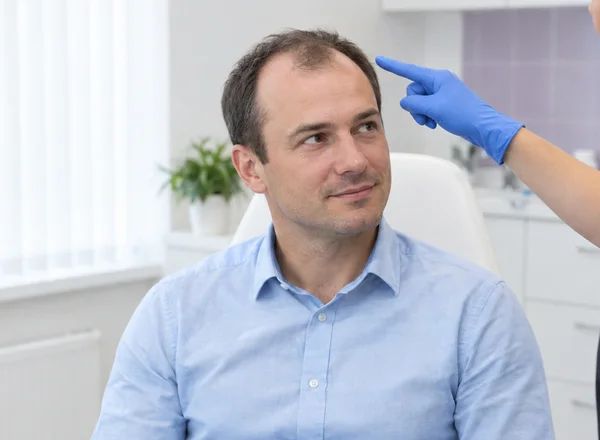

Write to us in WhatsApp or Telegram and send photos there. The doctor looks and tells you if a transplant helps. Free, nothing booked.

services
The consultation is free, the grafts are counted there, and the price you hear is the one in the contract.
| Your first meeting | Free |
|---|---|
| Eyebrow transplant, FUE | On request |
| Beard transplant, FUE | On request |
| Hair trichopigmentation | On request |
| PRP therapy / session | On request |
all included
Cover starts before surgery and lasts 12 months after.
Surgery day adds no new line to the bill.
two extra areas
Transplants are not limited to the scalp: the same grafts from the back of the head, the same FUE method, only the area changes.
FUE method, no incisions or stitches

The back of the head serves as the donor area: grafts move from there through micro-punctures of about 1 mm and leave no scars. The doctor discusses the shape with you before the operation, taking your facial features into account. Transplanted hair grows for life and the beard is trimmed and styled as usual.
On request
Hold the cost nowFUE method, no incisions or stitches

At the very first consultation the surgeon pencils in the brow line, you both go over reference images, and the drawing is matched to the proportions of your face. Placing each hair at the proper angle is what makes the result believable. Where plucking over many years has halted growth, this works as well.
On request
a same-day procedure with the scalp area numbed
Hold the cost nowAn honest look at the donor zone, a graft count and the outcome you can count on. You leave the consultation knowing the cost, and the contract confirms it.

Message our coordinator
Free online consultation · Reply within 15 minutes
Message us on TelegramMessage us on WhatsAppBy messaging us, you agree to our Privacy Policy
Process
From consultation to going home — all in one day

The opening step gives you a clear picture of how DHI and FUE differ in practice, answers to every question, and an assessment of your donor area.

This step reserves your surgery date through a deposit, paid by card at the clinic or online, with terms captured in a medical services contract.

For patients in Dchira, preparation means completing the analyses named on the clinic's list, following the directions given.

This step uses local anaesthesia to make sure the operation is completely painless.

The surgeon takes grafts from the donor area, either the back of the head or the temples, leaving no stitches behind.

Surgeons move the collected grafts across to where hair has been lost.
Fast healing is helped along by the clinic's supplies and the full instructions that accompany them.

The crusts peel away, the swelling drops, the area gradually recovers

A normal stage. Only the hairs leave, the follicles stay in place

Hair thickens gradually and you can see the difference

Hair thickens, and the main volume and contour become visible

Volume and the line of the hairline are both finished

Free, before the surgery and without obligation.
Ask a hair expertdoctors

Hair transplant doctor, trichologist, surgeon
10 years of experience

Dermatovenereologist, trichologist, surgeon
11 years of experience

Plastic surgeon
9 years of experience

Plastic surgeon
9 years of experience

Assistant
9 years of experience
You will have the donor zone examined, the grafts calculated and the outcome explained to you.
Ask a hair expertcoordinators
One named coordinator works with you from the moment you write until recovery is over.

Your personal manager
Stays beside you at every stage
Sorts out all your paperwork and bookings

Your personal manager
Stays beside you at every stage
Sorts out all your paperwork and bookings

Your personal manager
Stays beside you at every stage
Sorts out all your paperwork and bookings
Your personal manager
Stays beside you at every stage
Sorts out all your paperwork and bookings













Questions we get

Yes — the centre treats people whose home is in another city or another country, and online consultations are offered at the outset.
A free consultation with a graft count gives you the exact, contract-fixed price.
The operation fits into a single day; you then sleep at home.
No. The scalp is numbed by a local anesthetic and stays pain-free.
FUE means tweezer-based, incision-free graft harvesting. DHI means channel-free implantation with a Choi pen. Combined DHI+FUE uses FUE for harvesting and the DHI pen for implanting.
The number of grafts is assessed for free by the doctor, based on how much donor hair you have.
Give it 0–10 days for healing. Transplanted hairs fall at 2–4 weeks and that is meant to happen. Growth resumes by 3–4 months, density shows at 6–9 months, while the finished head arrives at 12–18 months.
Hair growth is covered by a lifetime guarantee, fixed in the signed contract.
The clinic holds a medical licence; care meets the standards and clinical guidelines
of the Ministry of Health.
For someone living in Dchira, the procedure takes a day and no more: FUE and DHI leave no cuts and no stitches and use local anaesthesia.
The start is possible in Dchira without stepping outside: the online consultation costs nothing, the doctor looks at photos of the area and tells you straight whether a transplant will help. Messages are answered 24/7.
Recovery runs 0-10 days; the transplanted hairs shed at 2-4 weeks and this frightens nobody who was warned; growth returns at 3-4 months, density at 6-9, the finished result at 12-18. A personal coordinator keeps photo control at 1, 3, 6, 9 and 12 months, and the growth guarantee is for life.
The cost is calculated individually after a free online consultation. Write to us on WhatsApp or Telegram.
By messaging us, you agree to our Privacy Policy
Dchira, written Dcheira El Jihadia in French, is an urban commune in the prefecture of Inezgane-Aït Melloul in the Souss-Massa region. It had 100,336 inhabitants at the 2014 census. It lies about 10 km south of the centre of Agadir, borders Agadir on three sides and touches Inezgane to the south. People here live in a busy, connected urban area, where work, school and family life run at a steady pace.
Men and women from Dchira who ask about hair transplantation usually start with the same worries: will it look natural, how long until it shows, and how do I fit the first weeks around my job and family? This text answers those questions with the daily life of Dchira in mind, for FUE and DHI alike.
The procedure itself is carried out at the clinic in Rabat, Morocco. The first step, though, is an online consultation that is free and takes place from your own home in Dchira. Coordinators are available around the clock (24/7) on Telegram and WhatsApp.
You write to a coordinator on Telegram or WhatsApp at any hour, including late evenings after work or early in the morning. You send clear photos of the front, the temples, the crown and the back of the head, and you describe your history: how long the hair loss has lasted, what you have tried, and any chronic conditions or regular medication.
The doctor then reviews your photos and discusses the plan with you online. The discussion covers the hair line, the density that is realistic for your donor area and the technique. FUE and DHI are both options, and the choice depends on your case. The doctor discusses the shape with you before the operation, taking your facial features into account.
We stay with you from pre-op planning to 12 months later. That means the same people answer your questions during the early weeks and at every later stage, wherever you live. For someone in Dchira, this removes the need to explain your case again each time.
Dchira sits close to the Atlantic coast and next to Agadir, a region well known for beaches and seaside resorts. For a hair transplant, the main seasonal issues are strong sun, dust, sweat and sea or pool water in the first weeks, when the treated area and the donor area are still healing.
Direct sun on the scalp should be avoided during healing. A light, clean, loose cap that does not rub the grafts is the usual advice, and your surgeon will tell you when headwear is allowed. Dusty, windy days call for care: avoid touching the scalp with unwashed hands and follow the washing routine you are given.
Sea and pool bathing are tempting in a coastal region, but they should wait until the doctor confirms the scalp is ready. Salt, chlorine and crowded beaches are not what freshly healing skin needs. Ask your coordinator at the planning stage so that your timing fits the guidance you are given.
Many people in Dchira prefer cooler months for surgery because there is less sweating and less exposure to strong sun while the scalp heals. Others choose a quieter period at work or school, or a time when there are no family celebrations in the first days.
The healing phase covers 0–10 days. Shedding of the transplanted hair comes at 2–4 weeks and is expected. Count forward from your surgery date: new growth begins at 3–4 months, real density arrives at 6–9 months, and the settled look comes at 12–18 months. If you want to look your best for a big event, plan well beyond the date of the operation.
Talk through your calendar with the coordinator. Summer holidays, the school year, Ramadan and family weddings all affect how comfortable the first days will be, and a clear plan avoids last-minute stress.
Dchira has a full set of primary schools, middle schools and secondary schools, and many residents also work in Agadir or Inezgane nearby. Whether you are a student, a teacher, an employee or a tradesman, ask the surgeon how many days you should stay at home and when visible redness or small crusts will fade, so you can plan your return to work.
People who work outdoors, in dust or under the sun need a plan for the first weeks: shade, a clean cap approved by the doctor and no heavy contact with the head. Office workers have fewer constraints but still need to follow the washing schedule.
Shedding at 2–4 weeks surprises many people. The transplanted hairs let go as expected, and the follicles stay in place. Knowing this in advance helps you avoid panic when you look in the mirror in the third week.
Football, running, gym training and surf are popular across the Agadir area. After a hair transplant, heavy exertion, sweating and any risk of a blow to the head should be avoided until the surgeon allows them. Ask for a clear timetable for each activity: light walking, gym work, contact sport, swimming and surfing.
Pool and sea timing should come from the surgeon, not from a friend's experience. A teammate who restarted early may have had a different case. Follow your own plan and use the check-ups to confirm each step.
Family gatherings, weddings and shared meals are central to life in the Souss region, and photographs are part of them. If you want to attend with a healed scalp, plan the date of surgery so that the first weeks pass quietly. Hot meals and tea are not a problem in themselves, but avoid crowded, hot, dusty places at the start.
Good general nutrition supports healing. Ask the surgeon about alcohol, smoking and any supplements, and about what to avoid just before and after the operation.
For men who are transplanting a beard, the procedure uses the same principle. Grafts are taken from the back of the head, the donor area, and moved through micro-punctures of about 1 mm, so nothing scars over. Transplanted hair grows for life: trim and style the beard as usual.
A good candidate has enough healthy donor hair at the back of the head and realistic expectations. Active scalp disease, unstable chronic conditions, some blood disorders and unclear causes of hair loss need medical assessment first. Be honest about everything you take and every condition you have.
Questions to ask: which technique suits me, FUE or DHI? How is my hair line designed? What does the donor area look like afterwards? What should I do on each day of the first 10 days? When do I wash, when can I wear a cap, and when can I train again? What happens if the result is uneven?
Our patients also share their experience. One wrote: from about the 4th month active, even growth began, the transplanted hair took very well, and the beard looks as natural as possible with no bald patches left. Such feedback shows how the timeline works in real life, though every case is individual.
Dchira borders Agadir on three sides and touches Inezgane to the south, so many residents spend their day moving between the three. Before the operation, think about what that day looks like for you: the commute, who you meet, and how long you stand or sit in crowded places. Write these points down and share them with your coordinator, who can help you build a calm schedule for the first days.
Dust from the main road, busy markets and crowded public transport are not friendly to a healing scalp. During the 0–10 days of healing, many patients choose to stay home as much as their job allows, and to ask a family member to handle errands. A colleague can cover urgent tasks, and a short conversation with your manager is usually enough to arrange it.
Self-employed people, shopkeepers and drivers in the Agadir area have the hardest planning task, because their income depends on being present. If that is your case, choose a quieter week and discuss with the surgeon which tasks you can safely do and which you must delay.
The Souss-Massa region is a place where Tachelhit is widely spoken alongside Moroccan Arabic. In a medical conversation, clarity matters more than anything else. If you feel more at ease describing your worries in your everyday speech, say so to the coordinator, and write down the instructions you receive so that family members at home can read them too.
Ask for the washing routine, the sleeping position and the list of things to avoid in a written message. You can keep it on your phone and return to it on day three, on day seven and in the week of shedding, when doubts are most common.
Involving a spouse, a brother or a parent is often helpful. They can help you take the photos for the check-ups, especially of the crown and the back of the head, which are difficult to photograph alone.
Hair loss affects confidence, whether you are a student at one of the local secondary schools, a young worker or a father preparing for a family occasion. A realistic conversation about expectations is the best protection against disappointment. The visible change comes slowly: 3–4 months for hair to come back, 6–9 months to look visibly thicker, and 12–18 months for the settled look.
Be clear with the doctor about what you want: a lower or higher frontal hair line, a denser front, or a beard that fills gaps. The doctor discusses the shape with you before the operation, taking your facial features into account, and will tell you honestly what your donor area can provide.
Avoid comparing yourself with photos of other people. Hair type, skin and the extent of loss differ, and the check-ups at months 1, 3, 6, 9 and 12 exist so that your own progress is measured against your own plan.
Because the operation takes place at the clinic in Rabat, Morocco, the days around it need some thought from a household in Dchira. Before anything is booked, talk to your coordinator on Telegram or WhatsApp and ask what the first day looks like, what you should bring, what you should eat beforehand and who should be with you afterwards. A short written checklist saves a lot of stress for families in a busy urban commune.
Think about who in the family will take over your usual tasks: school pick-ups, shopping, errands in Inezgane or Agadir, a shop or a workshop. A spouse, a brother or a colleague can cover these for the first days. Decide this before the operation, not after it.
Tell your employer or your family early. People who prepare their surroundings usually find the 0–10 days of healing calm, because nobody expects them to be out in the dust or in crowded places.
The first nights are spent at home, so prepare the bedroom in advance. Ask the surgeon which sleeping position protects the grafts, whether a clean pillowcase or an extra pillow helps, and how to avoid rubbing the back of the head, the donor area, against the mattress.
Washing follows a routine that the doctor gives you for each stage. Ask for it in writing, keep it on your phone and follow it exactly, including the water temperature, the way to apply the product and how to dry the scalp. Do not scratch the crusts; they fall away on their own during the healing phase.
If you are unsure about anything, such as redness, itching or a sore spot, send a photo to the coordinator rather than waiting. A coordinator will be on the phone 24/7, so a worry at midnight does not need to wait until morning.
Many families in the Souss use traditional oils and natural preparations on the hair and scalp, and henna is familiar to many households. Before the operation and during recovery, do not apply any of these without asking the surgeon, because freshly treated skin can react to things that were harmless before.
Barbers are an important part of local life, and a visit to the barber is a regular habit for men. Ask the surgeon when the first haircut or trim is allowed, and tell the barber about the operation. Clippers and razors should not touch the treated area until the doctor says so.
Hats, scarves and turbans are common in daily life. Any headwear must be clean, loose and approved by the doctor in the early weeks, so that nothing pulls on the grafts.
Hair transplantation is discussed openly in many families, and relatives often have a friend who had it done. Listen, but remember that a result depends on the donor area, the technique and the care taken afterwards. Your own plan, discussed with the doctor online, is what counts.
Some patients prefer to keep the operation private. If that is your choice, plan the first weeks with that in mind: the shedding at 2–4 weeks is the period when it is most visible, and new growth appears from 3–4 months.
Whatever you decide, keep one trusted person informed, ideally a spouse or a close relative, who knows the instructions and can help you with photos for the check-ups at months 1, 3, 6, 9 and 12.
Check-ups take place at months 1, 3, 6, 9 and 12, online for patients in Dchira. At each one you send new photos and the doctor compares them with your plan.
The full timeline is: 0–10 days for healing, 2–4 weeks for normal shedding of transplanted hair, 3–4 months for new growth to start, 6–9 months for real density and 12–18 months for the final result. A coordinator will be on the phone 24/7 if something worries you between check-ups.
Yes. The first consultation is online and free. You message a coordinator on Telegram or WhatsApp, send photos and speak with the doctor remotely.
At the clinic in Rabat, Morocco. Planning, questions and follow-up are handled online from your own city.
Shedding happens at 2–4 weeks and is expected. New growth begins at 3–4 months, and hair looks visibly thicker at 6–9 months.
The settled look comes 12–18 months after surgery.
Direct sun on the healing scalp should be avoided. Use the headwear your surgeon approves and ask when it is allowed.
Only when your surgeon confirms it. Ask for a clear date at planning so you can organise your summer.
Grafts are taken from the back of the head and moved through micro-punctures of about 1 mm, so nothing scars over.
Yes. Transplanted hair grows for life, and you can trim and style the beard as usual.
We stay with you from pre-op planning to 12 months later, with check-ups at months 1, 3, 6, 9 and 12.
A coordinator will be on the phone 24/7, and you can write on Telegram or WhatsApp at any hour.
Ask the surgeon how many days you should stay home during the 0–10 days of healing, then speak with your employer or a colleague early. Your coordinator can help you choose a quiet week.
Yes. A spouse or relative can take clear photos of the crown and the back of the head, which are hard to capture alone, and send them to the coordinator.
No. Transplanted hairs let go at 2–4 weeks as expected, and new growth starts at 3–4 months. If you are worried, write to your coordinator at any hour.
Ask the coordinator for a checklist: a clean pillowcase, the washing products the doctor recommends, approved headwear and someone to cover your usual errands during the first days.
Not without asking the surgeon first. Treated skin can react to products that were harmless before, so wait for the doctor's confirmation.
Ask the surgeon at the planning stage. Clippers and razors should not touch the treated area until the doctor allows it, and your barber should know about the operation.

 Forceps
 Minimal








