

























Liposuction7 min read
Visceral vs subcutaneous fat: what liposuction can and cannot remove
Not all body fat is the same. The soft fat you can pinch under the skin behaves very differently from the fat stored deep inside the abdomen around the organs. This difference matters when you think about liposuction: the operation reshapes the body by removing fat under the skin, but it cannot reach the deeper layer that has the biggest effect on health. This guide explains both types, how to tell which one you have and how each is reduced.
The main points in 30 seconds
- Subcutaneous fat lies under the skin; visceral fat surrounds the organs inside the abdomen.
- Liposuction removes only subcutaneous fat and does not lower the risks of visceral fat.
- Visceral fat is estimated mainly from waist size and responds well to weight loss.
- In significant obesity, bariatric surgery reduces visceral fat through large weight loss.
- City Medical Centre offers tumescent and VASER liposuction for contouring, not weight loss.
Key facts about the procedure
- Operation time1–4 hours
- Back to work7–10 days
- Final result3–6 months
- Pricefrom $1,200
Two types of body fat
Most of the fat in the body sits in two main places. Subcutaneous fat lies directly under the skin. It is the layer you can pinch on the abdomen, thighs, hips, arms and back, and it gives the body its soft contours. It stores energy, insulates and cushions, and in moderate amounts it is not considered harmful.
Visceral fat lies deeper, inside the abdominal cavity. It surrounds the liver, stomach and intestines and sits behind the abdominal muscles, so you cannot pinch it. Everyone has some visceral fat, and a small amount protects the organs. The problem begins when there is too much of it, because this fat is metabolically active: it releases substances that affect blood sugar, blood fats and inflammation throughout the body.
Location
- Subcutaneous fat
- Under the skin
- Visceral fat
- Inside the abdomen, around the organs
Can you pinch it?
- Subcutaneous fat
- Yes
- Visceral fat
- No
Main concern
- Subcutaneous fat
- Body shape and contour
- Visceral fat
- Metabolic and heart health
Removed by liposuction?
- Subcutaneous fat
- Yes, in treated areas
- Visceral fat
- No
Main way to reduce it
- Subcutaneous fat
- Weight loss, liposuction for local deposits
- Visceral fat
- Weight loss through lifestyle change or bariatric surgery
How to tell if you have excess visceral fat
Because visceral fat cannot be seen or pinched, it is usually estimated indirectly. The simplest sign is the shape of the body: a firm, rounded belly that protrudes even though the skin over it is not very thick often points to fat inside the abdomen, while soft folds that you can grab are mostly subcutaneous.
Common ways to assess it include:
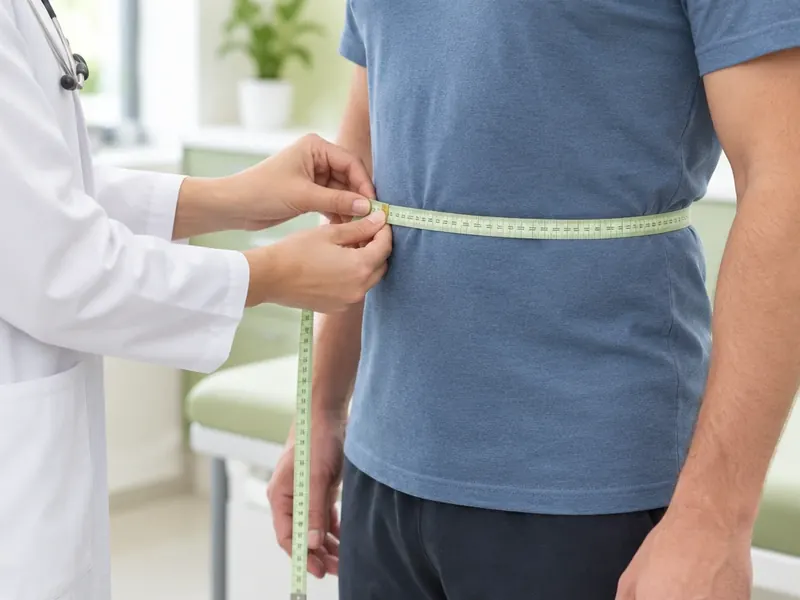
- waist circumference, measured at the level of the navel; a large waist is linked with more visceral fat;
- waist-to-height ratio, where a waist larger than half your height is a warning sign;
- waist-to-hip ratio, which shows whether fat is stored mainly around the middle;
- body composition scales, which give a rough estimate;
- imaging such as CT or MRI, which measures visceral fat precisely but is rarely needed for this alone.
Body mass index (BMI) alone does not tell you where the fat is. Two people with the same BMI can carry very different amounts of visceral fat.
Why visceral fat is a health risk
Excess visceral fat is closely linked with health problems, even in people whose weight is close to normal. It is associated with insulin resistance and type 2 diabetes, high blood pressure, unfavourable blood fats, fatty liver disease, heart disease and stroke. Visceral fat also drains directly to the liver, which helps explain its effect on metabolism.
Subcutaneous fat has much less effect on these risks. For this reason doctors pay more attention to waist size and the distribution of fat than to the number on the scales. Age, genetics, hormones, stress, lack of sleep, alcohol and a sedentary lifestyle all tend to shift fat towards the abdomen.
Why liposuction only removes subcutaneous fat
Liposuction works through small incisions and thin cannulas placed in the layer of fat under the skin. The surgeon removes fat from this layer to reshape a specific area, such as the abdomen, flanks, thighs or arms. The abdominal muscles form a wall between this layer and the abdominal cavity, and the cannula does not pass through it. Reaching the fat around the organs is not possible and would be dangerous.
This has several practical consequences:
- liposuction is a contouring procedure, not a treatment for obesity or a way to lose weight;
- a belly that protrudes mainly because of visceral fat will change little after liposuction;
- removing subcutaneous fat does not lower the health risks linked with visceral fat;
- fat cells removed from treated areas do not grow back, but if weight is gained later, fat can collect in untreated areas and inside the abdomen.
Liposuction suits people with a stable, close-to-normal weight who have local deposits that resist diet and exercise. The surgeon assesses by examination which type of fat dominates in your abdomen before recommending anything. More about the procedure is on our liposuction page.
How visceral fat is reduced
The encouraging news is that visceral fat usually responds well to weight loss, often better than subcutaneous fat. Even a moderate reduction in body weight tends to reduce fat around the organs. The main measures are:
- regular physical activity, especially moderate aerobic exercise such as brisk walking, cycling or swimming, combined with strength training;
- a balanced diet with fewer sugary drinks, refined carbohydrates and highly processed foods, and more vegetables, fibre and protein;
- limiting alcohol, which is closely linked with fat around the middle;
- enough sleep and attention to stress, since both influence appetite and where fat is stored;
- not smoking, which is associated with more abdominal fat.
There is no exercise that burns fat only from the belly. Visceral fat decreases as part of overall weight loss, and progress is best tracked by waist measurement rather than by weight alone. Any medical treatment for weight is chosen individually by a doctor.
When bariatric surgery is considered
For people with significant obesity, lifestyle measures alone often do not lead to lasting weight loss. In this situation bariatric surgery may be considered. It works on the stomach and digestive tract rather than on the fat itself, and the large weight loss that follows reduces visceral fat along with subcutaneous fat.
It is also linked with improvement in related conditions such as type 2 diabetes and high blood pressure.
Surgery is usually justified with a BMI above 40, or above 35 with serious related conditions, and sometimes at lower values if non-surgical approaches have failed. The choice of operation depends on BMI, health and eating habits and is made with a surgeon. After bariatric surgery, once the weight has stabilised, liposuction or a tummy tuck may later be used to refine the contour.

Personal assessment at City Medical Centre
City Medical Centre works with patients from abroad and helps you understand which type of fat is behind your concern. For local subcutaneous deposits the clinic performs tumescent liposuction, in which a special solution is injected before the fat is gently removed through a thin cannula, and VASER liposuction, in which ultrasound breaks down fat before removal. Before surgery the doctor examines you and orders a hormonal screening.
City Medical Centre does not offer liposuction as a weight-loss treatment and does not perform non-surgical fat-reduction procedures. For significant obesity the clinic performs bariatric surgery: sleeve gastrectomy, Roux-en-Y gastric bypass, mini gastric bypass and SADI-S.
The first consultation is free and can be held online: send photos of your abdomen from the front and side, along with your height, weight and waist measurement, via Telegram. The doctor will explain whether liposuction, bariatric surgery or a lifestyle-first approach suits you, and name the price, which is then fixed in the contract. A personal coordinator supports you from your first message to the end of recovery. More details are on our liposuction page.
Sources
Frequently asked questions
Can liposuction remove visceral fat?
No. Liposuction removes fat only from the layer under the skin. Visceral fat lies inside the abdominal cavity behind the muscles, where the cannula does not go. Visceral fat is reduced through weight loss, and in significant obesity bariatric surgery may be considered.
How is visceral fat measured?
Most often it is estimated from waist circumference, waist-to-height ratio or waist-to-hip ratio. Body composition scales give a rough figure, and CT or MRI measure it precisely but are rarely needed for this purpose alone. A doctor can also judge by examination whether your belly fat is mainly under the skin or inside the abdomen.
Is visceral fat dangerous?
A small amount is normal, but excess visceral fat is linked with type 2 diabetes, high blood pressure, fatty liver disease and heart disease. It can be a risk even when weight is close to normal, which is why waist size matters.
How do I lose visceral fat?
Regular exercise, a balanced diet with fewer sugary drinks and processed foods, less alcohol, enough sleep and not smoking all help. Visceral fat usually responds well to overall weight loss. There is no exercise that removes fat only from the belly.
Does a flat stomach mean low visceral fat?
Not always. Some people with a fairly flat stomach and normal weight still carry excess fat around the organs, especially with a sedentary lifestyle. A waist measurement and a doctor's assessment give a more reliable picture than appearance alone.
Have a question about your case? Get a free consultation
Message a coordinator on Telegram: we reply right in the chat, and you can send photos and questions there too.
- The first consultation is free, online consultations are available
- The doctor names the cost after the assessment, and it is fixed in the contract
- A personal coordinator guides you from the first message to recovery
Message our coordinator on Telegram
We reply right in the chat — you can send photos
Message us on TelegramBy sending a message, you agree to the privacy policy
Read also
 Liposuction
Stubborn belly fat: exercise, non-surgical treatments or liposuction?
How to get rid of stubborn belly fat: what diet and exercise can do, the limits of non-surgical treatments, when liposuction or a tummy tuck makes sense.
 Liposuction
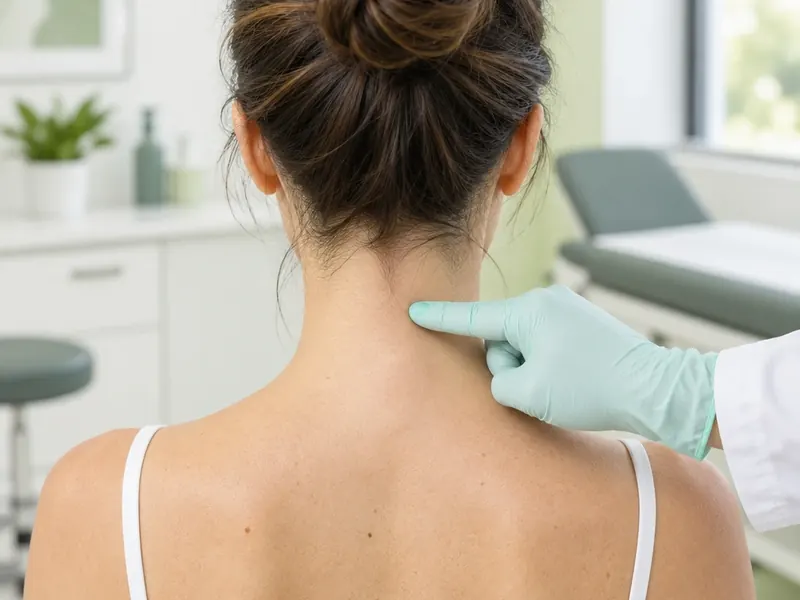
Buffalo hump (neck hump) liposuction: causes, treatment and recovery
What a buffalo hump at the base of the neck is, why it forms, when a doctor should check hormones first, and how liposuction removes it and keeps it away.
 Bariatric surgery
Vitamins and minerals after bariatric surgery: why they are needed for life
Why vitamins and minerals are needed for life after bariatric surgery: key nutrients, sleeve vs bypass differences, risks of skipping them and blood tests.