


























Liposuction5 min read
Buffalo hump (neck hump) liposuction: causes, treatment and recovery
A soft pad of fat at the base of the neck, often called a buffalo hump or neck hump, can make posture look older and clothes fit badly. It is usually harmless, but sometimes it is a sign of a hormonal problem that needs attention first. This guide explains why the hump forms, when a doctor should check the cause, how liposuction removes it and what helps keep the result.
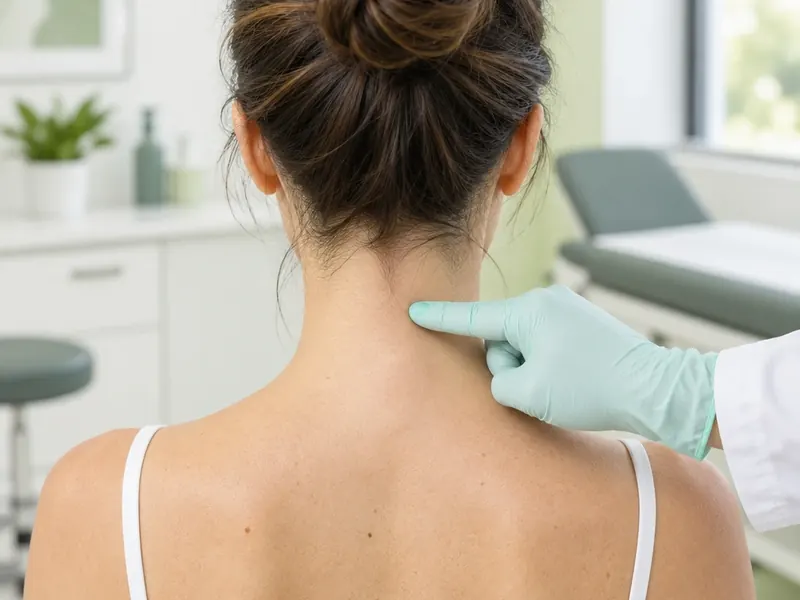
The main points in 30 seconds
- A buffalo hump is a pad of fat at the base of the neck; a curved spine is a separate problem.
- Rapid growth with other symptoms needs a hormonal check before any surgery.
- When the hump is local fat, tumescent or VASER liposuction can reduce it through small incisions.
- Most people return to desk work within a week; the final contour shows after about three months.
- A stable weight and good posture help keep the result.
Key facts about the procedure
- Operation time1–4 hours
- Back to work7–10 days
- Final result3–6 months
- Pricefrom $1,200
What a buffalo hump is
A buffalo hump is a collection of fat between the shoulder blades at the base of the back of the neck. It feels soft and movable under the skin and can range from a slight fullness to a clearly visible rounded pad.
It is important to separate two different things:
- A fat hump is a pad of soft tissue. It is the type that liposuction can reduce.
- A curve of the spine, where the upper back rounds forward, is a bone and posture problem. Removing fat does not change it.
Often both are present at the same time, and an examination shows how much of the fullness is fat and how much comes from posture.
Common causes: posture, genetics and hormones
A neck hump usually has more than one cause. The most common factors are:
- General weight gain, as this area is one of the places where fat can collect.
- Genetics, which influence where the body stores fat.
- Posture: years of leaning forward over a desk or phone can make the area more prominent.
- Hormonal changes, for example around menopause.
- Medical causes, such as long-term use of corticosteroids or a hormonal disorder called Cushing's syndrome, and certain long-term treatments that change fat distribution.
- Local fat deposit at a stable weight
- Liposuction can be considered
- Rounded upper back from posture
- Exercise and physiotherapy
- Hormonal disorder or medication
- Assessment and treatment by a doctor or endocrinologist
- General weight gain
- Weight loss, then reassessment

When a doctor should check the cause first
A hump that appears quickly, or together with other changes, can be a sign of excess cortisol in the body. Doctors look for a combination of signs, such as:
- a rounder face and weight gain mainly around the trunk;
- wide purple stretch marks, thin skin and easy bruising;
- muscle weakness, high blood pressure or raised blood sugar;
- long-term use of corticosteroid medicines.
In these cases blood or urine tests and treatment of the cause come first. Removing the fat without treating the underlying problem would not solve it, and the hump would likely return. Never stop prescribed medicines on your own; discuss any changes with the doctor who prescribed them.
How liposuction removes a neck hump
When the hump is a local fat deposit, liposuction is a direct way to reduce it. The procedure is usually short, and the surgeon works through one or two small incisions in the skin folds or near the hump.
In tumescent liposuction the area is first filled with a special solution that reduces bleeding and helps the surgeon remove fat gently through a thin cannula. VASER liposuction adds ultrasound to loosen the fat first, which can help in this fairly dense area. The surgeon shapes the neck and upper back so that the transition to the surrounding tissue looks smooth. You can read more about both techniques on the liposuction page.
Depending on the size of the hump and whether other areas are treated at the same time, the operation is performed under local or general anaesthesia.
Recovery and results
After surgery the area is swollen, tender and sometimes bruised. A compression garment or vest is usually worn for several weeks to support the tissues and reduce swelling. Most people return to desk work within a few days to a week.
- Sleeping on the back may be uncomfortable at first; extra pillows can help.
- Heavy lifting and intense exercise are avoided for several weeks.
- A visible change is often seen within weeks, while the final contour is judged after about three months.
Numbness, firmness or small irregularities can occur and usually improve as the tissues settle. The skin in this area is fairly thick, so it generally adapts well to the new contour.

Preventing the hump from returning
Fat cells removed by liposuction do not grow back, but the remaining cells can enlarge if weight increases. To keep the result:
- keep your weight stable;
- strengthen the upper back and practise good posture, especially at a desk;
- take regular breaks from looking down at phones and screens;
- have any hormonal condition monitored by your doctor.
If a hump was linked to medicines or a hormonal disorder, its return depends on how that condition is managed over time.
Treatment at City Medical Centre
City Medical Centre performs tumescent and VASER liposuction of the back, neck and other areas, including combined procedures. Before surgery the clinic arranges a hormonal screening with an endocrinologist to rule out hormonal causes of fat accumulation, as well as the usual pre-operative tests. City Medical Centre does not treat postural or spinal causes of a hump; these are managed by a physiotherapist or spine specialist.
The first consultation is free and can take place online: you can send photos of the area and your questions on Telegram, and the surgeon will explain whether liposuction is suitable. The price is given after the assessment and is fixed in the contract, and a personal coordinator supports you from the first message to the end of recovery. Book a consultation on the liposuction page.
Sources
Frequently asked questions
Can a buffalo hump be removed?
Yes, when the hump is caused by a local fat deposit, liposuction can reduce it noticeably. If the fullness comes from a curved spine or posture, removing fat does not change that part. If a hormonal disorder or medicine is the cause, it should be assessed and treated first.
Does a neck hump come back after liposuction?
Removed fat cells do not grow back, so the result is usually long-lasting. However, the remaining fat can enlarge if you gain weight, and a hump linked to hormones can return if that condition is not controlled. A stable weight and good posture help keep the result.
Is buffalo hump liposuction painful?
The operation is performed under local or general anaesthesia, so you should not feel pain during it. Afterwards the area is sore, swollen and tight for several days, similar to strong muscle ache. Pain relief as advised by the doctor and a compression garment usually keep it manageable.
What causes a hump at the base of the neck?
Common causes are weight gain, genetics, posture and hormonal changes such as those around menopause. Less often it is linked to long-term corticosteroid use or Cushing's syndrome. A doctor can tell which factors apply and whether tests are needed before any treatment.
How long is recovery?
Most people return to desk work within a few days to a week. A compression garment is worn for several weeks, and heavy lifting and intense exercise are avoided during that time. The final shape is usually assessed about three months after surgery, once the swelling has settled.
Have a question about your case? Get a free consultation
Message a coordinator on Telegram: we reply right in the chat, and you can send photos and questions there too.
- The first consultation is free, online consultations are available
- The doctor names the cost after the assessment, and it is fixed in the contract
- A personal coordinator guides you from the first message to recovery
Message our coordinator on Telegram
We reply right in the chat — you can send photos
Message us on TelegramBy sending a message, you agree to the privacy policy
Read also
 Liposuction
Double chin liposuction: how chin and neck fat removal works
How chin and neck liposuction removes a double chin: who it suits, how it is done, recovery with a chin strap, results, and when a neck lift is the better choice.
 Liposuction
Liposuction: who is a good candidate, who is not, and why it is not a way to lose weight
Who liposuction suits, which areas respond best, liposuction for men, contraindications, why it is not a weight-loss method and what recovery involves.
 Liposuction
Can Liposuction Remove Cellulite? What Helps and What Does Not
Does liposuction remove cellulite? How cellulite differs from fat, why it appears, what can improve it, whether liposuction can make it worse and what to expect.