








Rhinoplasty6 min read
Rhinoplasty FAQ: the questions patients ask before surgery
Deciding on rhinoplasty raises many questions: am I a good candidate, which technique is right, how painful is it, how long does recovery take and when will I see the final result? This guide answers the questions patients ask most often before nose surgery, from the first consultation to the end of recovery.

The main points in 30 seconds
- Rhinoplasty is done in adults with a fully grown nose; the optimal age is often 18 to 45.
- The technique is chosen for each nose: closed, open, septorhinoplasty or revision.
- The splints come out at a week and the cast at about two weeks.
- The final result is judged after one to one and a half years.
- City Medical Centre plans every operation with 3D modelling at a free consultation.
Key facts about the procedure
- Operation time1.5–3 hours
- Main healing4 months
- Stay in clinic1 day
- Price
$6,000from $4,200
Rhinoplasty basics: who it is for
Rhinoplasty is surgery to change the shape of the nose and, when needed, to improve breathing. People usually consider it because of a hump on the bridge, a wide or bulbous tip, a crooked nose, asymmetric nostrils, the effects of an injury or a deviated septum that makes breathing difficult.
A good candidate is an adult whose nose has finished growing, who is in good general health and who has realistic expectations. The optimal age for a first operation is often given as 18 to 45, although healthy older adults can also have surgery. Rhinoplasty is not done when there is:
- an acute infection or inflammation of the nose, ears, throat or eyes;
- a blood clotting disorder;
- an uncontrolled chronic disease;
- cancer;
- a mental health condition that affects the ability to make the decision;
- damaged skin in the area of the planned operation.
The types of operation we perform are described on our rhinoplasty page.
Techniques: closed, open, septorhinoplasty, revision
The technique is chosen for each nose. The main options are:
Closed rhinoplasty
- What it involves
- All incisions are inside the nose, with no visible scar
- When it is usually chosen
- Moderate changes, for example removing a hump
Open rhinoplasty
- What it involves
- A small incision across the columella gives a full view of the cartilages
- When it is usually chosen
- Complex tip work, grafts, marked asymmetry
Septorhinoplasty (rhinoseptoplasty)
- What it involves
- The septum is straightened and the outer shape corrected in one operation
- When it is usually chosen
- A deviated septum combined with aesthetic concerns
Revision rhinoplasty
- What it involves
- A repeat operation to correct an earlier result
- When it is usually chosen
- Unsatisfactory shape or breathing after a previous operation
A revision is usually planned no earlier than a year after the first operation, when the tissues have fully settled. Revisions often need cartilage grafts, because some of the nose's own support may already have been used or removed.
Consultation and 3D forecast
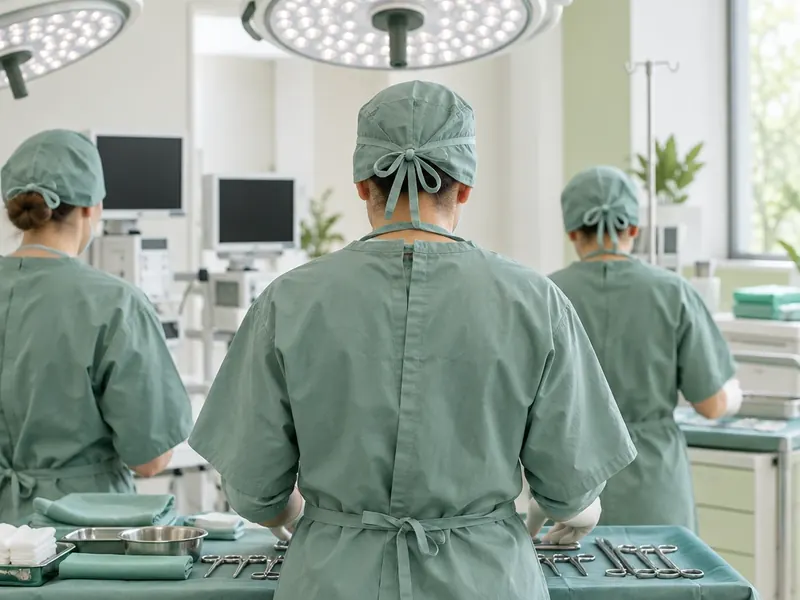
The consultation is where the plan is made. The surgeon asks about your goals and health, examines the outside and inside of the nose, and assesses the skin, the septum, the tip and how the nose fits the rest of the face. Photos are taken from several angles.
A 3D model can show how the planned changes will look. It is a useful way to agree on the goal, but it is a forecast, not a promise: the final result also depends on how your skin and tissues heal. Before surgery a set of tests is done, which usually includes blood tests, an ECG, a chest X-ray and, when needed, a scan of the sinuses. About three weeks before surgery you should stop smoking and avoid alcohol.
The operation and hospital stay
Rhinoplasty is most often performed under general anaesthesia, and some smaller corrections can be done under local anaesthesia. The operation usually takes one to three hours, depending on its complexity. At the end, soft splints are placed inside the nostrils and a rigid cast is put on the outside of the nose.
Most patients stay in hospital for one day after surgery so that the team can monitor breathing, bleeding and pain. After discharge you go home or to your hotel with written instructions and a date for the first check-up.
Recovery, swelling and final result
Recovery follows a fairly predictable pattern:
- Days 1–3
- Breathing through the mouth; swelling and bruising increase
- Day 7
- The splints inside the nose are removed
- Up to day 14
- The outer cast is worn; stitches and cast are removed at about two weeks
- Weeks 2–3
- Most visible swelling and bruising fade; many people return to office work
- Months 1–1.5
- Slight congestion may remain; the tip and bridge can still look slightly swollen
- 1–1.5 years
- The nose takes its final shape
During recovery you should sleep on your back with your head raised, avoid bending over, heavy exertion, saunas and sun, and not wear glasses on the nose. The first improvement is visible after two to three weeks, but fine changes, especially at the tip, continue for a year or more.

Risks and how to minimise them
Serious complications are uncommon, but every operation has risks. The main ones after rhinoplasty are:
- prolonged swelling and bruising;
- bleeding in the first days, especially if the restrictions are not followed;
- infection, which is rare;
- irregularities of shape or asymmetry;
- impaired breathing, for example after excessive tissue removal;
- thick scarring in people prone to it;
- dissatisfaction with the result, more often when expectations were unrealistic.
The risk is lower when you choose an experienced surgeon, complete all tests, stop smoking in advance, follow the aftercare rules and attend check-ups. If you have difficulty breathing, severe pain, a high temperature or a sudden change in the shape of your nose after surgery, contact your surgeon immediately.
Getting a personal plan at City Medical Centre
City Medical Centre welcomes patients from abroad and performs primary rhinoplasty, revision rhinoplasty, rhinoseptoplasty and reconstructive rhinoseptoplasty. City Medical Centre does not perform non-surgical nose correction with fillers. The surgeon examines the nose, uses 3D modelling to show the planned result and chooses the technique for your anatomy. The operation is performed under general anaesthesia with a one-day hospital stay.
Other methods mentioned in this article, such as non-surgical correction with fillers, are general information and are discussed at the consultation.
The first consultation is free and can take place online: send photos of your nose from several angles by Telegram. The cost is named after the assessment and fixed in the contract. A personal coordinator supports you from your first message to the end of recovery, and consultations with your surgeon are free for a year after surgery. Learn more on our rhinoplasty page.
Sources
Frequently asked questions
What is the right age for rhinoplasty?
Rhinoplasty is done in adults, once the nose has finished growing. The optimal age for a first operation is often given as 18 to 45, because the tissues heal well and the nose has reached its adult shape. Older adults in good general health can also have surgery; the surgeon assesses each case individually.
How long is recovery after rhinoplasty?
Splints come out after about a week and the cast and stitches at about two weeks. Most visible swelling and bruising fade within two to three weeks, and many people return to office work then. Slight congestion can last a month or so, and it is best to avoid heavy sport and saunas for several weeks.
When can I see the final result?
The first improvement is visible once the main swelling goes down, after two to three weeks. However, residual swelling, especially at the tip, takes much longer to settle. The final shape of the nose is usually assessed after one to one and a half years.
Is rhinoplasty painful?
The operation itself is done under anaesthesia, so you feel nothing. Afterwards most people describe pressure, a blocked nose and moderate discomfort rather than strong pain, and this is controlled with pain relief prescribed by the doctor. The first few days, when breathing is through the mouth, are usually the least comfortable.
How much does rhinoplasty cost?
The cost depends on the type of operation, its complexity and whether the septum or a previous result also needs correction. Revision and reconstructive operations are usually more complex than a primary rhinoplasty. The exact price is named after the surgeon's assessment and fixed in the contract.
Can filler replace rhinoplasty?
Only in some cases. Injectable fillers can smooth a small hump or slightly lift the tip for a limited time, but they cannot make the nose smaller, straighten the septum or improve breathing, and they carry their own risks. For lasting changes to shape or function, surgery is the reliable option.
Have a question about your case? Get a free consultation
Message a coordinator on Telegram: we reply right in the chat, and you can send photos and questions there too.
- The first consultation is free, online consultations are available
- The doctor names the cost after the assessment, and it is fixed in the contract
- A personal coordinator guides you from the first message to recovery
Message our coordinator on Telegram
We reply right in the chat — you can send photos
Message us on TelegramBy sending a message, you agree to the privacy policy
Read also
 Rhinoplasty
Cosmetic and medical rhinoplasty: indications and contraindications
The difference between medical and cosmetic nose surgery, the main indications and contraindications, operation types, recovery and possible complications.
 Rhinoplasty
Rhinoplasty myths vs facts: what is really true about nose surgery
Common rhinoplasty myths checked against the facts: fragility, pain, when the result shows, what shapes are possible and how to choose a surgeon.
 Rhinoplasty
Can rhinoplasty fix breathing problems, snoring and poor sleep?
When nose surgery can improve breathing, how a blocked nose affects sleep, what septorhinoplasty involves, how recovery goes and what to expect for snoring.