


























Hair transplant7 min read
Partial Shave Hair Transplant Explained
Many men and women hesitate over a hair transplant because they do not want a shaved head. A partial shave is one answer: only a small zone of the donor area is clipped, and the rest of the hair falls over it. This article explains what partial shave, unshaven and long-hair FUE really mean, what each trade-off is and how to decide.
By messaging us, you agree to our Privacy Policy
Medically reviewed by Ellina V. Goncharova, dermatovenereologist, trichologist, surgeon. Review date: .
The main points in 30 seconds
- Standard FUE shaves the donor area; partial shave clips only a small zone that long hair then covers.
- Fully unshaven or long-hair FUE is technically harder and raises transection risk.
- A small study of 42 patients found no significant transection difference between two non-shaven methods.
- Shedding and a long road to results are the same whether you shave or not.
- Ask for the exact meaning of unshaven in any quote and agree the plan at the consultation.
Key facts about the procedure
- Stay in clinicSame day
- Final result12–18 months
- AnaesthesiaLocal
- Price
$2,700from $2,200
Why the shaving question matters
In the standard version of FUE, the back and sides of the head are shaved so that the surgeon can see each follicular unit and remove it cleanly. The NHS describes it simply: the back of the head is shaved and individual hairs are taken one at a time. For someone who already wears short hair this is no problem. For someone with longer hair, a job with a strict dress code or a wish for privacy, the shaved patch can be the main obstacle.
Hair Transplant London, Hair Transplant Dublin — price and consultation.
Price in your country — message us on WhatsApp
WhatsAppClinics use several terms for the alternatives, and they are not always used in the same way. The ISHRS has pointed out that the word unshaven is used loosely and that clinics should define it clearly in their marketing. Knowing the difference helps you ask the right questions.
Shaven, partially shaven and unshaven: what the terms mean
According to the ISHRS terminology, the options can be separated like this:
- Shaven. The donor hair is fully shaved. It suits patients who already keep the sides and back short.
- Partially shaven. The hair is lifted, a zone of scalp is shaved for extraction, and the hair is then let down to cover it. It suits patients who want to keep their hair long at the sides and back.
More on this topic: Hair Transplant, Beard Transplant, Eyebrow Transplant, FUE & DHI Hair Transplant in Singapore, FUE & DHI Hair Transplant in Málaga.
- Unshaven. The donor hair is not shaved. Each target unit can be trimmed with scissors before extraction, or the punch can cut the hair shaft during the incision. Either way the extracted grafts are short.
- Long-hair FUE. The punch does not cut the shaft, so the long hair comes out with the graft.
In strip surgery (FUT) the hair in the strip can be shaved or left long, and the closed wound can be hidden from above.
Hair transplant abroad: choose a city and clinic
Prices, the clinic and a free online consultation for each city:
How a partial shave works in practice
A partial shave is usually the simplest compromise. The surgeon separates the hair at the back of the head, shaves the zone that will be used, and combs the long hair back over it. Once the patient stands up, the shaved area is hidden by the hair above.
The ISHRS adds two practical points. If the hair is not very long, several narrow areas can be shaved instead of one wider patch. And the size of the shaved zone depends on how many grafts are needed, which is why a small hairline procedure is easier to hide than a large session.
The recipient area is a separate question. Some patients prefer to shave it, because long hair gets in the way of incisions and implantation. Others keep it long, which the ISHRS says makes recovery easier for people who wear longer hair there. The price is that more hair makes it harder to place incisions at the right density.
What unshaven FUE adds and what it costs
Fully unshaven extraction is attractive because there is no visible change on the day. It is also harder to do. The ISHRS describes unshaven long-hair FUE as technically demanding and notes that it increases the risk of transection, which means the hair shaft is cut below the skin. A benefit is that the surgeon can see any thinning of the donor area while working and avoid over-harvesting.
One published comparison of two non-shaven methods gives a sense of the practical difference. In a study of 42 patients at a single clinic, each person had both a pretrimmed and a direct method in the same session, with 50 grafts taken from each zone. Pretrimming took 3.4 minutes per 50 grafts compared with 2.6 minutes for the direct method. The transection rates, 8.8% and 7.5%, were not significantly different. The authors concluded that both methods are useful and that the choice depends on the surgeon’s skill and the case. This was one small study, so it shows the principle rather than a promise for any individual.
Shaven
- Visible change on the day
- Whole donor area
- Technical difficulty
- Standard
- Time in the chair
- Shortest
- Suits
- Short hair at the sides
Partially shaven
- Visible change on the day
- Small hidden zone
- Technical difficulty
- Standard
- Time in the chair
- Similar
- Suits
- Long hair, moderate session
Unshaven
- Visible change on the day
- None or minimal
- Technical difficulty
- Higher
- Time in the chair
- Often longer
- Suits
- Selected cases
Is a partial shave right for you?
The decision depends on a few practical things that only a doctor can judge after seeing your scalp:
- How many grafts you need. A larger session needs a larger shaved zone.
- Your hair length and density. Longer, denser hair hides a shaved zone better.
- Your hair type. Thick, straight and curly hair behave differently during extraction.
- Your donor area. The doctor must be sure there are enough healthy follicles to take without leaving visible thin patches.
Sometimes the best answer is a compromise: a partial shave this time, with the plan for any later session decided afterwards. The goal of the operation is a natural, well-planned result, and the choice of method should serve that goal and not the other way round.
Partial shave with DHI and FUE
The shaving question applies to both extraction and implantation. In FUE, the shave concerns the donor area where units are taken. In DHI, the units are placed with a special implanter pen, which can be a good fit when the recipient area is partly left long, though the final choice depends on density, hair length and the surgeon’s skill. Ask whether a partial shave can be combined with DHI or with FUE+DHI in your case, and what the doctor expects to be possible.
Aftercare is the same, and shedding still happens
A shorter shave does not mean an easier recovery. The ISHRS notes that both long and cut hairs are likely to shed before they regrow, and that patients need guidance on washing and combing so as not to pull out grafts. The NHS explains that the transplanted hair often falls out after a few weeks, new hair usually appears around four months and full results are typically seen at 10 to 18 months.
The shaved donor zone grows back and is usually covered quickly, but the recipient area will still look crusted or thin for some time. Plan your work and social calendar with that in mind. See also our guide to hair transplant methods for how FUE and DHI differ.
Asking about a partial shave at City Medical Centre
City Medical Centre works with international patients. The first consultation is free and can be held online. If keeping your hair long matters to you, say so in your first message and send photos of the back and sides of your head as well as the thinning area. The doctor tells you what is realistic for your donor area, which method fits and how the donor zone can be managed, and the price is then fixed in the contract.
A personal coordinator stays with you from your first message to the end of recovery, and photos and questions can be sent by Telegram. Start on the hair transplant page.
How recovery usually goes
- 0-10 daysHealing: the crusts come off, the swelling goes down, the area gradually recovers
- 2-4 weeksShedding of the transplanted hairs: a normal stage, only the hairs fall out, the follicles stay in place
- 3-4 monthsGrowth begins: new hairs gradually appear, the result starts to show
- 6-9 monthsVisible density: the hair becomes thicker, the main volume and contour are visible
- 12-18 monthsFinal result: the final density and a natural hairline take shape
Sources
- ISHRS - Shaven and Un-Shaven Hair Transplant Terminology
- NHS - Hair transplant
- PMC - Pretrimmed versus Direct Nonshaven Follicular Unit Extraction (Park and You, 2017)
- PubMed / NCBI — Follicular Unit Extraction for Hair Transplantation: An Update (Actas Dermosifiliogr, 2017)
- PubMed / NCBI — Donor site healing in follicular unit extraction hair transplantation (Cell Mol Biol, 2025)
Medical disclaimer. This article is for general information only and is not medical advice. It does not replace a consultation with a doctor. Every procedure has contraindications and risks. Read more · How we prepare and review medical content
Frequently asked questions
Do I have to shave my head for a hair transplant?
Not always. In standard FUE the donor area is shaved, but partial shave and unshaven approaches exist. Whether they suit you depends on the size of the session, your hair length and your donor area. The doctor can advise after seeing photos or examining your scalp.
What is the difference between partial shave and unshaven FUE?
In a partial shave a limited zone is clipped and covered by the hair above it. In unshaven FUE the donor hair is not shaved at all, and the grafts are taken after trimming each unit or cutting the shaft during extraction. The second approach is technically more demanding.
Does a partial shave affect the result?
It should not affect the final growth when the procedure is planned and performed well. The ISHRS notes that unshaven long-hair extraction raises the risk of transection, so the method and the surgeon’s experience matter more than the amount of hair left long.
How long will the shaved patch be visible?
It depends on the size of the zone and the length of your hair. A small hidden zone is usually covered by the hair above it from the start, and it grows back over the following weeks. Your doctor can explain what to expect for your case.
Can I keep long hair at the front as well?
Some patients keep the recipient area long, which can make recovery easier, but the ISHRS notes that it makes placing incisions harder. Many surgeons prefer to trim or shave the recipient zone. This is a point to agree with your doctor beforehand.
Will the transplanted hair fall out?
Yes, it often does. The NHS explains that transplanted hair commonly falls out after a few weeks and then regrows, with new hair appearing around four months. Full results are typically seen at 10 to 18 months.
Have a question about your case? Get a free consultation
Message a coordinator on Telegram: we reply right in the chat, and you can send photos and questions there too.
- The first consultation is free, online consultations are available
- The doctor names the cost after the assessment, and it is fixed in the contract
- A personal coordinator guides you from the first message to recovery
Message our coordinator
We reply right in the chat — you can send photos
Message us on TelegramMessage us on WhatsAppBy messaging us, you agree to our Privacy Policy
Read also
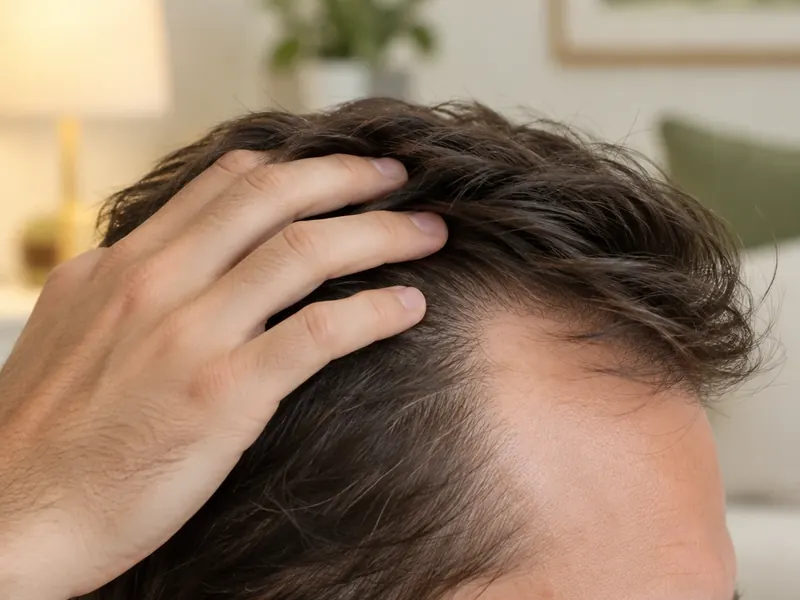 Hair transplant
 for a receding hairline: how a natural hairline is designed and what results to expect
How a receding hairline is restored with a hair transplant: who it suits, how a natural hairline is designed, FUE or DHI, grafts, recovery and results.
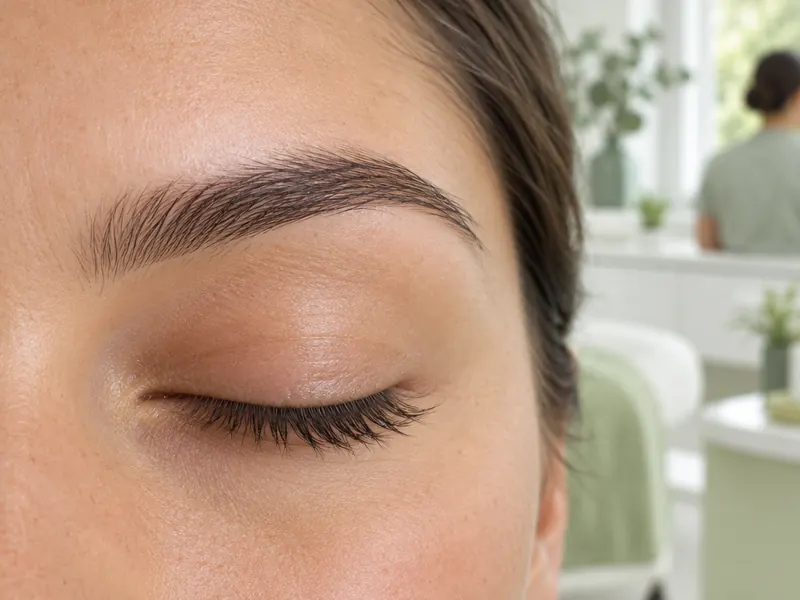 Hair transplant
Scalp hair vs eyebrow hair: differences in structure, growth and function
Scalp hair and eyebrow hair differ in length, thickness, growth cycle, texture and purpose. Here is how, and why it matters when hair is transplanted.
 Facelift
Platysmaplasty: how neck bands and a loose neck are corrected
What platysmaplasty is, why vertical neck bands and a loose neck appear, how the neck muscle is tightened, recovery, results and what shapes the cost.