


























Osteoarthritis treatment7 min read
Osteoarthritis stages explained: what can be done at each stage
Osteoarthritis rarely appears overnight. The cartilage that covers the ends of the bones wears down slowly, often over years, and the joint changes step by step. Knowing which stage you are at helps you understand your symptoms, what treatment can realistically achieve and when it is time to act. This guide explains the stages in plain words, who is at risk, and what can be done at each stage, from exercise to PRP and SVF injections.
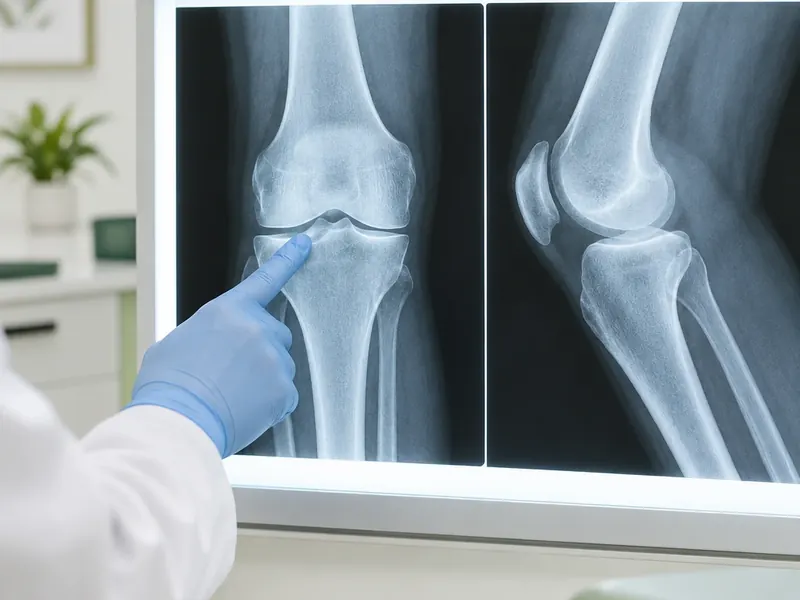
The main points in 30 seconds
- Osteoarthritis usually develops through four stages, from mild early changes to severe damage.
- Early stages have the most room for prevention: weight, exercise and protecting the joint matter most.
- PRP is most useful at stages 1–2 and SVF at stages 2–3, after a doctor reviews the scans.
- Inflammatory arthritis is treated by a rheumatologist; PRP and SVF do not replace this treatment.
- At stage 4 injections may ease pain for a time, but surgical options are discussed openly.
Osteoarthritis stages at a glance
Osteoarthritis is a condition in which the smooth cartilage inside a joint gradually thins and becomes rough, the space between the bones narrows and the bone underneath reacts by thickening and forming small bony growths. It most often affects the knees, hips, hands, spine and shoulders.
Doctors usually describe four stages, based on symptoms and on how the joint looks on X-rays or MRI. The stages are a guide rather than strict boxes: symptoms do not always match the scan, and two people with the same stage can feel very different.
1 – early
- What happens in the joint
- First changes in the cartilage, joint space almost normal
- Typical symptoms
- Mild ache after exertion, sometimes no symptoms
2 – mild
- What happens in the joint
- Cartilage thinning, small bony growths, space slightly narrower
- Typical symptoms
- Pain after activity, stiffness in the morning or after rest
3 – moderate
- What happens in the joint
- Clear narrowing of the joint space, rougher surfaces
- Typical symptoms
- Pain with everyday movements, crackling, swelling, reduced range
4 – severe
- What happens in the joint
- Little cartilage left, bone rubbing on bone, deformity
- Typical symptoms
- Pain at rest and at night, marked stiffness, limp or deformity
Stage 1: early changes and warning signs
At the earliest stage the changes are microscopic or barely visible on scans. Many people feel nothing at all; others notice a mild ache after a long walk, a sports session or kneeling, which passes with rest. Occasional stiffness after sitting may also appear.
This is the stage with the most room for prevention. Keeping a healthy weight, strengthening the muscles around the joint, avoiding repeated overload and treating old injuries properly can slow further change. Because symptoms are mild, this stage is often missed, which is why persistent joint discomfort is worth checking even when it seems minor.
Stage 2: pain, stiffness and narrowing joint space
At stage 2 the cartilage is noticeably thinner and small bony growths (osteophytes) may appear at the edges of the joint. On X-rays the joint space is still largely preserved but starts to narrow.
Typical complaints are pain after activity, stiffness in the morning that eases within half an hour, and discomfort when starting to move after rest. The joint still works well most of the time. This stage responds well to a combination of exercise therapy, weight management, pain relief prescribed by a doctor and, in suitable cases, regenerative injections.
Stage 3 and 4: deformity and limited movement
At stage 3 the joint space is clearly narrowed and the joint surfaces are rough. Pain comes with ordinary activities such as walking, climbing stairs or getting up from a chair. The joint may swell after exertion, crackle and lose part of its range of motion.
At stage 4 little cartilage remains and the bones rub against each other. Pain can be present at rest and at night, stiffness is marked and the joint may become visibly deformed: in the knee, for example, the leg can bow. Walking distance shrinks and daily life becomes limited. At this stage non-surgical treatment can still ease symptoms for some people, but joint replacement is often discussed.
Who is at risk and when to see a doctor
The risk of osteoarthritis rises with age, but age is not the only factor. Others include:
- excess body weight, which increases the load on the knees and hips;
- previous joint injuries, such as fractures, meniscus or ligament tears;
- repeated heavy loading at work or in sport;
- family history and joint shape;
- female sex, especially after menopause.
See a doctor if joint pain lasts longer than a few weeks, if the joint swells, locks or gives way, or if pain wakes you at night. A red, hot, very painful joint, joint pain with fever, or swelling of several joints at once needs prompt attention, because it may be an infection or an inflammatory arthritis. Inflammatory conditions such as rheumatoid arthritis are treated by a rheumatologist; PRP and SVF do not replace that treatment.

What can be done at each stage: support, PRP, SVF
Treatment is matched to the stage and to how much the joint limits your life. In practice the options build on each other:
- at every stage: regular exercise and physiotherapy, weight control, suitable footwear, pacing activity and pain relief prescribed by a doctor;
- stages 1–2: PRP, platelet-rich plasma prepared from your own blood, may be added to calm inflammation and support the tissues inside the joint;
- stages 2–3: SVF, a cell fraction obtained from a small sample of your own adipose tissue and combined with plasma, is usually considered when changes are more pronounced and a longer-lasting effect is the goal;
- stage 4: injections may still reduce pain for a time, but the realistic options, including surgery, are discussed openly.
Other injections exist too, such as injections of a lubricating gel or anti-inflammatory hormone injections; these are general information, and their choice belongs to your treating doctor. Whatever the method, the effect of injections differs from person to person and depends on the stage, body weight and activity, so no one can promise a fixed result. How PRP and SVF are carried out step by step is described on the joint treatment page.
When injections are not enough
Injections are most useful while the joint still has cartilage to protect. They become less effective when bone rubs on bone, the joint is markedly deformed or pain limits walking even after a well-conducted course of treatment.
Signs that it is time to discuss surgery with an orthopaedic surgeon include pain at rest and at night that no longer responds to treatment, a clear loss of mobility, repeated falls or a joint that gives way. Joint replacement is major surgery with a long rehabilitation, so it is worth making this decision with a clear view of your scans and of what has already been tried.

Getting a personal plan at City Medical Centre
City Medical Centre offers PRP and SVF cell therapy for the knee, hip, shoulder, elbow, ankle and small joints of the hand, including meniscus problems. The procedure is done in one day under local anaesthetic, injections are placed under ultrasound guidance, and there are no crutches or hospital stay. Follow-up visits take place after one, three and six months: pain usually eases during the first month, mobility improves over about three months and the full effect develops over around six months.
City Medical Centre does not perform joint replacement surgery and does not give lubricating gel or hormone injections into the joint.
The clinic works with patients from abroad. The first consultation and the review of your scans are free and can be done online: send your X-rays, MRI or ultrasound results and describe your symptoms. The doctor assesses the stage, tells you honestly whether PRP or SVF makes sense in your case and, if so, names the cost, which is then fixed in the contract. A personal coordinator stays with you from the first message to the follow-up visits, and questions can be sent by Telegram. Find out more on the osteoarthritis treatment page.
Sources
Frequently asked questions
How many stages of osteoarthritis are there?
Doctors usually describe four stages, from early changes with little or no pain to severe damage with bone rubbing on bone. The stage is judged from symptoms together with X-rays or MRI, and symptoms do not always match the scan exactly.
Can osteoarthritis be stopped at an early stage?
Worn cartilage does not grow back fully, but progression can often be slowed. Keeping a healthy weight, strengthening the muscles around the joint, avoiding overload and treating injuries properly make the biggest difference at stages 1 and 2, and injections may be added when symptoms appear.
Which stage of osteoarthritis responds to PRP?
PRP is usually most useful at stages 1 and 2, when the joint still has a good amount of cartilage. At stage 3 SVF is more often considered. At stage 4 injections may ease pain for a time, but the doctor also discusses surgical options. The decision is made after reviewing your scans.
How fast does osteoarthritis progress?
It varies widely. In many people it develops slowly over years; in others, especially after an injury or with excess weight, it can progress faster. Regular follow-up and repeated scans when symptoms change help to see how quickly the joint is changing.
When should I see a doctor for joint pain?
If pain lasts more than a few weeks, the joint swells, locks or gives way, or pain wakes you at night. A hot, red, very painful joint, joint pain with fever or swelling of several joints needs prompt care, as it may be an infection or inflammatory arthritis treated by a rheumatologist.
Have a question about your case? Get a free consultation
Message a coordinator on Telegram: we reply right in the chat, and you can send photos and questions there too.
- The first consultation is free, online consultations are available
- The doctor names the cost after the assessment, and it is fixed in the contract
- A personal coordinator guides you from the first message to recovery
Message our coordinator on Telegram
We reply right in the chat — you can send photos
Message us on TelegramBy sending a message, you agree to the privacy policy
Read also
 Osteoarthritis treatment
PRP or SVF therapy for knee osteoarthritis: how the two methods compare
PRP or SVF cell therapy for knee osteoarthritis: how each is prepared, which stage it suits, what to expect and when, contraindications and recovery.
 Osteoarthritis treatment
Hip replacement or joint injections: how to decide what suits your hip
Hip replacement or injections for hip osteoarthritis? How the stage decides, what PRP and SVF can do, what surgery involves, and how recovery compares.
 Rhinoplasty
Osteotomy in rhinoplasty: when the nasal bones need reshaping
What osteotomy in rhinoplasty is, when the nasal bones need reshaping, the main types, how the operation goes and what recovery with bruising and a splint looks like.