


























Osteoarthritis treatment6 min read
Hip replacement or joint injections: how to decide what suits your hip
When a hip hurts every day, the question soon comes up: is it time for a new joint, or can injections still help? There is no single answer for everyone. The choice depends mostly on how damaged the joint is, how much the pain limits your life and what you expect from treatment. This guide compares both paths honestly so you can discuss them with a doctor.
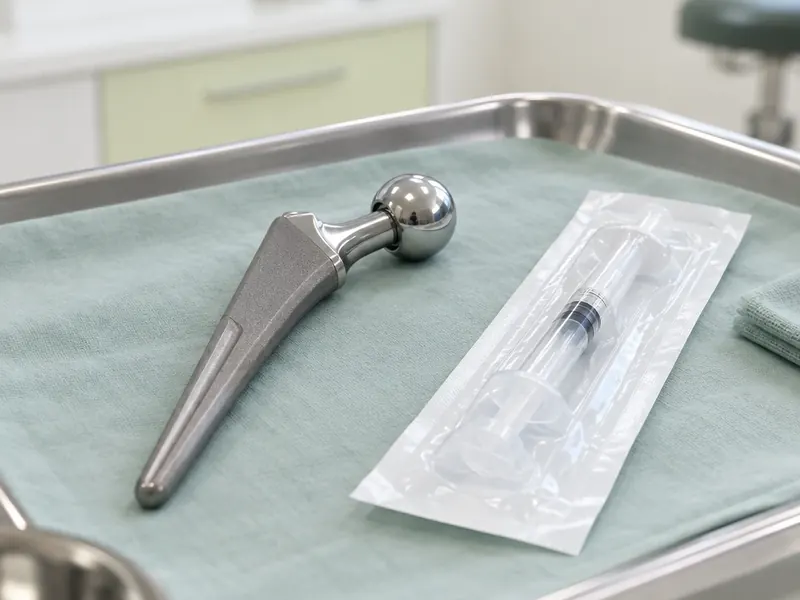
The main points in 30 seconds
- The stage of joint damage, not age alone, is the main factor in the choice.
- Injections suit early and moderate osteoarthritis and aim to ease pain and delay surgery.
- Hip replacement is usually the most reliable option when the joint is badly worn.
- Recovery after injections takes days; after replacement it usually takes months.
- At City Medical Centre the doctor reviews your scans and offers PRP or SVF with PRP if they fit.
Hip replacement or injections: how to decide
Hip replacement and joint injections are not competitors. They are tools for different situations. Injections try to make life with your own joint easier and to slow the disease. Replacement removes the worn joint surfaces and puts an artificial joint in their place.
In practice, the decision rests on three questions:
- How much cartilage is left, according to your X-ray or MRI?
- How strongly does pain limit walking, sleep and work?
- What have you already tried, and how well did it help?
Your age, weight, general health and personal plans also matter. A decision made on scans and symptoms together is almost always better than one made on a single figure or on fear of surgery.
What stage of hip damage you are dealing with
The stage of osteoarthritis is the starting point. An X-ray shows the width of the joint space, which reflects how much cartilage remains, as well as bony spurs and changes in the shape of the joint. MRI adds detail about the cartilage, the bone under it and the soft tissues.
Early
- Typical picture
- Slight narrowing of the joint space, pain after long activity
- Usual direction of treatment
- Exercise, weight control, injections if needed
Moderate
- Typical picture
- Clear narrowing, bony spurs, limited rotation
- Usual direction of treatment
- Conservative treatment and injections; surgery discussed if they fail
Advanced
- Typical picture
- Joint space almost gone, pain at rest and at night
- Usual direction of treatment
- Replacement is usually considered
Symptoms do not always match the scans. Some people with marked changes on X-ray walk well, while others with moderate changes are in severe pain. This is why the doctor looks at both.

What joint injections can realistically achieve
Injections into the hip are usually given under ultrasound or X-ray guidance, because the joint lies deep. Several types are used:
- Steroid injections can calm a painful flare quickly, but the effect is often short and they are not repeated often.
- Injections of a lubricating gel into the joint are meant to help it move more smoothly; the evidence for the hip is mixed.
- PRP (platelet-rich plasma) is made from your own blood and contains growth factors that may reduce inflammation.
- SVF (stromal vascular fraction) is a mix of cells from a small sample of your own fat tissue, usually combined with PRP.
Realistic goals of injections are less pain, easier movement and more time before surgery becomes necessary. They cannot rebuild a joint that has lost its cartilage, and they work best at early and moderate stages. Results differ between people, and research on regenerative methods is still developing. How PRP and SVF are done is described on our osteoarthritis treatment page.
What hip replacement involves
In a total hip replacement, the surgeon removes the damaged head of the thigh bone and the worn surface of the socket and replaces them with artificial parts made of metal, ceramic or durable plastic. Sometimes only part of the joint is replaced or the joint surface is resurfaced. The operation is done under general or spinal anaesthesia and usually takes one to two hours.
For people with advanced osteoarthritis, replacement is one of the most successful operations in orthopaedics. Most patients get much less pain and walk better afterwards. Modern artificial joints usually last many years, although a revision operation may be needed later in life, especially for younger and very active people.
Replacement is major surgery. It needs careful preparation, a hospital stay and a structured rehabilitation programme.
Risks and recovery: surgery vs injections
The two options differ greatly in how much they ask of your body and your time.
Anaesthesia
- Joint injections
- Local
- Hip replacement
- General or spinal
Hospital stay
- Joint injections
- Usually none, home the same day
- Hip replacement
- Usually a few days
Return to daily activities
- Joint injections
- Within a day or two
- Hip replacement
- Walking with support at first; everyday tasks over several weeks
Full recovery
- Joint injections
- Effect develops over weeks to months
- Hip replacement
- Usually several months, with physiotherapy
Main risks
- Joint injections
- Temporary soreness, rarely infection
- Hip replacement
- Blood clots, infection, dislocation, leg length difference, wear of the implant over time
After injections, the joint may ache a little more for a few days. After replacement, you learn to walk with crutches, follow precautions for the new hip and do daily exercises for months. Both paths need you to stay active and keep a healthy weight.

When injections are not enough
Injections should not be used to put off an operation that is clearly needed. It is time to talk to an orthopaedic surgeon about replacement when:
- pain wakes you at night or stays at rest;
- you can walk only a short distance, even with a stick;
- the hip has become stiff and the leg seems shorter;
- scans show the joint space has almost disappeared or the head of the femur has collapsed;
- several months of well-planned conservative treatment and injections have not helped.
A good doctor tells you honestly when your joint is past the point where injections make sense. Equally, a moderate stage with manageable pain is usually not a reason to rush into surgery.
Getting a personal plan at City Medical Centre
City Medical Centre works with international patients who want to understand their options before deciding. At our clinic the doctor offers non-surgical treatment of hip osteoarthritis with two methods: PRP therapy from your own blood, and cell therapy with SVF from your own fat tissue combined with PRP, both given under ultrasound guidance.
Hip replacement and other types of injections are described in this article as general information; which option suits you is decided at the consultation, and if the stage is too advanced for injections, the doctor will say so.
The first consultation is free and can be held online. Send your X-rays, MRI or reports, and the doctor will assess the stage and explain what can realistically be expected. The cost is named after the assessment and fixed in the contract. A personal coordinator stays with you from your first message to the end of recovery, and scans and questions can be sent by Telegram. More details are on our osteoarthritis treatment page.
Sources
Frequently asked questions
Can injections delay hip replacement?
At early and moderate stages, injections combined with exercise and weight control may ease pain and help some people put off surgery for a time. How long depends on the stage, activity and body weight. Injections do not restore lost cartilage, and at an advanced stage they rarely give a lasting effect.
At what stage is hip replacement necessary?
Replacement is usually considered at the advanced stage, when the joint space has almost disappeared, pain is present at rest or at night and walking is severely limited despite months of other treatment. The decision is made together with an orthopaedic surgeon based on symptoms, scans and general health.
Do PRP injections work for severe hip arthritis?
PRP works best at early and moderate stages. In severe osteoarthritis, when little cartilage is left, it may ease pain only for a short time or not at all. A doctor reviews your scans to judge whether PRP makes sense or whether other options should be discussed.
How long is recovery after hip replacement compared to PRP?
After PRP most people go home the same day and return to normal activity within a day or two, while the effect develops over weeks. After hip replacement, patients usually walk with support within a day or two, but full recovery with physiotherapy typically takes several months.
What scans do I need to decide on hip treatment?
An X-ray of the pelvis and hips is the main test and shows the stage. MRI gives more detail about cartilage, bone and soft tissues and helps at early stages. Ultrasound shows fluid and inflammation. Blood tests help rule out inflammatory arthritis. Recent scans can often be reviewed before a visit.
Have a question about your case? Get a free consultation
Message a coordinator on Telegram: we reply right in the chat, and you can send photos and questions there too.
- The first consultation is free, online consultations are available
- The doctor names the cost after the assessment, and it is fixed in the contract
- A personal coordinator guides you from the first message to recovery
Message our coordinator on Telegram
We reply right in the chat — you can send photos
Message us on TelegramBy sending a message, you agree to the privacy policy
Read also
 Osteoarthritis treatment
Knee osteoarthritis: stages, symptoms and treatment without surgery
Knee osteoarthritis stage by stage: why it develops, typical symptoms, how it is diagnosed and which non-surgical options, including PRP and SVF, suit each stage.
 Osteoarthritis treatment
Living with knee or hip osteoarthritis: exercise, weight and daily habits
How to live well with knee or hip osteoarthritis: safe exercise, weight, footwear and insoles, daily adjustments, and how habits support PRP or SVF treatment.
 Breast augmentation
A Short History of Breast Augmentation and Modern Implants
How breast augmentation developed: early experiments, the first silicone implants, safety debates and how modern implants differ in material, shape and surface.