


























Hair transplantCzechia5 min read
Did Martin Prágr have a hair transplant? Yes, and he showed the result
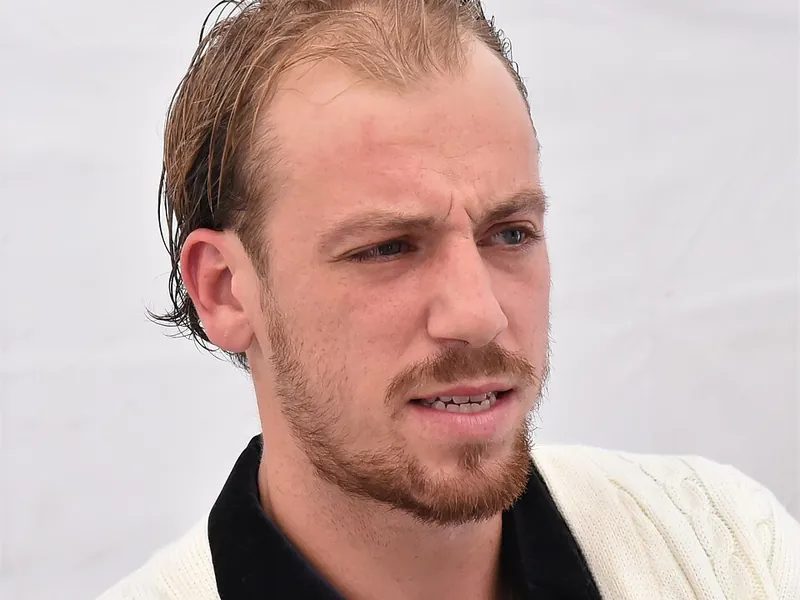
The Czech dancer Martin Prágr, known from the television competition StarDance, showed off his new hair half a year after a transplant and said openly that he is not ashamed of the procedure. Below is what he said, where it was published, and what the operation involves for anyone considering it today.
By messaging us, you agree to our Privacy Policy
Medically reviewed by Ellina V. Goncharova, dermatovenereologist, trichologist, surgeon. Review date: .
The main points in 30 seconds
- A week after his transplant, Martin Prágr told Extra.cz he'd spent a year deciding; op was June 2025.
- It didn't hurt, he said, lucky with real professionals; later he boasted: “Look how my hair has lived.”
- He isn't ashamed, hopes to be a trailblazer for other men; Super.cz said he flew to Turkey for it.
- A hair transplant is outpatient, local, FUE or DHI; hairs shed weeks 2–4, density clear by ~6 mo.
- At City Medical Centre FUE is from $2,200, DHI from $2,500, with follow-ups, lifetime guarantee.
Key facts about the procedure
- Stay in clinicSame day
- Final result12–18 months
- AnaesthesiaLocal
- Price
$2,700from $2,200
I gave it a whole year. I looked into everything — of course it’s a procedure, so I didn’t want to take it lightly. I’m now a week after the transplant.
What did Martin Prágr say about his hair transplant?
Super.cz later reported that the dancer flew to Turkey for the procedure. A week after it, Prágr confirmed the transplant himself in an interview for Nova.cz, explaining what pushed him to finally do it after a year of research.
Hair Transplant London, Hair Transplant Dublin — price and consultation.
Price in your country — message us on WhatsApp
WhatsAppExtra.cz quoted him: “I gave it a whole year. I looked into everything — of course it’s a procedure, so I didn’t want to take it lightly. I’m now a week after the transplant.” Asked how he felt, he added: “It doesn’t hurt at all. I have to say I was lucky to pick guys who are real professionals, and I looked into it a lot.” Half a year later, Super.cz quoted him showing off the result: “Look how my hair has lived. Half a year. I still can’t quite believe it.”, adding that he is not ashamed of the procedure and hopes to be a trailblazer for other young men.
That is all this article relies on. Prágr did not name the clinic or the surgeon in Turkey himself, and the only timing he gave was being a week past the procedure in early June 2025; we do not guess beyond that. Where the text below explains hair transplant methods and recovery, it describes the operation in general, not his treatment.
Why his openness matters
Prágr is a professional dancer who has spent years in the public eye on StarDance, the Czech version of Dancing with the Stars, where appearance is part of the job. Instead of staying quiet about thinning hair, he chose to show the result and explain his reasoning — that talking about it openly can make the decision easier for other men.
More on this topic: Hair Transplant, DHI Hair Transplant, Beard Transplant, FUE & DHI Hair Transplant in Singapore, FUE & DHI Hair Transplant in Málaga.
Hair loss in men is common and in most cases genetic (androgenetic alopecia); a transplant does not stop that process, it moves hair resistant to it from the back of the head to the areas that have thinned.

Hair transplant abroad: choose a city and clinic
Prices, the clinic and a free online consultation for each city:
How a hair transplant works today
A modern hair transplant is an outpatient operation under local anaesthesia. Follicles are taken one by one from a dense donor area, usually the back of the head, and implanted where hair is missing. The two main techniques are:
- FUE — grafts are extracted individually through tiny punctures, then placed into channels made by the surgeon. No linear scar, no stitches.
- DHI — grafts are implanted directly with a special pen (Choi implanter) without pre-made channels, giving fine control over angle and direction.
How grafts are placed
- FUE
- Into channels prepared in advance
- DHI
- Directly with an implanter pen
Anaesthesia
- FUE
- Local
- DHI
- Local
Stitches
- FUE
- None
- DHI
- None
Typical use
- FUE
- Larger areas, more grafts
- DHI
- Hairline and dense packing of smaller areas
Price at City Medical Centre
- FUE
- $2,200
- DHI
- $2,500
A combined approach (FUE extraction with DHI implantation) is also used. Which option fits depends on the extent of hair loss and the donor area, decided at a consultation, not from a celebrity story.
Who is a good candidate and how to prepare
A transplant works best when the donor area at the back of the head is dense enough to supply grafts and the hair loss has a clear pattern, such as a receding hairline or thinning crown. There are also contraindications, including patchy (focal) alopecia, age under 18, trichotillomania, body dysmorphic disorder, severe heart disease, diabetes mellitus, epilepsy and intolerance to anaesthetics, all checked by the surgeon before any date is booked.
What recovery looks like
The scalp heals over the first 7–10 days, with small crusts falling off as you follow washing and sleeping instructions. Transplanted hairs typically shed in weeks 2–4 — this is expected, the follicles stay in place under the skin — and new growth begins around months 3–4, often fine at first.
By about six months, which is when Prágr showed his result, density is already clearly visible, and the final picture is judged at 12–18 months.

How recovery after a hair transplant usually goes
- Day of surgeryLocal anaesthesia; grafts are taken and implanted, then you go home.
- Days 1–10The scalp heals, crusts fall off; follow washing and sleeping instructions.
- Weeks 2–4Transplanted hairs shed — expected; follicles remain under the skin.
- Months 3–4New hair begins to grow, often fine at first.
- About 6 monthsDensity is already clearly visible, as in Prágr's own case.
- Months 12–18The final result can be assessed.
A hair transplant at City Medical Centre
City Medical Centre performs FUE, DHI and combined hair transplants for international patients, and the first consultation is free and can be held online: the doctor reviews photos of the hair and donor area, estimates the number of grafts and names the price, fixed in the contract. Current prices start from $2,200 for FUE and $2,500 for DHI.
The price includes follow-up appointments at 1, 3, 6, 9 and 12 months, and the clinic gives a lifetime guarantee of hair growth. More details are on the hair transplant page.
To be clear: City Medical Centre has no connection with Martin Prágr or his treatment. His story is simply a well-known example of a man who talked openly about the procedure.
Hair transplant prices in this article are the current offer, valid until 30 November 2026. Regular prices: FUE $2,700, DHI $2,900, combined method $2,900. The price that applies to you is confirmed at the consultation.
Frequently asked questions
When did Martin Prágr have his hair transplant?
He showed the result about half a year later in an interview published in late November 2025, which places the procedure around mid-2025; he did not give an exact date.
Why did Martin Prágr talk about it openly?
He said he could be a trailblazer for other young men, and that there is nothing embarrassing about a hair transplant and he isn't ashamed of it.
Which method did he use?
He did not say publicly which technique was used, though Super.cz reported he had the procedure done in Turkey. Today most transplants are done by FUE, DHI or a combination; the choice depends on the individual's hair loss and donor area.
Is a hair transplant permanent?
Transplanted follicles come from the back of the head, where hair is resistant to genetic hair loss, so they usually keep growing for life. Surrounding native hair can still thin over the years, which the doctor takes into account when planning.
How much does a hair transplant cost at City Medical Centre?
Prices start from $2,200 for FUE and $2,500 for DHI. The final price is given after the free consultation and fixed in the contract.
Sources
What the article says about the celebrity is based only on these public statements.
Medical background and further reading
General information about the procedure from health authorities and medical societies. It is not advice for any individual patient.
- PubMed / NCBI — Follicular Unit Extraction for Hair Transplantation: An Update (Actas Dermosifiliogr, 2017)
- PubMed / NCBI — Donor site healing in follicular unit extraction hair transplantation (Cell Mol Biol, 2025)
- International Society of Hair Restoration Surgery — Hair loss treatments and solutions
How we prepare and review medical content · Medical disclaimer
Considering the same operation? Get a free consultation
Message a coordinator on Telegram: we reply right in the chat, and you can send photos and questions there too.
- The first consultation is free, online consultations are available
- The doctor names the cost after the assessment, and it is fixed in the contract
- A personal coordinator guides you from the first message to recovery
In other cities
Read also
 Hair transplant
Dominik Vodička and his hair transplant: the story in his own words
StarDance winner Dominik Vodička spoke openly about his hair transplant and the years of shame before it. What he said, how the procedure works and what to expect.
 Hair transplant
Did Marian Vojtko have a hair transplant? Yes, and he talked about it openly
Singer Marian Vojtko spoke openly about several hair transplant sessions. What he said, how the procedure works and how results develop.
 Hair transplant
Did Tomáš Polák have a hair transplant? Yes, twice
Czech singer Tomáš Polák confirmed two hair transplants, in Turkey and Hungary, and later said what he paid. His words, how the procedure works and recovery.
 Hair transplant
Hair Transplant Cost by Country: What Drives the Price and How to Compare Clinics Abroad
Why hair transplant prices differ by country, what really drives the cost, how to compare Turkey, the UK and the US fairly, and what FUE and DHI cost.