























Rhinoplasty6 min read
Deviated septum: symptoms, diagnosis and when surgery helps
The septum is the wall of cartilage and bone that divides the nose into two passages. In most adults it is not perfectly straight, and for many people this never causes a problem. For others, a bend in the septum means a constantly blocked side of the nose, mouth breathing at night and frequent sinus trouble. This guide explains how to tell a normal variation from a problem, how the septum is examined, what sprays can and cannot do, and when surgery is the right step.

The main points in 30 seconds
- A slightly crooked septum is common and needs treatment only when it blocks breathing.
- Constant one-sided blockage, mouth breathing at night and repeated sinus problems are reasons to be examined.
- An examination of the nose and a CT scan confirm the diagnosis.
- Sprays ease swelling but cannot straighten the septum.
- Rhinoseptoplasty corrects breathing and the shape of the nose in one operation.
Key facts about the procedure
- Operation time1.5–3 hours
- Main healing4 months
- Stay in clinic1 day
- Price
$6,000from $4,200
Deviated septum: when surgery helps
A deviated septum is a septum that leans to one side or has a bend, spur or thickening that narrows one or both nasal passages. It can be present from birth, develop as the face grows or result from an injury, sometimes one that was barely noticed at the time.
Surgery is not needed simply because the septum is crooked. It is considered when the deviation clearly blocks airflow and causes symptoms that affect daily life, sleep or sinus health, and when other treatment has not helped enough. If the outer nose is also crooked or its shape bothers you, the septum and the external nose can be corrected together.
Normal variation or a problem?
Most people have some asymmetry inside the nose. A slight deviation that causes no symptoms is a normal variation and needs no treatment. It becomes a medical problem when the narrowing is significant enough to limit breathing.
It also helps to know that nasal congestion has many causes. Allergies, a common cold, enlarged turbinates (the soft structures on the side walls of the nose), polyps and overuse of decongestant sprays can all block the nose, alone or together with a deviated septum. That is why an examination matters more than a guess.
Breathing
- Usually a normal variation
- Free on both sides most of the time
- More likely a problem
- One side blocked almost constantly
Sleep
- Usually a normal variation
- Nose breathing at night
- More likely a problem
- Mouth breathing, dry mouth, loud snoring
Sinuses
- Usually a normal variation
- Occasional colds
- More likely a problem
- Repeated sinus infections or pressure
Exercise
- Usually a normal variation
- No difficulty
- More likely a problem
- Need to breathe through the mouth quickly
Outer nose
- Usually a normal variation
- Straight
- More likely a problem
- Visibly crooked, especially after an injury
Symptoms that should prompt a visit
It is worth seeing a specialist if you notice:
- one nostril that is blocked most of the time, not only during colds;
- breathing through the mouth at night, a dry mouth in the morning or loud snoring;
- frequent sinus infections, facial pressure or headaches linked to congestion;
- nosebleeds from a dry area of the septum;
- a nose that became crooked after an injury;
- a feeling that you depend on decongestant sprays to breathe.
Sudden one-sided blockage with bleeding, pain or a change in the face should always be checked promptly, because it can have other causes.
Diagnosis: how the septum is examined
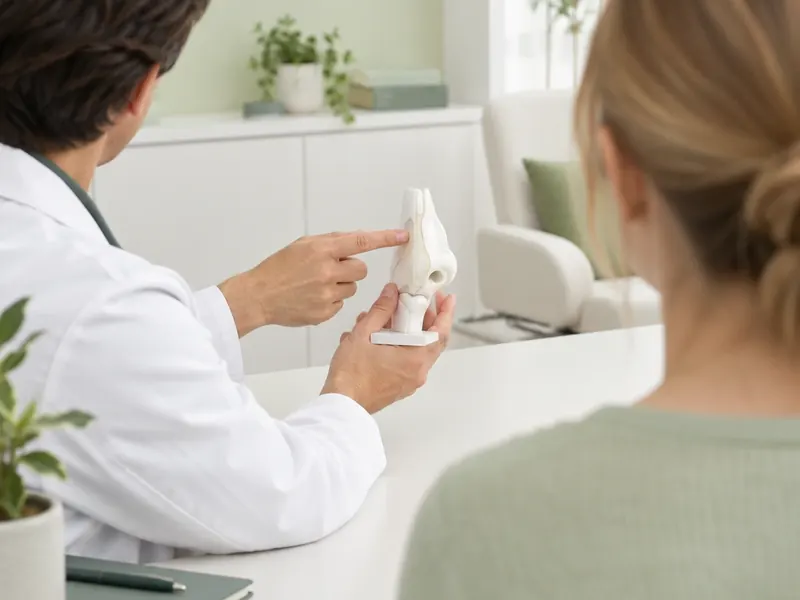
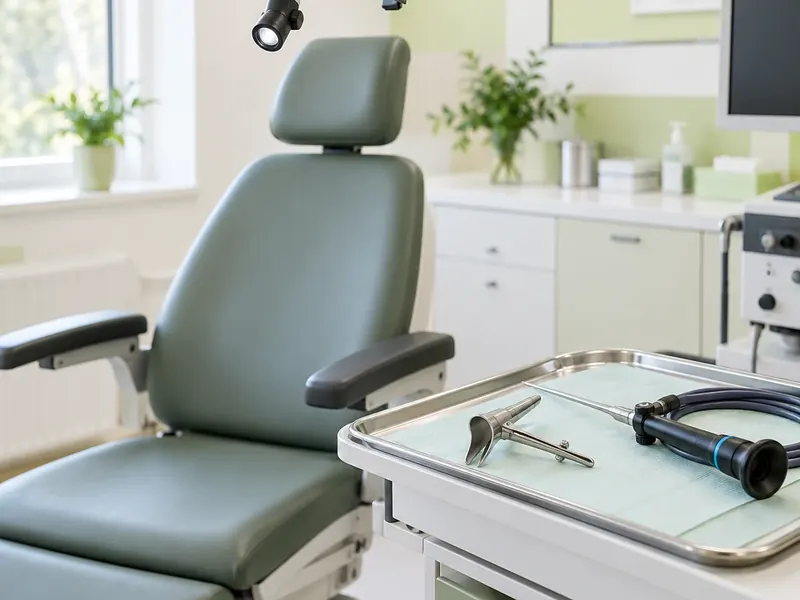
The examination starts with questions about your breathing, sleep, allergies, previous injuries and any sprays you use. The doctor then looks inside the nose with a light, often after using a decongestant to shrink the lining, so that the septum and turbinates can be seen clearly. A thin camera (endoscope) may be used to see further back.
A CT scan of the nose and sinuses shows the exact shape of the septum, the bones and the state of the sinuses. It is especially useful when surgery is being planned, when sinus disease is suspected or when the nose has been injured before. Photos of the outer nose from several angles are added if the shape of the nose is also a concern.
Treatment: why sprays only relieve symptoms
Medicines cannot straighten cartilage or bone. What they can do is reduce swelling of the lining, which makes the remaining airway feel more open. Doctors may recommend:
- saline rinses to keep the lining moist and clean;
- anti-inflammatory nasal sprays prescribed by a doctor, especially if allergies play a role;
- treatment of allergies when they are present;
- short-term use of decongestant sprays only, because using them for more than a few days can cause rebound congestion.
If symptoms remain troublesome despite this, the obstruction is mechanical and the solution is surgical. Nasal strips and similar devices can help a little at night but do not change the septum.
Septoplasty and septorhinoplasty: what to expect
The operation that straightens only the septum is called septoplasty. It is done through the nostrils, the outside of the nose is not changed and there are no visible scars.
This is general information: at City Medical Centre the septum is corrected as part of rhinoseptoplasty, which is chosen at the consultation depending on your anatomy and goals.
Rhinoseptoplasty, also called septorhinoplasty, corrects the septum and the shape of the nose in one operation. It suits people who have both breathing problems and a crooked nose, a hump or a tip they would like to change, as well as those whose nose was injured. Doing both at once means one anaesthesia and one recovery, and the surgeon can make sure the new shape supports good airflow.
The operation is performed under general anaesthesia. For the first days splints sit in the nostrils and you breathe mainly through your mouth; they are usually removed after about a week. Full nasal breathing usually returns within one to two weeks, and a feeling of slight congestion can last for a month or so. If the shape of the nose was changed, the final result is judged after one to one and a half years.

Getting a personal plan at City Medical Centre
City Medical Centre performs rhinoseptoplasty and reconstructive rhinoseptoplasty for a deviated septum, as well as closed, open and revision rhinoplasty. Before surgery, tests include a CT scan of the sinuses, and the surgeon examines both breathing and the outer shape of the nose. The operation takes place under general anaesthesia with a one-day stay at the clinic.
Follow-up visits take place at about seven days, three months and six months, and for a year after surgery consultations with your surgeon are free. City Medical Centre does not perform isolated septoplasty: the septum is corrected as part of rhinoseptoplasty.
The clinic works with patients from abroad. The first consultation is free and can be held online: describe your breathing symptoms, send photos of your nose from several angles and any previous scans. The surgeon explains whether rhinoseptoplasty suits your case and names the cost, which is then fixed in the contract; at an in-person consultation you can also see a 3D model of the planned shape. A personal coordinator stays with you from your first message to the end of recovery, and questions can be sent via Telegram. Read more on our rhinoplasty page.
Sources
Frequently asked questions
How do I know if I have a deviated septum?
Common signs are one side of the nose blocked most of the time, mouth breathing at night and frequent sinus problems. Only an examination can confirm it: the doctor looks inside the nose, sometimes with a thin camera, and a CT scan shows the exact shape of the septum.
Can a deviated septum be fixed without surgery?
No. Rinses and sprays prescribed by a doctor can reduce swelling of the lining and ease symptoms, but they cannot straighten cartilage or bone. If the blockage keeps affecting your breathing or sleep, the septum is corrected surgically.
Does a deviated septum cause snoring?
It can contribute. A narrowed nasal passage pushes people to breathe through the mouth at night, which makes snoring more likely. Snoring usually has several causes, so correcting the septum improves nasal breathing but does not always stop snoring completely.
Can septum surgery change how my nose looks?
Septum correction alone does not change the outer shape. If you would also like to straighten a crooked nose, remove a hump or refine the tip, the septum and the shape can be corrected together in rhinoseptoplasty.
How long is recovery after septum surgery?
Splints are usually removed after about a week, and nasal breathing typically returns within one to two weeks. Slight congestion can last about a month. If the outer shape was also changed, swelling settles over months and the final result is judged after one to one and a half years.
Have a question about your case? Get a free consultation
Message a coordinator on Telegram: we reply right in the chat, and you can send photos and questions there too.
- The first consultation is free, online consultations are available
- The doctor names the cost after the assessment, and it is fixed in the contract
- A personal coordinator guides you from the first message to recovery
Message our coordinator on Telegram
We reply right in the chat — you can send photos
Message us on TelegramBy sending a message, you agree to the privacy policy
Read also
 Rhinoplasty
Rhinoplasty, septoplasty or septorhinoplasty: which nose surgery do you need?
Rhinoplasty changes the shape of the nose, septoplasty straightens the septum, septorhinoplasty does both. Compare goals, technique, recovery and who each suits.
 Rhinoplasty
Septoplasty recovery: what to expect and how to heal well
How recovery after septum surgery usually goes: the first days, splints and crusts, when breathing improves, what to avoid and how to support healing.
 Hair transplant
DHI Hair Transplant Explained: the Choi Implanter Technique Step by Step
How DHI hair transplant with a Choi implanter works, the steps from extraction to implantation, how it differs from FUE and FUT, pros, cons and recovery.