


























Breast augmentation5 min read
Breast ultrasound before and after augmentation: why it matters and how often to scan
A breast scan is one of the quiet but essential steps of augmentation. Before surgery it makes sure there is nothing in the breast that needs attention first. After surgery it helps check the implants and the tissue around them for years to come. This guide explains which scans are used, what they can and cannot show, and how breast screening works once you have implants.
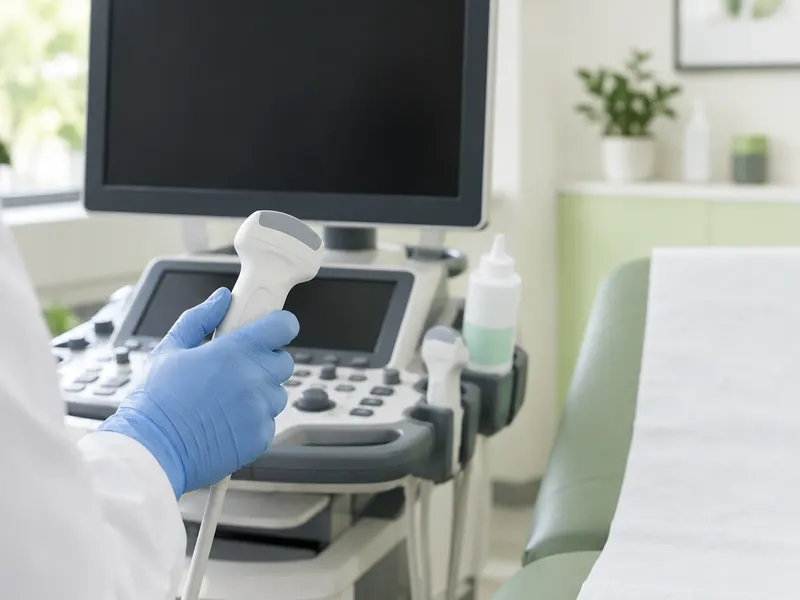
The main points in 30 seconds
- A breast scan before augmentation rules out lumps and gives a baseline for later comparison.
- After surgery, ultrasound checks the implant, fluid, the capsule and the breast tissue.
- Silicone implants are often scanned 5–6 years after surgery, then every 2–3 years.
- Mammography remains possible with implants; tell the radiographer in advance.
- MRI is the most sensitive test for silent rupture of silicone implants.
Key facts about the procedure
- Operation time1.5–3 hours
- Back to work7–14 days
- Stay in clinic1 day
- Fixed price$4,700
Why breast imaging matters before augmentation
Breast augmentation is a planned operation on healthy tissue. Before placing implants, the surgeon needs to be confident that the breasts have no lumps, cysts or other changes that should be investigated or treated first. An examination by hand is important, but imaging shows what cannot be felt.
A pre-operative scan also gives a baseline. If a question arises years later, doctors can compare new images with the picture of your breasts before surgery. This makes it easier to tell a normal post-operative change from something new.
Tests before surgery: ultrasound and other scans
Breast ultrasound is the usual first-line scan before augmentation, especially in younger women whose breast tissue is dense. It is quick, painless and uses no radiation. Depending on age, family history and local guidelines, a mammogram may be added.
Imaging is part of a wider medical work-up. Before breast surgery patients usually have:
- blood tests, including a complete blood count, biochemistry and clotting tests;
- tests for common infections;
- an ECG and a chest X-ray;
- a breast ultrasound and, when indicated, a consultation with a GP, gynaecologist or breast specialist.
If the scan finds something that needs checking, the operation is postponed until the question is answered. This protects both your health and the result of the surgery.
Can implants hide breast disease?
Implants do not cause ordinary breast cancer, but they can make parts of the breast tissue harder to see on a mammogram, because the implant blocks X-rays. The breast tissue itself is still there and can still be examined.
Several things help to keep screening reliable:
- placing the implant under the muscle often leaves more of the breast tissue visible on imaging;
- special mammogram views gently push the implant back and pull the breast tissue forward;
- ultrasound and MRI can be used alongside mammography when needed.
What matters most is telling the imaging team about your implants in advance and continuing regular self-examination and screening.
Ultrasound after augmentation: what it checks
After surgery, ultrasound is a convenient way to look at both the implant and the surrounding tissue. It can show:
- Fluid around the implant
- Early fluid after surgery or a late collection may need assessment
- The implant shell and contour
- Folds or signs of rupture can often be seen
- The capsule around the implant
- Thickening may accompany hardening (capsular contracture)
- Breast tissue and lymph nodes
- New lumps or enlarged nodes are checked as in any breast
Ultrasound is especially useful when you notice a change, such as new swelling, a lump, pain or a change in shape. A rare lymphoma linked mainly to textured implants, BIA-ALCL, usually shows up years later as swelling or fluid around the implant, and ultrasound is typically the first test.

How often to scan breasts with implants
Implants are not lifetime devices, and silicone implants can rupture without symptoms, because the gel usually stays inside the scar capsule. For this reason regulators advise periodic imaging for people with silicone gel implants, even when everything feels normal.
A commonly cited schedule is a first ultrasound or MRI around five to six years after surgery and then every two to three years. Your surgeon or doctor may suggest a different plan depending on the implant type and your health. In addition:
- any new lump, swelling, pain or change in shape deserves a scan without waiting for the next routine check;
- normal breast screening for your age continues as for anyone else.
You can read what the surgical programme includes, from pre-operative tests to follow-up visits, on the breast augmentation page.
Mammography and MRI with implants
Having implants does not exclude you from mammography. Tell the radiographer about your implants when you book and again at the appointment. Special implant displacement views are used, and the compression is adjusted so that the implant is not put under excessive pressure. The risk of a mammogram damaging a healthy implant is very low.
MRI is considered the most sensitive test for detecting silent rupture of silicone implants. It is also used when ultrasound or mammography results are unclear. Ultrasound, mammography and MRI complement each other, and your doctor chooses which one answers the question best.
Screening and follow-up at City Medical Centre
City Medical Centre performs breast augmentation with implants, breast lift with or without implants, breast reduction, implant removal and breast reconstruction. Before surgery every patient completes a medical work-up that includes breast ultrasound, and the surgeon examines the breasts to rule out lumps. After the operation, follow-up visits with the plastic surgeon are planned after 7 days, 3 months and 6 months, and consultations remain available during the first year.
City Medical Centre does not provide long-term breast screening such as routine mammography or MRI years after surgery; this is arranged with your doctor at home. The first consultation is free and can take place online: you can send photos and questions on Telegram. The price is given after the surgeon's assessment and is fixed in the contract, and a personal coordinator supports you from the first message to the end of recovery. Book a consultation on the breast surgery page.
How recovery usually goes
- 7–14 daysReturn to work without physical exertion
- 3 weeksPost-op swelling disappears; scars form; no lifting over 3 kg, no raising arms above shoulder level
- 1 monthThe swelling subsides and the breasts take on a natural shape and softness
- 4–6 weeksFitness, swimming, pool and sea; compression garments worn for 4–6 weeks
- 3 monthsDiscomfort disappears; inflammatory changes resolve and a pocket forms around the implant; strength training
Sources
Frequently asked questions
Do I need a breast ultrasound before augmentation?
Yes, a breast scan is a standard part of preparation. Ultrasound checks that there are no lumps or cysts that should be investigated before surgery and gives a baseline for later comparison. Depending on age and history, a mammogram may be added. If anything needs checking, surgery is postponed.
Can I have a mammogram with implants?
Yes. Tell the radiographer about your implants when you book and at the appointment. Special views gently move the implant aside so that more breast tissue can be seen, and compression is adjusted. The risk of damaging a healthy implant during a mammogram is very low.
How often should implants be checked by ultrasound?
For silicone implants, a commonly cited plan is a first ultrasound or MRI around five to six years after surgery and then every two to three years, even without symptoms. Any new lump, swelling, pain or change in shape should be scanned straight away.
Can ultrasound detect implant rupture?
Ultrasound can often show signs of rupture, folds and fluid around the implant, and it is a good first test. MRI is considered the most sensitive method for detecting silent rupture of silicone implants and is used when ultrasound results are unclear.
Do implants make cancer harder to detect?
Implants can hide part of the breast tissue on a standard mammogram, but special views, ultrasound and MRI help to examine it. Implants do not cause ordinary breast cancer. Tell the imaging team about your implants and keep attending screening for your age.
Have a question about your case? Get a free consultation
Message a coordinator on Telegram: we reply right in the chat, and you can send photos and questions there too.
- The first consultation is free, online consultations are available
- The doctor names the cost after the assessment, and it is fixed in the contract
- A personal coordinator guides you from the first message to recovery
Message our coordinator on Telegram
We reply right in the chat — you can send photos
Message us on TelegramBy sending a message, you agree to the privacy policy
Read also
 Breast augmentation
How long do breast implants last and when do they need replacing?
Breast implants are not lifetime devices. How long they usually last, whether they must be replaced at 10 years, warning signs and regular check-ups.
 Breast augmentation
Contraindications to breast augmentation: who should not have surgery and who should simply wait
Which health conditions rule out breast augmentation, which only delay it, what breast problems must be checked first and which tests confirm you are fit.
 Breast augmentation
Can you breastfeed after breast augmentation? What really matters
Breastfeeding after breast augmentation: how incision and implant placement affect milk supply, lift and reduction, nipple sensation and timing with pregnancy.