























Breast augmentation6 min read
Contraindications to breast augmentation: who should not have surgery and who should simply wait
Breast augmentation is one of the most common cosmetic operations, but it is still surgery under general anaesthesia with an implant left in the body. Some conditions make it unsafe, others only mean postponing it, and some breast findings must be investigated first. This article explains the three groups of contraindications, the tests used before surgery and the restrictions to plan for afterwards.
The main points in 30 seconds
- Contraindications are absolute, temporary or local to the breast
- Pregnancy, recent breastfeeding and infections only delay surgery
- Any breast lump or cyst is checked by ultrasound before surgery
- Standard tests include bloods, clotting, infections, ECG and breast ultrasound
- Plan for several weeks without lifting or raising your arms
Key facts about the procedure
- Operation time1.5–3 hours
- Back to work7–14 days
- Stay in clinic1 day
- Fixed price$4,700
Who should not have breast augmentation
Before any cosmetic operation the surgeon asks one question: are the expected benefits worth the risks for this particular person? For most healthy adults the answer is yes. For some people the risks of anaesthesia, poor healing or complications around the implant are too high, at least for now.
Surgeons usually divide the reasons into three groups:
- absolute — conditions in which surgery is not done;
- relative or temporary — situations in which surgery is delayed until the problem is treated or stable;
- local — findings in the breast itself that need to be checked before any decision.
The final decision is always individual and is made by the surgeon, often together with other specialists.
Absolute contraindications
These are situations in which elective breast surgery is generally not offered, because the operation could seriously harm your health:
- active cancer, including breast cancer that is not yet treated;
- serious heart, lung, kidney or liver disease that makes general anaesthesia unsafe;
- blood clotting disorders with a high risk of bleeding or thrombosis;
- severe autoimmune or systemic diseases in an active phase;
- serious mental health conditions in which a person cannot make an informed decision, or body image disorders in which surgery is unlikely to help.
Some of these conditions can change over time. For example, after successful cancer treatment many women later have breast reconstruction, which is planned together with their oncology team.
Relative contraindications and temporary delays
Much more often, surgery is simply postponed. Common reasons include:
- Pregnancy
- Surgery is not done; it is planned after pregnancy and breastfeeding
- Breastfeeding
- Surgeons usually wait several months after it ends, often at least six, so the breasts settle
- Acute infection, cold or flu
- Postponed until full recovery
- Diabetes that is not well controlled
- Surgery waits until blood sugar is stable, as poor control slows healing
- High blood pressure
- Treated and stabilised first
- Smoking
- You are asked to stop well before and after surgery
- Recent large weight change
- Surgery is usually delayed until weight is stable
- Medicines that affect clotting
- Reviewed and, if safe, paused on your doctor’s advice
Age also matters. Breast augmentation for cosmetic reasons is performed on adults, once the breasts have finished developing. In the United States, for example, the regulator has approved saline implants for augmentation from 18 and silicone gel implants from 22. There is no strict upper age limit: what counts is general health.
Local breast conditions that need checking first
Before placing an implant, the surgeon examines the breasts and the armpits and orders imaging. Some findings do not rule out surgery, but they must be clarified first:
- Cysts — simple fluid-filled cysts are common and often harmless, but they are assessed by ultrasound and sometimes followed up before surgery.
- Fibroadenomas and other lumps — any solid lump is investigated, and a breast specialist decides whether a biopsy or removal is needed.
- Mastitis or skin inflammation — surgery waits until it has fully resolved.
- Nipple discharge — needs to be explained before any operation.
- Marked asymmetry or tuberous breast shape — not a contraindication, but it changes the surgical plan.
Breast imaging before surgery also gives a baseline for future screening. Implants can make mammograms a little harder to read, so it is worth telling the radiographer about them later in life.
Tests used to confirm you are fit for surgery
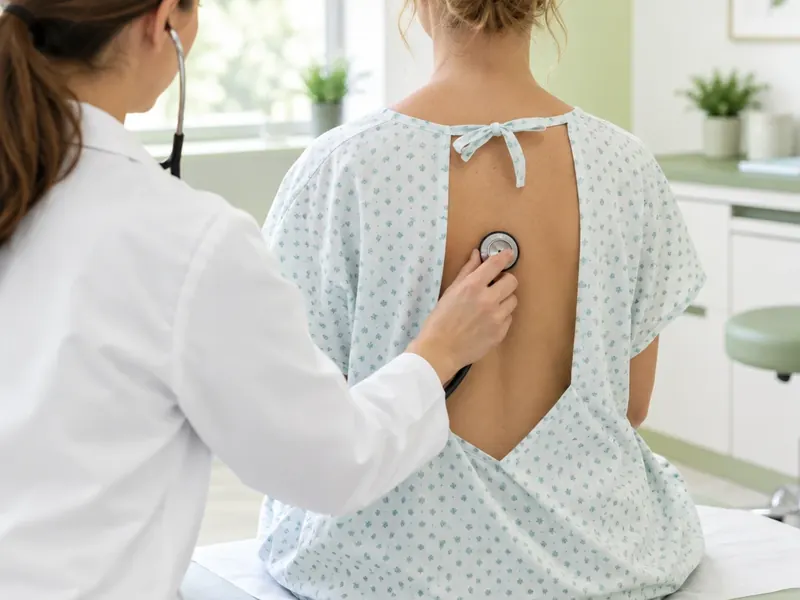
The exact list depends on your age and health, but a typical work-up before breast surgery includes:
- a complete blood count and blood biochemistry;
- a coagulation panel (how well the blood clots);
- tests for infections such as HIV, hepatitis and syphilis;
- an ECG and, where indicated, a chest X-ray;
- breast ultrasound, and mammography for older patients or when indicated.
If needed, a general practitioner, gynaecologist or breast specialist gives an opinion. Tell the surgeon about every medicine and supplement you take, previous operations, allergies and any reaction to anaesthesia in the past. Honest answers are part of your safety.
Recovery restrictions to plan for
Even when there are no contraindications, recovery sets real limits on daily life for several weeks. If you cannot follow them — because of a physically demanding job, small children to lift or travel plans — it is better to choose a different date. Typical restrictions include:
- no heavy lifting for several weeks, often up to about three months;
- not raising the arms above shoulder level for the first weeks;
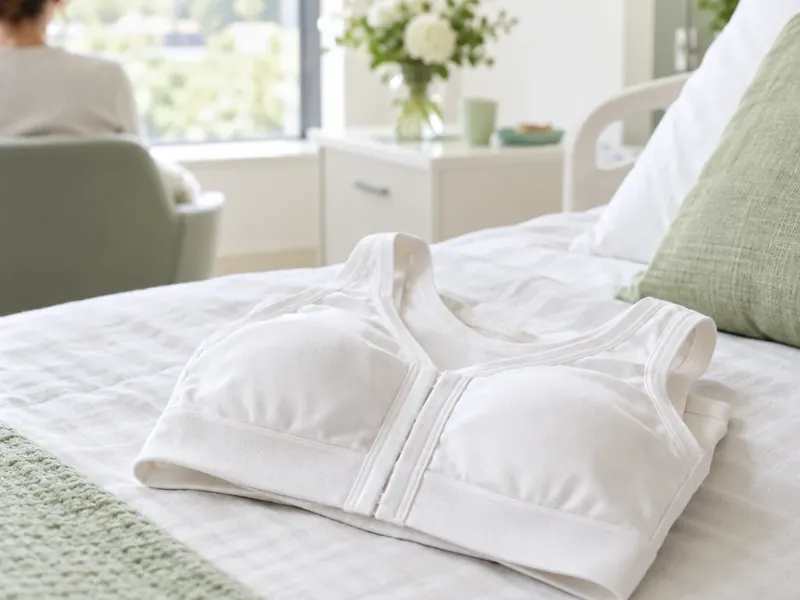
- wearing a compression or support bra for about one to one and a half months;
- no sauna, hot baths or intense sport until the surgeon allows it;
- sleeping on your back for the first weeks.
Implants are not lifetime devices. Some people need another operation years later, for example for capsular contracture or implant replacement, and this is worth knowing when you decide. More about the operation itself is on our breast augmentation page.
Checking your suitability at City Medical Centre
City Medical Centre works with international patients and performs breast augmentation with implants, a breast lift with or without implants, breast reduction, breast reconstruction and implant removal. Other approaches you may read about elsewhere are general information; the right option for you is chosen at the consultation.
The first consultation is free and can be held online. Send photos, list your medical conditions and medicines, and describe your goals. The surgeon assesses whether anything needs to be treated or checked first, tells you which tests are needed and names the cost, which is then fixed in the contract. A personal coordinator stays with you from your first message to the end of recovery, and questions can be sent by Telegram at any stage. Details are on the breast augmentation page.
How recovery usually goes
- 7–14 daysReturn to work without physical exertion
- 3 weeksPost-op swelling disappears; scars form; no lifting over 3 kg, no raising arms above shoulder level
- 1 monthThe swelling subsides and the breasts take on a natural shape and softness
- 4–6 weeksFitness, swimming, pool and sea; compression garments worn for 4–6 weeks
- 3 monthsDiscomfort disappears; inflammatory changes resolve and a pocket forms around the implant; strength training
Sources
Frequently asked questions
Can I have breast augmentation with diabetes?
Often yes, if the diabetes is well controlled. Poorly controlled blood sugar slows wound healing and increases the risk of infection, so the surgeon looks at your recent results and may ask your endocrinologist for an opinion. If control is poor, surgery is postponed until it improves.
Is there an age limit for breast augmentation?
Cosmetic augmentation is done in adults whose breasts have finished developing. Some regulators set minimum ages for particular implant types, for example 22 for silicone gel implants in the United States. There is no fixed upper limit; older patients are assessed mainly on their general health.
Can I have surgery if I have breast cysts?
Simple cysts are common and usually do not rule out surgery, but they must be examined by ultrasound first. If a cyst looks unusual or there is a solid lump, a breast specialist decides what further tests are needed. The operation is planned only after the findings are clear.
How long after breastfeeding can I have breast surgery?
Surgeons usually recommend waiting several months after breastfeeding ends, often at least six, so that milk production stops and the breast tissue settles into its final size and shape. Your surgeon will confirm the timing after examining you.
Which tests are needed before breast augmentation?
Typically a blood count, biochemistry, clotting tests, infection screening, an ECG and breast ultrasound, with a chest X-ray, mammography or specialist opinions when indicated. The exact list depends on your age and health and is given to you at the consultation.
Have a question about your case? Get a free consultation
Message a coordinator on Telegram: we reply right in the chat, and you can send photos and questions there too.
- The first consultation is free, online consultations are available
- The doctor names the cost after the assessment, and it is fixed in the contract
- A personal coordinator guides you from the first message to recovery
Message our coordinator on Telegram
We reply right in the chat — you can send photos
Message us on TelegramBy sending a message, you agree to the privacy policy
Read also
 Breast augmentation
Breast augmentation FAQ: honest answers to the questions patients ask most
Breast augmentation questions answered: who is a candidate, how implant size is chosen, scars, breastfeeding, recovery time and long-term implant care.
 Breast augmentation
Breast augmentation myths vs facts: seven beliefs checked honestly
Breastfeeding, implant replacement, rupture, cancer, sport, sauna, size, scars and sensation: common breast augmentation myths checked against the facts.
 Breast augmentation
Breast augmentation cost: what the price is made of and what to check before you book
What drives the price of breast augmentation: implants, technique, anaesthesia, hospital stay and follow-up, and what a full quote should include.