




start
12 months by now
2,800 grafts
FUE method
City Medical Centre
Free quote
Free consultation and cost estimate.
Actual case
start
12 months by now
FUE: no incisions, no stitches. Graft count and result forecast gone over and nothing owed — before you decide.
It costs nothing, no surgery booking required
Message our coordinator
Free online consultation · Reply within 15 minutes
Message us on TelegramMessage us on WhatsAppBy messaging us, you agree to our Privacy Policy
results
Every case here is a real CMC patient.
start
12 months by now
2,800 grafts
FUE method

start
12 months by now
3,500 grafts
FUE method

start
12 months by now
2,600 grafts
FUE method

start
12 months by now
3,000 grafts
FUE method

start
12 months by now
2,700 grafts
FUE method

start
12 months by now
3,300 grafts
FUE method

start
12 months by now
2,900 grafts
FUE method

start
12 months by now
2,500 grafts
FUE method

start
12 months by now
3,400 grafts
FUE method

start
12 months by now
2,500 grafts
FUE method

start
12 months by now
3,100 grafts
FUE method

start
12 months by now
3,600 grafts
FUE method

start
12 months by now
4,000 grafts
FUE method

start
12 months by now
3,200 grafts
FUE method

start
12 months by now
3,000 grafts
FUE method

start
12 months by now
3,700 grafts
FUE method

start
12 months by now
2,700 grafts
FUE method

start
12 months by now
3,800 grafts
FUE method

start
12 months by now
3,300 grafts
FUE method

start
12 months by now
2,800 grafts
FUE method

start
12 months by now
2,500 grafts
FUE method

start
12 months by now
3,900 grafts
FUE method

start
12 months by now
3,500 grafts
FUE method

start
12 months by now
3,800 grafts
FUE method

start
12 months by now
2,900 grafts
FUE method

start
12 months by now
3,600 grafts
FUE method

start
12 months by now
2,600 grafts
FUE method

start
12 months by now
2,700 grafts
FUE method

start
12 months by now
3,700 grafts
FUE method

start
12 months by now
3,200 grafts
FUE method

start
12 months by now
3,000 grafts
FUE method

start
12 months by now
2,800 grafts
FUE method

start
12 months by now
4,000 grafts
FUE method

start
12 months by now
3,400 grafts
FUE method

start
12 months by now
2,900 grafts
FUE method

start
12 months by now
3,100 grafts
FUE method

start
12 months by now
2,600 grafts
FUE method

start
12 months by now
3,300 grafts
FUE method

start
12 months by now
3,900 grafts
FUE method

start
12 months by now
3,500 grafts
FUE method

start
12 months by now
2,700 grafts
FUE method

start
12 months by now
3,800 grafts
FUE method

start
12 months by now
3,200 grafts
FUE method

start
12 months by now
3,000 grafts
FUE method

start
12 months by now
2,800 grafts
FUE method

start
12 months by now
3,100 grafts
FUE method

start
12 months by now
3,600 grafts
FUE method
Comparison
The clinic works with three graft transfer technologies: classic FUE, suture-free DHI and a combined protocol. Implantation technique, tissue trauma and graft survival differ, so compare before choosing.
Classic technique without incisions or stitches

On request
Graft implantation technique
ForcepsGraft trauma
MinimalNatural hair growth angle
NaturalGraft survival
98–100%Suitable for
Androgenetic alopeciaSuture-free implantation with a Choi pen

On request
Graft implantation technique
DHI pen (Choi implanter)Graft trauma
MinimalNatural hair growth angle
NaturalGraft survival
98–100%Suitable for
DensificationFUE extraction, DHI pen implantation

On request
Graft implantation technique
FUE extraction + DHI implantationGraft trauma
MinimalNatural hair growth angle
NaturalGraft survival
98–100%Suitable for
Androgenetic alopecia and densificationSurvival and trauma figures come as method averages, as a reference point: the exact numbers depend on the transplant area and the patient's individual features, and the doctor clarifies them at consultation.
Seek expert guidance


















about the clinic
Modern equipment, comfortable rooms, care for every patient

Ask us anything, we will reply.
Message us on Telegram Message us on WhatsApp Write to usThe doctor will name a non-surgical route at the consultation whenever one exists, and your budget stays untouched. Below you will find the situations where a transplant genuinely helps.
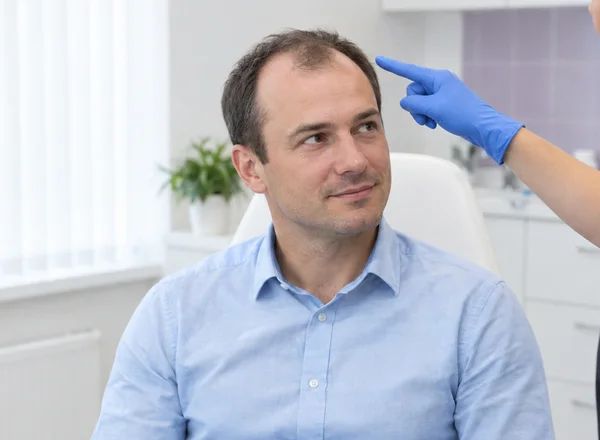

Write to us in WhatsApp or Telegram; photos go to a coordinator there, and the doctor says if a transplant helps. Free, with no booking.

services
The price depends on the graft count, which is done at the free consultation and recorded in the contract.
| The doctor's first look | Free |
|---|---|
| Eyebrow transplant, FUE | On request |
| Beard transplant, FUE | On request |
| Hair trichopigmentation | On request |
| PRP therapy / session | On request |
all included
From preparation for surgery to follow-up at 12 months.
Nothing unexpected lands on your bill that day.
another two zones
A hair transplant works beyond the scalp: same grafts from the back of the head, same FUE method — only the area changes.
FUE method, no incisions or stitches

The grafts are taken from the donor area at the back of the head and moved through micro-punctures of about 1 mm, leaving no scars. Before the operation the doctor discusses the shape with you, taking your facial features into account. Transplanted hair grows for life: the beard is trimmed and styled as usual.
On request
Pin your priceFUE method, no incisions or stitches

The surgeon draws the eyebrow shape at the initial consultation: you look through references together and the design takes your facial features into account. The hairs are implanted at the right angle, so the eyebrows look natural. It also helps where hairs have stopped growing after years of plucking.
On request
a day-clinic operation, the scalp numbed first
Pin your priceFirst the doctor assesses your donor area, counts the grafts and shows the achievable result. The cost is quoted at the consultation and fixed in the contract.

Message our coordinator
Free online consultation · Reply within 15 minutes
Message us on TelegramMessage us on WhatsAppBy messaging us, you agree to our Privacy Policy
Process
From consultation to going home — all in one day

At this first appointment you hear how the FUE and DHI methods work, get answers to your questions, and have the donor zone examined by the doctor.

A deposit reserves the day. Bring a card to the clinic if you prefer paying on site, or complete the payment online.

Preparation involves a round of pre-operative tests, for which the clinic supplies both the list and clear instructions.

No pain accompanies the surgery, as a local anaesthetic is used throughout it.

Harvesting takes place in the donor zone, typically the back of the head or the temples, with no stitches involved.

The collected units are implanted by surgeons into the thinning scalp.
The final step is recovery, backed by the clinic's supplies and full instructions for fast healing.

The crusts come off, the swelling fades, the skin heals day by day

Right on cue: shafts drop away, the roots remain settled

Gradually new hairs appear and the result shows

Thickness is gained, and the volume with its outline is evident

The result reaches full thickness with a believable hairline

Free, before surgery and leaving you free to decide.
Seek expert guidancedoctors

Hair transplant doctor, trichologist, surgeon
10 years of experience

Dermatovenereologist, trichologist, surgeon
11 years of experience

Plastic surgeon
9 years of experience

Plastic surgeon
9 years of experience

Assistant
9 years of experience
The doctor will inspect your donor area, count the grafts and say what result is possible.
Seek expert guidancecoordinators
One person is responsible for you throughout: your coordinator, right through recovery.

Personal support lead
Helps at the preparation stage and in recovery
Will sort your papers and book you the slot

Personal support lead
Helps at the preparation stage and in recovery
Will sort your papers and book you the slot

Personal support lead
Helps at the preparation stage and in recovery
Will sort your papers and book you the slot
Personal support lead
Helps at the preparation stage and in recovery
Will sort your papers and book you the slot













Your main worries

Yes, that is possible. Nothing stops a patient living far away from being accepted, and you can start by discussing your case online.
The exact figure is confirmed for free after a graft count and written into the contract.
It occupies a single day and patients then head home.
No. Local anaesthesia is administered and the session is painless.
FUE is cut-free graft extraction by tweezer. DHI is direct implantation with a Choi pen, skipping channel-making. The combined technique takes grafts by FUE and places them using the DHI method.
It depends entirely on the donor zone. The doctor works out the exact quantity during a free consultation.
Expect healing inside 0–10 days and a normal shedding phase at 2–4 weeks. Growth picks up at 3–4 months, the head looks full at 6–9 months, and the last changes finish by 12–18 months.
Your procedure includes a lifetime hair-growth guarantee under contract.
The clinic operates under a medical licence; care follows the standards and clinical guidelines
of the Ministry of Health.
The two methods offered to a patient in Khenifra, FUE and DHI, leave no cuts and no stitches, work under local anaesthesia and finish within one day.
A patient in Khenifra can get a doctor's opinion at home: the online consultation is free, the photos of the thinning area are enough, and the grafts are counted from them. The clinic keeps in touch 24/7, in your own hours.
Allow 0-10 days for healing. The transplanted hairs shed at 2-4 weeks, exactly as they are meant to, and the roots carry on working underneath. Regrowth sets in at 3-4 months, once that quiet phase is over.
The cost is calculated individually after a free online consultation. Write to us on WhatsApp or Telegram.
By messaging us, you agree to our Privacy Policy
Khenifra is a city in northern central Morocco, set among the Atlas Mountains on the Oum Er-Rbia River. It is known as the capital of the Zayane Berber tribes, and many residents speak a variety of Central Atlas Tamazight alongside Arabic. The population was 123,738 at the 2024 census. People here know each other, families are close, and a change in appearance is noticed quickly. That is why many patients from Khenifra ask the same thing first: will the result look natural, and what will people notice in the first weeks?
This text is for men and women in Khenifra who are thinking about a hair transplant (FUE or DHI). The first consultation is online and free, and you do not need to leave the city for it. The operation itself is carried out at the clinic in Rabat, Morocco. Coordinators answer on Telegram and WhatsApp around the clock, 24/7, so you can send photos in the evening after work and get an answer without arranging a visit.
Khenifra lies at about 826 metres above sea level among the Middle Atlas mountains. Summers are hot and winters are very cold. In the dry seasons the city is dusty, and in the rainy months the streets turn muddy. Each of these conditions matters for a fresh transplant, because the first days are a period when the scalp needs clean, calm conditions.
Dust is the main concern in the dry months. In the early healing phase, avoid dusty places, unpaved roads and building works, and never touch the treated area with unwashed hands. Mud and rain bring a different problem: wet or dirty headwear should not be pressed onto the scalp. Ask your surgeon which headwear is acceptable and when you may wear it.
Strong summer sun and heat are best avoided during healing. Sweating, direct sun on the scalp and long hours outdoors do not go well with the first period after surgery. Winter is cold, but the cold itself is rarely the issue; heavy, tight woollen hats are. Follow the written instructions you receive and ask about each situation in advance instead of guessing.
For residents of Khenifra the practical choice lies between a hot summer and a cold winter. Autumn and late winter are often convenient because the sun is gentler and a loose, clean head covering looks ordinary on cool days. Summer is possible, but it demands more discipline about shade and sweat.
Think also about the calendar of your own life: family events, weddings, local festivals and holidays when relatives gather. The visible stage of healing and the shedding of transplanted hair should not coincide with an event where you want to look your best. Healing takes 0–10 days, and normal shedding of transplanted hair comes at 2–4 weeks. Plan around those windows and discuss dates with your coordinator.
Khenifra is a regional centre for administration and trade. Many patients work in offices, shops, services or outdoors, and the return to work depends on the type of job. Desk work is easier to combine with healing than work in dust, sun or with physical effort. Tell your coordinator exactly what your day looks like, so the plan fits your real routine.
Sport matters here. Football is the best-known sport in the city, and the local club, Chabab Atlas Khenifra, has both a men's and a women's team. Mountain walks and outdoor activity in the Atlas are also part of local life. Heading, contact play, sweat and dust are exactly what should be put on hold at first. Ask the surgeon when you can return to training and to the pool, and do not rely on what a teammate or colleague did.
Food culture and hospitality also play a role. Family meals are social, and guests visit often. This is not a medical restriction in itself, but plan the first days at home, when you want rest and few visitors, and agree on it with your family in advance.
The stages are the same for everyone, so it helps to lay them next to your own plans: 0–10 days for healing, 2–4 weeks for normal shedding of transplanted hair, 3–4 months for new growth to start, 6–9 months for real density, and 12–18 months for the final result. The shedding stage worries many people, but it is expected: transplanted hairs let go at 2–4 weeks and hair comes back at 3–4 months.
One patient described it this way: from about the 4th month active, even growth began. The transplanted hair took very well, the beard now looks as natural as possible, no bald patches are left, and the beard became much thicker and denser, with the shape he had thought about for a long time. The same patience applies to scalp work: judge the result at 6–9 months, when it is visibly thicker, and at 12–18 months, when the look has settled.
Check-ups take place at months 1, 3, 6, 9 and 12, and they can be held remotely from Khenifra. The centre stays with you from pre-op planning to 12 months later.
Grafts are taken from the back of the head, the donor area, and moved through micro-punctures of about 1 mm, so nothing scars over. The doctor discusses the shape with you before the operation, taking your facial features into account. For a man in Khenifra, where the hair line and beard are noticed by friends and relatives, this planning step is the most important part of the process.
Bring photos of yourself from earlier years, and say honestly whether you want a mature, conservative hair line or a lower one. A natural result is built on a hair line that suits your age and face, not on the densest possible front. Transplanted hair grows for life: trim and style the beard as usual, and visit your usual barber without special rules once healing is finished.
In general terms, a candidate has a healthy donor area at the back of the head and realistic expectations. Stable general health, no active scalp infection and a clear understanding of the timeline are all useful. Some conditions call for a pause or a different plan, for example active skin disease of the scalp, unstable chronic illness, or hair loss that is still changing quickly.
Only the doctor can decide this after reviewing your photos and history. Be honest about medicines you take, past operations and allergies. Do not hide smoking or illness; the plan is built on your real condition, and honest answers protect your result.
You write to the coordinators on Telegram or WhatsApp from your own city. You send photos of the front, top, sides and back of the head, and describe your goals and your health. The doctor reviews them, and the first consultation is free. A coordinator will be on the phone 24/7, so evening and weekend questions are not a problem.
If you decide to go ahead, the operation is done at the clinic in Rabat, Morocco, which is about 230 kilometres from Khenifra. This helps you plan the days around the procedure with your family and employer. The centre then stays in contact through the full recovery period.
The questions from Khenifra tend to be practical. Will the front line look natural to relatives who see me every week? How many days should I stay out of sight? Can I still manage my work in a city where much of the day is spent outdoors, in the market, in the street or on the road? Such questions are normal, and the coordinators answer them one by one, in Arabic or in the language you are most comfortable with.
A good habit is to write your questions down in the evening and send them together with your photos. The answers then come as a plan rather than as scattered remarks. Many people in Khenifra also like to involve a brother, a wife or a parent in the conversation, and this is welcome: the recovery period goes more smoothly when the family knows what to expect and what to avoid.
Khenifra sits on the slopes where the central plateau meets the Middle Atlas, and the weather can change quickly between a bright morning and a cold evening. For the first week after the operation, plan for a calm routine at home: a clean place to sleep, clean pillowcases, and nothing that makes you rush outside in bad weather.
Prepare the practical things in advance. Arrange the days off with your employer, ask a family member to help with shopping and errands, and keep the written instructions where you can see them. If you live in a neighbourhood with unpaved streets, think about how you will keep dust and mud away from the treated area when you step out. Questions like these can be sent to the coordinator at any hour, because the line works 24/7.
The river, the cedar forests of the national park and the mountain lakes are part of life around Khenifra, and many residents like to spend free days outdoors. After a hair transplant, these plans need a pause. Long hours in direct sun, wind and dust do not suit a healing scalp, and swimming in a lake or river should wait until the surgeon allows water and the pool.
The good news is that the timeline is clear: healing takes 0–10 days, and normal shedding of transplanted hair comes at 2–4 weeks. Many people choose to return to hiking and outdoor weekends once the surgeon confirms that the scalp is ready, and to wear a light, clean cap only when it has been approved. Ask the surgeon for a concrete answer about each activity rather than relying on general advice.
In Khenifra, as elsewhere, a trip to the barber is a regular habit. After a transplant, tell the barber about the operation once healing is complete, and ask the surgeon when a first trim or shave is acceptable. The shape of the hair line is discussed with you before the operation, taking your facial features into account, so keep a photo of the agreed plan.
Over the months, the look changes. Transplanted hairs let go at 2–4 weeks, hair comes back at 3–4 months, you are visibly thicker at 6–9 months, and the look settles at 12–18 months. Keep photos taken in the same light every month. They help you and the doctor see real progress during the check-ups at months 1, 3, 6, 9 and 12.
Prepare a short list before the call. Ask which technique, FUE or DHI, suits your case and why. Ask how the donor area will look afterwards, how the hair line shape will be chosen, what the aftercare steps are for dust and sun, and when headwear is allowed. Ask when you can return to office work, to physical work and to sport, and what to do if something seems unusual during shedding.
Also ask what the schedule of check-ups looks like and how photos should be sent. Write the answers down, share them with your family, and keep them close during the first weeks.
Yes. The first consultation is online and free. You write on Telegram or WhatsApp, send photos and talk to the coordinators from your own city.
At the clinic in Rabat, Morocco, about 230 kilometres from Khenifra.
Yes. A coordinator will be on the phone 24/7, including evenings and weekends.
Grafts are taken from the back of the head, the donor area, and moved through micro-punctures of about 1 mm, so nothing scars over.
0–10 days for healing, 2–4 weeks for normal shedding of transplanted hair, 3–4 months for new growth to start, 6–9 months for real density, and 12–18 months for the final result.
No, it is expected. Transplanted hairs let go at 2–4 weeks, and hair comes back at 3–4 months.
They matter in the early days. Avoid dust, direct sun and heavy sweating, keep the scalp clean, and ask the surgeon which headwear is allowed.
Not at first. Contact, heading and heavy sweat should wait. Ask the surgeon for the exact moment when you can return to sport.
Check-ups are scheduled at months 1, 3, 6, 9 and 12, and the centre stays with you from pre-op planning to 12 months later.
Yes, the same approach is used. Transplanted hair grows for life, so you trim and style the beard as usual. The shape is discussed with you before the operation.
It is welcome. Relatives who know the plan can help during the first days at home, and they hear the same instructions you do.
Not at first. Ask the surgeon when water, the pool and open water are allowed, and follow the answer you are given.
Tell your coordinator what your job involves. Desk work is easier to combine with healing than work in dust, sun or with heavy effort, and the plan is adjusted to your routine.

 Forceps
 Minimal








