
























Liposuction6 min read
VASER (ultrasound) liposuction: how it works and who it suits
VASER is a form of liposuction in which ultrasound energy loosens fat before it is removed. It is often chosen for detailed body contouring, athletic definition and areas where fat is dense or fibrous. This article explains how the technique works, who it suits, what happens on the day, who should not have it, what recovery looks like and how it differs from classic tumescent liposuction.
The main points in 30 seconds
- VASER uses ultrasound to loosen fat before gentle suction.
- It suits detailed contouring, fibrous areas and muscle definition.
- It is not a weight-loss method and does not treat visceral fat.
- Recovery is similar to other liposuction: weeks of compression, final result in about three months.
- City Medical Centre offers VASER and tumescent liposuction; the choice is made at consultation.
Key facts about the procedure
- Operation time1–4 hours
- Back to work7–10 days
- Final result3–6 months
- Pricefrom $1,200
What VASER liposuction is
VASER stands for Vibration Amplification of Sound Energy at Resonance. It is an ultrasound-assisted liposuction technique: before fat is suctioned out, a thin probe delivers ultrasound energy into the fat layer. The energy loosens fat cells from the surrounding tissue, so they can be removed with less force through thin cannulas.
Like all liposuction, VASER removes fat cells from chosen areas under the skin. The removed cells do not grow back, so with a stable weight the new contour usually lasts. It is a contouring procedure, not a way to lose weight. You can read more about the techniques we use on our liposuction page.
How ultrasound loosens fat
The procedure starts in the same way as tumescent liposuction: a solution containing a local anaesthetic and a vessel-narrowing agent is injected into the area. This numbs the tissue, reduces bleeding and creates a fluid medium through which ultrasound energy travels.
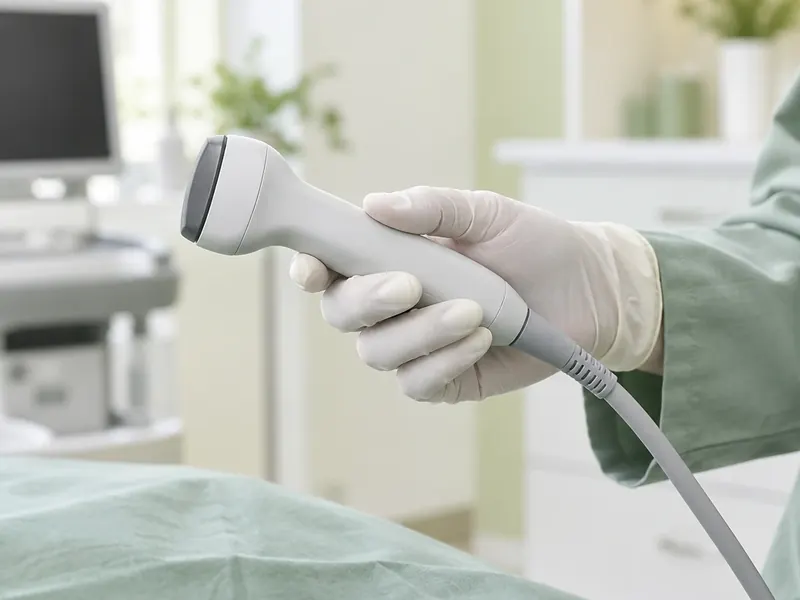
The surgeon then moves the ultrasound probe through the fat. The vibration mainly affects fat cells and turns them into an emulsion, while blood vessels and connective tissue are relatively spared. The loosened fat is then removed through small cannulas. Because the fat is already loosened, suction is usually smoother, which helps in dense areas and in fine detail work.

Who VASER suits: contouring and definition
VASER is usually considered for people who are close to a healthy weight and want to change specific areas. It is often used for:
- fibrous areas such as the back, flanks and the male chest, where fat is dense;
- muscle definition, for example accentuating the natural lines of the abdominal muscles in people with developed muscles and a thin fat layer;
- delicate areas such as the arms, knees and chin, where precise work matters;
- repeat procedures, when scar tissue from earlier surgery makes fat harder to remove.
Good skin elasticity matters. VASER may help the skin contract a little as it heals, but it does not replace skin-removing surgery when skin is loose. Liposuction is also not a treatment for cellulite, although smoother contours can make some areas look more even.
The procedure step by step
- Consultation and tests. The surgeon examines the areas, discusses goals and orders blood tests and other checks.
- Marking. On the day of surgery the areas are marked while you stand.
- Anaesthesia. Depending on the extent, local anaesthesia with sedation or general anaesthesia is used.
- Tumescent solution and ultrasound. The solution is injected, then the ultrasound probe loosens the fat.
- Suction and closure. Fat is removed through thin cannulas; the tiny incisions are closed or left to drain.
- Compression. A compression garment is put on straight away to support the new shape.
The operation usually takes from about an hour for a small area to several hours for combined areas. Many people go home the same day or after one night.
Contraindications
VASER is surgery, and it is usually not performed in people with:
- obesity caused by an endocrine disorder, or a need for major weight loss first;
- uncontrolled diabetes, blood clotting disorders or serious heart, kidney or liver disease;
- cancer or a severe chronic or mental illness;
- pregnancy or breastfeeding.
Acute infections and inflammation of the skin in the area are temporary reasons to postpone. Smoking slows healing, so surgeons usually ask you to stop before surgery. Possible risks include swelling, bruising, numbness, fluid collection (seroma), uneven contours and, rarely, skin burns from the ultrasound energy or infection.
Recovery and results
- First days
- Swelling, bruising and soreness; light walking is encouraged
- About 1 week
- Many people return to office work
- Several weeks
- Compression garment is worn; sport is added gradually as advised
- About 1 month
- A clear change becomes visible as swelling goes down
- About 3 months
- The final contour is usually assessed
Some firmness and numbness can last for a few months. Lymphatic drainage massage is sometimes recommended to help swelling settle. The result lasts best with a stable weight and regular activity.

VASER vs tumescent liposuction
How fat is loosened
- Tumescent liposuction
- By the injected solution and the cannula
- VASER liposuction
- By the solution plus ultrasound energy
Typical use
- Tumescent liposuction
- Classic contouring of most areas
- VASER liposuction
- Fibrous areas, fine detail, muscle definition
Recovery
- Tumescent liposuction
- Usually short, with compression garments
- VASER liposuction
- Similar; swelling may last a little longer after extensive work
Specific risks
- Tumescent liposuction
- General liposuction risks
- VASER liposuction
- General risks plus a small risk of ultrasound burns
Neither technique is better for everyone. The choice depends on the areas, the type of fat, the skin and the goal, and it is made by the surgeon.
VASER liposuction at City Medical Centre
City Medical Centre works with international patients and performs two liposuction techniques: tumescent liposuction and VASER ultrasound liposuction, which is used for defining muscle relief, body contouring and delicate areas. Other methods, such as laser, radiofrequency or water-jet assisted liposuction, are general information here; which technique suits you is decided at the consultation.
The first consultation is free and can be held online: send photos of the areas you want to change by Telegram. The doctor assesses them, rules out contraindications, orders tests including a hormonal screening and names the cost, which is then fixed in the contract. A personal coordinator stays with you from your first message to the end of recovery. More details are on our liposuction page.
Sources
Frequently asked questions
Is VASER better than traditional liposuction?
Not for everyone. VASER uses ultrasound to loosen fat, which helps in fibrous areas, fine contouring and muscle definition. Classic tumescent liposuction works well for many other cases. The surgeon chooses the technique based on the areas, the type of fat, the skin and your goals.
Does VASER tighten skin?
VASER may help the skin contract slightly as it heals, and results are often smooth when skin is elastic. It does not replace surgery that removes loose skin. If there is a lot of loose skin, for example after pregnancy or major weight loss, a tummy tuck or other lift may be discussed.
Can VASER create six-pack definition?
It can accentuate existing muscle definition by removing fat along the natural lines of the abdominal muscles. This works only when the muscles are developed and the fat layer is thin. VASER does not build muscle, and regular training is needed to keep the effect.
Is VASER liposuction painful?
The procedure is done under local or general anaesthesia, so you should not feel pain during it. Afterwards, soreness, swelling and bruising are common for several days and are managed with pain relief advised by the doctor and with compression garments.
How long is VASER recovery?
Many people return to office work in about a week. Compression garments are worn for several weeks, and more intense exercise is added gradually. A clear change is usually visible after about a month, and the final result is assessed at around three months.
Have a question about your case? Get a free consultation
Message a coordinator on Telegram: we reply right in the chat, and you can send photos and questions there too.
- The first consultation is free, online consultations are available
- The doctor names the cost after the assessment, and it is fixed in the contract
- A personal coordinator guides you from the first message to recovery
Message our coordinator on Telegram
We reply right in the chat — you can send photos
Message us on TelegramBy sending a message, you agree to the privacy policy
Read also
 Liposuction
Stubborn belly fat: exercise, non-surgical treatments or liposuction?
How to get rid of stubborn belly fat: what diet and exercise can do, the limits of non-surgical treatments, when liposuction or a tummy tuck makes sense.
 Liposuction
Buffalo hump (neck hump) liposuction: causes, treatment and recovery
What a buffalo hump at the base of the neck is, why it forms, when a doctor should check hormones first, and how liposuction removes it and keeps it away.
 Liposuction
Visceral vs subcutaneous fat: what liposuction can and cannot remove
The difference between visceral and subcutaneous fat, why only one of them can be removed with liposuction, and how the deeper fat around the organs is reduced.