


























Breast augmentationSerbia5 min read
Svetlana Ražnatović Ceca on her breast augmentation: “I wanted beautiful breasts”
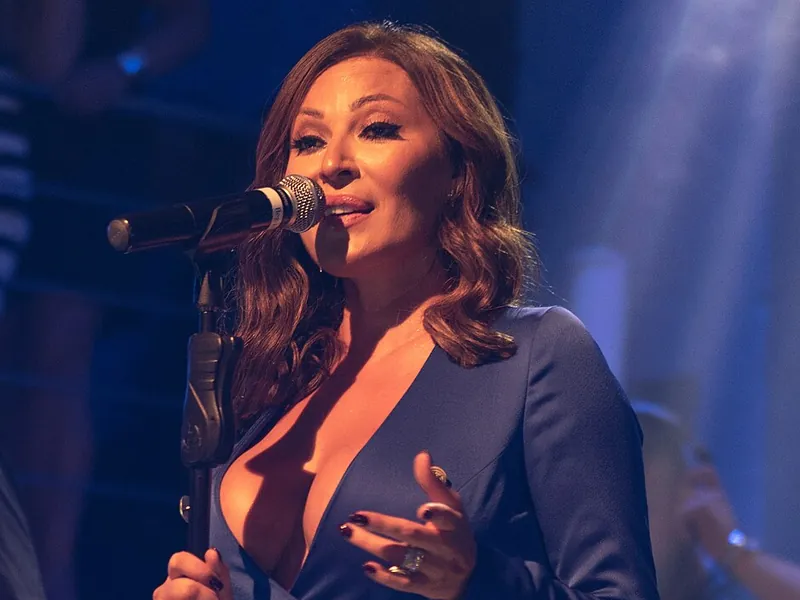
Svetlana Ražnatović Ceca, one of the most famous singers in Serbia and the wider Balkans, has spoken openly about her breast augmentation and said she is not ashamed of it. Below is what she said, where it was published, and what breast augmentation involves today.
By messaging us, you agree to our Privacy Policy
The main points in 30 seconds
- On 18 January 2011 Blic wrote that Svetlana Ražnatović Ceca had a breast augmentation and quoted her view of it.
- She said she wanted beautiful breasts, is not ashamed of it, and occasionally goes back to her surgeon for a check-up.
- Breast augmentation is done under general anaesthesia, usually takes 1.5–3 hours, and the patient normally spends one day in hospital.
- Non-physical work is usually possible after 7–14 days, and full recovery takes three to six months.
- At City Medical Centre breast augmentation costs $4,700, and the first consultation is free.
Key facts about the procedure
- Back to work7–14 days
- Stay in clinic1 day
- AnaesthesiaGeneral
- Fixed price$4,700
I don't see what is strange about it, I wanted to have beautiful breasts. I am not ashamed of it, and I will have an operation on anything that bothers me on my body and face.
What did Ceca say about her breast augmentation?
Svetlana Ražnatović Ceca, one of the best-known singers in the Balkans, has never hidden that she had her breasts enlarged. In a round-up of Serbian celebrities and cosmetic surgery published on 18 January 2011, Blic wrote that she had had a breast augmentation and quoted her own view of it: “I don't see what is strange about it, I wanted to have beautiful breasts. I am not ashamed of it, and I will have an operation on anything that bothers me on my body and face.”
Breast Augmentation Dublin, Breast Augmentation Birmingham — price and consultation.
Price in your country — message us on WhatsApp
WhatsAppShe also said that she occasionally goes back to her surgeon for a check-up, simply to see whether anything needs attention.
That is all we rely on here. She did not describe the method, the implants or the year of the operation, and this article does not name the clinic or the surgeon, so we do not guess at any of those details. Where the text below explains how the operation works and what recovery involves, it describes breast augmentation in general, not her treatment.
What her words mean for anyone considering surgery
Ceca's comment is short, but it carries three clear ideas. The first is the reason: she wanted a result she would be happy with, and she said so without excuses. The second is the absence of shame, a point that matters in a region where cosmetic surgery is still often discussed in whispers or denied.
More on this topic: Breast augmentation and mammoplasty with a natural result, Breast Augmentation with Implants, Breast Lift (Mastopexy), Breast Augmentation in Dubai, Breast Augmentation in Ibadan.
The third is easy to overlook: she mentioned going back for check-ups. An implant is not a one-time event; it is something to keep an eye on over the years.
That last point is the most practical one for anyone thinking about an augmentation. The decision does not end on the day of surgery. Follow-up visits, an ultrasound when the doctor recommends one, and a plan for eventual implant replacement are all part of a responsible choice. Nothing in this article judges anyone's appearance; the point is the decision and how carefully it is made.
Breast augmentation abroad: choose a city and clinic
Prices, the clinic and a free online consultation for each city:
How breast augmentation is done today
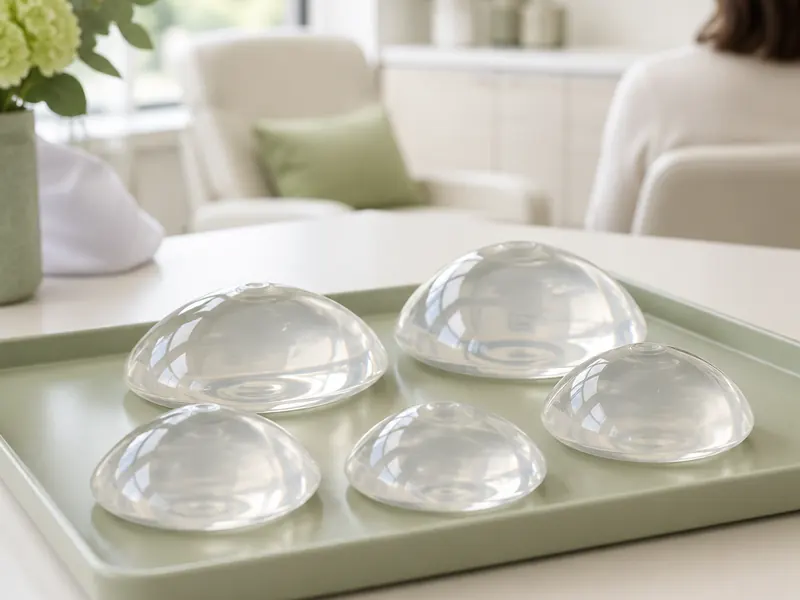
Breast augmentation places an implant behind the breast tissue or behind the chest muscle to add or restore volume. It is done under general anaesthesia, usually takes 1.5–3 hours, and the patient normally spends one day in hospital. The main decisions about the implant are made together with the surgeon at the consultation:
Filling
- Options
- Silicone or saline
- What it affects
- How the implant feels and behaves
Shape
- Options
- Round or anatomical
- What it affects
- Fullness of the upper part of the breast
Surface
- Options
- Smooth or textured
- What it affects
- How the implant sits in the tissue
Size and profile
- Options
- Chosen with the surgeon
- What it affects
- Volume and projection in proportion to the body
Implants usually last about 10–15 years before they need replacing, so a further operation later in life should be expected. That is worth discussing openly at the very first consultation, together with where the scars will be and how the chosen size fits the patient's frame.
Who is a candidate and how to prepare
A good candidate is an adult in stable health with realistic expectations and a clear personal reason for the operation. After childbirth, surgeons recommend waiting at least 6–12 months after the birth and after breastfeeding has ended, so that the breasts have settled. Before surgery the clinic asks for blood tests, a coagulation panel, infection tests, an ECG, a chest X-ray and a breast ultrasound.
Aspirin-type drugs, steroids and hormonal drugs are stopped in agreement with the doctor; oral contraceptives are usually paused at least a month before.
Like any operation, augmentation carries risks, and the surgeon explains them in advance: hematoma, seroma, infection, changes in nipple sensitivity, capsular contracture, asymmetry, wound separation and tissue necrosis. A good consultation leaves time for questions and does not push anyone towards a decision.
What recovery looks like
Moderate discomfort is normal for the first one to three days and eases noticeably by days five to seven. Non-physical work is usually possible after 7–14 days, walks after one to two weeks, fitness and swimming after four to six weeks, and strength training after three months. A compression garment is worn for four to six weeks.
Swelling settles in about a month, full recovery takes three to six months, scars fade over 6–12 months, and sensitivity usually returns within 3–12 months.

How recovery after breast augmentation usually goes
- Day of surgeryGeneral anaesthesia, 1.5–3 hours in theatre, then one day in hospital.
- Days 1–3Moderate discomfort, controlled with prescribed painkillers; compression garment on.
- Days 5–14Discomfort eases; non-physical work is usually possible after 7–14 days.
- Weeks 4–6Swelling has largely settled; fitness and swimming return; the compression garment comes off.
- Month 3Strength training is allowed again.
- Months 3–12Full recovery at 3–6 months; scars fade and sensitivity usually returns within a year.
Breast augmentation at City Medical Centre
City Medical Centre performs breast augmentation for $4,700, breast lift with implants for $5,400, and also breast lift without implants and breast reduction. The price is all-inclusive: anaesthesia, the hospital stay and a year of follow-up by the plastic surgeon. The first consultation is free and can be held online; the final cost is fixed in the contract. More details are on the breast augmentation page.
To be clear: City Medical Centre has no connection with Svetlana Ražnatović Ceca or her treatment. Her words are quoted because she chose to speak about her decision publicly.
Frequently asked questions
What did Ceca say about her breast augmentation?
Blic quoted her in 2011 saying she wanted beautiful breasts, did not see anything strange about it and was not ashamed of it.
Did she say which method or implants were used?
No. She did not describe the method, the implants or the year, so this article does not guess at them.
Do you need check-ups after breast augmentation?
Yes. Follow-up visits are part of the process: the surgeon checks healing in the first year, and later check-ups and an ultrasound are done as the doctor recommends.
How much does breast augmentation cost at City Medical Centre?
Breast augmentation costs $4,700 and a breast lift with implants $5,400, including anaesthesia, the hospital stay and a year of follow-up. The final price is fixed in the contract.
Do breast implants last for life?
No. Implants usually last about 10–15 years before replacement, so another operation later in life should be expected.
Sources
What the article says about the celebrity is based only on these public statements.
- Blic, 18 January 2011
Medical background and further reading
General information about the procedure from health authorities and medical societies. It is not advice for any individual patient.
- PubMed / NCBI — Recognizing and Managing Breast Implant Complications: A Review (Int J Womens Health, 2025)
- PubMed / NCBI — Outcomes in primary breast augmentation: 1539 consecutive cases (Plast Reconstr Surg, 2015)
- American Society of Plastic Surgeons — Breast Augmentation
- U.S. Food and Drug Administration — Breast Implants
How we prepare and review medical content · Medical disclaimer
Considering the same operation? Get a free consultation
Message a coordinator on Telegram: we reply right in the chat, and you can send photos and questions there too.
- The first consultation is free, online consultations are available
- The doctor names the cost after the assessment, and it is fixed in the contract
- A personal coordinator guides you from the first message to recovery
Read also
 Breast augmentation
Ksenija Mijatović on her breast surgery: “I did it consciously”
Serbian singer Ksenija Mijatović said openly that she had a breast correction. Her exact words, how augmentation works today and what recovery involves.
 Breast augmentation
Chrissy Teigen and breast augmentation: what she said about her implants
Chrissy Teigen got breast implants at 20 and said they were great to her for many years. Her words, how augmentation works and how to plan long term.
 Breast augmentation
Katie Price and breast augmentation: her own words on surgery and age
Katie Price has spoken openly about her breast surgery and says 21 should be the minimum age for it. Her words, how augmentation works and recovery.
 Breast augmentation
Breast Augmentation Abroad: Safety Checklist, Recovery and Flying Home
Considering breast augmentation abroad? A safety checklist for choosing a clinic, implant questions, recovery week by week and when you can fly home.