





















Facelift7 min read
SMAS facelift: what it is, how it works and what to realistically expect
“SMAS” is one of the most searched words in facial rejuvenation, and also one of the most confusing. It is used for a deep surgical facelift and for non-surgical ultrasound treatments that work very differently. This guide explains the anatomy behind the term, how the operation is done, who it suits, its advantages and drawbacks, and what recovery really looks like.
The main points in 30 seconds
- The SMAS is a deep supporting layer under the skin and fat of the face
- A surgical SMAS facelift lifts this layer, not only the skin
- Ultrasound “SMAS lifting” heats tissue but does not remove skin
- Bruising usually fades in two to four weeks, the final shape in three to six months
- City Medical Centre performs surgical facelifts only
Key facts about the procedure
- Main healing2 months
- Final result3–6 months
- AnaesthesiaGeneral
- Pricefrom $2,400
What the SMAS layer is
SMAS stands for superficial musculoaponeurotic system. It is a thin but strong sheet of connective tissue and muscle fibres that lies under the skin and the fat of the cheeks, jaw and neck. It links the facial muscles of expression together and is attached to the bone by small ligaments.
With age these ligaments stretch and the SMAS slowly slides downwards, carrying the fat of the cheeks with it. That is what creates jowls, a blurred jawline, deeper folds between the nose and mouth and loose tissue under the chin. The skin also thins and loses elasticity, but it is only the outer part of the story.
- Skin — thins, dries and wrinkles.
- Fat — shifts downwards or shrinks in some areas.
- SMAS and ligaments — loosen, so the whole lower face drops.
How a surgical SMAS facelift works
Older facelift techniques pulled mainly on the skin. Because skin stretches, the result could look tight and faded quickly. A SMAS facelift works one level deeper: the surgeon repositions the supporting layer and lets the skin lie over it without strong tension.
The main steps
- The operation is usually done under general anaesthesia and takes several hours.
- Incisions are placed in the hairline at the temple, in front of and behind the ear, and sometimes under the chin.
- The skin is lifted off the deeper tissues over a planned area.
- The SMAS is tightened, folded or partly removed and fixed higher with stitches; fat can be redistributed to restore volume in the cheeks.
- Excess skin is trimmed and the wound is closed in layers so that the scar follows natural creases.
There are several variants, from a limited SMAS lift of the lower face to more extensive “deep plane” approaches in which the surgeon works beneath the SMAS and releases the ligaments. The choice depends on how much the tissues have descended and on the surgeon’s assessment of your anatomy.

Surgical vs device-based “SMAS lifting”
Many beauty salons and clinics advertise “SMAS lifting” without surgery. In these treatments, focused ultrasound (often called HIFU) heats small points at the depth of the SMAS through the skin. The heat causes the tissue to contract and stimulates new collagen over the following months.
How it works
- Surgical SMAS facelift
- The SMAS is physically lifted and fixed
- Ultrasound “SMAS lifting”
- Heat triggers tightening and collagen
Excess skin
- Surgical SMAS facelift
- Removed
- Ultrasound “SMAS lifting”
- Not removed
Best for
- Surgical SMAS facelift
- Moderate to marked sagging
- Ultrasound “SMAS lifting”
- Early, mild laxity
Anaesthesia
- Surgical SMAS facelift
- Usually general
- Ultrasound “SMAS lifting”
- None or topical
Downtime
- Surgical SMAS facelift
- About two to four weeks of visible healing
- Ultrasound “SMAS lifting”
- Usually a few days of redness or tenderness
How long the effect lasts
- Surgical SMAS facelift
- Often many years
- Ultrasound “SMAS lifting”
- Usually months to a year or two; repeat sessions are common
The two are not competitors: ultrasound can refresh a face with early changes, while real jowls and loose neck skin generally need surgery. Remember that the same word covers two very different interventions when you compare offers.
Who a SMAS facelift suits
The operation is usually considered for people with visible sagging of the mid face, lower face and neck, most often from the mid-forties onwards, although age alone is not the deciding factor. Typical reasons to consult a surgeon include:
- jowls and a jawline that is no longer sharp;
- deep nasolabial folds and marionette lines;
- loose skin and bands on the neck, or a double chin;
- cheeks that have dropped and flattened.
Good candidates are in stable general health, do not smoke or are ready to stop well before and after surgery, and have realistic expectations. Uncontrolled diabetes, severe heart disease, blood clotting disorders, active skin inflammation, cancer, pregnancy and breastfeeding are among the situations in which surgery is postponed or not advised. A facelift does not change fine surface wrinkles or skin texture much; these are often treated separately.
Pros and cons
Advantages
- It addresses the deeper cause of sagging, not only the skin.
- The result usually looks more natural than a skin-only lift, without a “pulled” look.
- The effect is long-lasting compared with non-surgical options.
- It can be combined with eyelid surgery, a brow lift or liposuction of the chin.
Drawbacks and risks
- It is a real operation with anaesthesia and a recovery period.
- There are scars, although they are placed to be as discreet as possible.
- Possible complications include bleeding and haematoma, infection, delayed healing, temporary numbness, hair loss near the incisions and, rarely, injury to a branch of the facial nerve.
- It does not stop ageing: the face keeps changing after surgery.
Recovery and results
Most people spend at least one night under observation after the operation. The face is bandaged, and a compression garment for the chin and neck is often recommended for the first days or weeks. Swelling, bruising and a feeling of tightness are normal and usually peak in the first few days.
- Days 1–7
- Rest with the head raised, stitches checked, first dressing changes
- Weeks 2–4
- Bruising fades, most people feel ready to be seen in public
- Months 1–2
- Return to normal activity and sport as the surgeon allows
- Months 3–6
- Residual swelling settles, the final shape becomes visible
Make-up can usually be applied once the incisions have healed and the surgeon agrees, often after about two weeks, but never on the scar lines before they close. Scars are pink at first and gradually become pale over many months.

How often a SMAS facelift can be repeated
There is no fixed rule. The effect of a well-performed SMAS facelift often lasts many years, and many surgeons quote a range of around seven to ten years before a noticeable change returns. Genetics, skin quality, smoking, sun exposure and weight changes all influence this.
A second, “secondary” facelift is possible, but it is technically more demanding because of scar tissue from the first operation. Many patients instead choose smaller touch-ups, such as a neck lift or an eyelid procedure, years later. Your surgeon will advise whether a repeat operation makes sense after examining you.
SMAS facelift at City Medical Centre
City Medical Centre performs surgical facelifts only; it does not offer ultrasound or other device-based “SMAS lifting”. The surgical options described on our facelift page are a standard SMAS lift of the mid and lower face, a full (circular) facelift, a lift of the lower face and neck, and an endoscopic brow and temple lift. Deep plane and other variants mentioned above are general information; which technique fits your face is decided at the consultation.
The clinic works with international patients. The first consultation is free and can be held online: send photos of your face from the front and the side, describe what bothers you, and ask any questions. The surgeon assesses your case and names the cost, which is then fixed in the contract. A personal coordinator supports you from your first message to the end of recovery, and photos and questions can be sent by Telegram at any stage. Learn more on the facelift page.
Sources
Frequently asked questions
What is a SMAS facelift?
It is a surgical facelift in which the surgeon lifts and fixes the deeper supporting layer of the face, called the SMAS, instead of pulling only on the skin. Excess skin is then removed. Because the deeper tissues carry the lift, the result usually looks more natural and lasts longer.
How long does a SMAS facelift last?
The result often lasts many years, and surgeons commonly mention around seven to ten years. The face keeps ageing after surgery, so the effect depends on genetics, skin quality, sun exposure, smoking and weight stability. No surgeon can promise a fixed number of years.
Is ultrasound SMAS lifting the same as surgery?
No. Ultrasound treatments heat tissue through the skin to cause some tightening and collagen growth, but they do not remove skin or reposition the SMAS. They can help with early, mild laxity, while visible jowls and loose neck skin usually need a surgical facelift.
Is a SMAS facelift painful?
The operation itself is usually done under general anaesthesia, so you do not feel it. Afterwards most people describe tightness, swelling and discomfort rather than strong pain, especially in the first days. Your doctor prescribes pain relief and explains how to rest with the head raised.
When can I wear makeup after a facelift?
Usually once the incisions have closed and your surgeon has checked them, often around two weeks after surgery. Until then make-up should be kept away from the scar lines. Mineral products and gentle removal are often recommended for the first weeks; ask your surgeon for personal advice.
Have a question about your case? Get a free consultation
Message a coordinator on Telegram: we reply right in the chat, and you can send photos and questions there too.
- The first consultation is free, online consultations are available
- The doctor names the cost after the assessment, and it is fixed in the contract
- A personal coordinator guides you from the first message to recovery
Message our coordinator on Telegram
We reply right in the chat — you can send photos
Message us on TelegramBy sending a message, you agree to the privacy policy
Read also
 Facelift
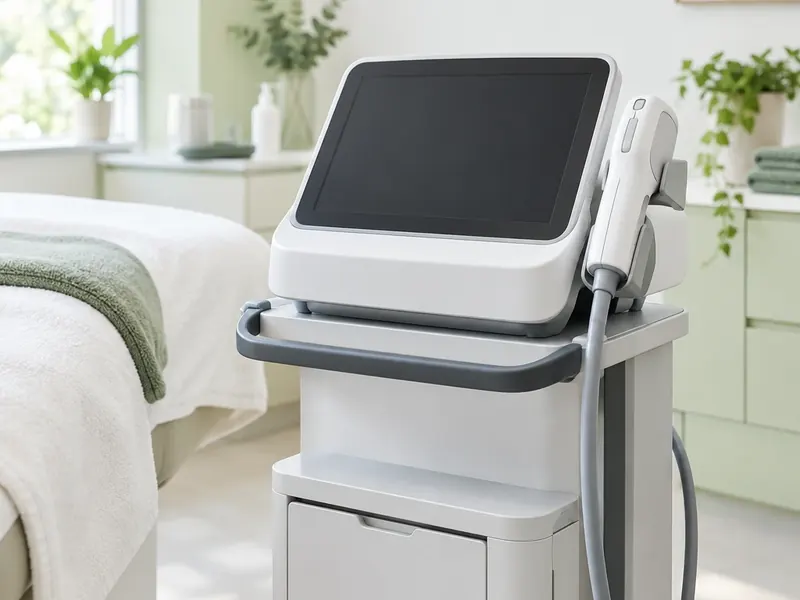
Surgical SMAS facelift or RF and ultrasound lifting: what really separates them
RF and HIFU heat tissue to tighten skin a little; a SMAS facelift lifts the deep layer and removes excess skin. Compare depth, results, downtime and who each suits.
 Facelift
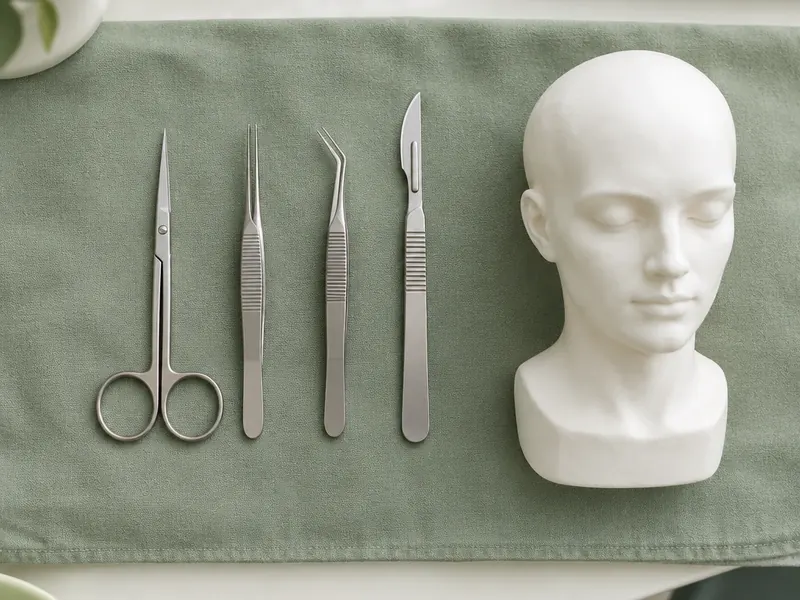
Types of facelift: how the main surgical techniques differ and which one suits you
SMAS facelift, full circular facelift, neck and lower face lift and endoscopic brow lift compared: what each corrects, scars, recovery and how the right type is chosen.
 Hair transplant
Stages of hair loss step by step: the Norwood and Ludwig scales explained
The stages of hair loss explained: the Norwood scale for men, the Ludwig scale for women, common causes and how the stage affects the choice of treatment.