
























Facelift6 min read
Surgical SMAS facelift or RF and ultrasound lifting: what really separates them
Radiofrequency and focused ultrasound devices are often advertised as a facelift without surgery. They can make skin a little firmer, but they do not do what an operation does. This article explains how each device works, what a surgical SMAS facelift changes, which problems each option can realistically solve, and how the degree of sagging points you towards one or the other.
The main points in 30 seconds
- RF and HIFU heat the tissue so it tightens slightly; they do not remove skin.
- A SMAS facelift lifts the deep layer and removes excess skin.
- Devices may help early changes; clear jowls and neck laxity need surgery.
- Device effects fade within months to about a year; a facelift lasts many years.
- City Medical Centre performs surgical facelifts only.
Key facts about the procedure
- Main healing2 months
- Final result3–6 months
- AnaesthesiaGeneral
- Pricefrom $2,400
Surgery or devices: the core difference
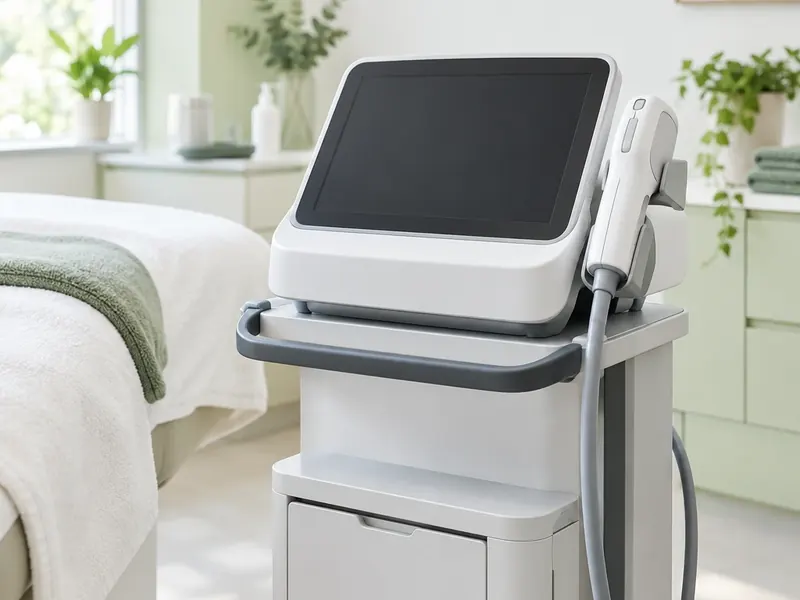
RF (radiofrequency) and HIFU (high-intensity focused ultrasound) lifting are non-surgical procedures. Both deliver heat into the tissues without cutting the skin. The body responds by tightening existing collagen and slowly producing new collagen, so the skin becomes somewhat firmer over the following months.
A surgical SMAS facelift is an operation. The surgeon physically lifts the deep muscle and fascia layer of the face, called the SMAS, fixes it higher, redistributes fat and removes excess skin. Nothing is removed or repositioned by a device: it only stimulates the tissue to contract.
RF lifting
- Method
- Heat from radiofrequency energy
- Main depth
- Skin
- Excess skin removed
- No
- Degree of change
- Subtle
- Downtime
- Usually none
- How long it lasts
- Months, maintenance needed
HIFU lifting
- Method
- Focused ultrasound heat
- Main depth
- Skin down to the SMAS level, in small points
- Excess skin removed
- No
- Degree of change
- Mild
- Downtime
- Usually none to a few days
- How long it lasts
- Often around a year
SMAS facelift
- Method
- Surgery
- Main depth
- Skin, fat and the SMAS layer
- Excess skin removed
- Yes
- Degree of change
- Moderate to marked
- Downtime
- Several weeks
- How long it lasts
- Often many years
These are typical ranges. The actual result depends on age, skin quality and the degree of sagging.
How RF lifting works
A handpiece passes radiofrequency energy through the skin, warming the dermis to a controlled temperature. Heat makes collagen fibres contract at once, which is why some people notice a slight tightening straight after a session. The main effect comes later, as new collagen forms over two to three months.
Several sessions are usually needed, followed by maintenance treatments. Some systems combine radiofrequency with fine needles to deliver heat a little deeper. Side effects are usually mild: redness, temporary swelling and, rarely, burns or small changes in skin colour.
How ultrasound (HIFU) lifting works
HIFU concentrates ultrasound energy into tiny points at a set depth, much as a lens focuses light. The skin surface stays intact while small zones of heating form beneath it, in some areas reaching the level of the SMAS. Over the following months the tissue contracts and the lift develops gradually.
One session is often done, sometimes repeated after a year or so. The procedure can be uncomfortable, and there may be redness, swelling, tenderness or temporary numbness. Because the energy acts deeper than with RF, it needs an experienced operator who knows facial anatomy and the position of the nerves.
What a surgical SMAS facelift achieves
Sagging happens mainly because the ligaments that hold the soft tissues weaken and the SMAS layer slides down. A SMAS facelift treats exactly this. Through incisions hidden along the hairline and around the ears, the surgeon lifts the SMAS, secures it in a higher position, redistributes fat in the cheeks and lower face, then redrapes the skin and trims the excess.
Because the deep layer carries the lift, the skin is not stretched tight, which helps the face look natural. The operation is done under general anaesthesia, swelling and bruising usually settle over two to three weeks, and the scars are permanent but typically well hidden. More about the types of lift is on our facelift page.
Which problems each option solves
Devices may help with
- early loss of firmness and slightly lax skin;
- a mild softening of the jawline or brow position;
- fine texture changes and a tired look;
- maintaining skin quality after a facelift.
Surgery is needed for
- clear jowls and a blurred jawline;
- excess or folded skin on the neck;
- sagging cheeks and deep nasolabial folds;
- marked changes across several areas of the face at once.
Heat cannot remove skin. Once there is a visible surplus, tightening it by a few per cent will not bring the contour back.
How to choose based on your sagging
A simple way to think about it is the degree of change:
- Early changes. The skin is still elastic and the contour only slightly soft. Devices may give a modest improvement, and surgery is usually not needed yet.
- Moderate sagging. Jowls are starting to form and the jawline is losing definition. Devices give a limited effect here; many people at this stage are better candidates for a SMAS or lower face lift.
- Marked sagging. Jowls, neck laxity and deep folds are clear. Only surgery can reposition the tissues and remove the excess.
Other factors matter too: your health, how much downtime you can take, how long you want the result to last and whether you are ready for an operation. A surgeon who examines your face in person or from photos can place you on this scale honestly.

Getting an honest recommendation at City Medical Centre
City Medical Centre performs surgical facelifts only: a standard SMAS facelift, a full (circular) facelift, a neck and lower face lift, and an endoscopic brow and temple lift. RF and HIFU lifting are described here as general information; the clinic does not offer them. If your changes are early and surgery is not yet justified, the surgeon will tell you so, and the variant that fits your face is chosen at the consultation.
The clinic works with patients from abroad. The first consultation is free and can take place online: send front and side photos of your face and neck and describe what bothers you. The doctor assesses your case and names the price, which is then fixed in the contract. A personal coordinator supports you from your first message to the end of recovery, and you can send photos and questions via Telegram. Learn more on our facelift page.
Sources
Frequently asked questions
Is HIFU as good as a facelift?
No. HIFU heats small points in the tissue so that it contracts a little over a few months. It does not reposition the SMAS layer or remove excess skin. For early changes it can give a mild lift, but it cannot reproduce the result of a surgical facelift.
How long do RF lifting results last?
The tightening after radiofrequency treatment usually builds up over two to three months and then gradually fades as ageing continues. Most people need a course of sessions and regular maintenance to keep the effect. How long it lasts depends on age, skin quality and lifestyle.
Can devices fix jowls?
Only very early, mild jowls may soften slightly after RF or HIFU. Once jowls are clearly visible, the cause is sagging of the deep tissues and excess skin, which heat cannot correct. In that case a SMAS facelift or a lower face and neck lift is usually considered.
When is surgery the only real option?
Surgery is usually the only effective option when there are clear jowls, loose or folded skin on the neck, deep folds and sagging in several areas at once. These changes involve the deep layers and a surplus of skin, which only an operation can reposition and remove.
Can I combine devices with a facelift?
Yes, in general practice some people use skin treatments after surgery to maintain skin quality. The timing is agreed with the surgeon once healing is complete. Tell your surgeon about any device treatments you have had before the operation.
Have a question about your case? Get a free consultation
Message a coordinator on Telegram: we reply right in the chat, and you can send photos and questions there too.
- The first consultation is free, online consultations are available
- The doctor names the cost after the assessment, and it is fixed in the contract
- A personal coordinator guides you from the first message to recovery
Message our coordinator on Telegram
We reply right in the chat — you can send photos
Message us on TelegramBy sending a message, you agree to the privacy policy
Read also
 Facelift
Types of facelift: how the main surgical techniques differ and which one suits you
SMAS facelift, full circular facelift, neck and lower face lift and endoscopic brow lift compared: what each corrects, scars, recovery and how the right type is chosen.
 Facelift
The best age for a facelift: signs you are ready, and when surgery is not advised
There is no single right age for a facelift. Learn the signs you may be ready, what surgery achieves at different ages, the minimum age and who should not have it.
 Joint treatment
SVF cell therapy for joints: how it works and who it suits
SVF cell therapy for joints explained: where the cells come from, which joints it helps, the procedure, recovery, SVF vs PRP and contraindications.