


























Arthritis treatment7 min read
Shoulder arthritis: causes, diagnosis and treatment
The shoulder is the most mobile joint in the body, which is why arthritis there is felt in so many daily tasks: reaching for a shelf, putting on a jacket, sleeping on your side. Shoulder arthritis usually develops gradually, and the earlier its type and stage are clear, the more options remain. This guide explains what causes shoulder arthritis, its main types and stages, how it is diagnosed and where PRP and SVF injections fit into treatment.

The main points in 30 seconds
- Shoulder arthritis can affect the main shoulder joint or the small joint on top of the shoulder.
- The main types are osteoarthritis, inflammatory, post-traumatic, rotator cuff tear arthropathy and avascular necrosis.
- Diagnosis combines examination with X-rays, ultrasound, MRI and, when needed, blood tests.
- PRP and SVF can help in early and moderate stages; they do not replace a rheumatologist for inflammatory arthritis.
- When the joint surface has collapsed, an orthopaedic surgeon discusses surgery.
What shoulder arthritis is
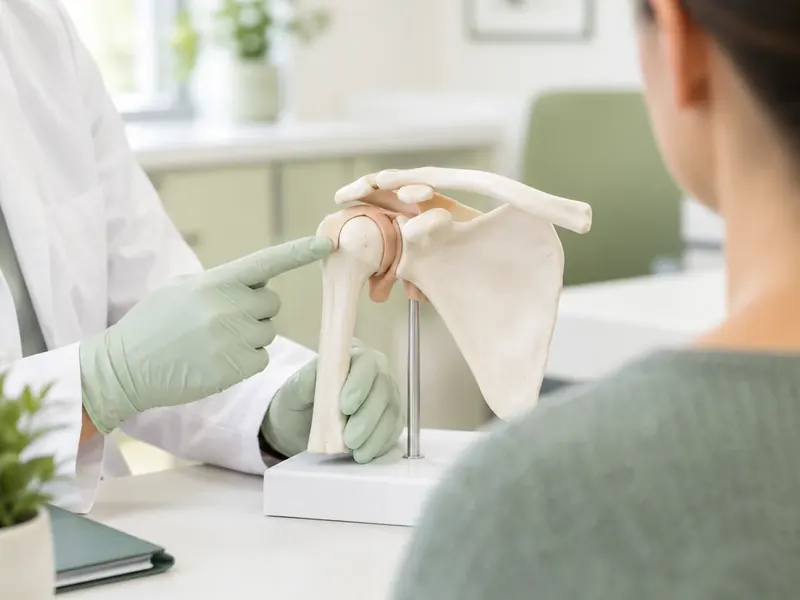
The shoulder has two joints that can be affected by arthritis. The main one is the glenohumeral joint, where the ball at the top of the upper arm bone sits in a shallow socket of the shoulder blade. The second is the acromioclavicular joint, a small joint on top of the shoulder where the collarbone meets the shoulder blade.
In arthritis the smooth cartilage that lets these surfaces glide gets damaged, either by wear or by inflammation. The joint becomes painful and stiff, movement shrinks, and over time the bone under the cartilage changes shape. Because the shoulder relies on a large range of motion rather than on bearing weight, even a moderate loss of movement can make ordinary tasks difficult.
What causes shoulder arthritis
Several different processes can lead to the same end result, a worn and painful joint:
- age-related wear of the cartilage, which becomes more common after 50;
- previous injuries such as fractures, dislocations or repeated instability of the shoulder;
- a large, long-standing rotator cuff tear, which changes how the ball sits in the socket;
- inflammatory diseases of the immune system that attack the joint lining;
- loss of blood supply to the head of the upper arm bone, which weakens the bone under the cartilage;
- heavy overhead work or sport over many years, especially for the small joint on top of the shoulder.
Often more than one factor is involved. A person who dislocated a shoulder in their twenties, for example, may develop arthritis in that shoulder decades earlier than in the other one.
Types of shoulder arthritis
Doctors separate several types because they are treated differently:
- osteoarthritis, the wear-and-tear type, which develops slowly and usually affects one shoulder;
- rheumatoid arthritis and other inflammatory types, which often affect both shoulders and other joints at the same time, with morning stiffness lasting longer than an hour;
- post-traumatic arthritis, which follows a fracture or dislocation;
- rotator cuff tear arthropathy, a combination of a large tendon tear and joint damage;
- avascular necrosis, in which part of the bone loses its blood supply and the joint surface can collapse.
The type matters. Inflammatory arthritis is treated by a rheumatologist with medicines that calm the immune system; PRP and SVF do not replace that treatment and are considered only as an addition, if at all.
Symptoms and stages of progression
The main symptom is pain deep in the shoulder, sometimes spreading down the upper arm. At first it appears after effort; later it comes with everyday movements and at night, especially when lying on the affected side. Other typical signs are:
- stiffness and a shrinking range of movement, particularly when lifting the arm or turning it outwards;
- clicking, grinding or catching during movement;
- weakness when holding the arm up;
- difficulty with tasks such as combing hair, fastening a bra or reaching a back pocket.
Like arthritis elsewhere, shoulder arthritis is often described in stages. In early stages cartilage changes are small and pain comes and goes. In moderate stages the joint space narrows, bony spurs form and movement becomes limited. In late stages little cartilage is left, pain is present at rest and the shoulder may barely lift above shoulder height.
Diagnosis: exam, tests and scans
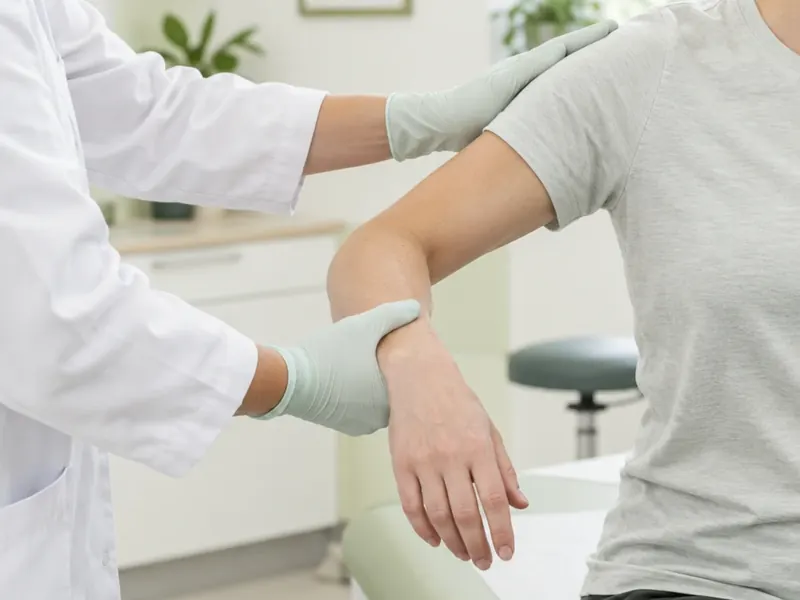
Diagnosis starts with a conversation and an examination. The doctor asks when the pain began, whether there was an injury and whether other joints are affected, then checks the range of motion, strength and tender spots, comparing both shoulders.
Scans then show what is happening inside:
- X-rays show the joint space, bony spurs and the position of the ball in the socket;
- ultrasound shows the tendons, fluid in the joint and inflammation of the soft tissues;
- MRI shows cartilage, rotator cuff tears and early bone changes;
- blood tests help rule out or confirm inflammatory arthritis.
A clear picture of the type and stage is what makes a sensible treatment plan possible. If you already have scans, they can often be reviewed before any in-person visit.
Treatment options and where PRP and SVF help
Most people start with treatment that does not involve surgery:
- physiotherapy to keep the shoulder moving and strengthen the muscles around it;
- adjusting activities, especially heavy lifting and overhead work;
- pain relief prescribed by a doctor;
- injections into or around the joint.
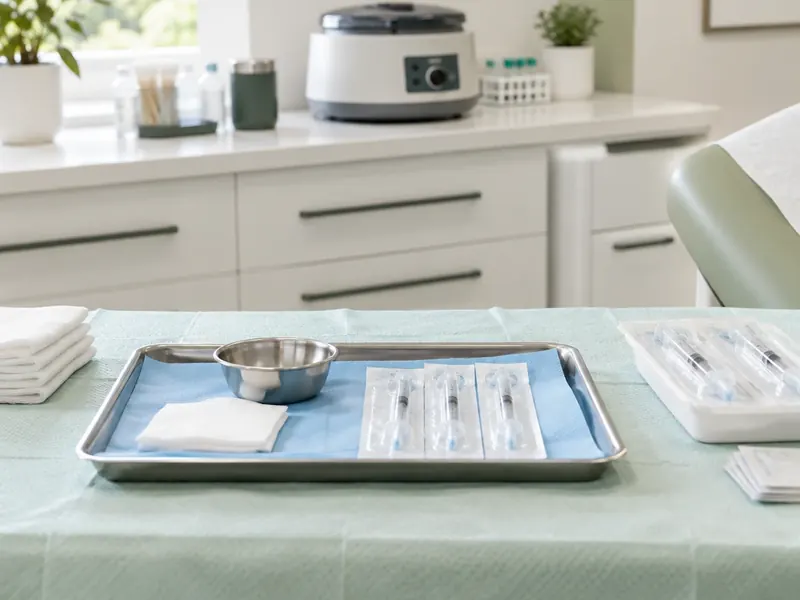
PRP, platelet-rich plasma prepared from your own blood, can calm inflammation and support the tissues of the joint and the tendons around it. It is most useful in early and moderate stages. SVF, a cell fraction obtained from a small sample of your own adipose tissue and combined with plasma, is usually considered when changes are more pronounced and a longer-lasting effect is the goal. Both are injected under ultrasound guidance so that the material reaches the right place.
Other injections exist, such as injections of a lubricating gel or anti-inflammatory hormone injections; these are general information, and their choice belongs to your treating doctor. The effect of any injection varies from person to person and depends on the type and stage of arthritis, so no one can promise a fixed result. How PRP and SVF are carried out is described on the joint treatment page.
When injections are not enough
Injections work best while the joint still has cartilage and the tendons are largely intact. They become less effective when the joint surface has collapsed, the ball has moved out of its normal position, or pain at rest and at night continues despite a well-conducted course of treatment.
At that point an orthopaedic surgeon may discuss surgery, such as keyhole surgery on the joint or shoulder replacement. These are major decisions with a long rehabilitation, so it is worth making them with a clear view of your scans and of what has already been tried. A second opinion on the same scans is a normal step before any operation.
Getting a personal plan at City Medical Centre
City Medical Centre offers PRP and SVF cell therapy for the shoulder and other joints. The procedure is done in one day under local anaesthetic, the injections are placed under ultrasound guidance, and there is no hospital stay; most people return to normal activity within one or two days. Follow-up visits take place after one, three and six months: pain usually eases during the first month, mobility improves over about three months and the full effect develops over around six months.
City Medical Centre does not perform shoulder surgery or joint replacement and does not give lubricating gel or hormone injections into the joint.
The clinic works with patients from abroad. The first consultation and the review of your scans are free and can be done online: send your X-rays, MRI or ultrasound results and describe your symptoms. The doctor assesses the type and stage of arthritis, tells you honestly whether PRP or SVF makes sense in your case and, if so, names the cost, which is then fixed in the contract. A personal coordinator stays with you from the first message to the follow-up visits, and questions can be sent by Telegram. Find out more on the arthritis treatment page.
Sources
Frequently asked questions
What are the symptoms of shoulder arthritis?
The main symptom is deep shoulder pain that first appears after effort and later with everyday movements and at night. Stiffness, a shrinking range of movement, grinding or clicking and difficulty lifting the arm or reaching behind the back are also typical.
Can shoulder arthritis be treated without surgery?
In many cases, yes, especially in early and moderate stages. Physiotherapy, adjusting activities, pain relief prescribed by a doctor and injections such as PRP or SVF can ease pain and preserve movement. Surgery is discussed when the joint is badly damaged and treatment no longer helps.
Do PRP injections help shoulder arthritis?
PRP can reduce pain and inflammation and support the tissues of the joint, most often in early and moderate stages. The effect varies between people. For inflammatory types such as rheumatoid arthritis, PRP does not replace treatment by a rheumatologist.
How is shoulder arthritis diagnosed?
The doctor examines the shoulder and asks about symptoms and injuries, then uses X-rays to see the joint space, ultrasound for tendons and fluid, and MRI for cartilage and tears. Blood tests help check for inflammatory arthritis.
Can shoulder arthritis lead to disability?
Without treatment, advanced shoulder arthritis can severely limit arm movement and make everyday tasks difficult. Early diagnosis, regular exercise and timely treatment help to keep the shoulder working for as long as possible.
Have a question about your case? Get a free consultation
Message a coordinator on Telegram: we reply right in the chat, and you can send photos and questions there too.
- The first consultation is free, online consultations are available
- The doctor names the cost after the assessment, and it is fixed in the contract
- A personal coordinator guides you from the first message to recovery
Message our coordinator on Telegram
We reply right in the chat — you can send photos
Message us on TelegramBy sending a message, you agree to the privacy policy
Read also
 Joint treatment
Shoulder joint pain: treatment without surgery and the signs that an operation is needed
Most shoulder pain settles without an operation. Learn the common causes, which scans help, how physiotherapy, PRP and SVF are used and when surgery is needed.
 Arthritis treatment
Arthritis vs osteoarthritis: what is the difference and why it matters for treatment
Arthritis or osteoarthritis? How inflammation differs from joint wear, which symptoms and tests tell them apart and how treatment differs, incl. PRP and SVF.
 Osteoarthritis treatment
Shoulder osteoarthritis: symptoms, stages and treatment options
Shoulder osteoarthritis explained: why the cartilage wears, typical symptoms and stages, which scans are needed, and how exercise, PRP and SVF can help.