






















Facelift6 min read
Full (circular) facelift: what it corrects, who it suits and what recovery involves
A full, or circular, facelift is the most comprehensive surgical option for an ageing face. Instead of treating one zone, it addresses the forehead, temples, cheeks, jawline and neck in a single operation. This guide explains what the procedure corrects, who is a good candidate, how it is carried out, what the first weeks look like and why the result usually lasts many years.

The main points in 30 seconds
- A full facelift treats forehead, temples, cheeks, jawline and neck together.
- It suits marked sagging in several areas, usually after 40.
- Work on the deep SMAS layer avoids a pulled, mask-like look.
- A supportive face bandage is worn first continuously, then mainly at night.
- Results often last around 7–10 years.
Key facts about the procedure
- Main healing2 months
- Final result3–6 months
- AnaesthesiaGeneral
- Pricefrom $2,400
What a full (circular) facelift is
A full facelift is a surgical lift that treats the whole face and neck as one unit. The name “circular” comes from the incision line, which runs from the temples inside the hairline, around the ears and behind them, so the tissues can be lifted evenly all the way round the face.
It combines several steps that are otherwise done separately:
- lifting the forehead and temples, which raises the brows and opens the eyes;
- repositioning the cheeks and midface;
- redefining the jawline and removing jowls;
- tightening the chin and neck and reducing a double chin.
The key element is work on the deeper muscle and fascia layer, the SMAS, rather than only on the skin. Because the deep layer carries the load, the skin can be redraped without excessive tension, which is what helps avoid a pulled or “mask-like” appearance.
Who needs a full facelift
A circular lift is chosen when ageing changes affect several parts of the face at once. Typical reasons include:
- marked sagging of the face and neck;
- a blurred jawline with jowls;
- a double chin and loose neck skin;
- deep nasolabial folds and marionette lines;
- drooping brows and a heavy, tired look;
- a noticeable loss of skin firmness, usually after 40.
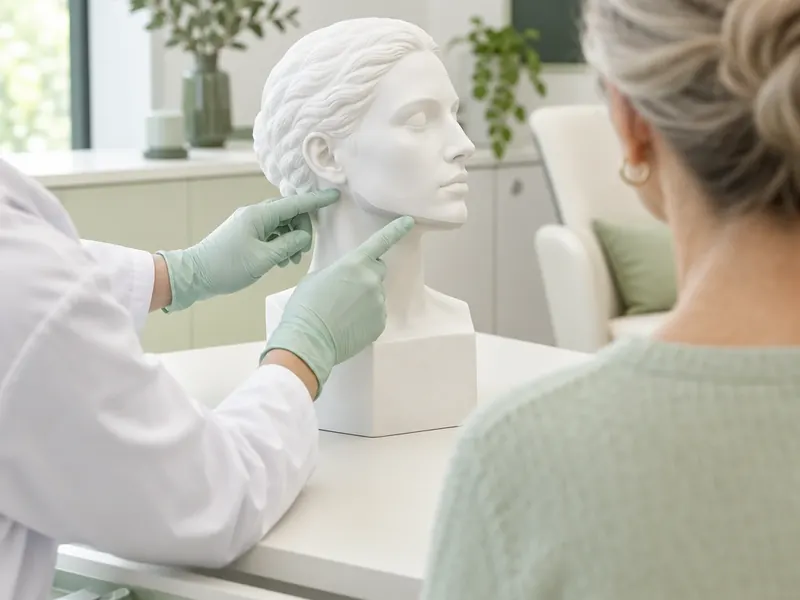
If sagging is limited to one area, a smaller operation may be enough. For example, changes only in the jaw and neck can often be treated with a neck and lower face lift, and a low brow line with an endoscopic brow lift. The surgeon compares these options at the consultation and explains which gives the best balance of result and recovery for you.
When the operation is not done
A full facelift is a significant operation under general anaesthesia, so health comes first. It is usually not performed in the following situations:
- age under 30 or no real signs of sagging;
- acute inflammation of the facial skin;
- pregnancy and breastfeeding;
- severe heart and blood vessel disease;
- blood clotting disorders;
- cancer;
- diabetes that is not under control.
Smoking, high blood pressure and certain medicines also raise the risk of complications and need to be discussed openly. A surgeon may postpone the operation until these factors are under control.
How the operation is performed
Before surgery you have a consultation, an examination and pre-operative tests. On the day, the operation is carried out under general anaesthesia and usually takes several hours, depending on how many areas are treated. In broad terms, the surgeon:
- makes incisions in the temples within the hair, around the ears and behind them into the hairline, and sometimes a small cut under the chin;
- lifts the skin carefully to reach the deeper layer;
- repositions and secures the SMAS in the midface, lower face and neck;
- redistributes fat to restore volume in the cheeks and remove heaviness in the lower face;
- lifts the brow and temple area as planned;
- redrapes the skin without excess tension, removes the surplus and closes the incisions with fine stitches.
The scars lie in natural folds and within the hair, so once healed they are usually hard to notice.
Face bandage and early recovery
At the end of the operation a supportive face and neck bandage is applied. It helps control swelling and supports the tissues in their new position. Surgeons usually ask patients to wear it continuously for the first days, then for a period mainly at night; your surgeon sets the exact schedule.
What to expect in the first weeks:
- First days
- Stay under observation, bandage, swelling and tightness, rest with the head raised
- Week 1–2
- Swelling and bruising start to fade; stitches are removed as the surgeon decides
- Week 2–4
- Many people return to office work and social life with light make-up
- Months 2–6
- Residual swelling settles, sensation returns and the final contour appears
During recovery it is usually advised to avoid heavy exercise, saunas, bending with the head down and sun exposure for the period your surgeon recommends. Smoking should be avoided because it slows skin healing.

Why results can last up to 10 years
The long-lasting effect comes from lifting the deep structures, not just tightening the skin. Skin alone stretches again fairly quickly, but a repositioned and secured SMAS layer holds the tissues for much longer. That is why a well-performed full facelift often keeps the face looking fresher for about seven to ten years.
The face continues to age after surgery, but from a younger starting point. Stable weight, sun protection, not smoking and good skin care help the result last. Some people choose a smaller touch-up operation many years later.
Full facelift at City Medical Centre
City Medical Centre performs surgical facelifts only: the SMAS facelift, the full (circular) facelift, the neck and lower face lift and the endoscopic brow and temple lift. At the consultation the surgeon assesses your face, explains each stage and helps you decide whether a full facelift or a more targeted option suits your age and type of ageing. You can read more on the facelift page.
International patients can start with a free online consultation by sending photos of the face from the front and side. The cost is named after the assessment and fixed in the contract. After surgery you stay in the clinic’s inpatient unit under round-the-clock monitoring, your surgeon follows you up for a year, and a personal coordinator supports you from the first message to the end of recovery, including by Telegram.
Sources
Frequently asked questions
What does a full facelift include?
A full, or circular, facelift usually combines a lift of the forehead and temples, the midface, the lower face and jawline, and the neck. The surgeon repositions the deep SMAS layer, redistributes fat and removes excess skin, so several areas are rejuvenated in one operation.
How long does a circular facelift take?
The operation is performed under general anaesthesia and usually takes several hours. The exact time depends on how many areas are treated and on individual anatomy. Afterwards patients normally stay in the clinic under observation before being discharged.
How long must I wear the face bandage?
Surgeons usually ask patients to wear the supportive bandage continuously for the first days, then for a further period mainly at night. The exact schedule depends on the extent of surgery and how swelling settles, so your surgeon sets it individually.
What should I avoid after a full facelift?
For the period your surgeon advises, avoid heavy exercise, lifting, saunas and hot baths, bending with the head down, sun exposure and smoking. Sleep with your head raised and attend all follow-up visits so that healing can be checked.
How long do the results last?
Because the deep SMAS layer is repositioned, the result of a full facelift usually lasts for many years, often around seven to ten. The face continues to age naturally, but from a younger starting point, and healthy habits help maintain the effect.
Have a question about your case? Get a free consultation
Message a coordinator on Telegram: we reply right in the chat, and you can send photos and questions there too.
- The first consultation is free, online consultations are available
- The doctor names the cost after the assessment, and it is fixed in the contract
- A personal coordinator guides you from the first message to recovery
Message our coordinator on Telegram
We reply right in the chat — you can send photos
Message us on TelegramBy sending a message, you agree to the privacy policy
Read also
 Facelift
SMAS facelift: what it is, how it works and what to realistically expect
What the SMAS layer is, how a surgical SMAS facelift lifts the face and neck, how it differs from ultrasound lifting, who it suits, recovery and results.
 Facelift
Facelift recovery timeline: what to expect from the first day to six months
Facelift recovery week by week: the first days, swelling and bruising, stitches, sleep, return to work and sport, flying home and when the result shows.
 Hair transplant
FUT (strip) vs FUE hair transplant: scars, grafts and recovery compared
FUT (strip) or FUE hair transplant? How each method takes grafts, what scars they leave, how recovery differs and who each one suits best.