




















Facelift6 min read
Facelift risks and complications: what can happen and how to lower the chances
A facelift is a well-established operation, and most people recover without serious problems. Still, it is real surgery under anaesthesia, and an honest conversation about risk belongs in every consultation. This guide separates the expected after-effects from true complications, explains who is more likely to run into trouble, and describes what you and your surgeon can do to keep the odds in your favour.

The main points in 30 seconds
- Swelling, bruising and numbness are normal and fade over weeks to months.
- Haematoma is the most common true complication and is treated promptly.
- Lasting facial nerve injury is rare; temporary weakness usually recovers.
- Smoking, high blood pressure and blood thinners raise the risk.
- Pregnancy, cancer and clotting disorders are contraindications.
Key facts about the procedure
- Main healing2 months
- Final result3–6 months
- AnaesthesiaGeneral
- Pricefrom $2,400
How safe is a facelift?
For a healthy adult who is carefully assessed beforehand, a facelift is generally considered a safe procedure. Serious complications are uncommon, and most of the problems that do occur can be treated without a lasting effect on the result.
Safety depends less on the name of the technique and more on three things: your general health, the experience of the surgical team and the conditions in which the operation and recovery take place. That is why a good surgeon asks many questions about your medical history before agreeing to operate, and may advise you to postpone surgery if something needs attention first.
It also helps to know that the risk of complications is not the same as the chance of disappointment. Even a technically smooth operation needs realistic expectations: a facelift lifts and tightens tissues, but it does not stop ageing or change skin texture.
Common temporary effects: swelling, bruising, numbness
Some reactions are a normal part of healing and are not considered complications. Almost everyone experiences them to some degree:
- Swelling. It peaks in the first few days and then settles gradually. Mild puffiness can linger for weeks, especially along the jaw and neck.
- Bruising. Usually yellow-green by the second week and gone within a few weeks.
- Tightness and discomfort. The face and neck often feel stiff or tight at first. Pain is usually moderate and controlled with medicines prescribed by your doctor.
- Numbness. The skin of the cheeks and around the ears commonly feels numb, because small sensory nerves are stretched during surgery. Feeling usually returns over several months.
- Mild asymmetry. One side may look more swollen than the other early on. This normally evens out as healing progresses.
These effects are part of the reason recovery is measured in weeks, and why surgeons ask patients to wait before judging the final appearance.
Less common complications: haematoma, nerve injury, poor scarring
True complications are less frequent, but you should know what they look like and how they are handled.
Haematoma
- What it looks like
- Rapid, often one-sided swelling with pain and tension, usually in the first 24 hours
- How it is usually managed
- A small one may be drained; a larger one needs a prompt return to theatre
Facial nerve injury
- What it looks like
- Weakness of the smile, lip or brow movement
- How it is usually managed
- Most cases are temporary and recover over weeks or months; permanent injury is rare
Infection
- What it looks like
- Redness, heat, discharge, fever
- How it is usually managed
- Antibiotics chosen by the doctor, sometimes drainage
Skin healing problems
- What it looks like
- Dark or blistered skin near the incision, delayed healing
- How it is usually managed
- Wound care and close follow-up; more likely in smokers
Visible or widened scars
- What it looks like
- Red, raised or stretched scars around the ears
- How it is usually managed
- Scar care, time, and in some cases a small revision later
Hair loss near incisions
- What it looks like
- Thinning at the temples or behind the ears
- How it is usually managed
- Often temporary; permanent patches are uncommon
Other risks shared by any operation include reactions to anaesthesia and blood clots in the legs. Changes in earlobe shape or hairline position are possible too, and are one reason why incision planning matters so much.
Who is at higher risk
Some factors raise the chance of complications. Your surgeon will weigh them at the consultation:
- Smoking and nicotine in any form reduce blood flow to the skin and are strongly linked with healing problems.
- High blood pressure, especially if poorly controlled, is a major factor in haematoma.
- Medicines and supplements that thin the blood, which may need to be paused on medical advice before surgery.
- Diabetes that is not well controlled, which slows healing and raises infection risk.
- Previous facial surgery, which can make tissues less predictable.
- Large recent weight changes, which may affect how the result holds.
Having one of these factors does not always rule out surgery, but it changes the preparation and sometimes the timing.

Contraindications
In some situations a facelift should not be done, at least for now. Typical contraindications include:
- pregnancy and breastfeeding;
- acute inflammation of the facial skin;
- severe heart and blood vessel disease;
- blood clotting disorders;
- cancer;
- diabetes that is not under control;
- young age with no real signs of sagging, usually under 30.
If you have any chronic condition, mention it early. A surgeon can only plan safely when the full picture is on the table.
How surgeons lower the risks
Much of safety is decided long before the first incision. Good practice usually includes:
- a thorough medical history, examination and pre-operative tests;
- stopping smoking well in advance and keeping blood pressure under control;
- reviewing every medicine and supplement you take;
- anaesthesia given by a specialist, with monitoring during and after surgery;
- careful handling of tissues and planning incisions along natural lines;
- an overnight stay with nursing observation, when the risk of haematoma is highest;
- clear written aftercare instructions and a direct line to the team.
Your part matters too: follow the aftercare plan, sleep with your head raised, avoid heavy exertion for the time advised and do not skip follow-up visits. Report anything that worries you instead of waiting it out.
Safety and follow-up at City Medical Centre
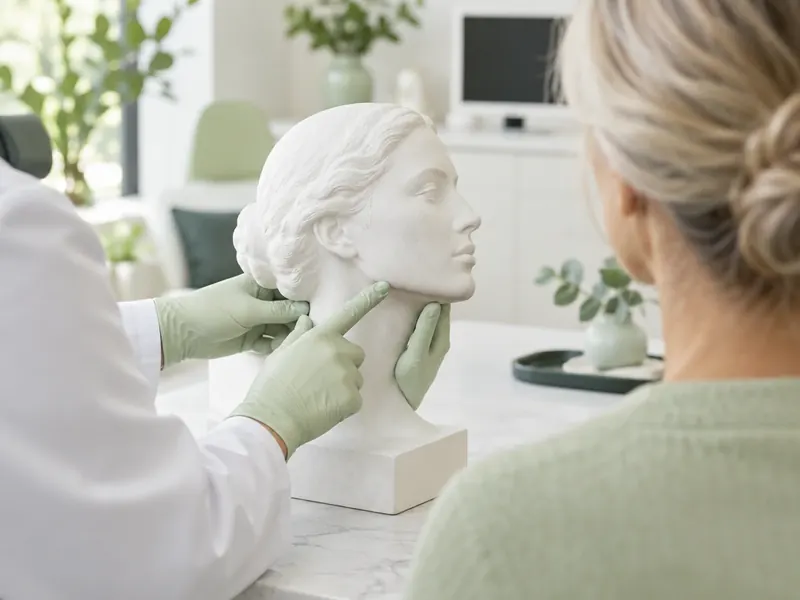
City Medical Centre performs surgical facelifts only: the SMAS facelift, the full (circular) facelift, the neck and lower face lift and the endoscopic brow and temple lift. At the consultation the surgeon reviews your health, explains the plan and its risks, and recommends the option that suits your anatomy. Non-surgical methods are not offered at the clinic. Read more on the facelift page.
International patients can start with a free online consultation by sending photos and health details. The surgeon names the cost after the assessment, and it is fixed in the contract. After surgery you stay in the inpatient unit under round-the-clock monitoring, your surgeon follows you up for a year, and a personal coordinator is available from the first message to the end of recovery, including by Telegram.
Sources
Frequently asked questions
What are the most common facelift complications?
Swelling, bruising and temporary numbness are expected after-effects rather than complications. Among true complications, a haematoma, a collection of blood under the skin, is the most common. Infection, healing problems, scarring issues and nerve weakness are less frequent.
Can a facelift damage facial nerves?
It can, but lasting damage is rare. Temporary weakness of the smile or brow sometimes appears after surgery because nerves are irritated or stretched, and it usually recovers over weeks or months. Numbness of the skin is more common and also tends to improve with time.
How is a haematoma after a facelift treated?
It depends on its size. A small collection may be drained or simply watched, while a larger, fast-growing one is usually treated by returning to the operating room to remove the blood and stop the bleeding. Prompt treatment protects the skin and the final result.
Does smoking increase facelift risks?
Yes. Nicotine narrows small blood vessels and is one of the strongest factors behind skin healing problems after a facelift. Surgeons usually ask patients to stop smoking and avoid nicotine products for several weeks before and after surgery.
How do I know if something is wrong after surgery?
Contact your surgeon at once if swelling suddenly increases on one side, pain becomes severe, the skin darkens, you develop fever or discharge, or face movement becomes weak. Calf pain, chest pain or breathlessness need emergency care.
Have a question about your case? Get a free consultation
Message a coordinator on Telegram: we reply right in the chat, and you can send photos and questions there too.
- The first consultation is free, online consultations are available
- The doctor names the cost after the assessment, and it is fixed in the contract
- A personal coordinator guides you from the first message to recovery
Message our coordinator on Telegram
We reply right in the chat — you can send photos
Message us on TelegramBy sending a message, you agree to the privacy policy
Read also
 Facelift
Facelift recovery timeline: what to expect from the first day to six months
Facelift recovery week by week: the first days, swelling and bruising, stitches, sleep, return to work and sport, flying home and when the result shows.
 Facelift
Full (circular) facelift: what it corrects, who it suits and what recovery involves
What a full circular facelift corrects, who it suits and who it does not, how the operation and the first weeks with a face bandage go, and how long results last.
 Facelift
Facelift or thread lift: how long each lasts and who each one suits
A thread lift gives a short-lived lift with little downtime; a surgical facelift works on deeper tissues for longer. Compare results, risks and who each suits.