



















Facelift6 min read
Facelift or thread lift: how long each lasts and who each one suits
Thread lifts are often promoted as a quick alternative to a facelift: no large incisions, a short recovery and a visible lift. The reality is more nuanced. Threads and surgery work on different layers of the face, give different degrees of change and last for very different lengths of time. This article compares the two honestly so you can decide which question to bring to a surgeon.
The main points in 30 seconds
- A thread lift gives a mild lift that usually lasts around one to two years.
- A facelift repositions the deeper SMAS layer and removes excess skin.
- Threads cannot deal with heavy jowls or loose neck skin.
- Repeated thread sessions can cost as much over time as one operation.
- City Medical Centre performs surgical facelifts only, not thread lifts.
Key facts about the procedure
- Main healing2 months
- Final result3–6 months
- AnaesthesiaGeneral
- Pricefrom $2,400
Facelift vs thread lift in brief
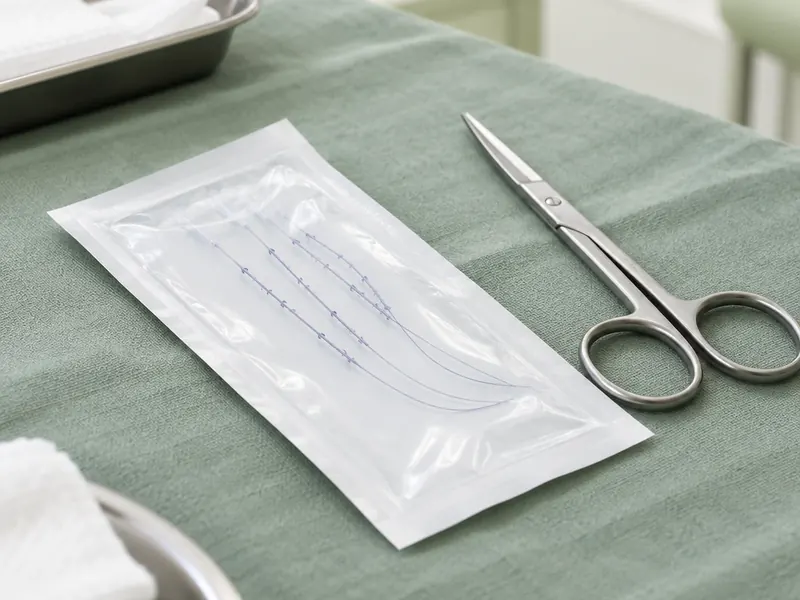
A thread lift uses fine threads placed under the skin to pull sagging tissue slightly upwards. A surgical facelift repositions the deeper muscle and fascia layer of the face, known as the SMAS, and removes excess skin. The first is a minimally invasive procedure; the second is an operation.
Layer treated
- Thread lift
- Skin and fat just under it
- Surgical facelift
- Skin, fat and the SMAS layer
Degree of lift
- Thread lift
- Mild
- Surgical facelift
- Moderate to marked
Excess skin
- Thread lift
- Not removed
- Surgical facelift
- Removed
Anaesthesia
- Thread lift
- Usually local
- Surgical facelift
- Usually general
Downtime
- Thread lift
- Days
- Surgical facelift
- Several weeks
How long the effect lasts
- Thread lift
- Often around one to two years
- Surgical facelift
- Often many years
These are typical ranges from general medical practice. Individual results depend on age, skin quality and the technique used.
How thread lifts work
The practitioner inserts threads through a few small punctures using a fine needle or cannula. Most modern threads are absorbable and have tiny barbs or cones along their length. Once in place, the threads are gently pulled to lift the tissue, and the barbs hold it in its new position.
Over the following months the threads dissolve. As they break down, the body forms a little new collagen around them, which may improve skin firmness for a while. The lift itself, however, relaxes as the threads disappear.
The procedure is usually done under local anaesthetic and takes around an hour. Common treatment areas are the cheeks, the jawline, the brows and the neck.

Pros and cons of thread lifting
Advantages
- no long incisions and usually no general anaesthesia;
- short downtime, often a few days of swelling or bruising;
- a subtle lift that can suit people with early changes.
Limitations and risks
- the effect is modest and temporary;
- threads cannot remove excess skin or deal with heavy jowls;
- dimpling, puckering or asymmetry can appear, especially early on;
- a thread may become visible, felt under the skin or work its way out;
- infection and nerve irritation are possible, though uncommon.
Repeating the procedure is possible, but the cost of repeated sessions over many years adds up, and scarring from earlier threads can make later work slightly harder.
Who threads may suit
Threads tend to work best for people in their thirties or forties with mild sagging, good skin elasticity and a slim face. They can also suit someone who wants a short-term refresh before an event, or who cannot have general anaesthesia and accepts a limited result.
They are usually a poor choice when:
- the skin is thin, loose or heavily creased;
- jowls are marked or the neck has loose skin and bands;
- there is a lot of fat in the lower face;
- you expect a result comparable to surgery.
Active skin infection, some autoimmune conditions, blood clotting disorders, pregnancy and a tendency to heavy scarring are general reasons to avoid threads.
How a surgical facelift differs
A facelift works on the structure that actually sags. Through incisions hidden along the hairline and around the ears, the surgeon lifts and secures the SMAS layer, redistributes fat, then redrapes the skin and trims the excess. Because the deep layer carries the lift, the skin is not pulled tight, which helps the face look natural.
This is why a facelift can deal with jowls, a blurred jawline, loose neck skin and deep folds, which threads cannot address. The trade-off is surgery: general anaesthesia, a few days of close aftercare, swelling and bruising for two to three weeks, and scars that are usually well hidden but permanent. You can read about the types of facelift on our facelift page.
Longevity and cost over time
A thread lift typically holds for around one to two years, sometimes less. A SMAS facelift keeps its effect for many years; ageing continues, but from a better starting point.
That changes how the cost looks over time. A single thread procedure costs much less than surgery, but people who want to maintain the effect return for new threads again and again. Over a decade, repeated sessions can approach or exceed the cost of one operation, while giving a smaller change. On the other hand, surgery involves more time off work and a longer recovery. The right choice depends on your goals, the degree of sagging and how long you want the result to last.
Having threads does not rule out a facelift later. Surgeons generally prefer to wait until old threads have dissolved and any inflammation has settled.

Choosing the right option at City Medical Centre
City Medical Centre performs surgical facelifts only: a standard SMAS facelift, a full (circular) facelift, a neck and lower face lift, and an endoscopic brow and temple lift. Thread lifting is described here as general information; the clinic does not offer it. If you are unsure whether you need surgery at all, the surgeon will say so honestly at the consultation and suggest the variant that fits your face.
The clinic works with patients from abroad. The first consultation is free and can take place online: send front and side photos of your face and neck and tell us what bothers you most. The doctor assesses your case and names the price, which is then fixed in the contract. A personal coordinator stays with you from your first message to the end of recovery, and you can send photos and questions via Telegram. More details are on our facelift page.
Sources
Frequently asked questions
How long does a thread lift last?
The visible lift from absorbable threads usually lasts around one to two years, sometimes less. As the threads dissolve, the tissue gradually settles back. Some improvement in skin firmness from new collagen may remain for a while, but the lifting effect itself is temporary.
Is a thread lift a substitute for a facelift?
Not really. Threads give a mild, short-lived lift of the skin and fat, while a facelift repositions the deeper SMAS layer and removes excess skin. For marked jowls, loose neck skin or deep folds, threads cannot give a comparable result.
Can I have a facelift after a thread lift?
Yes. Previous threads do not rule out surgery. Surgeons usually prefer to wait until the threads have dissolved and any swelling or inflammation has settled. Tell your surgeon about earlier threads, fillers and other procedures at the consultation.
Which is safer, threads or a facelift?
Threads carry fewer risks linked to anaesthesia and large incisions, but can cause dimpling, visible threads or asymmetry. A facelift has the general risks of surgery, such as bleeding, infection and nerve irritation. Safety depends on your health and on an experienced, qualified specialist.
Who should not have a thread lift?
Threads are usually not recommended for people with very loose or thin skin, heavy jowls, active skin infection, blood clotting disorders or during pregnancy. People who expect a surgical-level result are also likely to be disappointed. A doctor assesses suitability individually.
Have a question about your case? Get a free consultation
Message a coordinator on Telegram: we reply right in the chat, and you can send photos and questions there too.
- The first consultation is free, online consultations are available
- The doctor names the cost after the assessment, and it is fixed in the contract
- A personal coordinator guides you from the first message to recovery
Message our coordinator on Telegram
We reply right in the chat — you can send photos
Message us on TelegramBy sending a message, you agree to the privacy policy
Read also
 Facelift
Full (circular) facelift: what it corrects, who it suits and what recovery involves
What a full circular facelift corrects, who it suits and who it does not, how the operation and the first weeks with a face bandage go, and how long results last.
 Facelift
How long a facelift lasts, and when it can be repeated
How many years a facelift usually lasts, why the face keeps ageing after surgery, when a repeat lift may make sense and which habits help keep the result longer.
 Hair transplant
FUE hair transplant step by step: what happens on the day and during recovery
How an FUE hair transplant goes step by step: preparation, anaesthesia, graft extraction and placement, the first days and the months of regrowth.