





























Before
a full 12 months
2,800 grafts
FUE method
City Medical Centre
FUE · DHI
from $2,200
Appraisal with a sum — $0.
True case
Before
a full 12 months
FUE, done without incisions or stitches. Grafts and forecast added up, nothing to pay — before you decide.
Free online consultation · Reply within 15 minutes
Costs nothing, no surgery booking required
Message our coordinator
Free online consultation · Reply within 15 minutes
Message us on TelegramMessage us on WhatsAppBy messaging us, you agree to our Privacy Policy
Hair transplant for patients from Nuremberg at City Medical Centre starts at €2,000 (from $2,200). The first online consultation is free; the doctor names the final price and it is fixed in the contract.
How it works · Hair transplant prices
Information current as of 5 November 2026
results
Cases shown are all real CMC patients.
Before
a full 12 months
2,800 grafts
FUE method

Before
a full 12 months
3,500 grafts
FUE method

Before
a full 12 months
2,600 grafts
FUE method

Before
a full 12 months
3,000 grafts
FUE method

Before
a full 12 months
2,700 grafts
FUE method

Before
a full 12 months
3,300 grafts
FUE method

Before
a full 12 months
2,900 grafts
FUE method

Before
a full 12 months
2,500 grafts
FUE method

Before
a full 12 months
3,400 grafts
FUE method

Before
a full 12 months
2,500 grafts
FUE method

Before
a full 12 months
3,100 grafts
FUE method

Before
a full 12 months
3,600 grafts
FUE method

Before
a full 12 months
4,000 grafts
FUE method

Before
a full 12 months
3,200 grafts
FUE method

Before
a full 12 months
3,000 grafts
FUE method

Before
a full 12 months
3,700 grafts
FUE method

Before
a full 12 months
2,700 grafts
FUE method

Before
a full 12 months
3,800 grafts
FUE method

Before
a full 12 months
3,300 grafts
FUE method

Before
a full 12 months
2,800 grafts
FUE method

Before
a full 12 months
2,500 grafts
FUE method

Before
a full 12 months
3,900 grafts
FUE method

Before
a full 12 months
3,500 grafts
FUE method

Before
a full 12 months
3,800 grafts
FUE method

Before
a full 12 months
2,900 grafts
FUE method

Before
a full 12 months
3,600 grafts
FUE method

Before
a full 12 months
2,600 grafts
FUE method

Before
a full 12 months
2,700 grafts
FUE method

Before
a full 12 months
3,700 grafts
FUE method

Before
a full 12 months
3,200 grafts
FUE method

Before
a full 12 months
3,000 grafts
FUE method

Before
a full 12 months
2,800 grafts
FUE method

Before
a full 12 months
4,000 grafts
FUE method

Before
a full 12 months
3,400 grafts
FUE method

Before
a full 12 months
2,900 grafts
FUE method

Before
a full 12 months
3,100 grafts
FUE method

Before
a full 12 months
2,600 grafts
FUE method

Before
a full 12 months
3,300 grafts
FUE method

Before
a full 12 months
3,900 grafts
FUE method

Before
a full 12 months
3,500 grafts
FUE method

Before
a full 12 months
2,700 grafts
FUE method

Before
a full 12 months
3,800 grafts
FUE method

Before
a full 12 months
3,200 grafts
FUE method

Before
a full 12 months
3,000 grafts
FUE method

Before
a full 12 months
2,800 grafts
FUE method

Before
a full 12 months
3,100 grafts
FUE method

Before
a full 12 months
3,600 grafts
FUE method
Comparison
Three graft transfer technologies are on the table: classic FUE, suture-free DHI and a combined protocol. Implantation technique, tissue trauma and graft survival are what you compare when choosing.
Classic technique without incisions or stitches

$2,200
$2,700
Graft implantation technique
ForcepsGraft trauma
MinimalA natural growth angle
NaturalGraft survival
98–100%Suitable for
Androgenetic alopeciaSuture-free implantation with a Choi pen

$2,500
$2,900
Graft implantation technique
DHI pen, Choi implanterGraft trauma
MinimalA natural growth angle
NaturalGraft survival
98–100%Suitable for
DensificationFUE for extraction, DHI implant

$2,700
$2,900
Graft implantation technique
FUE extraction, DHI implantationGraft trauma
MinimalA natural growth angle
NaturalGraft survival
98–100%Suitable for
Densification for androgenetic alopeciaThese survival and trauma figures are averages for each method, meant as a guide: exact numbers depend on the transplant area and the patient's individual features and are clarified by the doctor at consultation.
Seek expert guidance


















about the clinic
Up-to-date equipment, comfortable rooms, care for the patient

We will respond to your questions and set a convenient consultation time
TelegramMessage us on TelegramMessage us on Telegram Message us on WhatsApp Fill in the formIf surgery is not the answer for you, you will hear it straight at the consultation — no money wasted. The situations in which a transplant genuinely helps are listed below.
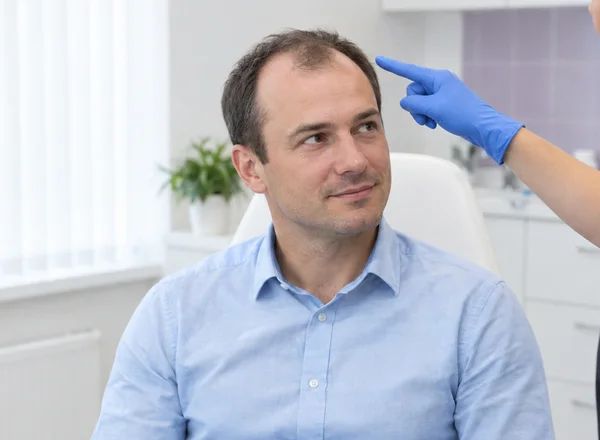

Leave a way to reach you. A coordinator asks for photos of the thinning area in a messenger, then a doctor answers whether a transplant would help you. No charge, no booking made.

services
Pricing waits for the graft count. It is done at the free consultation and written into the contract.
suture-free graft extraction

$2,200$2,700
Appraisal with a sum — $0.
Pin your priceimplantation without channels

$2,500$2,900
Appraisal with a sum — $0.
Pin your pricecombined technique

$2,700$2,900
Appraisal with a sum — $0.
Pin your price| The doctor's first look | Free |
|---|---|
| Eyebrow transplant, FUE | |
| Beard transplant, FUE | |
| Hair trichopigmentation | |
| PRP therapy / session | $200 |
all included
From preparation before surgery to 12 months after.
No extras are slipped in on the day of surgery.
two other spots
Only the zone is different from a scalp case. Donor grafts from the back of the head, the FUE method, everything else identical.
FUE method, no incisions or stitches

Grafts are taken from the donor area at the back of the head and moved through micro-punctures of about 1 mm — no scars are left. The doctor and you choose the shape before the operation, taking your facial features into account. Transplanted hair grows for life, and the beard can be trimmed and styled as usual.
$2,800$3,000
Appraisal with a sum — $0.
Pin your priceFUE method, no incisions or stitches

The eyebrow shape comes from the surgeon at the initial consultation: you look through references together and the design accounts for your facial features. The hairs are implanted at the right angle, so the eyebrows look natural. It also helps where years of plucking stopped hair growth.
$1,600$1,700
a procedure you go home from, numbed locally
Pin your priceThe doctor will weigh up your donor area, count the grafts and show the result achievable for you. The cost is quoted at the consultation and fixed in the contract.

Message our coordinator
Free online consultation · Reply within 15 minutes
Message us on TelegramMessage us on WhatsAppBy messaging us, you agree to our Privacy Policy
Process
From consultation to going home — all in one day

Before anything else, there is a free consultation: the doctor explains FUE and DHI, answers your questions, and works out an individual plan for the surgery.

A deposit, paid by card at the clinic or transferred online, locks in the surgery date, and the arrangement is written into a medical services contract.

This step is dedicated to pre-surgery preparation: completing the tests the clinic lists, following its instructions closely.

This step uses local anaesthesia to make sure the operation is completely painless.

Grafts come from the donor area — the back of the head or temples — collected in a way that avoids stitches entirely.

For patients in Nuremberg, this step means the surgeons implant the grafts into the balding zone.
The final step is recovery, backed by the clinic's supplies and full instructions for fast healing.

The crusts come off and the swelling goes down as the area recovers

This shedding is expected; the roots are not affected

Fresh growth comes through, and the change becomes visible

Density builds up and the main volume and the hairline show

You get the final density and a natural hairline

Free, before the operation, and you owe nothing.
Seek expert guidancedoctors

Hair transplant doctor, trichologist, surgeon

Dermatovenereologist, trichologist, surgeon
11 years of experience

Plastic surgeon
9 years of experience

Plastic surgeon
9 years of experience

Assistant
9 years of experience
The doctor will assess your donor area, count the grafts and say the result you can reach.
Seek expert guidancecoordinators
A coordinator is assigned to you and stays with you until you have recovered.

Patient support lead
Will be there before and after the surgery
Manages all your documents and your slots
Patient support lead
Will be there before and after the surgery
Manages all your documents and your slots

Patient support lead
Will be there before and after the surgery
Manages all your documents and your slots
Patient support lead
Will be there before and after the surgery
Manages all your documents and your slots













We will respond to your questions and set a convenient consultation time
TelegramMessage us on TelegramMessage us on Telegram Message us on WhatsApp Fill in the formReviews
I was having trouble with my hair. I came here and got a hair transplant. The results was awesome thank you
Review on Google
І experienced hair loss due to COVID and turned to this clinic; they helped me and performed a hair transplant, moving hair from the back of my head to my temples. Thank you.
Review on Google
I traveled to City Medical Centre, where they helped me overcome hair loss through a transplant to the balding areas of my scalp. I am grateful to the doctors for performing the procedure painlessly.
Review on Google
I am sharing my experience, because before the operation I went through a pile of reviews myself and was looking for real stories. I had a beard transplant six months ago. Honestly, in the first days after the procedure I felt a little jittery: my face looked unfamiliar, there was slight swelling and small scabs. In the first couple of months the hair partly fell out, as the doctor had warned. But now the result truly makes me very happy) From about the 4th month active, even growth began. The transplanted hair took very well, the beard now looks as natural as possible, no bald patches are left. The beard became much thicker and denser, with the shape I had thought about for a long time. All in all, I recommend the clinic, the doctor was polite and explained everything 👍 The result is definitely worth it!
Review on Google
I traveled to this clinic and do hair transplant, very good quality and cheap. Good doctors
Review on Google
I do hair transplant here very good doctors!!
Review on Google
Asked all the time
People often say hair implants, but no artificial hair is used. In a hair transplant the doctor moves your own follicles (grafts) from the donor area to thinning or bald areas using FUE or DHI.

Yes. City Medical Centre accepts patients from other cities and countries, and an online consultation is available before you decide.
Pricing starts from $2,200 (≈ €2,000) for FUE, $2,500 (≈ €2,250) for DHI, and $2,700 (≈ €2,450) for combined DHI+FUE. The exact figure is confirmed for free after a graft count and written into the contract.
The procedure is completed within a single day, after which you head home.
It helps with stable pattern hair loss and a receding hairline when there are enough donor grafts. Some types of alopecia need treatment first; the doctor checks this at the consultation.
The surgery is performed under local anaesthesia, so it's painless.
FUE is cut-free graft extraction by tweezer. DHI is direct implantation with a Choi pen, skipping channel-making. The combined technique takes grafts by FUE and places them using the DHI method.
At the free consultation, the doctor counts the grafts you need according to your donor area.
0–10 days for healing, 2–4 weeks for normal shedding of transplanted hair, 3–4 months for new growth to start, 6–9 months for real density, and 12–18 months for the final result.
A lifetime guarantee of hair growth is included, confirmed in your contract.
The clinic holds a medical licence, care is provided to the standards and clinical guidelines
of Ministry of Health.

Papers that show who is qualified to operate on you
View the documentsAKC POMOSHCH LLC
the clinic's legal name
1057746096924
OGRN
7728536872
INN
Someone in Nuremberg needs no hospital stay for this: FUE and DHI go without cuts or stitches, under local anaesthesia, and the whole operation takes one day. Graft survival is 98-100 %, and a price from $2,200 (≈ €2,000) is set in the contract after a free graft count.
The photo does the work at the start for a patient in Nuremberg: it goes to the doctor, the online consultation is free, and the answer about whether a transplant helps comes back to you. Open 24/7.
You heal over 0-10 days. Later on, at 2-4 weeks, the transplanted hairs shed; it is normal and it undoes none of the work already done. Growth begins at 3-4 months, and what grows then is yours to keep.
Prices are in US dollars; the amount in brackets is an approximate conversion to EUR at the rate of 02.10.2026. The final price is fixed in your contract.
By messaging us, you agree to our Privacy Policy
Written by Anastasia A. Kolesnik, plastic surgeon, hair transplant doctor
Medically reviewed by Ellina V. Goncharova, dermatovenereologist, trichologist, surgeon. Review date:
How we prepare and review medical content · Medical disclaimer
Well-known people who spoke openly about this operation, in their own words.
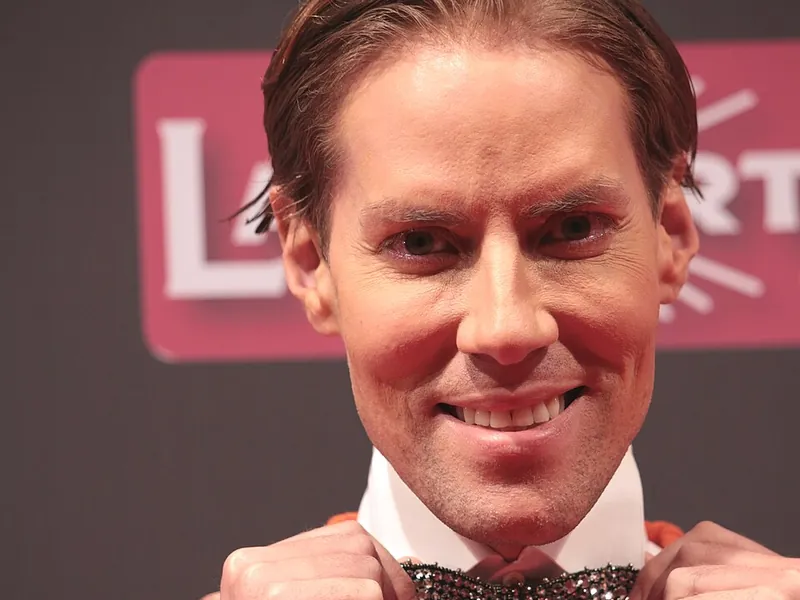 Did Jens Hilbert have a hair transplant? Yes — and he described every stepThe German reality star had a hair transplant in Turkey and then landed in an emergency room. His quotes and how the procedure usually goes.
 Did Jona Steinig have a hair transplant? Yes — his second one, documentedThe Germany Shore star had a second hair transplant in December 2025. His quotes on afro-textured hair, the failed first try and the redo.
 Did Jürgen Klopp have a hair transplant? Yes, and he said so himselfJürgen Klopp confirmed his hair transplant in April 2013. What he said, how the procedure works, how results develop and what to check before your own.
 Did Julian Claßen have a hair transplant? Yes, and he showed it himselfIn August 2024 YouTuber Julian Claßen shared his hair transplant on Instagram and called it a small dream come true. His words, the method and recovery.
 Did Kevin Großkreutz get a hair transplant? Yes, and he said so himselfIn March 2025, World Cup winner Kevin Großkreutz confirmed on Instagram that he had a hair transplant in December 2024 and is happy with the outcome.
A hair transplant is marketed as a solution, yet the first honest question is whether your kind of hair loss belongs among the cases the operation can help. The clinic is direct about it: for many people another route is better, and the doctor says so during the consultation instead of sending anyone to surgery without a reason.
In favour of surgery: androgenetic or diffuse thinning, bald areas, a receding frontal zone. Against it, the list is longer and less obvious. It names psychiatric conditions (trichotillomania, body dysmorphic disorder), cancer and age under 18, then epilepsy, serious heart disease, diabetes and a pacemaker, then HIV, hepatitis B or C and pulmonary embolism, and finally intolerance to anaesthetics. Doctors also weigh insufficient hair density, genetic traits of growth, damage from a burn or injury, and shedding after an illness or from a hormonal imbalance. Patchy alopecia belongs to the cases where a transplant does not suit.
Print both lists and sit with a pen. Mark every line that might concern you, however remotely, and send the marked copy to your coordinator along with the question: which of these applies to me, and where will you write it down? An answer you can reread in a month is worth more than a reassuring sentence on a call.
Asking costs nothing and obliges you to nothing. The clinic wants a phone number, nothing more; the pictures of your thinning areas reach a coordinator via a messenger app, a doctor studies them, and the reply tells you if a transplant is worth considering. No booking follows from sending a photograph.
Write down your own three questions too, and write them before the call, not during it. Which exact diagnosis did the doctor assign to my thinning? What would you advise if I decided to wait a year? Which part of the plan depends on the graft count, and which part would change if the count turned out lower? Answers that come with reasons let you tell a consultation from a sales conversation.
Three techniques are on offer, and each deserves its own question. In classic FUE the grafts are taken with forceps, with no incisions or stitches, and the hairs keep their natural angle. Ask the surgeon what makes this the right fit for your donor area.
DHI places each graft directly with a Choi pen, so the scalp is not first opened with channels. Ask what that changes in your density plan. The combined protocol harvests by FUE and implants by pen, and it is presented as a way to densify in androgenetic loss. Ask why it is, or is not, suggested for you.
Survival and trauma rates appear for each technique as averages, given only for orientation. Real figures depend on the treated area and on your own features, and the doctor spells them out in the consultation. Request your personal numbers in writing and do not rely on averages.
One more fact sits beside the method: the person who examines you at the consultation is the person holding the instruments. That doctor reads the donor zone, settles the graft count and explains what is realistic. The surgery takes one day under local anaesthesia, after which you go home.
The American Academy of Dermatology adds some history worth knowing: most surgeons now transplant healthy hairs a few at a time, which ended the doll-like look of the hair plugs placed in the 1970s and 1980s. Ask the surgeon to describe, in plain words, how the grafts will be placed in your plan and why.
Start with the number. It is set at the free consultation, once the grafts have been counted, and then written into the contract. Request it as a line of text placed beside the method and the graft count, so that nothing about the figure rests on a phone call you cannot reread. The agreed sum stands on the day of surgery; if you choose them, their terms deserve a separate line.
Go through the list of inclusions as a checklist and put a question beside every line you cannot find in the contract: dressings and healing checks, the care plan for both areas, advice on washing, sleep and headwear, the return to sport, photo exchange with a named coordinator, and the five check-ups.
Then comes timing. A surgery date is held once a deposit is paid, by card at the clinic or online, and the conditions are entered in a medical services contract.
Keep one folder for everything that reaches you: the quote, the contract, the list of tests with the instructions for completing them, the dates of the checks and the coordinator's contact. When something is unclear in month five, the answer will be sitting in a place you chose yourself.
Most worry in the first months comes from not knowing what is normal, and a timetable removes much of it. The first ten days belong to healing: crusts shed and swelling goes down. During weeks 2 to 4 the transplanted hairs fall out, which is expected, because the follicles stay in place.
New hairs begin to show in months 3 to 4. By months 6 to 9 the area gains thickness and its outline becomes visible, and the finished result, with full volume and a natural edge, arrives between months 12 and 18. Read these as ranges, not as a promise for one particular day.
Treat the check-ups as anchors: months 1, 3, 6, 9 and 12. Ahead of each one, photograph the same areas under similar light and pass the set to your coordinator, who stays in touch from the first enquiry until recovery is over and goes on exchanging photographs as things change.
For everyday matters the clinic gives instructions on washing the hair, sleeping and headgear, and a plan for returning to sport. Ask for them in writing at the first consultation. Coordinators reply round the clock on WhatsApp and Telegram.
A short diary helps more than memory. After each check-up note the date, what the doctor said and the one question you forgot to ask. At month five or month eight you will have a written timeline to compare with the stages above.
The American Academy of Dermatology names two conditions for a candidate: enough healthy hair on the scalp that can be moved, and the ability to grow hair in the thinning area. It says the outcome depends largely on the surgeon, who should understand hair loss and perform transplants regularly. It also describes what a candidacy check may involve: a thorough scalp exam, sometimes a blood test to look for causes inside the body, and in some cases a scalp biopsy. Its goal is honest: a full head of hair may be unrealistic, while a fuller head of hair can be the target. Bring that sentence to your consultation and ask what 'fuller' would mean for your own photographs.
The International Society of Hair Restoration Surgery, a non-profit medical association with more than 1,100 members in 70 countries, publishes patient information on hair loss treatments. Read it before the call.
Before paying, you are entitled to look at the paperwork: the clinic holds a medical licence, and the doctors' diplomas and certificates are available for inspection. Write down the licence number, the legal entity behind the medical services and the doctors' names, and file them with your contract.
Nuremberg had 531,159 residents on 31 December 2025. For each of them the route into a consultation is identical: a phone number, a few photographs sent in a messenger and a doctor's reply on whether a transplant would help.
Pictures of the areas where hair has thinned. Your coordinator will tell you which angles the doctor needs.
Yes. Your photographs go through a coordinator to a doctor, who tells you whether a transplant would help. The first online conversation costs nothing.
The licence, and the diplomas and certificates of the doctors. Ask also for the licence number and the name of the legal entity that provides the services.
The doctor from your consultation. That doctor examines the donor zone, counts the grafts and explains which outcome is achievable.
The method, the graft count, the sum, the list of inclusions, the dates of the check-ups and the name of your coordinator.
Weeks 2 to 4 are the stage of normal shedding, while the follicles stay put. You can send a photograph to your coordinator as things change.
Enough healthy hair on the scalp to be transplanted, and the ability to grow hair in the thinning area. It adds that the outcome depends largely on the surgeon.

 Forceps
 Minimal


