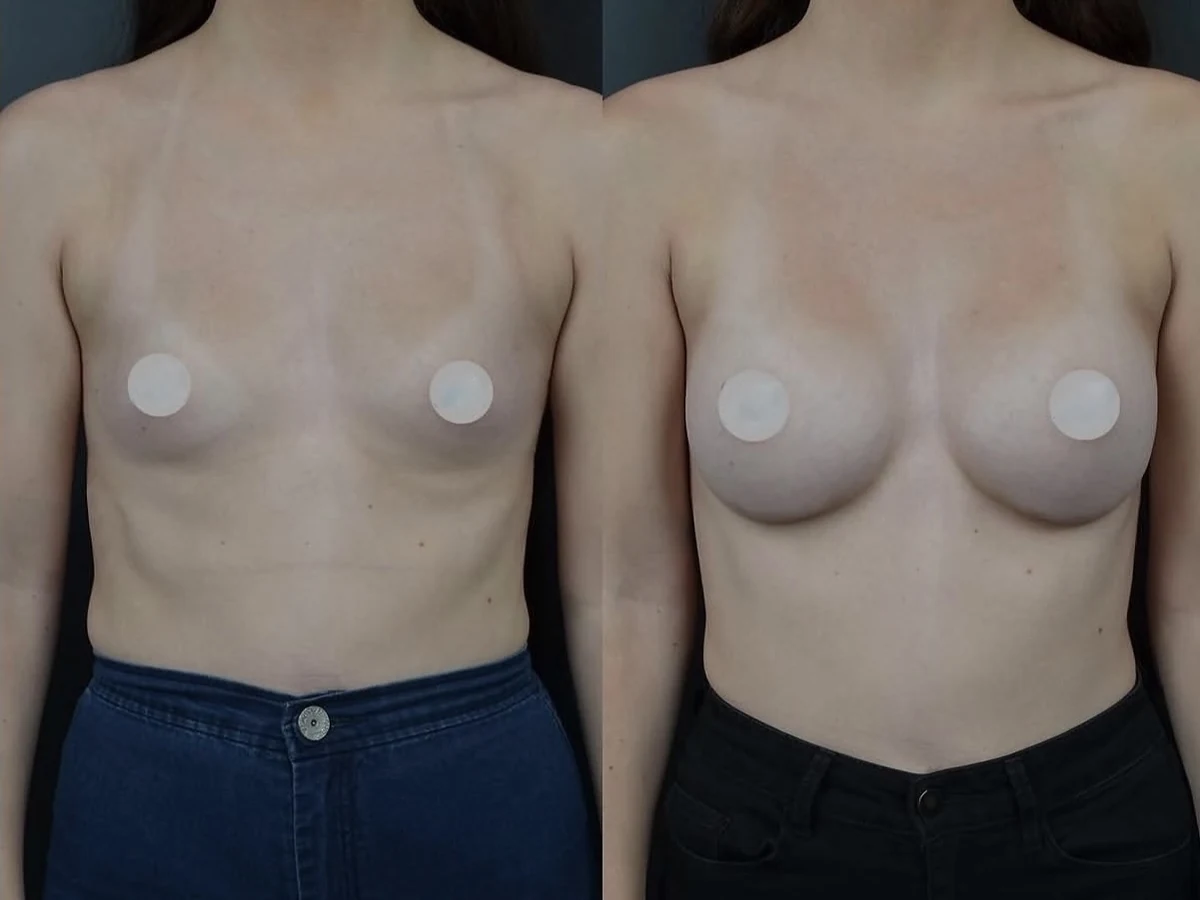
 beforeafter
Mammoplasty
Method: implants
Breast augmentation
$4,700
$5,900 · First consultation — Free
Free online consultation · Reply within 15 minutes
Message our coordinator
Free online consultation · Reply within 15 minutes
Message us on TelegramMessage us on WhatsAppBy messaging us, you agree to our Privacy Policy
Breast augmentation for patients from Copenhagen at City Medical Centre starts at DKK 31,500 (from $4,700). The first online consultation is free; the doctor names the final price and it is fixed in the contract.
How it works · Breast augmentation prices
Information current as of 5 November 2026
Results
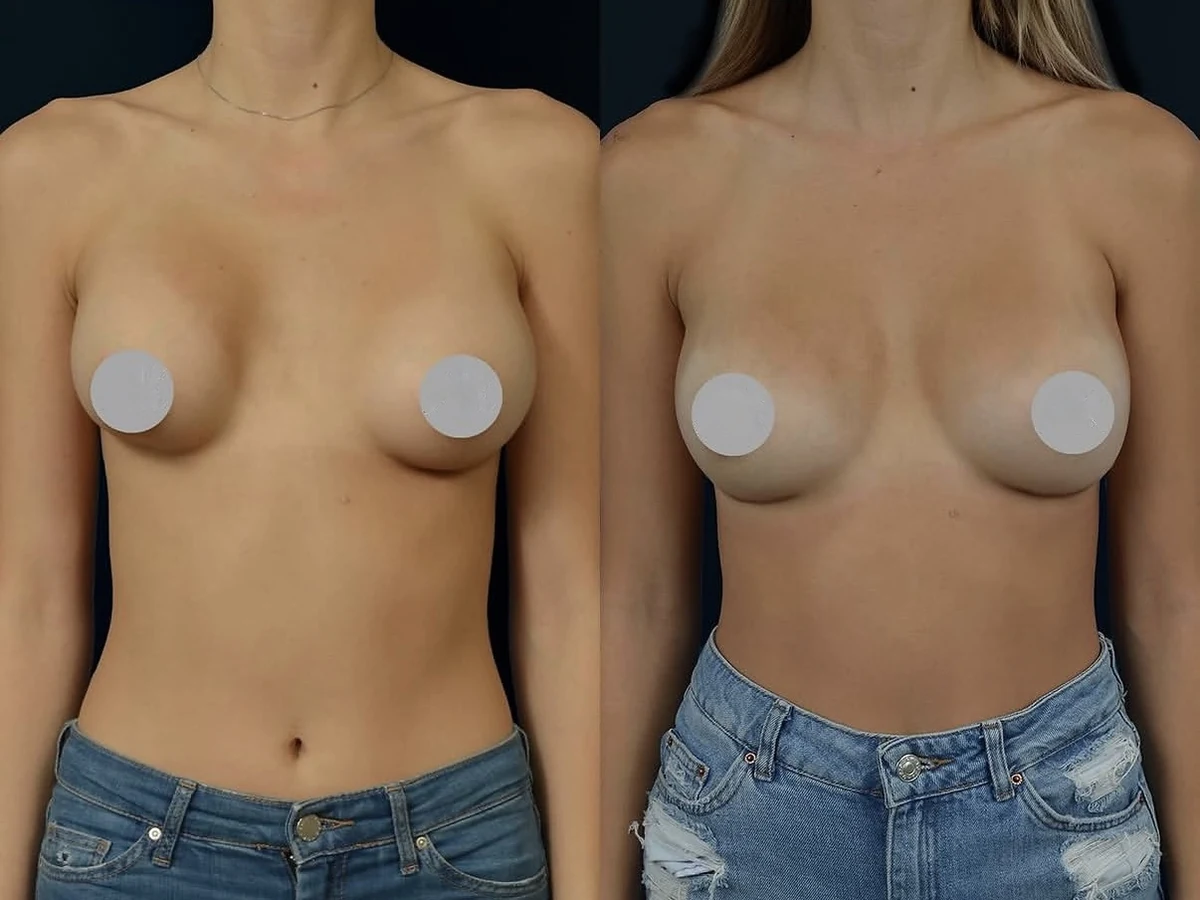
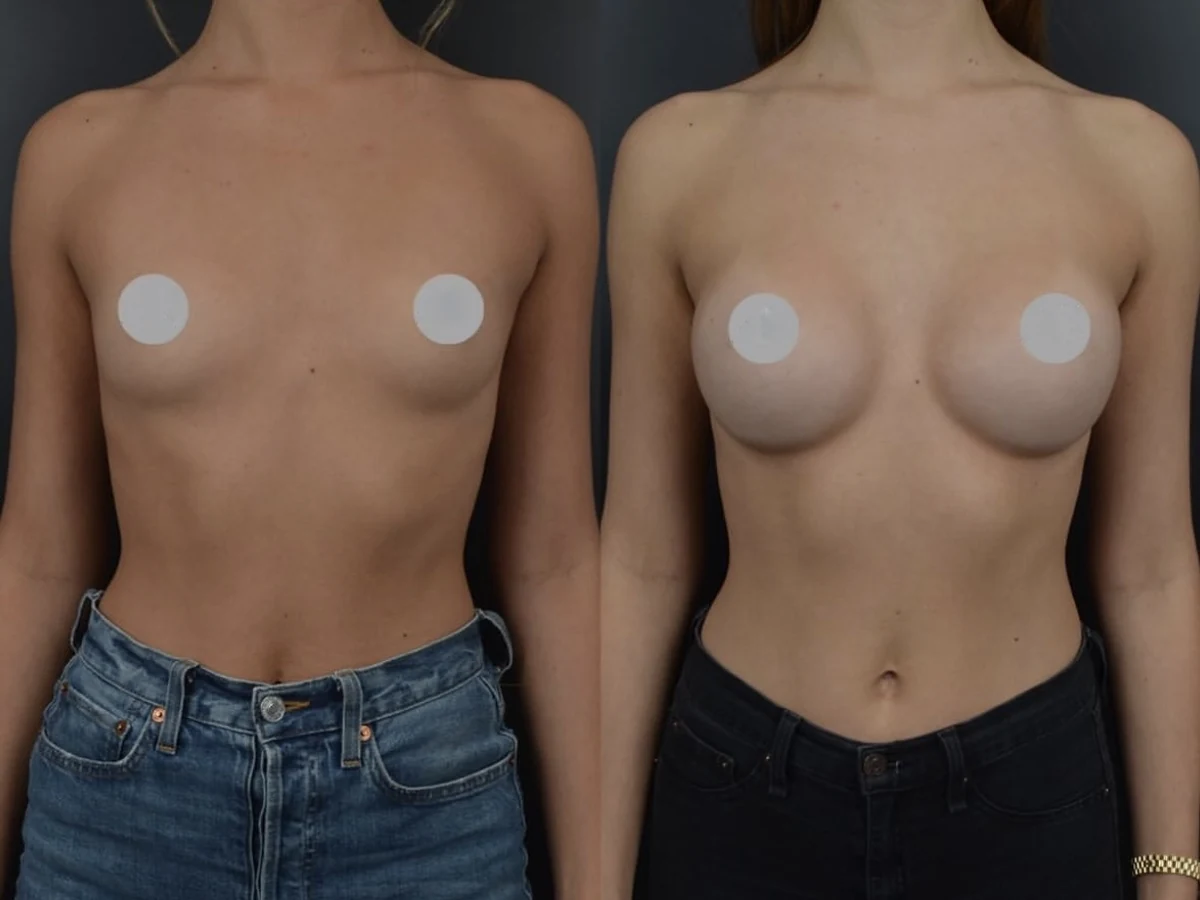
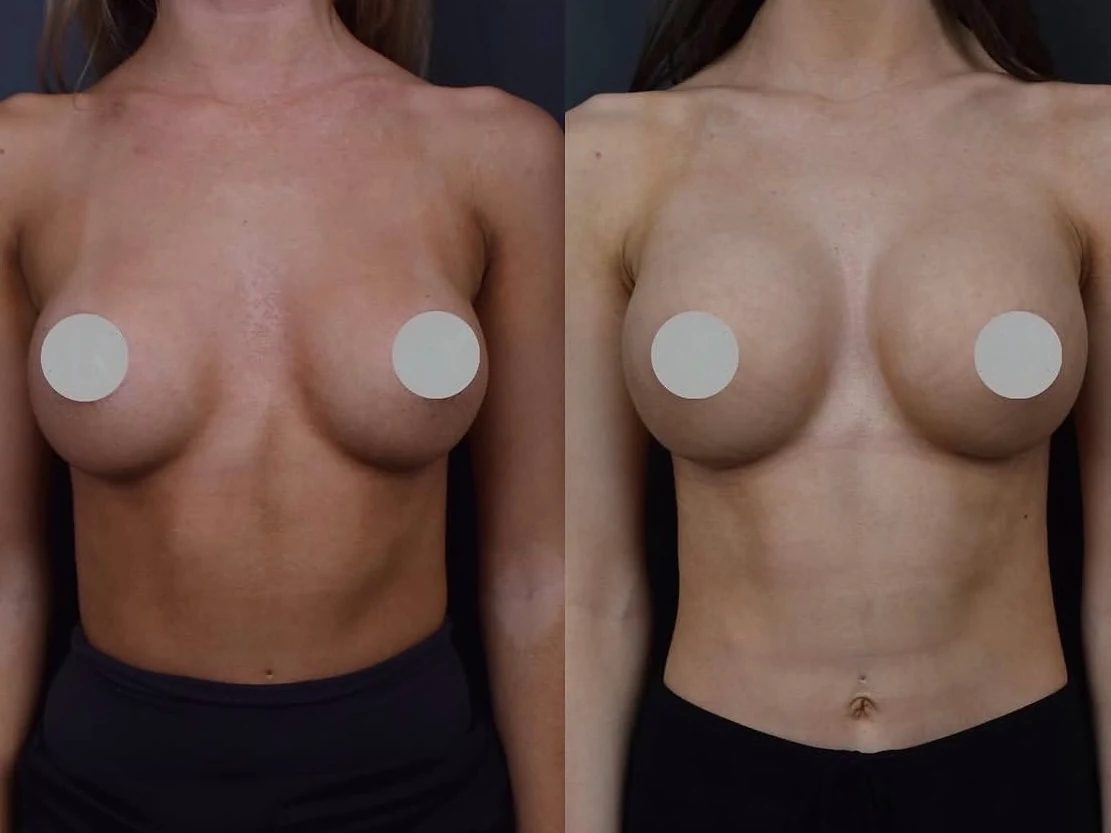
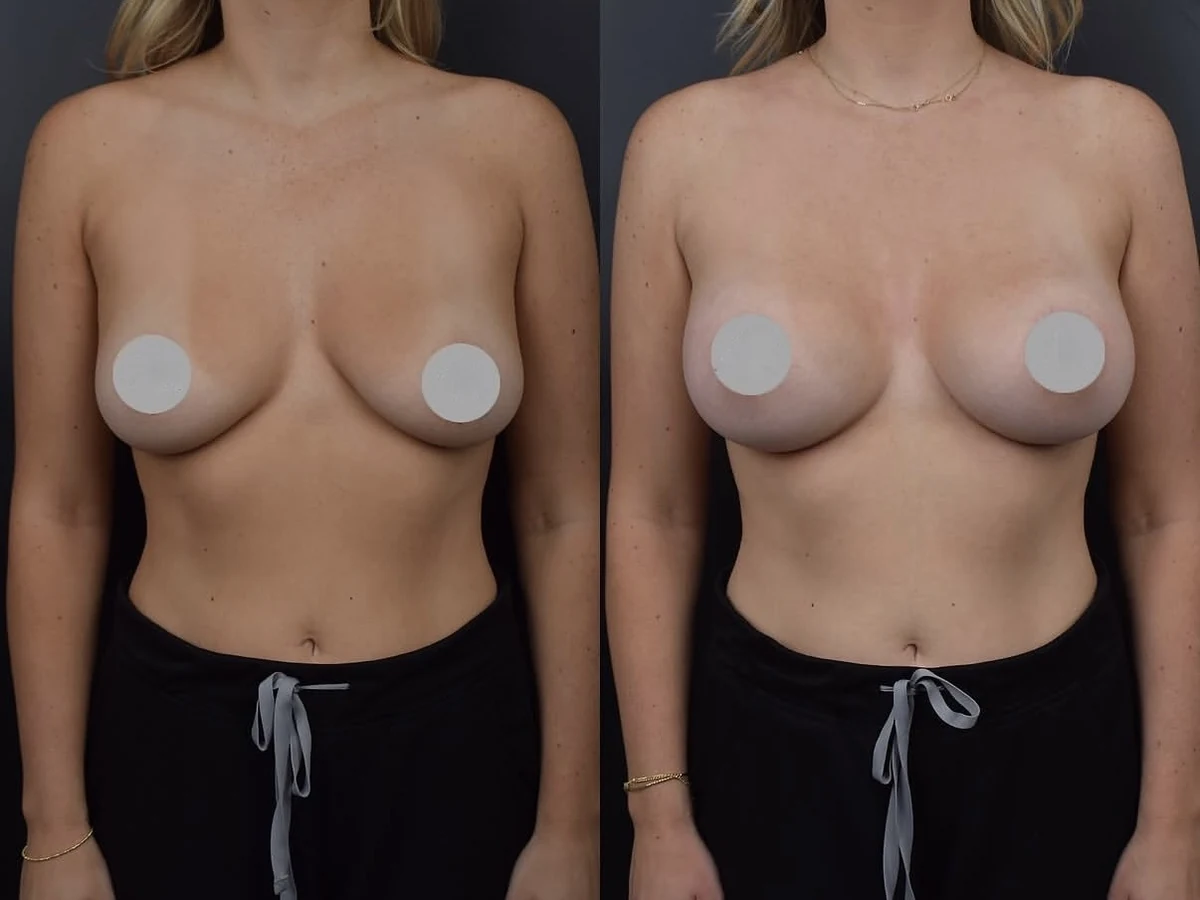
All photos show real patients of the clinic, with identifying details and faces hidden.
beforeafterMethod: implants
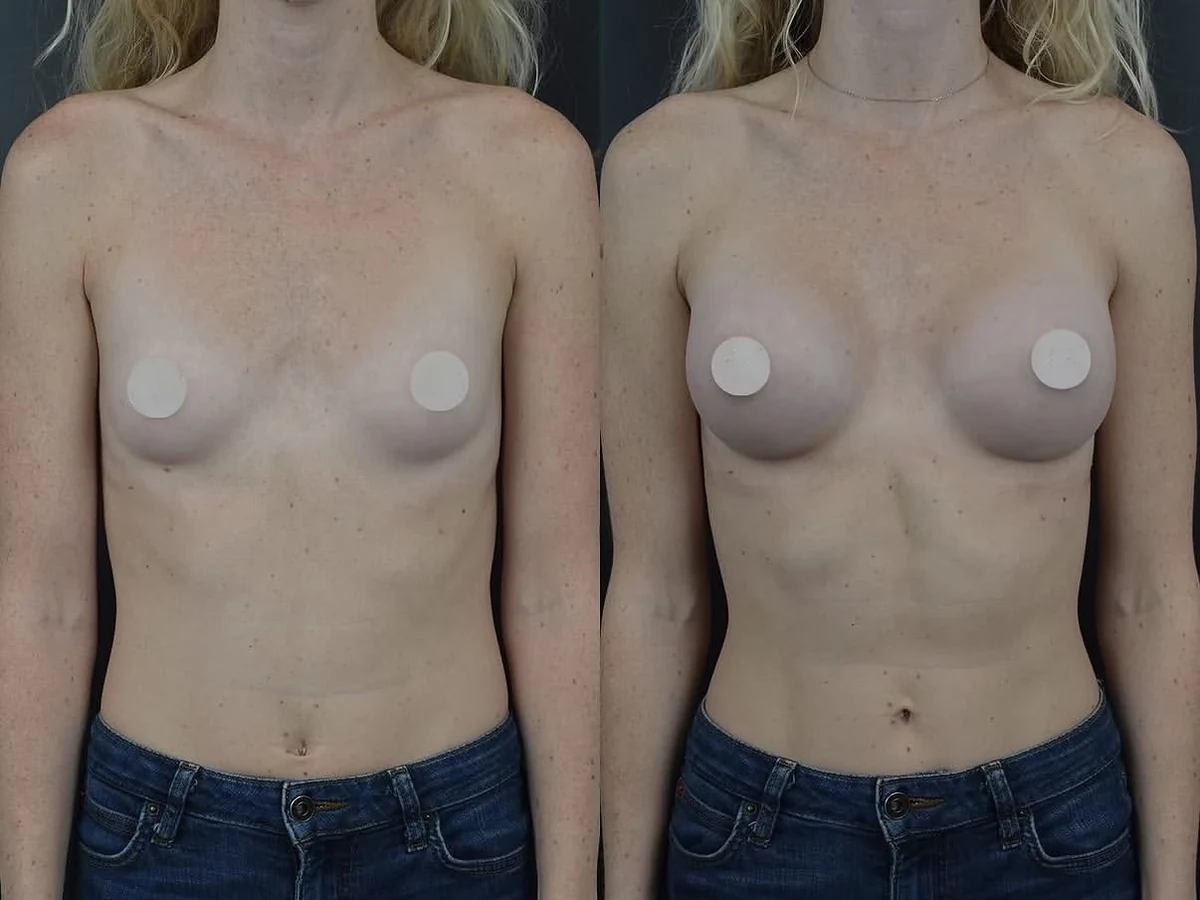 beforeafter
Method: implants
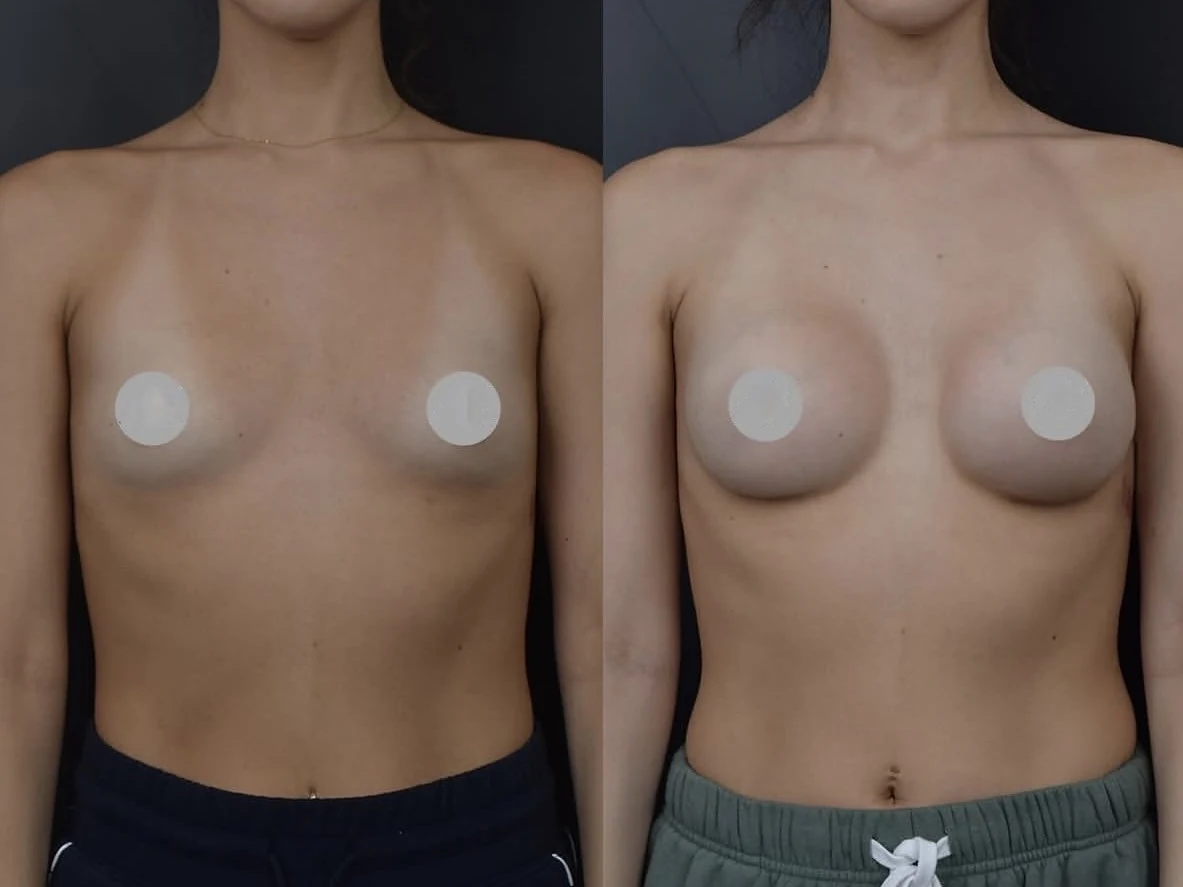 beforeafter
Method: implants
 beforeafter
Method: implants
 beforeafter
Method: implants
 beforeafter
Method: implants
 beforeafter
Method: implants
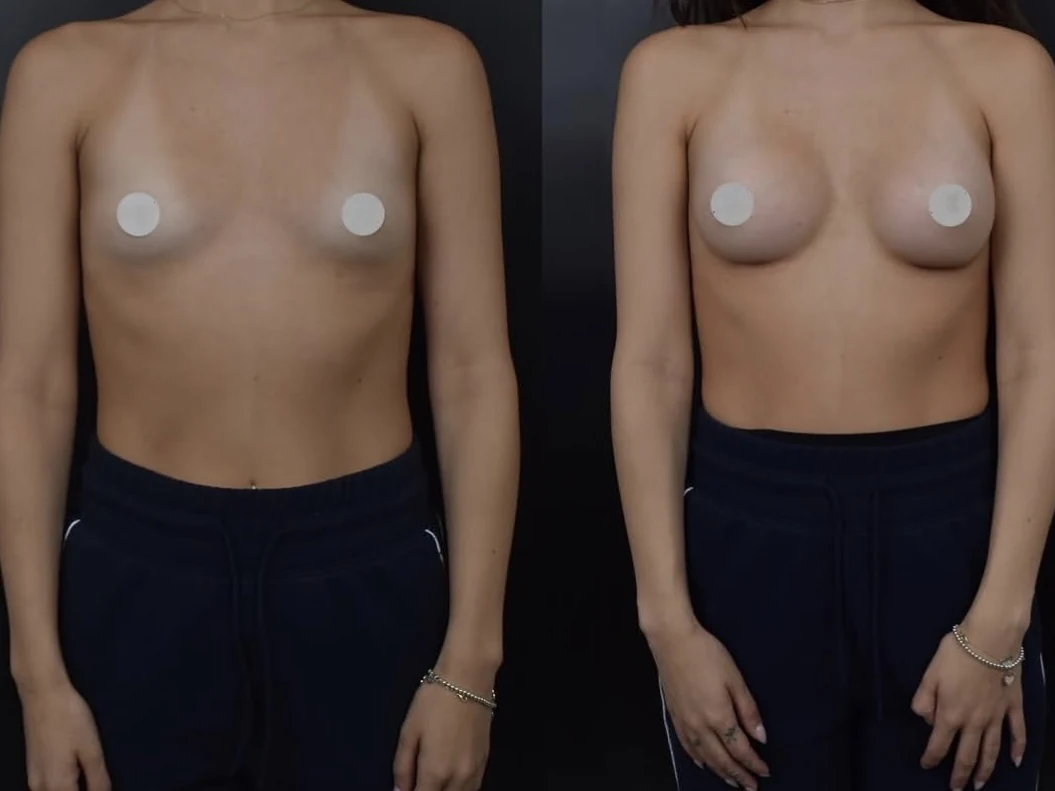 beforeafter
Method: implants
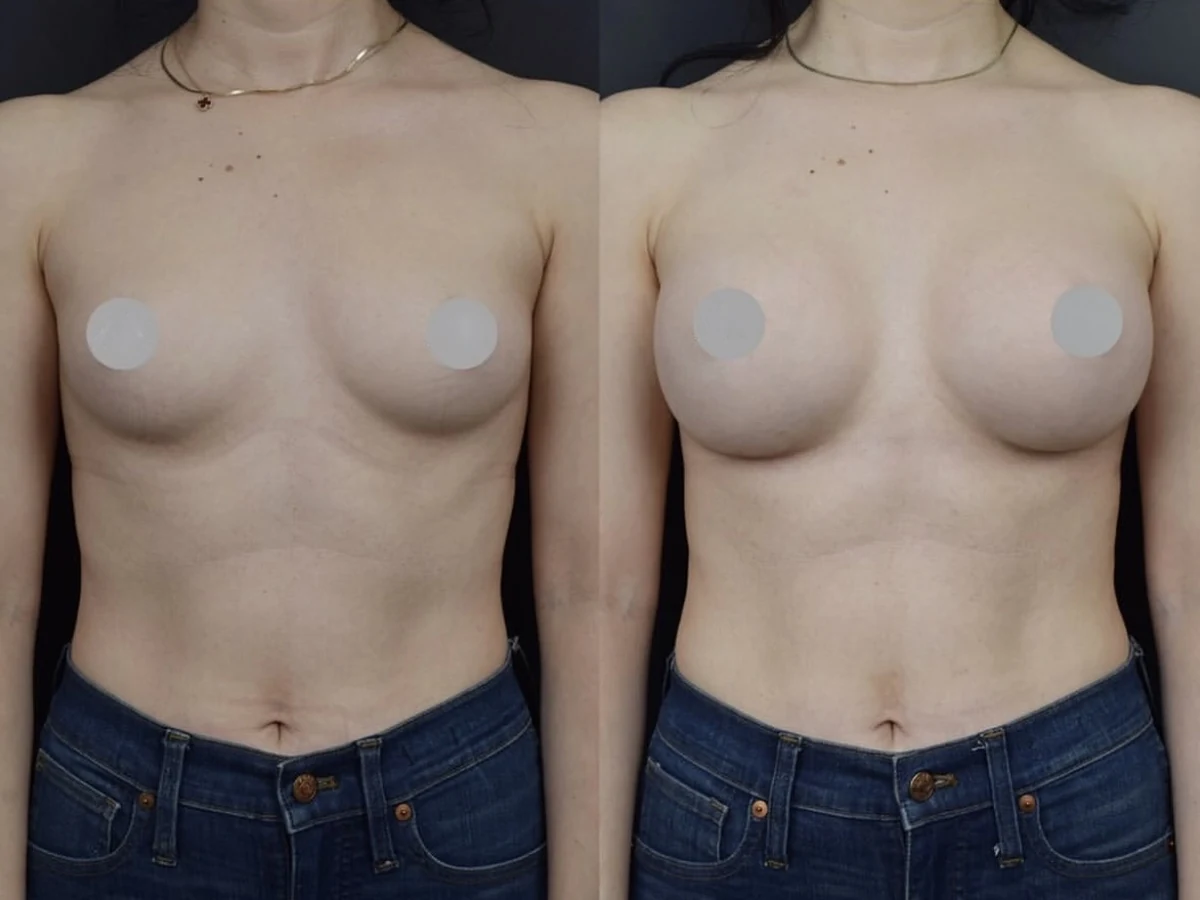 beforeafter
Method: implants
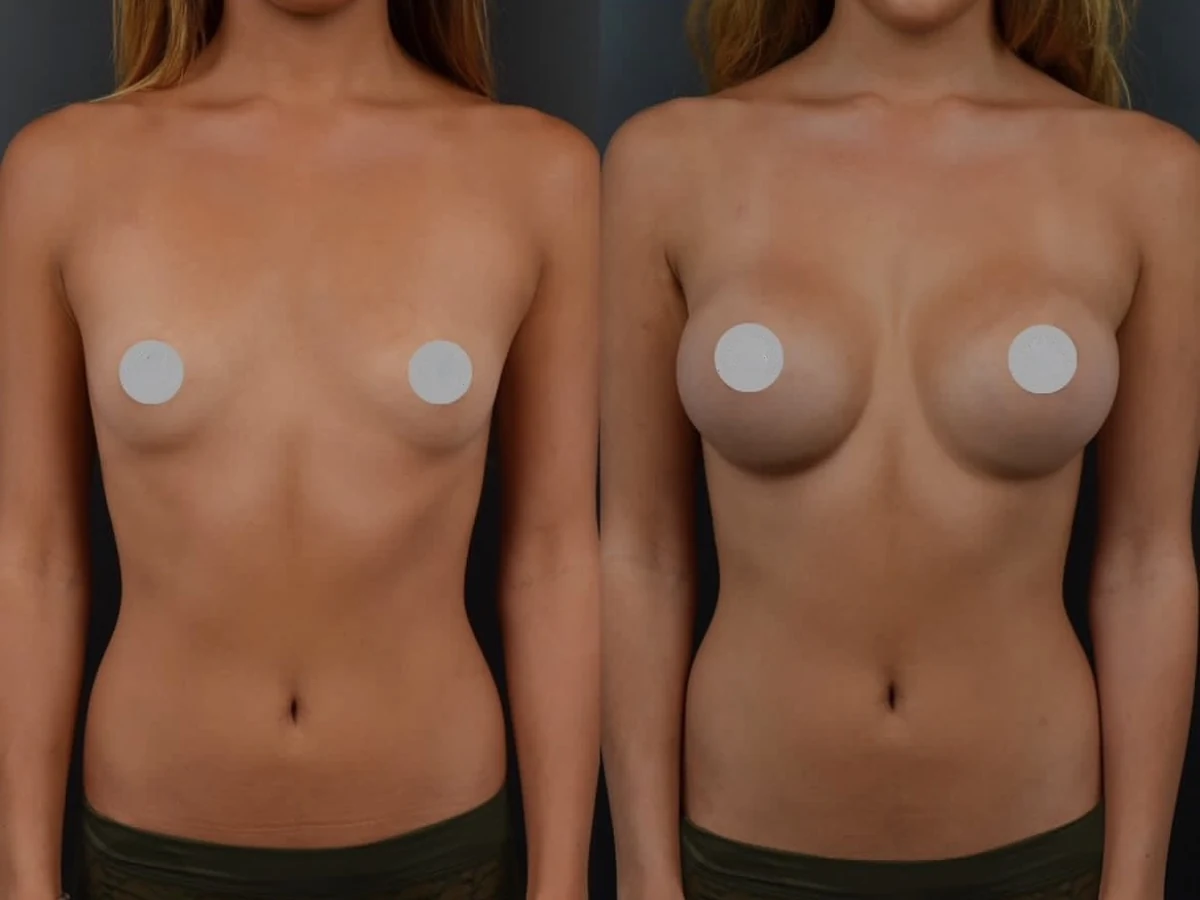 beforeafter
Method: implants
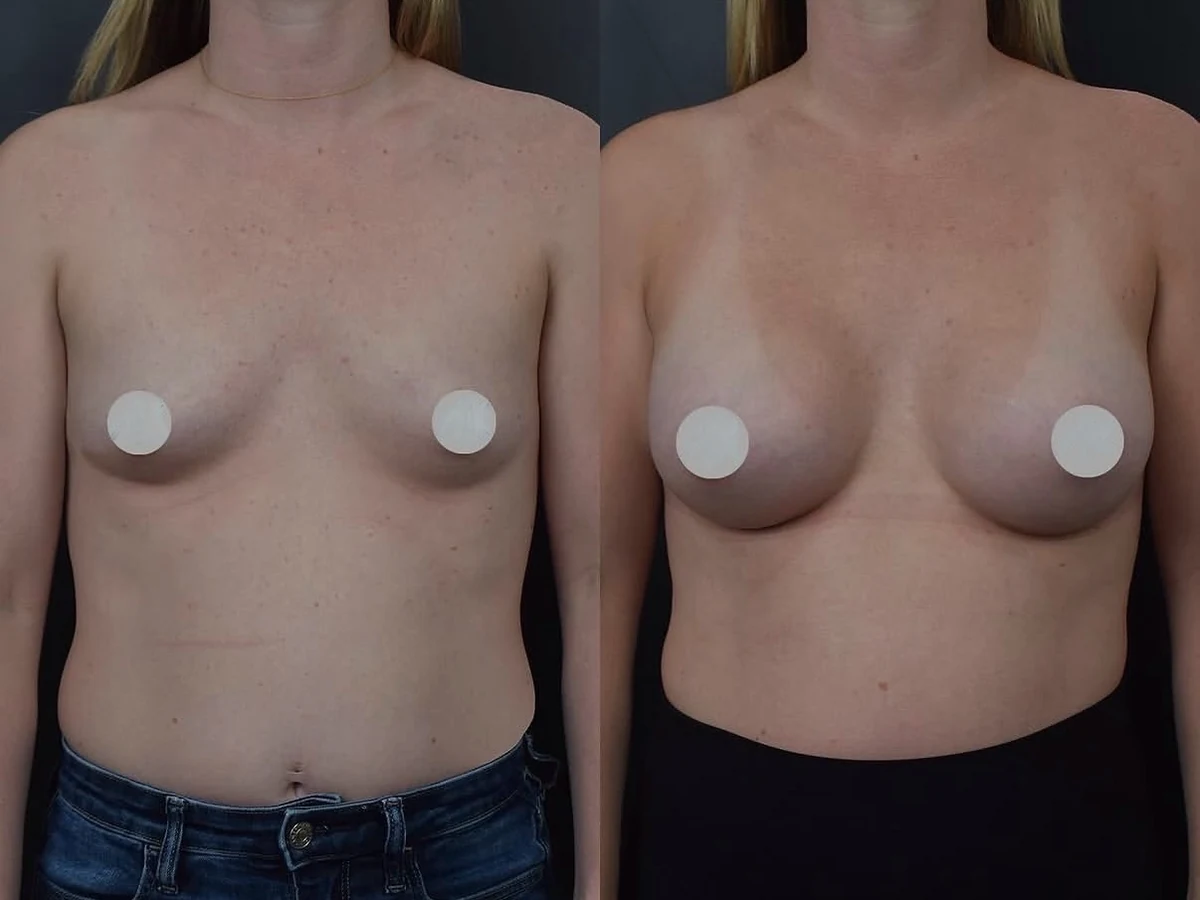 beforeafter
Method: implants
Comparison
Augmentation and reduction are the two main breast correction methods we perform. Compare what each one achieves, how precise it is and when it is indicated.
Size and shape correction with implants
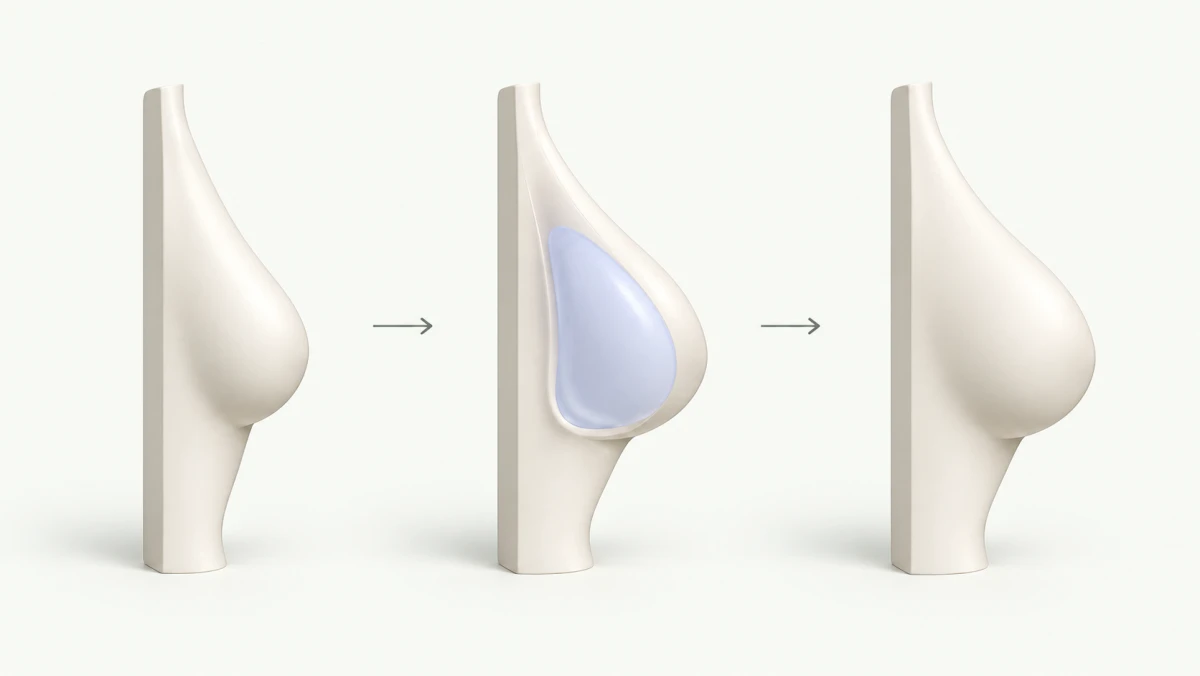
Discounted price
$4,700 $5,900
Correcting breast size by reducing volume and weight
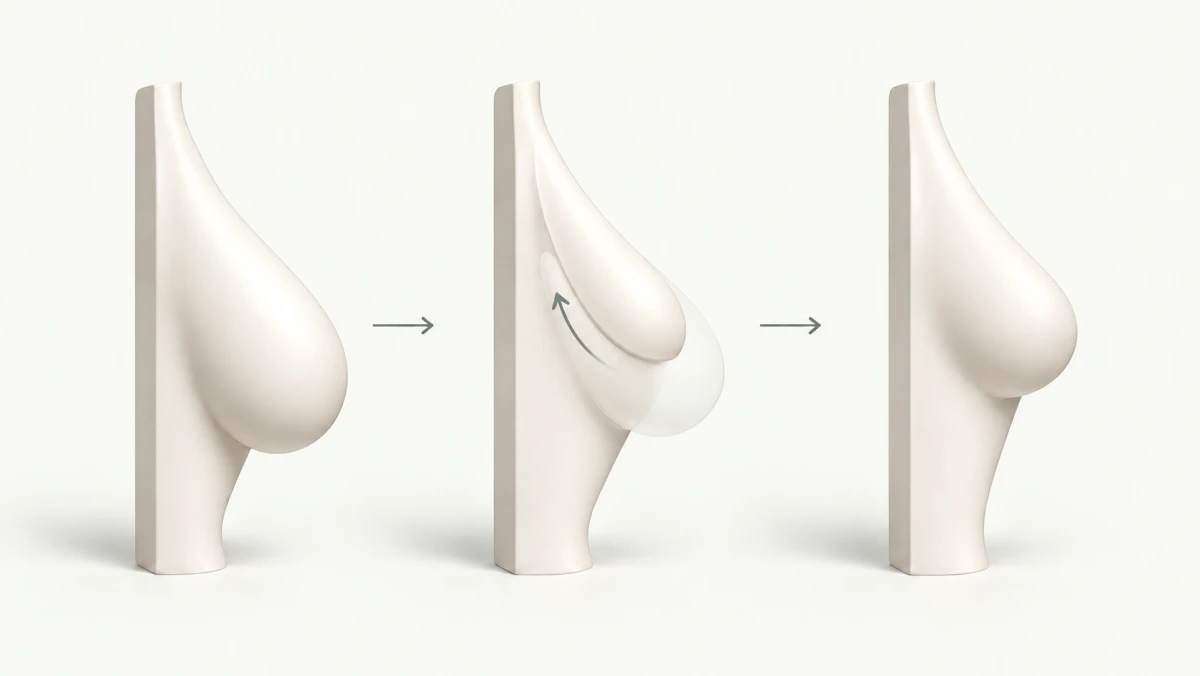
Discounted price
$4,700 $5,900
The surgeon examines the shape and proportions of your breasts at the consultation, discusses your goals and picks the mammoplasty option that fits you best.
The consultation is free, before surgery and with no commitment.
Comparison
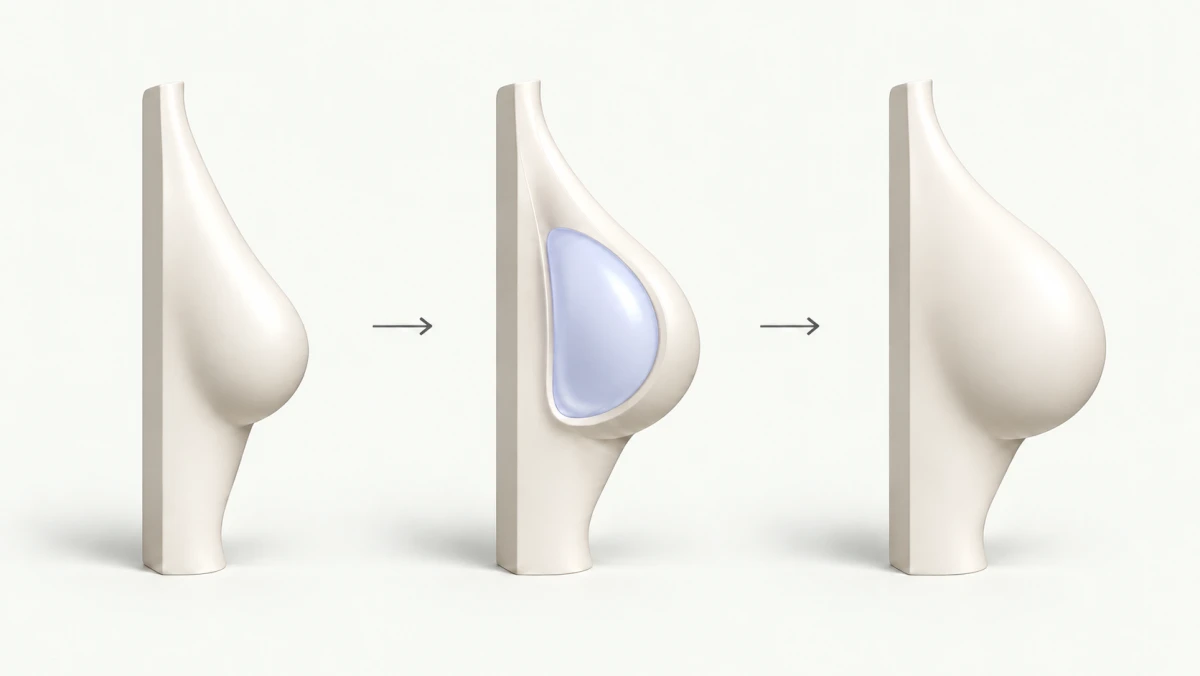
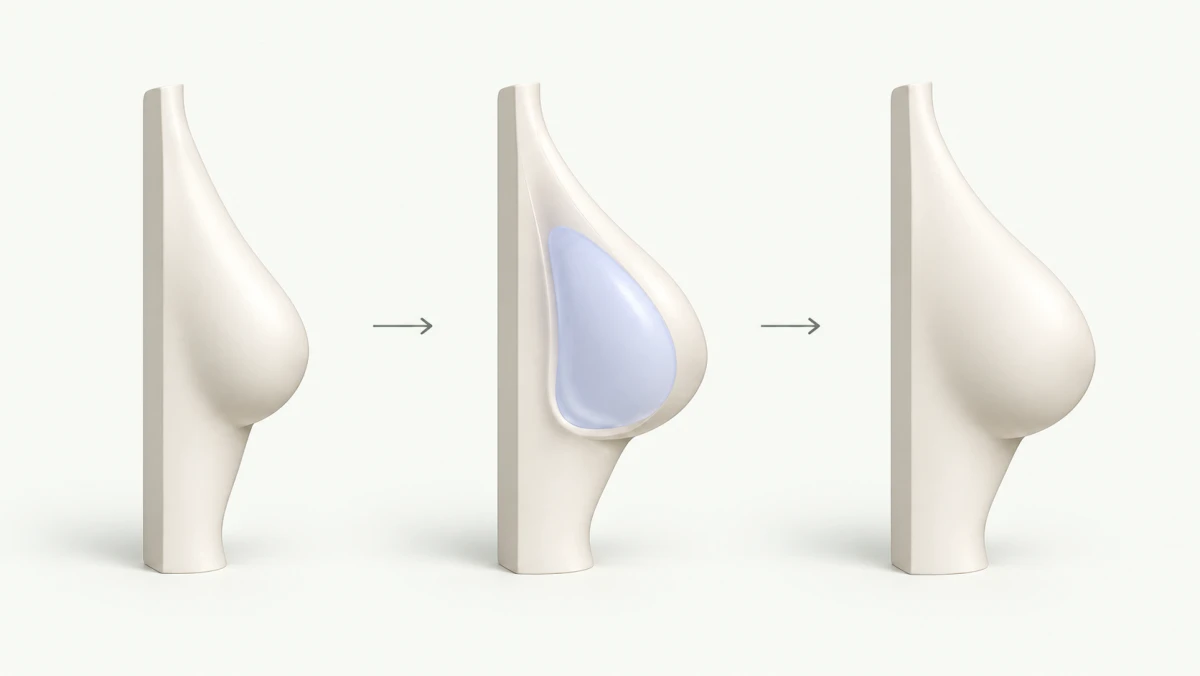
There are two main types of implants we place: round and anatomical. Both enlarge and reshape the breasts, while their form and the resulting look are different.
Uniform volume and a fuller upper area
A natural slope with a soft, teardrop-like shape
The surgeon will help you choose the implant shape and volume.
The clinic
Up-to-date equipment, comfortable rooms and attention to each patient
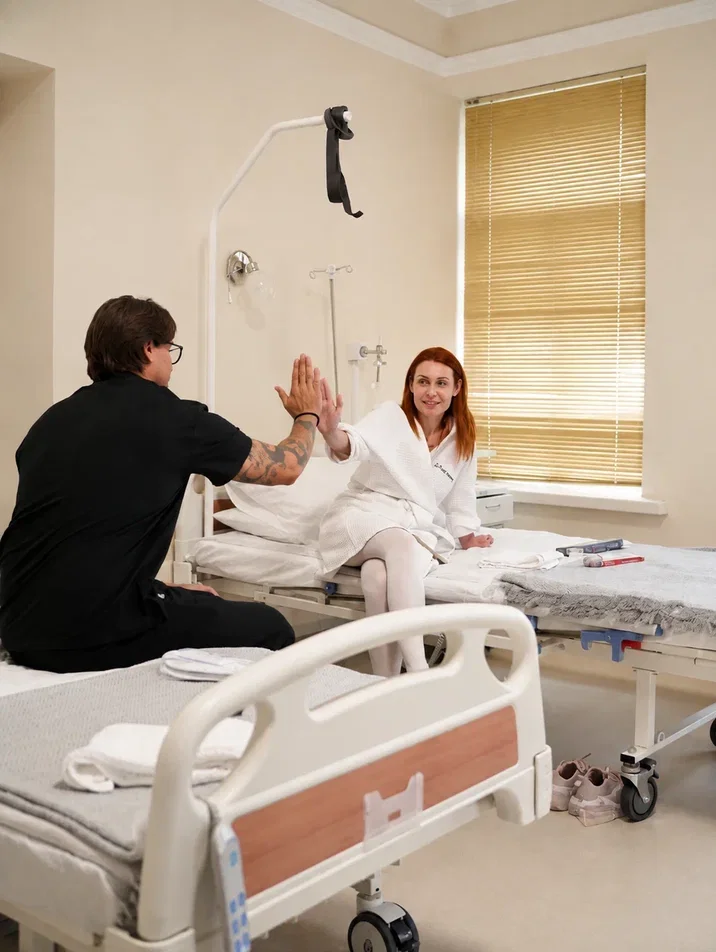
You get answers to your questions and a consultation slot that fits your schedule
By messaging us, you agree to our Privacy Policy
Should your case not require surgery, you will hear it from the doctor at the consultation, and no money will be spent in vain.


Unsure whether surgery suits your case?
Get in touch: your coordinator will ask you for photos in a messenger, the surgeon will study them and say whether mammoplasty is a good option for you.
Find out if it suits me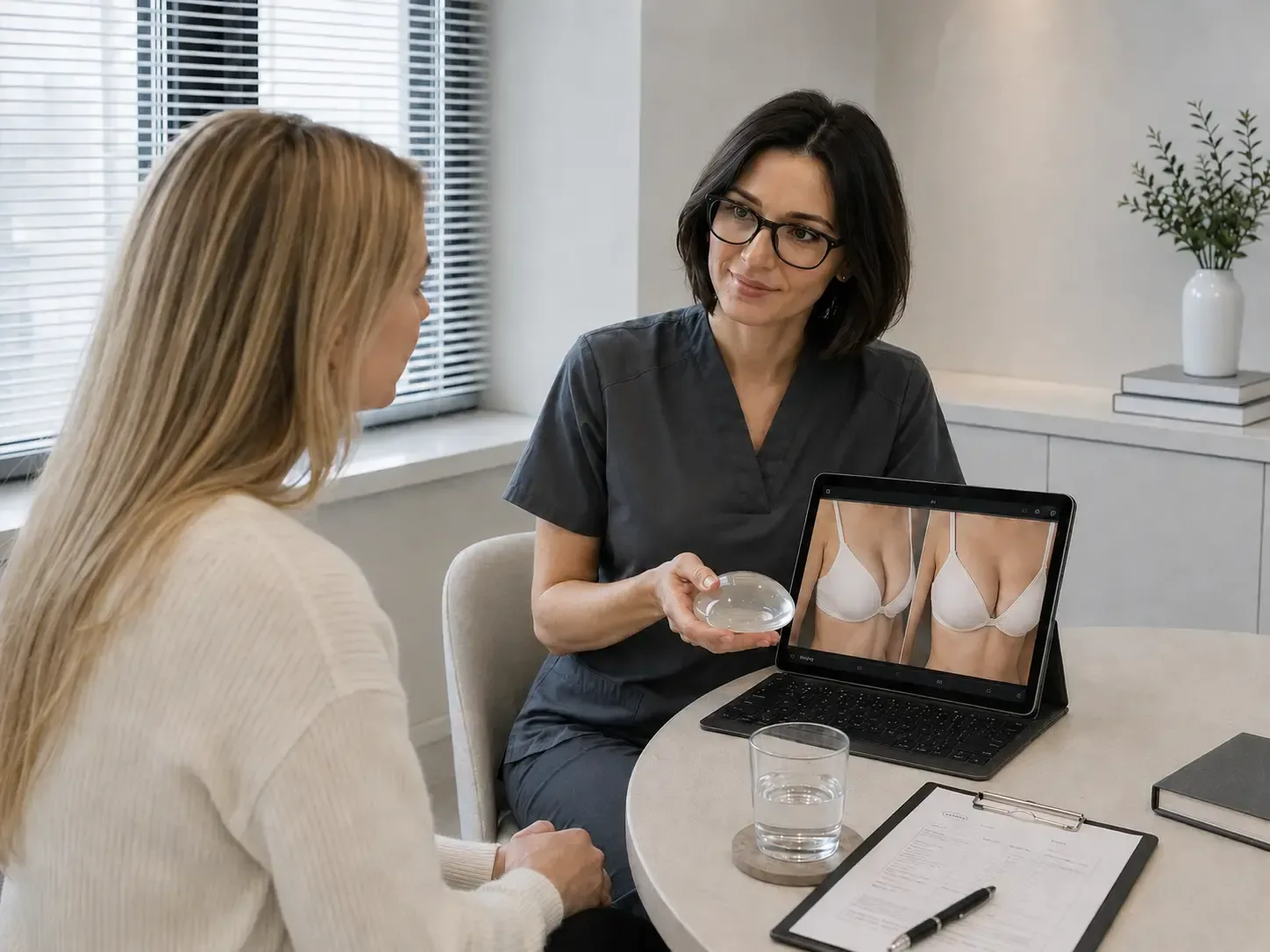
Prices
The price is set at the consultation and fixed in the contract.
Discounted price
Size and shape correction with implants
$4,700$5,900
Discounted price
Reducing the volume and weight of the breasts
$4,700$5,900
Breast restoration after mastectomy
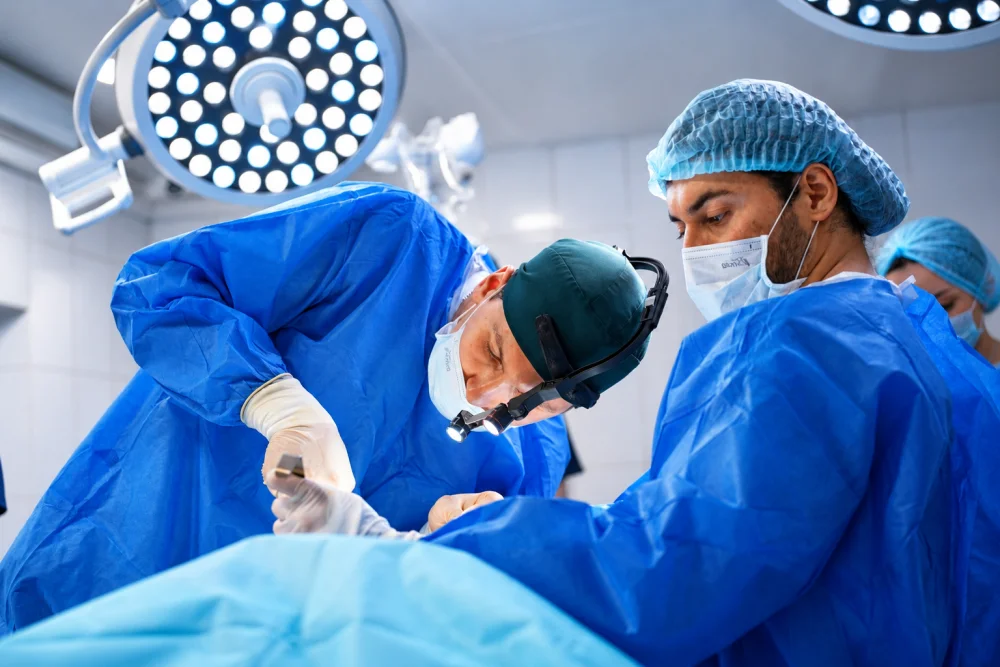
After assessing your breast anatomy and proportions and listening to your wishes, the surgeon chooses the appropriate correction method.
The price is set at the consultation and fixed in the contract.
Message our coordinator
Free online consultation · Reply within 15 minutes
Message us on TelegramMessage us on WhatsAppBy messaging us, you agree to our Privacy Policy

all inclusive
From preparation for surgery
to support for 12 months.
Discounted price
$4,700$5,900
What to expect
An agreed plan for the correction, observation in hospital and recovery monitoring for a year.
 1
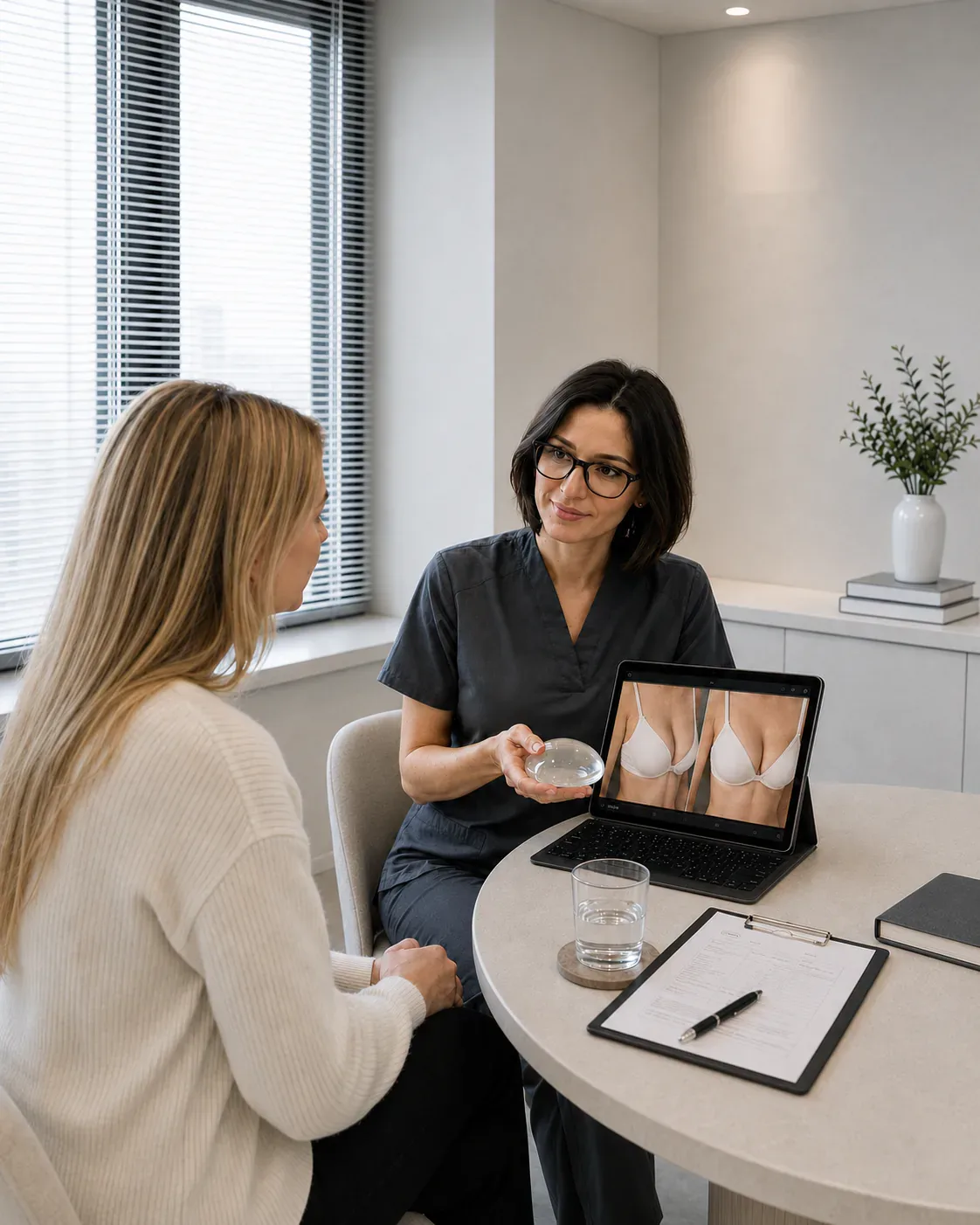
The surgeon assesses your figure, discusses your wishes and chooses the best volume, shape and correction method.
 2
We reserve a surgery date for you: the deposit can be paid by card at the clinic or online by bank transfer. The terms are fixed in the contract for medical services
 3
Ahead of surgery you go through full testing — blood tests, an ECG and other examinations as prescribed by the doctor.
 4
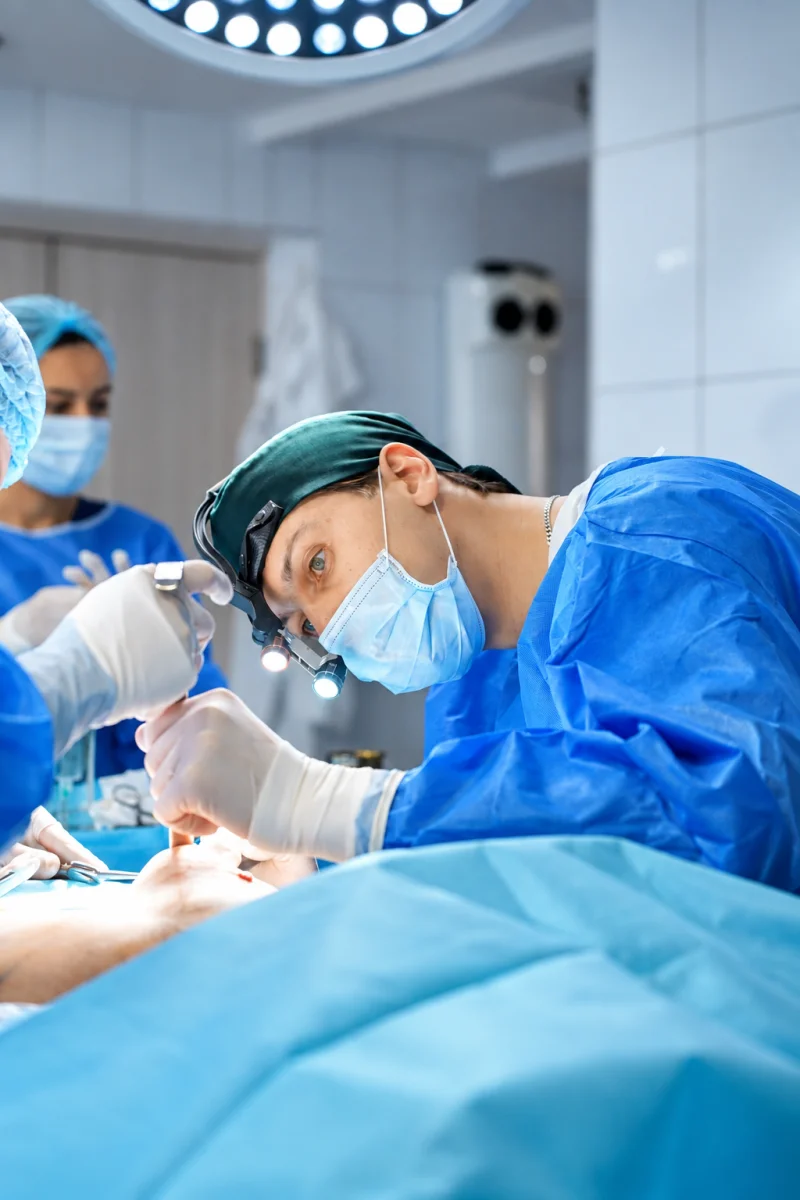
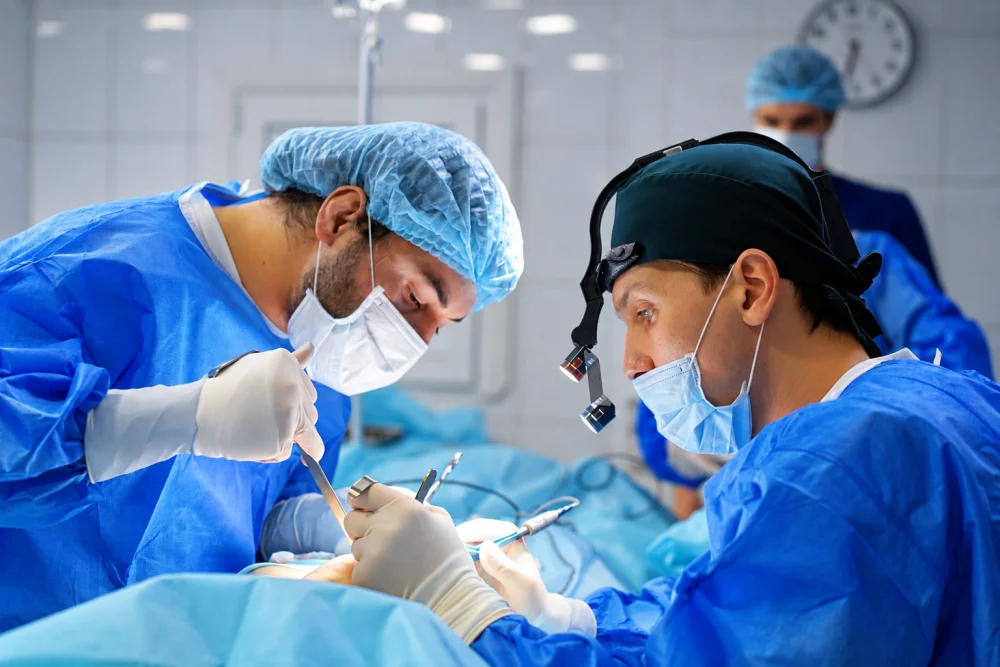
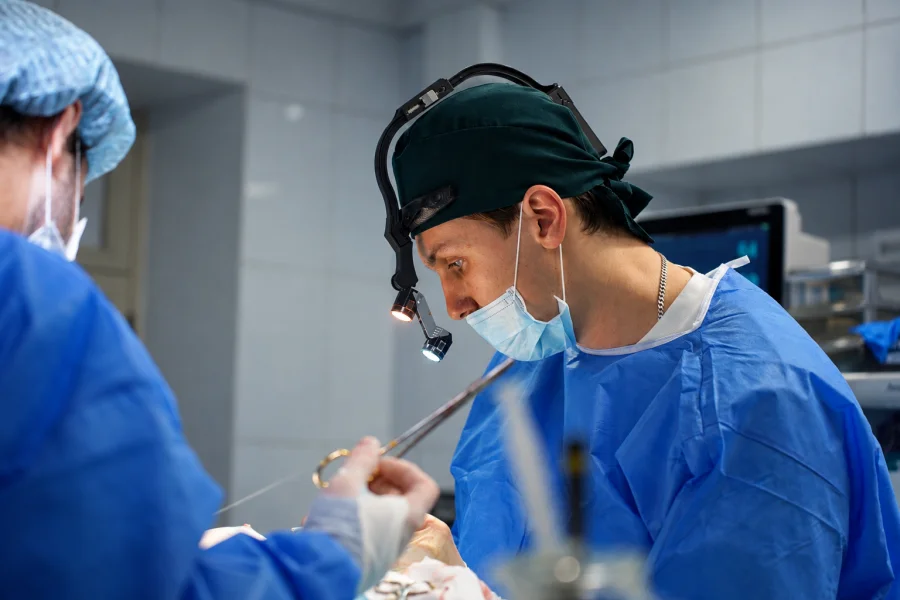
Mammoplasty is performed according to your individual plan. The surgery is done under general anaesthesia while your condition is monitored throughout.
 5
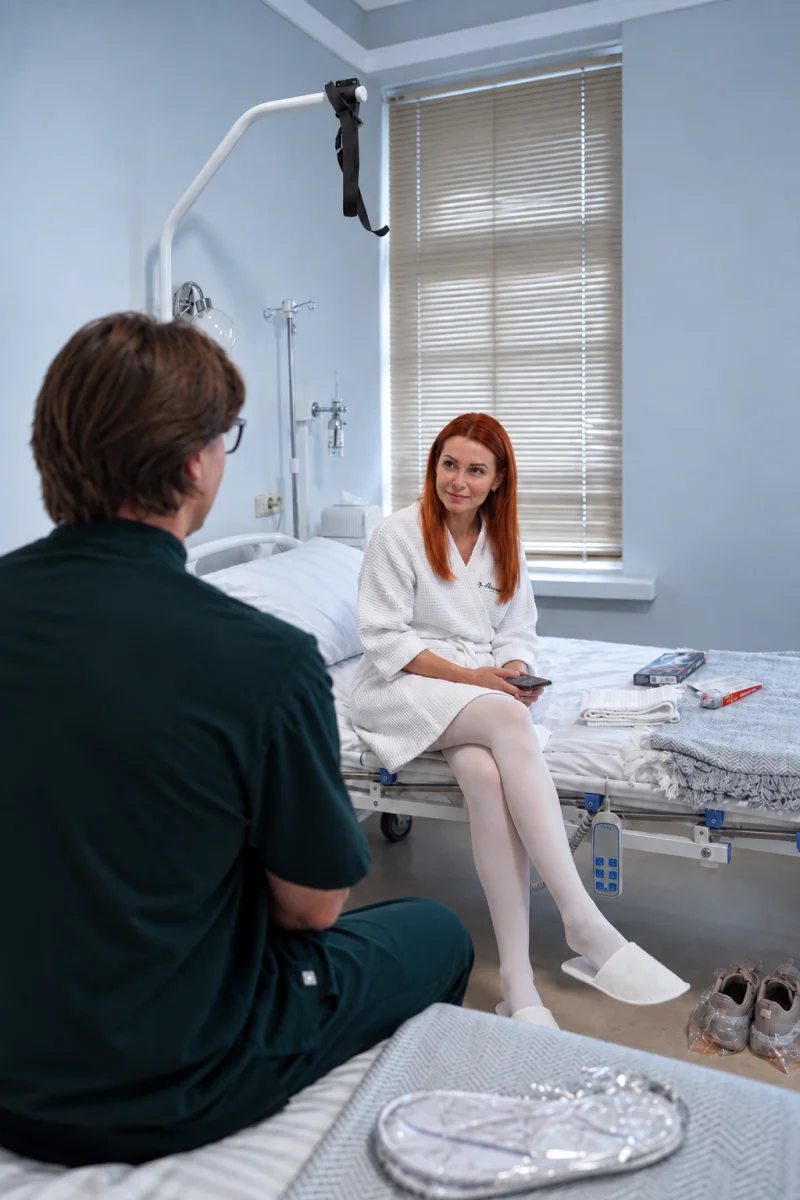
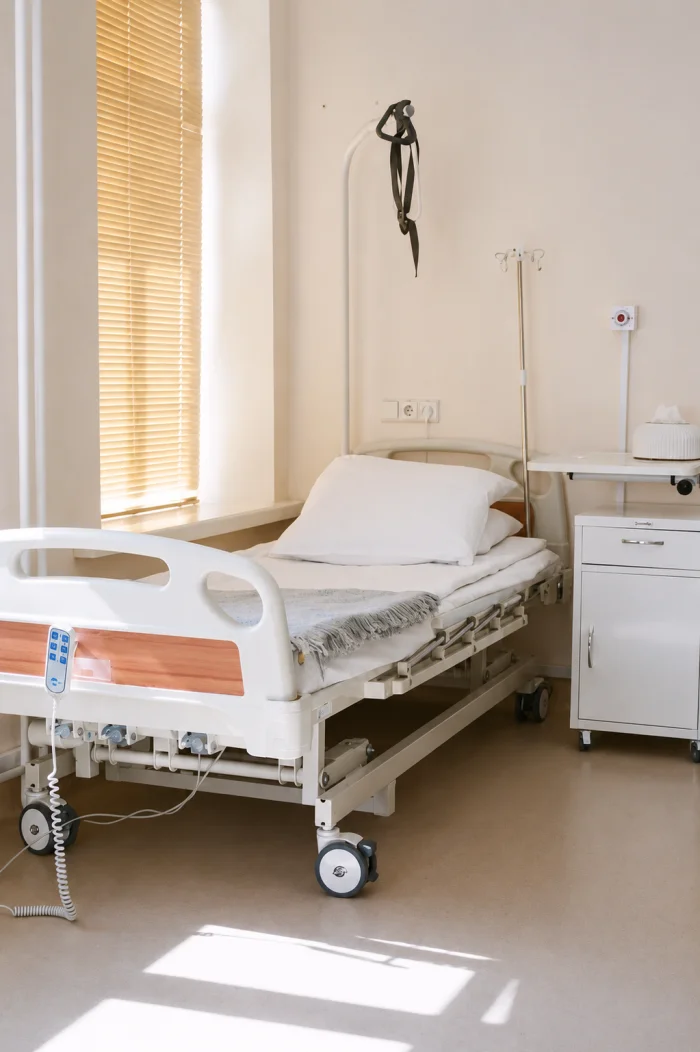
After the operation you remain in the clinic's comfortable inpatient ward, cared for by the medical team until you are discharged.
 6
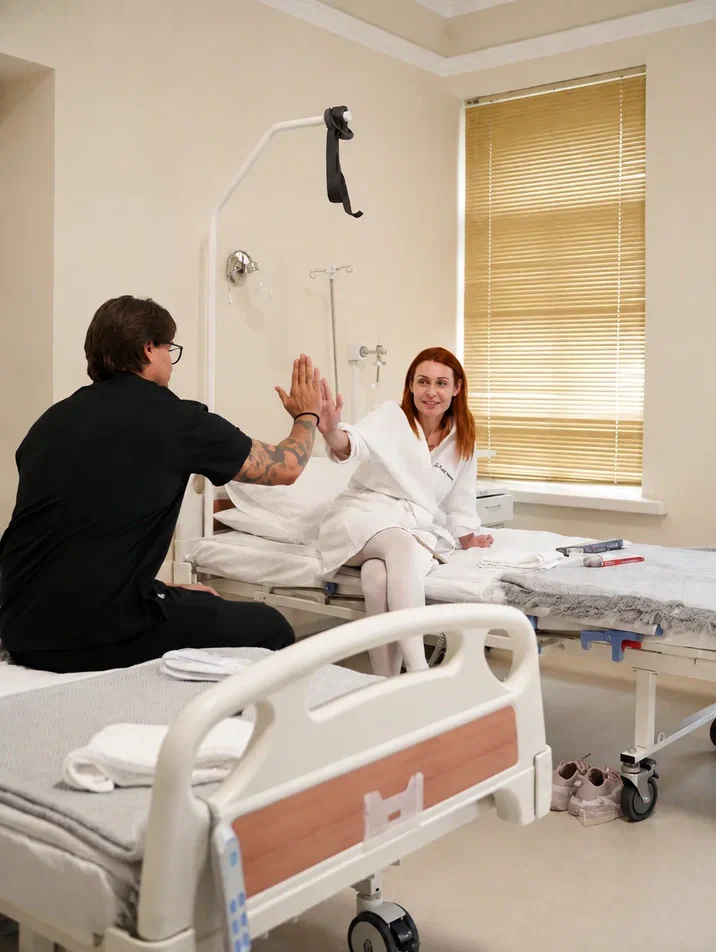
After surgery you receive a recovery programme. Check-ups at 7 days, 3 and 6 months track your progress, and consultations with your surgeon are free for a year.
Prepare for surgery with a few simple steps: a healthy balance of work and rest, more sleep, no stress, anxiety or strong emotions, and reduced physical activity.
Discontinue hormonal oral contraceptives at least a month ahead of the procedure
Stop taking aspirin-containing drugs, steroids and hormonal medications for chronic conditions before surgery
Do your tests a week before the operation
Post-op swelling disappears after 3 weeks
Within 3 weeks, scars form
No strenuous activity (lifting over 3 kg)
Avoid raising arms above shoulder level — 3 weeks
Part of recovery after the correction is wearing compression garments for 1–1.5 months
Up to 40 days without intense gym workouts or overly active aerobics; after a month you can try light cardio. Stay mindful of your diet and meals.
Discomfort fades after 3 months
Skip baths and saunas for up to three months and avoid physiotherapy
Inflammatory changes in the tissue resolve within 3 months, while a “pocket” forms around the implant
Doctors
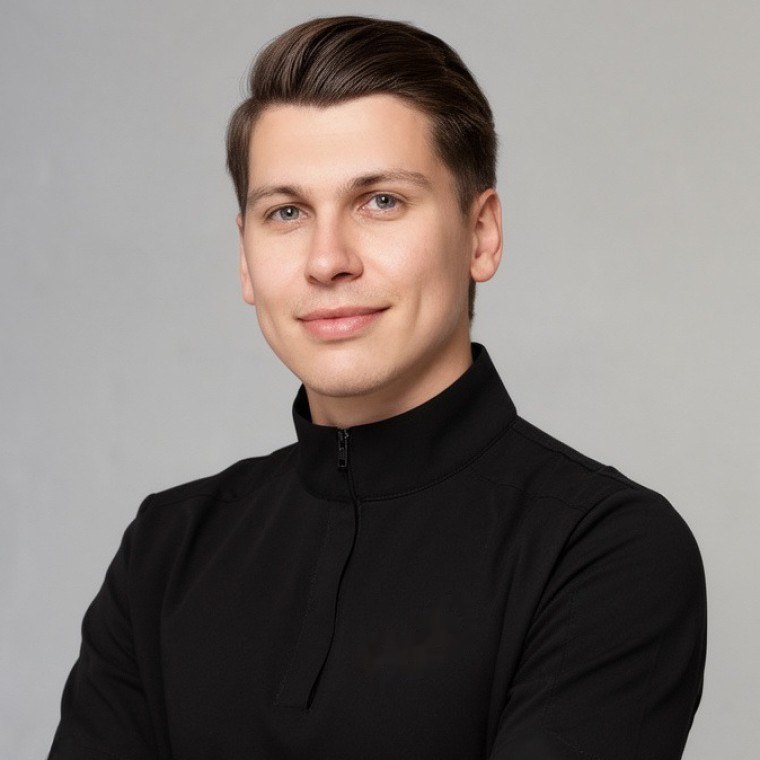
7 years of experience
Plastic surgeon
Residency training in plastic surgery, Petrovsky National Research Centre of Surgery. Specializes in aesthetic and reconstructive procedures on the breast and body.
You speak with the operating surgeon at the consultation
An experienced plastic surgeon who cares about patients' beauty and health
Book a consultationAdvantages
During the consultation we discuss your wishes and model the planned changes. The surgeon explains what surgery can achieve, so you know exactly what result to expect.
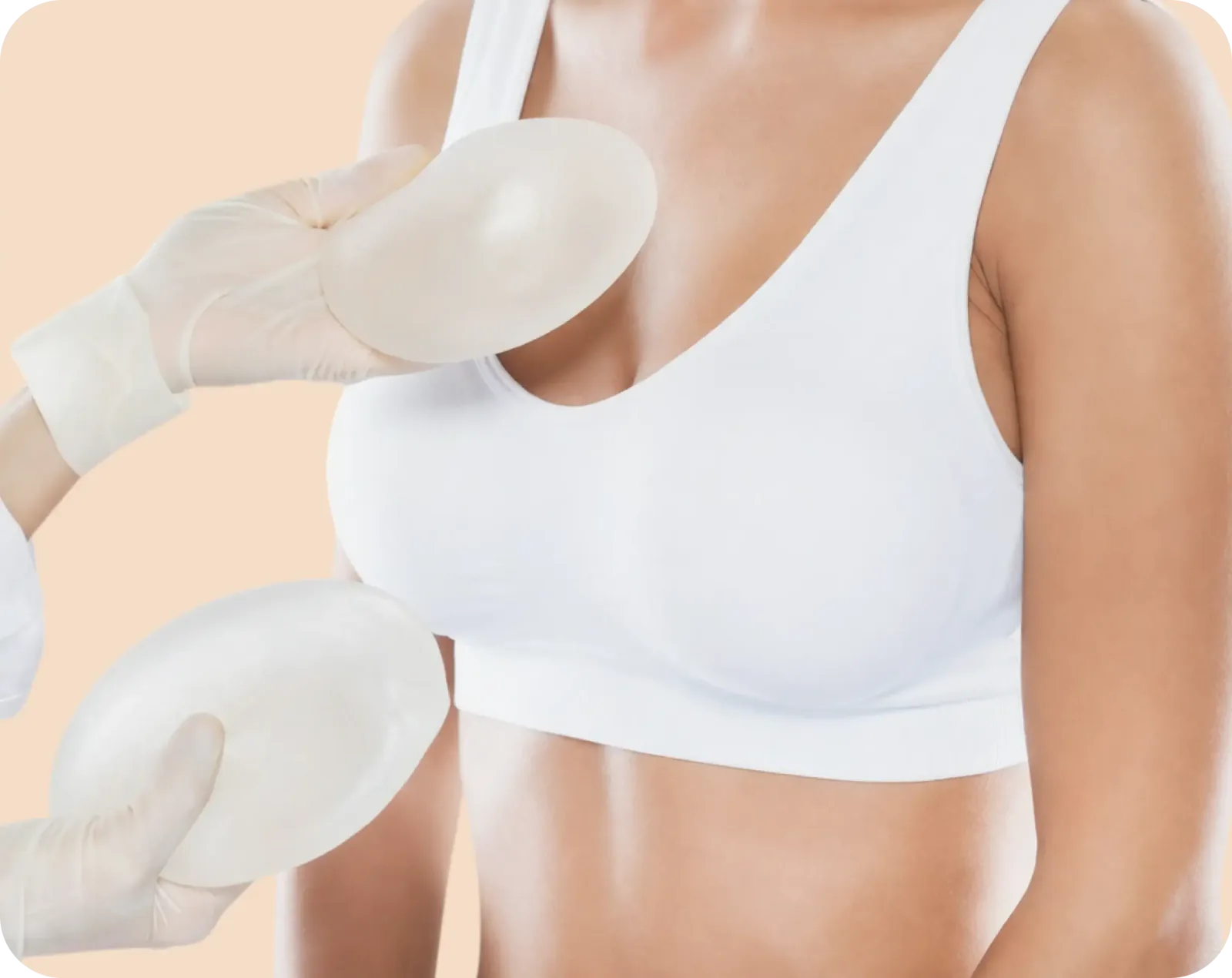
Your surgeon follows your recovery and the changes in your breast shape for a full year; check-ups and dressings are included in the price.
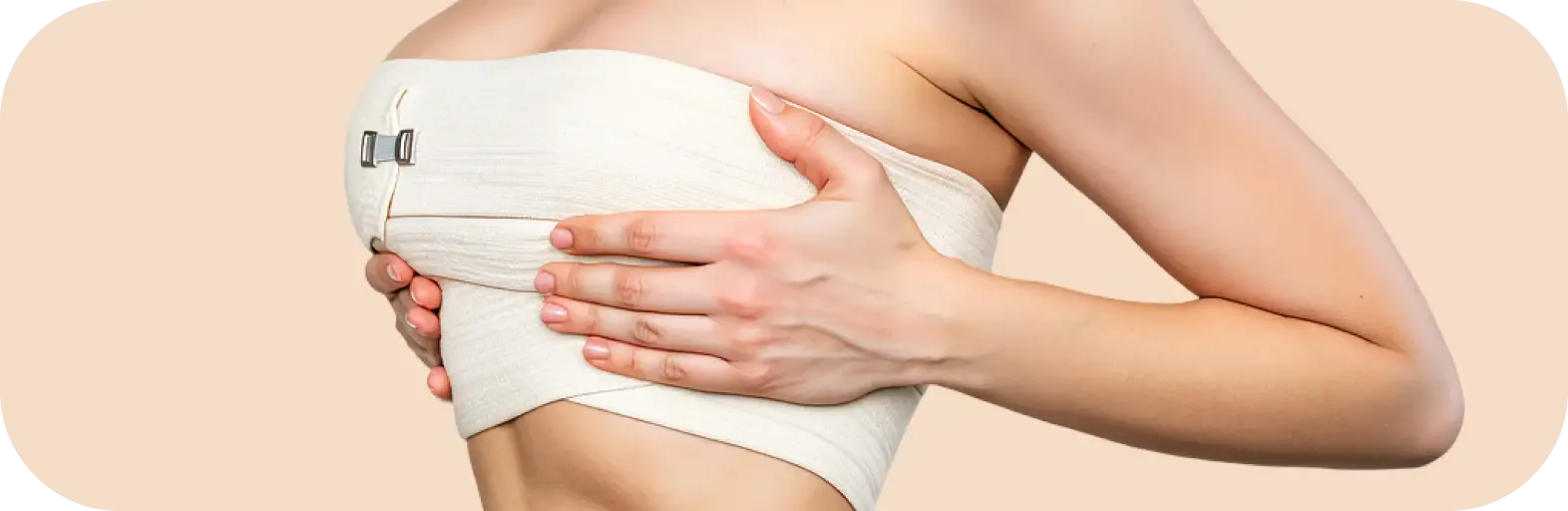
We select the shape, volume and correction method according to your anatomy and goals; for augmentation, implant size and profile are chosen just for you.

We value your time: open 24/7, easy to book, with a personal approach that adapts to your pace.
After the consultation the surgeon defines the extent of correction, and you get a clear price for the surgery — no surprises on the way to the result you want.

Recovery begins in a comfortable inpatient ward under round-the-clock nursing care. The stay and meals are already included in the price.
FAQ
Yes. Boob job is the everyday name for breast augmentation. At City Medical Centre it is done with round or anatomical implants that the surgeon chooses with you at the consultation.
Breast enlargement adds volume with implants. A breast lift (mastopexy) raises sagging breasts and removes excess skin. Which one suits you is decided at the free consultation.
There are several types of mammoplasty: augmentation (bigger volume with implants), reduction (removal of excess tissue and skin), mastopexy (a lift for sagging), reconstruction (after mastectomy) and correction of asymmetry. The best approach is chosen individually, considering your wishes and the surgeon's recommendation.
Message us — our coordinator will get back to you shortly and book your consultation. The plastic surgeon consultation is free.
If you follow all the recommendations, complications are rare; they may, however, include hematoma or seroma, wound infection, decreased or heightened nipple sensitivity, capsular contracture, aesthetic asymmetry, wound separation and tissue necrosis.
The outcome of mammoplasty is long-lasting: about 10–15 years after augmentation (until implants are replaced) and 5–10 years after a lift or reduction. Its duration is influenced by weight, pregnancy, skin aging and gravity. Keep the result by wearing supportive underwear and managing your weight.
After mammoplasty, breastfeeding depends on the type of surgery. If augmentation uses an under-breast or armpit incision and the implant goes under the muscle, lactation is typically preserved because glandular tissue is not damaged. A lift or reduction has a higher risk since ducts may be cut. Discuss it with your surgeon before surgery.
The choice of implant looks at material (silicone looks most natural, while saline is used less often), shape (round or anatomical teardrop), surface (smooth or textured), size and profile. The surgeon will choose what works best for your anatomy and wishes.
The operation itself happens under general anaesthesia, so nothing is felt. Moderate discomfort can occur in the first 1–3 days and responds to painkillers. By day 5–7 pain decreases a lot, and by weeks 2–3 discomfort is gone. In case of severe pain, tell your doctor right away.
After 7–14 days you can resume work, provided there is no physical exertion. Light walking after 1–2 weeks. Fitness and swimming after 4–6 weeks, and strength training after 3 months. Pool and sea after 4–6 weeks. Wear compression garments for 4–6 weeks. The exact schedule depends on your recovery.
There is no scientific basis for saying mammoplasty raises breast cancer risk. Implants do not cause cancer. Post-surgery, maintain regular screening with self-exams, mammography and ultrasound, and always inform the examining doctor that you have implants.
Mammoplasty after a C-section is possible, but only once your body has fully recovered. Allow at least 6–12 months after giving birth and after breastfeeding stops. A consultation and check-up with a surgeon are required before surgery.
Mammoplasty does result in scars, but a skilled surgeon keeps them minimal. Incisions are made in areas that are out of sight: under the breast, around the areola or in the armpit. At first scars are reddish, and within 6–12 months they fade and become nearly invisible.
During the first weeks after the operation, slight asymmetry is normal, since swelling and healing are uneven. If a size or shape difference continues after 3–6 months, see your surgeon for an exam to find its cause.
After mammoplasty, sensitivity of the nipples and breasts may change for a while, becoming lower or higher. This is due to irritation of the nerve endings. In most cases sensitivity comes back within 3–12 months. If nothing improves after a year, see your surgeon.
Hormonal medicines (contraceptives, hormone replacement therapy) do not directly affect implants but may trigger swelling or changes in breast tissue volume, which temporarily affects appearance. You must tell your surgeon about such drugs before the operation.
Prices are in US dollars; the amount in brackets is an approximate conversion to DKK at the rate of 02.10.2026. The final price is fixed in your contract.
Prices start from $4,700 (≈ DKK 31,500). The surgeon sets the final price at the free consultation, and it is fixed in the contract, with no hidden extras.
The surgical team's work, anaesthesia, the inpatient stay with meals, dressings and follow-up visits for twelve months.
Message us on WhatsApp or Telegram using the buttons below. A coordinator will answer your questions and book a free consultation where the doctor names the exact price.
By messaging us, you agree to our Privacy Policy
Enlargement with implants corrects both size and shape. It is aimed at patients who feel their breasts are too small, have lost volume or look asymmetrical. People searching for this surgery in Copenhagen should know that results typically last about 10 to 15 years, until the implants are replaced; weight, pregnancy, skin aging and gravity all influence how long they hold.
Recovery follows a clear timeline. Swelling subsides in about three weeks, scars form over the same period, and discomfort fades by three months. Compression garments are worn for 1–1.5 months, arms should not be raised above shoulder level for three weeks, and baths or saunas are off-limits for up to three months. Patients from Copenhagen get detailed care advice from the surgeon.
For patients from Copenhagen, City Medical Centre offers breast augmentation at a fixed all-inclusive price from $4,700 (≈ DKK 31,500). Included are the consultation with result modelling, combined inhalation anaesthesia, a comfortable room after surgery, meals, constant staff monitoring and a year of dressings and check-ups. Implant removal is $3,300 (≈ DKK 22,000). Getting started is simple: request a free consultation online.
Well-known people who spoke openly about this operation, in their own words.
Written by Dmitry S. Kuznetsov, plastic surgeon
How we prepare and review medical content · Medical disclaimer
Page last updated:
Start with a plain question to the coordinator: which specialty does the surgeon hold, and is that the person who will operate? The clinic says that at the consultation you speak to the surgeon who will do the operation. Ask for the full name and the specialty in writing, in the same message thread where you discuss the plan.
The Danish register comes next. Since 1 December 2007 practitioners of cosmetic treatment have been registered as such, and the Danish Patient Safety Authority shows who appears on the list. Search the surgeon's name there yourself and keep a dated screenshot.
Sites are registered too. An order of 20 November 2024, number 1206, sets out that the Authority keeps a register of treatment sites, among them sites where cosmetic treatment is carried out, and that registration comes before treatment begins. If the clinic says its operations are done at a registered site, ask to see the entry.
None of this makes you a lawyer. It gives you three short questions, about the specialty, the person and the register entry, and a habit of keeping the answers where you can find them.
Roughly 84 per cent of Danish health spending was public in 2016, across five regions and 98 municipalities. Even so, the national patient handbook states that cosmetic operations are paid for by the patient at private clinics. Augmentation chosen for appearance belongs on that side of the line, and your budget should assume as much from the first day.
The same handbook gives examples of operations done in the public system, and the list includes breast reduction and correction of breast asymmetry. If your reason for surgery is medical, say that at the start, and ask your own physician what the public route could offer.
The clinic itself sets out a wider palette than augmentation alone: reduction, lifts with or without implants, implant removal, reconstruction after mastectomy and correction of asymmetry. A conversation with the surgeon can establish whether your wish fits augmentation or belongs to one of those other procedures.
Add to that the clinic's own reasons not to operate: pregnancy and breastfeeding, acute infection, inflamed or damaged skin in the operating area, uncompensated chronic illness, age under 18, uncorrected clotting problems, uncontrolled diabetes, and a malignant breast tumour before its treatment ends. State any that apply before photographs are sent.
Population figures are not the point here, though they set the scene: Copenhagen municipality had 671,714 inhabitants at the start of 2026, and the urban area 1,408,575. Every one of those people has the same opening move available, a free online consultation, answered on WhatsApp or Telegram at any time of day.
Two shapes are on offer. Round implants give even volume and extra fullness above, and the outline is a symmetrical circle. Anatomical ones take a teardrop shape with a gently falling slope, which the clinic calls the most natural contour. Learn to say which of these descriptions matches the picture in your head.
Choose words with care. Terms like small, natural or noticeable mean different things to different people, so show the surgeon two or three photographs of the proportions you like, and explain what you would change. The surgeon assesses your figure and wishes and then chooses volume, shape and method, with a model of the planned result built at the consultation.
Material, surface, size and profile are the remaining decisions. Silicone is described as giving the most natural look, saline is less common, and the surface can be smooth or textured. Ask the surgeon to explain each choice using your own measurements rather than general rules, and put the explanation in writing.
Photographs for the first review should be taken upright and in even light: front view and both sides, with no filters. State your age, earlier surgery, the date of your last pregnancy, whether you still breastfeed, your regular medicines and any condition now under treatment.
If you also speak to another surgeon, put the two answers into one table: proposed shape, volume, incision, placement and the reasons given. Disagreements are normal. What matters is that each has a reason you can follow.
In the weeks before the operation the clinic asks for rest and a quieter life, with more sleep and less stress. Aspirin-based medicines, steroids and hormonal drugs for chronic conditions are stopped one to two weeks ahead, and hormonal oral contraceptives earlier, on the surgeon's own schedule. Test results are due a week before the date. Heavy training stops for 40 days, and light cardio comes back after a month.
The operation is done under general anaesthesia and followed by a stay on the inpatient ward under the medical team. Ask the clinic exactly how long you stay on the ward and who is present during that time.
Visits follow at day 7, month 3 and month 6, and for a year after the operation consultations with the surgeon are free. Dressings and check-ups for the full year are in the price, and the stay with meals is included.
The early weeks have limits with dates attached. Swelling goes down over 3 weeks, and arms stay below shoulder level for that time. A compression garment is worn for 1 to 1.5 months, lifting above 3 kg waits for three months, and baths and saunas are avoided for up to three months. Within that window a pocket forms around the implant and the tissue settles.
Keep your own notes. Take a weekly photograph in the same light, write down how you feel, and send anything unusual to the coordinator at once; coordinators are available round the clock, and a message costs less than a worry kept overnight.
Ask for the surgeon's name and specialty, the draft contract for medical services, the clinic's medical licence, and the full legal name of the entity that will sign. A date is held when a deposit is paid, with all terms recorded in that contract. Read every clause that concerns the deposit and a possible change of date.
Compare the listed inclusions with the contract: consultation and modelling of the result, the work of the surgical team, combined inhalation anaesthesia, the ward and meals, dressings and a year of check-ups, and monitoring by medical staff day and night. Anything missing should be asked about in writing.
Ask which tests are required before the operation: the clinic names blood tests, an ECG and other examinations that the doctor prescribes. Find out where each can be done near you and how fresh the results must be.
Finish with an honest conversation about what can go wrong. The clinic lists haematoma or seroma, wound infection, changes in nipple sensitivity, capsular contracture, asymmetry, wound separation and tissue necrosis, and states that complications are rare when recommendations are followed. A surgeon willing to talk about them calmly is a good sign.
The full name, the specialty, and confirmation that the surgeon you meet at the consultation is the one who operates. Ask for all three in writing, then search the name in the Danish register.
The national patient handbook gives breast reduction and asymmetry of the breasts as examples of operations done publicly. Cosmetic augmentation is paid by the patient at private clinics.
The Danish Patient Safety Authority shows who is registered, a registration that has applied since 1 December 2007. Search the surgeon's full name.
Order number 1206 of 20 November 2024 describes a register of treatment sites kept by the Patient Safety Authority, including sites carrying out cosmetic treatment, with registration before treatment begins.
From the first tests to discharge the clinic describes a single day. You remain on the inpatient ward under the medical team until discharge; ask how long and who attends.
Your goal in your own words, photographs from the front and both sides, age, earlier operations, last pregnancy, breastfeeding status and regular medicines.
Yes. Share the clinic's answers with your own doctor and ask for an opinion, particularly if you have a chronic condition.