















Tummy tuck7 min read
Mini or full tummy tuck: what each one corrects and how to tell which you need
A mini tummy tuck and a full tummy tuck share a name, but they are built for different abdomens. One works only below the navel through a shorter incision; the other reshapes the whole front of the abdomen. Here we compare what each corrects, where the scars sit, what happens to the belly button and how recovery differs, so you can go into a consultation with the right questions.
The main points in 30 seconds
- A mini tummy tuck treats only the lower abdomen; a full one reshapes the whole abdomen.
- In a mini tummy tuck the navel is not moved and there is no scar around it.
- Wide diastasis or loose skin above the navel usually needs a full tummy tuck.
- Recovery is usually shorter after a mini tummy tuck.
- The surgeon chooses the technique after examining your skin and muscles.
Key facts about the procedure
- Operation time2–4 hours
- Back to work2–3 weeks
- Stay in clinic1–3 days
- PriceAt consultation
Mini vs full tummy tuck at a glance
Both operations remove loose skin from the abdomen and can tighten the abdominal muscles. The difference is scope. A full (classic) tummy tuck treats the area above and below the belly button. A mini tummy tuck deals only with the lower abdomen, between the navel and the pubic area.
The choice does not depend on how much you want to change, but on where the problem actually is. If the skin is loose all the way up to the ribs, a mini version cannot reach it. If the only issue is a small overhang low down, a full operation may be more surgery than you need.
Area treated
- Mini tummy tuck
- Lower abdomen only
- Full tummy tuck
- Upper and lower abdomen
Incision
- Mini tummy tuck
- Shorter, low above the pubic area
- Full tummy tuck
- Longer, from hip to hip in many cases
Belly button
- Mini tummy tuck
- Not moved
- Full tummy tuck
- Repositioned, with a small scar around it
Muscle repair
- Mini tummy tuck
- Lower part of the muscles
- Full tummy tuck
- Along the whole length of the muscles
Typical candidate
- Mini tummy tuck
- Small excess of skin below the navel
- Full tummy tuck
- Marked loose skin, an apron of skin, wide diastasis
Recovery
- Mini tummy tuck
- Usually shorter
- Full tummy tuck
- Usually longer
These are general patterns. The final plan always depends on the surgeon's examination.
What a full tummy tuck corrects
A full tummy tuck is designed for an abdomen that has been stretched along its whole height, most often by pregnancy or major weight loss. Through a low horizontal incision the surgeon lifts the skin up to the ribs, tightens the muscle layer and removes the surplus skin and fat.
Because the skin is pulled downwards, the belly button would end up in the wrong place. So the surgeon keeps it attached to its stalk and brings it out through a new opening in the tightened skin. The operation typically helps with:
- loose, folded or overhanging skin above and below the navel;
- an apron of skin that hangs over the lower abdomen;
- separation of the rectus muscles (diastasis) along their full length;
- stretch marks on the skin below the navel, which is removed.
It is done under general anaesthesia and usually takes a few hours. A short hospital stay is common afterwards.

What a mini tummy tuck corrects
A mini tummy tuck is a more limited operation. The incision is shorter and sits low, and only the skin below the navel is tightened. The belly button stays where it is, so there is no scar around it.
It tends to suit people who are close to a stable, healthy weight, have fairly firm skin above the navel and are bothered by a small pouch or overhang low on the abdomen. A typical example is a little fold of skin above a C-section scar.
The muscles can also be tightened in the lower part of the abdomen. If diastasis extends above the navel, however, a mini approach may not reach it fully, and the surgeon may suggest a classic operation instead. More about both techniques is on our tummy tuck page.
Scar length and navel position
For many people the scar is the deciding factor, so it helps to know what to expect.
Mini tummy tuck scar
The scar is shorter and placed low, often not much wider than a C-section scar. It is usually hidden by underwear or swimwear. There is no scar around the navel.
Full tummy tuck scar
The main scar is longer and runs low across the abdomen, often from one hip to the other. Its exact length depends on how much skin needs to go. Surgeons plan the line so that it can be covered by underwear. There is also a small scar around the new belly button.
Scars in both cases are red and firm at first and fade gradually over twelve to eighteen months. They do not disappear completely. Not smoking, following wound-care advice and protecting the scar from the sun all help it mature well.
Swelling, garments and recovery compared
Recovery follows the same pattern after both operations, but it is usually quicker and gentler after a mini tummy tuck because less tissue has been lifted.
- First days. After a full tummy tuck you usually stay in hospital for one to a few days. You walk slightly bent at first, and drains may be left in place for a short time.
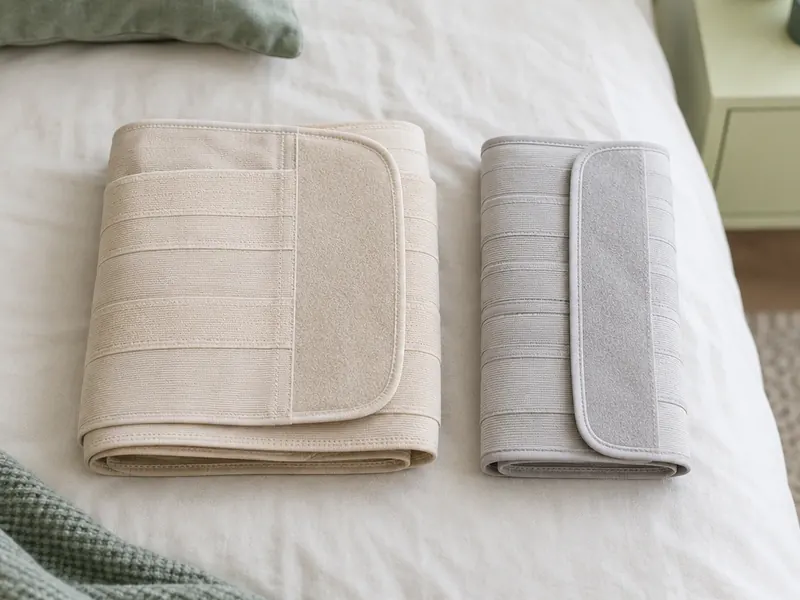
- Compression. A compression garment or binder is worn for several weeks, typically around six weeks or longer after a full operation.
- Work. Desk work is often possible after about two to three weeks following a full tummy tuck, and sometimes sooner after a mini one.
- Exercise. Heavy lifting and abdominal training are postponed for several weeks, usually until the surgeon confirms the muscle repair has healed.
- Swelling. Most swelling settles within the first month or two; the final contour is judged at around three months or later.
Possible complications for both include fluid collection under the skin, slow wound healing, changes in skin sensation and blood clots. Your surgeon will explain how these risks apply to you.

Which one suits you
A simple way to think about it is to look at where the loose skin starts.
- If the skin above the navel is firm and only the lower abdomen sags a little, a mini tummy tuck may be enough.
- If the skin is loose or creased above the navel as well, or there is an apron of skin, a full tummy tuck is usually the realistic option.
- If the main problem is separated muscles along the whole abdomen, a full operation usually gives better access for repair.
Some factors matter for both. Your weight should have been stable for several months, and neither operation is a way to lose weight. If you plan another pregnancy, it is usually wiser to wait, since pregnancy can stretch the repaired abdomen again. Smokers are asked to stop well before surgery, because smoking slows healing.
Choosing the right option at City Medical Centre
City Medical Centre performs both a classic tummy tuck and a mini tummy tuck with diastasis repair. The technique is chosen by the surgeon after assessing your skin, the fat layer and the abdominal muscles, rather than in advance.
The clinic works with patients from abroad. The first consultation is free and can take place online: send photos of your abdomen from the front and the side, tell us about pregnancies, C-sections and weight changes, and ask which option could suit you. The doctor assesses your case and names the price, which is then fixed in the contract. A personal coordinator stays with you from your first message to the end of recovery, and you can send photos and questions via Telegram. Details are on our tummy tuck page.
How recovery usually goes
- 1–3 daysHospital stay under medical supervision; drains are usually removed after two days
- 7 daysStitches removed
- 2–3 weeksOffice work resumes
- 30 daysMost swelling goes
- 1.5–2 monthsCompression binder period; swelling and tightness pass; interim result
- 6–12 monthsThe final contours and scar
Sources
Frequently asked questions
What is the difference between a mini and a full tummy tuck?
A mini tummy tuck treats only the lower abdomen through a shorter incision and does not move the belly button. A full tummy tuck tightens the skin and muscles above and below the navel, uses a longer incision and repositions the navel.
Does a mini tummy tuck fix diastasis?
It can repair separated muscles in the lower part of the abdomen. If the gap extends above the navel, a mini approach may not reach it fully, and the surgeon may recommend a classic tummy tuck. The decision is made after examining the abdominal wall.
Which has the shorter scar?
A mini tummy tuck. Its scar is shorter, sits low and has no second scar around the navel. A full tummy tuck leaves a longer low scar plus a small one around the belly button. Both are usually planned to be hidden by underwear.
Is the belly button moved in a mini tummy tuck?
No. In a mini tummy tuck the navel stays in its original position, which is one reason the operation suits only a small excess of skin. In a full tummy tuck the navel is brought out through a new opening in the tightened skin.
Which has faster recovery?
Recovery is usually quicker after a mini tummy tuck, because less tissue is lifted. After a full tummy tuck many people return to desk work after about two to three weeks and wear a compression garment for around six weeks or longer.
Have a question about your case? Get a free consultation
Message a coordinator on Telegram: we reply right in the chat, and you can send photos and questions there too.
- The first consultation is free, online consultations are available
- The doctor names the cost after the assessment, and it is fixed in the contract
- A personal coordinator guides you from the first message to recovery
Message our coordinator on Telegram
We reply right in the chat — you can send photos
Message us on TelegramBy sending a message, you agree to the privacy policy
Read also
 Tummy tuck
Pregnancy after a tummy tuck: what happens to the result and how to plan
Can you get pregnant after a tummy tuck, what pregnancy does to the skin, muscles and scar, how long to wait and how to plan surgery around a family.
 Tummy tuck
Tummy tuck after bariatric surgery: when and how to plan it
When to plan a tummy tuck after bariatric surgery: stable weight, tests, which areas are corrected, combining procedures safely, scars and recovery.
 Facelift
Neck and lower face lift: how it fixes jowls, a double chin and loose neck skin
How a neck and lower face lift corrects jowls, a double chin and loose neck skin: who it suits, where the scars are, recovery week by week and contraindications.