
























Facelift6 min read
How to tighten a sagging jawline: from home care to surgery
A clear jawline is one of the first things we notice in a face, and one of the first to change with age. Jowls appear, the line between chin and neck softens, and the lower face starts to look heavier. There are many ways to respond, from daily habits to cosmetic treatments and surgery, but they work at very different depths. This article explains why the jawline loses definition, what each approach can realistically achieve and how to choose between them.

The main points in 30 seconds
- The jawline blurs as skin loosens, ligaments weaken and fat slides towards the jaw.
- Home care slows the changes but cannot lift sagging tissue.
- Non-surgical treatments give a mild, temporary effect for early changes.
- A neck and lower face lift targets jowls, a double chin and loose neck skin.
- City Medical Centre performs surgical lifts only and can combine them with double-chin liposuction.
Key facts about the procedure
- Main healing2 months
- Final result3–6 months
- AnaesthesiaGeneral
- Pricefrom $2,400
Why the jawline loses definition
A defined jawline depends on firm skin, a well-supported deep layer of tissue and a modest amount of fat under the chin. With age all three change:
- the skin loses collagen and elasticity and stretches more easily;
- the ligaments that hold the cheek and jowl tissues weaken, so fat slides down towards the jaw;
- the deep supporting layer of the face, the SMAS, loosens and sags;
- fat may build up under the chin, and the neck muscle can form visible bands.
Genetics, sun exposure, smoking and weight changes speed these processes up. The result is jowls, a blurred line between jaw and neck and sometimes a double chin. Which of these factors dominates determines which approach will help.
What you can do at home
Daily habits do not lift sagging tissue, but they can slow the changes and keep skin in better condition:
- daily sun protection, which slows the breakdown of collagen;
- not smoking, which damages the skin's blood supply and elasticity;
- a stable weight, since repeated gain and loss stretches the skin;
- good posture and attention to how long you look down at a phone;
- a consistent skincare routine suited to your skin.
Facial exercises and face yoga are popular, but there is little good evidence that they tighten the jawline. They may improve muscle tone slightly, yet they cannot shorten stretched skin or reposition fat that has already slid down.

Cosmetic treatments for mild sagging
In general practice several non-surgical treatments are used for early jawline changes:
- Radiofrequency and focused ultrasound devices heat the deeper skin to stimulate collagen and can give mild tightening over a few months.
- Threads placed under the skin give a light, temporary lift along the jaw.
- Injectable volume along the jaw or chin can sharpen the contour a little, but it adds volume rather than lifting.
These methods suit people with mild sagging and good skin. Their effect is modest and temporary, usually measured in months rather than years, and they need repeating. When jowls are clearly formed or the neck skin is loose, they cannot deliver a defined jawline.
Surgical options for a defined jawline
Surgery repositions the deep layer and removes excess skin, which is why it gives the clearest and longest-lasting result:
Neck and lower face lift
- What it addresses
- Jowls, double chin and loose neck skin, through small incisions
- Best suited to
- Sagging limited to the lower face and neck
SMAS facelift
- What it addresses
- Lifts the deep layer of the mid and lower face together with the jaw
- Best suited to
- Jowls combined with cheek sagging and deep folds
Full (circular) facelift
- What it addresses
- Forehead, temples, mid and lower face and neck at once
- Best suited to
- Marked changes in several areas
Double-chin liposuction
- What it addresses
- Removes fat under the chin; often combined with a lift
- Best suited to
- Fullness under the chin rather than loose skin alone
For a jawline that has lost definition mainly through jowls and a loose neck, a neck and lower face lift is often the most targeted choice. You can read about the types of lift on our facelift page.
How to choose the right method
The right approach depends on what has actually changed:
- Early softening, good skin, no clear jowls — home care, and in general practice cosmetic treatments, may be enough for a while.
- Visible jowls and loose neck skin — surgery is the method that lifts and tightens; non-surgical options give only a small, short-lived change.
- Fullness under the chin with good skin — fat removal may help; with loose skin it is usually combined with a lift.
- Sagging in the cheeks as well as the jaw — a SMAS or full facelift treats the areas together.
A simple test: gently lift the skin in front of your ears with your fingertips. If the jawline sharpens clearly, the problem is mainly sagging tissue, and lifting it is what will help. Age alone does not decide the method; the degree of sagging and your health do.
Keeping the result
Whatever method you choose, the result lasts longer if you look after the skin and tissues:
- keep your weight stable after treatment;
- protect your skin from the sun every day;
- avoid smoking;
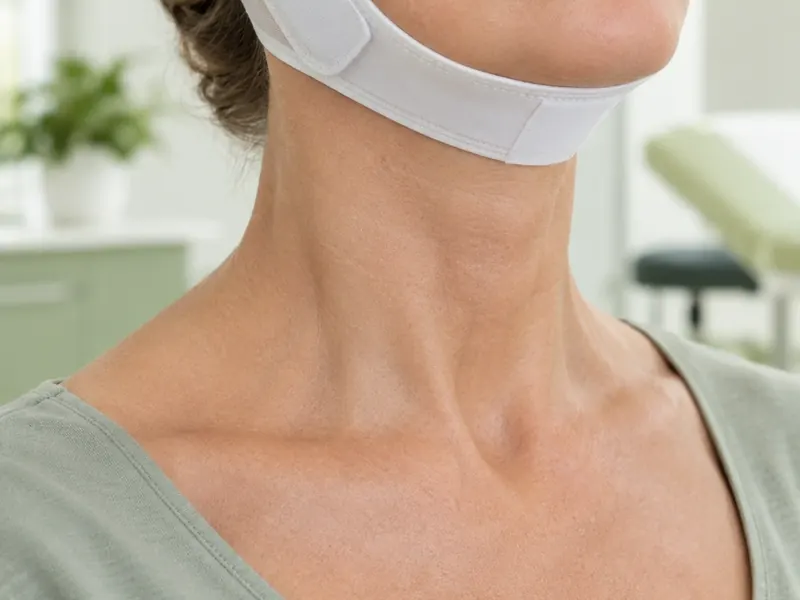
- follow the aftercare advice, including wearing any compression garment as instructed after surgery.
After a surgical lift that repositions the deep layer, the result usually lasts many years, often seven to ten. Ageing continues, but from a better starting point.

Jawline correction at City Medical Centre
City Medical Centre performs surgical facelifts only: the standard SMAS facelift, the full (circular) facelift, the neck and lower face lift, and the endoscopic brow and temple lift. For the jawline, the neck and lower face lift removes a double chin, jowls and loose neck skin through small incisions, and a facelift can be combined with double-chin liposuction.
Radiofrequency and ultrasound devices, threads and injectable volume are described here as general information; the clinic does not offer them. The surgeon chooses the variant that suits your face at the consultation. Results typically last seven to ten years, and the price includes a year of post-operative follow-up by the plastic surgeon.
The clinic works with patients from abroad. The first consultation is free and can take place online: send front, side and three-quarter photos of your face and describe what bothers you most. The doctor assesses your case and names the price, which is then fixed in the contract. A personal coordinator stays with you from the first message to the end of recovery, and photos and questions can be sent via Telegram. Learn more on our facelift page.
Sources
Frequently asked questions
How can I tighten a sagging jawline?
It depends on the degree of sagging. Early softening with good skin may respond to home care and, in general practice, cosmetic treatments. Once jowls and loose neck skin have formed, surgery such as a neck and lower face lift is the method that lifts the tissues and gives a defined jawline.
Can face yoga tighten the jawline?
There is little good evidence that it does. Facial exercises may slightly improve muscle tone, but they cannot shorten stretched skin or reposition fat that has slid towards the jaw. They are harmless, but they are not a substitute for treatment when jowls are visible.
Which facelift best defines the jawline?
When sagging is limited to the lower face and neck, a neck and lower face lift is often the most targeted option. When the cheeks have dropped as well, a SMAS or full facelift lifts the mid and lower face together. The surgeon chooses the variant at the consultation.
Can liposuction improve the jawline?
It can help when the problem is fat under the chin and the skin is still firm. If the skin is loose, removing fat alone may leave it slack, so liposuction is usually combined with a lift. At City Medical Centre a facelift can be combined with double-chin liposuction.
How long do non-surgical results last?
Non-surgical treatments usually give a mild effect that lasts months rather than years and needs repeating. A surgical lift that repositions the deep layer usually lasts many years, often seven to ten, although ageing continues.
Have a question about your case? Get a free consultation
Message a coordinator on Telegram: we reply right in the chat, and you can send photos and questions there too.
- The first consultation is free, online consultations are available
- The doctor names the cost after the assessment, and it is fixed in the contract
- A personal coordinator guides you from the first message to recovery
Message our coordinator on Telegram
We reply right in the chat — you can send photos
Message us on TelegramBy sending a message, you agree to the privacy policy
Read also
 Facelift
Midface lift: how sagging cheeks and tear troughs are corrected
What a midface lift corrects, the signs of midface sagging, surgical and non-surgical options, who it suits, recovery and how the cheeks are treated in a facelift.
 Facelift
Neck and lower face lift: how it fixes jowls, a double chin and loose neck skin
How a neck and lower face lift corrects jowls, a double chin and loose neck skin: who it suits, where the scars are, recovery week by week and contraindications.
 Joint treatment
PRP and SVF joint treatment cost: what you pay for and how to compare offers
What shapes the cost of PRP and SVF joint injections: the method, number of joints and sessions, scans, follow-up, and how to compare offers fairly.