


























Breast augmentation6 min read
How Breast Augmentation Is Performed: Step by Step
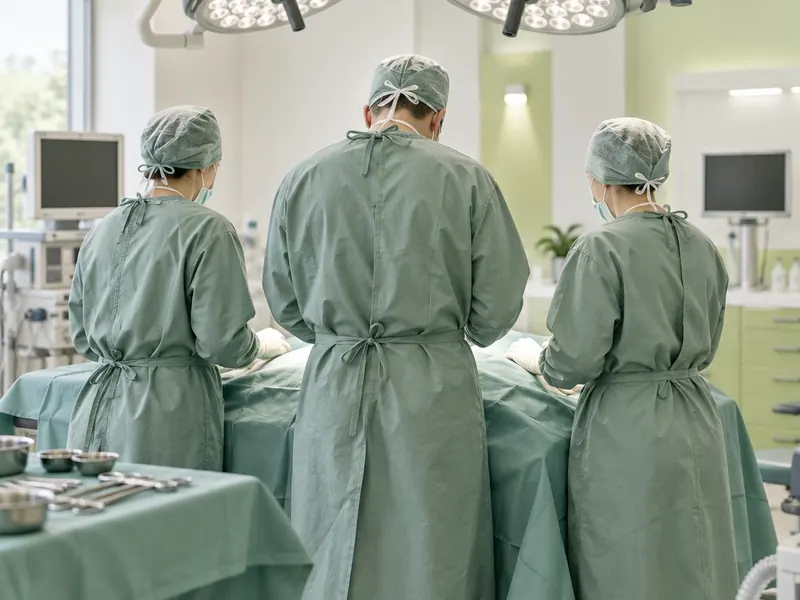
Breast augmentation is a planned operation in which the surgeon places an implant behind the breast tissue to increase volume and improve shape. Knowing what happens at each stage makes the day less stressful and helps you prepare. This article walks through the process in order: consultation and tests, anaesthesia and marking, the choice of incision, placing the implant over or under the muscle, closing the wound, the first hours after surgery and the main recovery milestones.
The main points in 30 seconds
- Before surgery: consultation, breast examination, implant choice and a full set of tests.
- The operation is done under general anaesthesia and usually takes about 1.5 to 3 hours.
- The incision and implant position are chosen for your anatomy and goals.
- Most patients stay in hospital for one night and wear compression garments for 4 to 6 weeks.
- Office work is usually possible after 1 to 2 weeks; the final shape settles over months.
Key facts about the procedure
- Operation time1.5–3 hours
- Back to work7–14 days
- Stay in clinic1 day
- Fixed price$4,700
Before surgery: consultation, tests and planning
Planning starts with a consultation with the plastic surgeon. The doctor asks about your health, previous operations, pregnancies and plans for breastfeeding, examines and palpates the breasts to rule out lumps, measures the chest and assesses skin quality and the amount of breast tissue. Together you discuss the size, shape and profile of the implant and whether a lift is also needed. You can read more about implant options on our breast augmentation page.
Before the operation you complete a medical work-up. It usually includes a full blood count and blood chemistry, a clotting test, tests for infections, an ECG, a chest X-ray and a breast ultrasound; a mammogram may be advised depending on age. If needed, a general practitioner, gynaecologist or breast specialist is consulted. You will also be asked to stop smoking, to tell the surgeon about all medicines you take, and to reduce heavy exercise before the operation.
Anaesthesia and marking
On the day of surgery the surgeon marks the planned incision lines, the breast midline and the future position of the implant while you are standing, because the breasts sit differently when you lie down. Then you meet the anaesthetist, who reviews your tests and explains the anaesthesia.
Breast augmentation is usually performed under general anaesthesia, so you sleep throughout the operation and feel nothing. The anaesthetist monitors your breathing, heart rate and blood pressure all the time. The skin is cleaned with an antiseptic and covered with sterile drapes.
Incision choice
The implant is inserted through one of three main incisions. The choice depends on your anatomy, the implant type and size, and how visible the scar may be.
Inframammary
- Where it is
- In the fold under the breast
- Points to consider
- The most common; good access and control; scar hidden in the fold
Periareolar
- Where it is
- Along the lower edge of the areola
- Points to consider
- Scar blends with the areola border; may affect nipple sensation more often
Transaxillary
- Where it is
- In the armpit
- Points to consider
- No scar on the breast; access is more limited
Implant placement: over or under the muscle
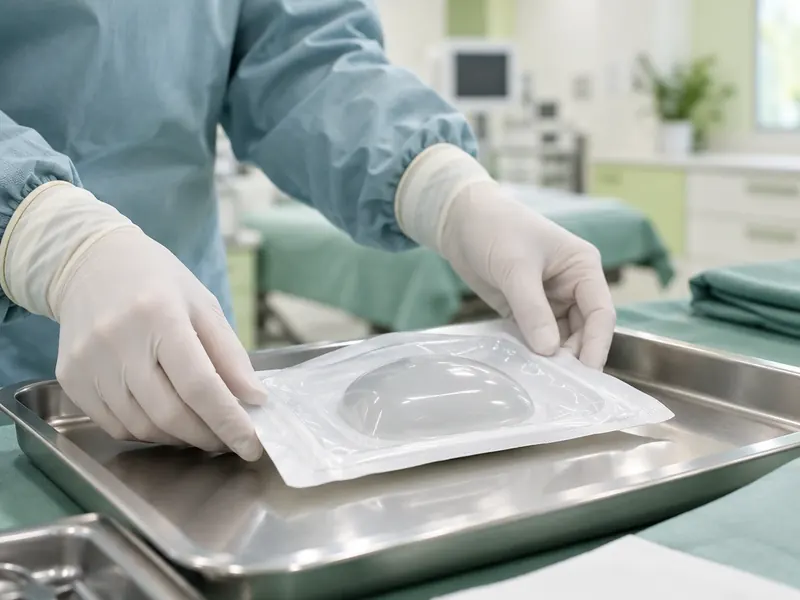
Through the incision, the surgeon creates a pocket for the implant. There are three main options:
- Under the gland (subglandular): the implant lies in front of the chest muscle. It can suit women with enough breast tissue.
- Under the muscle (submuscular): the implant lies behind the chest muscle, which gives better coverage in slim patients.
- Dual plane: the upper part of the implant is covered by muscle and the lower part by breast tissue. It is often chosen to combine a natural shape with good coverage.
The surgeon places the implant, checks its position with you in a semi-sitting position and adjusts both sides for symmetry. If a lift is performed at the same time, the gland is reshaped, excess skin is removed and the nipple and areola are moved higher.
Closing and dressing
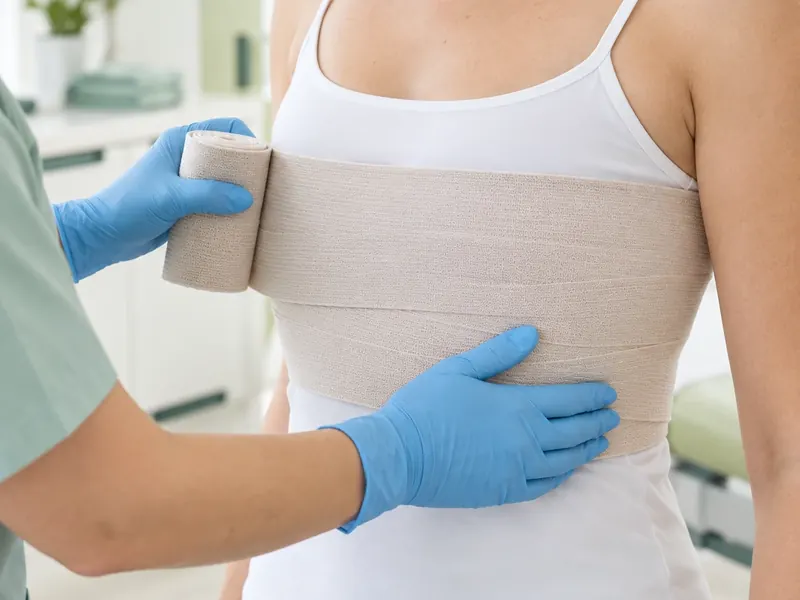
The wound is closed in layers: first the deeper tissues, then the skin. Cosmetic self-absorbing sutures are often used, which reduces the risk of rough scars. If needed, thin drains are left for a short time to remove excess fluid. A sterile dressing is applied, and compression garments are put on to hold the breasts in the planned position.
The first hours after surgery
After the operation you wake up in the recovery area under the care of the anaesthetist and nurses. A feeling of tightness in the chest, heaviness and moderate pain are normal and are relieved with pain relief chosen by the doctor. Nurses check your pulse, blood pressure, dressings and drains. You can usually drink and get up within a few hours with support. Most patients stay in hospital for one night and go home the next day after the surgeon's check.
Recovery milestones
- Days 1–3
- Pain and tightness are strongest; rest, short walks, dressings
- Days 5–7
- Pain decreases noticeably; drains, if placed, are usually removed earlier
- 1–2 weeks
- Return to office work without physical strain
- About 3 weeks
- Most swelling subsides; arms can be raised above shoulder level again
- 4–6 weeks
- Compression garments are no longer needed; light cardio and swimming resume
- About 3 months
- Strength training resumes; the implant settles and the breast becomes softer
Until the surgeon allows it, avoid lifting heavy objects, sleeping on your stomach, hot baths, saunas and intense sport. The final shape is usually assessed several months after surgery.
Your surgery day at City Medical Centre
City Medical Centre works with international patients and performs breast augmentation with implants, breast lift with or without implants, breast reduction, implant removal and reconstruction. The consultation includes breast examination and planning of the size, shape and profile of the implants. The operation is performed under general anaesthesia in an inpatient setting; after surgery you stay in a comfortable ward with round-the-clock monitoring and meals, and you are discharged after one day.
Dressings and check-ups with the plastic surgeon are included for a full year after the operation. The first consultation is free and can be held online: send photos by Telegram, and the doctor will assess your case and name the cost, which is then fixed in the contract. A personal coordinator supports you before and after surgery. Learn more on our breast augmentation page.
How recovery usually goes
- 7–14 daysReturn to work without physical exertion
- 3 weeksPost-op swelling disappears; scars form; no lifting over 3 kg, no raising arms above shoulder level
- 1 monthThe swelling subsides and the breasts take on a natural shape and softness
- 4–6 weeksFitness, swimming, pool and sea; compression garments worn for 4–6 weeks
- 3 monthsDiscomfort disappears; inflammatory changes resolve and a pocket forms around the implant; strength training
Sources
Frequently asked questions
How long does breast augmentation surgery take?
The operation itself usually takes about 1.5 to 3 hours, depending on the incision, the implant position and whether a lift is done at the same time. Add time for preparation, anaesthesia and waking up in the recovery area. On the whole, plan to spend the day and the following night in the clinic.
Is breast augmentation done under general anaesthesia?
Yes, in most cases breast augmentation is performed under general anaesthesia, so you sleep and feel nothing during the operation. The anaesthetist reviews your tests beforehand and monitors breathing, heart rate and blood pressure throughout. Moderate pain afterwards is relieved with medication chosen by the doctor.
Is it better to place implants under the muscle?
Not always. Placement under the muscle or in the dual plane gives better coverage and a more natural upper slope in slim women with little breast tissue. Placement under the gland can suit women with enough tissue. The surgeon chooses the pocket after examining your breasts and discussing your goals.
Do I stay in hospital overnight?
Most patients stay in hospital for one night. During this time nurses monitor your condition, check the dressings and drains, and help you get up. The next day the surgeon examines you, explains how to wear the compression garments and care for the wounds, and you are discharged home.
When are stitches removed?
Self-absorbing sutures are often used, and they do not need to be removed. If non-absorbable skin sutures are used, they are usually removed around one to two weeks after surgery. Drains, if placed, are taken out earlier, usually within the first days, once the fluid output decreases.
Have a question about your case? Get a free consultation
Message a coordinator on Telegram: we reply right in the chat, and you can send photos and questions there too.
- The first consultation is free, online consultations are available
- The doctor names the cost after the assessment, and it is fixed in the contract
- A personal coordinator guides you from the first message to recovery
Message our coordinator on Telegram
We reply right in the chat — you can send photos
Message us on TelegramBy sending a message, you agree to the privacy policy
Read also
 Breast augmentation
Seroma After Breast Augmentation: Causes, Signs and Treatment
What a seroma after breast augmentation is, who is more likely to get one, early signs, how it is diagnosed and drained, and how to lower the risk.
 Breast augmentation
Tuberous Breasts: Causes and Surgical Correction
What tuberous breasts are, why they develop, how the grades differ, and how surgery with implants, areola reduction and asymmetry correction helps.
 Breast augmentation
How long do breast implants last and when do they need replacing?
Breast implants are not lifetime devices. How long they usually last, whether they must be replaced at 10 years, warning signs and regular check-ups.