























Hair transplant6 min read
Hair transplant contraindications: when a transplant will not help
A hair transplant moves healthy follicles from the back of the head to thinning areas. It works well in androgenetic hair loss, but in some situations it is useless or even unsafe. This article explains which types of hair loss a transplant cannot fix, which health conditions and psychological factors rule it out, and what to do instead to get the right diagnosis and treatment first.

The main points in 30 seconds
- A transplant redistributes existing hair; it does not treat the cause of hair loss.
- It suits androgenetic alopecia, not alopecia areata or active autoimmune hair loss.
- Shedding after illness, stress or hormonal problems often recovers after treatment.
- Scars, a thin donor area and some medical conditions limit or rule out surgery.
- Diagnosis by a dermatologist comes first; a transplant is considered only afterwards.
Key facts about the procedure
- Stay in clinicSame day
- Final result12–18 months
- AnaesthesiaLocal
- Price
$2,700from $2,200
When a hair transplant will not help
A transplant does not create new hair. It redistributes the hair you already have: follicles from the back and sides of the head, which are usually resistant to the hormone behind male and female pattern hair loss, are moved to the thinning areas. That is why it works well in androgenetic alopecia and poorly or not at all when:
- the cause of hair loss is still active and will also affect the transplanted hair;
- hair loss is temporary and may recover on its own;
- there is not enough donor hair;
- health risks of surgery outweigh the benefit.
An honest consultation should start with the question of why the hair is falling out, not how many grafts are needed.
Autoimmune and patchy hair loss (alopecia areata)
In alopecia areata the immune system attacks the hair follicles, leaving round bald patches. The hair often grows back, but new patches may appear at any time, including in transplanted areas and in the donor zone. For this reason a transplant is not a treatment for alopecia areata.
The condition is treated by a dermatologist, and the plan depends on its extent and activity.
Some other autoimmune and scarring conditions of the scalp also destroy follicles. They need diagnosis and treatment first, often including a scalp examination and sometimes a biopsy.
Hair loss from illness, stress or hormones
Heavy shedding a few months after a high fever, surgery, childbirth, sudden weight loss or severe stress is usually telogen effluvium. The follicles are not lost; they have simply switched into the resting phase at the same time. In most cases hair recovers within several months once the trigger has passed.
Hair loss caused by thyroid problems, iron deficiency or other hormonal imbalances also needs its cause treated. Transplanting hair in these situations means spending the limited donor supply on a problem that could resolve without surgery. More about which types of hair loss a transplant suits is on our hair transplant page.
Scars from injury or burns and insufficient donor area
Scar tissue after injuries and burns has a poorer blood supply than healthy skin, so grafts often grow less reliably there. Whether such an area can be treated at all depends on the scar, and it is a question for a specialist in scar surgery.
The donor area is the main limit of any transplant. If the hair at the back of the head is thin, fine or itself affected by hair loss, there may not be enough grafts to create visible density without leaving the donor area noticeably sparse. Some people also have genetic features of hair growth, such as naturally low density, that limit what a transplant can achieve.
- Alopecia areata
- Active autoimmune process, may affect grafts and donor area
- Shedding after illness or stress
- Often recovers on its own
- Hormonal hair loss
- The cause needs treatment first
- Scars and burns
- Poorer blood supply, less reliable growth
- Thin donor area
- Not enough grafts for a visible result
Medical and psychological contraindications
A transplant is a surgical procedure, and some health conditions make it unsafe or require a specialist's opinion first. Commonly listed contraindications include:
- active cancer;
- poorly controlled diabetes;
- serious heart conditions, a pacemaker, a history of pulmonary embolism;
- epilepsy;
- intolerance to local anaesthetics;
- some infections, such as HIV and hepatitis B or C;
- age under 18, when hair loss is still developing and hard to predict.
Psychological factors matter just as much. In trichotillomania a person pulls out their own hair, including transplanted hair, so the underlying condition needs treatment by a mental health specialist. In body dysmorphic disorder a person is preoccupied with a flaw others barely notice, and surgery rarely brings relief. A careful doctor will gently raise these topics rather than simply book an operation.
What to do instead: diagnosis and treatment first
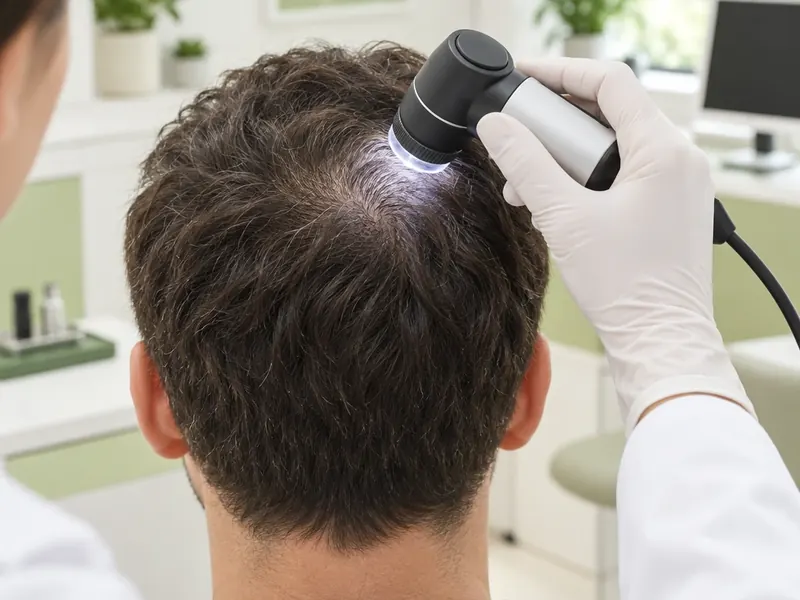
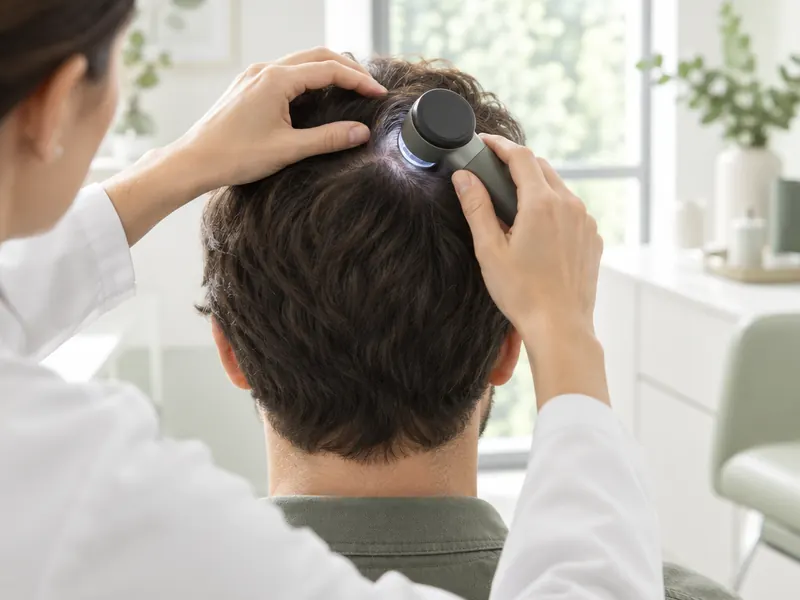
- See a dermatologist or trichologist to find the cause of hair loss. The doctor examines the scalp, often with a dermatoscope, and may order blood tests.
- Treat the cause: an autoimmune process, a hormonal imbalance, a deficiency or scalp inflammation.
- Give temporary shedding time. Hair after illness or stress often recovers within six to twelve months.
- Stabilise progressive hair loss with treatment prescribed by a doctor.
- Return to the question of a transplant once the situation is stable and the donor area has been assessed.
Getting a personal plan at City Medical Centre
City Medical Centre works with international patients and performs hair transplants using FUE, DHI and a combined FUE and DHI method. FUE is used for androgenetic alopecia; the combined FUE and DHI method is used for androgenetic alopecia and for densification.
The clinic does not perform transplants in alopecia areata, in hair loss after illness or from a hormonal imbalance, on scars after injuries or burns, or when there are medical contraindications such as those listed above: in these cases the doctor will tell you honestly and recommend seeing the right specialist first. The first consultation is free and can be held online: send photos of the thinning area and the back of your head, and the doctor will say whether a transplant will help. If it does, the cost is named after the grafts are counted and fixed in the contract. A personal coordinator stays with you from the first message through recovery, and photos and questions can be sent by Telegram. Read more on the hair transplant page.
How recovery usually goes
- 0-10 daysHealing: the crusts come off, the swelling goes down, the area gradually recovers
- 2-4 weeksShedding of the transplanted hairs: a normal stage, only the hairs fall out, the follicles stay in place
- 3-4 monthsGrowth begins: new hairs gradually appear, the result starts to show
- 6-9 monthsVisible density: the hair becomes thicker, the main volume and contour are visible
- 12-18 monthsFinal result: the final density and a natural hairline take shape
Sources
Frequently asked questions
Can alopecia areata be treated with a hair transplant?
Usually not. In alopecia areata the immune system attacks follicles, and new patches can appear in transplanted areas and in the donor zone. The condition is treated by a dermatologist. A transplant is not considered while the disease is active, and City Medical Centre does not perform transplants in alopecia areata.
Can I have a hair transplant with diabetes?
Diabetes affects healing and the risk of infection, and poorly controlled diabetes is a common contraindication to surgery. At City Medical Centre diabetes is on the list of contraindications, so the question is discussed individually with the doctor, who will be open about whether surgery is advisable.
What if my donor area is too thin?
If the back of the head has little or fine hair, there may not be enough grafts for visible density without over-thinning the donor area. The doctor assesses density before planning. In such cases a transplant may not be recommended, and other options for managing hair loss are discussed instead.
Is there an age limit for hair transplant?
Transplants are not performed under 18. In young people hair loss is often still developing, so it is hard to predict its final pattern and plan a natural result. There is no strict upper limit; general health and the state of the donor area matter more than age.
Can hair lost after illness grow back without a transplant?
Often yes. Shedding a few months after a high fever, surgery, childbirth or severe stress is usually temporary, and hair tends to recover within six to twelve months once the trigger has passed. If it does not, a doctor should look for another cause before a transplant is considered.
Have a question about your case? Get a free consultation
Message a coordinator on Telegram: we reply right in the chat, and you can send photos and questions there too.
- The first consultation is free, online consultations are available
- The doctor names the cost after the assessment, and it is fixed in the contract
- A personal coordinator guides you from the first message to recovery
Message our coordinator on Telegram
We reply right in the chat — you can send photos
Message us on TelegramBy sending a message, you agree to the privacy policy
Read also
 Hair transplant
Who can benefit from a hair transplant, and when is it usually declined?
Who a hair transplant can help, from male and female pattern hair loss to scars, and why clinics sometimes decline or postpone the procedure.
 Hair transplant
Hair loss and health: which conditions can cause it and who can help
Pattern baldness, hormonal changes, scalp conditions, medicines and recent illness: an overview of what can cause hair loss and which doctors can help.
 Hair transplant
Hair transplant for women: diffuse thinning and who can really benefit
Hair transplant for women: causes of diffuse thinning, tests to take first, when treatment comes before surgery, who is a candidate and what results to expect.