


























Hair transplant5 min read
Hair loss treatments vs hair transplant: what works and when
People with thinning hair often ask whether to try treatments first or go straight to a transplant. The honest answer depends on why the hair is falling out and how much has already been lost. This article compares medical treatment, supplements and PRP with a transplant, explains what each can and cannot do, and shows when combining them gives the best long-term result.

The main points in 30 seconds
- Treatments slow hair loss; a transplant restores hair where follicles have gone.
- The type of hair loss decides the approach, so diagnosis comes first.
- Doctor-prescribed treatments work only while used and need several months.
- PRP can help some people and supports healing after a transplant.
- In androgenetic alopecia, a transplant plus treatment gives the most stable result.
Key facts about the procedure
- Stay in clinicSame day
- Final result12–18 months
- AnaesthesiaLocal
- Price
$2,700from $2,200
Treatment or transplant: which works and when
Treatments and a transplant solve different problems. Treatments aim to slow hair loss and strengthen hair that is still growing. A transplant moves healthy follicles to areas where hair has already gone. One does not replace the other.
In simple terms:
- if hair is thinning but follicles are still active, treatment is usually the first step;
- if there are bald areas where follicles no longer produce hair, only a transplant can restore coverage there;
- if hair loss is progressive, a combination often gives the most stable result.
Why hair falls out: causes shape the choice
The right approach starts with the diagnosis. The most common cause is androgenetic alopecia, a hereditary sensitivity of follicles on the top of the head to a hormone. Other causes include shedding after illness, stress or childbirth, thyroid problems, iron deficiency, alopecia areata and some scalp conditions.
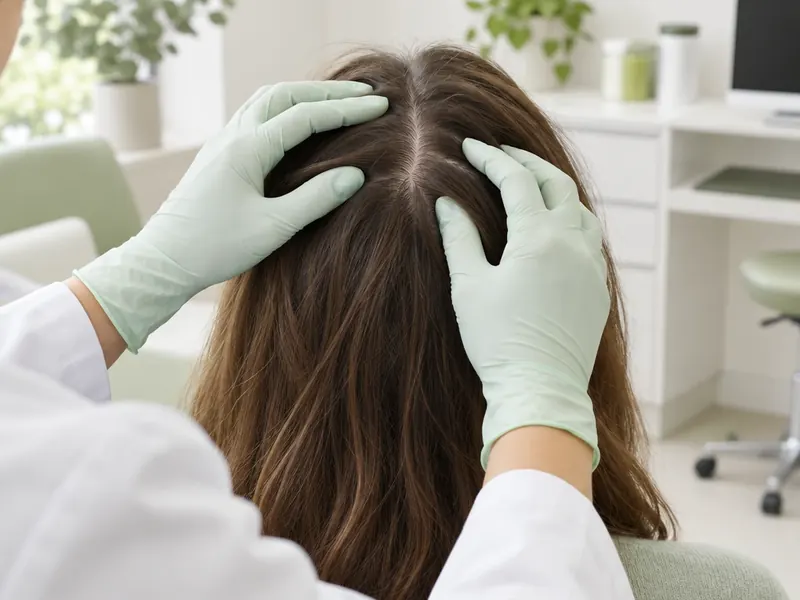
Temporary and autoimmune hair loss are treated, not transplanted. Androgenetic alopecia is the only type where a transplant is a standard option, and even then treatment often remains important to protect the hair that has not been moved. A dermatologist or trichologist can confirm the type of hair loss with a scalp examination and, if needed, blood tests.
Topical products, medication and supplements
For androgenetic alopecia, doctors prescribe topical products that stimulate growth and tablets that reduce the effect of hormones on follicles. They can slow hair loss and in some people thicken existing hair. Important facts about them:
- they are prescribed and monitored by a doctor, who takes contraindications and side effects into account;
- results take several months to appear;
- they work only while they are used; when treatment stops, the effect gradually fades;
- they do not bring back hair where follicles have already disappeared.
Vitamins and minerals help when there is a real deficiency, for example of iron. Without a deficiency, supplements alone rarely change much, so it is better to test first than to take them blindly.
Regenerative options: PRP and other scalp therapies
PRP is platelet-rich plasma prepared from a small amount of your own blood and injected into the scalp. The growth factors it contains are thought to support follicles and prolong the growth phase. Studies in androgenetic alopecia show a benefit for some patients, but the effect varies and usually needs a course of sessions with maintenance afterwards. PRP is also used after a transplant to support healing of the implanted and donor areas.
Other methods, such as low-level laser devices, microneedling and mesotherapy, are used by some specialists; the evidence for them is mixed, and whether they suit you is decided at a consultation. More about PRP and transplant methods is on our hair transplant page.
What treatments cannot do
Slow down further hair loss
- Treatments
- Yes, while used
- Transplant
- No, it does not treat the cause
Thicken thinning but living hair
- Treatments
- Often, to some degree
- Transplant
- Adds density with grafts
Restore hair on bald areas
- Treatments
- No
- Transplant
- Yes, within donor limits
Restore a receding hairline
- Treatments
- Rarely
- Transplant
- Yes
Permanent effect without ongoing care
- Treatments
- No
- Transplant
- Transplanted hair usually keeps growing
Treatments cannot regrow hair on smooth, shiny skin where follicles have gone. That is the point at which many people start considering a transplant.
When a transplant is the logical next step
A transplant is worth discussing when:
- the diagnosis is androgenetic alopecia;
- there are visible bald or very thin areas, such as a receding hairline or crown;
- hair loss has been stable for some time or is controlled with treatment;
- the donor area at the back of the head is dense enough;
- expectations are realistic: a transplant redistributes hair, it does not create more of it.

Combining treatment with a transplant
A transplant and treatment work best as a team. The transplant restores coverage in bald areas, while treatment protects the native hair around it, which would otherwise continue to thin with androgenetic alopecia. Without this, the result can look patchy years later: dense transplanted zones next to new thinning.
After surgery, PRP sessions may be recommended to support healing, and the doctor decides whether to continue medical treatment. The plan is individual and is reviewed at follow-up visits.
Getting a personal plan at City Medical Centre
City Medical Centre works with international patients and performs hair transplants using FUE, DHI and a combined FUE and DHI method. FUE is used for androgenetic alopecia; the combined FUE and DHI method is used for androgenetic alopecia and for densification. The clinic also offers PRP therapy for the scalp and trichopigmentation. Long-term medical treatment of hair loss is prescribed by a dermatologist, and the clinic does not offer laser therapy or microneedling courses.
Transplants are not performed in alopecia areata: that is treated by a dermatologist first. The first consultation is free and can be held online: send photos of the thinning area and the back of your head, and the doctor will say whether treatment, a transplant or both make sense. The cost is named after assessment and fixed in the contract, and a personal coordinator stays with you throughout. Photos and questions can be sent by Telegram. Read more on the hair transplant page.
How recovery usually goes
- 0-10 daysHealing: the crusts come off, the swelling goes down, the area gradually recovers
- 2-4 weeksShedding of the transplanted hairs: a normal stage, only the hairs fall out, the follicles stay in place
- 3-4 monthsGrowth begins: new hairs gradually appear, the result starts to show
- 6-9 monthsVisible density: the hair becomes thicker, the main volume and contour are visible
- 12-18 monthsFinal result: the final density and a natural hairline take shape
Sources
Frequently asked questions
Can hair loss be stopped without a transplant?
Often it can be slowed. Doctor-prescribed treatment can reduce androgenetic hair loss while it is used, and temporary shedding after illness or stress usually recovers once the cause is treated. What treatment cannot do is bring back hair on areas where follicles have already gone; that requires a transplant.
Does PRP regrow hair?
PRP can strengthen existing hair and prolong its growth phase in some people with androgenetic alopecia, but it does not create follicles where they have been lost. Results vary, a course of sessions is usually needed, and the effect is maintained with repeat sessions. The doctor decides whether PRP suits you.
When is it too late for hair loss treatment?
Treatment helps as long as follicles are still alive, even if hair is thin. When the skin on an area is smooth and shiny with no visible hair, treatment is unlikely to restore it. At that stage a transplant may be considered, often together with treatment to protect the remaining hair.
Do I need to keep using treatments after a transplant?
Transplanted hair usually keeps growing, but your native hair around it can continue to thin with androgenetic alopecia. That is why doctors often recommend continuing treatment after surgery to keep the overall result balanced. The plan is individual and is reviewed at follow-up visits.
Are vitamins effective for hair loss?
They help when there is a real deficiency, for example of iron, which a blood test can show. Without a deficiency, supplements alone rarely stop hair loss. It is better to find the cause with a doctor than to rely on vitamins without testing.
Have a question about your case? Get a free consultation
Message a coordinator on Telegram: we reply right in the chat, and you can send photos and questions there too.
- The first consultation is free, online consultations are available
- The doctor names the cost after the assessment, and it is fixed in the contract
- A personal coordinator guides you from the first message to recovery
Message our coordinator on Telegram
We reply right in the chat — you can send photos
Message us on TelegramBy sending a message, you agree to the privacy policy
Read also
 Hair transplant
Hair transplant contraindications: when a transplant will not help
A hair transplant is not for everyone. Learn which types of hair loss, health conditions and life situations rule it out, and what to do instead first.
 Hair transplant
How to stimulate hair growth: factors, medical options and when to see a specialist
What affects hair growth, which medical options may support it, when to see a specialist and where a hair transplant fits when hair is lost for good.
 Hair transplant
Hair after chemotherapy: why it falls out, how it grows back and how to cope
Why chemotherapy causes hair loss, what may reduce it, how hair usually grows back after treatment and how to care for your scalp and wellbeing meanwhile.