


























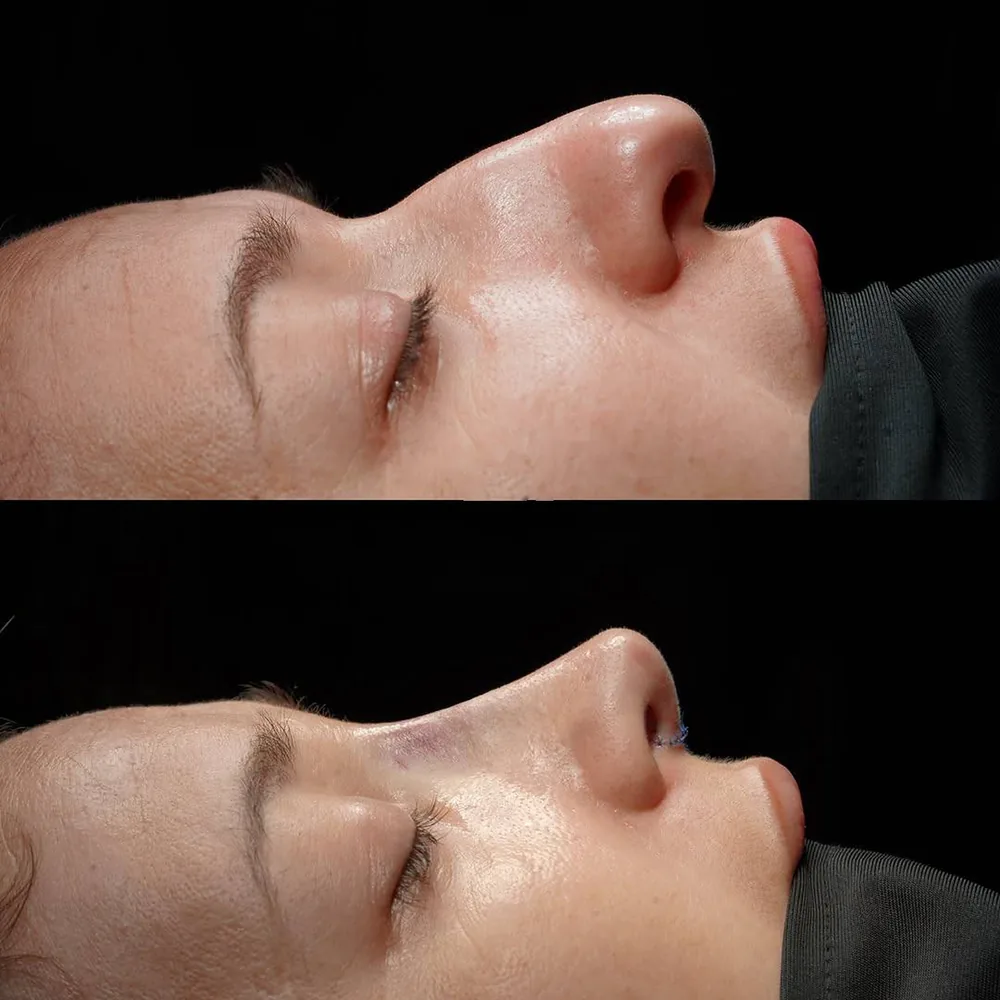
 beforeafter
Irina, 24
Rhinoplasty
Rhinoplasty
$4,200
Instead of $6,000 (≈ €5,400) · First consultation — Free
Free online consultation · Reply within 15 minutes
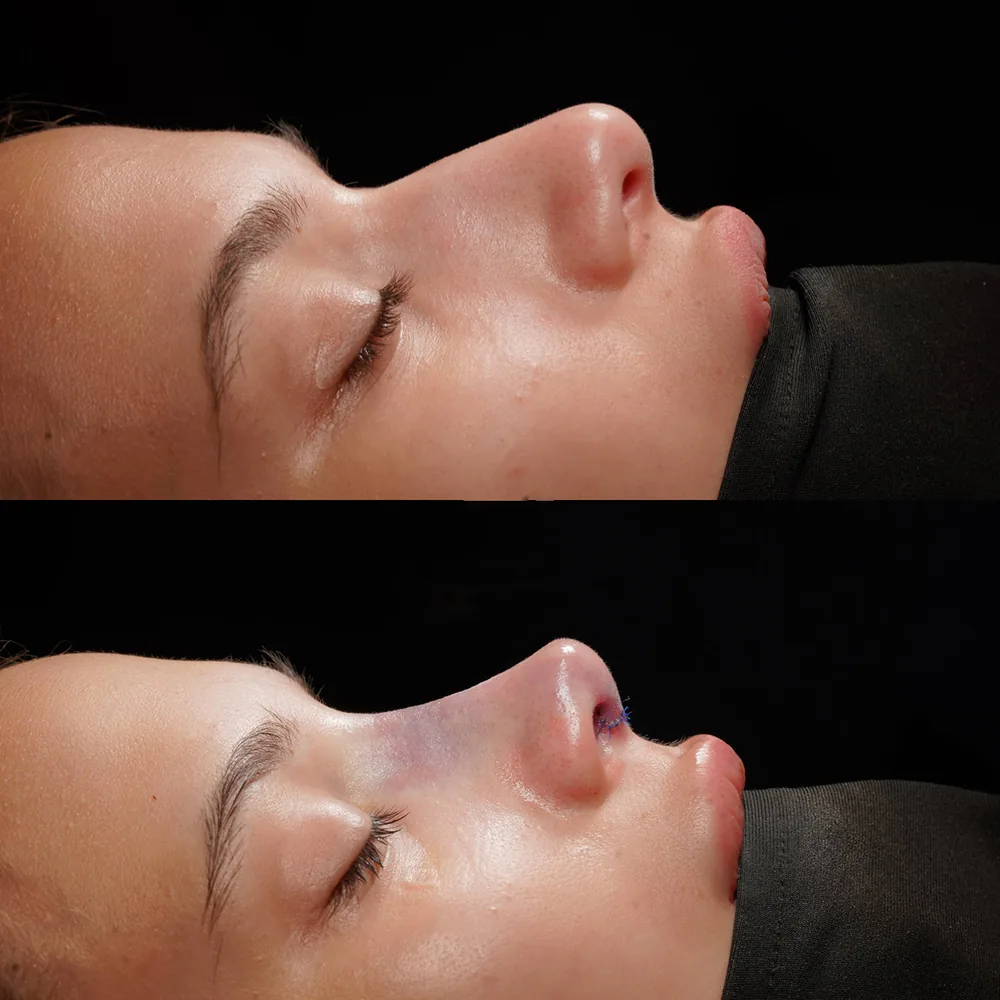 before
after
Message our coordinator
Free online consultation · Reply within 15 minutes
Message us on TelegramMessage us on WhatsAppBy messaging us, you agree to our Privacy Policy
Rhinoplasty for patients from Zagreb at City Medical Centre starts at €3,750 (from $4,200). The first online consultation is free; the doctor names the final price and it is fixed in the contract.
How it works · Rhinoplasty prices
Information current as of 5 November 2026
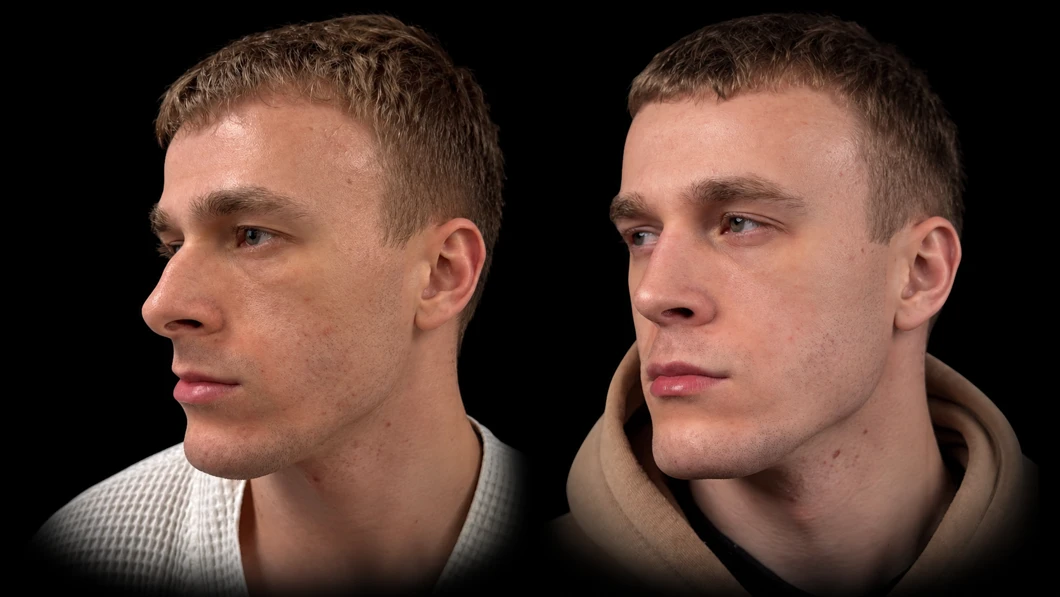
Results
All cases are real patients of the clinic.
Our Telegram community lets you speak directly with the clinic's patients.
beforeafterRhinoplasty
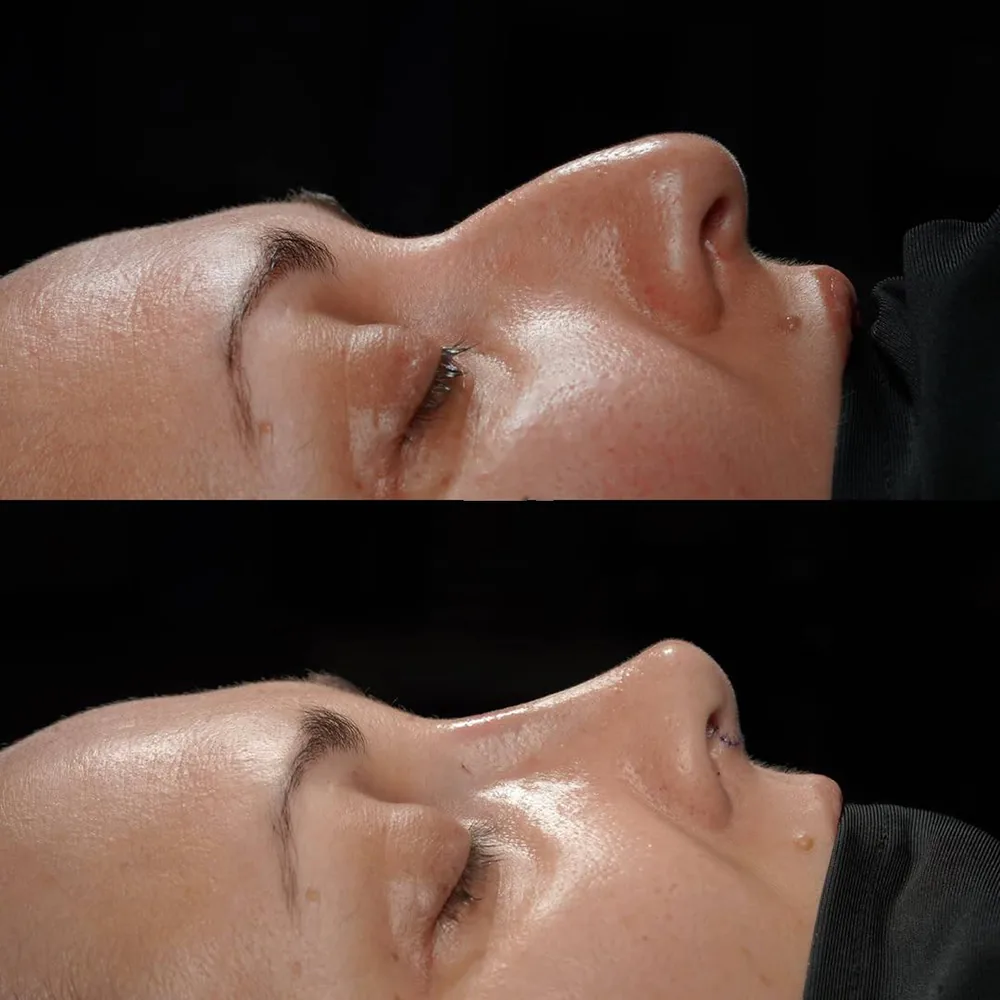 beforeafter
Rhinoplasty
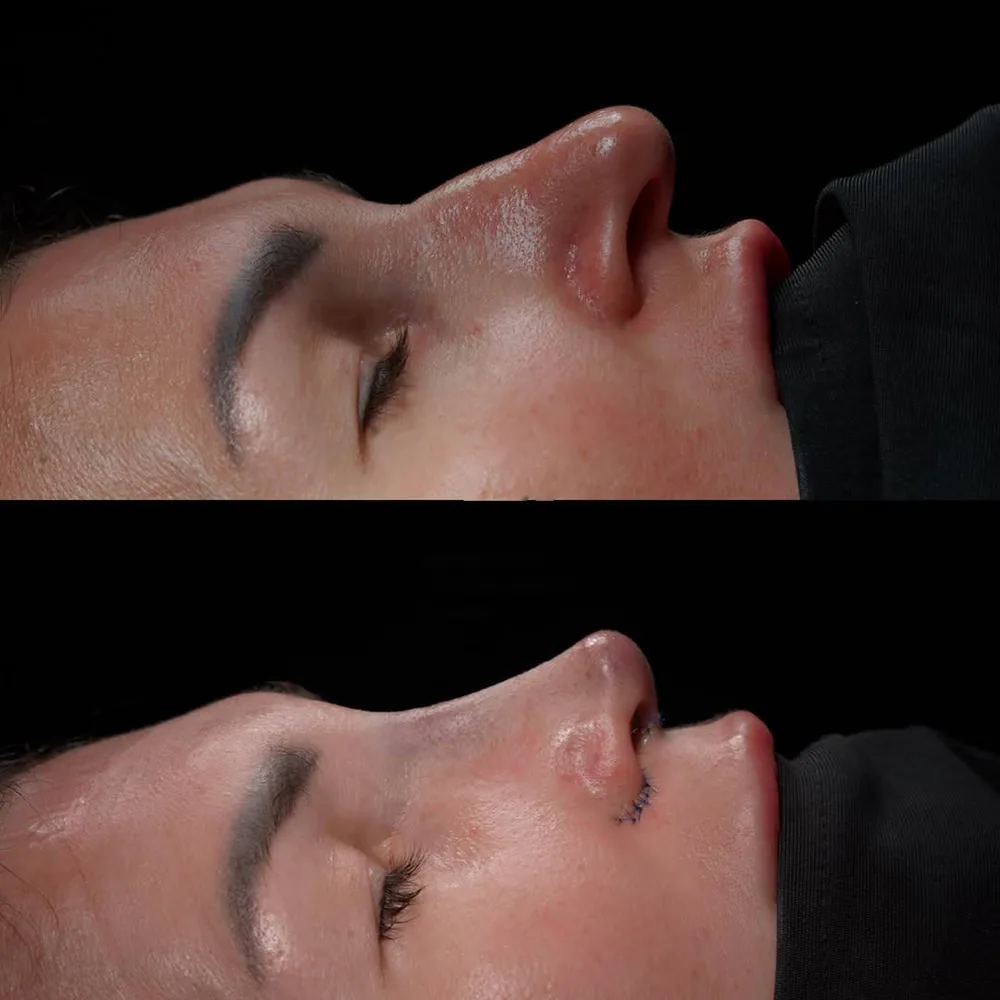 beforeafter
Rhinoplasty
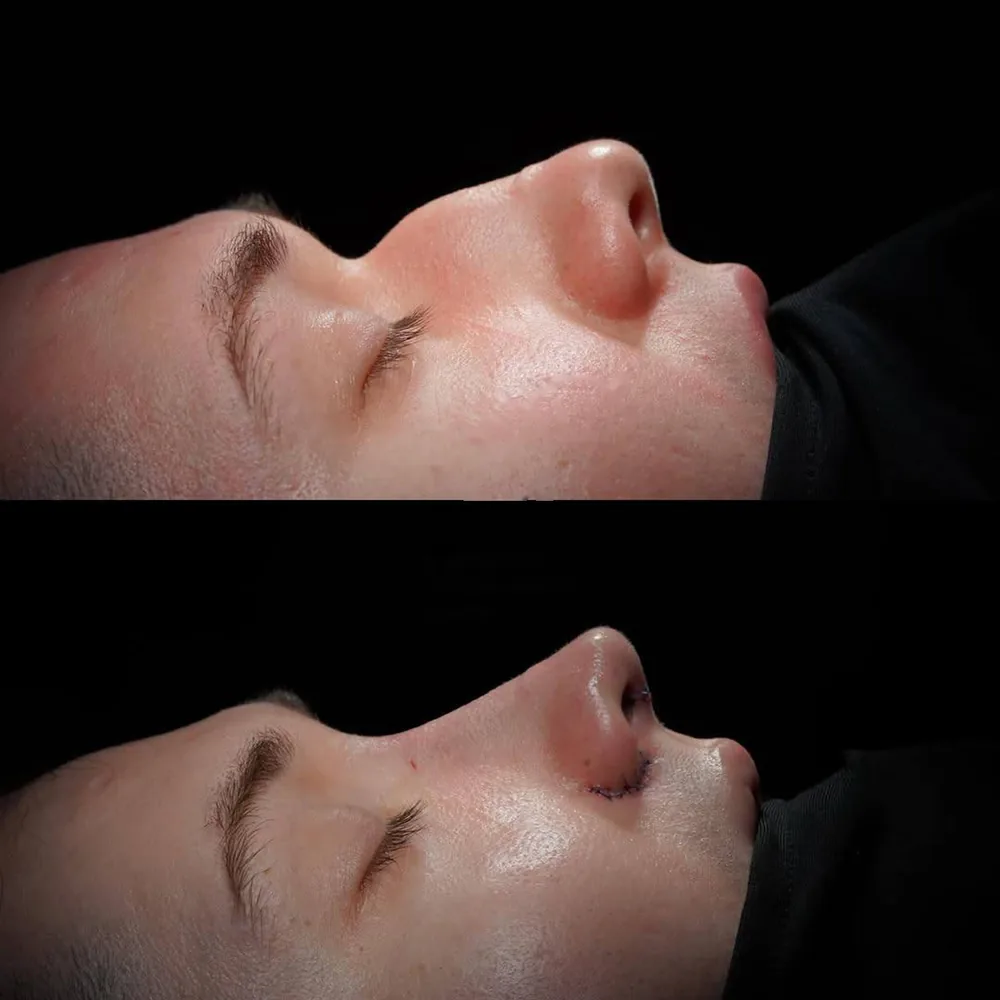 beforeafter
Rhinoplasty
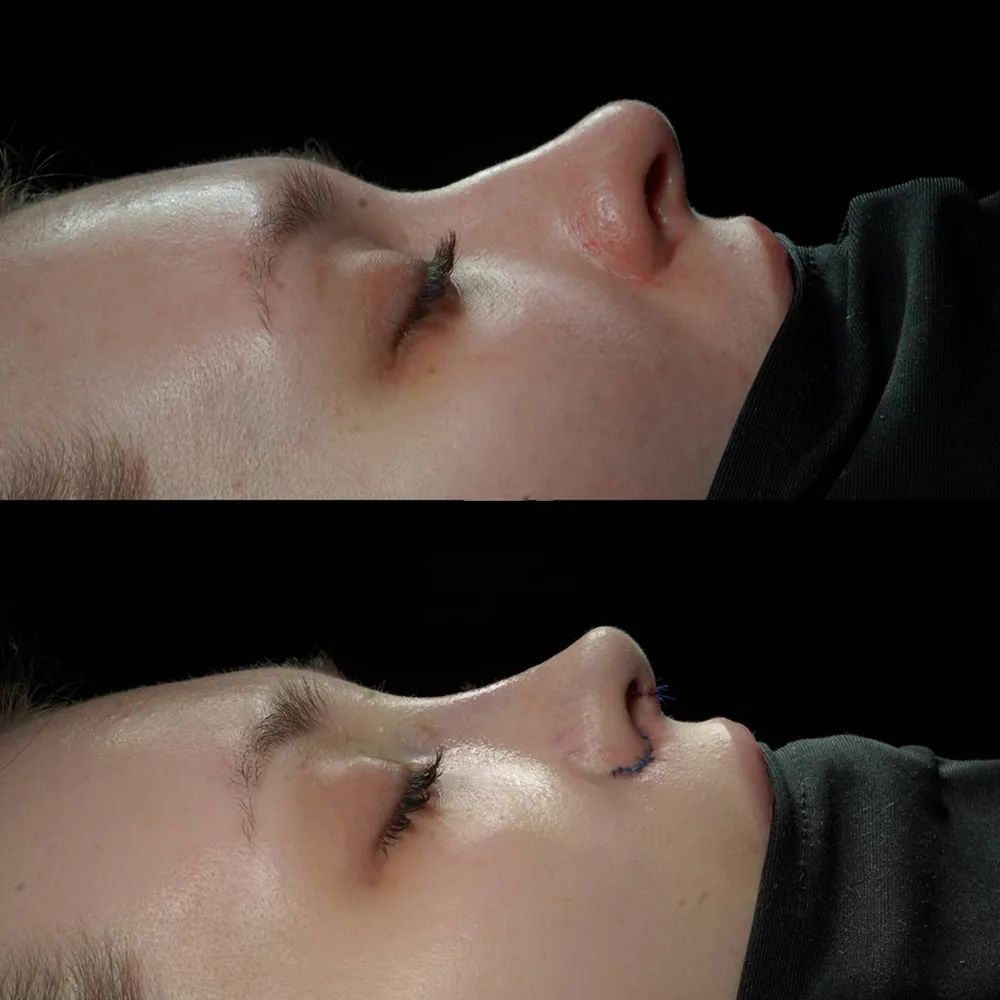 beforeafter
Rhinoplasty
beforeafterRhinoplasty
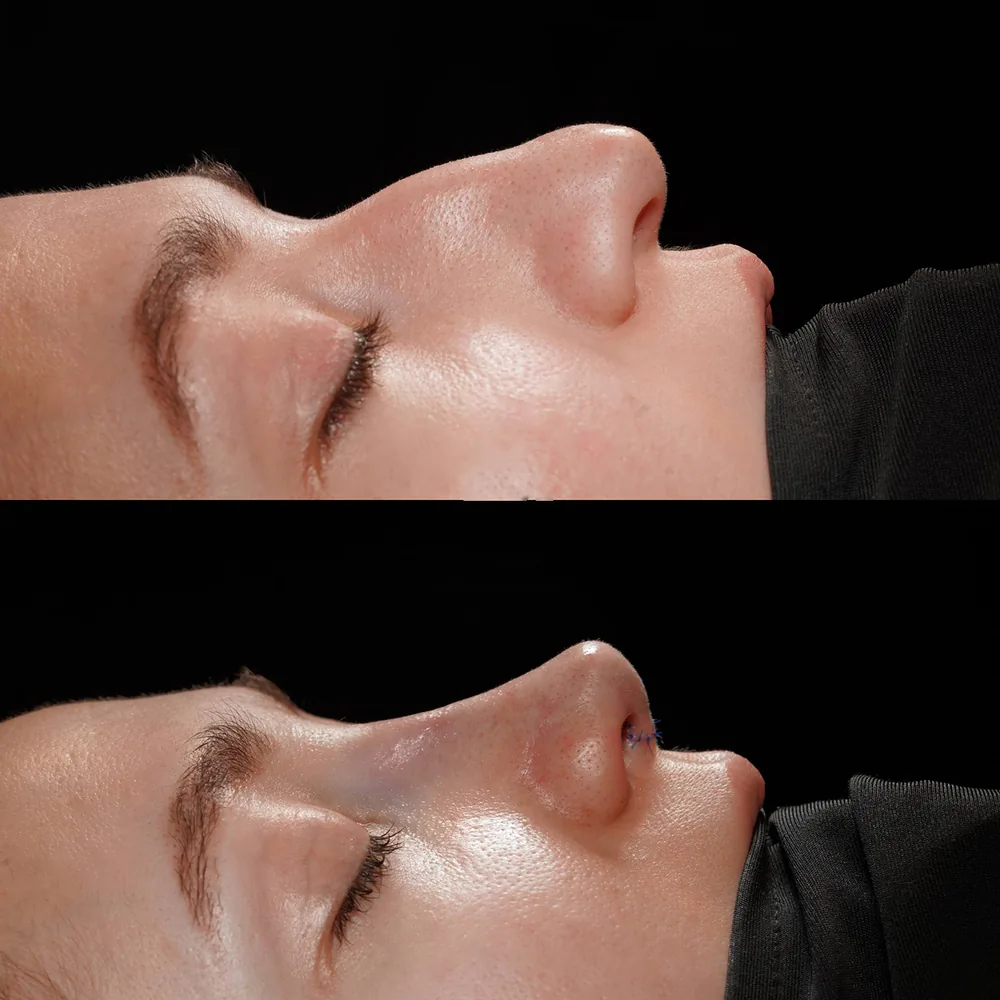 beforeafter
Rhinoplasty
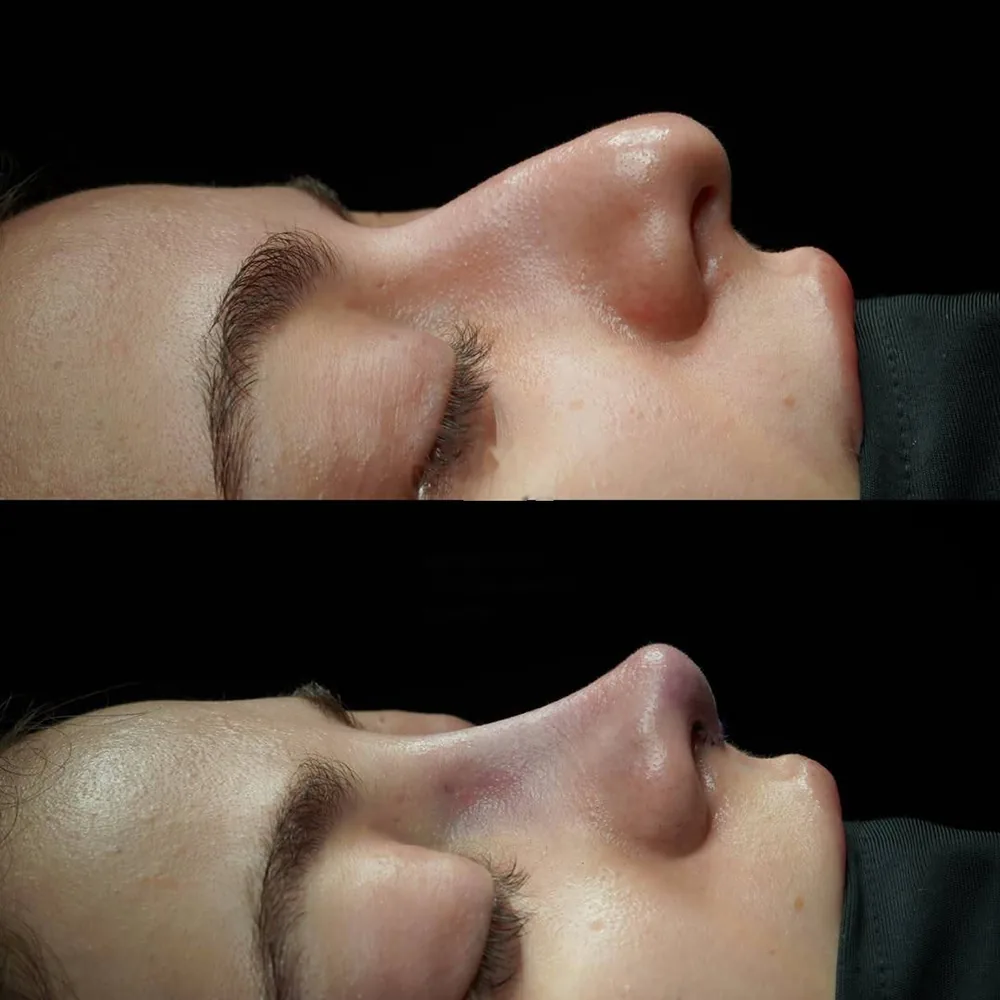 beforeafter
Rhinoplasty
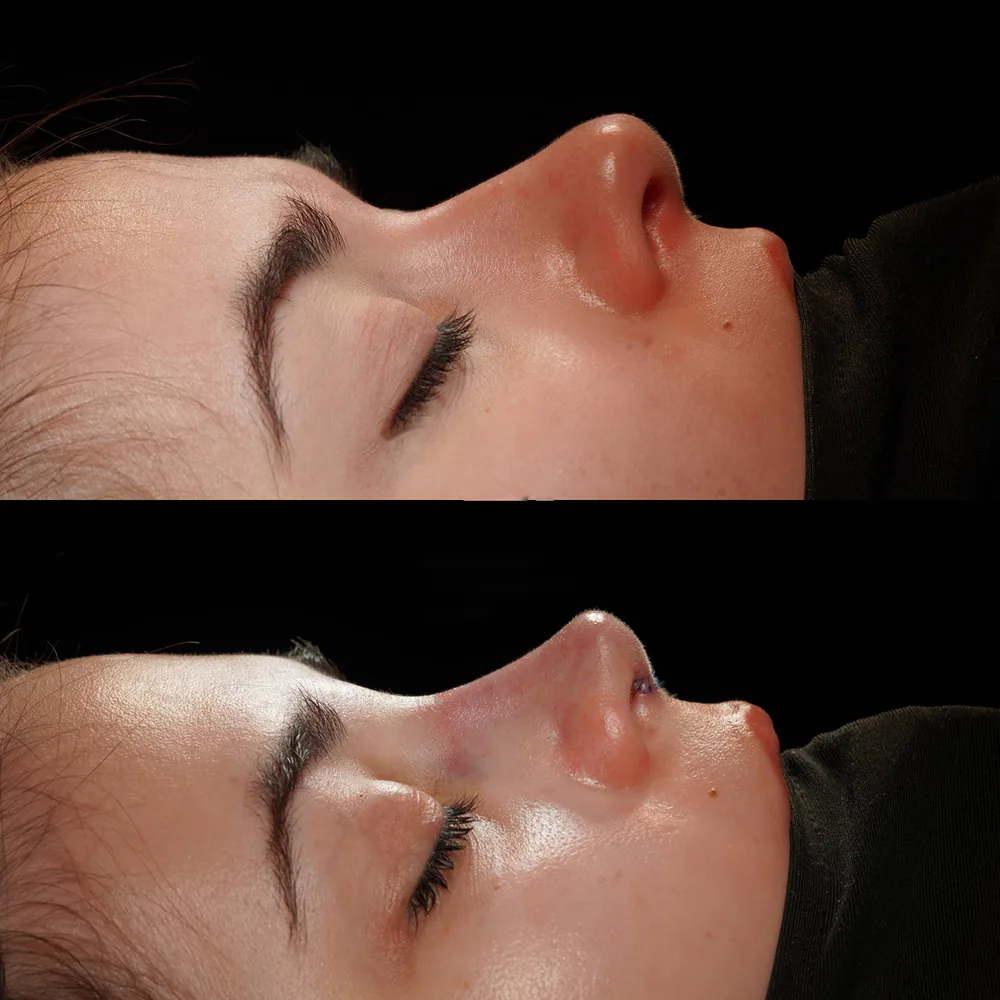 beforeafter
Rhinoplasty
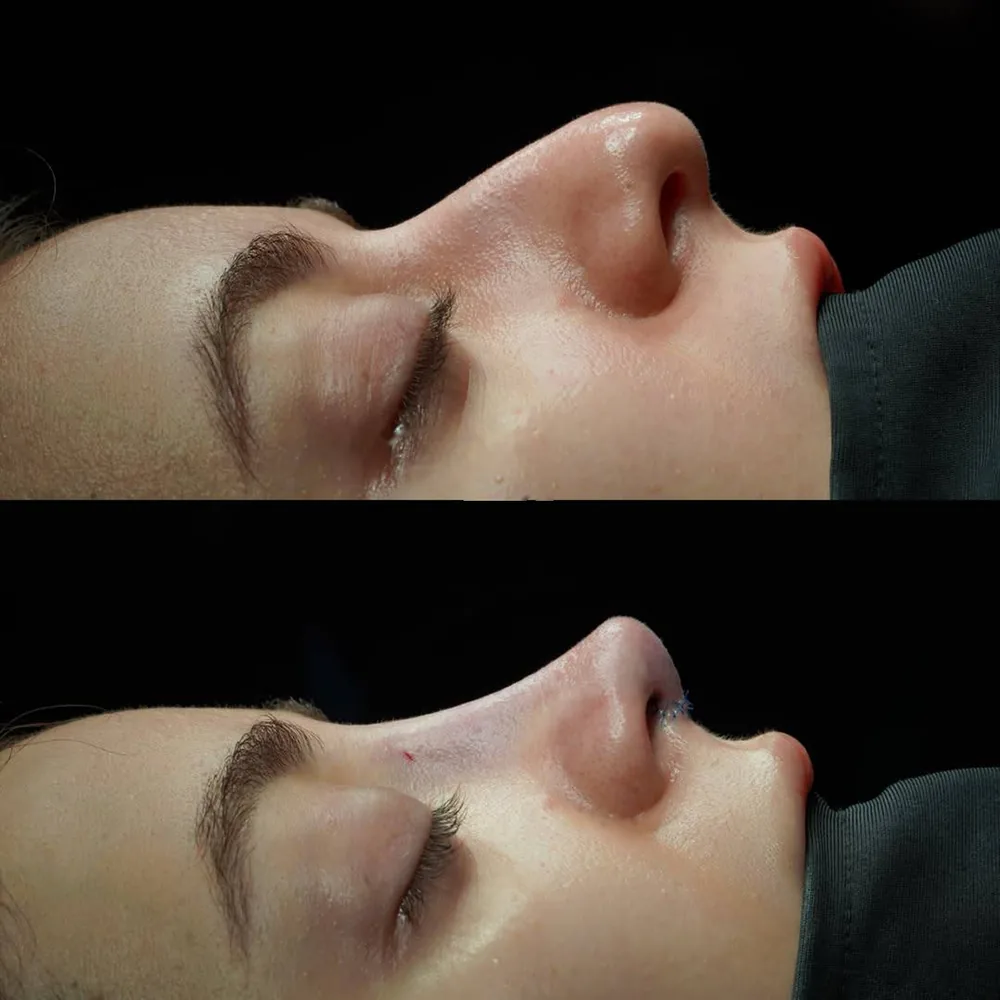 beforeafter
Rhinoplasty
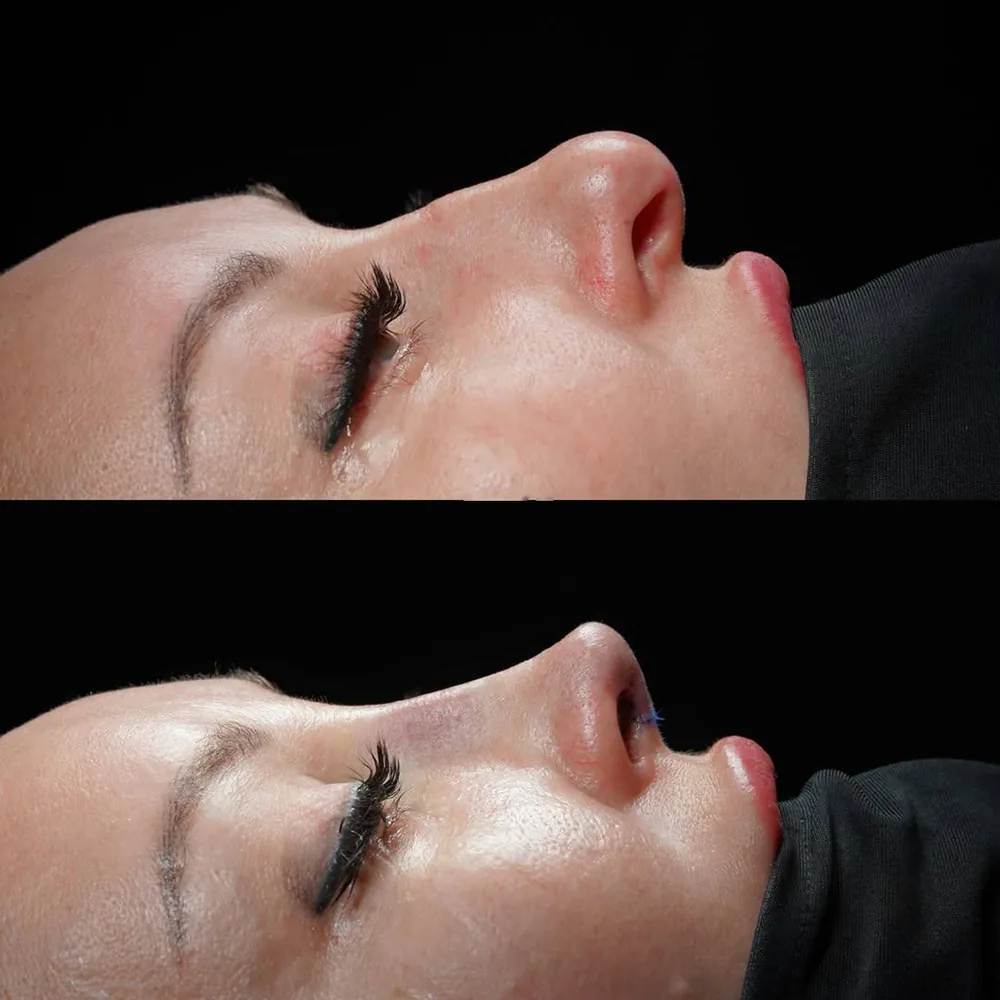 beforeafter
Rhinoplasty
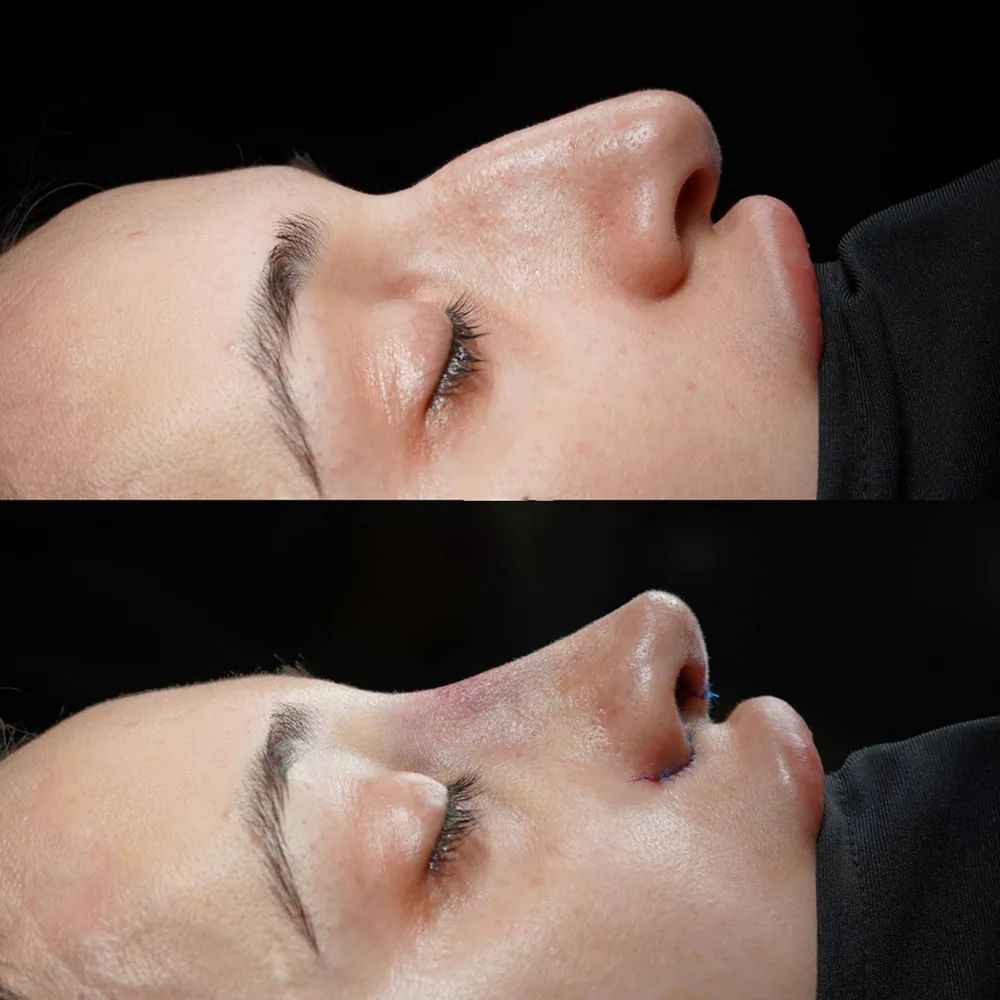 beforeafter
Rhinoplasty
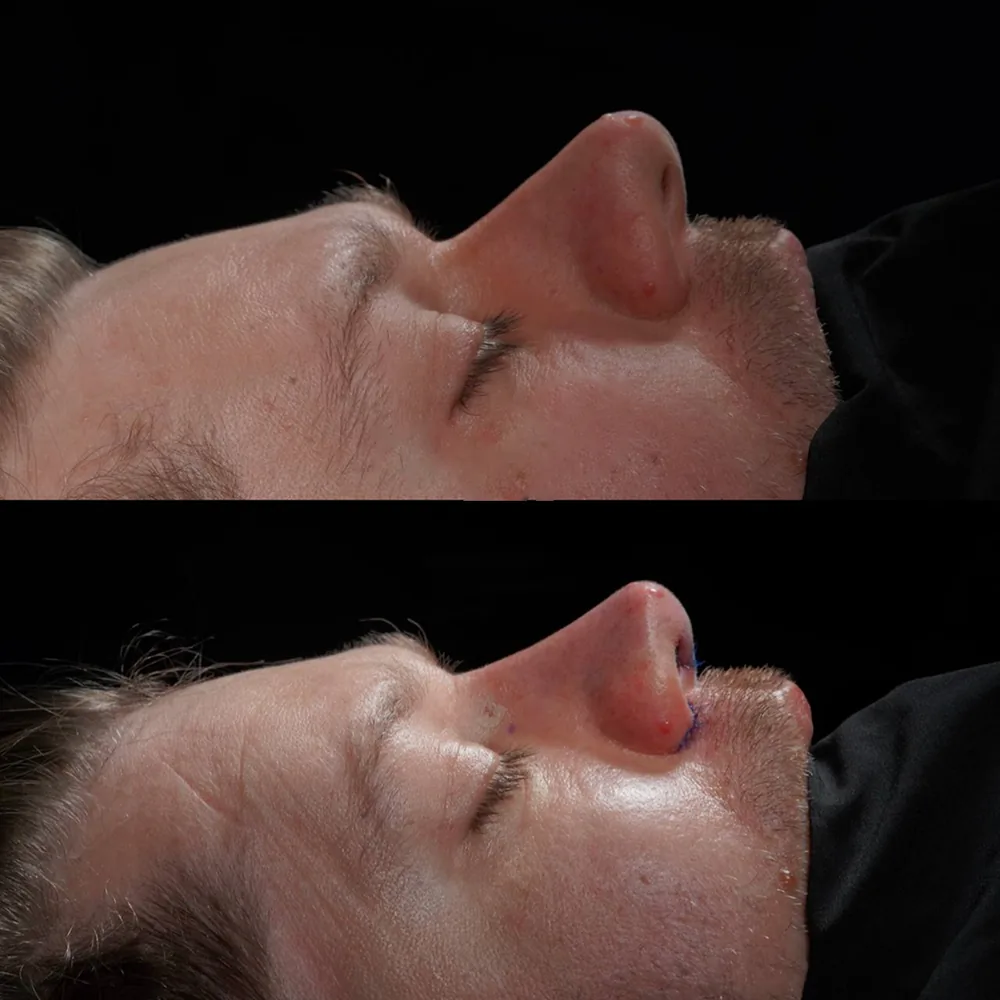 beforeafter
Rhinoplasty
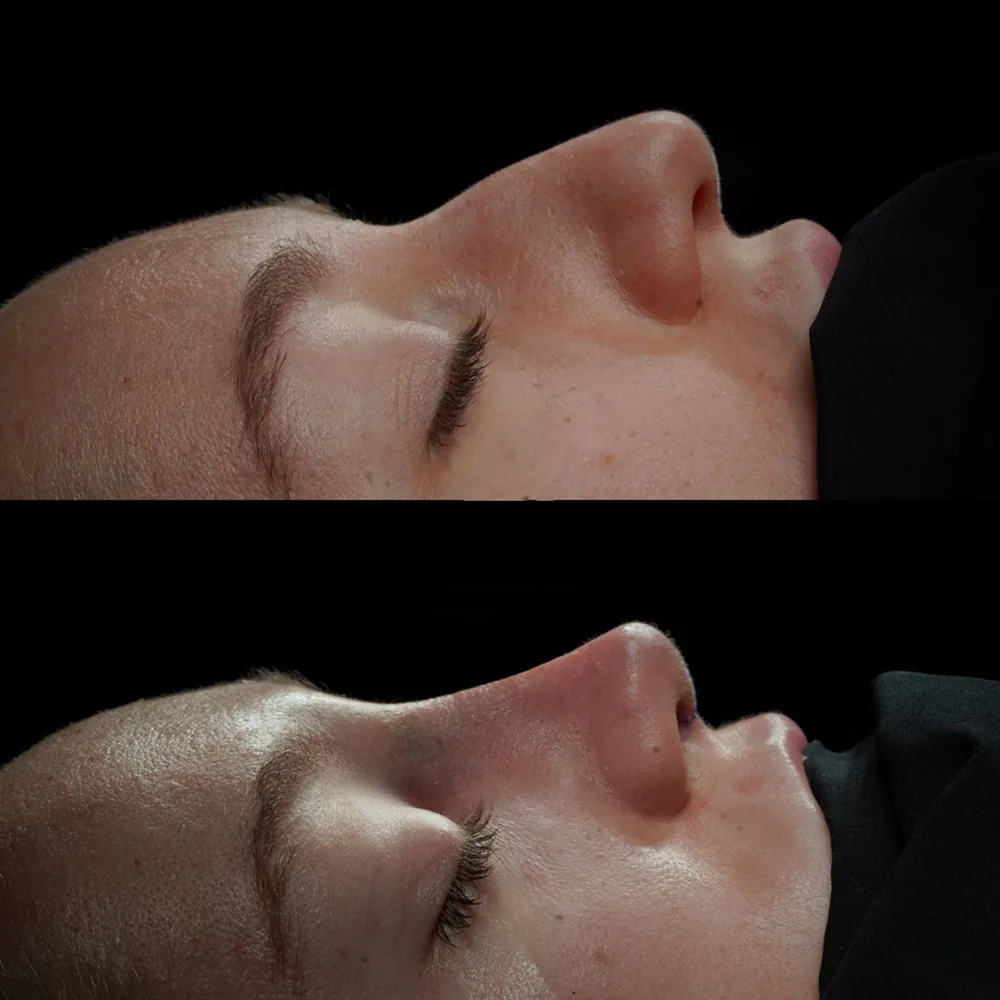 beforeafter
Rhinoplasty
Comparison
We'll identify the most effective solution for your case and reach an excellent result.
The initial nose procedure, aimed at changing its shape and restoring function if breathing is impaired.
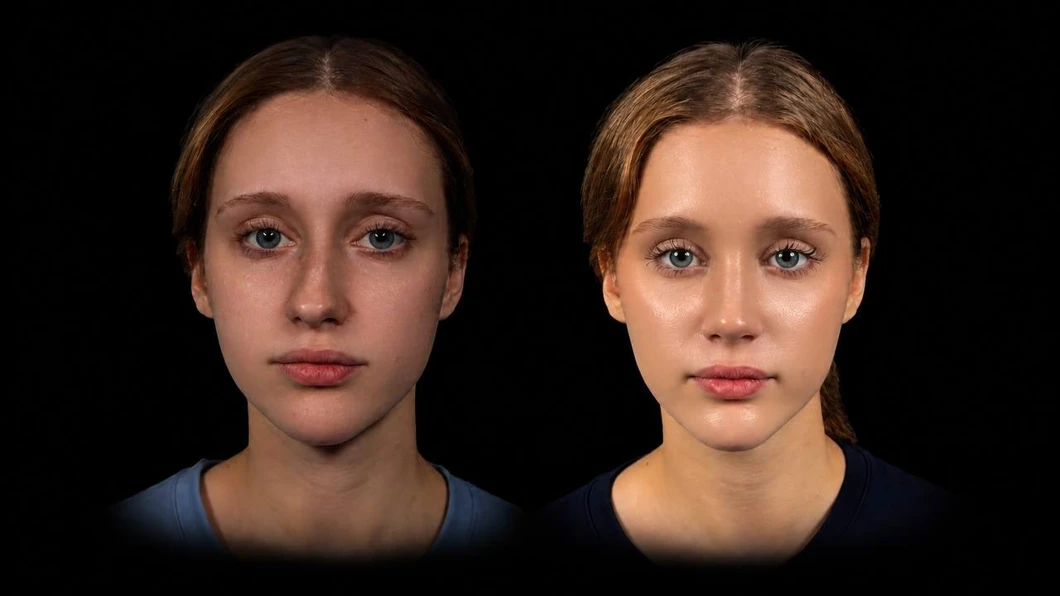
Discounted price
$4,200 $6,000
Repeat rhinoplasty: used to correct the nose following an operation that did not fully succeed. Scheduled no earlier than one year after the original surgery.
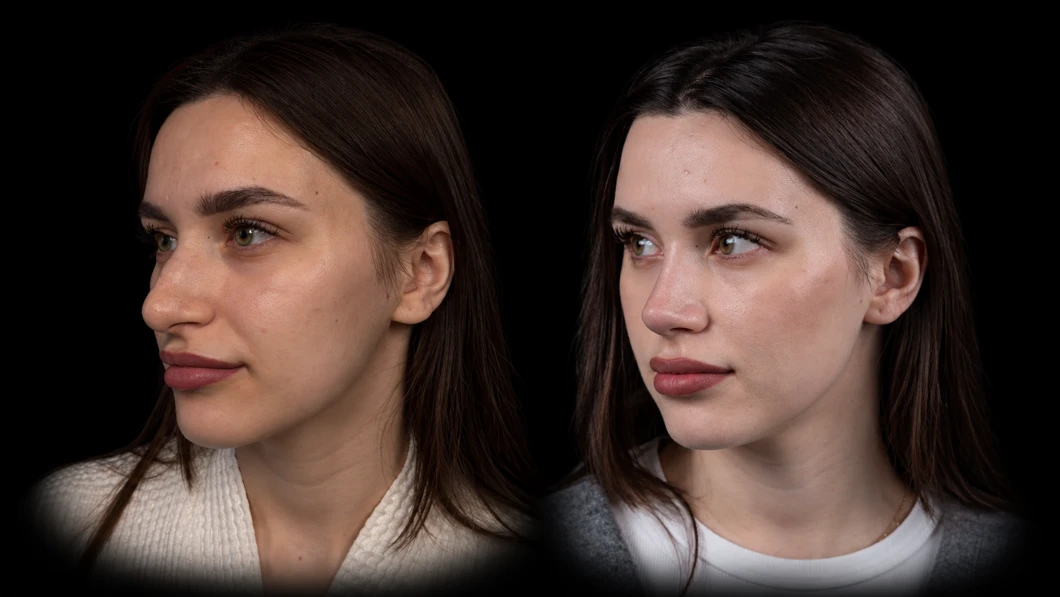
Discounted price
$5,400 $7,200
A single surgery addressing both the septum and the shape of the nose.
Discounted price
$5,000 $6,600
The benefits and recovery periods listed here are average figures by surgery type, provided only for guidance — the actual scope of correction and recovery time depend on your own anatomy, and the surgeon will confirm them at the consultation.
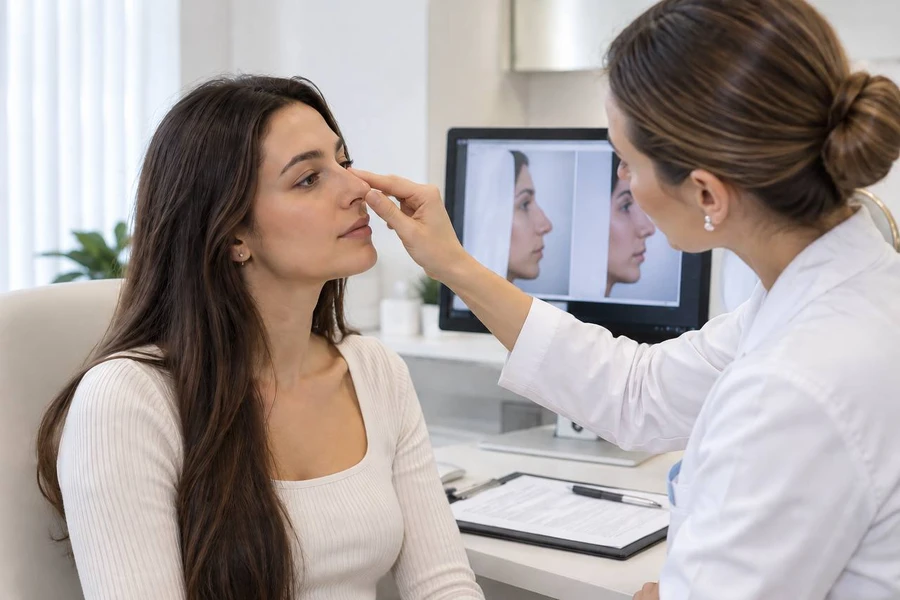
During the consultation the doctor will create a 3D model of your future result and explain
each step of your rhinoplasty
The consultation is at no cost, held before any surgery, and commits you to nothing.
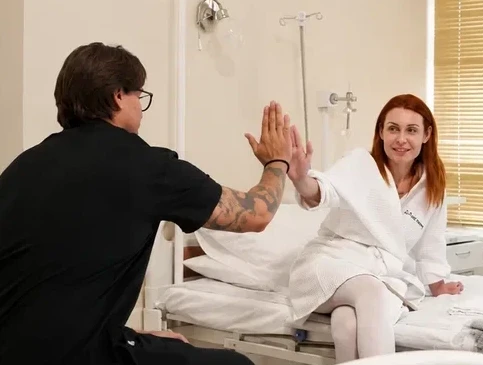
Book a consultationInside the clinic
Every patient gets modern equipment, comfortable rooms and attentive care
We will answer your questions and find a convenient time for a consultation
By messaging us, you agree to our Privacy Policy
Get a consultationIf surgery isn't actually needed in your case, the doctor will tell you this at the consultation, saving you an unnecessary expense.
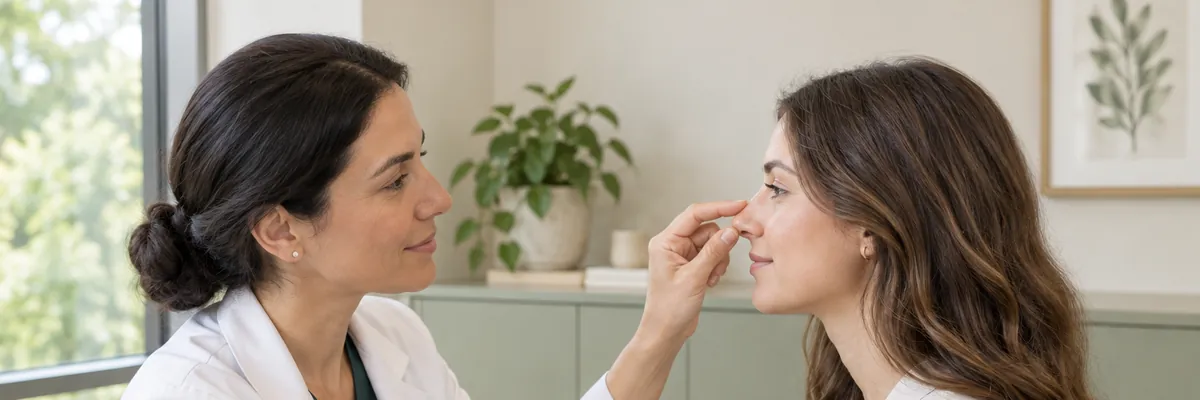

Unsure which column applies to you?
Share photos of your nose with us on Telegram and the doctor will assess whether rhinoplasty fits your case, free of charge and with no obligation to proceed.
Find out if it suits me
Prices
Once the result is modelled at the free consultation, the cost is announced and locked in the contract.
Discounted price
reshaping the nose
$4,200$6,000
Discounted price
secondary, revision
$5,400$7,200
Discounted price
shape of the nose and the septum
$5,000$6,600
Free
surgeon's examination and 3D modelling
Free
you are told the cost of surgery
and it is fixed in the contract
The doctor will study your nasal anatomy, listen carefully to what you want
and propose the right correction technique. The cost is given at the consultation and recorded in the contract.

Message our coordinator
Free online consultation · Reply within 15 minutes
Message us on TelegramMessage us on WhatsAppBy messaging us, you agree to our Privacy Policy
Price
From getting ready for surgery
to 12 months of support.
Discounted price
$4,200$6,000Discounted price
The process
A plan for your correction agreed in advance, inpatient observation, and monitoring throughout the year of recovery.
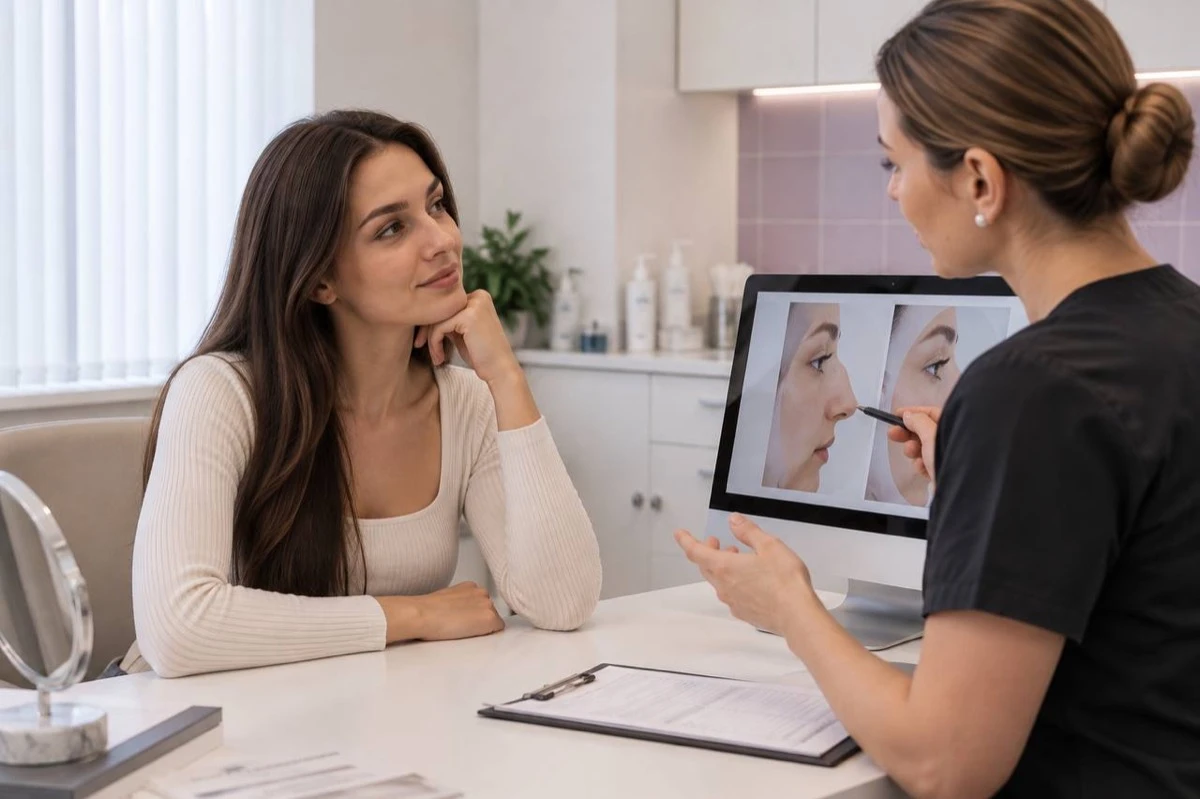
The doctor assesses your nose, discusses your wishes and carries out the examinations needed to choose the best correction technique

We reserve a surgery date for you: the deposit can be paid by card at the clinic or online by bank transfer. The terms are fixed in the contract for medical services
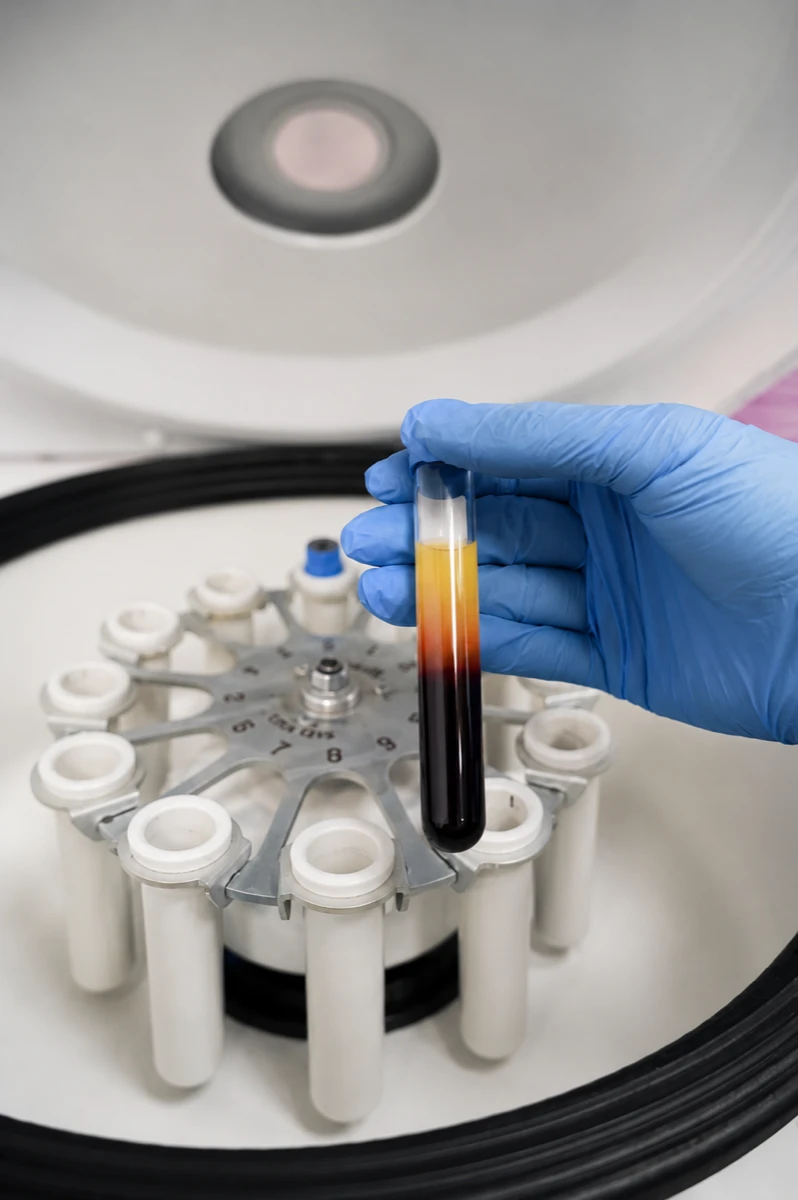
Ahead of surgery, a full set of lab tests is required: complete blood count, biochemistry, coagulation panel, chest X-ray and a sinus X-ray
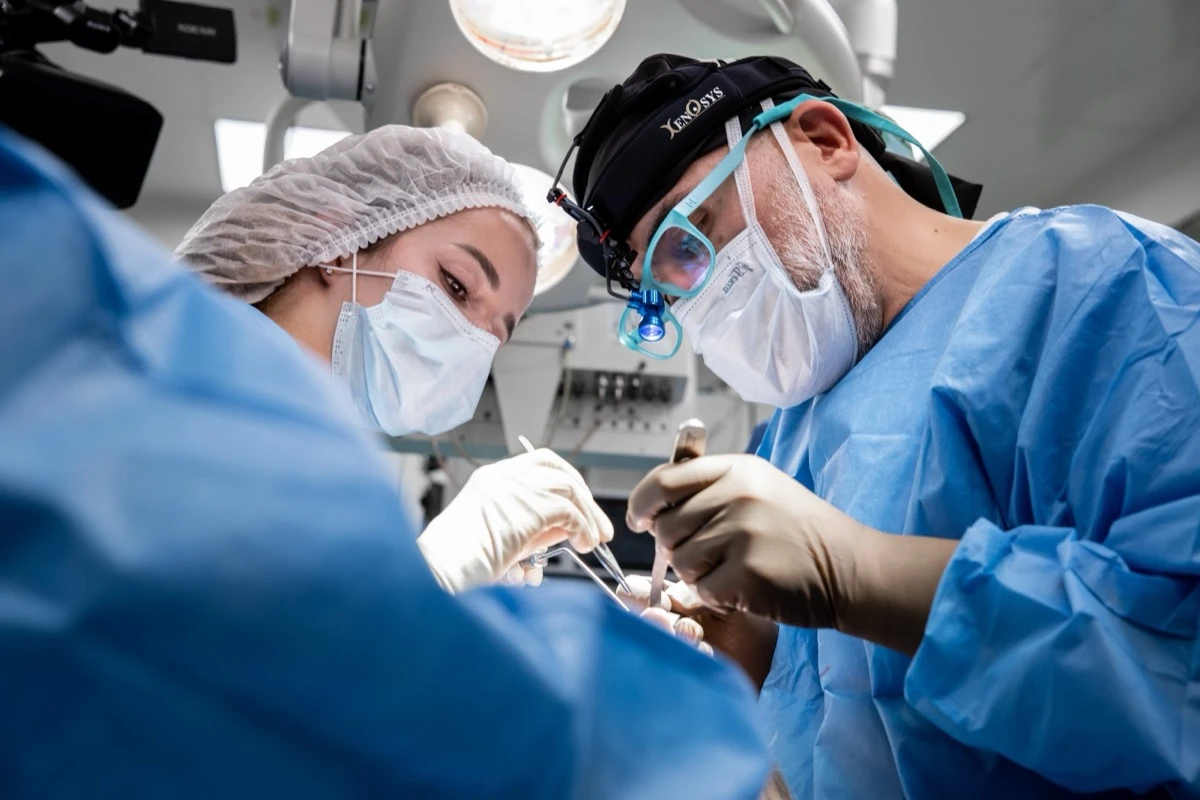
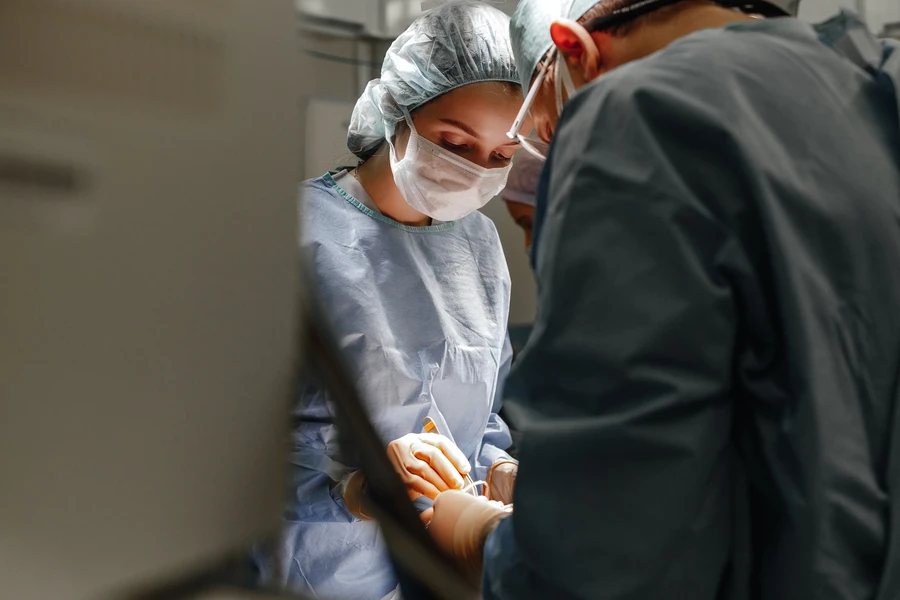
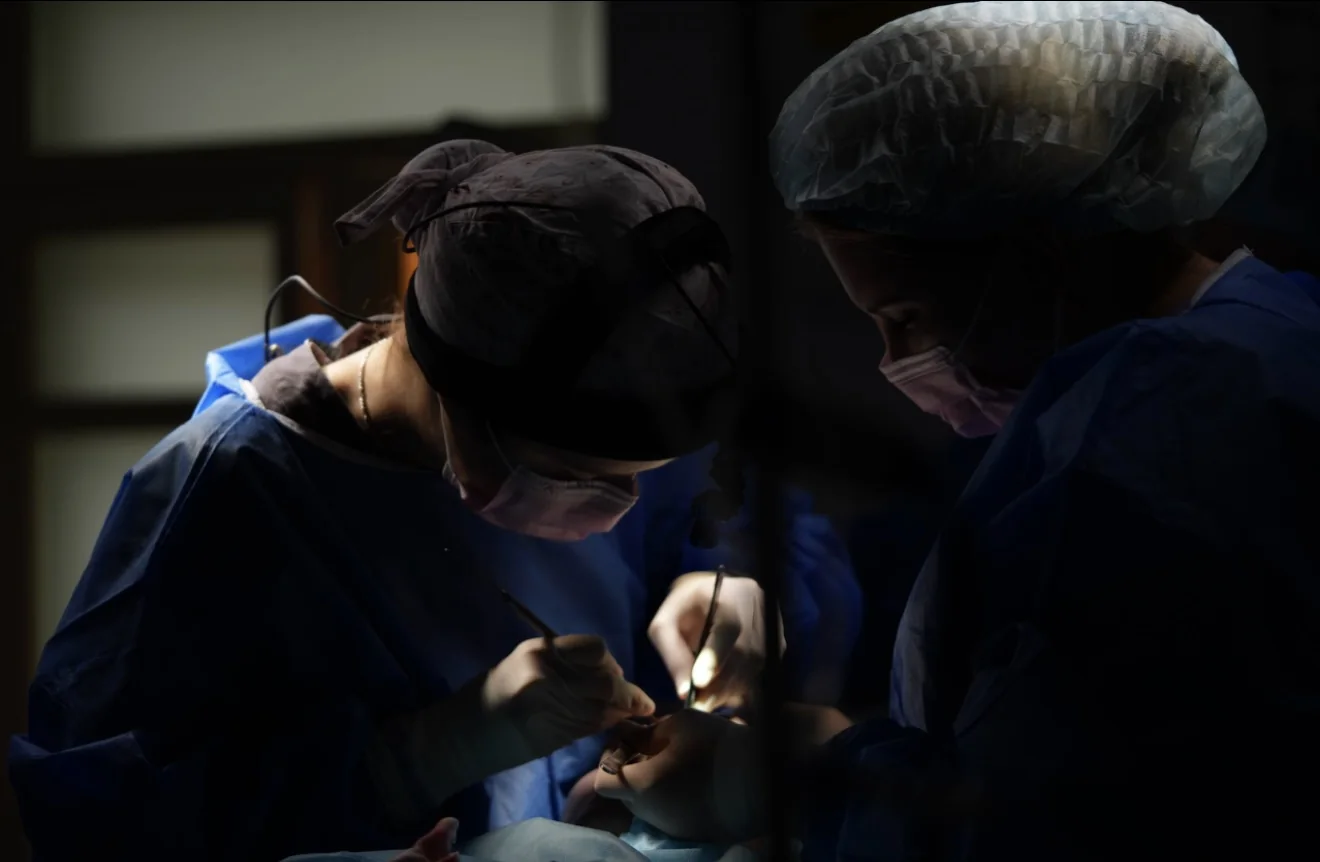
The surgeon performs rhinoplasty with the chosen technique under general or local anaesthesia, correcting the shape and structure of the nose
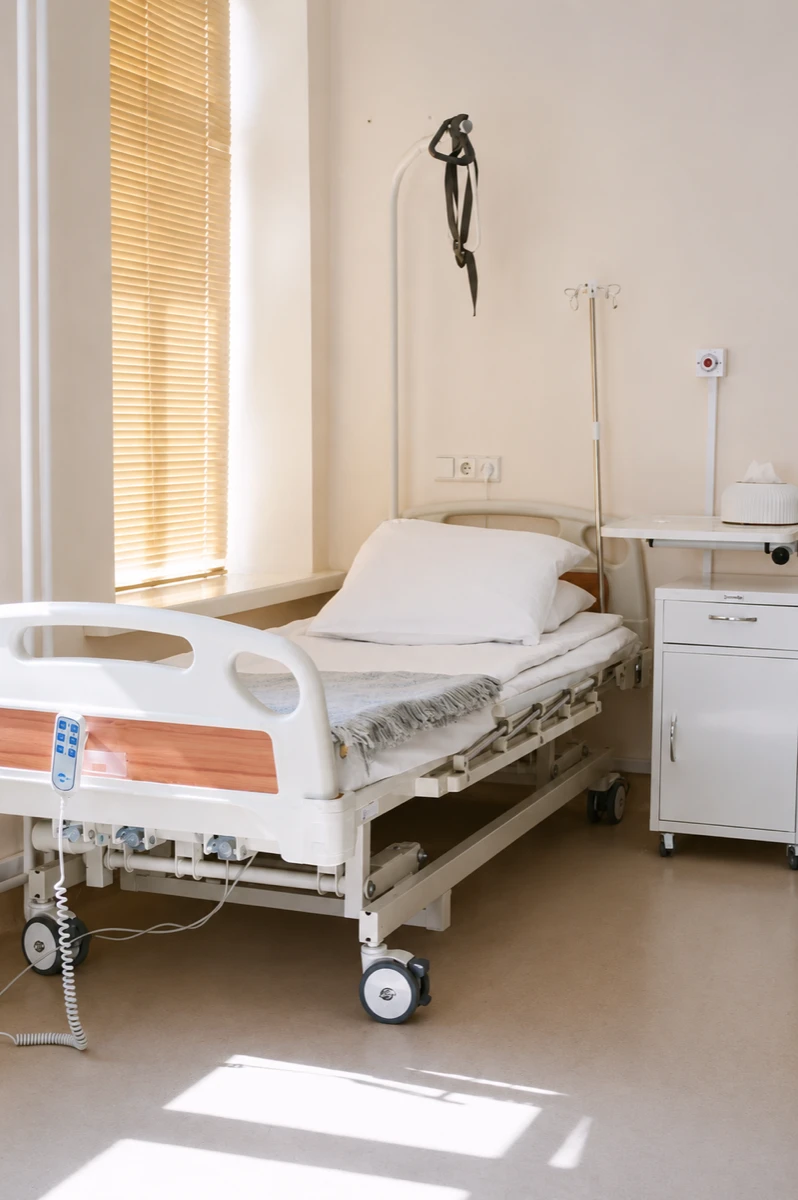
All procedures are performed in the clinic's inpatient unit. After surgery you stay there for one day
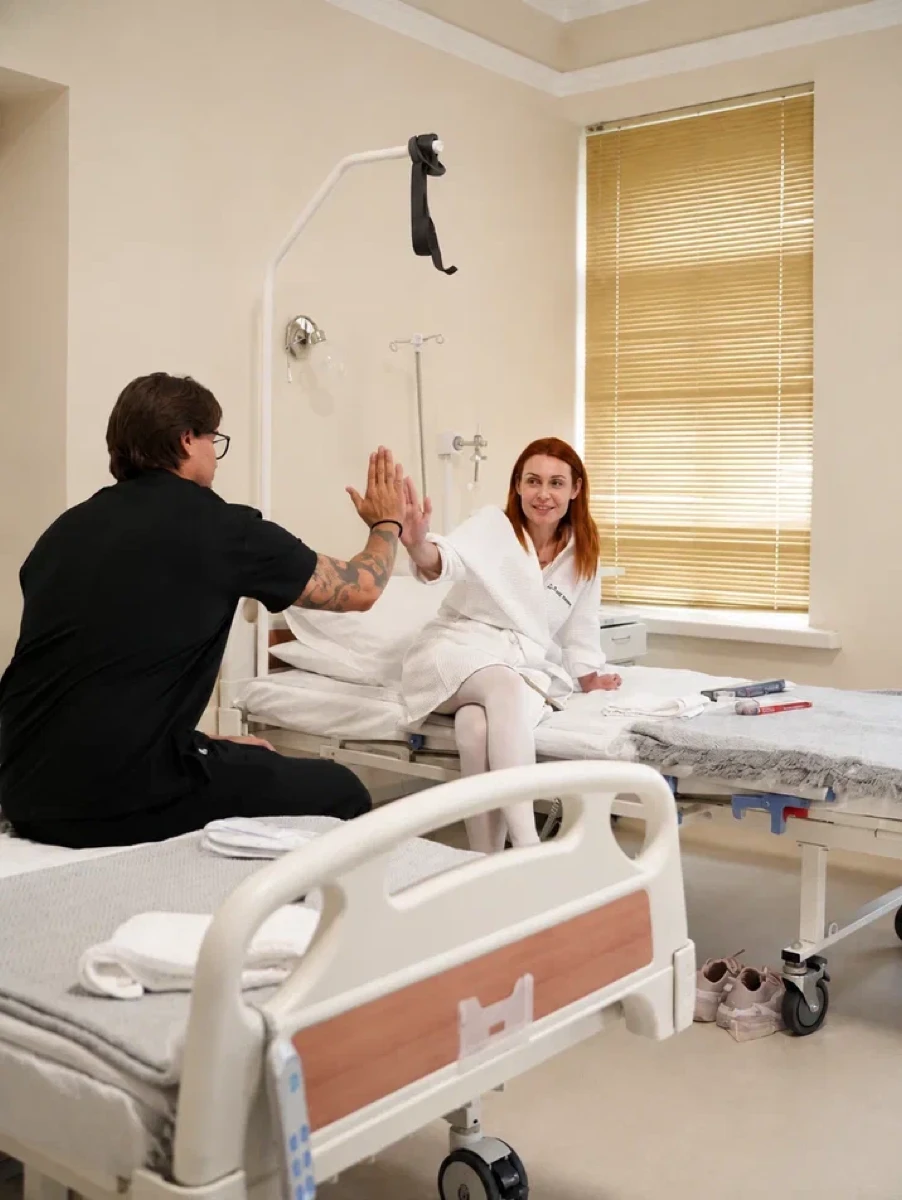
After surgery you get a recovery programme. Check-ups at 7 days, 3 and 6 months help track your recovery. For a year after surgery, consultations with your surgeon are free.
The consultation gives you a realistic forecast of what the result will look like
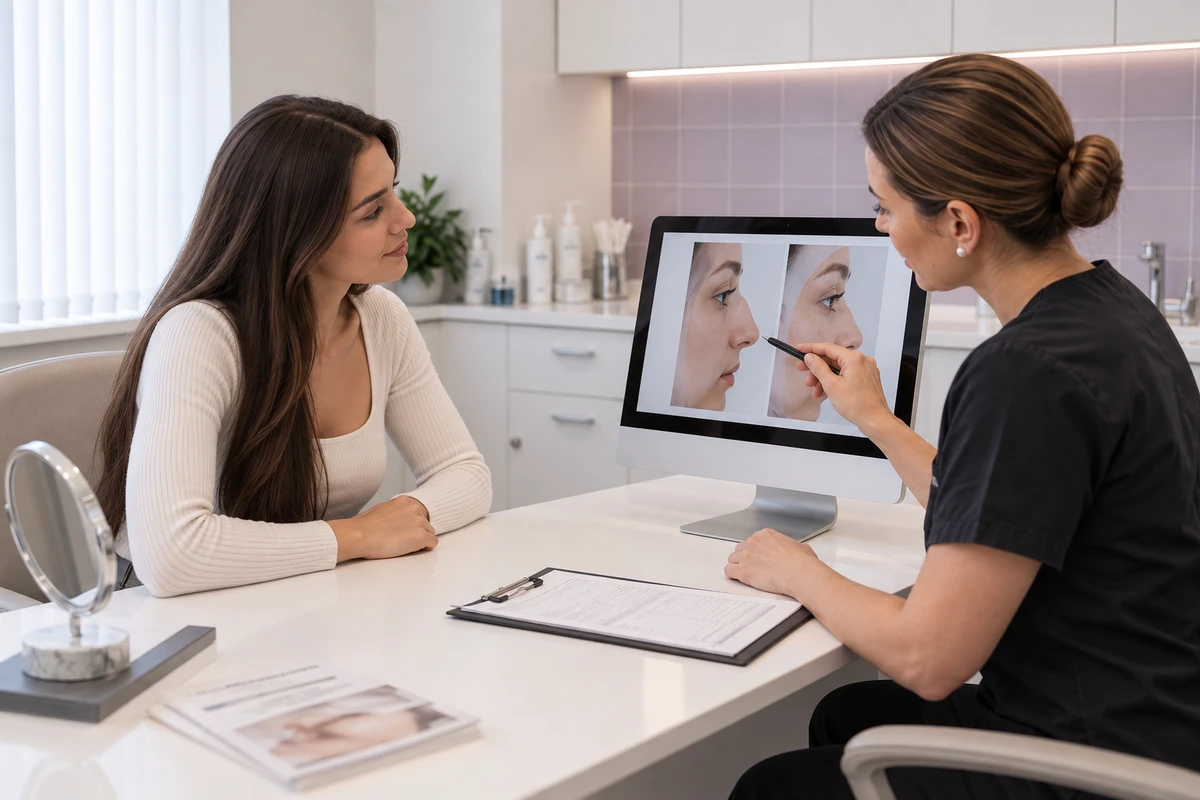
The consultation is at no cost, held before any surgery, and commits you to nothing.
Book a consultationNasal splint
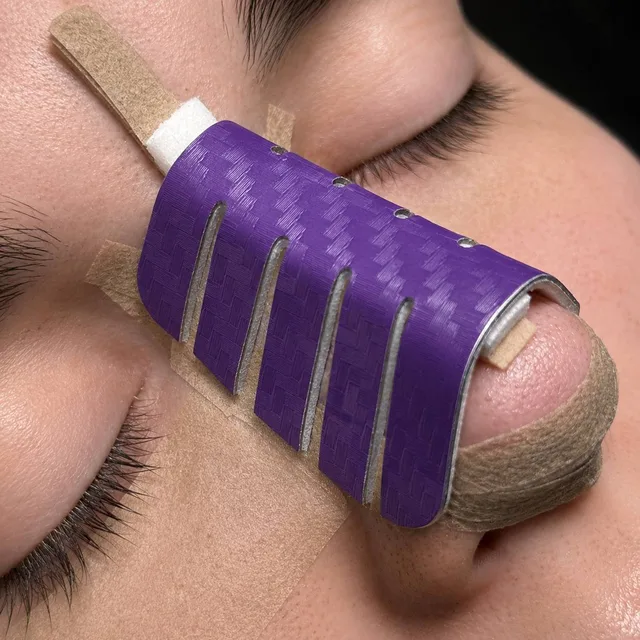
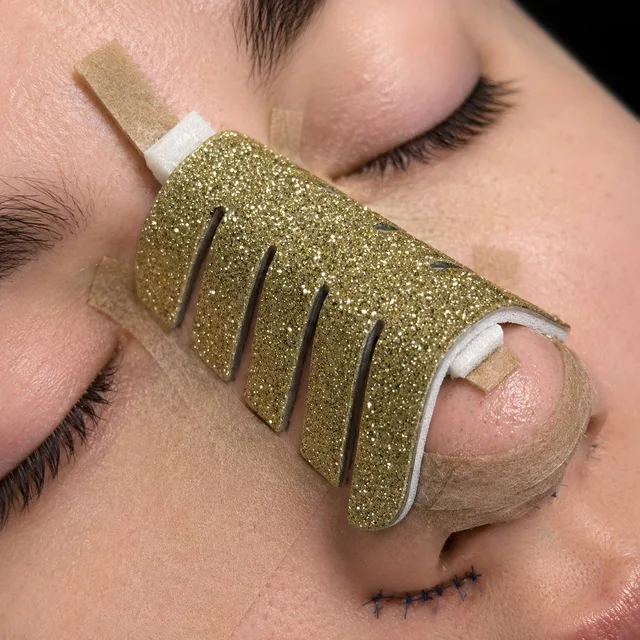
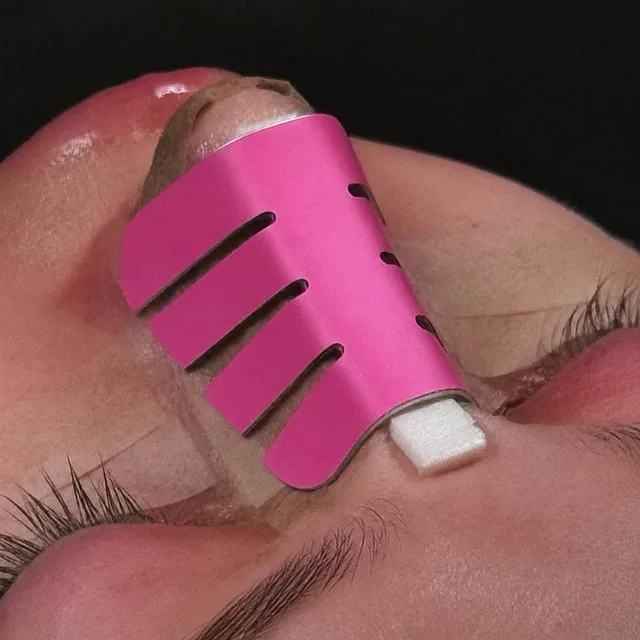
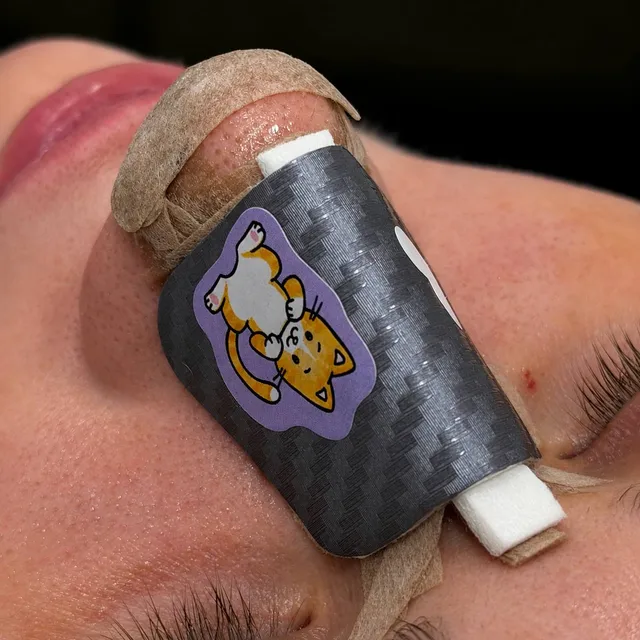
Every detail aims to highlight your natural beauty, and to make the recovery period more enjoyable, we let you pick the colour of your nasal splint.
Your personal style, down to the details:
Choose a splint colour to match your mood
Small things build confidence — much like your future profile
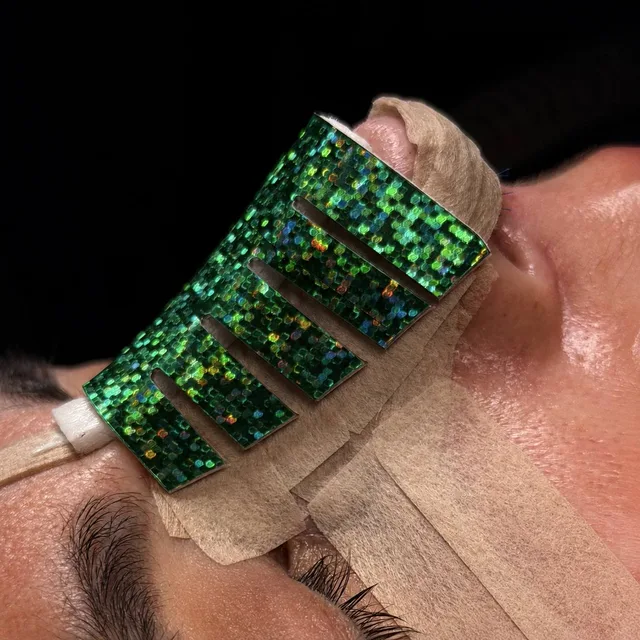
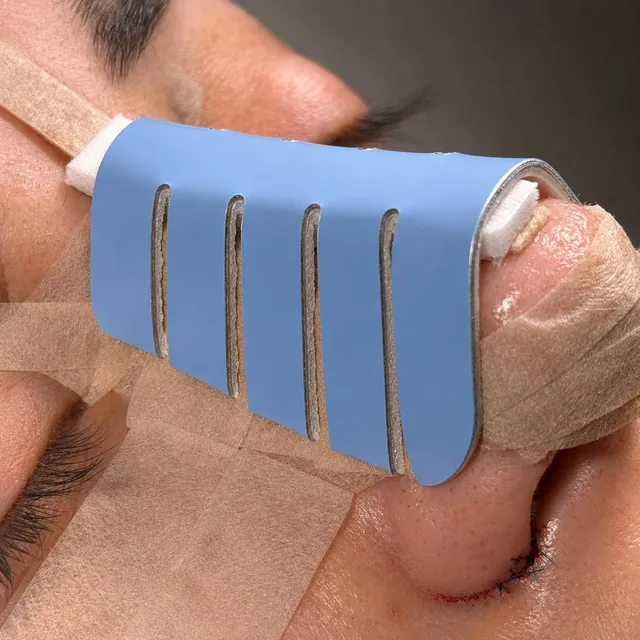
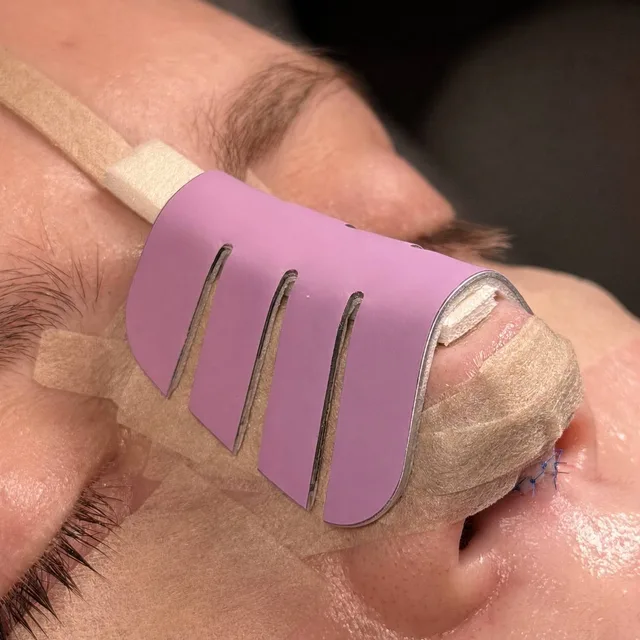
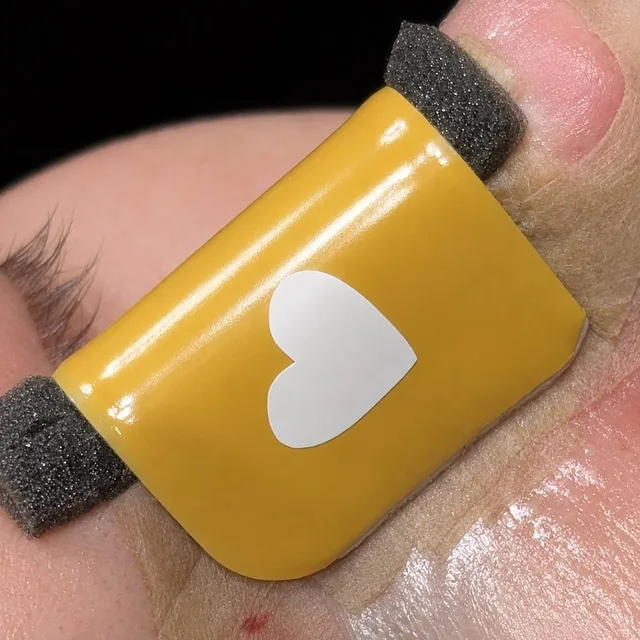
Doctors
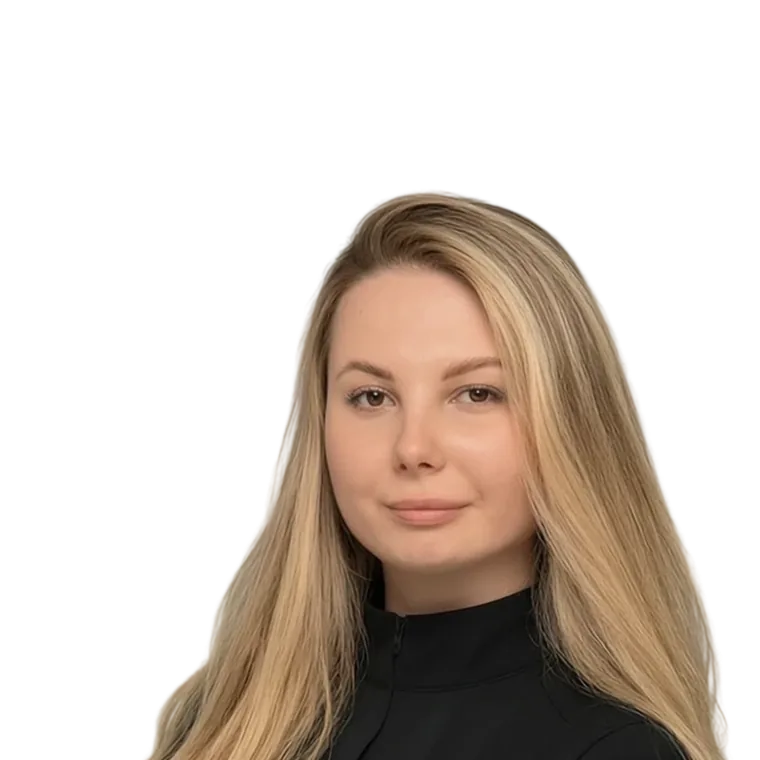
Rhinoplasty surgeon
At the consultation you meet and talk with the surgeon who will perform your surgery
The doctor reviews your facial proportions, hears out your wishes and explains what changes are possible.
Book a consultationCoordinators
We stay with you through every stage

Your personal coordinator
Your initial contact at the clinic, from the first message you send to the consultation itself
Patient support specialist
Answers your questions before the first consultation and helps you choose a convenient date

Your personal coordinator
Present before and during your stay — covering everything from booking to discharge
Patient support specialist
Helps you prepare for surgery and stays in touch during your stay at the clinic

Your personal coordinator
Supporting you through recovery, from discharge to your final check-up
Patient support specialist
Keeps in touch during recovery and books your follow-up visits with the surgeon
For those who value honesty and expertise — a closed channel
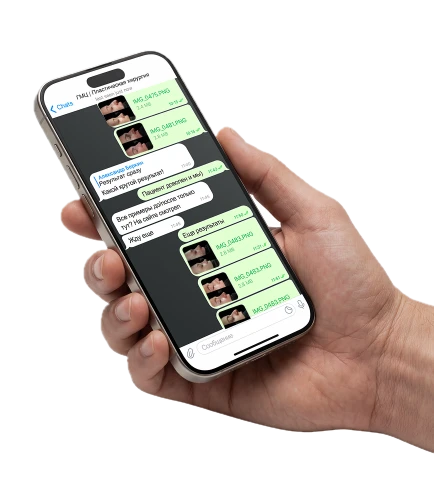
Message us — our coordinator will contact you shortly and book your consultation
By messaging us, you agree to our Privacy Policy
Get a consultationAdvantages
A lifetime guarantee applies under the contract, which sets out the terms of surgery, support and post-operative follow-up in advance.
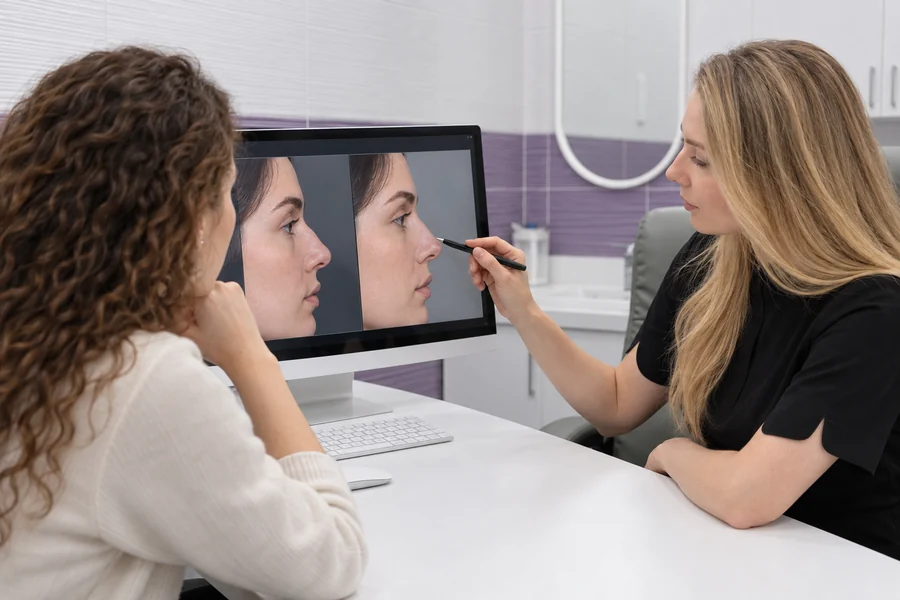
A free consultation lets us review your case and tell you whether rhinoplasty makes sense for you — facts only, no persuasion involved.
For patients travelling from another city or country, we combine the consultation and the required preparation into one trip, so the process is more convenient and needs fewer journeys.
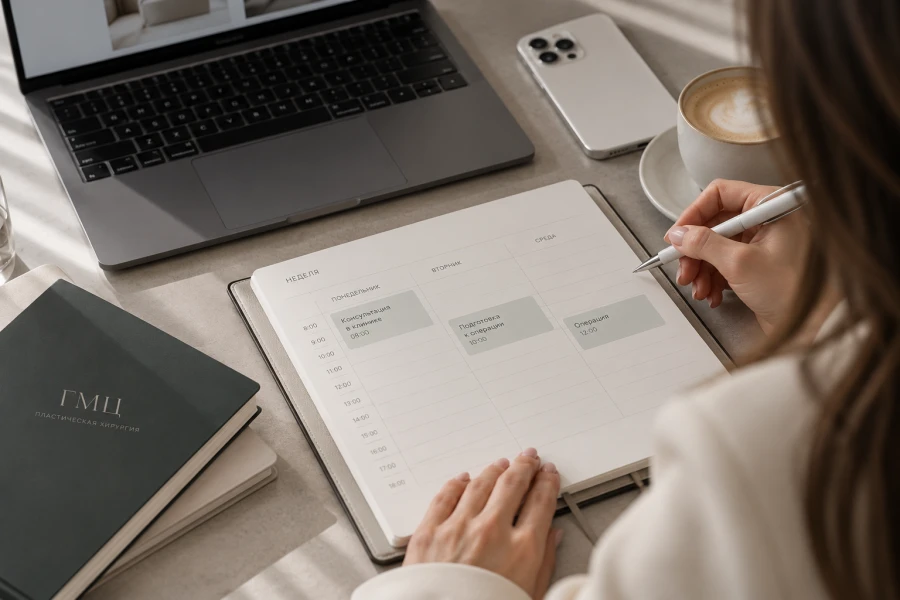
We respect your schedule: working 24/7, with easy booking and a personal approach that fits your pace.
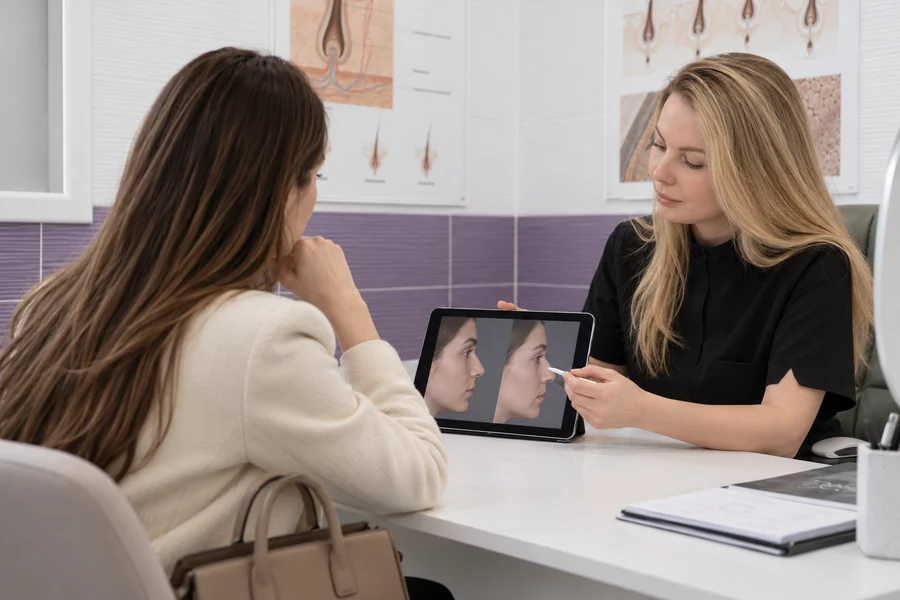
Following the consultation, the surgeon decides on the extent of correction and names a clear surgery price, keeping the path to your result free of surprises.
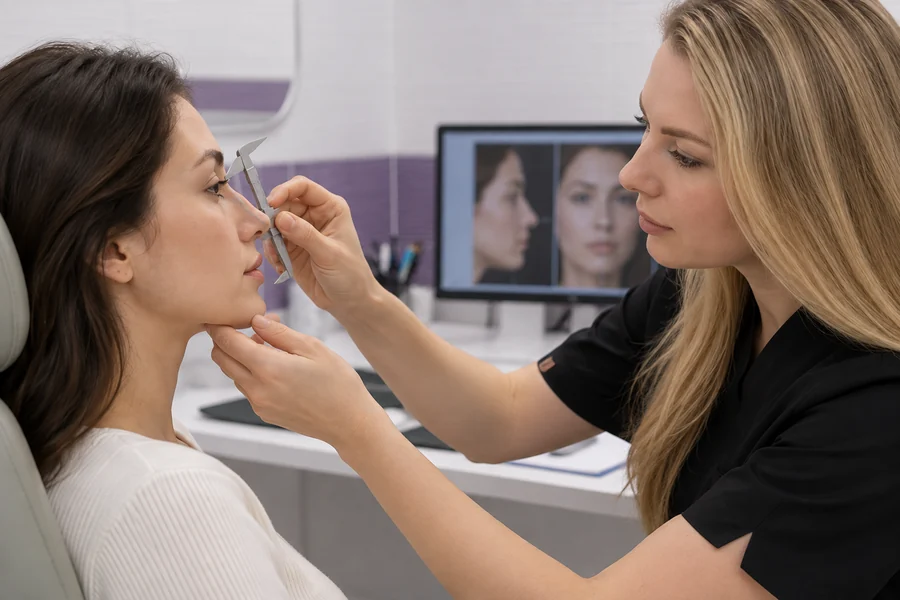
With modern equipment, the surgeon can operate gently and with precision — crucial where millimetres shape proportions, profile and facial harmony.
Prices
Send a request and get a free consultation on any service
Free
BookPrice without discount: $6,000$4,200
Price without discount: $7,200$5,400
Price without discount: $6,600$5,000
Price without discount: $6,500$4,700
Price without discount: $7,200$5,400
FAQ
Rhinoplasty (nose job) — one of the most intricate and popular plastic surgeries, intended to reshape the nose so it matches the individual proportions of the nose and the whole face. Modern rhinoplasty is more than an operation to alter the nose's look — it is complex surgical work aimed at an aesthetic ideal that does not compromise health.
Yes. Nose job is the everyday name for rhinoplasty, plastic surgery of the nose. The surgeon can change its shape and, with rhinoseptoplasty, also correct a deviated septum to make breathing easier.
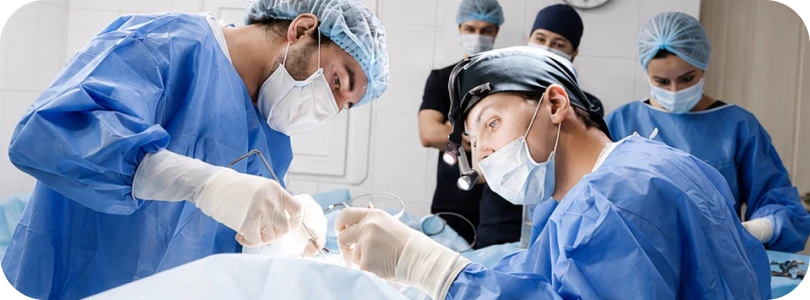
The optimal age range is 18 to 45. The nose is fully formed by then and tissues still heal well. At an older age, surgery is possible with medical indications if your general health allows it
At its core, rhinoplasty is a comprehensive solution. It corrects both congenital and acquired nasal deformities, for example after a nasal injury. Patients are often bothered by a dorsal hump or an overly wide nose. Nose correction can also target the tip (tip rhinoplasty) or the nostrils (alar rhinoplasty). The surgical plan is created individually for each patient, taking every feature of their nose into account.
Rhinoplasty is performed under general anaesthesia and, depending on complexity, takes 1.5 to 3 hours.
The surgeon determines the extent and course of the surgery at the consultation, based on your goals and the anatomy of your nose.
Rhinoplasty — surgery to change the appearance of the nose (an aesthetic goal) and improve its function if breathing is impaired.
Septoplasty — surgery to correct the nasal septum and restore normal breathing, keeping the nose's external contour intact.
Often both surgeries are combined, especially when a patient has a deviated septum and aesthetic concerns. This gives a harmonious look and restores full breathing. At City Medical Centre we perform rhinoseptoplasty — a combined surgery that solves both tasks at once
For a successful operation, preparation should begin 21 days before rhinoplasty. At the first appointment our plastic surgeon will give you a list of the required tests.
| Complete blood count (including ESR, white cell differential, platelets) | 2 weeks |
| Urinalysis | 2 weeks |
| Infection tests: HIV, HBsAg, anti-HCV, antibodies to Treponema pallidum | 2 weeks |
| Blood group and Rh factor | 2 weeks |
| Blood biochemistry (total protein; urea; uric acid; creatinine; glucose; total, unconjugated and conjugated bilirubin; ALT; AST; K; Na; Cl; cholesterol) | 2 weeks |
| Coagulation panel (Quick prothrombin, INR, APTT, D-dimer, antithrombin III) | 2 weeks |
| Electrocardiogram (ECG) tracing with a report | 2 weeks |
| Doppler ultrasound of the leg vessels / duplex scan of the leg veins | 2 weeks |
| Chest X-ray or fluorography with a report | 6 months |
| MSCT of the paranasal sinuses | 6 months |
| After the full laboratory work-up — a physician's report confirming there are no contraindications to surgery | 2 weeks |
Getting ready involves consultations with the plastic surgeon, lab work (CBC, biochemistry, coagulation, infection tests), ECG, chest X-ray, plus a nasal X-ray or CT. A week ahead, give up anticoagulants, alcohol and smoking. The day before — light food; no food 6 hours before surgery
Although nose surgery is one of the most popular and well-established aesthetic operations, like any surgery it carries certain risks. To minimise the likelihood of complications after rhinoplasty, our clinic provides thorough pre-operative preparation and post-operative monitoring.
Important: if after rhinoplasty you have difficulty breathing, severe pain, a high temperature or a change in the shape of your nose, contact your doctor immediately.
Rhinoplasty at City Medical Centre is performed with modern technology, safe materials and constant medical supervision, which keeps the risk of complications to a minimum.
We also provide post-operative monitoring and prescribe recovery therapy.
Recovery after nose surgery is just as important as the operation itself. Proper recovery determines how aesthetic and harmonious the final result will be. At City Medical Centre recovery is closely monitored and divided into three phases: early, intermediate and late
First changes show as swelling subsides (2–3 weeks); however, the final rhinoplasty outcome is assessed in 1–1.5 years, when the tissues stabilise completely
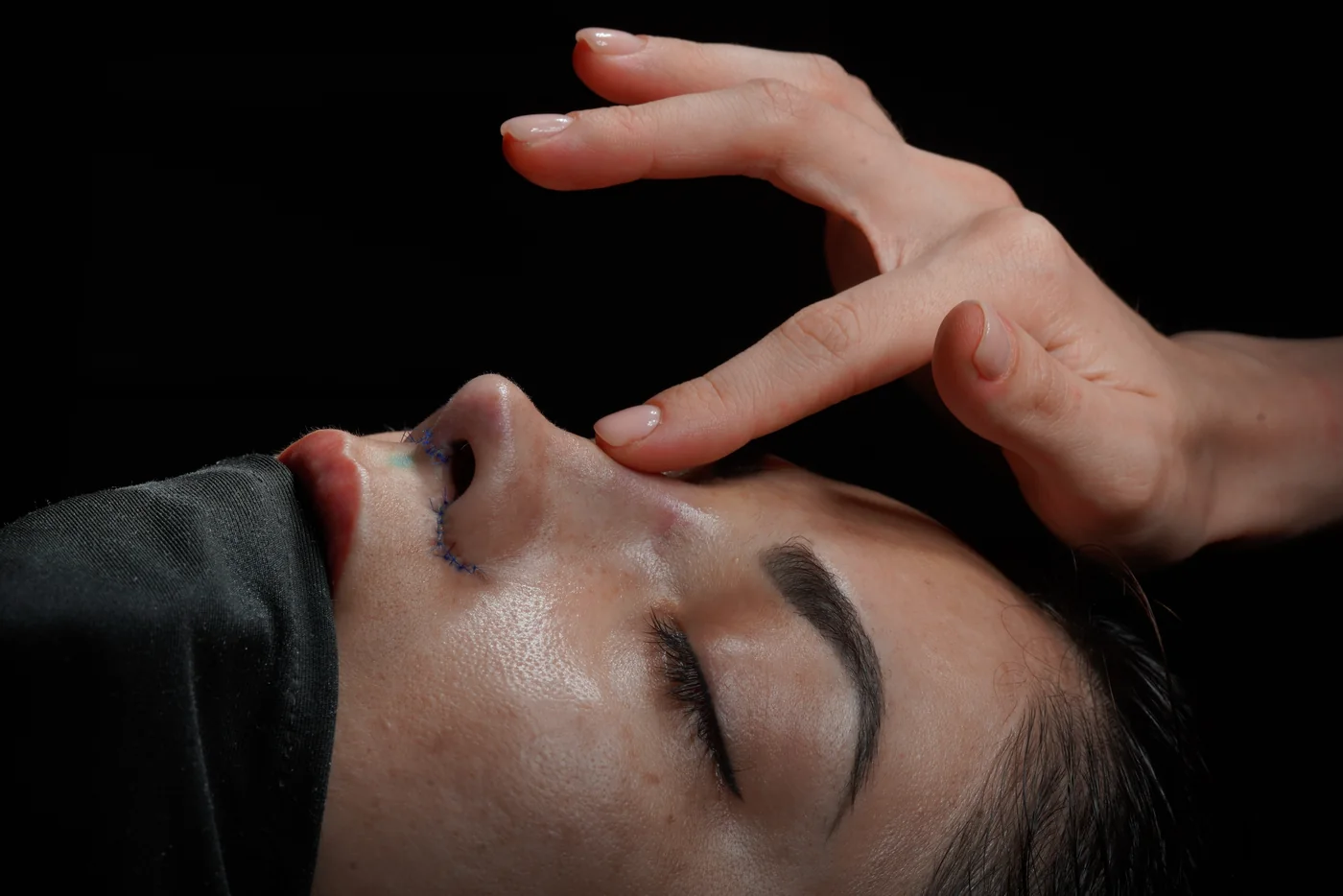
The nose needs to be protected after surgery. An aluminium cast is placed over the nose, with special silicone splints inside the nasal cavity. Nasal function is limited in the first days but recovers quickly. The final result of rhinoplasty can be assessed after 1–1.5 years, once the swelling has fully subsided.
Important: if nasal function is impaired after the first operation or you are not satisfied with the result, revision (secondary) rhinoplasty may be needed. It is a more complex procedure, performed no earlier than one year after the primary operation.
During the first days after surgery, splints or swelling may partly block the nasal passages. Breathing is usually fully restored within 1–2 weeks, depending on the extent of surgery and your body
Our doctors use microsurgical techniques and quality sutures to keep scars minimal
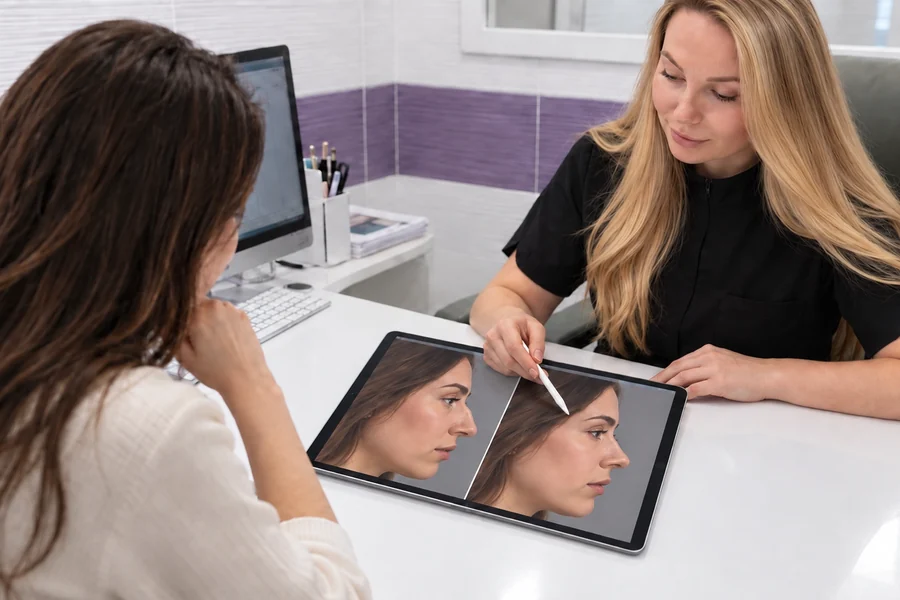
Rhinoplasty improves aesthetics and makes facial features more harmonious, without loss of individuality. With 3D modelling the predicted result is visible in advance, and you agree on changes with your surgeon
Rhinoplasty is a serious step. A well-performed rhinoplasty means the new nose is in perfect harmony with your facial features and works flawlessly. At the consultation the nasal surgeon assesses every parameter in detail: the size of the nose, tip projection, and the condition of the septum and nasal mucosa. We use 3D modelling so you can see the future proportions of your nose before the surgery is performed.
Don't just browse rhinoplasty photos online. Book a consultation to discuss what modern rhinoplasty can and cannot do for you. Correcting external nasal deformities and reshaping the nose is our speciality.
How much it costs depends on the extent of surgery and is decided at the consultation: the doctor names the exact price after studying your nose and facial proportions.
Blog
Articles about rhinoplasty
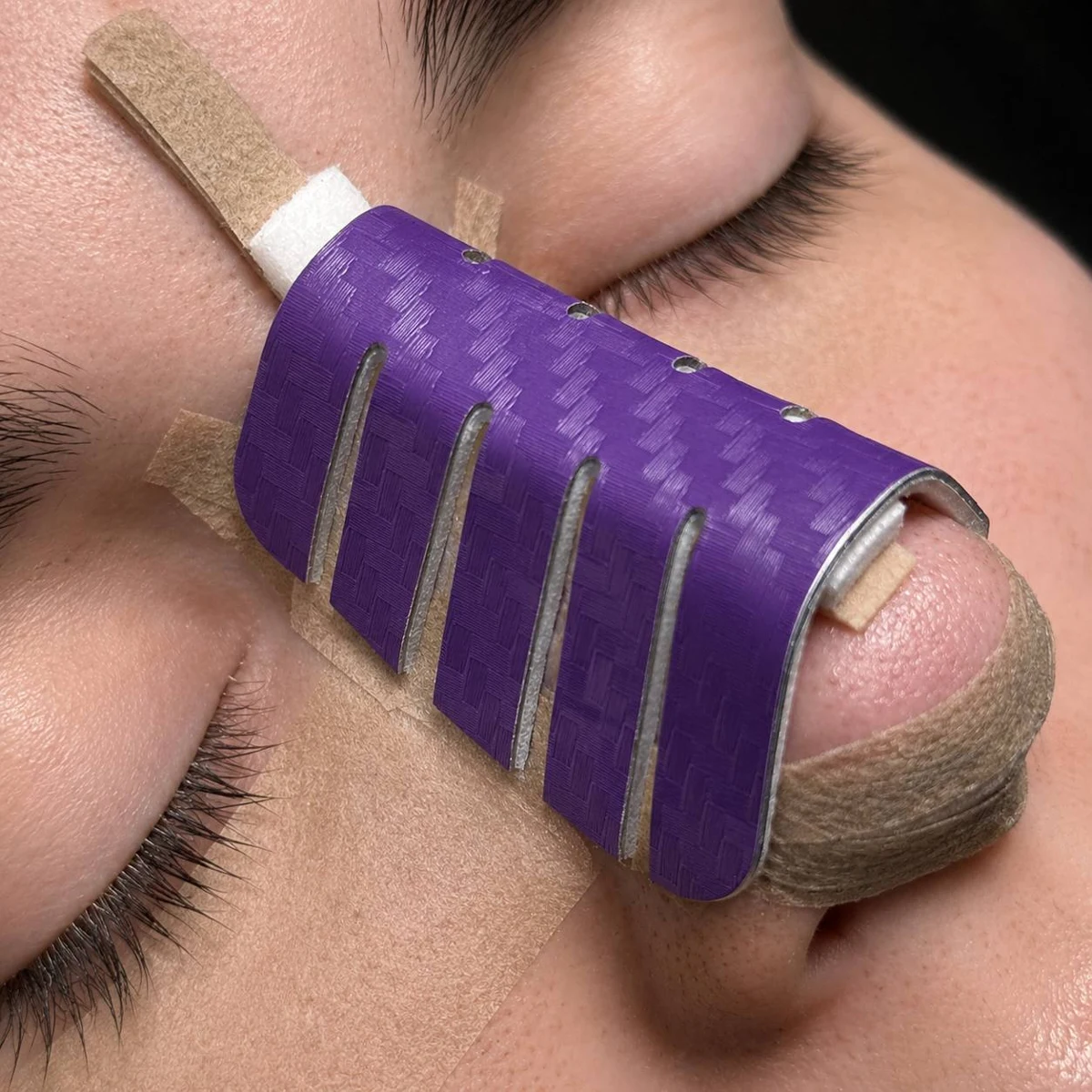
Find out how recovery after rhinoplasty goes in the first 7, 14 and 30 days
Read the article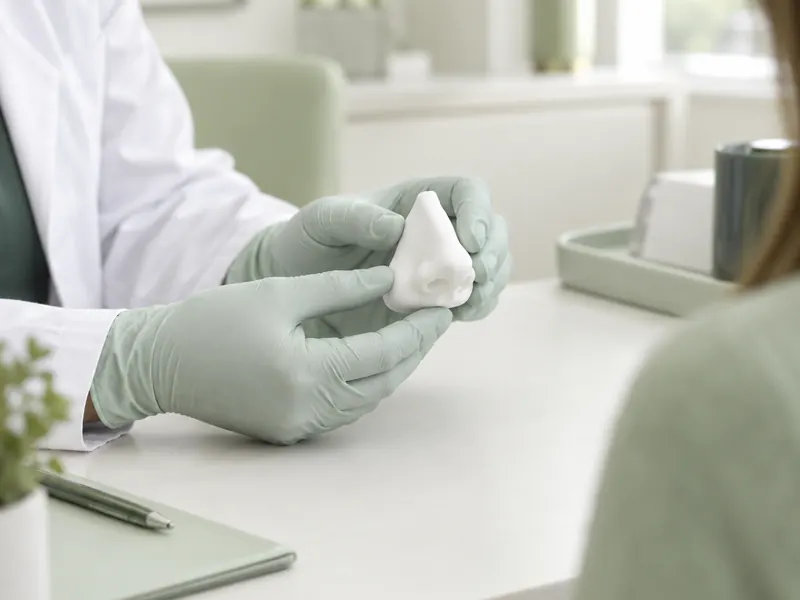
Preparation, recovery week by week, when the splint and stitches come out and how long to wait before flying home.
Read the articlePrices are in US dollars; the amount in brackets is an approximate conversion to EUR at the rate of 02.10.2026. The final price is fixed in your contract.
Prices start from $4,200 (≈ €3,750). The surgeon sets the final price at the free consultation, and it is fixed in the contract, with no hidden extras.
The operation under general anaesthesia, a one-day inpatient stay, follow-up visits and dressings, plus a lifetime guarantee on the result.
Surgery takes 1.5–3 hours and you stay one day in the clinic. The nasal splints come out on day 7, and the cast is worn for up to 14 days.
Yes. The first consultation is free and does not oblige you to anything. You can start online by sending a message to the coordinator.
Message us on WhatsApp or Telegram using the buttons below. A coordinator will answer your questions and book a free consultation where the doctor names the exact price.
By messaging us, you agree to our Privacy Policy
This is one of the most delicate and popular plastic surgeries. It suits adults who want to correct the shape of the nose, whether the issue is congenital or appeared after an injury, and those with impaired nasal breathing. If you are from Zagreb and unhappy with the outcome of an earlier operation, secondary rhinoplasty is also an option after at least a year.
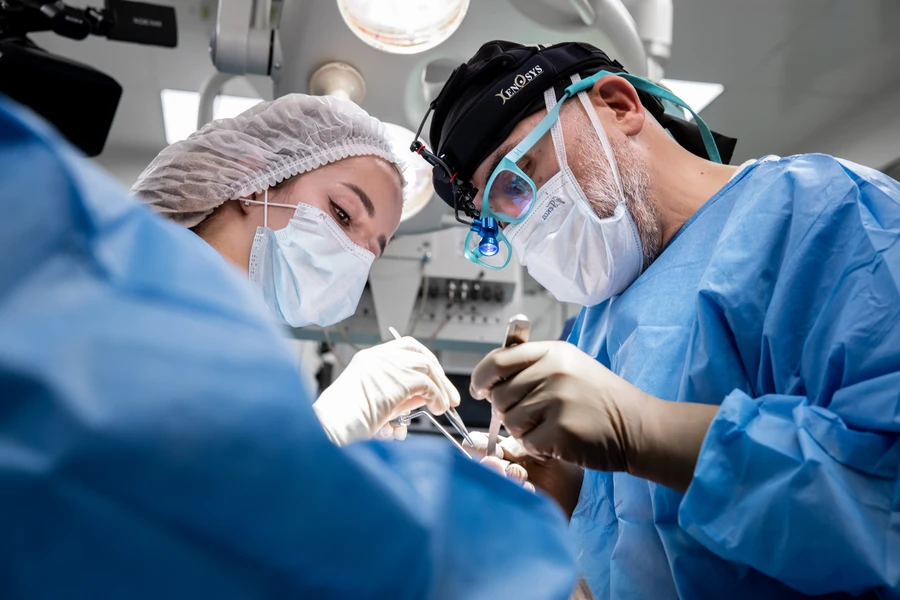
In the operating room, the anaesthetist uses TIVA or classic general anaesthesia depending on complexity. The surgeon opens access by the chosen technique, corrects bone and cartilage with a piezo device, reshapes the nose and closes with atraumatic or self-absorbing sutures. Packing and an external splint stabilise the new shape. For those in Zagreb, the first 24 hours are spent under observation.
One price, $4,200 (≈ €3,750), applies to open and closed techniques, tip work and septorhinoplasty alike. It includes general anaesthesia, a day in the inpatient unit, doctor monitoring and a free check-up afterwards, and the clinic gives a lifetime guarantee on the result. Zagreb residents can start with a free consultation: the doctor examines the nose and names the exact figure.
Public accounts from well-known people about the operation: rhinoplasty.
Written by Marina T. Pershikova, rhinoplasty surgeon
How we prepare and review medical content · Medical disclaimer
Page last updated:
The 2021 census counted 767,131 people in the City of Zagreb, and a further part of the built-up area lies outside the city limits; the urban figure is 663,592 and the metropolitan one, with Zagreb County, is 1,086,528. For anybody who has wondered about rhinoplasty for years, the useful fact is that the first step is small. A free online consultation begins when you send photographs of your nose to a coordinator in WhatsApp or Telegram.
Take four pictures in daylight without filters: straight on, left profile, right profile, and slightly from below. Add two sentences, one about the outline you dislike and one about how you breathe. A surgeon looks at these images, says whether rhinoplasty can solve the complaint, and if it can, prepares a 3D model of the probable result for the consultation. If the problem can be handled without surgery, the clinic says so, and no one expects you to pay for an operation you did not need.
Keep the whole exchange in one chat thread. A single history of photographs, questions and answers helps if a second coordinator joins, and it gives you a record to return to when the surgeon proposes a plan that looks different from what you first imagined.
Do not worry about finding the perfect wording. Coordinators reply round the clock, and a first answer is promised within 15 minutes. What the surgeon cannot guess from a message is your medical background, so mention previous nose injuries, earlier operations, long-term illnesses and regular medicines in the first conversation, not in the tenth.
The professional body for doctors in Croatia is the Croatian Medical Chamber, Hrvatska liječnička komora, at hlk.hr. Its website carries the Imenik liječnika, a directory of physicians with procedures for entering and removing names, and a licensing section for issuing, renewing, replacing and certifying a licence. For a patient, the practical outcome is simple: you can take the name of the surgeon proposed to you and compare it with the chamber's directory.
Ask the coordinator for the surgeon's full name and specialisation in writing, then check it against the Imenik liječnika at hlk.hr yourself, or ask the chamber how the directory can be consulted. Make a note of what you found and when. The surgeon who sees you at the consultation is the one who will operate, so one name is enough to check. If the entry is unclear, ask the clinic to explain, and request copies of the diplomas and of the licence; a quick, specific answer says something good about how the clinic treats questions.
Keep your own copy of anything you are shown. A photographed licence or a PDF of the contract draft is easy to store, and it allows a relative or a family doctor to read the same document without you having to retell it.
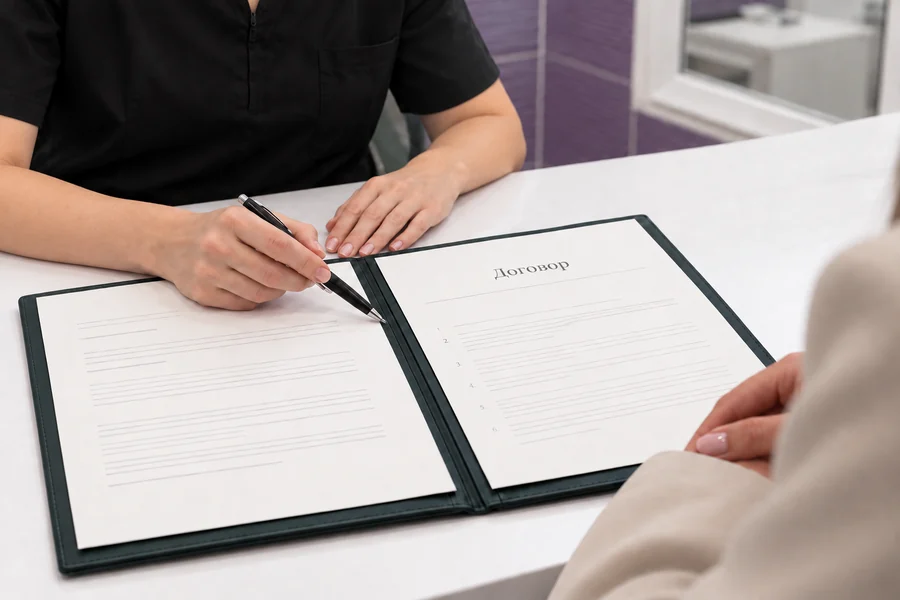
Check the legal paperwork in the same sitting. Ask for the draft contract for medical services and read it with the licence copy beside it. The contract should name the operation, the anaesthesia, what the fee covers, the follow-up appointments and the way you reach the coordinator after discharge. Anything you do not understand is a question for the coordinator before the deposit, not after it.
A Croatian guide to healthcare states plainly that the cost of some elective services, plastic surgery among them, is not covered by mandatory health insurance. The official government overview of compulsory insurance lists primary care, specialist and hospital care, and the medicines and aids on the lists of HZZO, the national insurer, and it does not mention aesthetic procedures at all.
Put those two statements together and the honest planning assumption is that a nose operation done for appearance is paid by the patient. If your complaint is breathing, the situation can look different, but only the insurer can say so. Phone HZZO or ask your family doctor which documents it would need, and keep the answer in writing. Ask the surgeon to explain which part of the proposed operation addresses the airway, since the clinic itself distinguishes rhinoplasty, which changes the shape and can improve function, from septoplasty, which only corrects the septum.
A practical exercise helps here. Write three headings on a sheet: what I want to change, what I have trouble with, and what my doctor has told me. Under each, put only facts. At the consultation the sheet shows the surgeon quickly where aesthetics ends and function begins, and you can take it away to the insurer or the family doctor afterwards.
Where the problem has two parts, a crooked septum and a nose shape you want to change, the clinic offers rhinoseptoplasty and treats both in a single operation. Bring that wording to the insurer's desk, because a request that names a functional complaint and a medical plan is easier to evaluate than one that only says nose operation.
A nose can be described in two ways: by the diagnosis of an ear, nose and throat specialist and by the wish you see in the mirror. They need not match, and a good consultation puts them on the table together. A deviated septum is a functional finding. A hump, a bulbous tip, a wide bridge or asymmetric nostrils are matters of shape. The clinic lists all of these among the reasons rhinoplasty may help, together with a saddle nose, marked breathing problems and injuries.
Some situations rule rhinoplasty out or put it on hold. The clinic lists infections, mental health disorders, cancer, being under 18, decompensated chronic disease, clotting trouble, damaged skin at the planned site of surgery and inflamed ears, throat, nose or eyes. Not sure which side of the line you stand on? Photographs sent to the coordinator are the quickest test, and the doctor answers without charge or obligation.
Think about the questions that tend to be skipped. How would a problem be recognised out of hours? Who decides if the cast should come off earlier or later? What does the contract say about a correction that turns out to be needed? These cost nothing to ask and show how the clinic thinks about the unglamorous parts of surgery.
When you have a written opinion from another doctor, share it. A surgeon who sees both the earlier assessment and your photographs can say where the two agree and where they differ, and can explain whether the difference is about technique, timing or expectation. Write the differences down in two columns and keep that page for the consultation.
This part is written for the relative or friend who helps with the recovery. After a night of observation following general anaesthesia, the patient breathes through the mouth for three days with soft splints in the nostrils, and may be swollen, stuffy or bruised. Splints are taken out on day 7. The metal cast can stay for up to 14 days, with stitches removed at the same time.
For the first month the household keeps to a short list. No heavy work, no steam rooms, saunas, pools, hot baths or sun, no cigarettes or alcohol, and no glasses pressing on the bridge. The patient sleeps on the back with the head up. A helper can humidify the room, cook with little salt and spice, and keep track of check-ups at 7 days, 3 months and 6 months.
Some signs mean a call to the doctor without delay: strong pain, high temperature, breathing that is getting harder, or an outline that changes shape. Normal breathing returns within 1–2 weeks for most, swelling eases over 2–3 weeks, and the settled shape is judged at 1–1.5 years. Conversations with the surgeon cost nothing for a year, so there is no reason to hold back a question.
Prepare the paperwork as well. The clinic asks for class 2 compression stockings to be bought in advance and brought to the hospital stay, for every test result to sit on its own stamped and signed form, and for a physician's report that nothing stands in the way of surgery. A helper who keeps these papers in one folder removes a good deal of pressure from the patient.
Agree on roles before the date. One person keeps the test folder, one person handles messages with the coordinator, and one person keeps the check-up dates at 7 days, 3 months and 6 months. Writing the roles down turns a vague promise to help into a schedule that a tired person can follow.
Yes. Photos of your nose go to a coordinator in WhatsApp or Telegram, and the free first consultation takes place on screen, with a 3D model of the expected result.
The Croatian Medical Chamber at hlk.hr publishes the Imenik liječnika and has a licensing section. Take the full name from the clinic and check it against the directory yourself.
A Croatian healthcare guide states that some elective services such as plastic surgery are outside mandatory insurance, and the official overview of compulsory insurance does not list aesthetic procedures. Ask HZZO about any functional complaint.
The first reshapes the nose and can improve breathing; the second straightens the septum and leaves the outer contour as it is. The clinic combines them as rhinoseptoplasty when both are needed.
Mention it at the first contact. Correcting an earlier result is a separate category, and it is planned no sooner than a year after the previous operation.
Preparation starts three weeks ahead with a list from the surgeon. Each result sits on its own form with a stamp and a signature, and a physician then confirms that there is no obstacle to the operation.
On day 7. The cast stays for up to 14 days and is removed with the stitches on day 14.
Yes, if you wish. Mention it to the coordinator when you book, because two people listening catch more of what the surgeon says about technique, anaesthesia and the schedule.