


























 beforeafter
Liposuction
Abdomen and sides
from $1,200
The price is fixed in the contract before surgery
Message our coordinator
Free online consultation · Reply within 15 minutes
Message us on TelegramMessage us on WhatsAppBy messaging us, you agree to our Privacy Policy
Results
All cases are real patients. Faces and identifying details are hidden.
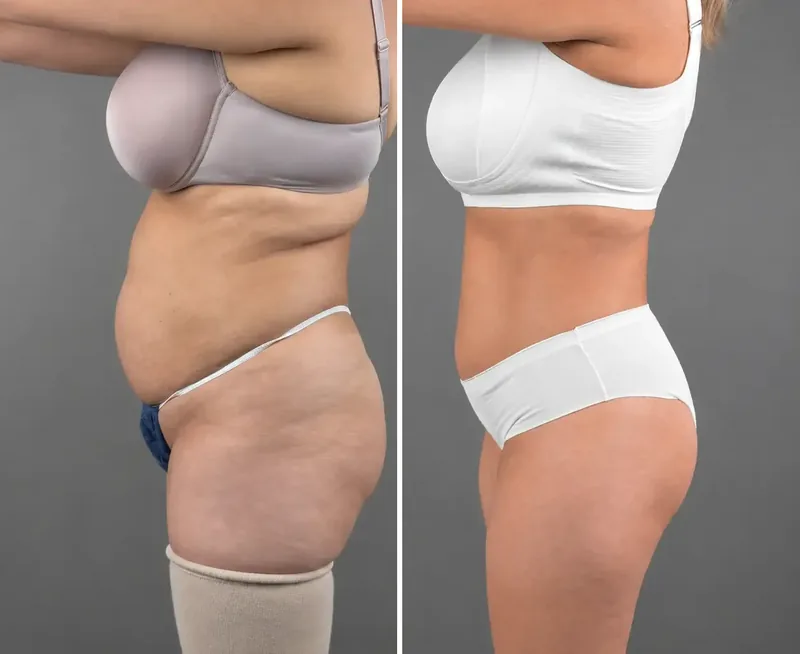
beforeafterAbdomen and sides
 beforeafter
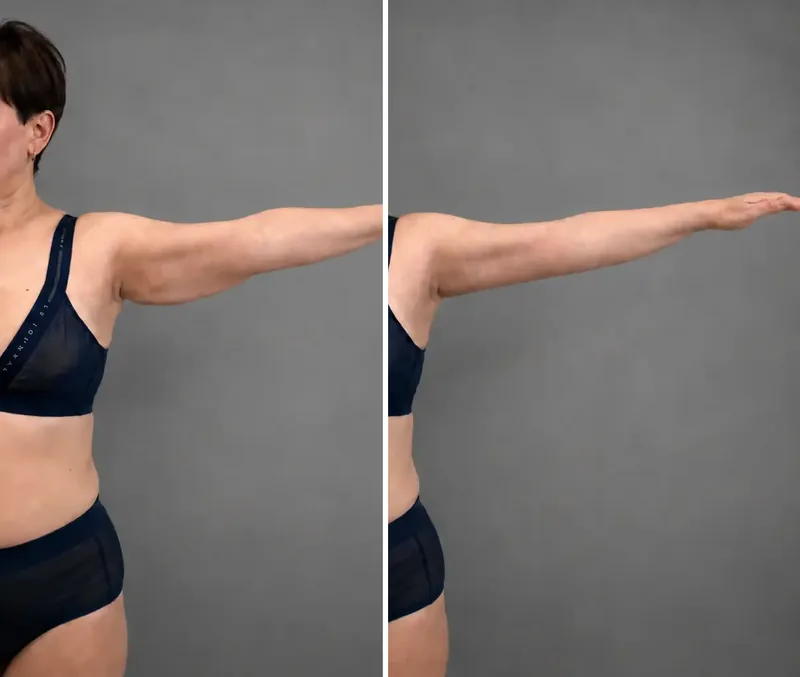
Arms
 beforeafter
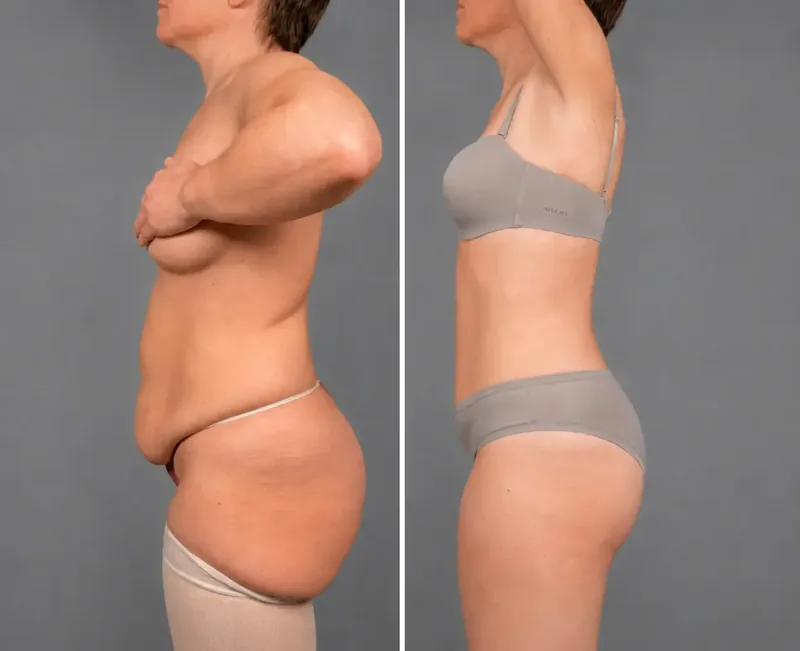
Abdomen and sides
 beforeafter
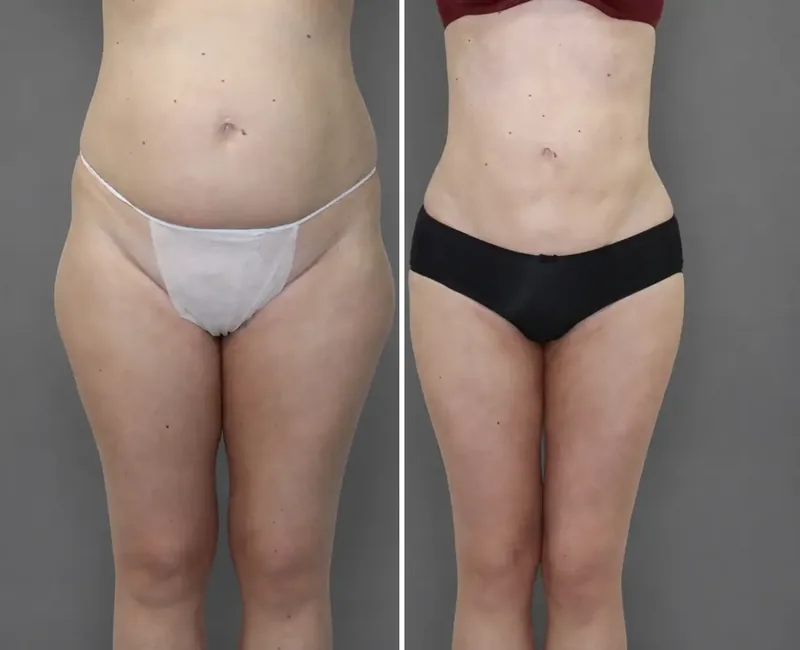
Abdomen and thighs
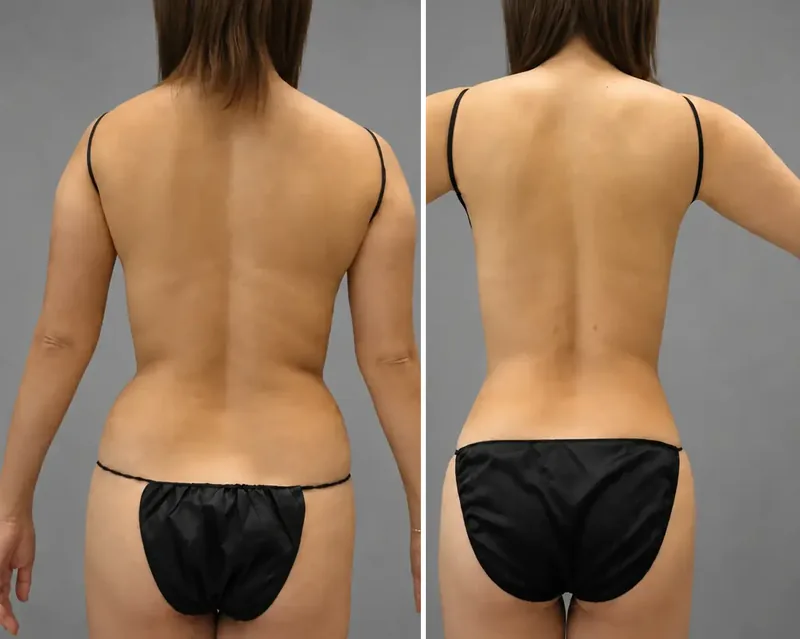 beforeafter
Back and flanks
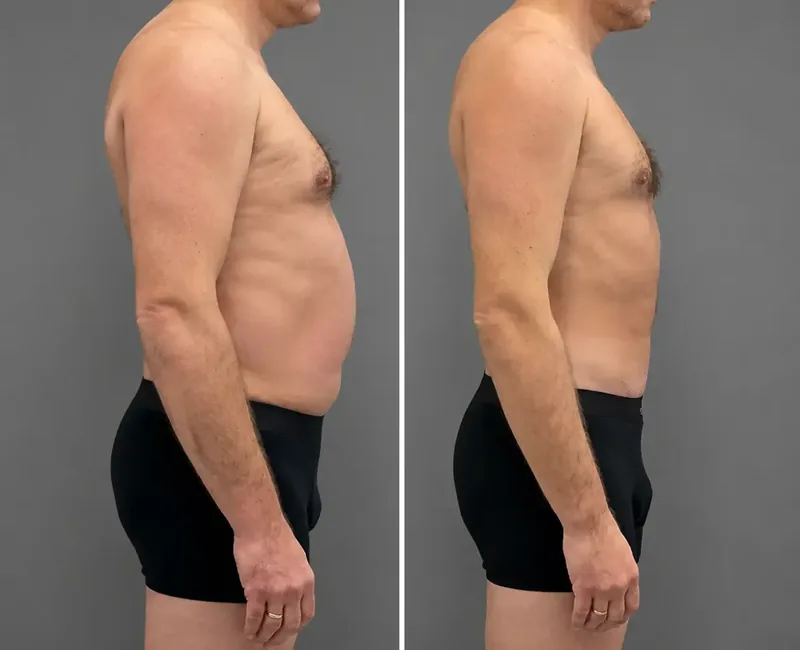 beforeafter
Male abdomen
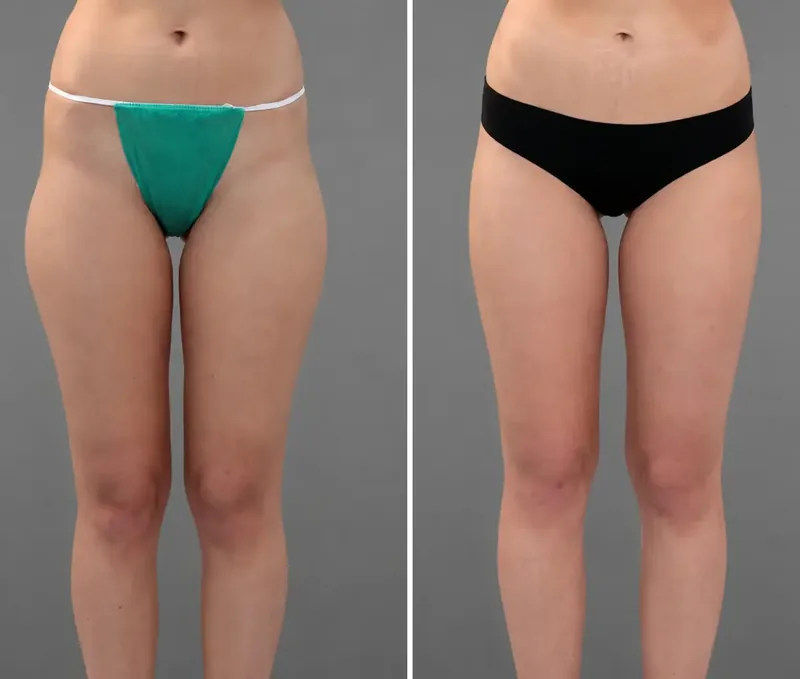 beforeafter
Inner thighs
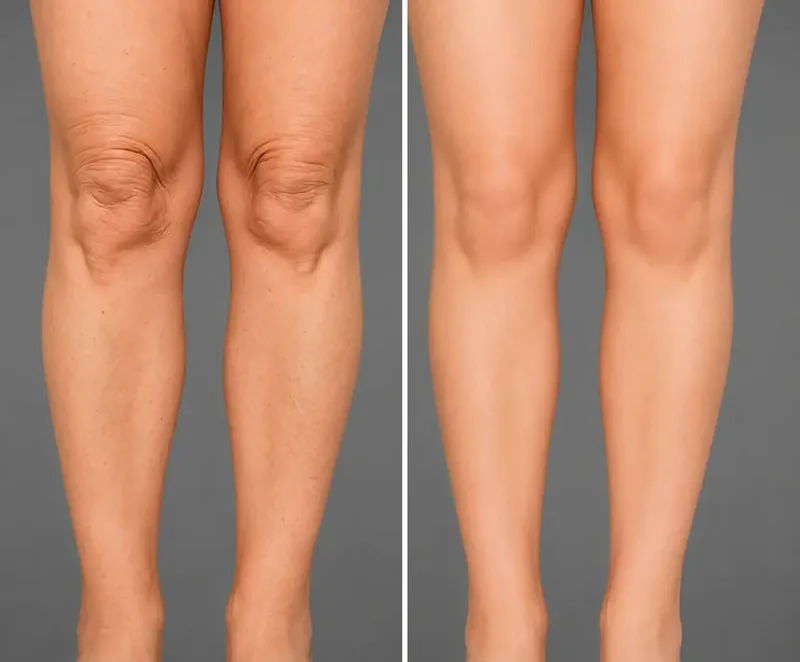 beforeafter
Knees
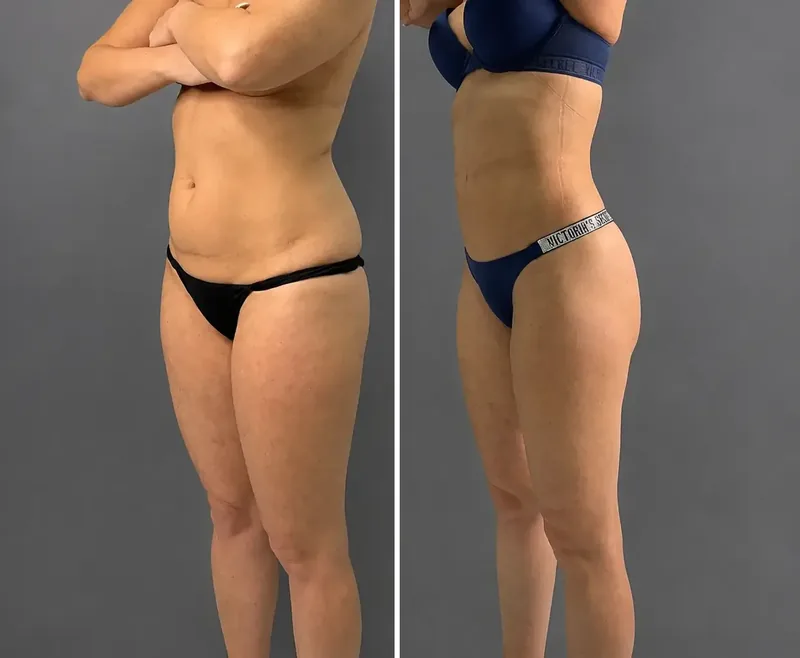 beforeafter
Abdomen and sides
Comparison
We use two liposuction techniques: tumescent (classic) and VASER (ultrasound). Compare the goal, the indications and the anaesthesia to choose the right technique together with your surgeon.
A special solution loosens fat for removal through a thin cannula
from $1,200
Ultrasound breaks down fat cells before vacuum removal
Price at consultation
The benefits and recovery times shown are averaged for each technique and given for guidance: the scope of correction and rehabilitation depend on your anatomy and individual features, and the surgeon confirms them at the consultation.
At the consultation the surgeon draws up a plan for your case and explains how your liposuction will go.
Free, before surgery and with no obligation.
You can treat several areas in one operation and save on both recovery time and cost
The most requested area for women and men, often combined with abdominoplasty
Fat “traps” that resist exercise
Back rolls that spoil the silhouette
A concern that becomes visible in warm weather
Small area, fast visible result
A delicate area that needs precise work
Gynecomastia, pseudogynecomastia — the fat component
About the clinic
Modern equipment, comfortable rooms and care for every patient

We will answer your questions and find a convenient time for a consultation
If your case can be solved without surgery, the doctor will tell you so at the consultation — and you will not spend money for nothing.


Not sure the surgery is right for you?
Leave your number — the coordinator will call you back, and the surgeon will tell you whether liposuction suits you. No surgery booking needed.
Find out if it suits me
Prices
The final price is calculated individually after an examination and fixed in the contract.
The most requested area — treated in one operation

Contouring of the front abdominal wall

The surgeon assesses the fat deposits and skin tone, listens to your wishes and chooses the right technique.

Message our coordinator
Free online consultation · Reply within 15 minutes
Message us on TelegramMessage us on WhatsAppBy messaging us, you agree to our Privacy Policy

all inclusive
From preparation for surgery
to post-op check-ups.
from $1,200
Book a consultationHow it works
An agreed treatment plan, careful monitoring after surgery and post-op check-ups.
 1
1The surgeon listens to your wishes, assesses the fat deposits and skin tone and rules out contraindications. A hormonal screening is also ordered — it helps predict the long-term result.
 2
2We reserve a surgery date for you: the deposit can be paid by card at the clinic or online by bank transfer. The terms are fixed in the contract for medical services
 3
3Blood tests (complete count, coagulation panel, biochemistry, infections), an ECG, a chest X-ray and, if needed, a GP consultation. All tests can be done at the clinic with no waiting.
 4
4Marking the areas and fitting compression garments. Under local or general anaesthesia the surgeon removes fat through 3–5 mm micro-punctures — from 1 hour for small areas to 3–4 hours for a combined procedure.
 5
5With local anaesthesia you go home 3–4 hours after surgery; with general anaesthesia you stay one day in a comfortable ward under medical supervision.
 6
6Compression garments for 30–45 days. First changes show at 2 weeks, once swelling subsides; the final result forms in 3–6 months. Check-ups at 7 days, 3 and 6 months.

After tumescent liposuction, recovery is much shorter than after a conventional procedure. Most patients return to work within 7–10 days. In the first week, mild swelling and a raised temperature are possible — a normal response to surgery. Compression garments are worn for 30–45 days: they fix the new contours and speed up tissue recovery. In the first month, bathhouse, sauna, pool and intense sport are off-limits. For the best result and faster recovery we recommend lymphatic drainage massage, pressotherapy and a gradual return to activity. First visible changes show 2 weeks after surgery, when the main swelling subsides; the final result forms in 3–6 months.
After 7 days, at 3 months and at 6 months. Until the end of the year, get a post-surgery consultation with your surgeon to review results and get more information, at the clinic's expense.
Advantages

At the consultation we discuss your wishes and assess the fat deposits and skin tone. Before surgery an endocrinologist rules out hormonal causes of the fat deposits — this improves the long-term result.

The surgeon follows your recovery and the new body contour at check-ups after 7 days, 3 and 6 months. Check-ups, dressings and aftercare advice are already included in the price of surgery.

Tumescent and VASER techniques, micro-incisions of 3–5 mm and precise volume control. Our aim is a smooth contour that keeps the natural proportions of your body.

We respect your time: we work 24/7, with easy booking and a personal approach — we adapt to your pace.
After the consultation the surgeon defines the areas and the scope of surgery, and you get a clear price fixed in the contract — no hidden extras.

With general anaesthesia recovery starts in a comfortable hospital ward under round-the-clock nursing care. The stay and meals are already included in the price.
FAQ
Yes, it's routine. Only rarely is one area treated on its own — more often several problem zones are combined, e.g. abdomen and flanks, or inner and outer thighs. At the consultation our surgeons will help set the optimal scope of surgery based on your health and the result you are after.
No, liposuction does not serve for weight loss. It removes local fat deposits that resist diet and exercise and reshapes the body. If your weight fluctuates, first see a nutritionist or endocrinologist.
The surgery is done through punctures only 3–5 mm across — they usually need no stitches. Once healed, the marks are barely visible. With proper care during recovery they fade completely.
Skin tone, elasticity and turgor are always evaluated by the surgeon before surgery. Skin in good shape tightens itself, following the new contours. Where tone is reduced or stretch marks exist, our specialists recommend preparatory treatments to get the skin ready in advance.
No — the procedure is performed under anesthesia, either local or general depending on the scope. Afterwards mild discomfort is possible and is relieved by doctor-prescribed painkillers.
No exertion or heavy lifting during the first 7 days. Compression garments for 4–6 weeks, with the bathhouse, sauna, pool and active sport off the table. For at least a month, alcohol and tanning beds are off-limits. Individual recommendations are given by your surgeon after surgery.
We carry out the surgery for patients 18+ with no contraindications. An upper age limit does not exist — each case is decided individually after an examination and health assessment.
Not directly. The skin structure that causes cellulite is not changed by liposuction, which removes fat tissue. Yet the improved contours visibly reduce its appearance.
Most people resume their routine and work in 7–10 days. Bruising and swelling go by weeks 4–5. The final result forms in 3–6 months, when the tissues have adapted fully.
A strict diet is not required; still, nutrition matters if you want to keep the result. Removed fat cells never return, but remaining ones can expand when you gain weight. A balanced diet and regular physical activity are our recommendation for lasting results.
Yes. 7–10 days before the liposuction, stop smoking and alcohol, as well as medications affecting blood clotting (aspirin, etc.). Pre-operative tests are needed: blood tests, ECG, ultrasound, plus GP and anesthesiologist consultations. After your first consultation you'll get all the instructions.
When the main swelling subsides, 2 weeks after surgery, the first changes become visible. The interim result is assessed at 1.5–2 months and the final contours form in 3–6 months.
Prices are in US dollars; the amount in brackets is an approximate conversion to IQD at the rate of 02.10.2026. The final price is fixed in your contract.
Prices start from $1,200 (≈ IQD 1,600,000) per area. The surgeon sets the final price at the free consultation, and it is fixed in the contract, with no hidden extras.
The operation under local or general anaesthesia and the surgeon's support throughout recovery. The price is per area and fixed in the contract.
Message us on WhatsApp or Telegram using the buttons below. A coordinator will answer your questions and book a free consultation where the doctor names the exact price.
By messaging us, you agree to our Privacy Policy
The aim is not a smaller number on the scales but a better shape. Liposuction targets saddlebags, back rolls, a belly that will not flatten and fat on the arms, chin or knees. For patients from Kut, the result depends on one key fact: removed fat cells do not return, while the remaining ones can still grow with weight gain, so a balanced diet keeps the contour for the long term.
Follow-up does not end at discharge. The surgeon stays in touch throughout recovery, and planned check-ups take place at 7 days and at 3 months. Until the end of the year, a post-op follow-up consultation with the surgeon is at the clinic's expense, to review the result and answer questions. Patients from Kut also get advice on returning gradually to activity.
One operation can cover several problem zones, and the price reflects that: from $1,200 (≈ IQD 1,600,000) for a single area, calculated individually for combinations. The contract fixes the sum with no hidden extras, and instalments carry no interest. For patients from Kut, a free surgeon consultation is the place to plan scope and cost together. Leave a request to book yours.
Well-known people who spoke openly about this operation, in their own words.
 Amy Schumer's liposuction: “thanks for helping me get my strength back”Amy Schumer revealed her liposuction on Instagram in 2022 and explained why. Her words, how liposuction works today and what recovery looks like.
 Brooks Nader and her liposuction regret: what she actually saidModel Brooks Nader told People she regrets a past liposuction, saying it left dimples and ripples. What she said, how liposuction works, and recovery.
 Stacey Silva's liposuction: what was reported, and what wasn'tStacey Silva and her twin Darcey had liposuction on a 2021 trip to Turkey, reported by Showbiz Cheat Sheet. What was said, how the procedure works and recovery.
 Did Tara Reid have liposuction? Yes — and she told the whole storyThe American Pie star had liposuction and breast surgery in 2004; both went wrong. Her honest quotes on the damage and the repair.
 Did Wendy Williams have liposuction? Yes — and she paid a price for saying soThe talk-show host had full-body liposuction and breast implants in 1994 and says she was 'vilified' for admitting it. Her quotes and what lipo involves.
 Did Josie Gibson have liposuction? Yes, and she explained whyJosie Gibson had liposuction and skin removal on her arms in 2026 because of lipoedema. Her own words, how liposuction works and what recovery involves.
Kut is known for its carpet trade and its cereal farming, and it sits on the left bank of the Tigris inside a wide U-shaped bend that almost cradles it, only 23 metres above sea level. Anyone who understands how a carpet is woven knows that a good pattern comes from counting knots before any decoration, and that an early mistake shows only when three quarters of the work is done. People in Kut approach liposuction in the same spirit: first the counting, the measuring and the notes, then the plan, and the date comes last of all. Across the river from Kut lay Wasit, the older city founded by al-Hajjaj around the year 702, and a town facing a memory that deep learns not to hurry what is meant to last. The Kut Barrage, built in the 1930s, still governs the flow of water with gates raised by measure and lowered by measure, and your own surgical decision deserves the same rhythm. Kut also has its own market habits: the carpet seller shows a pattern in daylight, never under a shop bulb, because artificial light flatters the dye. Take the hint for your photographs and use plain daylight beside a window, so that what the surgeon sees is the real colour and contour.
The first thing to count is your own body. Take a tape measure around the narrowest part of the waist, around the widest part of the hips and around the fullest part of one thigh, and write the numbers on a small sheet with the date. Then photograph yourself in plain fitted clothing in a room with soft window light, from the front, both sides and the back, the stomach relaxed and no staged pose. Avoid app filters and bright ceiling lamps, because they colour the shadows and change what the surgeon sees. He does not need a pretty picture, only one that resembles you. No equipment is needed. Agree with a close relative on a quiet moment at home, ask them to photograph you from roughly three metres away, and have the phone held at waist height, not face height. A raised angle shortens the trunk and exaggerates the belly, while a level one gives the surgeon a picture close to the truth.
Knowing precisely what the operation does is helpful. It removes fat cells from specific areas that resist diet and movement, so the outline of the body becomes clearer, but it does not reduce total weight and does not treat skin that has slackened after repeated pregnancy or a large loss of weight. In such cases the surgeon proposes a complementary procedure frankly instead of promising what suction alone cannot give. A steady weight before the assessment helps, since the estimate rests on the body you will live in and not on one that changes weekly. It is useful to write beside each area what you expect: do you want a light reduction or an obvious change? Does the shape bother you in tight clothes or only in the undressed photograph? These small differences alter the surgeon's plan and protect you from a result that is medically correct but unlike what you imagined.
In your first message write a short note on your health: the medicines you take, especially blood thinners, whether you smoke, earlier operations on the abdomen or flanks, and chronic illness such as diabetes. Coordinators reply on Telegram and Telegram all day and all night, and the answer returns in writing after the surgeon has read the file, so you can consider it at leisure. Nobody asks at this point for an appointment, a payment or a decision, and the conversation stays in your phone, unseen by relatives or neighbours unless you choose otherwise. If you are slow to answer a question from the team, that is never taken as refusal, since the matter stays open to you. Come back when you feel at ease, and reread the old file to recall what you said; repetition and unhurried thought bother nobody who works this way, because they are the core of the method.
The length of the operation is set by the amount of work. A small, clearly bounded spot can be finished in an hour, while a broad plan joining the abdomen, the flanks and the thighs needs three to four hours. That difference reorders the day: when you arrive, who waits for you, whether you go home in the evening or stay a night. So put the question practically: which spot in my plan uses the most time? The reply tells you how much preparation to make, better than any general number passed around by word of mouth. A short session differs from a long one in something that few people notice: how much monitoring is needed afterwards. With extended sessions the first rest in hospital and the checks after anaesthesia grow more important, and this belongs to the safety plan rather than being delay without reason. There is one more thing worth asking about timing: how much of the day is spent waiting and preparing, and how much is the operation itself. Hospitals have routines, and knowing them beforehand lets your companion bring a book, a charger and a snack instead of simply waiting anxiously in a corridor.
The kind of anaesthesia is tied to the same scope. Local anaesthesia is enough when the area is small and the plan simple, and general anaesthesia is used when areas widen or multiply. The surgeon and the anaesthetist confer after reviewing your photographs and health history, and write down their decision with time left for questions. Ask for the last hour at which you may eat and drink before the session, the medicines you will hold for some days, and the name of the person who will follow your pulse and breathing minute by minute. A team that respects its patient answers this in writing and without complaint. If you take medicine for blood pressure or diabetes, write down the names and doses and ask the surgeon whether to take them on the morning of the session or postpone them. Do not make that decision yourself, because stopping an important medicine without advice is more dangerous to the body than the worry that tempted you to stop.
After the session the stay depends on the anaesthetic: with general you remain a day in hospital under observation, and with local you leave three to four hours after the work ends. In a river city where houses stand close together and family roles overlap, write a list of tasks before the day: who drives, who sleeps near you the first night, who hands out the medicines on time and who telephones the coordinators when needed. Prepare a resting place close to the bathroom with water, a cup with a straw, a charged phone and a pill box sorted by day. Before leaving hospital ask for the instruction sheet in clear handwriting, photograph it on your phone, and stand at the door for a moment to be sure you understood every item. A companion who sees the sheet with you is better able to answer when you ask hours later: when is the medicine, and how much water? Bring loose clothing that opens at the front, flat shoes you can slip on, and a small bag with your own papers. Leave valuables at home. These ordinary precautions are the kind that experienced patients repeat to newcomers, because they remove avoidable stress from a day that already asks a good deal of you.
Before the session starts, while you stand, the surgeon draws the boundaries of the zones with a medical pen, so the plan becomes a map on the skin that preserves the balance between the two halves and sets how deep the work goes at each point. You are entitled to ask at the mirror why this spot entered the plan and that one stayed out, and to describe what you pictured. Documentary photographs are taken before the start; ask for a copy on your phone, because it is the reference that protects you from a flattering memory when you compare months later from the same angle in the same light. Do not fear repeating to the surgeon what you picture in several different phrasings. A good surgeon prefers hearing something twice to hearing it once and understanding it wrongly, and you may ask for a sketch on paper of what will happen, which turns imagination into a plan that can be discussed.
Iraq's average daytime high in August is about 43.8 degrees Celsius and in January about 17.5, and southerly winds sometimes lift the dust. These figures explain why recovery in Kut calls for its own arithmetic: summer traps sweat beneath a medical compression garment, winter is gentler though nights call for warm layers, and dusty days add a matter of cleanliness that no surgical team treats lightly. We quote the figures to show that Kut combines a harsh summer with a damp winter in well-known months: rain in Iraq falls at about 138 millimetres a year between November and March, and the average high is about 43.5 in July and 43.8 in August. If you want surgery in the gentlest months, keep these differences in mind when choosing the date. Between the heat of summer and the damp of winter there are shoulder months when the weather is kinder, and many people in Kut choose them for surgery. If your calendar allows, ask the surgeon whether a milder month would suit your plan, since milder air means less sweat beneath the garment and easier sleep.
In summer, soft cotton under the compression garment is changed more than once a day, water is taken in small frequent amounts, a cooled room is kept through the peak hours, and the treated area is never exposed to direct rays or a scorching car seat. In winter a few light layers of cotton and soft wool are enough, and quiet walking inside the home or in the courtyard, in short spells spread across the day, stimulates circulation as surgeons recommend in the first days after the operation. In the rainy season unpaved lanes become wet, and a patient moving with caution finds it hard to walk without fear of slipping. Choose house shoes with a good sole, finish essential errands before the operation, and avoid going out on rainy days afterwards unless the need is pressing.
For dust there is a simple rule: shut your bedroom windows on days of southerly wind, wipe the surfaces near your bed with a damp cloth, change the sheet regularly, and keep whatever touches the skin clean and dry, replacing it according to the team's instructions if it gets soiled. Do not hesitate to write to the coordinators with a picture of the area if its colour or texture worries you, because a written reply to a photograph is clearer than a flustered phone call at a late hour. Remember that a warm bath after surgery is governed by the surgeon's instructions. Some patients think hot water relaxes muscles and speeds healing, whereas it may increase swelling in the first days. Ask what water temperature is suitable and when full bathing is allowed. Plan your first outings after the operation for the cooler hours of the day, and keep them short. A walk to the end of the street at dusk is a fine goal for the second week, provided the surgeon agrees, and it gives the circulation the gentle stimulus it needs without tiring the body.
Most patients return to work within seven to ten days, though a clerk in a government office or a student in a lecture room goes back before someone who lifts, stands and moves between the city's markets. The final result forms over three to six months, once the tissues have fully adapted, so the body should not be judged in its first week, when swelling and bruising hide the picture. If you want an outing by the Tigris, ask when it is suitable, since healed skin does not like strong sun or water before the surgeon agrees. It is better not to impose a rigid timetable on yourself in the first weeks: walk when you can, rest when you tire and eat light food when you feel like it. Your body sends signals, and the best you can do is listen to it and report to the team what you notice.
In Wasit governorate, which counted 1,644,273 people in the Iraqi census of 25 November 2024, about 1,045,103 live in towns and cities, Kut district numbers 654,110, and roughly sixty percent of the population is between fifteen and sixty-four. It is a young, active place, home to the University of Wasit, which has operated since 2003 with fifteen colleges. Young people's questions are direct, and a direct written answer is the shortest road to a decision, with full respect for the privacy of whoever asks. The young university in the city, the carpet market, the governorate offices and the fields around all gather ages and trades that know the value of discretion. If you are among the young people who dread peers' comments, remember that nobody will know as long as you are the one who decides to speak. Because most of the governorate's population is of working age, many patients arrange the operation around employment and study. Speak to your employer or department with a simple note, ask for a medical paper from the team if you need one, and keep the request brief; there is no obligation to give details to anyone.
The written exchange remains in your phone and your file, and neither family, colleagues nor neighbours see it unless you wish. When you decide to tell someone, one honest sentence is enough: I am having a small shaping procedure and shall be resting at home for a few days. Then look for one companion who handles the social front for you, carrying the phone when it rings, excusing you politely to visitors and passing on whatever news is needed. Having such a person grants a calm that cleverness cannot buy. When someone asks why you were absent for some days, do not reach for a complicated story you would have to memorise. It is enough to say you are going through a small ailment or a scheduled medical procedure, a sentence that is true, tells no lie and reveals no more than you wish.
For food after the operation, young and old alike follow one rule: light and orderly. Thin soups, boiled rice, cooked vegetables, soft fruit and plenty of water, with less salt, which holds fluid. Do not rely on fast food or fizzy drinks, and if morning coffee is part of your life, ask the team how much. Cook or buy what you need two days before the date and arrange the food in small containers in the refrigerator, so you can eat without standing long at the stove. Before the operation prepare a basket next to your bed with what you need without getting up: water, tissues, lip balm, a charger, earphones and a light book. Little movement in the first days means that everything two steps away becomes far, so place everything within reach. If you live alone, tell the coordinators from the first message, so the team can suggest how to arrange help for the first night and day. A neighbour who brings soup, a cousin who stays one evening or a friend who phones at fixed hours can turn a lonely recovery into a manageable one.
Give yourself a social grace period. The many gatherings of Kut life can be declined gently, and carrying bags, long errands and heavy chores wait for the surgeon's permission, activity by activity. If you fast voluntarily or in Ramadan, ask early how to time medicines and fluids. At the close of the first week sit by the window in the evening, quietly, with a cup of warm tea, since stillness belongs to healing and matters no less than the compression garment and the tablets. Do not burden yourself with smiling for every visitor or with the duty of explaining to whoever asks; you are entitled to ask for quiet. A visitor who loves you will understand, and one who does not is not worth pleasing now, because recovery comes first.
The Iraqi Board for Medical Specializations was founded in 1986, began training in 1988 and prepares physicians in 37 specialties. When you ask the surgeon about his certificate, request in writing his full name, his exact specialty and the body that awarded it, and the number of similar cases he has done in recent months. If he names a body you do not know, ask for a simple explanation; a doctor comfortable with your question will be comfortable with your follow-up later. You may also ask the surgeon how he listens to your remarks after the operation: does he schedule photographic follow-up, who answers your messages, and how long does an answer take? Such details reflect the working culture of a team more than slogans do. Ask also how the team deals with a patient who changes his mind. A serious team answers calmly that the decision remains yours until the day itself, and that postponing is perfectly acceptable. Hearing that in advance tells you a great deal about the way you will be treated later.
That Board is a training and qualification body, not an office that checks a doctor's licence, and we found no public page where a patient can verify a doctor's licence alone, so we will not pretend otherwise. Ask for the licence number and a copy of the certificate, consult the competent health authority, and find out which licensed hospital will be used, whether it has a unit for care afterwards, who the anaesthetist is, and how contact is kept after discharge. Clear answers to such questions point to an organised team. If a relative suggests another place that is cheaper or faster, put to it the same questions you will ask here: who is the surgeon, what is his certificate, which hospital, who gives the anaesthetic? If it cannot answer, know that the difference is not in the price alone.
On insurance, our sources contain nothing confirming that public or private cover pays for elective cosmetic surgery, so take it as it stands: ask the insurer in writing before fixing the date, keep the reply in your file, and plan for the cost to fall on you unless a clear text proves otherwise. This early caution prevents a late surprise and puts your decision on firm ground. Remember that the last word is yours, and that any serious team respects a patient's hesitation and treats it as a sign of awareness. Take the time you need, consult people you trust and return to the coordinators whenever you like with new questions, because no final deadline presses on you.
The plan ends with regular follow-up. At the end of each month stand in the same spot in the room, in the same light and in the same pose, and send your shots to the coordinators, so the surgeon sees how the contour is changing and adjusts his advice, and you compare with your first measurements in a calm way that a heavy mood cannot sway. Coordinators remain on Telegram and Telegram day and night, so what occurs to you late you write down and go to sleep, and the written reply is waiting at dawn. When the final result arrives after three to six months, compare your first pictures with the latest ones and with your recorded measurements, and share your impression honestly with the team, since your remarks help improve the care of whoever comes after you. Finally, keep your own records tidy: the written plan, the instructions, the dates of messages and the photographs, arranged by month in one folder. If you ever need to discuss your case with another doctor, this folder will speak for you clearly and spare you from reconstructing events from memory.
A slight irregularity can sometimes occur, and it depends on skin elasticity, on the depth of work and on aftercare. A skilled surgeon reduces the chance through careful planning and attention to symmetry, and explains before you agree what may appear and what can be corrected later if necessary. If something in the feel of the skin worries you, photograph the area and send it to the coordinators.
The time runs from one hour for small spots to three or four hours when several areas are combined. After general anaesthesia you stay one day under observation, and after local anaesthesia you leave three to four hours after the work ends. Ask also what to bring with you if an overnight stay is possible.
No. Local anaesthesia is enough for small areas and simple plans, while general suits wider or multiple areas. The surgeon and the anaesthetist decide after reading your photographs and history, and you receive the instructions on eating and medicines well ahead of the day. Do not take any new medicine before the session without consulting the surgeon.
Close the windows on dusty days, wipe the surfaces near your bed with a damp cloth, change the sheet, and keep everything that touches the skin clean and dry. If the colour or texture of an area worries you, send a picture to the coordinators so the team can answer with written instructions. If you live in a district far from the centre, arrange your transport in advance.
Most patients return within seven to ten days. Study and desk work allow a faster return than lifting or long standing, and the time shortens or lengthens with the scope of the operation. Describe your day to the surgeon so he can give you a suitable date. Tell the surgeon if your job needs frequent repetitive movement.
No, the operation does not remove the need for movement or a moderate diet. It reshapes particular areas by removing fat cells from them, and keeping a steady weight and an active life is part of making the result last. The surgeon says when and how you may return to sport. The result needs a steady weight and balanced habits in order to last.
Ask for his full name, his specialty certificate, the body that granted it and the number of similar cases, and ask about the licensed hospital and the anaesthetist. We found no public page for self-checking a licence, so consult the competent health authority and keep every answer in writing. Write down your questions before you call so that nothing is forgotten.
It forms over three to six months once the tissues adapt to the new shape. In the first weeks swelling covers the picture, so do not judge it. Photograph yourself every month and send the shots to the coordinators so you can compare with them calmly. Contact the surgeon early if you notice a worrying lack of symmetry.