City Medical Centre · multi-specialty surgery clinicOpen 24/7

Tummy tuck

Classic and Mini Tummy Tuck in Kut

Free consultation

Price at consultation

The price is fixed in the contract before surgery
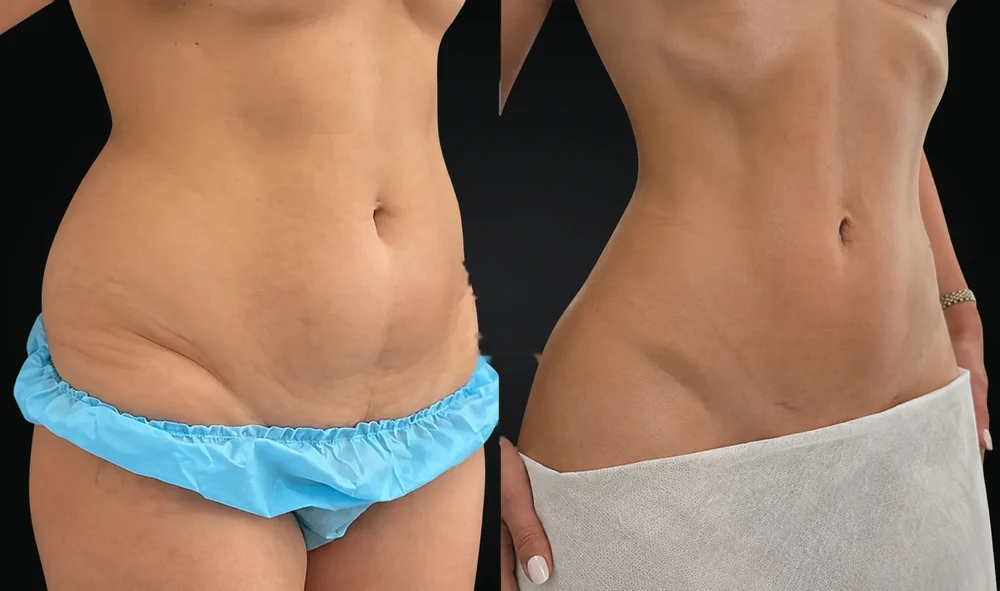
Real case
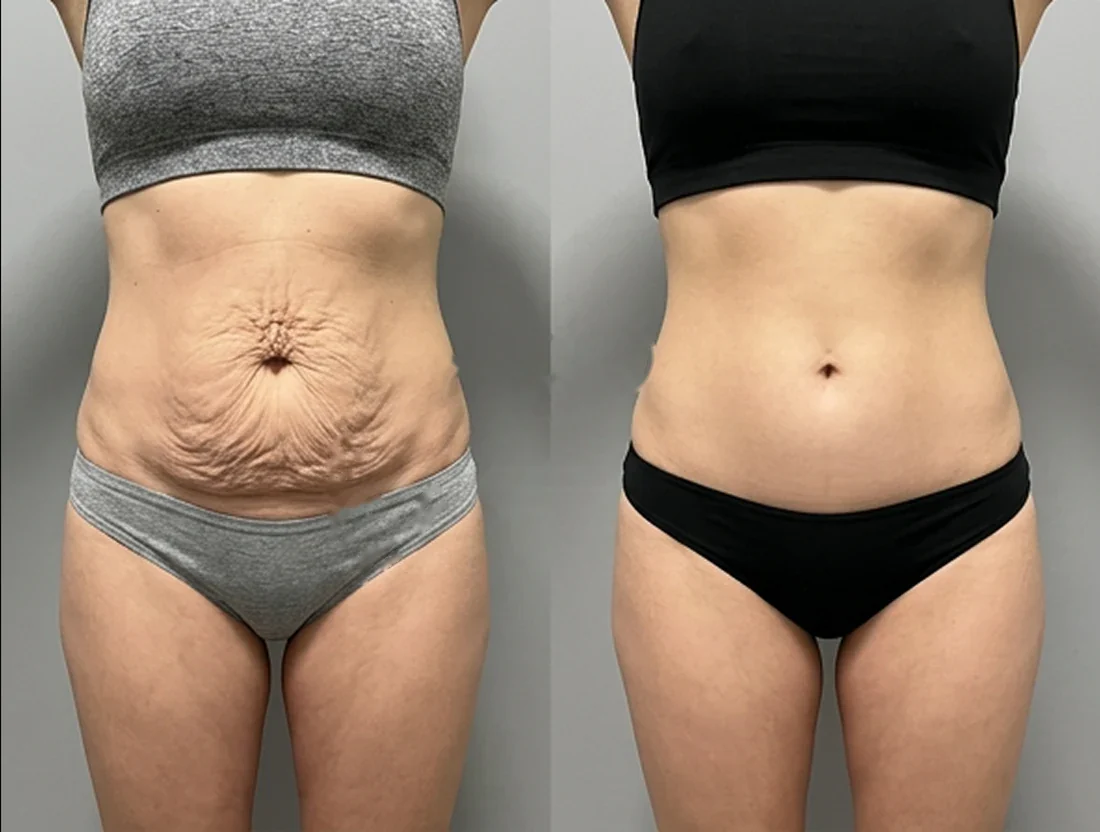
Tummy tuck: a patient's abdomen before and after surgery before after
A flat tummy and a toned silhouette in one operation. Your individual surgical plan and the expected result are discussed at the consultation

Message our coordinator

Free online consultation · Reply within 15 minutes

Message us on Telegram

By messaging us, you agree to our Privacy Policy

Results

Tummy tuck results
of our patients

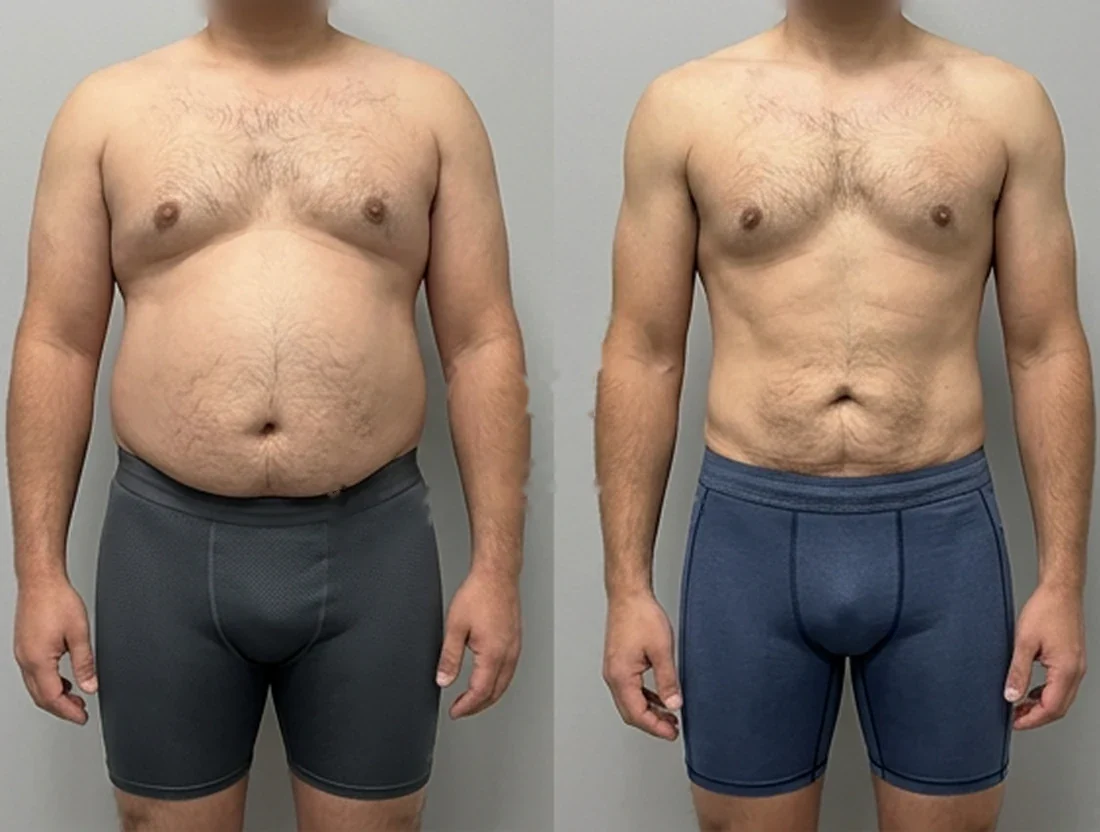
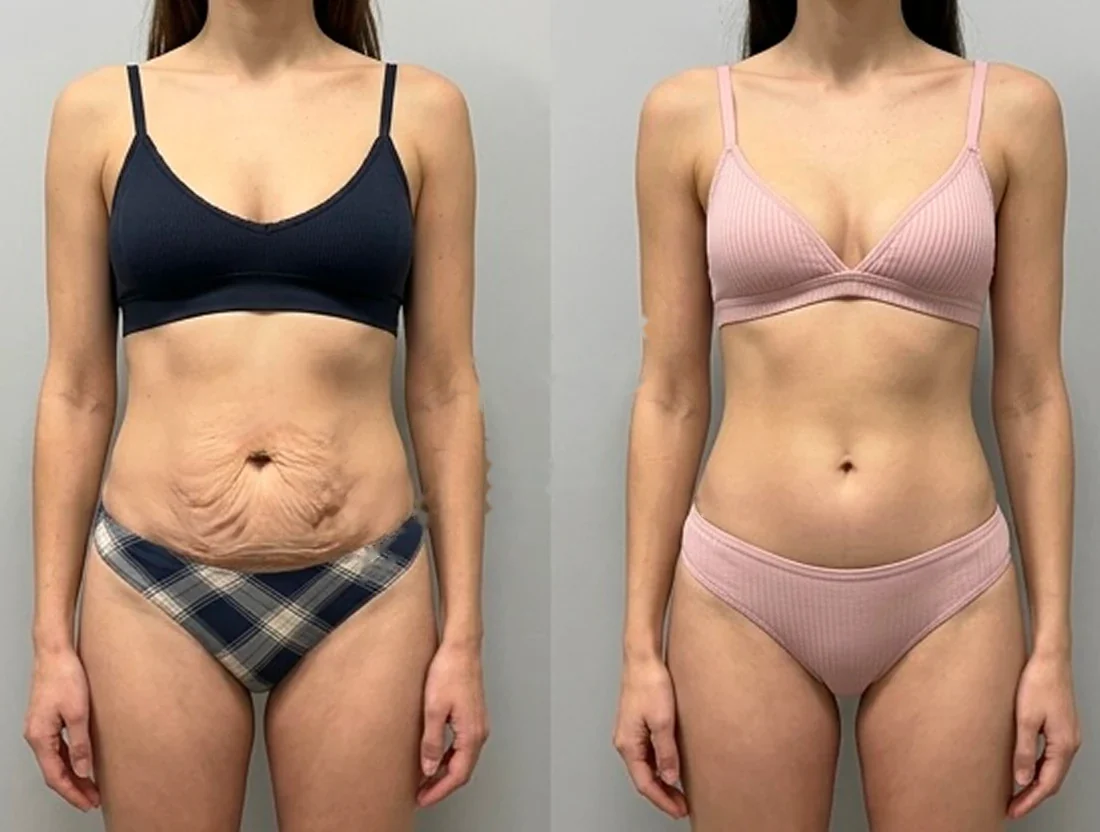
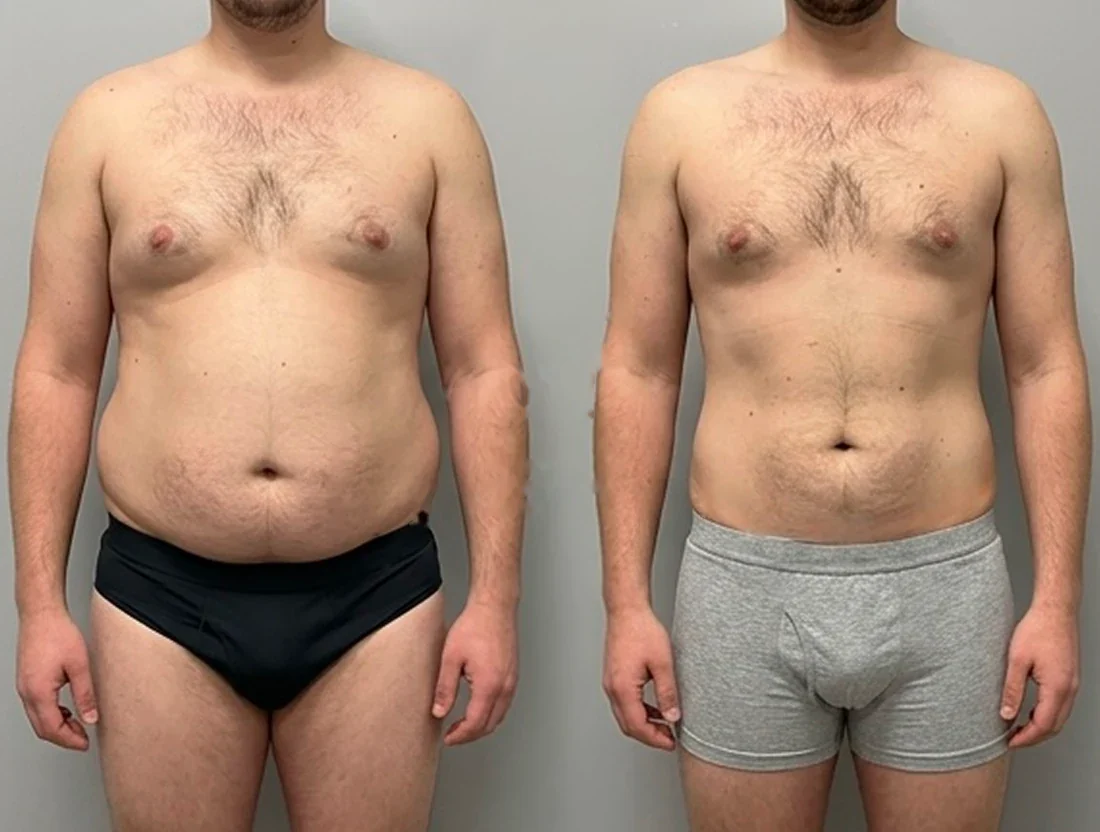
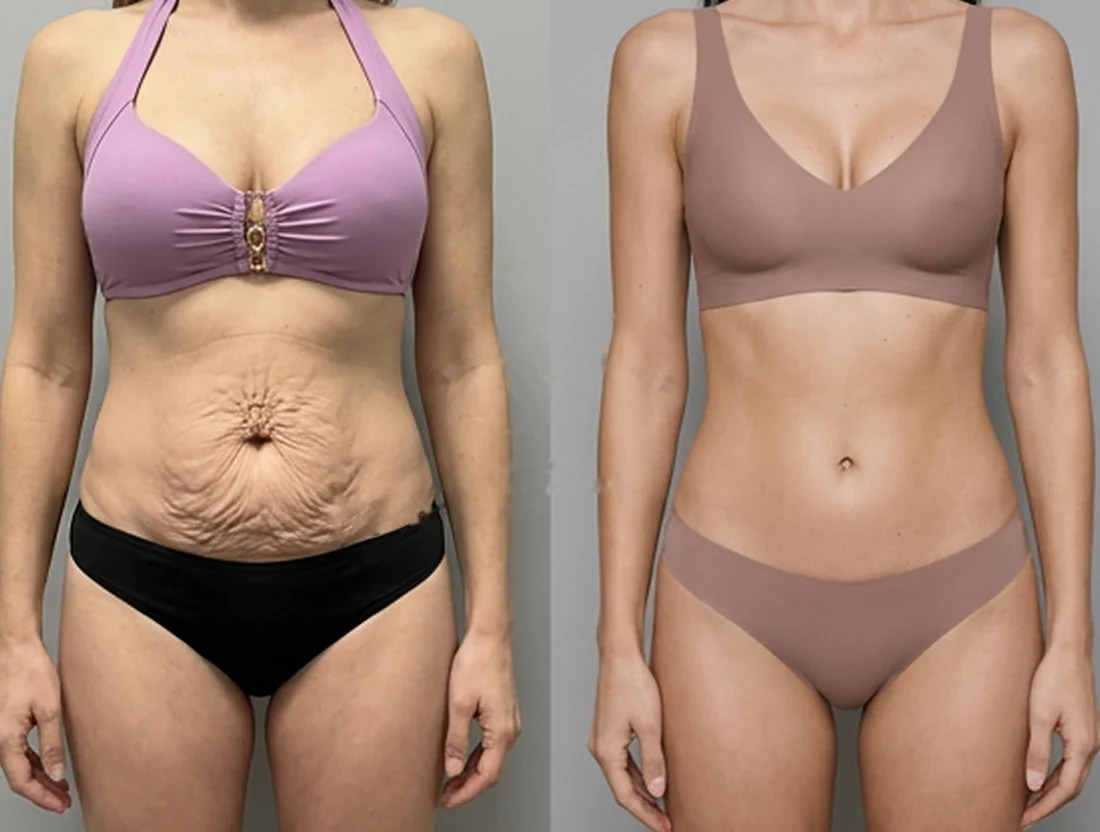
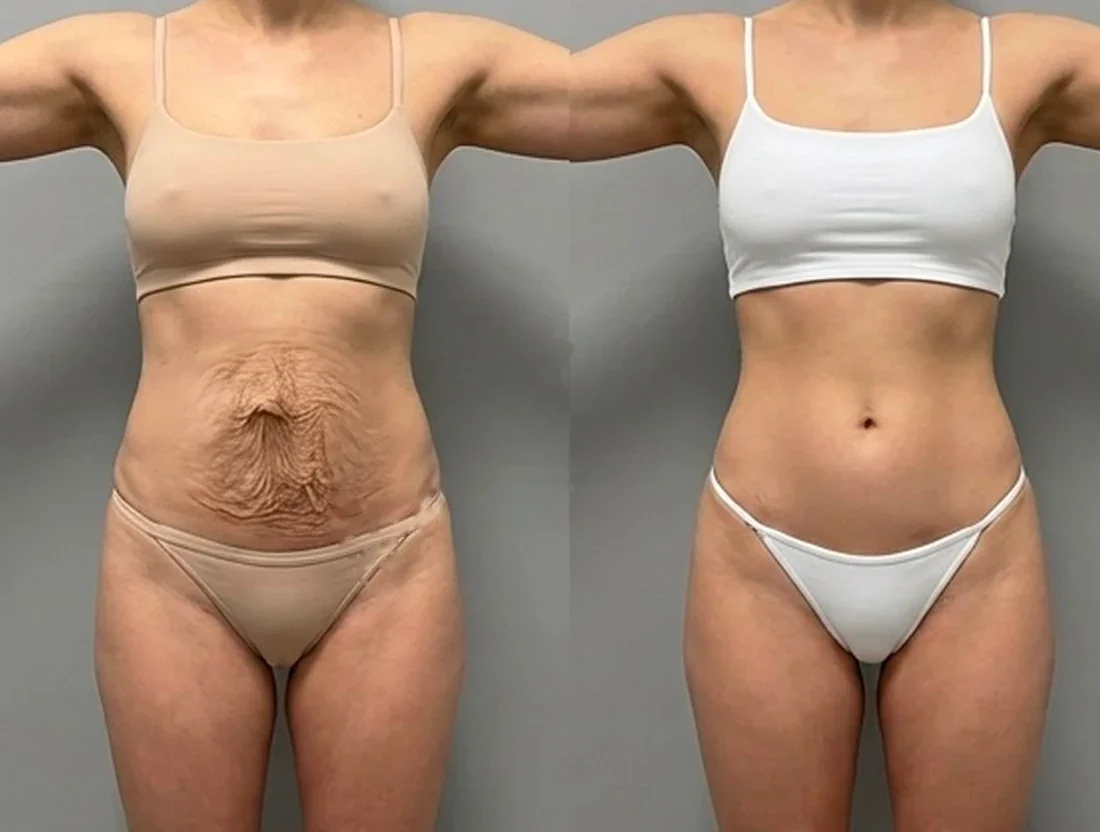
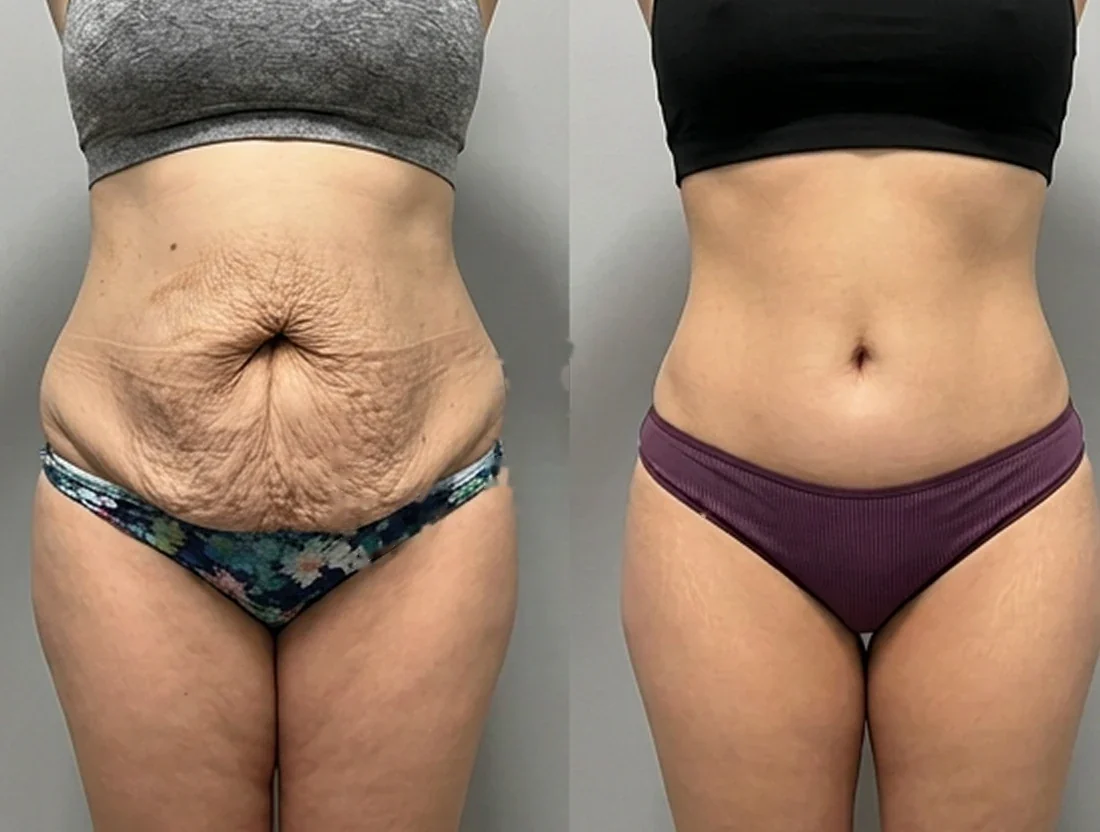
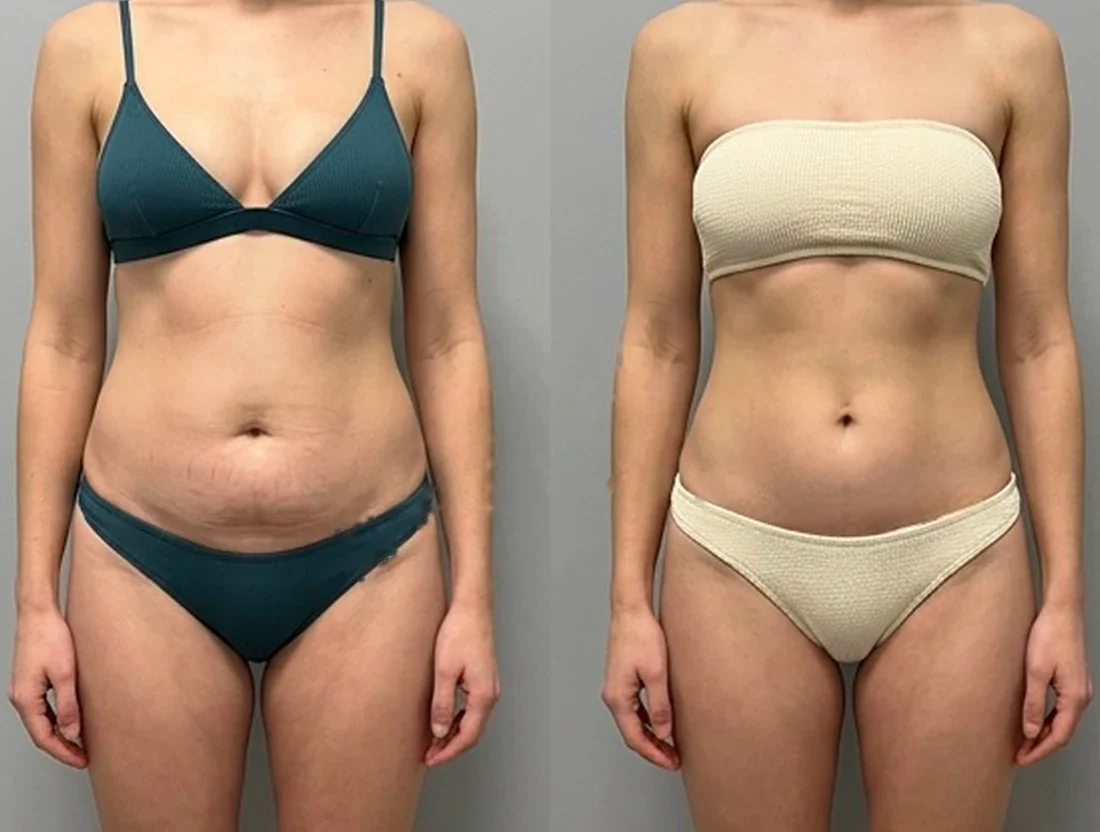
All cases are real patients. Faces and identifying details are hidden.

Tummy tuck: a female patient's abdomen before and after surgerybeforeafter
Tummy tuck: a male patient's abdomen before and after surgerybeforeafter
Tummy tuck: a female patient's abdomen before and after surgerybeforeafter
Tummy tuck: a male patient's abdomen before and after surgerybeforeafter
Tummy tuck: a female patient's abdomen before and after surgerybeforeafter
1 of 8

Comparison

Tummy tuck techniques

A tummy tuck is done as a full (classic) or mini operation, or combined with liposuction as lipoabdominoplasty. Compare the scope of surgery, the indications and the expected results to choose the right technique together with your surgeon.

Tummy tuck

Removal of excess skin, abdominal muscle tightening
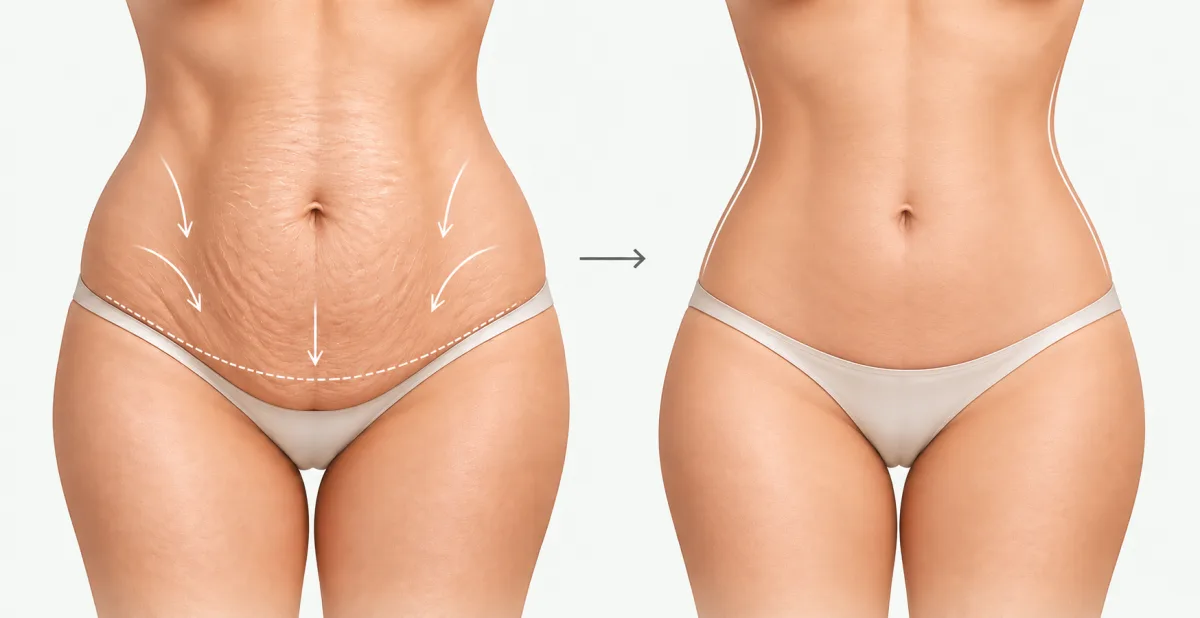
Tummy tuck diagram: the abdomen before surgery with the incision line, and the result
Main goal
Removal of excess skin, diastasis repair
When it is done
Excess skin after childbirth or weight loss
Anaesthesia and stay
General anaesthesia, up to 3 days in hospital

Lipoabdominoplasty

Tummy tuck with added liposuction
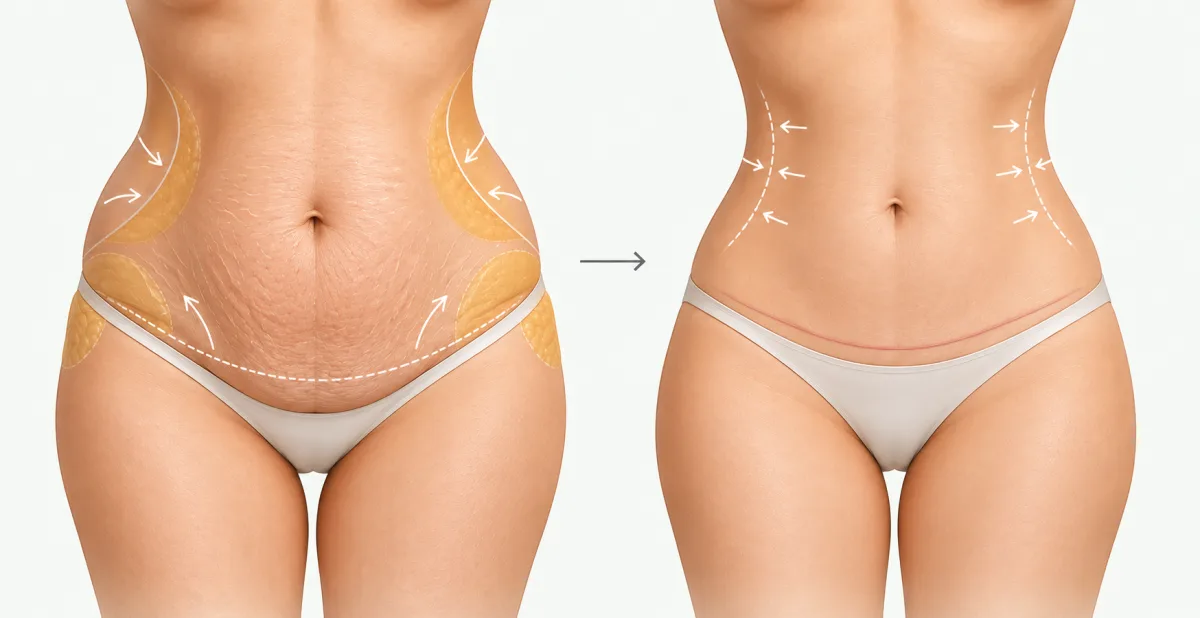
Lipoabdominoplasty diagram: the abdomen with fat on the flanks before surgery, and the result
Main goal
Tummy tightening and waist contouring
When it is done
For fat deposits on the flanks and waist
Anaesthesia and stay
General anaesthesia, up to 3 days in hospital

The benefits and recovery times shown are averaged for each technique and given for guidance: the scope of correction and rehabilitation depend on your anatomy and individual features, and the surgeon confirms them at the consultation.

At the consultation the surgeon draws up a plan for your case and explains how your tummy tuck will go.

Free, before surgery and with no obligation.

Book a consultation

Tummy tuck from the inside

About the clinic

A clinic where you can feel at ease

Modern equipment, comfortable rooms and care for every patient

A doctor and a patient in a clinic ward

Contact us the way that suits you

We will answer your questions and find a convenient time for a consultation

A tummy tuck is not for everyone

If your case can be solved without surgery, the doctor will tell you so at the consultation — and you will not spend money for nothing.

Suitable

A surgeon shows a patient on a model and a monitor how the abdominal contour changes after a tummy tuck
  • Rectus abdominis diastasis
  • Skin folds after weight loss
  • Loose abdominal skin
  • Stretched skin after pregnancy
  • A distorted abdominal contour

Not suitable

A surgeon discusses the indications and contraindications for a tummy tuck with a patient
  • Acute infections
  • Significant disease of the heart, kidneys or liver
  • Disorders of blood clotting
  • Age below 18
  • Decompensated diabetes
  • Cancer
  • Skin inflammation in the surgical area
  • Being pregnant or breastfeeding

Not sure the surgery is right for you?

Message us — the coordinator will ask for your photos in the messenger, and the surgeon will tell you whether a tummy tuck suits you. No surgery booking needed.

Find out if it suits me

A surgeon goes through a tummy tuck diagram with a patient at the consultation

Prices

You know the price
before surgery

The price is set at the consultation and fixed in the contract.

Other services

  • First consultationFree
  • Liposuction of the abdomen and flanksfrom $1,700
Book a consultation

Find out your tummy tuck plan and price

The surgeon assesses your abdominal skin and muscles, listens to your wishes and chooses the right correction technique.
The price is set at the consultation and fixed in the contract.

A nurse talks to a patient in a clinic ward

Message our coordinator

Free online consultation · Reply within 15 minutes

Message us on Telegram

By messaging us, you agree to our Privacy Policy

A patient's abdomen before a tummy tuck in the operating room

all inclusive

What the price includes

From preparation for surgery
to post-op check-ups.

  • All scheduled dressings
  • Scheduled post-op check-ups
  • A personal coordinator on call
  • Compression garments fitted on the day of surgery
  • A stay in a comfortable
    hospital ward with meals
  • Individual recommendations
    for recovery
  • Remote progress monitoring
    by photos

How it works

Three days at the clinic —
from preparation to discharge

An agreed correction plan, inpatient observation and post-op check-ups.

A doctor shows a patient a tummy tuck diagram on a monitor1

Consultation
and the surgical plan

The surgeon assesses your abdominal skin and muscles and checks for diastasis, listens to your wishes and chooses the right correction technique.

Paying the deposit by card at the clinic reception2

Booking the date
of surgery

We reserve a surgery date for you: the deposit can be paid by card at the clinic or online by bank transfer. The terms are fixed in the contract for medical services

A blood sample tube for tests before a tummy tuck3

Check-up before
surgery

Before surgery you complete a full lab check-up: blood tests, an ECG, a chest X-ray and reports from the required specialists.

The surgical team during the operation4

Surgery

The surgeon performs the tummy tuck with the chosen technique, repairs diastasis if needed and shapes a firmer abdominal contour.

A hospital ward at the clinic5

Inpatient stay

After surgery the patient stays for 1–3 days in a comfortable hospital ward with meals, under medical supervision.

A surgeon and a patient in the ward during recovery6

Recovery

After surgery you get a recovery programme. Check-ups at 7 days, 3 and 6 months help track your recovery.

Book a free consultation — the surgeon will plan every step with you.

A doctor discusses the tummy tuck plan with a patient
Book a consultation
A doctor discusses the tummy tuck plan with a patient

How it really happens

Healing after a tummy tuck

Immediately after surgery the patient stays in hospital for 1–3 days, supervised by doctors. Drains are usually removed after two days, stitches after 7 days. For 1.5–2 months you wear a compression binder that supports the abdominal wall and forms a smooth contour. Most of the swelling goes within 30 days; office work is possible after 2–3 weeks. No sports, sauna or heavy lifting for 2–3 months, and in the beginning it is best to sleep on your back with knees bent. At 12 months the scar is fully mature, faded and barely noticeable.

Post-op check-ups

After 7 days, at 3 months and at 6 months. Until the end of the year, get a post-surgery consultation with your surgeon to review results and get more information, at the clinic's expense

Advantages

What makes patients choose City Medical Centre

A surgeon discusses the tummy tuck plan with a patient at the consultation

Just find out — you lose nothing

At the consultation we discuss your wishes and assess your abdominal skin and muscles. The surgeon explains what changes are possible, chooses the correction technique and answers your questions.

A surgeon on a video call with a patient after surgery

We stay with you after surgery

The surgeon follows your recovery and the changing abdominal contour at check-ups after 7 days, 3 and 6 months. Check-ups, dressings and aftercare advice are already included in the price of surgery.

A surgeon shows a patient a model and tummy tuck diagrams

A beautiful contour that fits your figure

We choose the correction technique based on your skin, muscles and figure. Our aim is a harmonious abdominal contour that keeps the natural proportions of your body.

A patient writes down a convenient visit time in her planner

Your schedule is our priority

We respect your time: we work 24/7, with easy booking and a personal approach — we adapt to your pace.
A surgeon shows a patient the fixed price of surgery with no extra charges

Fixed prices

After the consultation the surgeon defines the extent of correction, and you get a clear price for the surgery — no surprises on the way to the result you want.

A surgeon visits a patient in the hospital ward after surgery

Round-the-clock care after surgery

Recovery starts in a comfortable hospital ward under round-the-clock nursing care. The stay and meals are already included in the price.

FAQ

We answer what
people ask before booking

Tummy tuck in Kut: what you should know

Every tummy tuck leaves a scar; it is the unavoidable price of removing excess skin. In a classic procedure it runs across the lower abdomen from hip to hip, below the underwear or swimsuit line, and in a mini procedure it is much shorter. By 12 months the scar is mature, thin and barely noticeable. People in Kut can discuss at the consultation how the incision line will be planned.

Pre-surgery tests should be completed in advance, not the day before. The surgeon gives the exact list at the consultation, and results are usually valid for 10–14 days. Seven to ten days before the operation, stop smoking, alcohol and medicines that affect blood clotting. Anyone in Kut preparing for a tummy tuck also sees a GP and an anaesthetist before the surgery date.

Start with a free consultation for a tummy tuck in Kut. The surgeon assesses your abdomen, explains the difference between the classic and mini techniques for your case and gives the final price, which is then recorded in the contract. Apply before the end of the year and the consultation is at the clinic's expense. Write to us in any messenger or use the form on the page.

Stories of well-known people

Well-known people who spoke openly about this operation, in their own words.

All stories about this operation →

A fortnight in diary form: what the first two weeks after abdominoplasty feel like

Kut lies only 23 metres above sea level, inside a U-shaped bend of the Tigris, so a diary of recovery here is easiest to picture as a river does its work: slowly, with quiet turns. The first entry is the operation itself. General anaesthesia, two to four hours on the table depending on how much loose skin is removed and how far the abdominal muscles have separated, and then the ward, where nurses watch the wound and the drains through one to three days. Keep a pencil and a pad on the bedside table and note each day how you slept, what you ate, how the wound looked and what you took. A diary of this kind sounds fussy, yet it gives the surgeon facts instead of impressions at the review, and it helps you notice trends, for example pain that eases steadily or swelling that grows towards evening.

Days two and three are about small movements. Drains, if you have them, are usually taken out around the second day. A nurse helps you from the bed to a chair, then to a few careful steps. The abdomen feels tight and heavy, and walking slightly bent is entirely normal. Doses of painkiller follow a timetable, and you are asked about your comfort at regular intervals so the amount can be adjusted instead of endured. Do not be disturbed by the sight of bruising that moves downward over the days, or by a feeling of numbness across the lower abdomen. Both are widespread after this operation and tend to fade over months. What does call for a message is sudden one-sided swelling, fever, a wound edge that opens, or shortness of breath, any of which the team will want to hear about without delay.

By the end of the first week you are home in the arrangement your family prepared, and the stitches come out at about day seven. Evenings are the tiring part, and a short, slow walk through the house keeps circulation moving. Eat lightly, drink water often, and sleep with pillows under your knees. Most visitors should come briefly, because conversation exhausts more than people expect at this stage. Meals in the first week should be small and frequent. Soup, yoghurt, rice, cooked vegetables and chicken suit the stomach after anaesthesia, while heavy fried dishes sit uncomfortably against a tight abdomen. A fibre-rich plate and plenty of water ease the sluggish bowels that painkillers can cause, which spares you a problem that bothers many patients more than the wound itself.

In the second week the energy returns faster than the healing, which is the classic trap. Office work resumes after two to three weeks in most cases, but lifting, carrying children and housework involving bending remain off the list until the surgeon agrees at the review. Send the coordinators a photograph at the end of the fortnight; somebody replies at any hour, and the surgeon compares it with the earlier ones. Use the second week to rehearse the routine you will follow later: a morning walk indoors, a rest, a light meal, a short phone call with a coordinator if needed, an evening walk. The more regular the rhythm, the less the tightness feels like an illness and the more it feels like a stage that will pass.

Southerly dust, forty-three degree summers and the garment you wear for two months

Kut's summers are fierce: July highs average around 43.5 degrees and August around 43.8, while a January day reaches about 17.5 with nights near 5.5. Rain, roughly 138 mm a year, falls between November and March. Winds from the south lift fine dust over the plain beside the river, and that dust shapes recovery as much as the temperature does, because a healing wound and airborne grit are poor company. Wind from the south is not simply a nuisance. It carries fine particles that settle on bedding, sills and clothes, and inside a bedroom they find their way to the dressing. Damp-wipe the surfaces each day, wash bedding more often than usual, and ask the family to take shoes off at the door so that dust stays in the hall and away from your resting place.

The compression binder is worn for roughly one and a half to two months. In January it is a welcome second layer under a thick robe. In July it presses against skin that is already sweating, so it needs a cool room, a thin cotton layer changed daily and a steady supply of cold water. People who plan the date around the calendar usually find the garment far easier to live with than those who do not. A thin cotton layer between skin and binder should be changed whenever it feels damp, and in the hottest weeks that can be several times a day. Keep a stack of clean ones within reach. Rinse your hands before handling them, and ask the surgeon how to dry the area gently after washing, since rubbing hard on a fresh scar does more harm than the heat does.

On windy days keep the windows closed, wipe floors with a damp cloth and let someone else sweep. Wash hands before touching the area around the wound, and change any damp layer promptly. If an itch or a pink rim appears at the edge of the binder, photograph it and send it to the coordinators instead of scratching or applying a cream nobody prescribed. Sun care begins as soon as the wound allows. A scar exposed to strong light in its first months tends to darken and may look more noticeable than it needs to. Cover it in the early weeks, ask the surgeon which product to use and when, and keep to shade on the river bank if you walk there once the walking distance is permitted.

When the surgeon's list is open, many people select a window from late autumn to early spring. The weather is mild, dust is less intense, and the binder is comfortable. When it is not open, summer works with preparation, and the coordinators will lay out the available weeks in a written schedule. You may adjust it as often as you wish before anything is confirmed. Choose clothes that take the weather into account but do not press on the waist: a long cotton dress with a loose belt line, a wide shirt with soft trousers, flat shoes that slip on. Avoid anything with a tight elastic band or a rough seam across the lower abdomen. Comfortable clothing is as much a part of the plan as medicine.

A governorate of 1.6 million and the woman who asks: is this operation for me?

The census of 25 November 2024 counted 1,644,273 people in Wasit governorate, with about 1,045,103 of them living in urban areas, and Kut district alone held 654,110. Roughly 60 percent of residents are of working age, between 15 and 64. In a place with so many busy adults, questions about body contouring come from every walk of life: teachers, nurses, university staff, shop owners, mothers who have carried several children. In the days before the first message, collect some basic facts about yourself that you may not have in your head: the dates of past operations, names of regular medicines with doses, allergies to drugs or plasters, any history of blood clots in the family, and whether you smoke. The surgeon will ask about each, and having them ready makes the first exchange productive.

A tummy tuck is not a general beauty treatment. It targets a particular structure: skin that has been stretched beyond its ability to return and abdominal muscles that parted along the midline. The surgeon removes the excess skin and fat below the navel and sews the muscles together again. If your concern is a small deposit of fat with firm skin, a lighter procedure may suit you better, and if weight is still changing, a delay is wiser. If you smoke, tell the truth. Smoking slows healing and raises the risk of wound problems, and surgeons usually ask patients to stop for a period before and after the operation. This is not a judgement. It is a way of protecting the result and your own safety, and the coordinators will pass on exactly what the surgeon wants.

You can help the surgeon by being precise in your first message. Give your age, the number of pregnancies, whether any were caesarean, how much weight you have gained or lost and how long it has been stable, and any chronic conditions or regular medicines. Add front and side photographs in even light. Keep your arms slightly away from the body and avoid underwear that leaves creases across the skin. It also matters to say what you hope for. Some women want a flatter profile in fitted clothes, others a stronger core to ease back pain, others a return to the body they had before children. The operation can serve some of these aims better than others, and the surgeon will be candid about what is realistic for your tissues and your history.

The reply names the procedure that fits, explains why, and says what recovery will involve. It does not oblige you to book anything. Many women read the answer several times, share it with a sister or a friend, and come back with further questions, which the coordinators welcome. The best decisions on a major operation are made slowly and from paper, not on the spur of a single phone call. Once you hold the plan in writing, give yourself time. Show it to a person you trust and wait a few days before you decide. If you still want to proceed, you will go forward with a calm mind, and if doubts remain, the coordinators will answer them in turn without any pressure to speed up.

Credentials, public hospitals and the cost of not asking

The Iraqi Board for Medical Specializations was founded in 1986, began teaching in 1988 and certifies and trains physicians across 37 specialties. A diploma from it is evidence of recognised postgraduate training, and a careful patient should look for one. It is not a licensing office, however, and we do not present it as one. Treat it as one important document among several, not as a seal on its own. A good question to ask at the start is how the follow-up will work when you are back in your own house. Who sees your photographs? Within what time do you hear back? What should you do in the middle of the night if something frightens you? The answers should appear in the written plan, and a service that cannot explain them has not thought the matter through.

We found no public page where a patient can verify a doctor's registration, and we would rather say so than invent a tool. Practical steps remain. Ask the coordinators for the specialist certificate, the registration number and the date of graduation. Ask how many abdominoplasties the surgeon has performed recently, what complications he has met and how he handled them. Show the answers to a relative who works in medicine, if you have one. Compare notes with a second doctor if you wish. A physician in your city may look at your plan and the surgeon's credentials and offer an opinion on whether the questions have been answered. This does not insult anyone. A surgeon with a strong record will not mind, and your own confidence in the decision will be firmer for it.

Since February 2016, public hospitals in Iraq have charged patients for individual services, and elective cosmetic procedures are arranged and paid for privately. Our sources describe no public cover for such surgery, so we make no promise about insurance. If you hold a policy, ask the insurer in writing and wait for a written reply. If part of your problem is medical, such as a weak abdominal wall, tell the surgeon at the start. When you read the plan, check that it includes the type of procedure, the expected length of the operation, the days in hospital, the removal of drains and stitches, the time in the binder and the dates of review. Missing items are a reason to ask, not to guess. The more complete the paper, the fewer surprises there will be.

Finally, keep every document in one folder: the plan, the certificate, messages, the discharge sheet, the insurer's reply and the monthly photographs. When a year has passed and a relative asks what was agreed, the folder answers. It also protects you if the person answering your messages changes, because the history stays with you and not with a single phone. Remember that you can always say no, or not yet. Elective surgery has no deadline except the one you set yourself. A pause to arrange finances, child care, or work leave is a sign of seriousness. Coordinators will keep your file open and pick up the conversation whenever you are ready.

Carpets, grain and a household rota: getting back to ordinary life

Kut has long been a town of carpet trading and cereal farming, a place where hands do patient work and families run on shared effort. That tradition suits recovery. Before the operation, sit down with the household and divide the weeks: who cooks, who looks after children, who sleeps within earshot, who drives to the review. A rota agreed in advance turns an anxious month into a routine one. On the practical side, line up transport for the review visits, since you should not drive in the early weeks, and a seat cushion under the belt helps the ride on uneven roads. Prepare a small folder to carry to each visit, with the plan, the photographs, the list of medicines and your notebook of questions.

Keep a few items at chest height so that you never need to bend: water, medicines, a charger, tissues and the written instructions. Place a firm chair with arms next to the bed, add a cushion to support the back, and arrange a clear route to the bathroom. Friday and Saturday are Iraq's rest days, a useful window for relatives to share care, but the weekdays need names on the rota too. At work, a short conversation with your manager before the date prevents misunderstandings. Say that you are having a planned operation, give the expected absence of two to three weeks for desk work, and indicate that your return depends on the surgeon's review. Most employers respond better to early, clear information than to a message sent from a hospital bed.

Employers in the governorate vary from schools and the University of Wasit, opened in 2003, to shops, farms and offices. Tell yours early. Desk and classroom work generally resumes after two to three weeks, while jobs involving standing for hours, lifting or bumping along rough roads need the surgeon's approval. Ask the coordinators whether a medical note can be prepared, and handle the administrative side well before the date. For the children, a simple explanation works: mother has an operation on her tummy and needs rest, so for a while others will help. Give older ones small jobs, such as bringing water or reading aloud beside the bed. They feel useful, and you lose the pressure to do things you are not yet allowed to do.

When the weeks of tightness are over, think about keeping the result. A stable weight, regular movement and sun care protect the contour and the scar, and the surgeon's final assessment between six and twelve months tells you where things stand. If you plan another pregnancy, say so at the consultation, as it affects the timing. Good follow-up continues until the picture settles, and the coordinators stay available. In the months that follow, keep the check-ins going. Photographs on the same day each month, a short message about how things feel, and attendance at the review visits build a record of the whole recovery. When the final assessment arrives, the surgeon will have what is needed to judge the outcome, and you will have the satisfaction of having watched it unfold.

What does a tummy tuck correct that liposuction cannot?

It removes loose, overstretched skin and tightens separated abdominal muscles, two things liposuction does not touch. Liposuction suits a localised fat deposit in a person whose skin is elastic. The surgeon decides after examining your photographs and history, so send front and side pictures with your pregnancy and weight details to the coordinators first. Bring a list of past operations and medicines to that first exchange so that nothing is missed.

How long is the operation and what anaesthesia is used?

General anaesthesia is used, and surgery lasts about two to four hours depending on how much skin is removed and how much muscle repair is needed. You then stay in hospital for one to three days under observation. The surgeon gives an estimate for your case after seeing the photographs, and it appears in the written plan. Expect to be asked about smoking, since it affects wound healing and the surgeon will want to plan around it.

Is dust from the south a problem for healing?

It can be, because grit irritates a fresh wound. On windy days stay indoors, keep windows closed, wipe floors with a damp cloth and wash your hands before touching the dressing area. If redness, itching or discharge appear near the wound, photograph it and message the coordinators so that the team can advise. Wash your hands every time before you handle the dressing or the layer beneath the binder.

When are drains and stitches removed?

Drains normally come out after about two days, because their only job is to carry away fluid at the beginning. Stitches are removed at around seven days. The surgical team decides the exact timing by examining the wound, and you can write to the coordinators at any hour if something worries you earlier. The coordinators also pass on the surgeon's answer to any question you add between visits.

How soon can I return to work or sport?

Desk or classroom work usually resumes after two to three weeks, and most swelling fades by about thirty days. Sport, lifting and carrying children wait for the surgeon's permission at a review. Returning too early is a frequent cause of trouble, so regard the date as a medical decision. Never carry a heavy bag, and let someone else handle the lifting.

How can I check a surgeon's credentials in Iraq?

No public lookup page exists that we could find. Ask the coordinators for the specialist certificate, registration number and graduation date, plus a written follow-up plan. The Iraqi Board for Medical Specializations, founded in 1986, certifies physicians across 37 specialties, but it is not a licence-checking office, so documents from the surgeon are still necessary. Keep the copies you receive so that you can show them to another doctor later if you wish.

Does public healthcare pay for cosmetic surgery?

Public hospitals have charged for individual services since February 2016, and elective cosmetic procedures are arranged and paid privately. We found no source describing cover, so we promise nothing. Ask any insurer you hold a policy with, in writing, and keep the written answer with your documents. The same rule applies to any policy that came through your employer.

How do I know the scar and the result are developing normally?

Photograph the area once a month in the same light and pose, and send it to the coordinators, who pass it to the surgeon. The scar changes from red to pink to pale over months, and the final contour is assessed between six and twelve months. Increasing pain, redness or discharge deserve an immediate message. If you see a sudden change between photographs, do not wait for the next month before sending one.