


























Bariatric surgery6 min read
Weight Regain After Bariatric Surgery: Why It Happens and What Helps
Bariatric surgery gives most people a large and lasting weight loss, but for some the numbers on the scale slowly creep up again a few years later. This is not a rare failure and it does not mean the operation was pointless. This guide explains how often weight regain happens, why it occurs, what can be done after a sleeve or a gastric bypass, who decides on a second operation and which daily habits help keep the result.

The main points in 30 seconds
- A small rise in weight after reaching the lowest point is normal after bariatric surgery.
- Larger regain usually has several causes: habits, activity, hormones and changes in the stomach.
- The first step is always a check-up and nutritional support, not immediate surgery.
- After a sleeve, conversion to a bypass, MGB or SADI-S may be considered.
- Planned meals, daily activity and regular follow-up protect the result.
Key facts about the procedure
- Back to work2–4 weeks
- Stay in clinic1–5 days
- Final result18–24 months
- Price
$4,800from $3,600
How common weight regain is
After any weight loss operation, the lowest weight is usually reached within one to two years. After that, a small rise of a few kilograms is normal and expected, because the body adapts and appetite partly returns. Doctors speak of real weight regain when a noticeable share of the lost weight comes back, or when conditions such as type 2 diabetes or high blood pressure start to return.
- A modest rise after reaching the lowest weight happens to most patients and usually needs no treatment.
- A larger regain affects a minority of patients, and the risk grows with the years that pass after surgery.
- Even with some regain, most people remain much lighter and healthier than they were before the operation.
The key point is to notice the trend early. Regain of a few kilograms is much easier to stop than regain of twenty.
Why weight can return
Weight regain rarely has a single cause. Usually several factors act together, some linked to the body and some to daily life.
- Eating habits: frequent snacking, grazing through the day, sweet drinks and soft high-calorie foods pass easily through a small stomach and add many calories.
- Anatomical changes: over time a sleeve can stretch, and after a bypass the new stomach pouch or its outlet may widen, so larger portions fit in.
- Hormones and metabolism: the strong early drop in hunger fades partly with time, and the body tries to defend its previous weight.
- Low activity: less movement means fewer calories burned and loss of muscle, which lowers energy use at rest.
- Stress, sleep and mood: emotional eating, poor sleep and depression are common drivers of regain.
- Missed follow-up: people who stop seeing their team lose the support that helps them catch problems early.
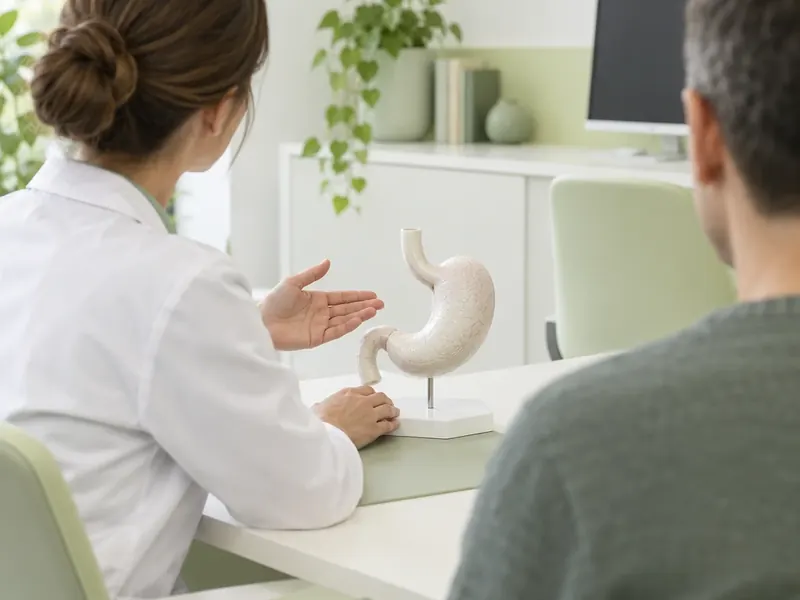
Options after a sleeve
If weight comes back after a sleeve, the first step is always a check-up: a review of eating habits, blood tests and, if needed, imaging or a gastroscopy to see the shape of the stomach. Many people get back on track with nutritional support and changes in routine alone.
When this is not enough, a second operation may be considered. The sleeve is often a good base for further surgery, and the table shows the options most often discussed.
Conversion to Roux-en-Y gastric bypass
- What changes
- A small pouch is created and part of the intestine is bypassed
- Main point to consider
- Often chosen when reflux is also a problem
Conversion to mini gastric bypass (MGB)
- What changes
- The sleeve is joined to a lower loop of intestine with one connection
- Main point to consider
- Stronger effect on absorption, so supplements matter
SADI-S as a second stage
- What changes
- The existing sleeve is kept and a large part of the small intestine is bypassed
- Main point to consider
- Powerful effect, lifelong supplements and blood tests
Re-sleeve
- What changes
- A stretched sleeve is narrowed again
- Main point to consider
- Used less often; effect depends on the cause of regain
Options after a gastric bypass
After a gastric bypass the approach is similar: first find the reason, then choose the least invasive solution that fits it. Many people improve with a structured plan from a dietitian and regular contact with their team.
- If the pouch or its outlet has widened, specialists may discuss ways to make them smaller again.
- In some cases the length of the bypassed intestine can be changed so that fewer calories are absorbed; this increases the risk of nutrient deficiencies.
- Some patients are offered medical treatment for weight control by their doctor, alongside changes in diet and activity.
These possibilities are described here as general information. Which of them is suitable, and whether it is available, is discussed individually with the surgeon.
Who decides on revision surgery
A second operation is a serious step. It is usually more complex than the first one, because the surgeon works on tissues that have already been operated on. The decision is made by the surgeon after a full assessment, often together with a dietitian and other specialists. You can see which methods are available on our bariatric surgery page.
- The surgeon reviews the first operation, the weight history and current health.
- Tests show the anatomy and look for problems such as reflux, ulcers or a widened pouch.
- Eating habits are discussed honestly, because surgery alone will not fix a pattern of grazing.
- The expected benefit is weighed against the risks, which are generally higher than at the first operation.
Revision is considered only when it can realistically help, and never as a quick fix.
Habits that protect your result
The best way to handle weight regain is to prevent it. The habits that matter most are simple, but they need to last for years, not weeks.
- Eat three planned meals and, if needed, one or two small snacks instead of eating all day.
- Start each meal with protein and vegetables, and chew slowly.
- Avoid sweet and fizzy drinks, and do not drink with meals.
- Keep moving: walking every day plus strength exercises twice a week help protect muscle.
- Weigh yourself regularly, so that you notice a trend of a few kilograms early.
- Take your vitamin and mineral supplements as your doctor advised.
- Look after sleep and ask for psychological support if stress or emotional eating are a problem.

Long-term follow-up at City Medical Centre
City Medical Centre works with international patients and performs laparoscopic sleeve gastrectomy, Roux-en-Y gastric bypass, mini gastric bypass (MGB) and SADI-S, including SADI-S as a second stage after a sleeve. City Medical Centre does not narrow a widened pouch or outlet, does not change the length of a bypass and does not prescribe weight-control medication.
During the first year after surgery specialists follow each patient's weight loss, blood tests and nutrition, which is the period when the foundation for a lasting result is built.
If you have regained weight after an earlier operation, the first consultation is free and can take place online: send your height, current weight, details of the first operation and your medical history via Telegram. The surgeon will explain which option, if any, suits you. The doctor names the price after the assessment, and it is then fixed in the contract. A personal coordinator guides you from the first message to the end of recovery. Learn more on the bariatric surgery page.
How recovery usually goes
- First hoursYou may sit up, stand and drink fluids
- 1–5 daysObservation at the clinic, depending on the extent of surgery
- 2–4 weeksReturn to office work; physical work after about 1.5 months
- 1–2 monthsStaged diet from liquids to solids to let the stomach adapt
- Every monthOn average 10% of excess weight lost per month
- 1.5–2 yearsFinal result, stable eating habits prevent the weight from returning
Sources
Frequently asked questions
Can you regain weight after bariatric surgery?
Yes. A small rise of a few kilograms after reaching the lowest weight is normal. Some people regain a larger share of the lost weight over the years, usually because of eating habits, less activity or changes in the stomach. Most still stay much lighter than before surgery.
What causes weight regain after a sleeve?
The most common causes are frequent snacking, high-calorie drinks and soft foods, lower activity, stress and missed follow-up. Over time the sleeve can also stretch and hunger can partly return. Often several of these factors act together.
Can bariatric surgery be redone?
Yes, in selected cases. After a sleeve the most common options are conversion to a gastric bypass, a mini gastric bypass or SADI-S. After a gastric bypass other changes may be discussed. The surgeon decides after a full assessment.
How can I prevent weight regain?
Eat planned meals built around protein, avoid sweet drinks and grazing, stay active every day, weigh yourself regularly and keep in contact with your team. Taking supplements, sleeping well and getting help with stress also make a real difference.
Is revision surgery riskier?
Generally, yes. A second operation is done on tissues that have already been operated on, so it is technically more complex and the risk of complications is usually higher than at the first operation. This is why it is chosen only when the expected benefit is clear.
Have a question about your case? Get a free consultation
Message a coordinator on Telegram: we reply right in the chat, and you can send photos and questions there too.
- The first consultation is free, online consultations are available
- The doctor names the cost after the assessment, and it is fixed in the contract
- A personal coordinator guides you from the first message to recovery
Message our coordinator on Telegram
We reply right in the chat — you can send photos
Message us on TelegramBy sending a message, you agree to the privacy policy
Read also
 Bariatric surgery
Which Doctor Treats Obesity? Endocrinologist, Dietitian, Psychologist or Bariatric Surgeon
Who treats obesity and when: the roles of the GP, endocrinologist, dietitian, psychologist and bariatric surgeon, and the signs it is time to see a doctor.
 Bariatric surgery
Who qualifies for bariatric surgery: BMI criteria, contraindications and tests
Who qualifies for bariatric surgery: BMI criteria from the 2022 guidelines, related conditions, contraindications, tests before surgery and readiness for life after.
 Hair transplant
What are grafts in hair transplantation, and how are they handled?
What a hair graft is, which types exist, how grafts are extracted, kept and implanted, and why careful handling matters for the result of a hair transplant.