


























RhinoplastyUnited States5 min read
Did Tamar Braxton have a nose surgery? Yes — a medical one, she says
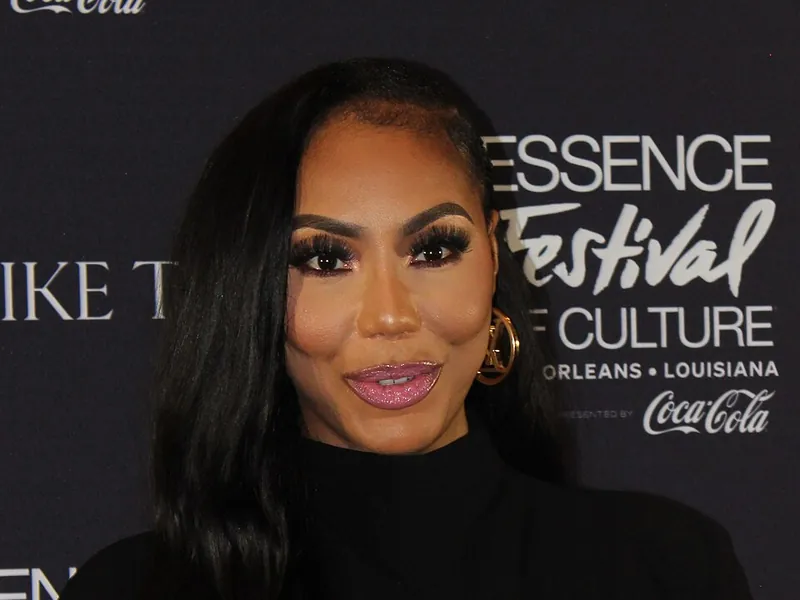
Tamar Braxton, the singer and Braxton Family Values star, has explained for years that her nose surgery was never about looks: she says she was born without cartilage in her nose, and breathing was difficult. Here is her story in her own words, and what nasal reconstruction involves.
By messaging us, you agree to our Privacy Policy
Key facts about the procedure
- Operation time1.5–3 hours
- Stay in clinic1 day
- AnaesthesiaGeneral
- Price
$6,000from $4,200
Profile
Tamar Braxton
- Country
- United States
- Who
- American singer and TV personality
- Quote source
- Vibe, 4 May 2011
What did Tamar Braxton say about her nose surgery?
Tamar Braxton's account is about a medical problem, not a makeover. As she told Vibe in an interview reported in May 2011, she was “born without cartilage in my nose”, and as a teenager she had her first operation — “an implant put in my nose.” Her father, she said, had the same surgery. The reason was never vanity: breathing was difficult, and she “snored terribly.”
Rhinoplasty Leeds, Rhinoplasty Dublin — price and consultation.
Price in your country — message us on WhatsApp
WhatsAppThe story did not end there. The implant later caused headaches, she said, and ear cartilage was eventually used instead — a revision built on the first operation. That chain — a congenital problem, a reconstruction, and later adjustments — is exactly the territory of reconstructive rhinoplasty, a branch of nose surgery that exists for patients whose noses never formed, or stopped working, the usual way.
That is what this article relies on: her quoted words in the report. Everything below describes rhinoplasty in general, not her treatment.
Why her story matters
Tamar Braxton's case describes a different side of nose surgery than the usual celebrity story: reconstruction for a congenital defect. People born without nasal cartilage can have trouble breathing, sleep badly and live with a nose that lacks support — and surgery for them is medical treatment, not cosmetic choice.
More on this topic: Rhinoplasty in one day, Open Rhinoplasty, Closed Rhinoplasty, Rhinoplasty for Patients from Singapore, Rhinoplasty in Melbourne.
Her account of struggling to breathe and snoring terribly is precisely the symptom set ear-nose-throat doctors assess before planning a reconstruction.
Her story also shows the reality of revisions over a lifetime. An early implant can cause headaches decades later; ear cartilage is a common, reliable replacement material; and each adjustment is planned around what is already there. Patients with congenital nasal problems should expect exactly this: a long-term relationship with a surgeon, staged over years — not one operation that ends the story.

How rhinoplasty is done today
Rhinoplasty reshapes and rebuilds the nose: the bridge, the tip, the nostrils and, in septorhinoplasty, the deviated septum inside that blocks breathing. The operation is done under general anaesthesia or TIVA, with open technique (a small incision on the columella) or closed technique (incisions inside the nostrils), and ultrasonic piezo instruments for precise bone work.
Where structure is missing — as in congenital cases like Tamar Braxton's — cartilage grafts from the septum, ear or rib rebuild the framework, and implants are used selectively.
Closed rhinoplasty
- What it does
- Reshaping through incisions inside the nostrils
- Typically for
- Moderate reshaping, no external scar
Open rhinoplasty
- What it does
- Full view through a small incision on the columella
- Typically for
- Complex tip and bridge work
Septorhinoplasty
- What it does
- Reshaping plus straightening the septum
- Typically for
- Deviated septum, breathing problems
Reconstructive rhinoplasty with grafts
- What it does
- Rebuilding missing structure with cartilage grafts
- Typically for
- Congenital defects, trauma, failed implants
Which option fits is decided at the consultation after examination, not from a celebrity story.
Who is a candidate and how to prepare
Candidates are adults, typically aged 18–45 with marked concerns, in stable health; older patients are assessed individually. For congenital and functional cases, breathing symptoms — congestion, snoring, difficulty through one side — are exactly what the surgeon wants to hear about, alongside the appearance goals.
- Start preparing 21 days ahead: blood tests, biochemistry, coagulation, infection screening, ECG and chest/sinus imaging.
- Stop blood-thinning medicines, alcohol and smoking a week before; no food or drink for six hours before surgery.
- Bring the full history of any previous nose operations and implants — revisions are planned around what is already there.
What recovery looks like
The first 24 hours are spent in the inpatient unit. For the first days, breathing goes through the mouth and splints sit in the nostrils; swelling and bruising around the eyes are normal. Nasal splints come out around day 7, the external splint stays up to 14 days, and stitches are removed on day 14. For a month there is no exercise, sauna, pool, hot baths or sun.
Congestion can linger for a month or two, the first improvements appear after two to three weeks, healing completes over about four months, and the final shape of the nose settles over one to one and a half years.

How recovery after rhinoplasty usually goes
- Day of surgeryGeneral anaesthesia or TIVA; the first 24 hours in the inpatient unit under monitoring.
- Days 1–3Mouth breathing with splints in the nostrils; swelling and bruising around the eyes are normal.
- Day 7Nasal splints come out; the external splint stays up to 14 days.
- Day 14Stitches removed; swelling visibly declining.
- Weeks 2–4No exercise, sauna, pool, hot baths or sun for a month after surgery.
- Months 1–18Congestion eases, healing completes by about four months, final shape settles over 1–1.5 years.
Rhinoplasty at City Medical Centre
City Medical Centre performs primary, revision and reconstructive rhinoplasty for international patients, including patients from New York. Primary rhinoplasty costs $4,200 (currently reduced from $6,000), revision rhinoplasty $5,400, rhinoseptoplasty $5,000, reconstructive rhinoseptoplasty $4,700 and rib-cartilage reconstruction from $5,400. The first consultation is free; the final cost is confirmed after an in-person examination.
The price includes anaesthesia, the inpatient stay and a lifetime guarantee on the result with a free post-operative check-up. More details are on the rhinoplasty page and the page for patients from New York.
To be clear: City Medical Centre has no connection with Tamar Braxton or her treatment. Her story is quoted here only because she chose to talk about her surgery openly.
Frequently asked questions
Did Tamar Braxton have nose surgery?
Yes. She told Vibe in 2011 that she was born without cartilage in her nose and had her first operation — an implant placed in her nose — as a teenager, because breathing was difficult and she snored terribly.
Why did Tamar Braxton need nose surgery?
She said she was born without cartilage in her nose, which made breathing difficult. Her father, she added, had the same surgery.
What happened to Tamar Braxton's nasal implant?
She said the implant later caused headaches, so ear cartilage was eventually used instead — a common step in staged nasal reconstructions.
Can a nose be reconstructed if cartilage is missing?
Yes. Surgeons rebuild the framework with cartilage grafts from the septum, ear or rib, restoring both support and breathing — the standard approach for congenital and post-traumatic cases.
How much does rhinoplasty cost at City Medical Centre?
Primary rhinoplasty is $4,200 (reduced from $6,000), revision $5,400, rhinoseptoplasty $5,000, reconstructive rhinoseptoplasty $4,700 and rib-cartilage reconstruction from $5,400. The final price is confirmed after the free consultation.
Sources
What the article says about the celebrity is based only on these public statements.
- Vibe, 4 May 2011
Medical background and further reading
General information about the procedure from health authorities and medical societies. It is not advice for any individual patient.
- PubMed / NCBI — Reporting Outcomes and Outcome Measures in Open Rhinoplasty: A Systematic Review (Aesthet Surg J, 2020)
- PubMed / NCBI — Systematic Review and Meta-analysis of Functional Rhinoplasty Outcomes with the NOSE Score (2017)
- American Society of Plastic Surgeons — Rhinoplasty
- World Health Organization — Safe surgery
How we prepare and review medical content · Medical disclaimer
Considering the same operation? Get a free consultation
Message a coordinator on Telegram: we reply right in the chat, and you can send photos and questions there too.
- The first consultation is free, online consultations are available
- The doctor names the cost after the assessment, and it is fixed in the contract
- A personal coordinator guides you from the first message to recovery
Message our coordinator
We reply right in the chat — you can send photos
Message us on TelegramMessage us on WhatsAppBy messaging us, you agree to our Privacy Policy
Read also
 Rhinoplasty
Ashley Tisdale's rhinoplasty: a breathing problem, a decision and the reaction
Ashley Tisdale had rhinoplasty in 2007 to fix a deviated septum and later wrote about the shaming that followed. Her words, the operation and recovery.
 Rhinoplasty
Bhad Bhabie and her rhinoplasty: what she posted, day by day
In January 2025 Bhad Bhabie (Danielle Bregoli) shared her rhinoplasty recovery on Instagram. What she wrote, why she had it, and how a nose job works.
 Rhinoplasty
Did Cameron Diaz have a nose operation? Yes — and she called it purely medical
The actress told GQ her septum was “like a train derailed” and had a nose operation so she could breathe. Her quotes, and how septorhinoplasty works today.
 Rhinoplasty
 Abroad: What to Know, Recovery Week by Week and When You Can Fly Home
Planning rhinoplasty abroad? Preparation, recovery day by day and week by week, when splints and stitches come out, and how long to wait before flying home.