
























Tummy tuck7 min read
How a tummy tuck is performed: step by step from consultation to recovery
Knowing what happens on the operating table and in the days around it makes a tummy tuck feel far less daunting. This guide walks through the whole process in order: the consultation and tests, marking and anaesthesia, how the surgeon repairs the muscles and removes skin, what happens to the navel, and what the first days and weeks after surgery usually look like.

The main points in 30 seconds
- A tummy tuck is done under general anaesthesia and usually takes two to four hours.
- The surgeon stitches separated muscles, removes excess skin and repositions the navel.
- Thin drains are placed for the first days and usually removed after about two days.
- Most patients stay in hospital for one to three days; stitches come out after about a week.
- A compression binder is worn for about six to eight weeks.
Key facts about the procedure
- Operation time2–4 hours
- Back to work2–3 weeks
- Stay in clinic1–3 days
- PriceAt consultation
What a tummy tuck involves
A tummy tuck (abdominoplasty) is an operation on the front of the abdominal wall. The surgeon removes loose, stretched skin and the fat beneath it from the lower abdomen and, in most cases, stitches together separated rectus muscles (diastasis). It is not a weight-loss operation: the goal is a flatter, firmer contour.
There are two main versions. In a classic tummy tuck the incision is longer, the muscles are repaired along their length and the navel is repositioned. In a mini tummy tuck only the lower abdomen is corrected through a shorter incision, and the navel is not moved. The steps below describe a classic tummy tuck; a mini tummy tuck follows the same logic on a smaller scale.
Consultation, tests and marking
At the consultation the surgeon asks about your wishes, pregnancies and weight history, examines the skin, fat and muscles and rules out contraindications. This is when the choice between a classic and a mini tummy tuck is made.
Before surgery you usually have:
- blood tests: complete blood count, coagulation panel, biochemistry and infection screening;
- an ECG and a chest X-ray;
- a GP consultation if needed.
Preparation usually starts about two weeks before surgery, when medicines that affect blood clotting are stopped on your doctor's instructions. Alcohol and smoking are stopped at least a week before, and you stop eating about eight hours before the operation.
On the day of surgery the surgeon meets you again and draws the plan on your skin while you stand: the incision line, the area of skin to be removed and the midline. Many surgeons mark while you wear your usual underwear so that the scar can be hidden. Your compression garment is fitted at this stage too.

Anaesthesia and incision
A tummy tuck is performed under general anaesthesia, so you are asleep throughout. The anaesthetist monitors your breathing, heart and blood pressure, and measures are taken to protect you against blood clots, such as compression stockings or devices on the legs.
The surgeon then makes a horizontal incision low on the abdomen, just above the pubic area. Its length depends on how much skin needs to be removed. In a classic tummy tuck a second small incision is made around the navel to free it from the surrounding skin.
Muscle repair and skin removal
Through the incision the surgeon lifts the skin and fat away from the abdominal wall, working upwards towards the ribs. This exposes the rectus muscles and the gap between them.
If the muscles have separated, the surgeon brings them back together with strong internal stitches along the midline, much like tightening a corset. This is the step that flattens a bulging stomach and makes the waist firmer. Muscle repair is also the main reason why lifting and abdominal exercise are restricted for several weeks after surgery.
Next, the lifted skin is pulled down towards the lower incision. The excess skin and fat, often including stretch marks below the navel, is removed. In some patients an old C-section scar is removed at the same time.
- Incision
- Horizontal cut above the pubic area, plus one around the navel
- Lifting the skin
- Skin and fat are separated from the abdominal wall
- Muscle repair
- Separated rectus muscles are stitched together
- Skin removal
- Excess skin is pulled down and removed
- Navel
- A new opening is made for the navel
- Closure
- Drains are placed, the wound is closed in layers
Navel repositioning, drains and closure
The navel itself stays attached to the abdominal wall and does not move. Because the skin above it has been pulled down, the surgeon makes a new opening in the right place and stitches the navel into it. The result should look natural and sit in the middle of the abdomen.
Before closing, the surgeon usually places one or two thin drains under the skin. They let fluid and blood escape for the first days and reduce the risk of fluid collecting under the skin. The wound is then closed in layers, dressings are applied and the compression binder is put on. The whole operation usually takes two to four hours. More about the operation is on our tummy tuck page.
The first days after surgery
You wake up in the recovery room and then stay in hospital under medical supervision, usually for one to three days. In this period:
- pain is controlled with medicines prescribed by the doctor;
- you are encouraged to get up and walk, slightly bent forward, within hours of surgery to help prevent blood clots;
- the team checks the wound, the drains and your general condition;
- drains are usually removed after about two days, once little fluid is coming out.
At home it is advised to sleep on your back with your knees bent and your upper body slightly raised, which takes tension off the incision.
Garments, scar care and home recovery
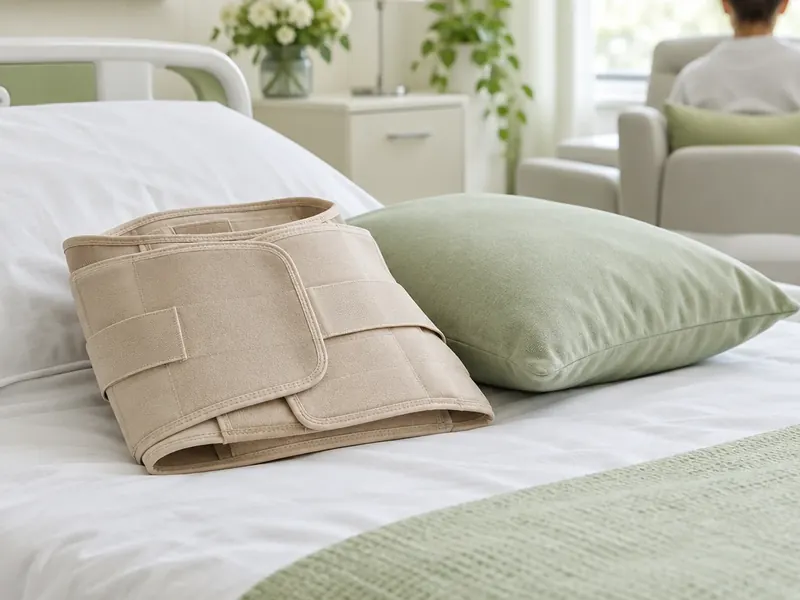
The compression binder is worn for about six to eight weeks. It supports the repaired abdominal wall, reduces swelling and helps the skin settle smoothly. Stitches are usually removed after about seven days.
Most swelling goes down within a month, and office work is usually possible after two to three weeks. Sport, sauna and heavy lifting are off-limits for two to three months. The final contour is judged at about three months, and the scar keeps maturing for about a year: it is red at first and then gradually fades and flattens. Protecting it from the sun and not smoking help it heal well.
Contact your surgeon if you have a fever, increasing pain or swelling on one side, discharge from the wound or a painful, swollen calf.
Your surgery day at City Medical Centre
City Medical Centre performs a classic tummy tuck and a mini tummy tuck with diastasis repair. At the consultation the surgeon examines you and rules out contraindications, and a hormone screening is also ordered, as it helps predict the long-term result. All pre-operative tests can be done at the clinic without waiting.
On the day of surgery you meet your surgeon, the marking is done and compression garments are fitted; the operation takes two to four hours under general anaesthesia, followed by one to three days in hospital under medical supervision. Follow-up visits take place at about one week, three months and six months.
The clinic works with patients from abroad. The first consultation is free and can be held online: send photos of your abdomen and ask which technique suits you and how long to plan your stay. The doctor assesses your case and names the price, which is then fixed in the contract. A personal coordinator stays with you from your first message to the end of recovery, and questions can be sent via Telegram. Read more on our tummy tuck page.
How recovery usually goes
- 1–3 daysHospital stay under medical supervision; drains are usually removed after two days
- 7 daysStitches removed
- 2–3 weeksOffice work resumes
- 30 daysMost swelling goes
- 1.5–2 monthsCompression binder period; swelling and tightness pass; interim result
- 6–12 monthsThe final contours and scar
Sources
Frequently asked questions
How long does a tummy tuck take?
A classic tummy tuck usually takes two to four hours, depending on how much skin is removed and whether the muscles are repaired. A mini tummy tuck is often shorter. Add time for preparation, anaesthesia and the recovery room on the day of surgery.
Is a tummy tuck done under general anaesthesia?
Yes. A tummy tuck, including the muscle repair, is performed under general anaesthesia, so you are asleep and feel nothing during the operation. The anaesthetist monitors your breathing, heart and blood pressure throughout and stays with you until you wake up.
Why are drains needed after a tummy tuck?
After the skin is lifted from the abdominal wall, fluid and some blood can collect in the space beneath it. Thin drains let this fluid escape during the first days and lower the risk of a seroma. They are usually removed after about two days.
How many nights will I stay in hospital?
Usually one to three nights, under medical supervision. The exact time depends on the extent of the surgery, how you feel and how much fluid the drains produce. Patients from abroad usually plan to stay locally for longer to attend the first follow-up visit.
When are stitches removed?
External stitches are usually removed about seven days after surgery. Internal stitches, including those used to repair the muscles, stay in place and dissolve or remain permanently, which is why heavy lifting and abdominal exercise wait for two to three months.
Have a question about your case? Get a free consultation
Message a coordinator on Telegram: we reply right in the chat, and you can send photos and questions there too.
- The first consultation is free, online consultations are available
- The doctor names the cost after the assessment, and it is fixed in the contract
- A personal coordinator guides you from the first message to recovery
Message our coordinator on Telegram
We reply right in the chat — you can send photos
Message us on TelegramBy sending a message, you agree to the privacy policy
Read also
 Tummy tuck
How to prepare for a tummy tuck: tests, weight, timing and the day of surgery
How to prepare for a tummy tuck: stable weight, the consultation, pre-operative tests, stopping smoking, planning help at home and the day of surgery.
 Tummy tuck
Liposuction or tummy tuck: how to choose the right operation for your abdomen
Liposuction removes fat; a tummy tuck removes loose skin and repairs separated muscles. Compare results, scars, recovery and who each operation suits.
 Breast augmentation
How Breast Augmentation Is Performed: Step by Step
What happens in breast augmentation from consultation and tests to anaesthesia, incision, implant placement, stitches, the first hours and recovery.