
























Hair transplant6 min read
Hair transplant risks and complications: what is normal and how to lower the risk
A hair transplant is a minor operation under local anaesthesia, and serious complications are uncommon. Still, it is surgery, and knowing what to expect helps you tell a normal recovery from a problem. This article explains the usual side effects, early and late complications, the risk factors that depend on you and on the clinic, and the aftercare rules that make trouble less likely.
The main points in 30 seconds
- Serious complications after a hair transplant are uncommon for healthy people.
- Swelling, crusts, itching and shedding at 2–4 weeks are usually normal.
- Pus, spreading redness, fever or no growth after 6–9 months need a doctor.
- Risk depends on correct diagnosis, careful surgery and good aftercare.
- Patchy alopecia is treated by a dermatologist first, not with a transplant.
Key facts about the procedure
- Stay in clinicSame day
- Final result12–18 months
- AnaesthesiaLocal
- Price
$2,700from $2,200
Is a hair transplant safe? The main risks in brief
For most healthy people a hair transplant is a safe procedure. It is done under local anaesthesia, the patient goes home the same day, and the skin heals within about one to two weeks. The main risks are not dramatic but practical: an infection in the tiny wounds, grafts that grow worse than expected, a result that looks unnatural, or a donor area that has been thinned too much.
Almost all of these risks depend on three things: whether a transplant is the right solution for your type of hair loss, how carefully the operation is planned and performed, and how well you follow the aftercare instructions.
Normal side effects vs complications
Some reactions are an expected part of healing and pass on their own. Others need a doctor's attention.
- Swelling of the forehead for a few days
- Swelling that spreads to the eyes and keeps increasing after day 4–5
- Small crusts on the grafts for 7–10 days
- Pus, yellow discharge, a bad smell
- Mild itching and tightness
- Growing pain, redness and warmth around the wounds
- Temporary numbness of the scalp
- Fever or feeling unwell
- Shedding of transplanted hairs at 2–4 weeks
- No new growth at all after 6–9 months
The shedding stage in particular frightens many patients. At two to four weeks the transplanted hairs fall out, but the follicles stay in the skin and start producing new hair after about three to four months.
Early complications: swelling, bleeding, infection
- Swelling. Fluid from the anaesthetic and the operated area can move down to the forehead and around the eyes on days two to four. Sleeping with the head raised and following the doctor's instructions usually keeps it mild.
- Bleeding. Small spots of blood on the first night are common. Real bleeding is rare; it is more likely if you take blood-thinning medicines, which is why you must tell the doctor about all medicines in advance.
- Infection. The wounds are tiny, so infection is uncommon, but it can happen if the area is touched with dirty hands, scratched or exposed to dirt and sweat too early.
- Folliculitis. Small pimples may appear when new hairs push through the skin after a few months. They usually settle, but inflamed spots should be shown to the doctor.
Mid- and long-term problems: shock loss, poor growth, unnatural look
Shock loss
Sometimes your own native hair around the transplanted area thins for a while after surgery. This is called shock loss. In most cases the hair grows back within a few months, but hair that was already very weak may not return.
Poor growth
If grafts are damaged during extraction, kept outside the body for too long or implanted at the wrong depth, fewer of them survive. The final result takes 12–18 months to form, so it is too early to judge before about nine months.
Unnatural result
A hairline that is too low, too straight or too dense for your age can look artificial, especially as your own hair continues to thin over the years. Good planning leaves room for future hair loss.
Donor area damage
Taking too many grafts from the back of the head can leave it visibly thin. With FUE the tiny punctures heal as small dots that are usually hidden by the surrounding hair, but the number of grafts that can be taken safely is limited. More on caring for this area is on our hair transplant page.
Risk factors that depend on you and on the clinic
Factors that depend on you:
- smoking, which worsens blood supply to the skin and graft survival;
- uncontrolled chronic illnesses and some medicines, which you should disclose in advance;
- ignoring aftercare: scratching crusts, sport, sauna or alcohol too early;
- unrealistic expectations about density.
Factors that depend on the clinic:
- whether your type of hair loss is assessed correctly before surgery;
- who performs the operation and how carefully grafts are handled;
- how the hairline and the use of the donor area are planned;
- whether there are clear aftercare instructions and follow-up visits.
A transplant is not suitable for everyone. Patchy alopecia (alopecia areata), hair loss after an illness or from a hormonal imbalance are usually treated by a dermatologist first; transplanting hair while the cause is still active is likely to disappoint.
How to lower the risk: aftercare rules
- Follow the washing schedule you are given and do not rub the implanted area.
- Do not pick or scratch the crusts; let them fall off by themselves.
- Sleep with your head raised for the first nights.
- Avoid sport, sauna, swimming pools and direct sun for the period the doctor recommends.
- Wear loose headwear that does not press on the grafts.
- Do not smoke or drink alcohol during the early healing period.
- Take only the medicines your doctor has approved.
- Attend the follow-up visits and send progress photos to your coordinator.

Getting a personal plan at City Medical Centre
City Medical Centre works with international patients and performs hair transplants using FUE, DHI and a combined FUE and DHI method. FUE is used for androgenetic alopecia; the combined FUE and DHI method is used for androgenetic alopecia and for densification. The clinic does not perform strip surgery (FUT) and does not transplant hair in patchy alopecia: in that case a dermatologist's treatment comes first.
The first consultation is free and can be held online: send photos of the thinning area and the back of your head, and the doctor will assess the donor area and say whether a transplant will help you. The cost is named after the grafts are counted and fixed in the contract. A personal coordinator stays with you from the first message through recovery, with follow-up visits at 1, 3, 6, 9 and 12 months, and photos and questions can be sent by Telegram. Read more on the hair transplant page.
How recovery usually goes
- 0-10 daysHealing: the crusts come off, the swelling goes down, the area gradually recovers
- 2-4 weeksShedding of the transplanted hairs: a normal stage, only the hairs fall out, the follicles stay in place
- 3-4 monthsGrowth begins: new hairs gradually appear, the result starts to show
- 6-9 monthsVisible density: the hair becomes thicker, the main volume and contour are visible
- 12-18 monthsFinal result: the final density and a natural hairline take shape
Sources
Frequently asked questions
What are the risks of hair transplant?
The main risks are infection of the tiny wounds, swelling, temporary shock loss of your own hair, poor growth of some grafts, an unnatural hairline and a thinned donor area. Serious complications are uncommon, and most risks can be reduced by careful planning and good aftercare.
Is shock loss after a hair transplant normal?
Temporary shedding is common. The transplanted hairs usually fall out at two to four weeks while the follicles stay in place, and your own nearby hair may thin for a while. In most cases growth resumes after a few months; very weak native hair may not return.
Can a hair transplant fail?
Growth can be weaker than expected if grafts are damaged, the type of hair loss was not suitable or aftercare rules were broken. The final result forms over 12 to 18 months, so it is judged only after that time. No clinic can promise a specific density.
How can I avoid infection after a hair transplant?
Wash your hands before touching your head, follow the washing instructions, do not scratch the crusts, and avoid dirt, heavy sweating, sport, pools and sauna for the period your doctor recommends. Report pus, spreading redness or fever to the doctor without delay.
Can the donor area be damaged?
If too many grafts are taken, the back of the head can look thin. With careful planning, grafts are harvested evenly and the tiny FUE punctures heal as small dots that are usually hidden by the surrounding hair. The doctor assesses the donor area before deciding how many grafts are possible.
Have a question about your case? Get a free consultation
Message a coordinator on Telegram: we reply right in the chat, and you can send photos and questions there too.
- The first consultation is free, online consultations are available
- The doctor names the cost after the assessment, and it is fixed in the contract
- A personal coordinator guides you from the first message to recovery
Message our coordinator on Telegram
We reply right in the chat — you can send photos
Message us on TelegramBy sending a message, you agree to the privacy policy
Read also
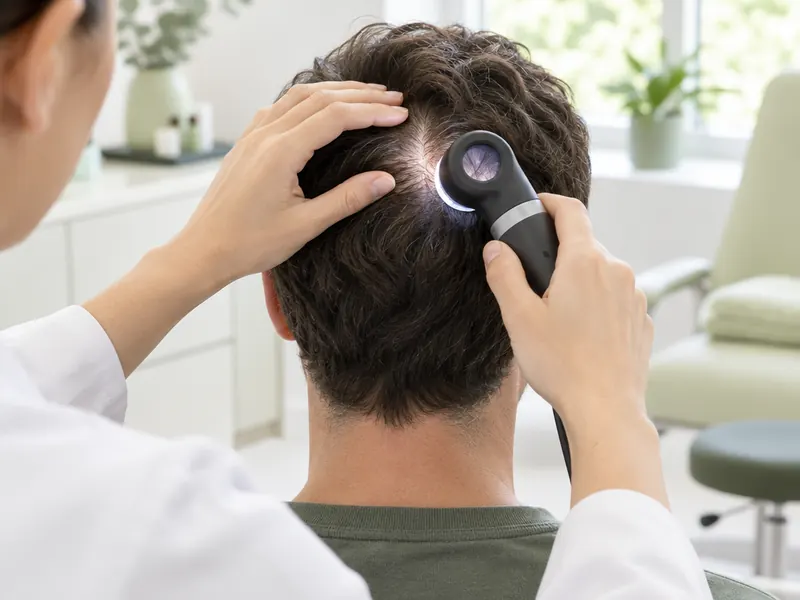 Hair transplant
Donor area after a hair transplant: how to care for it and what to expect
How the donor area heals after a hair transplant: what is normal, how to wash and protect it, what scarring FUE and FUT leave and when to call your doctor.
 Hair transplant
Aftercare after a hair transplant: rules for washing, sleeping, exercise and sun protection
Hair transplant aftercare rules: when and how to wash your hair, how to sleep, when to return to sport, sun protection and what to avoid while grafts settle.
 Arthritis treatment
Arthritis of the fingers and hands: symptoms, diagnosis and treatment
Arthritis of the fingers and hands: the main types, early signs, who is at risk, how it is diagnosed, treatment options and where PRP injections may fit.