





















Facelift6 min read
Endoscopic brow and forehead lift: how it works, what the scars are like and how recovery goes
Drooping brows can make a face look tired, stern or sad even when you feel rested. An endoscopic brow and temple lift raises the brows and smooths the forehead through a few short incisions hidden in the hair. This guide explains how the technique works, who it suits, how it compares with the traditional open approach, what to expect on the day and during recovery, and when it is combined with other procedures.
The main points in 30 seconds
- An endoscopic brow lift raises the brows through small incisions in the hair.
- It smooths forehead and frown lines and opens up a tired look.
- Scars are hidden in the hairline; there is none on the forehead.
- Many people return to office work after about 10–14 days.
- It can be combined with an SMAS or full facelift for even rejuvenation.
Key facts about the procedure
- Main healing2 months
- Final result3–6 months
- AnaesthesiaGeneral
- Pricefrom $2,400
What an endoscopic brow lift is
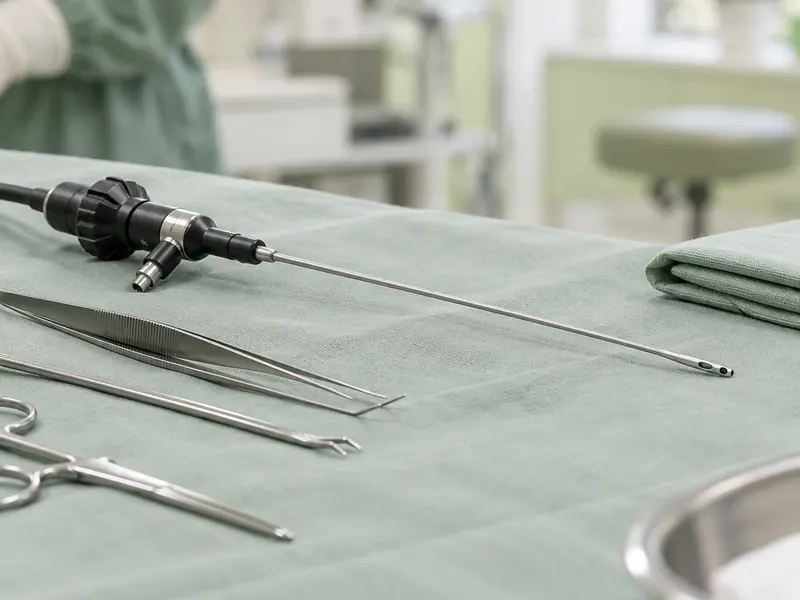
An endoscopic brow lift, also called an endoscopic forehead lift, is an operation that repositions the brows and the tissues of the forehead and temples. Instead of a long incision across the scalp, the surgeon works through several small incisions behind the hairline, using an endoscope: a thin tube with a camera and light that shows the inside of the forehead on a screen.
Through these openings the surgeon releases the tissues that hold the brows down, lifts them to a more youthful position and secures them. The procedure can also soften the muscles that create frown lines between the brows. The result is a more open look and a smoother forehead, while the scars stay hidden in the hair.
Who it suits
An endoscopic brow lift is usually considered when the upper third of the face shows signs of ageing, for example:
- brows that sit low or have dropped at the outer end;
- a heavy, hooded look caused by the brow pressing down on the upper eyelid;
- deep horizontal forehead lines;
- vertical frown lines between the brows;
- a tired or stern expression that does not match how you feel.
It tends to work best for people with a normal or not too high forehead and moderate sagging. If the hairline is very high or the hair is thin, the surgeon may suggest another incision plan. General contraindications are the same as for other facial surgery: pregnancy and breastfeeding, acute skin inflammation, severe heart and blood vessel disease, clotting disorders, cancer and uncontrolled diabetes.
Advantages over open brow lifts
A traditional open (coronal) brow lift uses one long incision from ear to ear across the top of the head. It gives the surgeon wide access but leaves a longer scar and can cause more numbness of the scalp. The endoscopic approach was developed to achieve a similar lift in a less invasive way.
Incisions
- Endoscopic brow lift
- Several short incisions behind the hairline
- Open (coronal) brow lift
- One long incision across the scalp
Scars
- Endoscopic brow lift
- Small and hidden in the hair
- Open (coronal) brow lift
- Long, hidden in hair but can widen
Scalp numbness
- Endoscopic brow lift
- Usually less and shorter-lived
- Open (coronal) brow lift
- Often more extensive
Swelling and recovery
- Endoscopic brow lift
- Typically quicker
- Open (coronal) brow lift
- Typically longer
Best suited to
- Endoscopic brow lift
- Moderate brow descent, normal hairline
- Open (coronal) brow lift
- Very heavy brows or special cases
Which approach is right depends on your anatomy. The surgeon explains the options after examining your forehead, brows and eyelids.
Preparation and planning
At the consultation the surgeon assesses brow position, forehead height, eyelid skin and the balance of the whole face. It is important to check whether heaviness of the upper eyelid comes from a low brow, from excess eyelid skin or from both, because this changes the plan.
Before surgery you will usually be asked to:
- have the recommended blood tests and a general health check;
- stop smoking several weeks in advance;
- tell the doctor about every medicine and supplement you take, as some may need to be paused on medical advice;
- avoid alcohol and intense sun exposure in the days before the operation.
The operation step by step
The operation is performed under general anaesthesia and usually takes one to two hours, longer if combined with another procedure. In broad terms:
- the surgeon marks the planned lift and makes several short incisions behind the hairline;
- the endoscope is inserted, and the tissues of the forehead and temples are carefully released;
- the muscles responsible for frown lines may be softened;
- the brows are lifted to the planned height and fixed in their new position;
- the incisions are closed, and a light dressing or band is applied.
Because the incisions lie in the hair, there is no visible scar on the forehead itself.
Recovery and possible complications
Recovery after an endoscopic brow lift is usually easier than after a full facelift, but it still takes time. Swelling and bruising can spread down to the eyelids and cheeks in the first days. Many people feel ready for office work and social plans after about 10 to 14 days, and the final look settles over a few months.
Common temporary effects include tightness of the forehead, numbness or itching of the scalp and mild headache. Possible complications, which are uncommon, include:
- bleeding or a collection of blood under the skin;
- infection;
- temporary weakness in raising the brows;
- slight asymmetry of the brows;
- hair thinning around the incisions, usually temporary.
Sleeping with the head raised, avoiding heavy exercise for the time advised and attending follow-up visits help recovery go smoothly. Contact your surgeon if swelling increases suddenly, pain becomes severe or you develop a fever.

Combining with other procedures
A brow lift treats the upper third of the face only. If sagging also affects the cheeks, jawline or neck, it is often combined with an SMAS facelift, or performed as part of a full (circular) facelift, so the face is rejuvenated evenly. As general information, a brow lift is sometimes combined with upper eyelid surgery when there is also excess eyelid skin; whether this is needed is decided at the consultation after examining the eyelids.
Results of an endoscopic brow lift usually last many years. The face continues to age, but the brows generally stay higher than they would have without surgery.
Endoscopic brow lift at City Medical Centre
City Medical Centre performs surgical facelifts only: the SMAS facelift, the full (circular) facelift, the neck and lower face lift and the endoscopic brow and temple lift. The endoscopic lift is done through tiny incisions hidden in the hairline; it repositions the brows, smooths forehead and frown lines and opens up the look. At the consultation the surgeon assesses your upper face and advises whether a brow lift alone or a combination suits you best. You can read more on the facelift page.
International patients can start with a free online consultation by sending photos of the face from the front and side. The cost is named after the assessment and fixed in the contract. After surgery you are monitored in the clinic’s inpatient unit, your surgeon follows you up for a year, and a personal coordinator supports you from the first message to the end of recovery, including by Telegram.
Sources
Frequently asked questions
How long does an endoscopic brow lift last?
The result usually lasts many years. The brows are secured in a higher position, and although the face continues to age naturally, they generally stay higher than they would have without surgery. Sun protection, not smoking and a stable weight help maintain the effect.
Will there be visible scars?
The incisions are short and placed behind the hairline, so the scars are hidden in the hair and there is no scar on the forehead itself. As with any surgery, healing varies, and the scars fade gradually over several months.
Can a brow lift fix hooded eyes?
It can help when the heaviness is caused by a low brow pressing down on the upper eyelid. If there is also excess eyelid skin, a brow lift alone may not be enough. The surgeon examines the brows and eyelids to find the cause before suggesting a plan.
How long is recovery after a brow lift?
Most people need about 10 to 14 days before returning to office work and social life. Swelling and bruising fade over the first weeks, scalp numbness may take longer to settle, and the final result appears over a few months.
Can a brow lift be combined with eyelid surgery?
As general information, a brow lift is sometimes combined with upper eyelid surgery when both a low brow and excess eyelid skin are present. Whether this is needed and which options are available is decided at the consultation after the surgeon has examined your face.
Have a question about your case? Get a free consultation
Message a coordinator on Telegram: we reply right in the chat, and you can send photos and questions there too.
- The first consultation is free, online consultations are available
- The doctor names the cost after the assessment, and it is fixed in the contract
- A personal coordinator guides you from the first message to recovery
Message our coordinator on Telegram
We reply right in the chat — you can send photos
Message us on TelegramBy sending a message, you agree to the privacy policy
Read also
 Facelift
Full (circular) facelift: what it corrects, who it suits and what recovery involves
What a full circular facelift corrects, who it suits and who it does not, how the operation and the first weeks with a face bandage go, and how long results last.
 Facelift
Facelift cost: what shapes the price and what a fair quote includes
What a facelift costs depends on: the type of lift, combined procedures, anaesthesia and stay, follow-up and travel. How to read a quote and compare clinics.
 Tummy tuck
Exercise after a tummy tuck: when and how to return to sport and lifting
When you can walk, run, swim, lift weights and train your abs after a tummy tuck: a stage-by-stage plan, warning signs and how to protect the muscle repair.