
























Facelift6 min read
Deep plane or SMAS facelift: how the two techniques differ and how surgeons choose
Deep plane and SMAS facelifts are often presented as rivals, but they are closely related. Both work on the deep muscle and fascia layer of the face rather than just the skin. The difference lies in how deep the surgeon goes, which ligaments are released and how the tissues are moved. This article explains the main difference, what a deep plane lift adds, how recovery compares, which technique suits whom and how the choice is made.

The main points in 30 seconds
- Both techniques lift the deep SMAS layer, not just the skin.
- A deep plane lift releases ligaments and moves skin and SMAS as one unit.
- It may lift the mid-face more; a SMAS lift works well for jaw and neck.
- Recovery is similar; the surgeon’s experience matters more than the name.
- City Medical Centre chooses the technique and depth at the consultation.
Key facts about the procedure
- Main healing2 months
- Final result3–6 months
- AnaesthesiaGeneral
- Pricefrom $2,400
Deep plane vs SMAS: the main difference
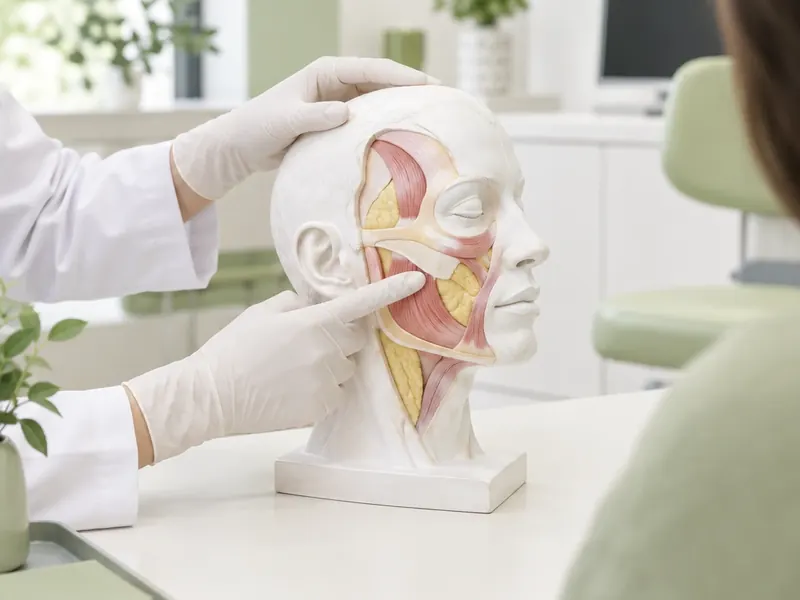
Under the skin of the face lies a layer of fat and then the SMAS, a sheet of muscle and fascia that supports the cheeks, jaw and neck. With age the SMAS and the ligaments that hold it weaken, and the tissues slide down. Both techniques aim to lift this layer back into place.
- SMAS facelift. The surgeon lifts the skin, then tightens and repositions the SMAS by folding it, trimming it or securing it with stitches. The skin and the SMAS are handled as two separate layers.
- Deep plane facelift. The surgeon works beneath the SMAS, releases the retaining ligaments that tether the cheek and jaw, and moves the skin and SMAS together as one unit.
Level of work
- SMAS facelift
- On top of and within the SMAS
- Deep plane facelift
- Beneath the SMAS
Retaining ligaments
- SMAS facelift
- Usually not released or partly released
- Deep plane facelift
- Released to free the tissues
How tissues are moved
- SMAS facelift
- Skin and SMAS separately
- Deep plane facelift
- Skin and SMAS as one unit
Main strength
- SMAS facelift
- Jowls, jawline and neck
- Deep plane facelift
- Also the mid-face and deep nasolabial folds
Technical demand
- SMAS facelift
- High
- Deep plane facelift
- Very high
In practice there are many variations between these two poles, and surgeons often adapt the depth of dissection to each area of the face.
How surgeons choose a technique
The choice depends less on fashion and more on your anatomy and goals. Surgeons usually consider:
- where the sagging is: mainly the jaw and neck, or also the cheeks and mid-face;
- how deep the nasolabial folds are;
- skin thickness and quality;
- previous facial surgery and scarring;
- general health and how much recovery time you can take;
- the surgeon’s own experience with each technique.
A skilled SMAS facelift and a skilled deep plane lift can both give natural results. The surgeon’s experience and judgement usually matter more than the name of the technique.
What a deep plane lift adds
Because the deep plane approach releases the ligaments that hold the cheek down, it can lift the mid-face more vertically. That may help people whose main concern is flattened cheeks and deep folds between the nose and mouth, not only the jawline.
Moving the skin and SMAS together also means the skin is carried by the deeper layer, so there is less tension on the skin itself. This is one of the reasons deep plane lifts are associated with a natural, un-pulled look.
The trade-off is complexity. Working beneath the SMAS brings the surgeon closer to the branches of the facial nerve, so the technique requires detailed anatomical knowledge and experience. Serious complications are uncommon with any well-performed facelift, but the risks should be discussed openly. More about the types of lift is on our facelift page.
Pain, recovery and return to work
Recovery after both techniques follows a similar pattern:
- discomfort is usually moderate and controlled with standard pain relief prescribed by the doctor;
- swelling and bruising are most visible in the first one to two weeks;
- many people return to desk work and social life after two to three weeks;
- residual swelling and numbness fade over several months.
Some surgeons report that a deep plane lift can cause more mid-face swelling in the first weeks, others find the difference small. In both cases your personal recovery depends more on your health, the extent of surgery and following aftercare than on the technique itself.
How pronounced and natural the results are
Both techniques aim for a result in which the face looks rested rather than tight. A natural look comes from lifting the deep layer and not pulling the skin, and both approaches do this.
A deep plane lift may give a stronger change in the mid-face, while a SMAS lift gives a clear improvement along the jaw and neck. How long the result lasts depends on skin quality, age, weight stability and lifestyle; there is no reliable evidence that one technique always lasts markedly longer than the other.
Which technique suits you
As a general guide:
- Changes mainly along the jaw and neck. A SMAS facelift or a neck and lower face lift is often enough.
- Jowls plus flattened cheeks and deep nasolabial folds. A deeper release of the mid-face may be considered.
- Marked changes across the whole face. A full facelift, sometimes combined with a brow lift, with the depth adapted to each area.
The final decision is always made after the surgeon has examined your face.

Technique selection at City Medical Centre
City Medical Centre performs surgical facelifts only, based on work with the SMAS layer: a standard SMAS facelift, a full (circular) facelift, a neck and lower face lift, and an endoscopic brow and temple lift. City Medical Centre does not perform deep plane facelifts. The deep plane technique is described here as general information about facelift methods.
Which depth of work and which variant suit your face is decided by the surgeon at the consultation, after examining you and explaining every stage.
The clinic works with patients from abroad. The first consultation is free and can take place online: send front and side photos of your face and neck and describe what bothers you most. The doctor assesses your case and names the price, which is then fixed in the contract. A personal coordinator supports you from your first message to the end of recovery, and you can send photos and questions via Telegram. Learn more on our facelift page.
Sources
Frequently asked questions
Is a deep plane facelift better than SMAS?
Not in general. A deep plane lift releases the ligaments beneath the SMAS and may lift the mid-face more, while a SMAS lift works well for the jaw and neck. Both can give natural results. The better choice depends on your anatomy, goals and the surgeon’s experience.
Does a deep plane facelift last longer?
There is no reliable evidence that it always lasts markedly longer. Both techniques lift the deep layer, which is why they usually last many years. How long your result lasts depends more on skin quality, age, weight stability, sun protection and smoking than on the technique.
Is recovery longer after a deep plane lift?
Recovery is broadly similar. Swelling and bruising are most visible in the first one to two weeks, and many people return to desk work after two to three weeks. Some patients have more mid-face swelling after a deep plane lift, but individual healing matters more than the technique.
Is a deep plane facelift riskier?
Working beneath the SMAS brings the surgeon closer to branches of the facial nerve, so the technique demands great anatomical knowledge and experience. Serious complications are uncommon when any facelift is well performed. Discuss the specific risks of the planned technique with your surgeon.
Which facelift looks most natural?
The most natural results come from lifting the deep layer and avoiding tension on the skin, which both SMAS and deep plane techniques do. The surgeon’s skill, the right choice of technique for your face and realistic goals matter more than the technique’s name.
Have a question about your case? Get a free consultation
Message a coordinator on Telegram: we reply right in the chat, and you can send photos and questions there too.
- The first consultation is free, online consultations are available
- The doctor names the cost after the assessment, and it is fixed in the contract
- A personal coordinator guides you from the first message to recovery
Message our coordinator on Telegram
We reply right in the chat — you can send photos
Message us on TelegramBy sending a message, you agree to the privacy policy
Read also
 Facelift
Endoscopic brow and forehead lift: how it works, what the scars are like and how recovery goes
How an endoscopic brow and temple lift works, who it suits, how it compares with an open brow lift, what the operation and recovery involve and how long it lasts.
 Facelift
Facelift cost: what shapes the price and what a fair quote includes
What a facelift costs depends on: the type of lift, combined procedures, anaesthesia and stay, follow-up and travel. How to read a quote and compare clinics.
 Bariatric surgery
Teeth and digestion after bariatric surgery: what to watch
How bariatric surgery can affect your teeth: why reflux, vomiting and frequent snacking matter, warning signs, and simple habits that protect your teeth.