
























Tummy tuck6 min read
Compression garment after a tummy tuck: why it matters and how long to wear it
After a tummy tuck you leave the operating room already wearing a compression garment, and it stays with you for weeks. Many patients find it the least pleasant part of recovery, yet it plays a real role in how the abdomen heals and settles. This guide explains what the garment does, how long it is usually worn, how it should fit, how to live with it day to day and which signs mean you should contact your surgeon.
The main points in 30 seconds
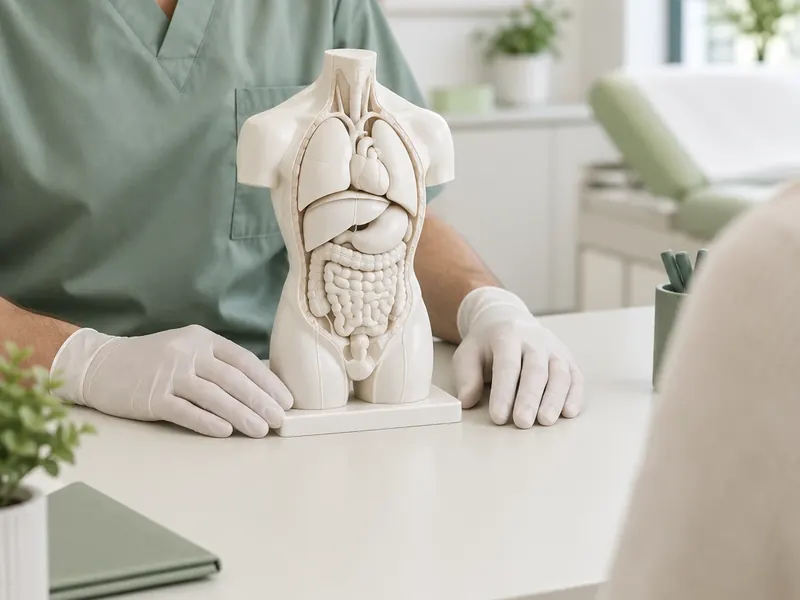
- Compression reduces swelling, supports repaired muscles and helps the layers heal together.
- It is usually worn for about six to eight weeks, day and night at first.
- The garment should be snug and even, never painful or numbing.
- A second garment makes washing and daily wear easier.
- Severe pain, skin colour change, calf swelling or breathlessness need urgent contact with a doctor.
Key facts about the procedure
- Operation time2–4 hours
- Back to work2–3 weeks
- Stay in clinic1–3 days
- PriceAt consultation
What a compression garment does
During a tummy tuck the surgeon lifts the skin and fat off the abdominal wall, removes the excess, repairs separated muscles and closes the skin under tension. The body responds with swelling and fluid in the space that was created. A compression garment applies even pressure over this area, which helps in several ways:
- less swelling, because pressure limits fluid build-up in the tissues;
- support for the repaired muscles when you get up, cough or walk;
- better contact between skin and abdominal wall, so the layers heal together smoothly;
- a lower risk of fluid collections, which sometimes need to be drained;
- more comfort and confidence when moving in the first weeks.
The garment does not create the result on its own. It supports what the operation achieved while the tissues heal.
Binders and garments
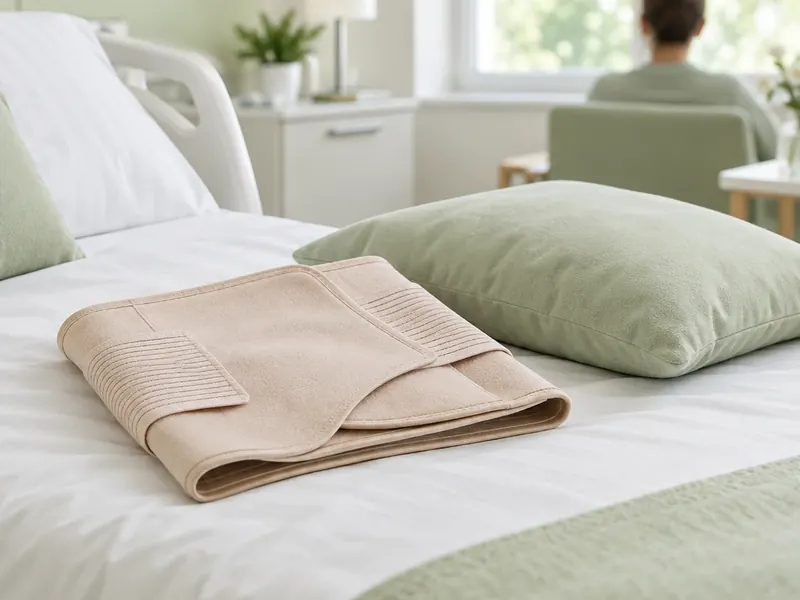
Two types of compression are used after a tummy tuck. An abdominal binder is a wide elastic band that wraps around the waist and fastens at the front. It is easy to adjust while swelling changes and easy to open for checking the wound. A compression garment looks more like firm shapewear: it covers the abdomen and often the hips and thighs, and gives more even pressure over a larger area.
Some surgeons use a binder first and switch to a garment later; others use one type throughout. The choice depends on the technique, whether liposuction of the flanks was added and the surgeon's routine. The type matters less than a good fit and wearing it as instructed.
How long to wear it
Most patients wear compression for about six to eight weeks. The exact schedule is set by the surgeon, but a typical course looks like this:
- Day of surgery
- Fitted before or right after the operation
- Hospital stay, 1–3 days
- Worn continuously; drains are usually removed after about two days
- Weeks 1–3
- Worn day and night, removed only briefly for washing when allowed
- Weeks 3–6
- Usually still worn most of the day and night; swelling is going down
- Weeks 6–8
- The surgeon decides when to reduce wear and when to stop
Most swelling goes within the first month, but the abdomen keeps settling for about three months. Stopping compression early on your own can mean more swelling and a longer recovery.
How it should fit
A compression garment should feel snug and supportive, not painful. Signs of a good fit:
- the pressure is even, with no area that feels much tighter than the rest;
- you can breathe deeply and sit comfortably;
- the fabric lies flat, without deep folds or edges rolling into the skin;
- the skin under it is not numb, cold or unusually pale or dark.
As swelling goes down, the garment can become loose. If it no longer gives firm pressure, tell the clinic: you may need a smaller size or a different fastening position. A garment that is too tight is a problem too, because it can mark or irritate the skin and affect blood flow.

Living with it day to day
Having two garments makes life easier: one is worn while the other is washed and dried. Follow the washing instructions, because hot water and dryers can stretch the fabric and weaken the compression.
When the surgeon allows showering, take the garment off, wash, dry the skin carefully and put it back on without delay. Keep the skin under it clean and dry. A thin, seamless layer of cotton underneath can reduce rubbing if your surgeon agrees. Loose clothes that open at the front are easier to wear over the garment, and a slightly raised sleeping position with knees bent reduces pressure on the wound.
Walking little and often from the first days is encouraged. Heavy lifting, bending and abdominal exercises wait until the surgeon gives permission, usually several weeks after surgery. Office work is usually possible after two to three weeks.
Common problems and when to call your surgeon
Itching, a feeling of heat, pressure marks and some discomfort are common, especially in warm weather. Smoothing the fabric, keeping the skin dry and adjusting the fastening often help.
Contact your surgeon or the clinic straight away if you notice:
- severe or increasing pain, or pain that does not improve with the prescribed treatment;
- numbness, tingling, or skin that turns very pale, blue or dark under the garment;
- a new bulge, fluid or strong swelling on one side of the abdomen;
- redness, warmth or discharge around the wound, or fever;
- pain or swelling in a calf, shortness of breath or chest pain, which need urgent medical care.
Do not cut, loosen or remove the garment for long periods without advice, even if it feels uncomfortable. More about recovery on our tummy tuck page.

Compression after surgery at City Medical Centre
City Medical Centre performs a classic tummy tuck and a mini tummy tuck with diastasis repair. The compression garment is fitted on the day of surgery, and patients stay in hospital under medical supervision for one to three days. A compression binder is worn for about six to eight weeks; it supports the abdominal wall and helps shape a smooth contour. Drains are usually removed after about two days and stitches after about seven days.
Follow-up visits with the surgeon take place at about one week, three months and six months after surgery, and the surgeon decides when compression can be reduced. The clinic works with patients from abroad: the first consultation is free and can be held online, the price is fixed in the contract, and a personal coordinator answers questions via Telegram at any stage, including after you return home. Read more on our tummy tuck page.
How recovery usually goes
- 1–3 daysHospital stay under medical supervision; drains are usually removed after two days
- 7 daysStitches removed
- 2–3 weeksOffice work resumes
- 30 daysMost swelling goes
- 1.5–2 monthsCompression binder period; swelling and tightness pass; interim result
- 6–12 monthsThe final contours and scar
Sources
Frequently asked questions
How long do I need to wear a compression garment after a tummy tuck?
Usually about six to eight weeks. It is worn day and night for the first weeks and removed only briefly for washing when allowed. The surgeon decides when you can reduce wear and stop, based on how the swelling and wound are healing.
Can I take the garment off to sleep?
In the first weeks the garment is usually worn at night too, because swelling builds up when compression is removed for long periods. Later, the surgeon may allow breaks. Ask at your check-up rather than deciding on your own.
What happens if I stop wearing it too early?
Stopping early can mean more swelling, a higher chance of fluid collecting under the skin and a slower recovery. It does not usually ruin the result, but it can make healing less comfortable and longer. If the garment is uncomfortable, ask the clinic about adjusting or replacing it.
Can I shower while wearing compression?
Once your surgeon allows showering, you take the garment off, wash quickly, dry the skin well and put it back on straight away. Having a second garment helps, so a clean, dry one is always ready.
Is a compression garment the same as shapewear?
Not quite. Medical compression garments are designed to give even, controlled pressure over the operated area and to be worn for weeks. Ordinary shapewear may press unevenly or dig into the wound area, so use the garment your clinic recommends.
Have a question about your case? Get a free consultation
Message a coordinator on Telegram: we reply right in the chat, and you can send photos and questions there too.
- The first consultation is free, online consultations are available
- The doctor names the cost after the assessment, and it is fixed in the contract
- A personal coordinator guides you from the first message to recovery
Message our coordinator on Telegram
We reply right in the chat — you can send photos
Message us on TelegramBy sending a message, you agree to the privacy policy
Read also
 Tummy tuck
Diastasis recti: how to check for it, what exercise can do and when surgery is the answer
Diastasis recti is a gap between the abdominal muscles. Learn how to check for it, what exercise can and cannot do, and when surgical repair is considered.
 Tummy tuck
Exercise after a tummy tuck: when and how to return to sport and lifting
When you can walk, run, swim, lift weights and train your abs after a tummy tuck: a stage-by-stage plan, warning signs and how to protect the muscle repair.
 Hair transplant
Crown hair transplant: how thinning at the top of the head is treated
Can a transplant fix a thinning crown? Causes of crown baldness, when surgery makes sense, FUE or DHI, graft planning, recovery and when results show.