


























 beforeafter
Liposuction
Abdomen and waist
from $1,200
The price is fixed in the contract before surgery
Message our coordinator
Free online consultation · Reply within 15 minutes
Message us on TelegramMessage us on WhatsAppBy messaging us, you agree to our Privacy Policy
Results
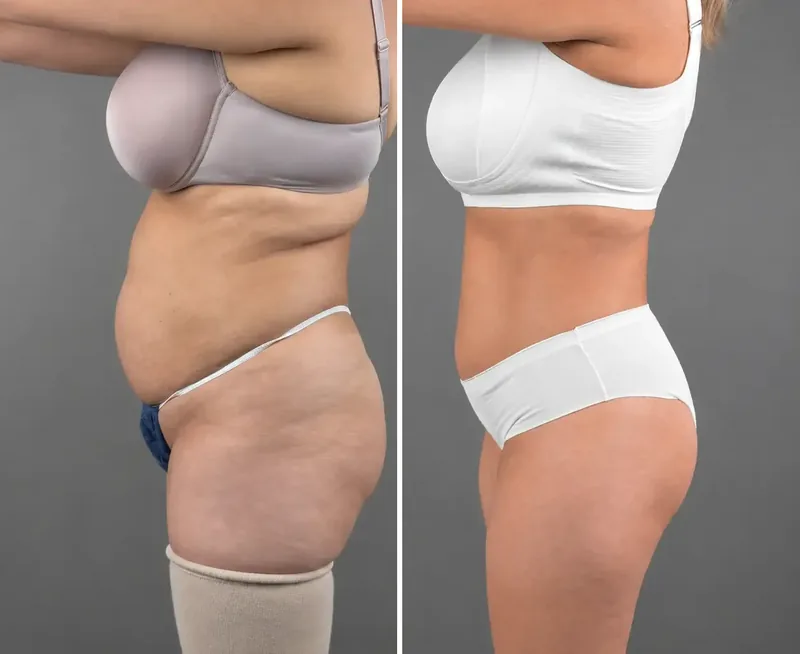
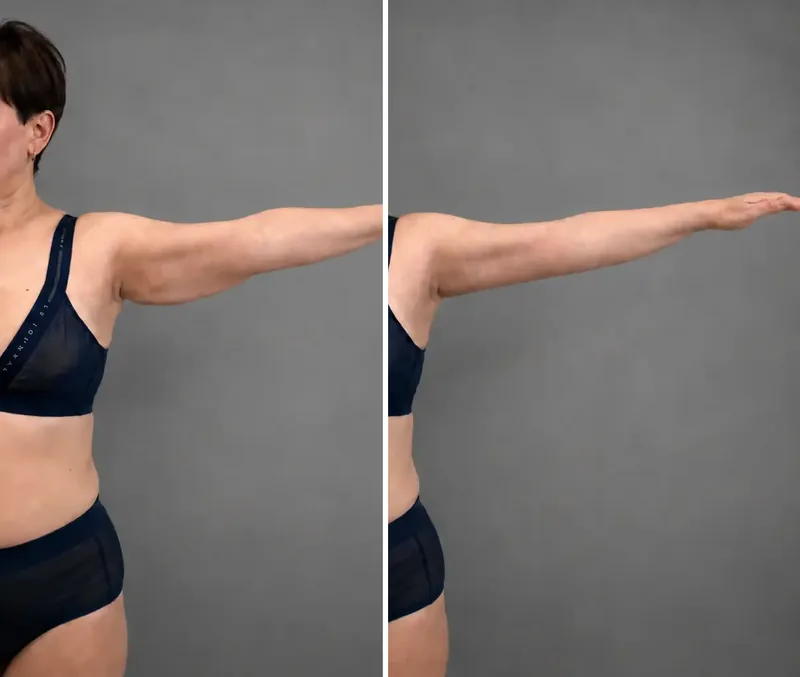
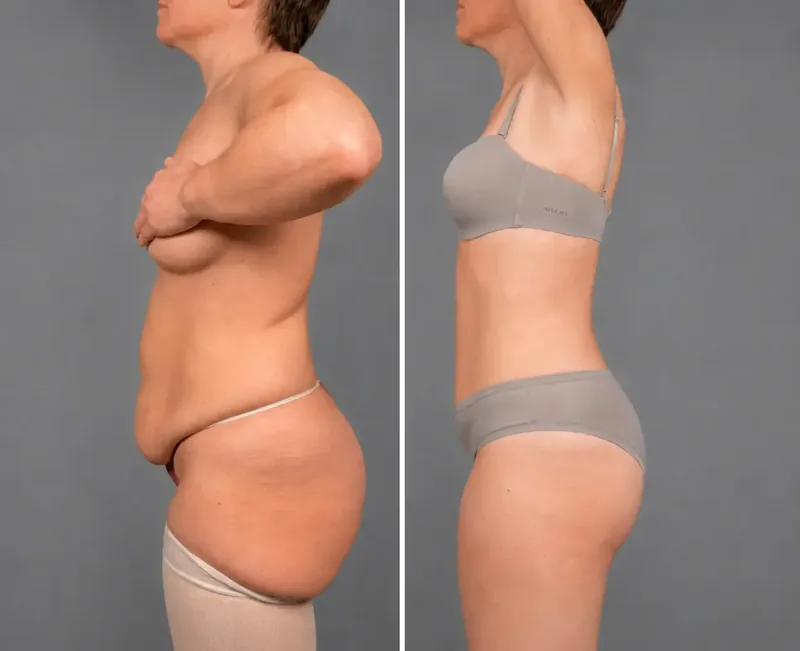
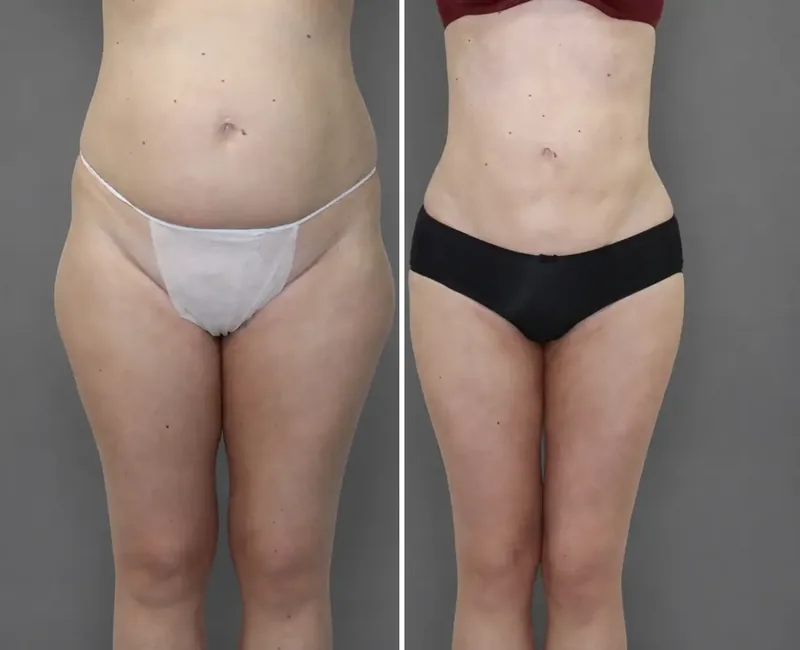
All cases are real patients. Faces and identifying details are hidden.
beforeafterAbdomen and waist
 beforeafter
Arms
 beforeafter
Abdomen and waist
 beforeafter
Abdomen and thighs
 beforeafter
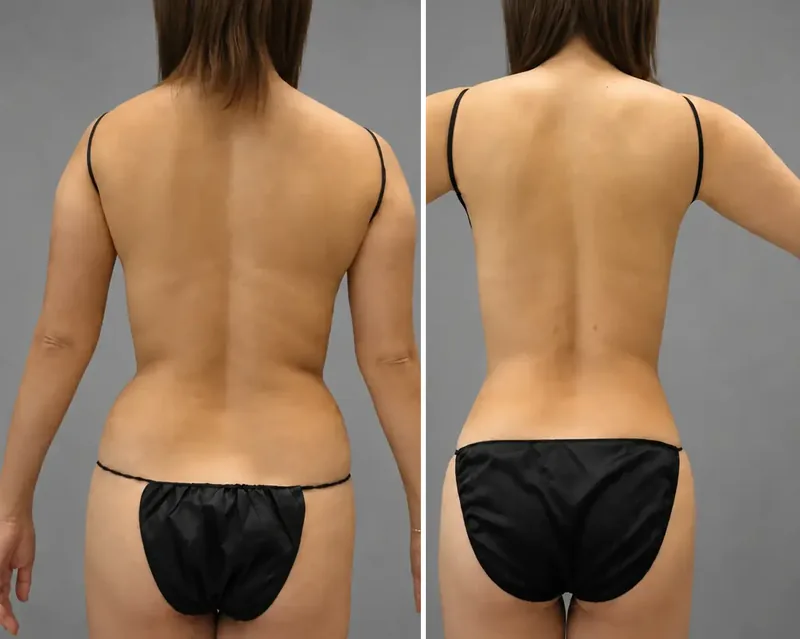
Back and flanks
 beforeafter
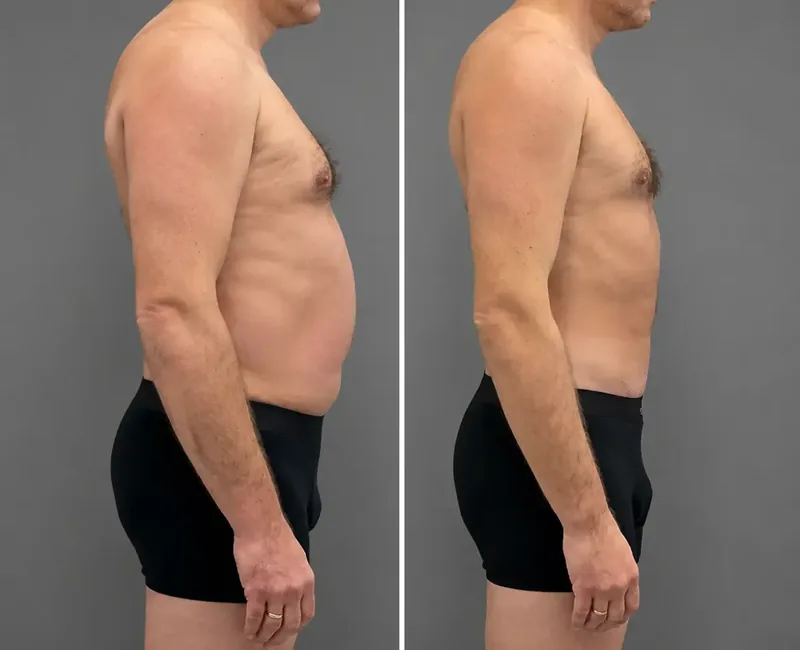
Male abdomen
 beforeafter
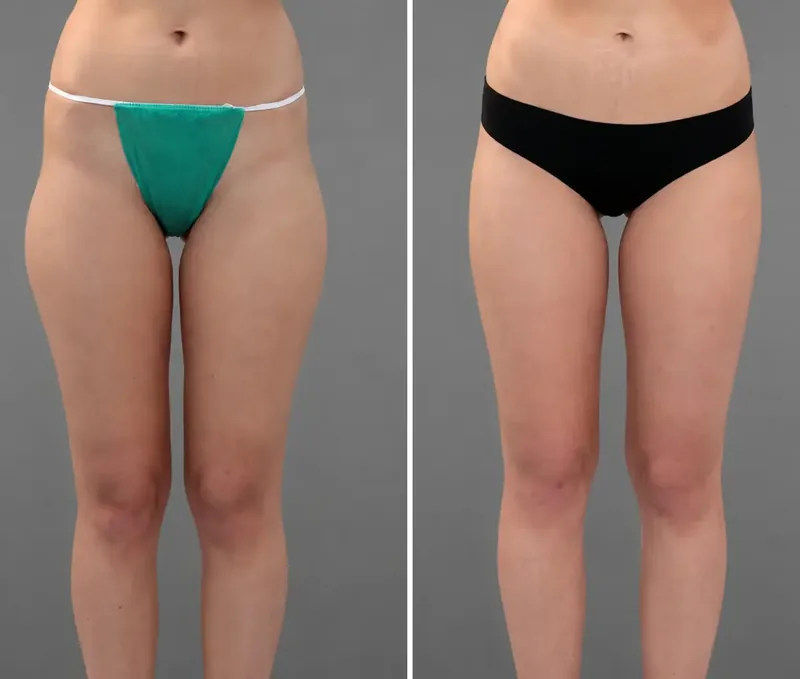
Inner thighs
 beforeafter
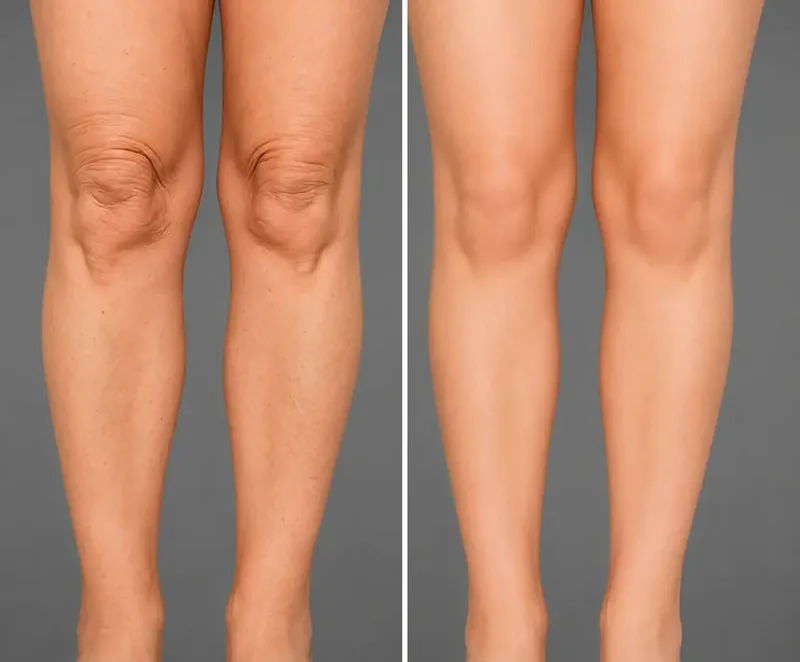
Knees
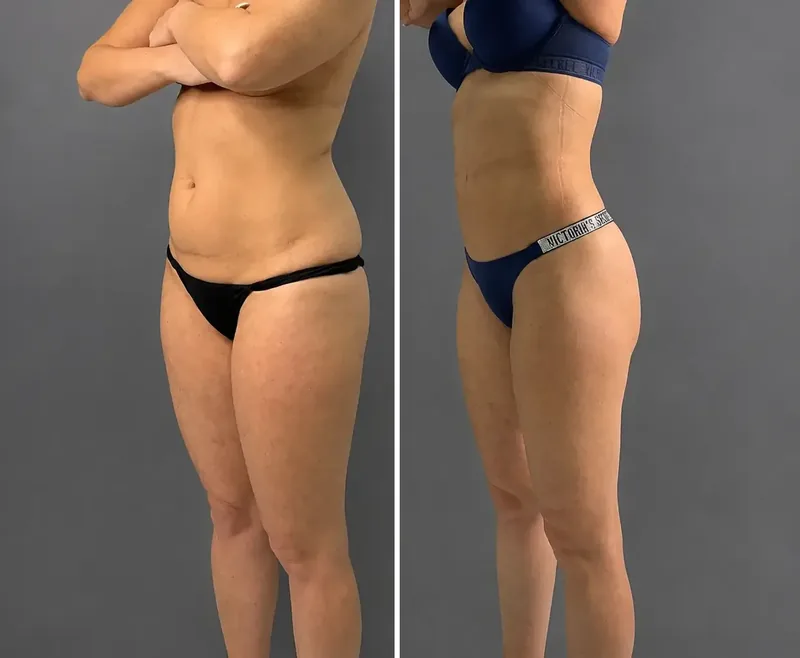 beforeafter
Abdomen and waist
Comparison
We use two liposuction techniques: tumescent (classic) and VASER (ultrasound). Compare the goal, the indications and the anaesthesia to choose the right technique together with your surgeon.
A special solution loosens fat for removal through a thin cannula
from $1,200
Ultrasound breaks down fat cells before vacuum removal
Price at consultation
The benefits and recovery times shown are averaged for each technique and given for guidance: the scope of correction and rehabilitation depend on your anatomy and individual features, and the surgeon confirms them at the consultation.
At the consultation the surgeon draws up a plan for your case and explains how your liposuction will go.
Free, before surgery and with no obligation.
Combine several areas in one operation to save recovery time and budget
The most requested area for women and men, often combined with abdominoplasty
Fat pockets that resist training
Back rolls that disrupt the silhouette
A cosmetic issue seen in warm weather
Small volume and a fast-appearing result
A delicate spot that requires precision
Gynecomastia, pseudogynecomastia: the fat part
About the clinic
Modern equipment, comfortable rooms and care for every patient

We will answer your questions and find a convenient time for a consultation
If your case can be solved without surgery, the doctor will tell you so at the consultation — and you will not spend money for nothing.


Not sure the surgery is right for you?
Leave your number — the coordinator will call you back, and the surgeon will tell you whether liposuction suits you. No surgery booking needed.
Find out if it suits me
Prices
The final price is calculated individually after an examination and fixed in the contract.
The most requested area — treated in one operation

Contouring of the front abdominal wall

The surgeon assesses the fat deposits and skin tone, listens to your wishes and chooses the right technique.

Message our coordinator
Free online consultation · Reply within 15 minutes
Message us on TelegramMessage us on WhatsAppBy messaging us, you agree to our Privacy Policy

all inclusive
From preparation for surgery
to post-op check-ups.
from $1,200
Book a consultationHow it works
An agreed treatment plan, careful monitoring after surgery and post-op check-ups.
 1
1The surgeon listens to your wishes, assesses the fat deposits and skin tone and rules out contraindications. A hormonal screening is also ordered — it helps predict the long-term result.
 2
2We reserve a surgery date for you: the deposit can be paid by card at the clinic or online by bank transfer. The terms are fixed in the contract for medical services
 3
3Blood tests (complete count, coagulation panel, biochemistry, infections), an ECG, a chest X-ray and, if needed, a GP consultation. All tests can be done at the clinic with no waiting.
 4
4Marking the areas and fitting compression garments. Under local or general anaesthesia the surgeon removes fat through 3–5 mm micro-punctures — from 1 hour for small areas to 3–4 hours for a combined procedure.
 5
5With local anaesthesia you go home 3–4 hours after surgery; with general anaesthesia you stay one day in a comfortable ward under medical supervision.
 6
6Compression garments for 30–45 days. First changes show at 2 weeks, once swelling subsides; the final result forms in 3–6 months. Check-ups at 7 days, 3 and 6 months.

After tumescent liposuction, recovery is much shorter than after a conventional procedure. Most patients return to work within 7–10 days. In the first week, mild swelling and a raised temperature are possible — a normal response to surgery. Compression garments are worn for 30–45 days: they fix the new contours and speed up tissue recovery. In the first month, bathhouse, sauna, pool and intense sport are off-limits. For the best result and faster recovery we recommend lymphatic drainage massage, pressotherapy and a gradual return to activity. First visible changes show 2 weeks after surgery, when the main swelling subsides; the final result forms in 3–6 months.
After 7 days, at 3 months and at 6 months. Until the end of the year, get a post-surgery consultation with your surgeon to review results and get more information, at the clinic's expense.
Advantages

At the consultation we discuss your wishes and assess the fat deposits and skin tone. Before surgery an endocrinologist rules out hormonal causes of the fat deposits — this improves the long-term result.

The surgeon follows your recovery and the new body contour at check-ups after 7 days, 3 and 6 months. Check-ups, dressings and aftercare advice are already included in the price of surgery.

Tumescent and VASER techniques, micro-incisions of 3–5 mm and precise volume control. Our aim is a smooth contour that keeps the natural proportions of your body.

We respect your time: we work 24/7, with easy booking and a personal approach — we adapt to your pace.

After the consultation the surgeon defines the areas and the scope of surgery, and you get a clear price fixed in the contract — no hidden extras.

With general anaesthesia recovery starts in a comfortable hospital ward under round-the-clock nursing care. The stay and meals are already included in the price.
FAQ
Yes, that's standard. Treating only one area is rare — usually several problem zones are combined, like the abdomen with the flanks or the inner with the outer thighs. At the consultation, our surgeons define the optimal scope of surgery according to your health and the result you want.
No. Liposuction is not a weight-loss method. It is meant to remove local fat deposits that resist diet and exercise and to reshape body contours. If your weight is unstable, see a nutritionist or endocrinologist first.
The surgery is done through punctures only 3–5 mm across — they usually need no stitches. Once healed, the marks are barely visible. With proper care during recovery they fade completely.
Before the operation, the surgeon always assesses skin tone, elasticity and turgor. If the skin is in good condition, it tightens on its own around the new contours. For reduced tone or stretch marks, our specialists recommend preparatory treatments to improve the skin in advance.
No, you are under anesthesia during the procedure — local or general, depending on the scope. After surgery there may be mild discomfort, relieved by painkillers prescribed by the doctor.
For the first 7 days — no physical exertion or heavy lifting. For 4–6 weeks wear compression garments and avoid bathhouse, sauna, pool and active sport. Alcohol and tanning beds are off-limits for at least a month. Your surgeon gives all individual recommendations after surgery.
We operate on patients aged 18+ with no contraindications. There is no upper age limit — the decision is made individually after an examination and health assessment.
Not directly: liposuction removes fat but doesn't alter the skin structure causing cellulite. The improved body contours do, however, visibly reduce its appearance.
The majority of patients go back to work and their normal routine within 7–10 days. Swelling and bruising disappear by weeks 4–5, and it takes 3–6 months for the final result to form as tissues fully adapt.
A strict diet isn't required, but nutrition matters for keeping the result. Removed fat cells don't come back, but the remaining ones can grow if you gain weight. For a lasting result we recommend a balanced diet and regular physical activity.
Yes. Give up smoking, alcohol and medications that affect clotting (aspirin, etc.) 7–10 days before liposuction. Pre-operative tests — blood tests, ECG, ultrasound, GP and anesthesiologist consultations — are also required. You'll receive all instructions after the first consultation.
First changes show 2 weeks after surgery, when the main swelling subsides. The interim result is assessed at 1.5–2 months. The final contours form in 3–6 months.
Prices are in US dollars; the amount in brackets is an approximate conversion to EGP at the rate of 02.10.2026. The final price is fixed in your contract.
Prices start from $1,200 (≈ EGP 63,000) per area. The surgeon sets the final price at the free consultation, and it is fixed in the contract, with no hidden extras.
The operation under local or general anaesthesia and the surgeon's support throughout recovery. The price is per area and fixed in the contract.
Message us on WhatsApp or Telegram using the buttons below. A coordinator will answer your questions and book a free consultation where the doctor names the exact price.
By messaging us, you agree to our Privacy Policy
Which zones can be treated? The abdomen and flanks are the most requested, for women and men alike. Thighs (outer and inner), back and lower back, arms and shoulders, chin and neck, knees and the male chest are also corrected. Several areas can be done in one operation, saving recovery time and budget, which is why patients from Aswan rarely limit themselves to a single zone.
It starts with a surgeon consultation: the doctor listens to your wishes, assesses the fat deposits and rules out contraindications, and a hormonal screening is ordered to predict the long-term result. Patients from Aswan then take pre-operative tests — blood count, coagulation panel, biochemistry, infection screening, ECG and chest X-ray — which can all be done at the clinic with no waiting.
There are no surprises in the bill: the price is set after an examination, recorded in the contract and stays the same. Starting from $1,200 (≈ EGP 63,000) per area, liposuction can be paid in interest-free instalments. Patients from Aswan begin with a free consultation where the surgeon answers questions about technique, recovery and contraindications before anything is decided.
Well-known people who spoke openly about this operation, in their own words.
 Amy Schumer's liposuction: “thanks for helping me get my strength back”Amy Schumer revealed her liposuction on Instagram in 2022 and explained why. Her words, how liposuction works today and what recovery looks like.
 Brooks Nader and her liposuction regret: what she actually saidModel Brooks Nader told People she regrets a past liposuction, saying it left dimples and ripples. What she said, how liposuction works, and recovery.
 Stacey Silva's liposuction: what was reported, and what wasn'tStacey Silva and her twin Darcey had liposuction on a 2021 trip to Turkey, reported by Showbiz Cheat Sheet. What was said, how the procedure works and recovery.
 Did Tara Reid have liposuction? Yes — and she told the whole storyThe American Pie star had liposuction and breast surgery in 2004; both went wrong. Her honest quotes on the damage and the repair.
 Did Wendy Williams have liposuction? Yes — and she paid a price for saying soThe talk-show host had full-body liposuction and breast implants in 1994 and says she was 'vilified' for admitting it. Her quotes and what lipo involves.
 Did Josie Gibson have liposuction? Yes, and she explained whyJosie Gibson had liposuction and skin removal on her arms in 2026 because of lipoedema. Her own words, how liposuction works and what recovery involves.
When the temple complex of Philae was lifted from its original island and reassembled on Agilkia Island, nobody rushed it: every block was numbered, measured and placed where the plan said it belonged. People in Aswan, a city of roughly 370,000 by the 2024 figure that was once the frontier town of Swenett, tend to carry that patience into personal decisions. Liposuction rewards the same temperament. It is a shaping operation for stubborn pockets of fat, so the first stage is a written plan, built at your own kitchen table, long before any calendar date is discussed. The people who ask are as varied as the city itself: a teacher after the school day, a mother who has raised three children, a driver, a pharmacist, a man who sits behind a desk. None of them needs to explain why a particular area bothers them, and none should feel obliged to defend the wish to the neighbours.
Begin with photographs, and let the Aswan sun teach you a small lesson about them. Hard midday light carves deep shadows around every curve and makes a mild bulge look dramatic, which misleads both you and the surgeon. Stand a few steps from a window that receives soft, indirect daylight, or shoot in the early morning, and take one picture from the front, one from each side and one from behind, relaxed, in fitted underwear, without pulling your stomach in. Add three written measurements: around the waist, around the hips, and across the widest part of the thigh. If you have an older photograph from before a pregnancy or a long illness, keep it nearby and describe in a sentence what you would like to recover. Please resist editing apps and flattering filters, because a smoothed image misleads the assessment and quietly misleads you as well about what the real starting point is.
An honest surgeon will tell you at once what the operation is not. It removes fat cells from the treated zones and sharpens the outline, yet it is not a method for losing weight and it cannot replace regular movement or sensible eating. Skin matters just as much as fat: elastic skin settles smoothly over the new shape, while loose skin sometimes calls for a different or additional operation, and that conversation is far easier to have early. A stable weight before the assessment also helps, because the surgeon is judging the body you will actually keep. It is also useful to note whether the stubborn zone runs in the family. Many people find that fat gathers in the same place where it gathered for their mother or sister, which tells the surgeon something about bone structure and habit, and helps explain what an operation can change and what simply belongs to the body's design.
Use the first message to cover your health history without embarrassment: medicines you take, especially anything that thins the blood, whether you smoke, earlier operations on the abdomen or hips, and any long-term illness. Coordinators answer on Telegram and Telegram around the clock, and the reply you receive is written, so you can read it twice with a trusted relative before deciding anything. At this stage there is no date, no deposit and no obligation, only information that you can check against your own expectations at an unhurried pace. When the reply arrives, do not decide on the same evening. Read it with a coloured pen in hand, mark every line that raises a question, and send those questions back. Every round of questions narrows the distance between what you imagine and what is achievable, and the time spent now saves a great deal of worry on the day itself.
The length of the procedure follows the territory being treated, not a fixed script. A small, well-defined area can take about an hour, while a combined session that covers the abdomen, both flanks and perhaps the thighs can stretch to three or four hours. That difference shapes your whole day. A short session leaves room to be back home the same afternoon, whereas a long one asks for a different arrangement of helpers, meals and sleep, so ask the surgeon early which area in your plan will take the largest share of the time. Do not stop at asking how many hours. Ask which part of the plan is the longest, since the thighs may take more time than the abdomen, and that explains why two people with the same procedure name can be given quite different estimates of how long they will be in the operating room.
Anaesthesia follows the scope in the same way. A small area can often be handled under local anaesthesia, and a wider or multi-zone plan is usually done under general anaesthesia. The surgeon and the anaesthetist decide together after studying your photographs and history, and you should receive their reasoning in writing with enough notice to ask questions. Ask about fasting before a general anaesthetic, about which regular tablets to pause, and about the name of the person who will watch your breathing and pulse throughout. Any serious team welcomes those questions. Whatever the anaesthetic, an adult should stay with you through the first hours, because tiredness often arrives later than expected. Also ask what you may eat or drink on the morning itself and when the last meal before the procedure must be finished; clear written times are better than a vague rule of thumb.
What happens after the last stitch depends on the anaesthetic too. With general anaesthesia you stay one day in hospital under observation, and with local anaesthesia you are discharged three to four hours after the operation. In Aswan, where family homes often have stairs, courtyards and a lively kitchen at the centre, it helps to prepare a ground-floor room if one exists, with water, a cup with a straw, a charged phone and your medicines sorted into one box, so that the first evening is calm rather than improvised. On the ride home, put a cushion on the back seat, since sitting upright for long is tiring in the early hours. Before leaving, ask for a direct number for night time, because small questions tend to appear after midnight when the house falls quiet and the pain medicine reminder rings.
Before anything begins, the surgeon draws on your skin while you stand, marking the working zones and their borders. The method is not unlike how stonecutters in the granite quarries scribe a line on a block before the first cut: the mark protects symmetry between left and right and decides how deep the work goes in each place. Look in the mirror together, say aloud what you expect, and ask for the before photographs to be saved to your file, because those images will be your honest comparison months later. Documentation photographs of the treated zones are normally taken before the start and stored in your file. Ask for a copy on your own phone; being able to compare from the same angle is one of the most powerful tools you will have during the months of follow-up that come afterwards.
Aswan sits among the hottest cities on earth. In July and August the average daytime high is 41.9 degrees Celsius and nights stay near 27.8, while January averages 23.2 by day and 10.0 by night, and the whole year brings only a couple of millimetres of rain. Those figures are a recovery calendar in disguise. Summer makes a compression garment feel heavy because sweat collects under it, whereas winter gives calmer skin and less dampness, though December and January nights still call for a few light, warm layers. Because summer and winter are so far apart in Aswan, many families think of the season of an operation the way farmers think of sowing: when will the house be quiet, and when will someone be free to help? That practical way of thinking removes half the anxiety before it begins.
If your date falls in summer, treat the preparation seriously. Choose soft cotton to wear beneath the garment and change it more than once a day if needed, sip water at short intervals, stay in an air-conditioned room through the hottest hours, and never leave the treated area exposed to direct sun or to a parked car heated for hours. If your date falls in winter, the easier cool evenings allow a gentle indoor walk, which is the movement surgeons normally encourage after the operation to keep circulation active without taxing the body. Keep any winter walk short, gradual and slow, and stop if you feel dizzy or if pain increases. Walking after surgery is treatment rather than sport, its goal being to wake the circulation instead of building fitness, so a few unhurried laps of the hallway inside the house several times a day are quite enough.
Returning to work is arithmetic more than mood. Most patients are back at their jobs within seven to ten days, and Egypt's Friday and Saturday weekend gives you two joined days that can be merged with leave to widen the window. Someone who works at a desk at the university, which opened in 2012, will find the road shorter than a guide who stands all day among tourists on the Nile, or a technician on a shift at the chemical works founded in the 1950s. Tell the surgeon what your working day truly involves, so the advice fits it. If your job involves long drives or standing in front of customers, say so at the start, because the surgeon can plan better when the details of your week are known. Do not hesitate to ask for a written medical note for your employer; it is an ordinary part of organising time off.
The final shape forms over three to six months, once the tissues have fully adapted, so judge nothing during the first week when swelling and bruising blur the picture. A city with this much sunshine also deserves a sun plan for the treated skin: loose clothes, a hat, shade, and a sunscreen your doctor approves, since freshly healed skin can darken under strong light and prevention is simpler than correction. Take a monthly photograph in the same place with the same light and stance, then compare it to your first set. In the hottest months, remember that very cold water feels refreshing for a moment, while drinking moderately cool water at close intervals works better. Resting in a dim, cool room is kinder to the body than stepping out onto a sunlit balcony for fresh air.
In Aswan news often arrives before the knock on the door, which makes privacy a real concern for people considering a cosmetic operation. You do not owe anyone an announcement. The written conversation with coordinators stays on your phone and in your file, and nobody among relatives or neighbours learns of it unless you choose to speak. When you do decide to tell someone close, a plain sentence is enough: you are having a small shaping procedure and need some quiet days afterwards. Privacy takes gentle forms here; many people tell only one person and offer the rest a short general remark about their health. That is your right, it needs no justification, and the coordinating team treats it as part of the service and never as an obstacle to be argued with.
One companion who knows the details is worth more than a crowd. After anaesthesia, patients forget much of what they hear, so this person becomes your second memory: writing down discharge instructions, tracking medicine times, and calling the coordinators when something looks worrying. Include them from the first written exchange rather than only on the day itself, so they understand the full plan and do not receive it in pieces in a hospital corridor. Ask your companion to carry a small sheet listing each medicine with its times, the contact numbers and the things to avoid. Paper survives the confusion that accompanies any discharge, and phone batteries have a habit of running flat at exactly the moment you need the number.
In a city known for hibiscus tea, dates and the produce of the Nile fields, the first practical question at home is usually about food. Light, soft meals with plenty of fluids are enough for the opening days, excess salt tends to prolong swelling, and chilled hibiscus drinks are refreshing but worth mentioning to your team if you take blood-pressure tablets. Plan the meals now and teach whoever will cook them, so that you are not standing at the stove. Fasting at other times of the year can matter as well, so raise it before a date is fixed. The right timing for tablets and fluids during the opening days is a medical decision and should not be guessed at; it is set down for you in advance as part of the aftercare plan.
Do not rush back into social life. The visits that fill Aswan homes can be postponed politely with one sentence, and heavy shopping bags or housework should wait until the surgeon says each activity is allowed. If you fast, whether voluntarily or in Ramadan, ask in advance how to time medicines and fluids around it; the answer belongs in your written care plan. A small reward at the end of the first week, a cup of tea at dusk when the river cools the air, belongs to recovery as much as any bandage. By the end of the first week, treat yourself to one small ritual that you enjoy, such as tea on the balcony in the evening when the Nile softens the air. Mental comfort is inseparable from physical recovery, and a calm head makes the days pass more easily.
In Egypt the Medical Syndicate keeps physicians on a general register. It began in January 1920 as the Egyptian Medical Association and became a syndicate in 1926, its council holds 24 seats, and more than 230,000 doctors are registered with it. Every question you put to a surgeon stands on that foundation. Is the doctor registered, under what number, and with which specialty? Ask for the answers in writing, keep them in your file, and be wary of anyone who treats those questions as an insult. Do not hesitate to ask which certificates the surgeon holds and which body issued them. A serious doctor keeps these papers in order and names the institution without fuss. If a certificate comes from a body you do not recognise, ask for a short explanation of what it means.
We could not find a public page that lets a patient look up a doctor's registration alone, so we promise nothing we cannot see. In practice, ask for the surgeon's full name and registration number and contact the syndicate yourself for confirmation. Ask how many similar cases the surgeon has performed, which licensed hospital will host the operation, and who the anaesthetist will be by name. A team that welcomes these questions and answers them calmly is showing you how it will behave when something unexpected happens later. Other useful questions include what happens if a complication appears, who follows your case, and where a patient is taken if more care is needed. Clear answers show a team that works from a plan instead of improvising, and they dissolve much of the fear that builds in silence.
Insurance deserves a careful word as well. Egypt passed its Universal Health Insurance Law, number 2 of 2018, to organise healthcare coverage, yet none of the sources we opened says that public or private cover pays for cosmetic procedures like this one. Write to your insurer before settling a date, keep the answer, and never assume a clause will cover something that no explicit line mentions. Knowing this early keeps the decision honest and stops a surprise from appearing after the operation. Some people wonder about instalments or borrowing, which lies outside what we discuss here. Simply make sure that whatever you commit to is written plainly before you decide, and never take a step because of pressure or hurry from anybody.
After the operation comes the quiet work of follow-up. Send the coordinators a monthly photograph in the same light and the same stance, and set it beside the waist and hip measurements you took at the start. This gives the surgeon a way to see how the contour changes and to adjust advice, and it gives you a fair comparison that does not depend on a bad mood. Coordinators remain on Telegram and Telegram at any hour, so a question that appears at night will find an answer waiting. You can return to the coordinators with any question in the weeks that follow without feeling that you are a burden, since that is exactly why they are there, and a written reply will be waiting whenever you pick up the phone.
No. It reshapes chosen areas by removing fat cells from them, and it suits people whose weight is already stable but who carry stubborn pockets that exercise and diet have not shifted. If your goal is to lose a lot of weight, a nutritional and medical plan comes first, and the contour is reassessed afterwards. Photographs and measurements let the surgeon tell you plainly whether the operation fits you now or should wait. If your aim is to lose many kilograms, say so openly in the first message so the plan can be honest.
It runs from about one hour for small areas to three or four hours when several zones are combined. The surgeon fixes the plan after reading your photographs, and you receive the expected duration before the appointment, so you know how long you will be away from home and how much help to arrange for meals, rest and getting around afterwards. A wide area may also be divided over more than one session if the surgeon considers it wiser.
That depends on the scope of the work. Small areas can be treated under local anaesthesia, while a larger area or several zones usually calls for general anaesthesia. The surgeon decides together with the anaesthetist and explains the reasoning, along with instructions on fasting and medicines. You are free to ask about alternatives before you agree to anything. Remember that general anaesthesia means a day in hospital, whereas local anaesthesia allows a quick discharge after a few hours.
Most patients return within seven to ten days, a little sooner for desk work and a little later for jobs that involve standing for hours or lifting. Remember that Friday and Saturday form your weekend, so you can pair them with leave to create a longer rest. Describe your usual day to the surgeon so the advice is specific. Tell your surgeon about specific tasks such as carrying children, driving or standing for long periods.
Not necessarily, but it asks for more preparation. Heat traps sweat beneath a compression garment, so you need soft cotton, frequent changes, a cool room and plenty of water. Some people prefer the milder winter months, others have long summer leave. Choose the season that suits your schedule and talk it through with the surgeon. If summer is your only option, the coordinators will share a practical plan for sleep, clothing and fluids.
Ask for the full name, the registration number with the Egyptian Medical Syndicate, and the specialty, then confirm those details yourself with the syndicate. Ask about similar cases, the hospital that will host the operation and the anaesthetist. A serious surgeon answers in writing without hesitation and encourages you to verify before you decide. If no official channel is open to you for checking, ask for a copy of the registration certificate and read it carefully.
We found nothing confirming it. Universal Health Insurance Law number 2 of 2018 organises healthcare in general, but none of our sources says it includes cosmetic surgery. Ask your insurer in writing and keep the reply. If your cover is private, read the contract clauses carefully before assuming anything. If the answer is negative or vague, treat the cost as your own responsibility when you plan.
The final result forms over three to six months, once the tissues have adapted to the new contour. Swelling eases gradually, so the first weeks are not a verdict. Take a monthly photograph under the same light and in the same pose, and send it to the coordinators so you can compare calmly rather than on a difficult day. Never judge your shape in the first weeks, because it keeps improving month after month.