City Medical Centre · multi-specialty surgery clinicOpen 24/7

Tummy tuck

Abdominoplasty in Aswan: Scar and Results

Free consultation

Price at consultation

The price is fixed in the contract before surgery
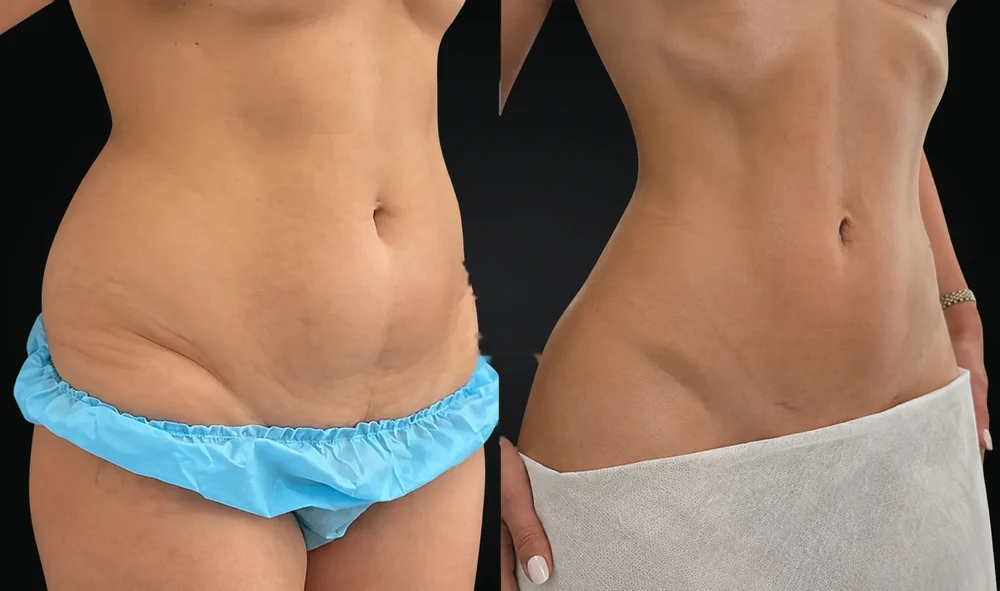
Real case
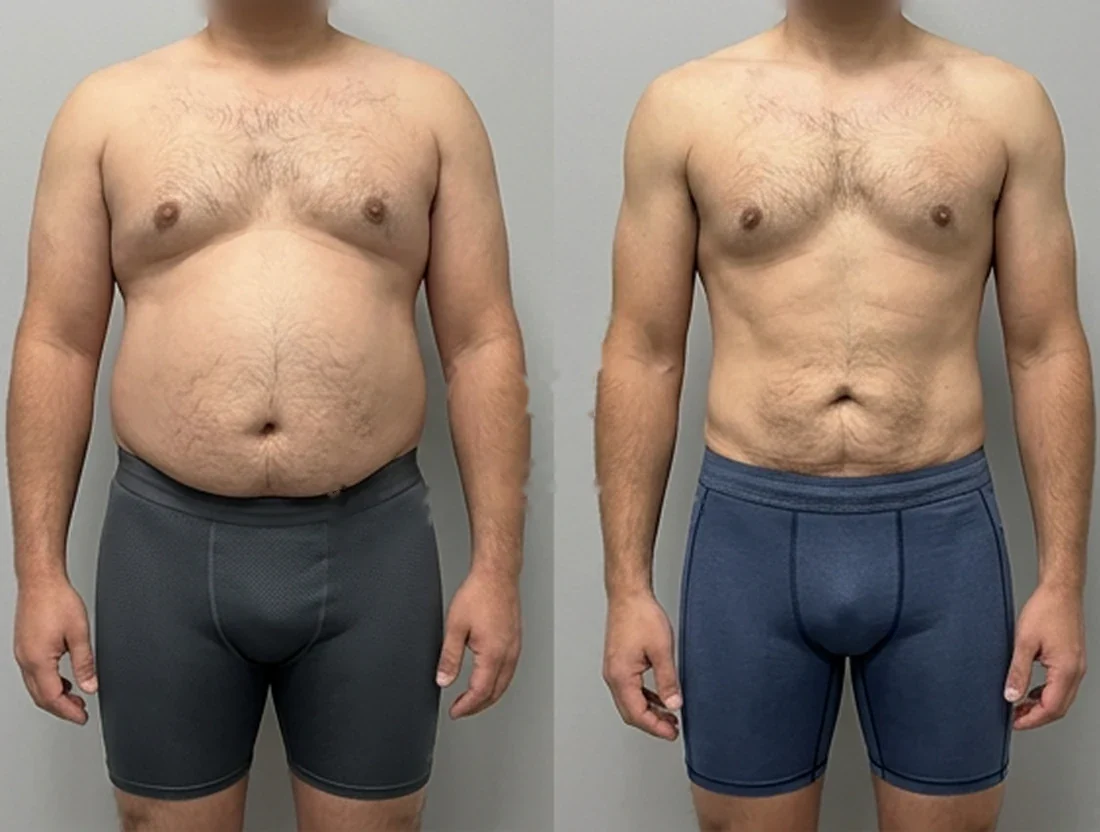
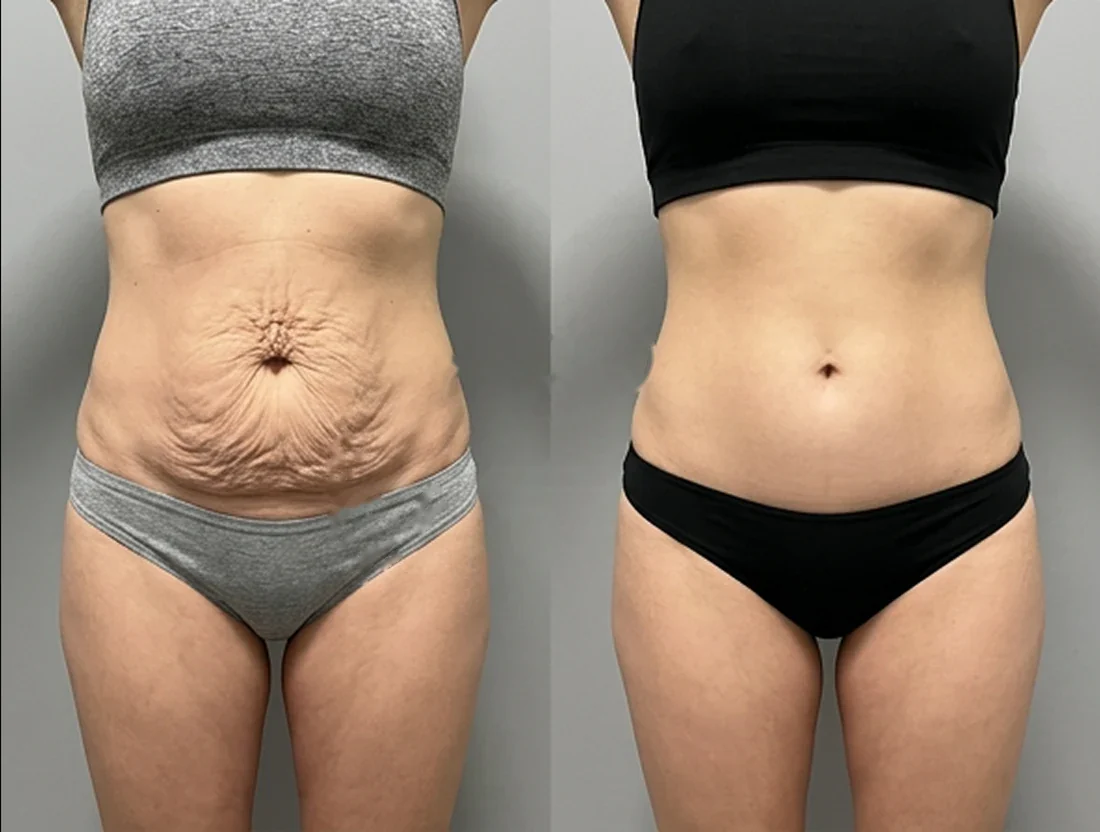
Tummy tuck: a patient's abdomen before and after surgery before after
A flat tummy and a toned silhouette in one operation. Your individual surgical plan and the expected result are discussed at the consultation

Message our coordinator

Free online consultation · Reply within 15 minutes

Message us on Telegram

By messaging us, you agree to our Privacy Policy

Results

Tummy tuck results
of our patients

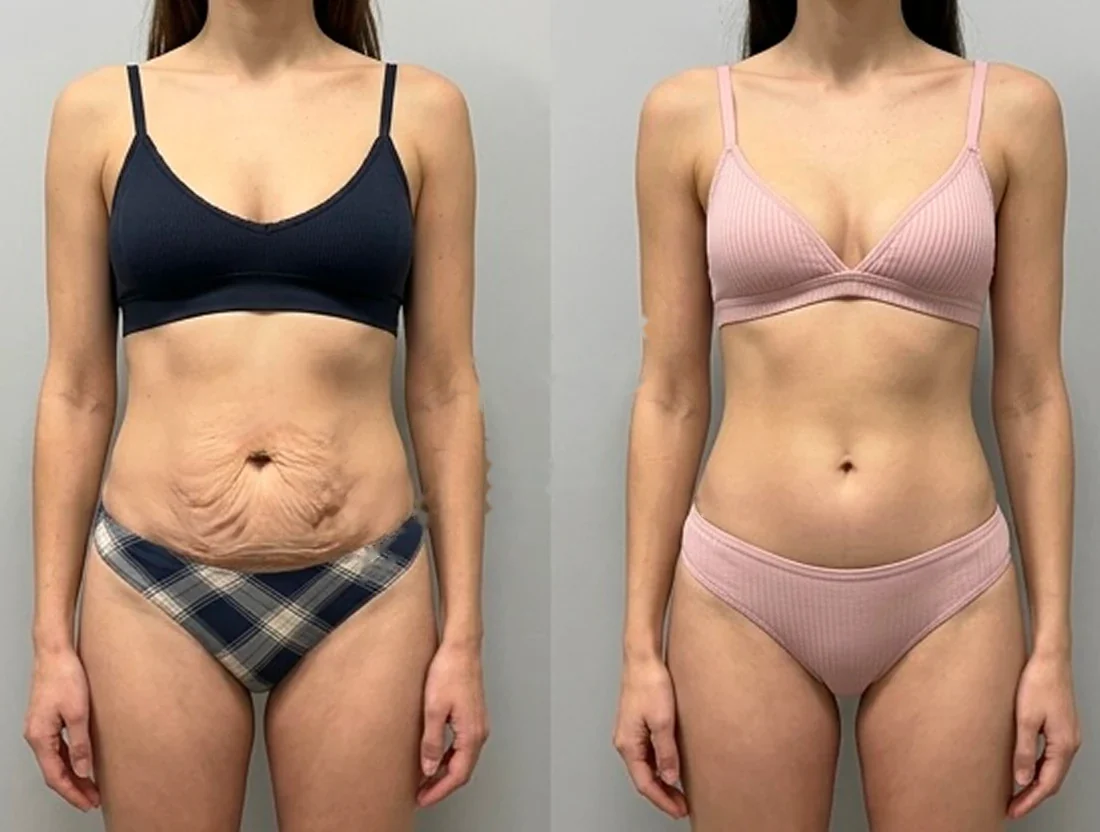
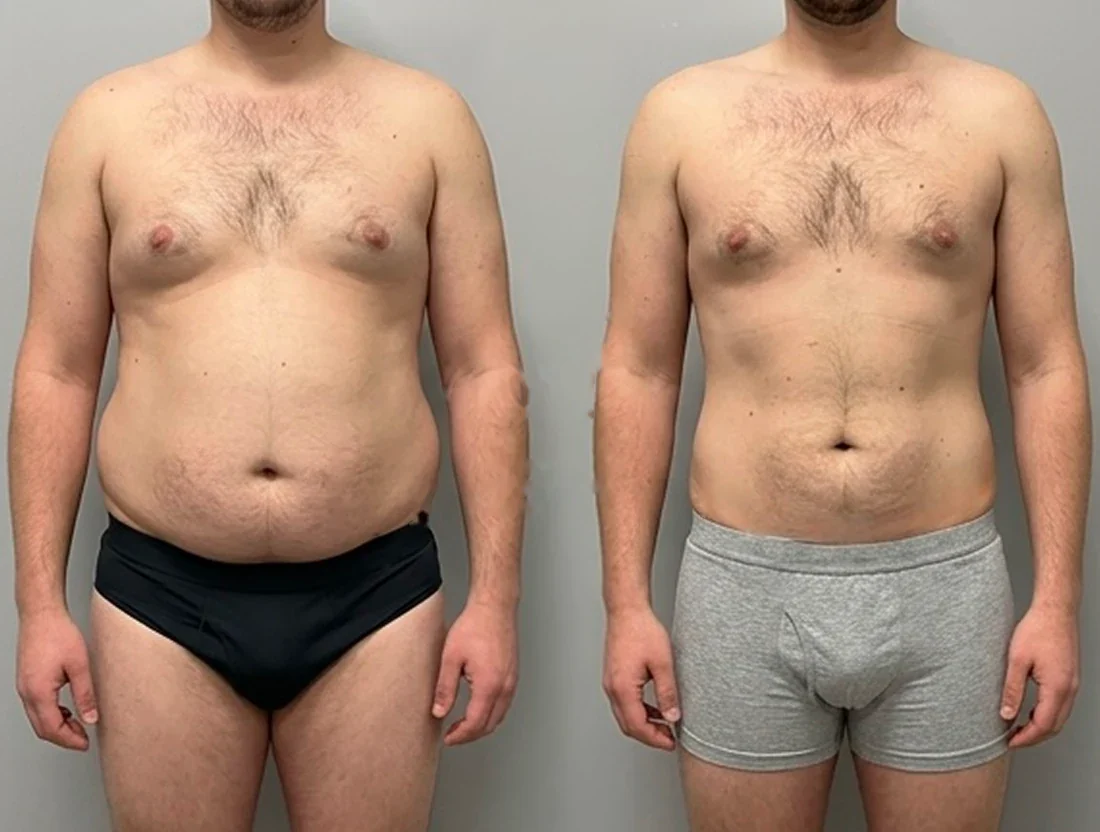
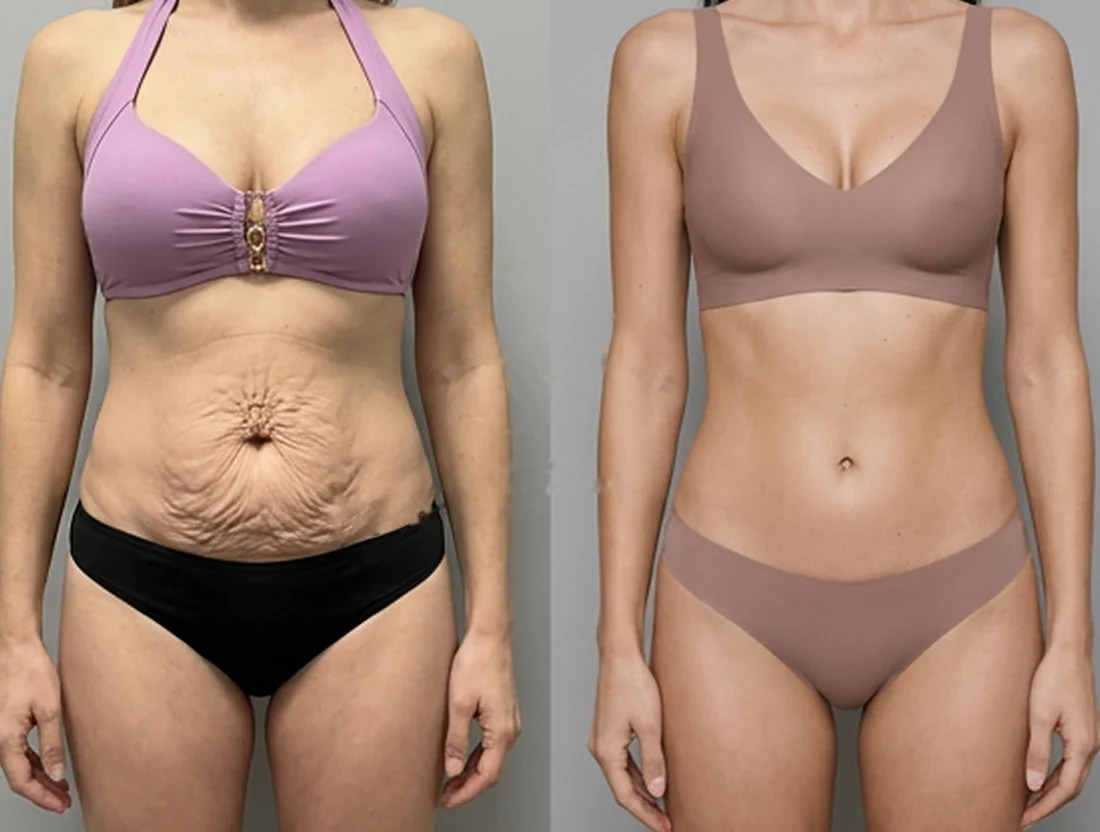
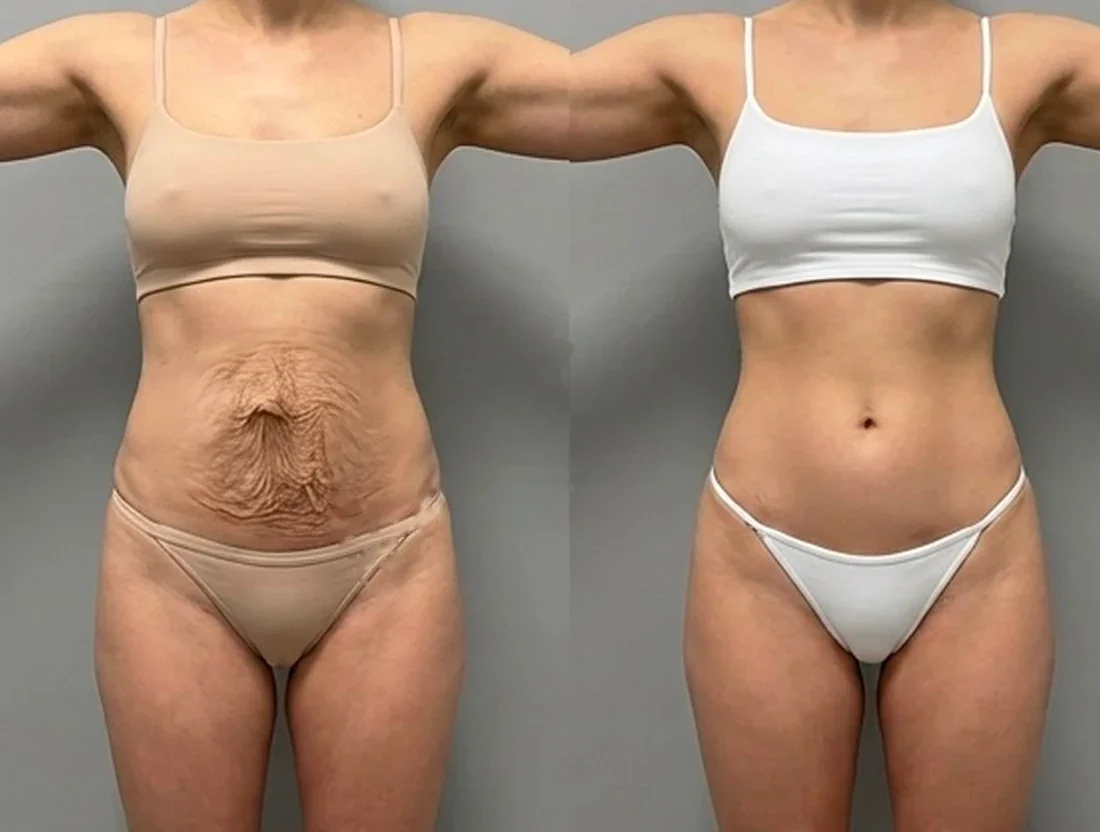
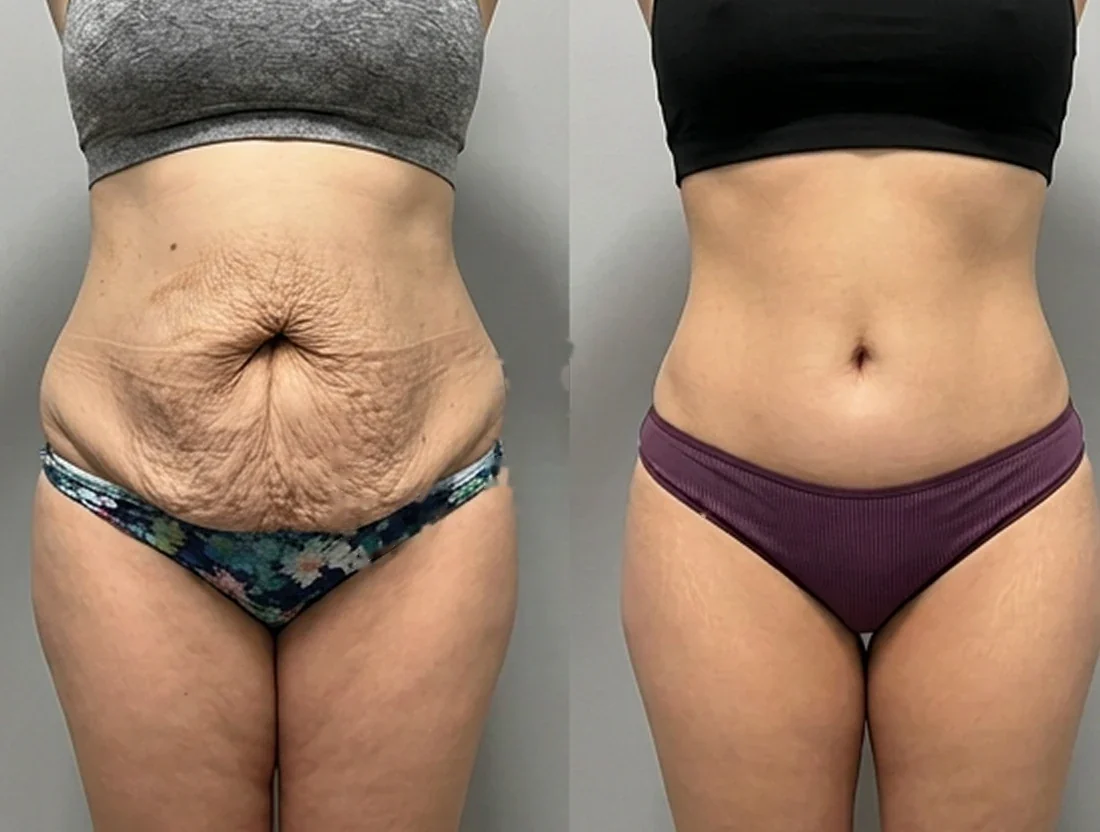
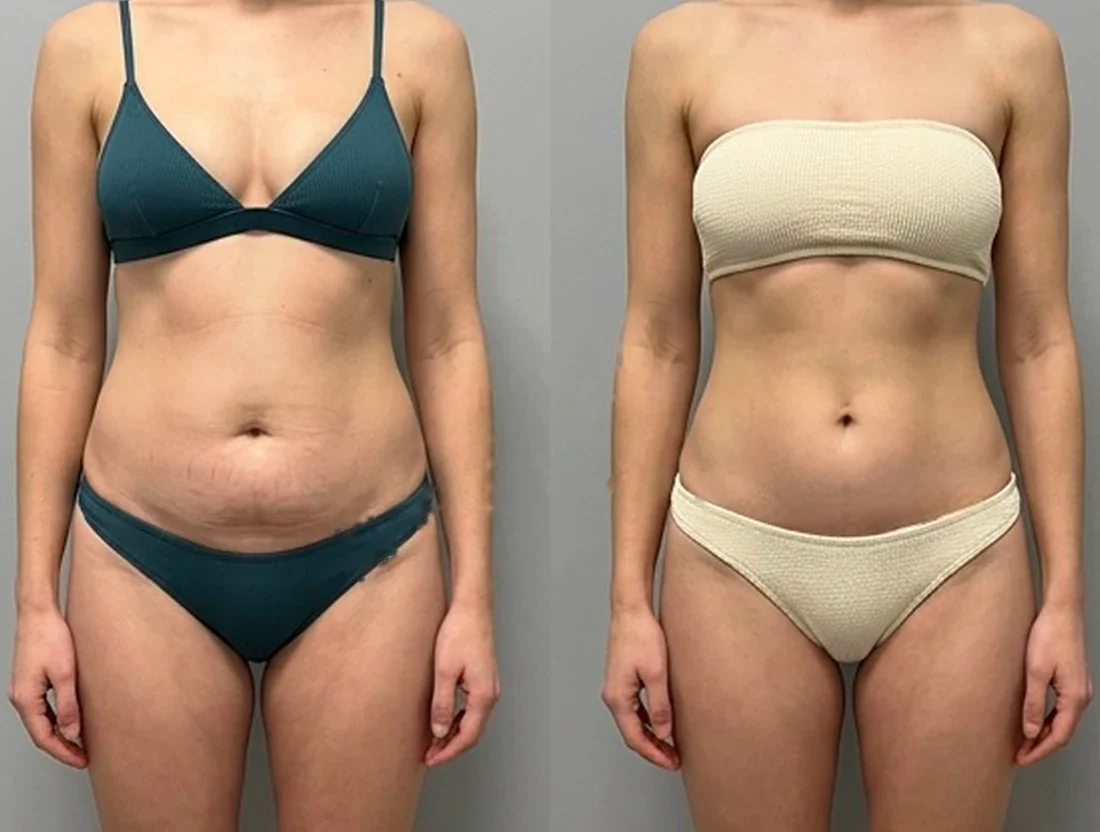
All cases are real patients. Faces and identifying details are hidden.

Tummy tuck: a female patient's abdomen before and after surgerybeforeafter
Tummy tuck: a male patient's abdomen before and after surgerybeforeafter
Tummy tuck: a female patient's abdomen before and after surgerybeforeafter
Tummy tuck: a male patient's abdomen before and after surgerybeforeafter
Tummy tuck: a female patient's abdomen before and after surgerybeforeafter
1 of 8

Comparison

Tummy tuck techniques

A tummy tuck is done as a full (classic) or mini operation, or combined with liposuction as lipoabdominoplasty. Compare the scope of surgery, the indications and the expected results to choose the right technique together with your surgeon.

Tummy tuck

Removal of excess skin, abdominal muscle tightening
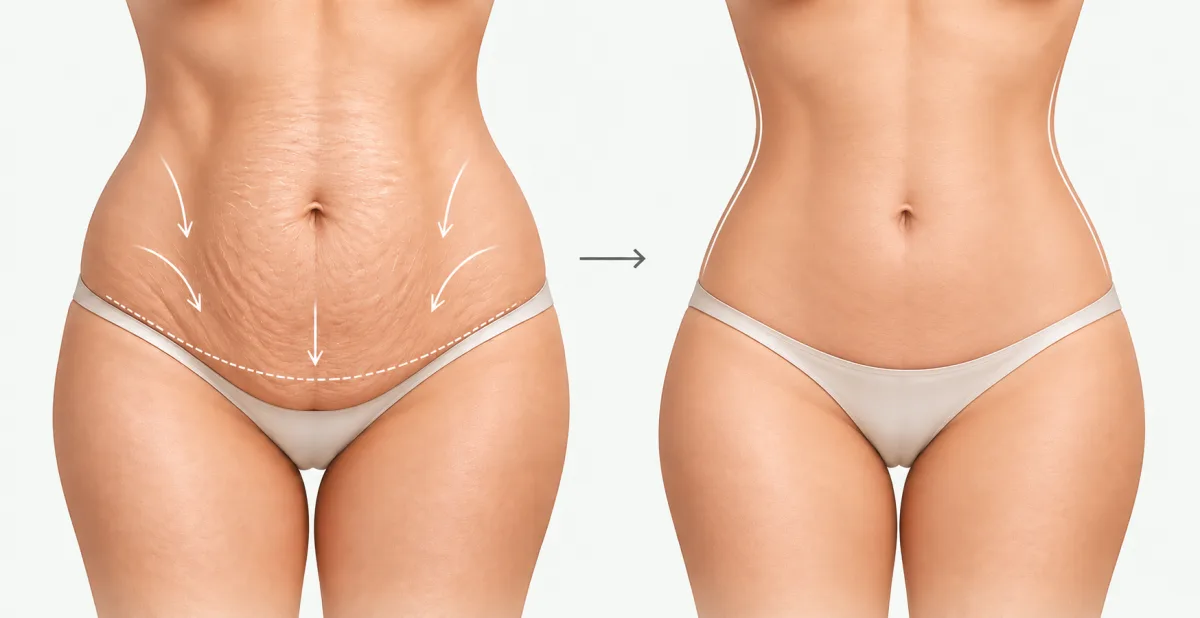
Tummy tuck diagram: the abdomen before surgery with the incision line, and the result
Main goal
Removal of excess skin, diastasis repair
When it is done
Excess skin after childbirth or weight loss
Anaesthesia and stay
General anaesthesia, up to 3 days in hospital

Lipoabdominoplasty

Tummy tuck with added liposuction
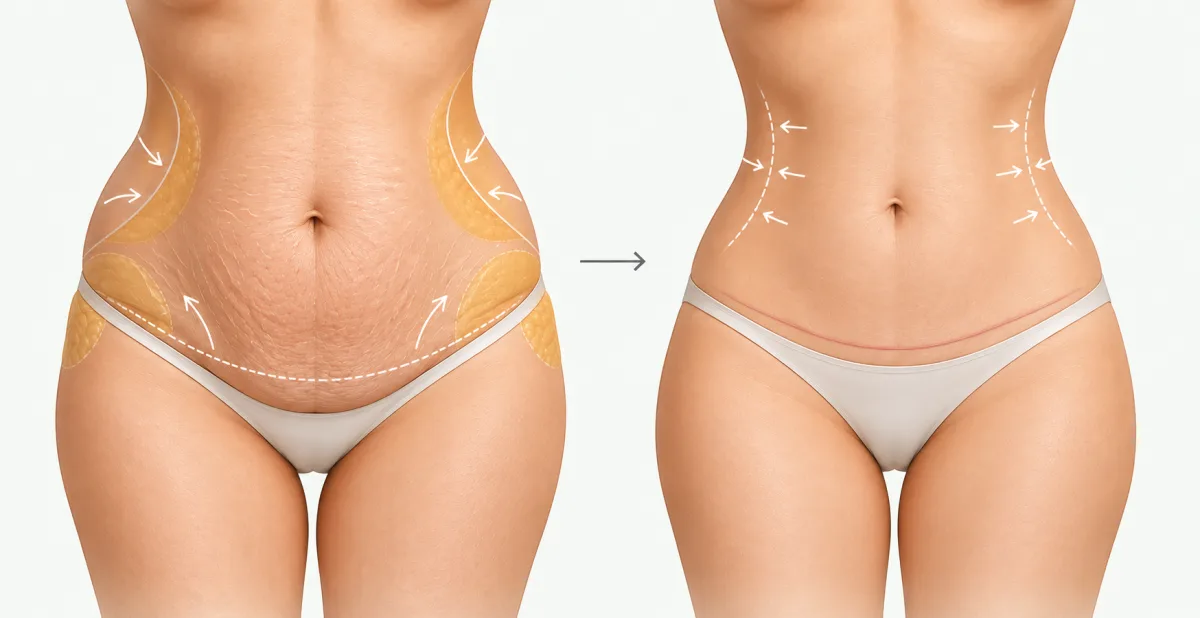
Lipoabdominoplasty diagram: the abdomen with fat on the flanks before surgery, and the result
Main goal
Tummy tightening and waist contouring
When it is done
For fat deposits on the flanks and waist
Anaesthesia and stay
General anaesthesia, up to 3 days in hospital

The benefits and recovery times shown are averaged for each technique and given for guidance: the scope of correction and rehabilitation depend on your anatomy and individual features, and the surgeon confirms them at the consultation.

At the consultation the surgeon draws up a plan for your case and explains how your tummy tuck will go.

Free, before surgery and with no obligation.

Book a consultation

Tummy tuck from the inside

About the clinic

A clinic where you can feel at ease

Modern equipment, comfortable rooms and care for every patient

A doctor and a patient in a clinic ward

Contact us the way that suits you

We will answer your questions and find a convenient time for a consultation

A tummy tuck is not for everyone

If your case can be solved without surgery, the doctor will tell you so at the consultation — and you will not spend money for nothing.

Suitable

A surgeon shows a patient on a model and a monitor how the abdominal contour changes after a tummy tuck
  • Rectus abdominis diastasis
  • Skin folds after weight loss
  • Loose abdominal skin
  • Stretched skin after pregnancy
  • A distorted abdominal contour

Not suitable

A surgeon discusses the indications and contraindications for a tummy tuck with a patient
  • Acute infections
  • Severe disease of the heart, kidneys or liver
  • Clotting disorders of the blood
  • Age below 18
  • Decompensated diabetes
  • Cancer
  • Skin inflammation in the surgical area
  • Pregnancy and breastfeeding

Not sure the surgery is right for you?

Message us — the coordinator will ask for your photos in the messenger, and the surgeon will tell you whether a tummy tuck suits you. No surgery booking needed.

Find out if it suits me

A surgeon goes through a tummy tuck diagram with a patient at the consultation

Prices

You know the price
before surgery

The price is set at the consultation and fixed in the contract.

Other services

  • First consultationFree
  • Liposuction of the abdomen and flanksfrom $1,700
Book a consultation

Find out your tummy tuck plan and price

The surgeon assesses your abdominal skin and muscles, listens to your wishes and chooses the right correction technique.
The price is set at the consultation and fixed in the contract.

A nurse talks to a patient in a clinic ward

Message our coordinator

Free online consultation · Reply within 15 minutes

Message us on Telegram

By messaging us, you agree to our Privacy Policy

A patient's abdomen before a tummy tuck in the operating room

all inclusive

What the price includes

From preparation for surgery
to post-op check-ups.

  • All scheduled dressings
  • Scheduled post-op check-ups
  • A personal coordinator on call
  • Compression garments fitted on the day of surgery
  • A stay in a comfortable
    hospital ward with meals
  • Individual recommendations
    for recovery
  • Remote progress monitoring
    by photos

How it works

Three days at the clinic —
from preparation to discharge

An agreed correction plan, inpatient observation and post-op check-ups.

A doctor shows a patient a tummy tuck diagram on a monitor1

Consultation
and the surgical plan

The surgeon assesses your abdominal skin and muscles and checks for diastasis, listens to your wishes and chooses the right correction technique.

Paying the deposit by card at the clinic reception2

Booking the date
of surgery

We reserve a surgery date for you: the deposit can be paid by card at the clinic or online by bank transfer. The terms are fixed in the contract for medical services

A blood sample tube for tests before a tummy tuck3

Check-up before
surgery

Before surgery you complete a full lab check-up: blood tests, an ECG, a chest X-ray and reports from the required specialists.

The surgical team during the operation4

Surgery

The surgeon performs the tummy tuck with the chosen technique, repairs diastasis if needed and shapes a firmer abdominal contour.

A hospital ward at the clinic5

Inpatient stay

After surgery the patient stays for 1–3 days in a comfortable hospital ward with meals, under medical supervision.

A surgeon and a patient in the ward during recovery6

Recovery

After surgery you get a recovery programme. Check-ups at 7 days, 3 and 6 months help track your recovery.

Book a free consultation — the surgeon will plan every step with you.

A doctor discusses the tummy tuck plan with a patient
Book a consultation
A doctor discusses the tummy tuck plan with a patient

How it really happens

Recovery after a tummy tuck

The patient stays in hospital under medical supervision for 1–3 days right after surgery. Usually drains are removed after two days and stitches after 7 days. Wearing a compression binder for 1.5–2 months supports the abdominal wall and gives a smooth contour. Most swelling is gone within 30 days, with office work resuming after 2–3 weeks. For 2–3 months avoid sports, sauna and heavy lifting; at first, sleeping on your back with knees bent is recommended. By 12 months the scar is fully mature, faded and barely noticeable.

Post-op check-ups

After 7 days, at 3 months and at 6 months. Until the end of the year, get a post-surgery consultation with your surgeon to review results and get more information, at the clinic's expense

Advantages

What makes patients choose City Medical Centre

A surgeon discusses the tummy tuck plan with a patient at the consultation

Just find out — you lose nothing

At the consultation we discuss your wishes and assess your abdominal skin and muscles. The surgeon explains what changes are possible, chooses the correction technique and answers your questions.

A surgeon on a video call with a patient after surgery

We stay with you after surgery

The surgeon follows your recovery and the changing abdominal contour at check-ups after 7 days, 3 and 6 months. Check-ups, dressings and aftercare advice are already included in the price of surgery.

A surgeon shows a patient a model and tummy tuck diagrams

A beautiful contour that fits your figure

We choose the correction technique based on your skin, muscles and figure. Our aim is a harmonious abdominal contour that keeps the natural proportions of your body.

A patient writes down a convenient visit time in her planner

Your schedule is our priority

We respect your time: we work 24/7, with easy booking and a personal approach — we adapt to your pace.
A surgeon shows a patient the fixed price of surgery with no extra charges

Fixed prices

After the consultation the surgeon defines the extent of correction, and you get a clear price for the surgery — no surprises on the way to the result you want.

A surgeon visits a patient in the hospital ward after surgery

Round-the-clock care after surgery

Recovery starts in a comfortable hospital ward under round-the-clock nursing care. The stay and meals are already included in the price.

FAQ

We answer what
people ask before booking

Classic or mini tummy tuck in Aswan

Who is a candidate? Adults aged 18 and over with no contraindications; there is no upper age limit, and each case is considered after an examination. Surgery is done at a stable weight and is not performed during pregnancy or breastfeeding. Contraindications also include decompensated diabetes, blood clotting disorders, cancer and serious heart, kidney or liver disease. Aswan patients get a personal assessment.

It all begins with a surgeon consultation: the doctor listens to your wishes, examines the abdomen and rules out contraindications, and a hormone screening is ordered to help predict the long-term result. Patients from Aswan then complete a check-up: blood tests including a coagulation panel, biochemistry and infections, ECG and chest X-ray, all available at the clinic with no waiting.

A tummy tuck price is personal. It reflects how much excess skin needs removing, whether the navel is repositioned and whether separated muscles are repaired. To find out yours, book a free consultation: the surgeon examines you, answers questions about the scar, recovery and pregnancy planning and confirms the cost. Aswan residents can apply online or through a messenger.

Stories of well-known people

Well-known people who spoke openly about this operation, in their own words.

All stories about this operation →

Granite, skin and tension: when Aswan women ask about a tummy tuck

Aswan was once Swenett, the southern frontier of ancient Egypt, and its quarries supplied the granite that built much of the pharaohs' stonework. Anyone raised near a working quarry understands one thing about material: you cannot make it behave differently by wishing. Skin that was stretched by pregnancy or by a large weight change behaves the same way. Exercise firms muscle, and diet shrinks fat, but neither teaches overstretched skin to shrink back. That gap is exactly where an abdominoplasty is considered. Aswan University opened only in 2012, and the city's gardens on the Nile, the Plantation Island among them, show how long people here have cultivated patience: plants set in sand and watered carefully return the effort slowly. Treat the decision the same way. A week of reading and asking costs nothing, whereas a rushed booking can cost months of regret.

The operation does two jobs that nothing else on the list does together. The surgeon removes the loose skin and fat that hangs below the navel, and then sews the separated abdominal muscles back toward the midline so the trunk regains its support. A woman who carries a soft, rounded lower belly even at a stable weight, or who sees a ridge down the middle when she stands, is usually describing exactly this combination. The photographs will tell the surgeon whether the whole procedure or a smaller version fits. It also helps to understand what the operation does not do. It is not a weight-loss procedure, and it does not replace the exercise that keeps core muscles strong afterwards. Surgeons often say that the best results belong to patients whose weight has been stable for some time, who do not plan another pregnancy soon, and who understand that the scar is a trade for the contour.

Not everyone who asks is a candidate. If the complaint is a pocket of fat with taut skin, a lighter procedure may serve better, and if weight is still falling, most surgeons prefer to wait until it settles. These are judgments about your body, not about a catalogue, so we ask you to arrive at the consultation with questions rather than a decision already made. A good plan starts with an honest answer to the question: what exactly is bothering me? Many women in Aswan describe the same small daily frictions: jeans that fit at the hips but gap at the waist, a shirt that has to be pulled down over a soft bulge, a swimsuit left in a drawer. Naming such details in your first message helps the surgeon see what you want fixed, and it keeps the conversation focused on your real goals rather than on a stock before-and-after picture.

Getting that answer takes one message. Write to the coordinators on Telegram or Telegram, where somebody replies at any hour, and attach two photographs, one from the front and one from the side, in plain daylight. Add the number of pregnancies, the weight you lost or gained and when it stopped changing, and any earlier surgery on the abdomen. The surgeon reads all of it together, and the reply names the type of procedure that suits you before any date is discussed. If your photographs come out poorly the first time, do not worry. The coordinators will explain the angle, the distance and the lighting in simple words, and a second attempt takes a minute. Ask a relative to hold the phone, stand against a plain light wall, keep your arms away from the body, and avoid tight underwear that creates creases which could mislead the assessment.

Planning around a 42 degree summer: the compression months in Aswan

Aswan is among the hottest, sunniest and driest cities anywhere. July and August bring average daytime highs of about 41.9 degrees, with nights near 28, while January averages a 23.2 high and a 10.0 low and December 24.5 and 11.4. Rain is almost absent all year. That spread matters because a compression garment is worn after this operation for roughly one and a half to two months, and it behaves very differently in a cool January than in a white July. Because Aswan sees almost no rain, dust and dry air are the companions of every season, and dry skin itches under a garment. Ask the surgeon which fragrance-free moisturiser may be used on the skin around the binder, and when. Do not improvise with oils or home remedies on a fresh wound, however well meant, because they can irritate the scar and delay healing.

In winter, the garment simply adds a layer of warmth under a loose gown, and short evening walks around the house or the garden are comfortable. In summer the same garment demands a thin cotton layer beneath it, changed daily, a cooled room for most of the day, cold water within reach, and a plan that keeps you indoors through the afternoon. Women who prepare for this find even July manageable. Those who ignore it describe the binder as a punishment. Hydration deserves its own line. A body wrapped in compression and exposed to desert heat loses fluid faster than you notice, so keep a bottle by the bed and sip at regular intervals through the day. Pale urine is a simple signal that the supply is adequate, while dark urine, headache or dizziness is a reason to drink more and to tell the coordinators.

The sun also reaches the scar. A fresh scar below the waistline is usually covered, but a Nile boat deck, an open balcony or a short robe can expose tender skin to light that does not forgive. Ask the surgeon when scar treatment may start, what protects the area in the first weeks, and for how long the area should stay covered. Those answers are written into the follow-up plan and checked against your monthly photographs. Check the practical details of the room as well. A fan that blows directly onto the wound dries it unevenly, whereas a steady air conditioner set to a moderate temperature keeps the skin comfortable. Put the bed away from the window glare, hang a light curtain, and choose bedding that breathes. These small adjustments make the first fortnight pass more calmly.

If your calendar is open, many people choose the cooler months, because the garment then feels welcome rather than heavy, and the first fortnight indoors costs less comfort. If your calendar is not open, the summer is workable with preparation. Tell the coordinators which weeks you can spare, and they will match them with the surgeon's availability and send you a written schedule that you can adjust before anything is fixed. On the days when the temperature falls toward the cooler end, a gentle walk at dusk along a shaded corridor or courtyard keeps the circulation moving. Keep it short, take a companion, and leave the sun behind. The surgeon sets the pace, and every week you will be told whether to extend the distance or hold steady.

The syndicate, the paperwork and the questions to ask before you book

Doctors in Egypt are registered with the Egyptian Medical Syndicate, a quasi-governmental body that helps the Ministry of Health issue licences. It began in January 1920 as the Egyptian Medical Association, took the name syndicate in 1926, and enters physicians in a general register. Its governing council holds 24 seats and its membership runs past 230,000 doctors. That is the formal frame behind any physician practising in the country, and it is where a careful patient starts. On the morning of the operation, you will be asked about your last meal, your regular medicines, any allergies and any herbal products. Answer completely. Some supplements affect bleeding or anaesthesia, and the team would rather hear a minor detail than discover a major one. The anaesthetist will also explain how you will feel on waking, which spares much confusion.

We could not find a public page that lets a patient check a particular surgeon's registration on her own, and we will not pretend that such a tool exists. The honest route is documentary. Ask the coordinators for the registration number, the proof of specialisation in plastic surgery, and the written follow-up plan. A surgeon who is comfortable with his record hands these over without fuss, and one who hesitates has told you something useful. On waking you may feel drowsy, thirsty and tight across the abdomen. Nausea is common after general anaesthesia and passes, and the nurses have remedies. Within hours they will help you sit up, then stand, then walk a few steps. This early movement lowers the risk of clots and gets the bowels working, so follow their guidance even when you would prefer to stay still.

Add practical questions of your own. How many abdominoplasties has he performed recently? What would make him decline a case like yours? How are fluid collections or wound problems handled once you are home? Who answers your messages on a Saturday night? Specific answers show experience, while vague ones show that you should keep asking before you commit to a date or to a hospital. Ask the team what warning signs justify an immediate call: pain that suddenly worsens, one side swelling more than the other, fever, a wound that opens, or breathlessness. Keep the list on paper and give a copy to your companion. Knowing in advance what is normal and what is not turns anxious hours into manageable ones, and lets the coordinators respond quickly.

Insurance is the last item. None of the sources we reviewed states that public or private cover pays for cosmetic surgery in Egypt, so do not plan on it. Put the question to your insurer in writing and keep the written reply. If part of your complaint is medical, for example a weak abdominal wall or a hernia, tell the surgeon, because that can change how the case is classified and documented. When the surgeon releases you, plan a gentle ride home on smooth roads with a seat cushion and a seat belt placed below the wound. The room that awaits you should already be prepared. After you arrive, a coordinator will check in, and from then on you can send questions at any hour without worrying about disturbing anyone.

Surgery day, the drains and the first nights at home

The procedure is performed under general anaesthesia and usually lasts between two and four hours, depending on how much skin is removed and how far the muscles have separated. Afterwards you stay in hospital for one to three days under medical supervision. The surgeon estimates the length of your case after seeing your photographs, and he writes it into the plan so that your family knows how long to expect to wait. Be wary of any offer that pushes you to confirm a date before the plan is complete. A responsible service gives you the full written plan, covering the type of procedure, the length of stay, the follow-up schedule and who answers your messages. Reading that document at home, with family, is the best protection against a decision made under pressure.

Small drains often sit near the wound for the first couple of days, and they are normally taken out after about two days. Seeing them can startle visitors, so tell your family beforehand what to expect. One calm companion who knows the plan is worth more than a crowded room. Keep a notebook for names, doses and times, since anaesthesia leaves everyone slightly forgetful for the first day. If you wish to take a second opinion from a doctor in Aswan, that is your right and a sensible step. Show the photographs and the written plan, hear what he or she says, and bring the questions back to the coordinators. No honest surgeon is offended by a patient who wants to understand a major operation thoroughly before agreeing to it.

Pack for the abdomen rather than for appearance. A front-opening shirt, a loose wide-waisted skirt or trousers, shoes that slip on without bending, a long phone cable and a small pillow for the car seat do more good than any gadget. At home, move the items you use daily to chest height before you leave, so you do not need to bend, stretch or lift during the first week. Ask what the surgeon will do if you are unhappy with an aspect of the healing. Revision is sometimes needed for a scar that thickens or a small irregularity, and the policy should be clear before you start. Clarity about such cases is a sign of professionalism, and it removes the unspoken fear that many patients carry into the operating theatre.

Egypt's weekend is Friday and Saturday, which makes those two days a natural window for relatives to share care. Do not rely on them alone. Build a rota so that two people can cover the first fortnight, tell your employer early that office work usually resumes after two to three weeks, and let the surgeon confirm the exact day at the follow-up appointment once he has seen the wound. Keep a single folder, paper or digital, with every document: the registration number, the diploma, the plan, the exchange of messages, the insurer's reply, the discharge instructions. In a year you may want to check what was said, or a relative may need to understand your history, and a tidy folder makes both easy.

From stitches to scar: a calendar for the refrigerator door

Recovery follows a recognisable sequence. Stitches are removed at about seven days. Most of the swelling has gone by around thirty days. The compression binder stays on for roughly one and a half to two months, during which the tightness passes and an interim result appears. The final contour and the scar are assessed between six and twelve months, once the tissues have fully adapted. Write these stages on one sheet and stick it where the whole household sees it. Many people in Aswan are used to a rhythm where the working week ends on Thursday afternoon and Friday and Saturday are rest days. Use that rhythm: schedule the review visits and the first steps outside the house at the quieter end of the week, when relatives are free to accompany you, and keep the busiest days for rest.

The first weeks teach patience. Standing fully upright feels odd because the skin is tight, and that tightness eases day by day. Short walks inside the house improve circulation and mood. Drinking water regularly matters more than usual in a dry climate like Aswan's, and a glass of cold unsweetened hibiscus tea, a local favourite, is a pleasant companion at family sittings if your surgeon has no objection. Eat light, regular meals with protein and vegetables, since your body is rebuilding tissue. Fibre and fluid help bowel movements that may slow after anaesthesia and some painkillers. Skip heavy, salty feasts for the first weeks, because salt encourages swelling and a full stomach presses on the abdomen at precisely the moment it needs room.

Aswan's working life is varied: Nile hotels and river tourism, date palm and hibiscus farming, a chemical industry created in 1956, and a university opened in 2012. Desk work resumes after two to three weeks in most cases. Jobs that involve lifting, long standing or heavy physical effort wait for the surgeon's decision at the review, and that decision is not negotiable by enthusiasm, however keen you feel. Sleep on your back with pillows under your knees and behind your head, as the surgeon advises. Many patients find the first nights awkward, and a sleeping position that was habitual for years may need to change for a time. If a night is miserable, mention it to the coordinators, who can ask the team about the dose and the timing of medication.

Do not judge the scar early. Colour changes, redness fades, and the texture softens over months. Photograph the area once a month in the same light and pose, and send the pictures to the coordinators, who pass them to the surgeon for comparison. What looks like a defect in week five is often an ordinary stage, and what truly deserves attention is caught sooner when you check in regularly. At the one year mark, put the first photographs beside the latest ones. Judge the contour, the scar and your own feeling about the way clothes fit. Then talk to the surgeon about how to keep the result: stable weight, regular movement and sun care. A good outcome is teamwork between the operation and the habits that follow it.

Who is a better candidate for a tummy tuck than for liposuction?

A tummy tuck suits a woman with loose, overstretched skin and separated abdominal muscles, which liposuction cannot correct. If your skin is elastic and the problem is a localised pocket of fat, liposuction may fit better. The surgeon decides after examining photographs and your history, so begin by sending two clear pictures, the number of pregnancies and your weight changes to the coordinators. The appointment also covers whether any earlier surgery on the abdomen affects the plan.

Is summer in Aswan a poor time for the operation?

It is harder, not impossible. Daytime highs reach about 42 degrees in July and August, and you wear the compression garment for roughly one and a half to two months. You would need a thin cotton layer under it, a cooled room and plenty of cold water. Many people choose the cooler months, but the final choice rests on your calendar and the surgeon's schedule. Whatever the season, the surgeon will tell you which weeks are best for the follow-up visits.

How long is the surgery and what anaesthesia is used?

General anaesthesia is used, and the operation takes about two to four hours depending on the extent of skin removal and muscle repair. You then stay in hospital for one to three days. The surgeon gives you an estimate for your own case once he has seen the photographs, and it appears in the written plan so your family can organise the waiting. Your family will also be told what to do if you feel unwell during those hours.

When do the drains and stitches come out?

Drains are usually removed after about two days, while stitches come out at around seven days. The surgical team decides the exact moment by looking at the wound and the fluid collected. If something looks unusual before then, such as spreading redness or increasing pain, contact the coordinators straight away rather than waiting for the planned review. If the fluid looks cloudy or the amount suddenly increases, tell the team at once.

How soon can I return to work and exercise?

Office work usually resumes after two to three weeks, and most swelling fades in about a month. Exercise, lifting and carrying children wait until the surgeon allows them at a review. Returning too quickly is a common cause of complications, so treat that date as a medical decision and not as a personal target. Sitting at a desk is fine early on, provided you can stand and walk now and then.

How can I check a surgeon's credentials in Egypt?

The Egyptian Medical Syndicate keeps the register of physicians, but we found no public page where a patient can search it. Ask the coordinators for the registration number, proof of plastic surgery specialisation and the follow-up plan in writing. A confident surgeon provides these willingly, and you should keep copies in a folder. Keep copies of everything you receive, since you may need them at later appointments.

Will insurance pay for an abdominoplasty?

None of the sources we reviewed confirms cover for cosmetic surgery from public or private insurers, so we do not promise it. Ask your insurer in writing and wait for a written reply. If your problem includes a medical element such as a weak abdominal wall, mention it to the surgeon, since that may change how the case is assessed. Even then, ask for a written answer, because verbal replies are easy to forget or misremember.

When will the scar and the result be final?

The final result and the scar are assessed between six and twelve months after surgery, once the tissues have fully adapted. Before that you will see swelling go down, tightness ease and a red scar fade. Sending monthly photographs lets the surgeon compare stages and tell you whether the course is normal or needs an earlier visit. A steady routine of checking in tends to calm worries that would otherwise grow in silence.