City Medical Centre · multi-specialty surgery clinicOpen 24/7

Tummy tuck

Tummy Tuck After Pregnancy in Hoji ya Henda

Free consultation

Price at consultation

The price is fixed in the contract before surgery
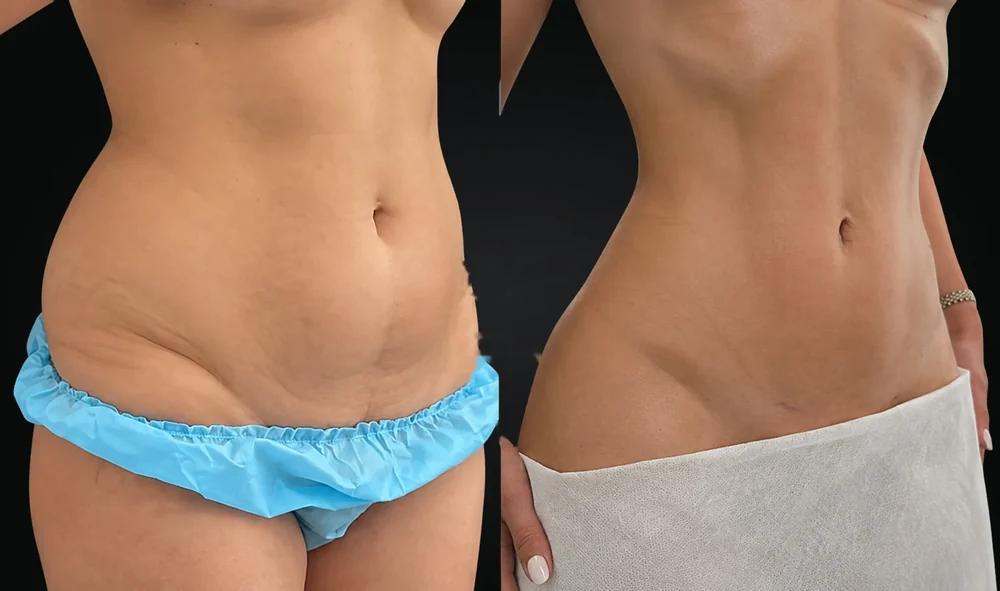
Real case
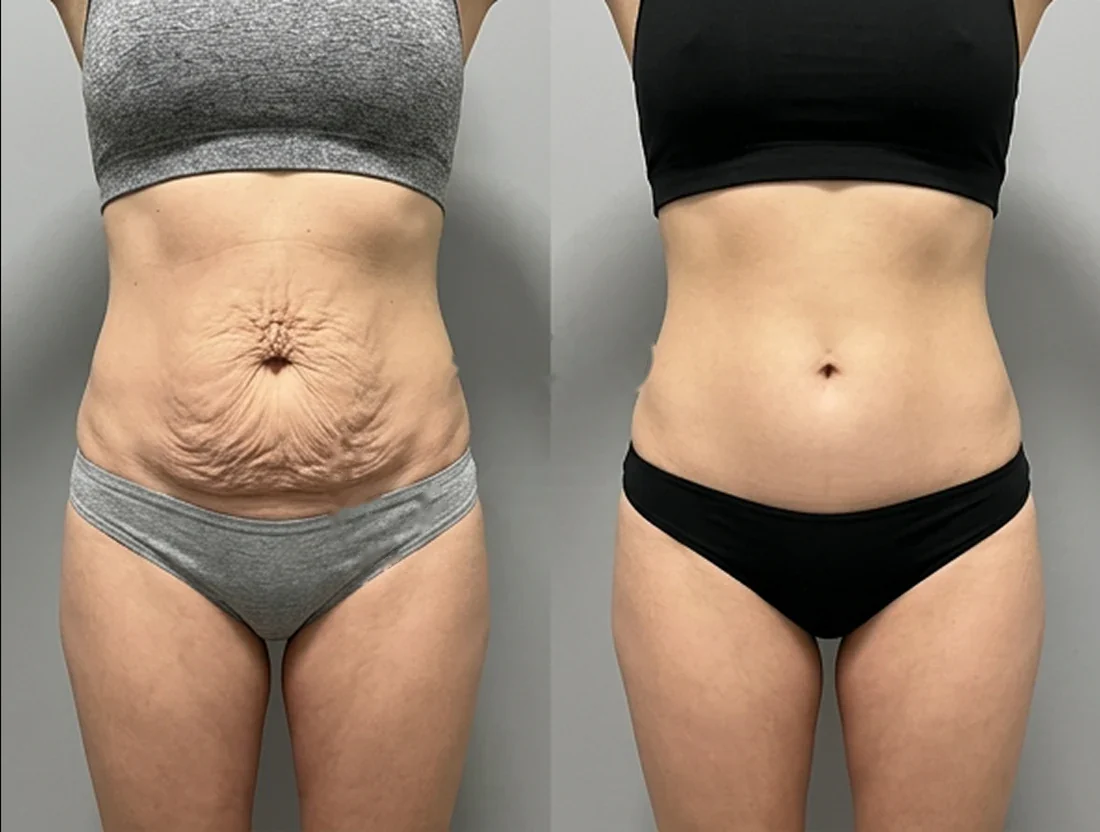
Tummy tuck: a patient's abdomen before and after surgery before after
A flat tummy and a toned silhouette in one operation. Your individual surgical plan and the expected result are discussed at the consultation

Message our coordinator

Free online consultation · Reply within 15 minutes

Message us on Telegram

By messaging us, you agree to our Privacy Policy

Results

Tummy tuck results
of our patients

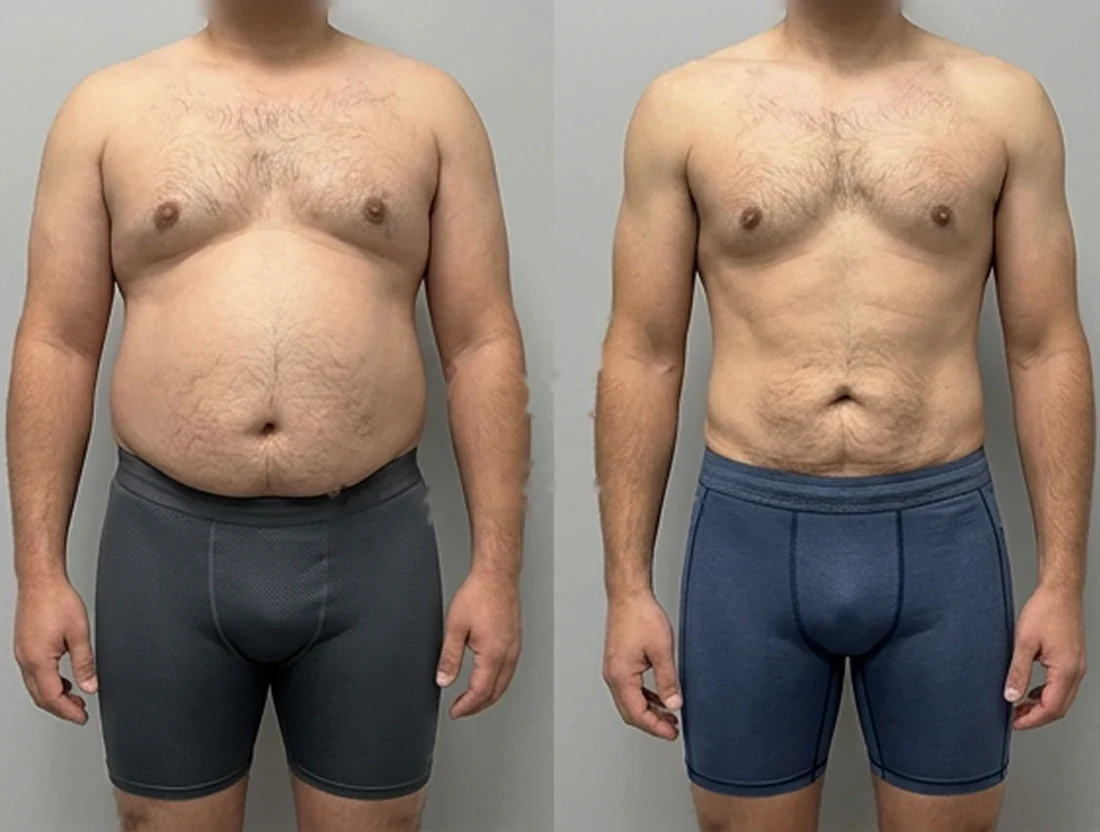
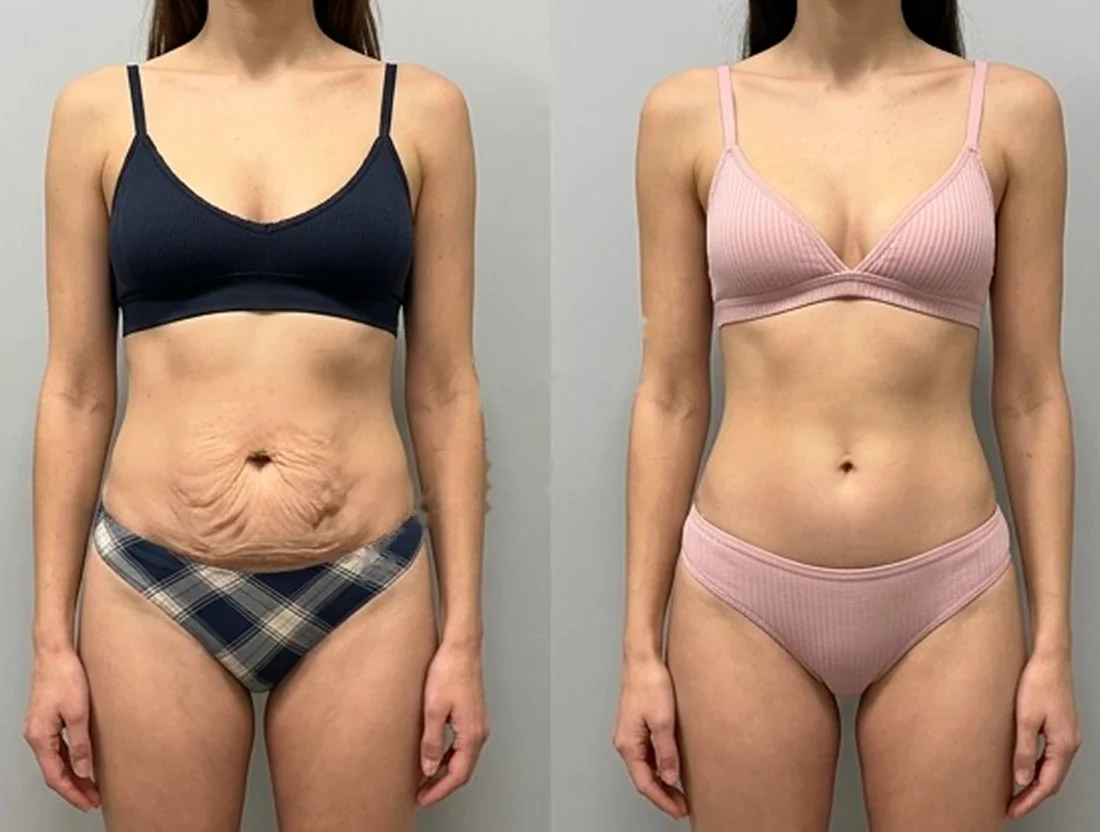
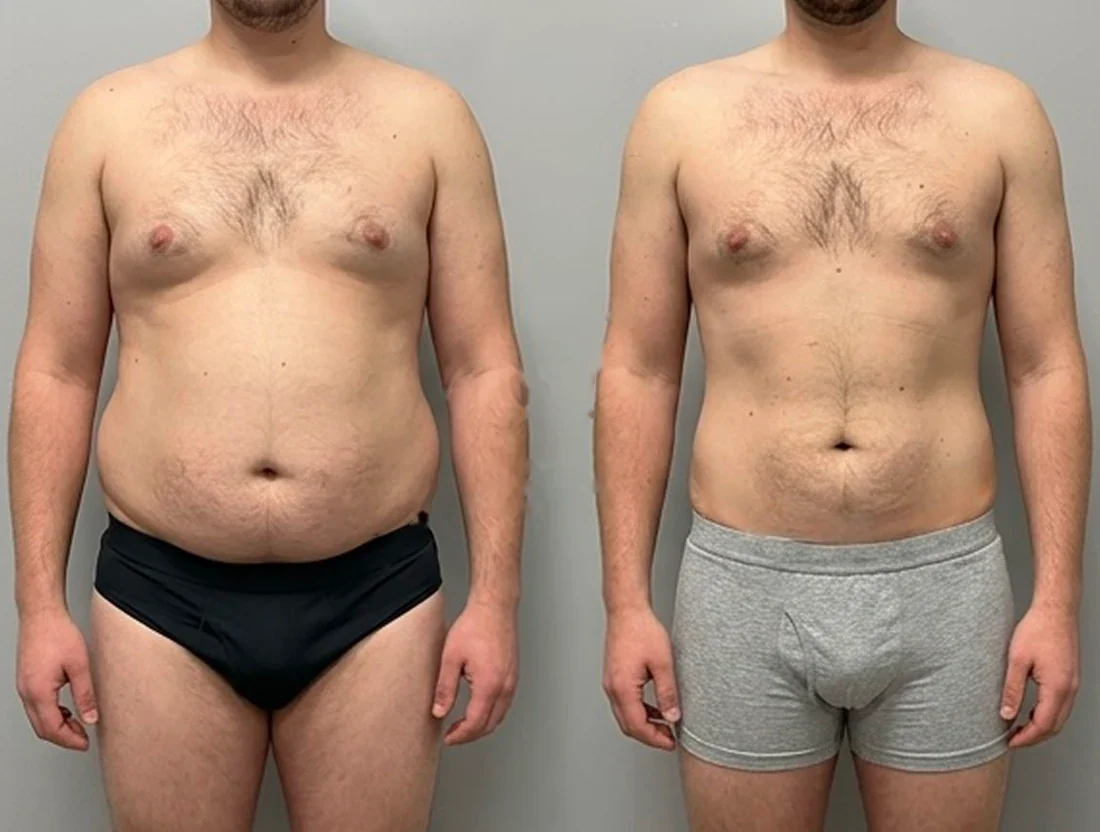
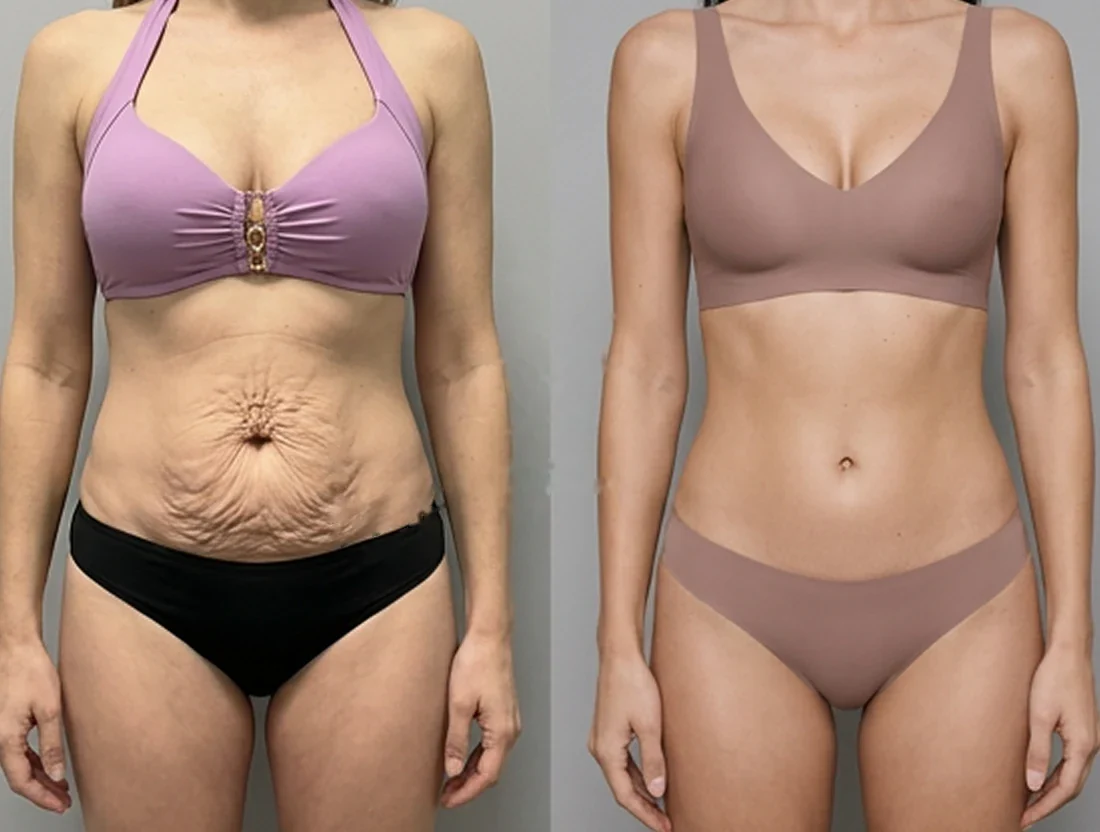
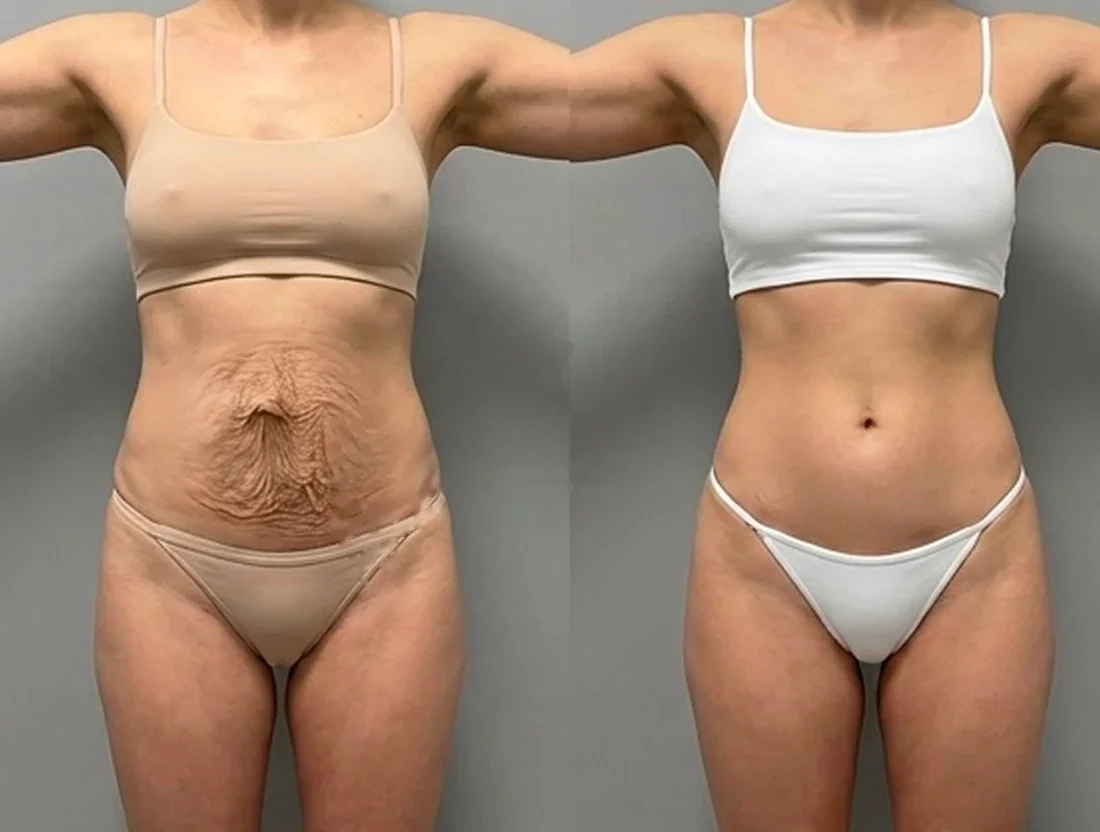
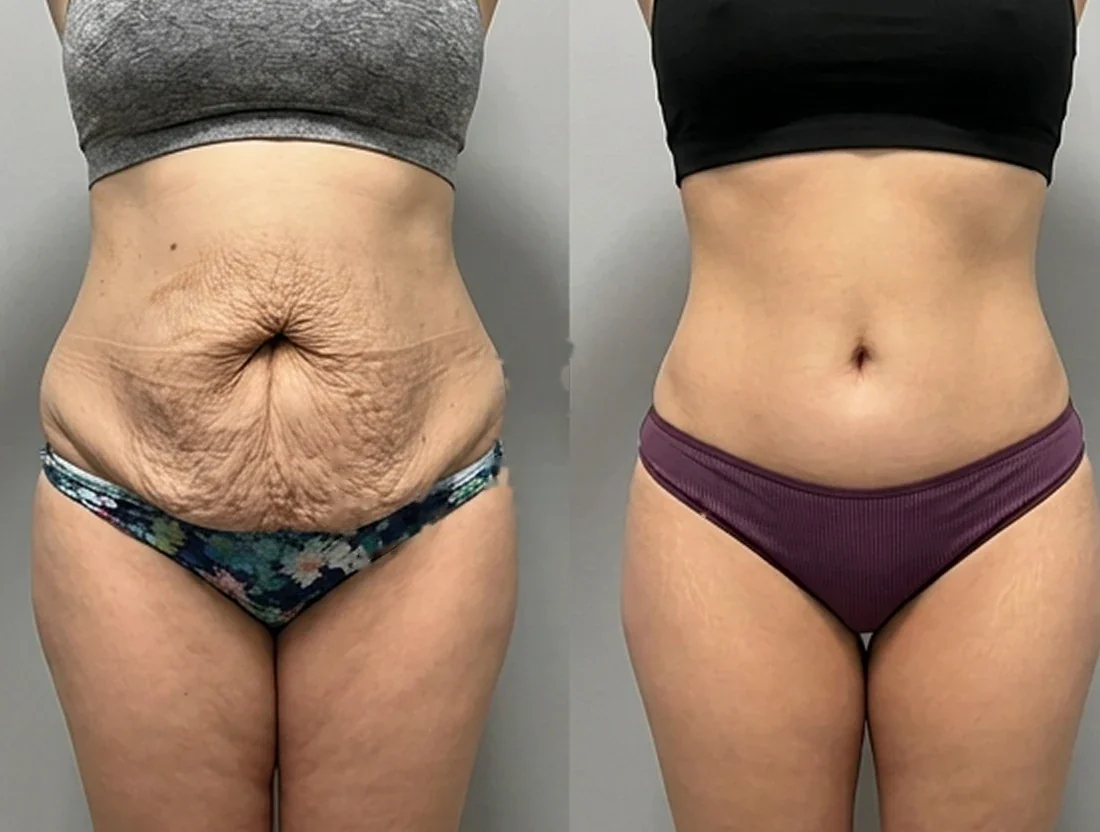
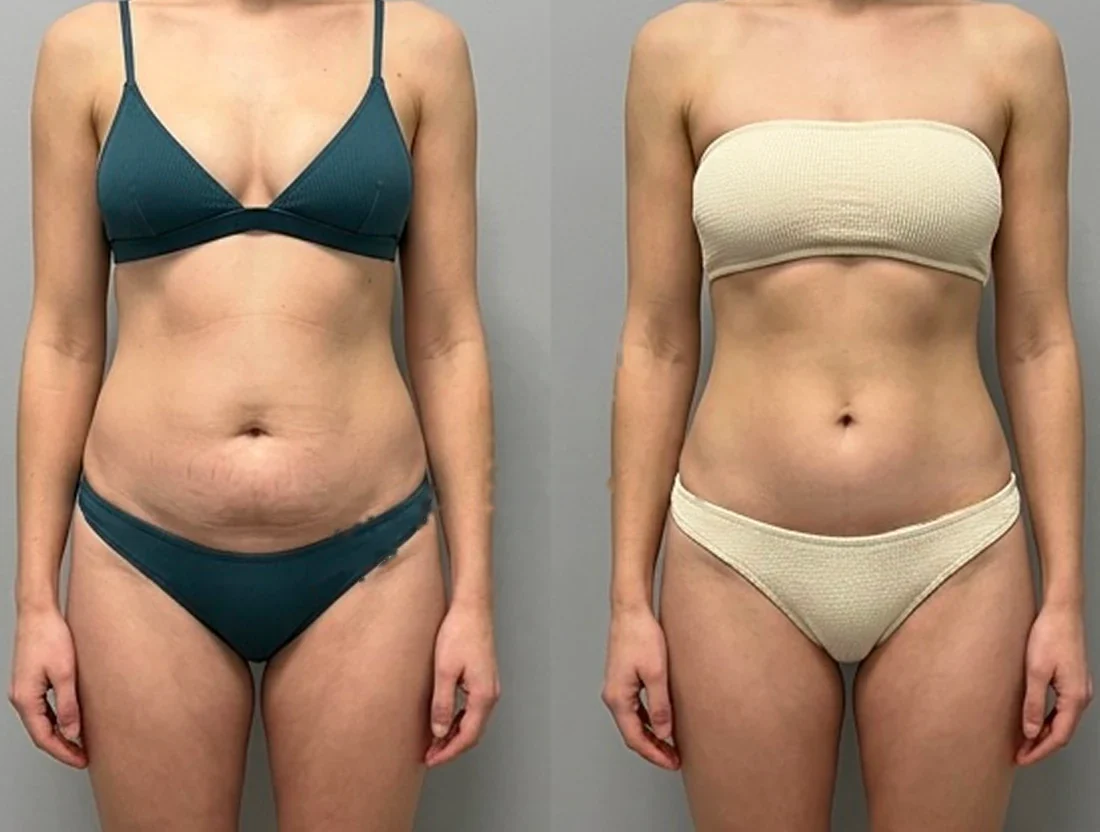
All cases are real patients. Faces and identifying details are hidden.

Tummy tuck: a female patient's abdomen before and after surgerybeforeafter
Tummy tuck: a male patient's abdomen before and after surgerybeforeafter
Tummy tuck: a female patient's abdomen before and after surgerybeforeafter
Tummy tuck: a male patient's abdomen before and after surgerybeforeafter
Tummy tuck: a female patient's abdomen before and after surgerybeforeafter
1 of 8

Comparison

Tummy tuck techniques

A tummy tuck is done as a full (classic) or mini operation, or combined with liposuction as lipoabdominoplasty. Compare the scope of surgery, the indications and the expected results to choose the right technique together with your surgeon.

Tummy tuck

Removal of excess skin, abdominal muscle tightening
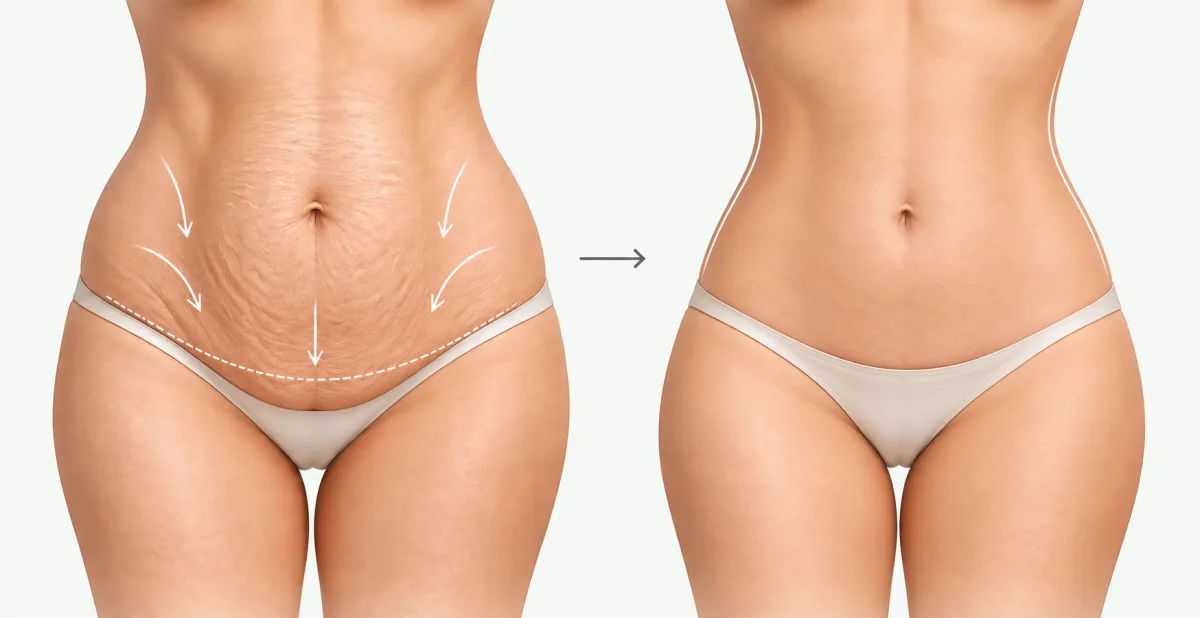
Tummy tuck diagram: the abdomen before surgery with the incision line, and the result
Main goal
Removal of excess skin, diastasis repair
When it is done
Excess skin after childbirth or weight loss
Anaesthesia and stay
General anaesthesia, up to 3 days in hospital

Lipoabdominoplasty

Tummy tuck with added liposuction
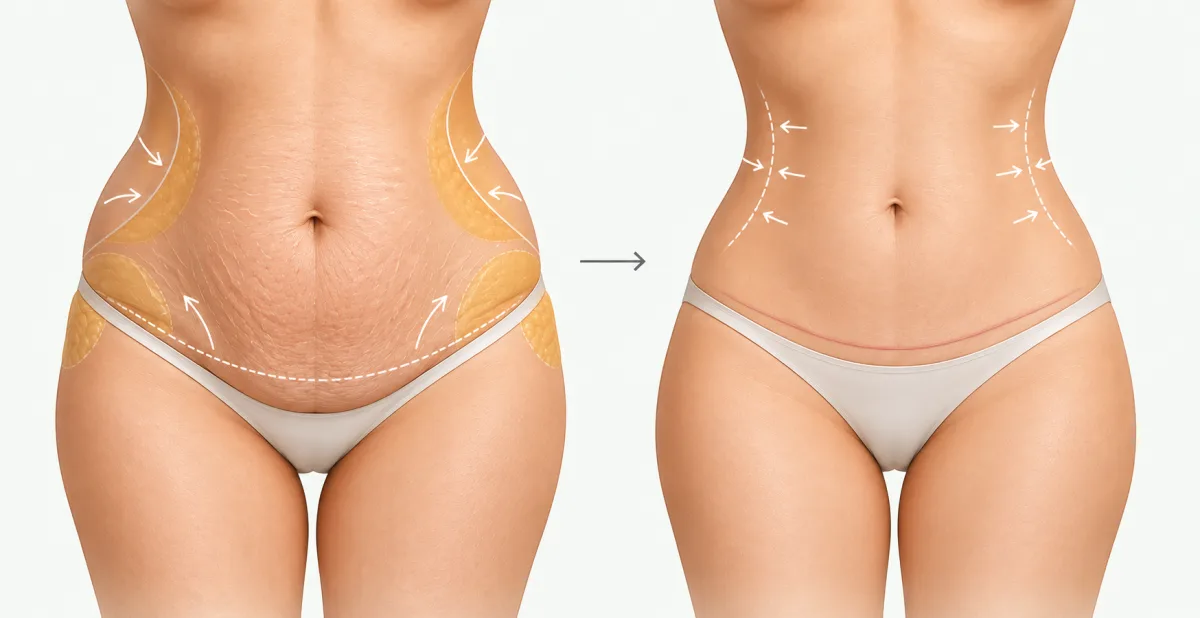
Lipoabdominoplasty diagram: the abdomen with fat on the flanks before surgery, and the result
Main goal
Tummy tightening and waist contouring
When it is done
For fat deposits on the flanks and waist
Anaesthesia and stay
General anaesthesia, up to 3 days in hospital

The benefits and recovery times shown are averaged for each technique and given for guidance: the scope of correction and rehabilitation depend on your anatomy and individual features, and the surgeon confirms them at the consultation.

At the consultation the surgeon draws up a plan for your case and explains how your tummy tuck will go.

Free, before surgery and with no obligation.

Book a consultation

Tummy tuck from the inside

About the clinic

A clinic where you can feel at ease

Modern equipment, comfortable rooms and care for every patient

A doctor and a patient in a clinic ward

Contact us the way that suits you

We will answer your questions and find a convenient time for a consultation

By messaging us, you agree to our Privacy Policy

A tummy tuck is not for everyone

If your case can be solved without surgery, the doctor will tell you so at the consultation — and you will not spend money for nothing.

Suitable

A surgeon shows a patient on a model and a monitor how the abdominal contour changes after a tummy tuck
  • Rectus abdominis diastasis
  • Skin folds after weight loss
  • Loose abdominal skin
  • Stretched skin after pregnancy
  • A distorted abdominal contour

Not suitable

A surgeon discusses the indications and contraindications for a tummy tuck with a patient
  • Acute infections
  • Severe heart, kidney or liver conditions
  • Blood coagulation disorders
  • Age below 18
  • Decompensated diabetes
  • Cancer
  • Skin inflammation in the surgical area
  • Pregnancy and nursing

Not sure the surgery is right for you?

Message us — the coordinator will ask for your photos in the messenger, and the surgeon will tell you whether a tummy tuck suits you. No surgery booking needed.

Find out if it suits me

A surgeon goes through a tummy tuck diagram with a patient at the consultation

Prices

You know the price
before surgery

The price is set at the consultation and fixed in the contract.

Other services

  • First consultationFree
  • Liposuction of the abdomen and flanksfrom $1,700
Book a consultation

Find out your tummy tuck plan and price

The surgeon assesses your abdominal skin and muscles, listens to your wishes and chooses the right correction technique.
The price is set at the consultation and fixed in the contract.
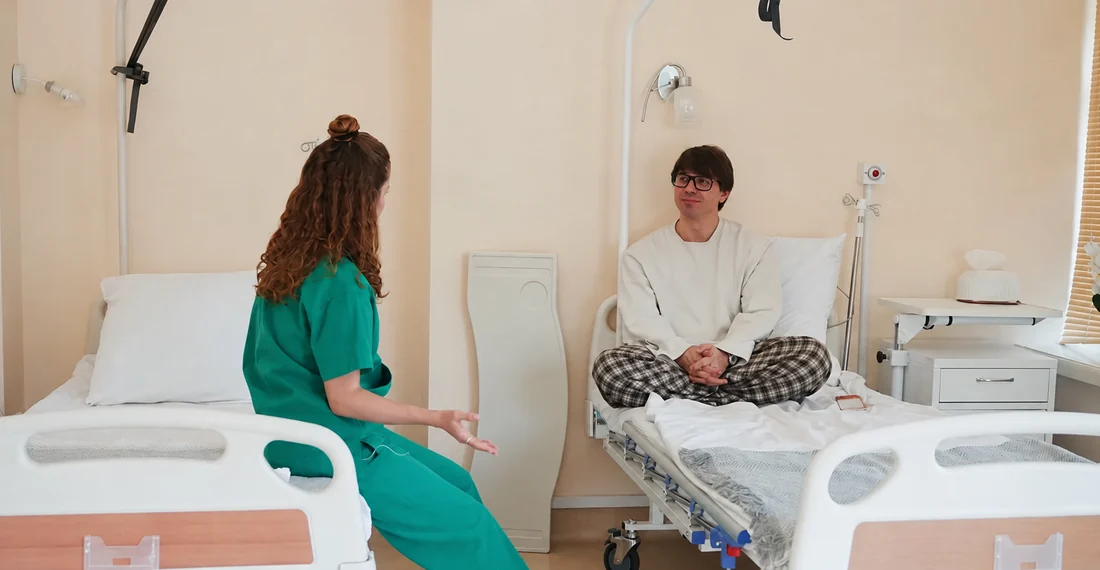
A nurse talks to a patient in a clinic ward

Message our coordinator

Free online consultation · Reply within 15 minutes

Message us on Telegram

By messaging us, you agree to our Privacy Policy
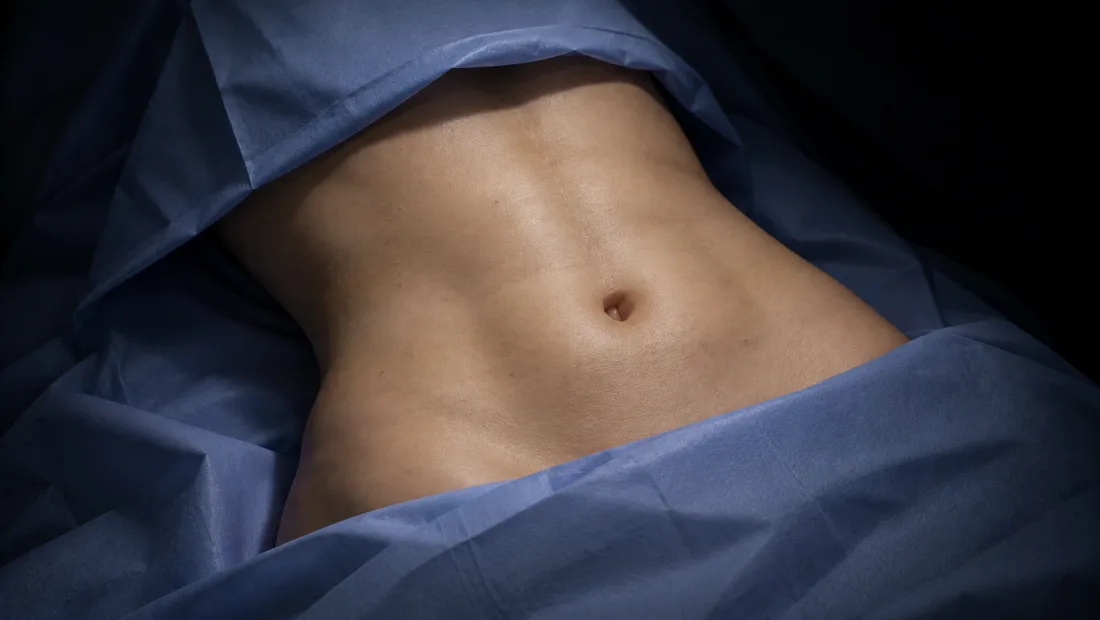
A patient's abdomen before a tummy tuck in the operating room

all inclusive

What the price includes

From preparation for surgery
to post-op check-ups.

  • All scheduled dressings
  • Scheduled post-op check-ups
  • A personal coordinator on call
  • Compression garments fitted on the day of surgery
  • A stay in a comfortable
    hospital ward with meals
  • Individual recommendations
    for recovery
  • Remote progress monitoring
    by photos

How it works

Three days at the clinic —
from preparation to discharge

An agreed correction plan, inpatient observation and post-op check-ups.

A doctor shows a patient a tummy tuck diagram on a monitor1

Consultation
and the surgical plan

The surgeon assesses your abdominal skin and muscles and checks for diastasis, listens to your wishes and chooses the right correction technique.

Paying the deposit by card at the clinic reception2

Booking the date
of surgery

We reserve a surgery date for you: the deposit can be paid by card at the clinic or online by bank transfer. The terms are fixed in the contract for medical services

A blood sample tube for tests before a tummy tuck3

Check-up before
surgery

Before surgery you complete a full lab check-up: blood tests, an ECG, a chest X-ray and reports from the required specialists.

The surgical team during the operation4

Surgery

The surgeon performs the tummy tuck with the chosen technique, repairs diastasis if needed and shapes a firmer abdominal contour.

A hospital ward at the clinic5

Inpatient stay

After surgery the patient stays for 1–3 days in a comfortable hospital ward with meals, under medical supervision.

A surgeon and a patient in the ward during recovery6

Recovery

After surgery you get a recovery programme. Check-ups at 7 days, 3 and 6 months help track your recovery.
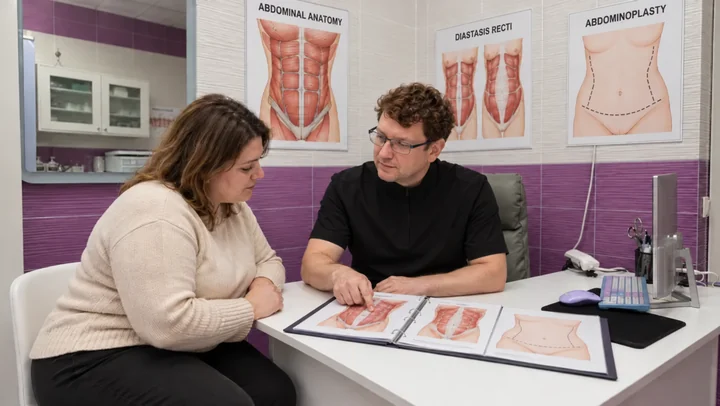
Book a free consultation — the surgeon will plan every step with you.

A doctor discusses the tummy tuck plan with a patient
Book a consultation
A doctor discusses the tummy tuck plan with a patient

How it really happens

Recovery after abdominoplasty

Following surgery, the patient stays 1–3 days in hospital under medical supervision. Drains usually come out after two days, and stitches after 7 days. For 1.5–2 months a compression binder supports the abdominal wall and shapes a smooth contour. Within 30 days most swelling goes, and office work is possible after 2–3 weeks. Sports, sauna and heavy lifting are not allowed for 2–3 months; in the early days, sleep on your back with your knees bent. By 12 months the scar is fully mature: faded and barely noticeable.

Post-op check-ups

After 7 days, at 3 months and at 6 months. Until the end of the year, get a post-surgery consultation with your surgeon to review results and get more information, at the clinic's expense

Advantages

Why people choose City Medical Centre

A surgeon discusses the tummy tuck plan with a patient at the consultation

Just find out — you lose nothing

At the consultation we discuss your wishes and assess your abdominal skin and muscles. The surgeon explains what changes are possible, chooses the correction technique and answers your questions.

A surgeon on a video call with a patient after surgery

We stay with you after surgery

The surgeon follows your recovery and the changing abdominal contour at check-ups after 7 days, 3 and 6 months. Check-ups, dressings and aftercare advice are already included in the price of surgery.

A surgeon shows a patient a model and tummy tuck diagrams

A beautiful contour that fits your figure

We choose the correction technique based on your skin, muscles and figure. Our aim is a harmonious abdominal contour that keeps the natural proportions of your body.

A patient writes down a convenient visit time in her planner

Your schedule is our priority

We respect your time: we work 24/7, with easy booking and a personal approach — we adapt to your pace.
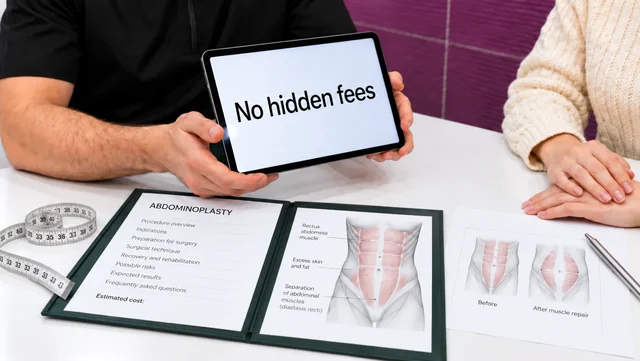
A surgeon shows a patient the fixed price of surgery with no extra charges

Fixed prices

After the consultation the surgeon defines the extent of correction, and you get a clear price for the surgery — no surprises on the way to the result you want.

A surgeon visits a patient in the hospital ward after surgery

Round-the-clock care after surgery

Recovery starts in a comfortable hospital ward under round-the-clock nursing care. The stay and meals are already included in the price.

FAQ

We answer what
people ask before booking

Tummy tuck in Hoji ya Henda: from consultation to result

A tummy tuck, or abdominoplasty, is surgical tightening of the front abdominal wall that removes excess stretched skin and fat. It is not a weight-loss method and does not replace diet or exercise. For patients from Hoji ya Henda, the goal is a flat abdominal contour: removing the overhanging skin-and-fat apron, repairing separated rectus muscles and, where needed, creating a new navel.

Pre-surgery tests should be completed in advance, not the day before. The surgeon gives the exact list at the consultation, and results are usually valid for 10–14 days. Seven to ten days before the operation, stop smoking, alcohol and medicines that affect blood clotting. Anyone in Hoji ya Henda preparing for a tummy tuck also sees a GP and an anaesthetist before the surgery date.

A tummy tuck price is personal. It reflects how much excess skin needs removing, whether the navel is repositioned and whether separated muscles are repaired. To find out yours, book a free consultation: the surgeon examines you, answers questions about the scar, recovery and pregnancy planning and confirms the cost. Hoji ya Henda residents can apply online or through a messenger.

Hoji ya Henda and the decision to have a tummy tuck

Hoji ya Henda is a densely settled urban area of Angola with about 642,050 inhabitants. In a place this size, a decision about your body is rarely made alone. Relatives, neighbours, colleagues and friends all notice changes in routine, and many people ask how to plan a few quiet weeks without turning the matter into a topic for the whole street. A tummy tuck (abdominoplasty) is one of those operations where good planning matters as much as the operation itself.

People in Hoji ya Henda usually ask about the operation after pregnancies and births, after a large loss of weight, or when loose skin and a weakened abdominal wall no longer respond to exercise and diet. These are the typical reasons, and a tummy tuck is aimed at them: removing excess skin and fat and tightening the front wall of the abdomen. It is not a method of losing weight. The World Health Organization describes overweight and obesity as abnormal or excessive fat accumulation that may harm health, and a surgeon will want to discuss your general health and weight history openly before agreeing to operate.

City Medical Centre works with patients from Hoji ya Henda through a free online consultation. You do not need to arrange anything in advance: write to the coordinators on Telegram or WhatsApp, tell them what bothers you, send photos if you wish, and the conversation starts from there. The coordinators are available 24/7, so you can write after work, late in the evening or on a day off, at your own pace.

Climate in Hoji ya Henda and what it means for healing

Hoji ya Henda lies in Angola, a country on the western Atlantic coast of Southern Africa. Along the coast the land is a plain, and temperatures tend to rise closer to the Atlantic Ocean. Angola has alternating rainy and dry seasons. The dry season, called cacimbo, is often marked by a heavy morning mist, and the coolest months are July and August. These facts shape how you plan the weeks after surgery.

Heat is the main practical issue. A compression garment worn around the clock in warm, humid weather can be uncomfortable, and sweating under the garment can irritate the skin near the dressings. Choose loose, light, breathable clothes in natural fabric to wear over the garment, keep the room ventilated, and rest in the shade during the hottest part of the day. Do not remove the garment on your own to cool down. Your surgeon will explain how to keep the skin clean and dry and how to change dressings.

Sun needs care as well. For the first weeks the wound and the fresh scar should not be exposed to direct sunlight. Tanning beds are excluded for at least a month, and open sun, a beach or a pool are not suitable in the early stage either. When you return to being outdoors, cover the scar with clothing, and ask the surgeon when and how to begin protecting the scar with suitable products.

Choosing the season for the operation

There is no single correct month, but the climate of Angola gives you something to think about. The dry cacimbo season, with its cooler months of July and August, is often more comfortable for wearing a compression garment for weeks. The rainy season brings humidity, and in Angola the rains usually run from September to April in the north and from about November to February in the south. Rain can complicate short outings to check-ups and make a long rest at home feel longer.

Think about your own calendar as much as the weather. Plan the date so that you have the first 2–3 weeks without heavy duties. Those weeks are for avoiding physical exertion, heavy lifting and sudden movements. If you take care of children, arrange help with carrying and lifting them. If you run a household, agree in advance who cooks, shops and does the laundry.

Avoid scheduling the operation just before a wedding, a funeral, a christening or another family event where you will be expected to stand for hours, dance, or serve guests. Swelling gradually passes by 1.5–2 months, and the final contour is assessed at 6–12 months, so a picture-perfect result for an event next month is not a realistic goal. It is better to choose a quiet period and let the healing take its course.

Life, work and study in Hoji ya Henda during recovery

A busy urban area means busy days: work, studies, errands, family obligations and a lot of movement. After a tummy tuck you can usually return to office work after 2–3 weeks. That figure applies to desk work. If your job involves standing for many hours, carrying loads, or long periods of walking, tell your surgeon at the consultation, so that your return is planned individually and not by the calendar alone.

Students can plan the operation for a break between terms or a lighter period of the year. Spend the first days resting, with short walks around the home to keep the circulation active, as advised by the surgeon. Reading, calls and light work on a laptop are normally easier than anything requiring physical effort, but follow the instructions you receive.

If you work for yourself or run a small business, speak to a colleague or relative about covering the first weeks. Many people feel pressure to come back too early, and that tends to cause more swelling and a slower recovery. Remember the milestones: office work at 2–3 weeks, swelling and tightness passing by 1.5–2 months, and the final result and scar assessed at 6–12 months. Plan around these three points, not around the hope that everything will be finished at once.

Food, family meals and daily habits

Food is a central part of family life in Angola, and meals are often shared and celebrated. After surgery you will need to be gentle with yourself in this area. In the hospital you stay in a comfortable ward with meals under medical supervision, for 1–3 days depending on the type of operation, so you leave with a clear idea of what you can eat at first. At home, choose simple, light dishes, drink enough water, and ask relatives not to press you to eat large portions because of tradition or hospitality.

Alcohol is out for at least a month, and so are smoking, sauna, steam bath and pool. If your social circle expects you at gatherings where drinks are served, tell people in advance that you are recovering. Having a ready explanation makes it easier to decline. Before surgery you also need to stop smoking, drinking alcohol and taking medicines that affect blood clotting 7–10 days ahead, so this conversation with family and friends should happen early.

A tummy tuck works best when your weight is stable. Dramatic changes in weight after the operation can change the abdominal contour. A balanced everyday diet and regular, moderate activity after the surgeon allows it will help you keep the result you worked for.

Sport, movement and compression garments

Many people in Hoji ya Henda play football, walk briskly, dance or exercise to keep fit, and want to know when they can return. The rule after a tummy tuck is the same for everyone. For the first 2–3 weeks you avoid physical exertion, heavy lifting and sudden movements. Sport is resumed gradually, and only with the surgeon's approval. Do not decide this yourself on the basis of how you feel, because you can feel well while the tissues are still healing inside.

The compression garment is a requirement. Recovery is worse without it, because it supports the tissues and reduces swelling. For the first 3–4 weeks it stays on around the clock, then during the daytime for roughly a month more. Your operating surgeon will name the exact period. In a warm climate, buy or prepare two garments if the surgeon advises it, so that you can wash one while wearing the other, and keep the skin dry.

The pool, sauna, steam bath and tanning beds are excluded for at least a month. Compression garments are worn for another 4–8 weeks in total after the first stage, as part of the general rule. If your sport involves team contact, such as football, say so at the consultation and ask for a clear plan of how to return step by step.

Who is a suitable candidate and who is not

You must be at least 18 and have no contraindications. There is no upper age limit. At City Medical Centre each case is considered individually, after an examination and a health assessment. The decision depends on your general condition, the state of the skin and abdominal wall, your history, and your expectations, and not on a number in your passport.

People often come after childbirth, when the muscles of the abdominal wall have separated and the skin has stretched, or after losing a great deal of weight. If you are planning another pregnancy, tell the surgeon, because this can affect the timing. If your weight is still changing, the surgeon may recommend waiting. Serious chronic illness, problems with blood clotting, and certain other conditions can be contraindications, and the doctors will decide after the checks.

Smoking is a particular concern, since it can interfere with healing. You are asked to stop smoking before and after the operation. Honest answers about your health, medicines and previous operations help the surgeon plan a safe procedure. If you are unsure whether you are a candidate, the online consultation is the simplest way to find out without any obligation.

How the online consultation works from Hoji ya Henda

The consultation is free and takes place online, so you stay in your own city and use your own phone. Write to the coordinators on Telegram or WhatsApp. They work around the clock, 24/7, with easy booking and a personal approach, adapting to your pace. You describe your goals, send photographs if you are comfortable doing so, and answer questions about your health.

Before surgery there is a preparation stage, and it is a must. The check-up covers blood tests, ECG, leg vein ultrasound and consultations with a GP and an anaesthetist. The full list usually includes blood and urine tests, a coagulation panel, biochemistry, infection tests, ECG, chest X-ray, ultrasound of the leg veins and a GP's report. The exact list comes from the surgeon at the consultation, and tests usually stay valid for 10–14 days, so do them in advance but not too early, and certainly not the day before.

After the operation you receive a recovery programme. Check-ups at 7 days, 3 months and 6 months help track your recovery, and the surgeon follows the changing abdominal contour at each of them. Dressings and aftercare advice are included. A post-surgery consultation with the surgeon to review results is also part of the plan. You can keep in touch with the coordinators by message throughout, which is helpful when you are resting at home in Hoji ya Henda.

Talking to family and neighbours in Hoji ya Henda about your decision

Hoji ya Henda is part of the province of Luanda, and the province has a population of approximately 8,665,510 according to the census of 19 September 2024. In an area where so many people live close together, news travels quickly between households. Some patients are happy to share their plans, others prefer privacy. Both choices are fine, but decide in advance who will know, because the people who know are the ones who can help you during the first quiet weeks.

Choose one or two trusted people: a spouse, a sister, a close friend or a colleague. Explain the practical side. For the first 2–3 weeks you avoid physical exertion, heavy lifting and sudden movements, so you will need someone to carry shopping, water containers and children, and to accompany you to appointments. Clear requests work better than vague promises of help.

Be ready for opinions. Some relatives may say that a body should be left as it is, and others may ask you to recommend the operation for them. You do not have to debate. A short, calm sentence such as «this is a medical decision made with a surgeon» is usually enough. The free online consultation lets you gather facts first, in private, before you discuss anything at home.

Setting up your home in Hoji ya Henda before the operation

A few days before the operation, arrange your living space so that you do not have to bend, stretch or lift. Put the things you use every day, such as water, phone charger, medicines, towels and light clothing, at waist height. Prepare a comfortable place to rest with several pillows, and keep the route to the bathroom clear of objects.

Think about the practical conditions of everyday life in a busy urban area: power cuts, heat in the room, noise and visitors. A battery-powered fan or a charged power bank for your phone can be useful, because you will want to stay in touch with the coordinators on Telegram or WhatsApp at any hour. They are available 24/7, so a question that appears at night does not have to wait for morning.

Prepare meals in advance if you can, and wash two sets of loose, soft clothing. Arrange who will take care of children, elderly relatives or a small shop while you rest. After 1–3 days under medical supervision in the hospital ward with meals, you return to a home that is already organised, and that makes the first week much calmer.

Mini and classic tummy tuck: what patients from Hoji ya Henda ask

Patients often ask whether a smaller operation can be enough. The answer depends on where the excess skin and fat are located and on the condition of the abdominal wall. A classic tummy tuck means 1–3 days under medical supervision, while for a mini tummy tuck one day in hospital is usually enough. The surgeon decides which option fits after seeing your photographs and assessing your health.

Do not choose the type of operation by the length of stay or by what a friend had. Two people with similar complaints can need different approaches. Describe your history honestly: pregnancies, previous operations, weight changes, chronic conditions and medicines. The more accurate the picture, the more realistic the plan.

Whichever type is chosen, the same stages follow: general anaesthesia, a recovery programme, and check-ups at 7 days, 3 and 6 months. The surgeon follows the changing abdominal contour at each check-up, and you can compare how you feel with what was expected at the first consultation.

Questions to ask your surgeon

Prepare your questions before the consultation and write them down. Ask which type of operation suits you: a classic tummy tuck means 1–3 days under medical supervision, while for a mini tummy tuck one day is usually enough. Ask what the scar will look like and where it will lie, how it is expected to change over 6–12 months, and how to protect it from the sun in the climate you live in.

Ask about anaesthesia: the operation is performed under general anaesthesia, and the stay in hospital is up to 3 days. Ask who will monitor you at home, how to reach the team if something worries you, and what signs mean you should write at once. Ask exactly how long you must wear the compression garment, since the surgeon will name the exact period.

Ask about your own plans: your job, your studies, your sport, your family obligations and the season you prefer. Tell the surgeon about every medicine and supplement you take. A clear conversation about what the operation can and cannot do helps you set realistic expectations. The first changes appear 2 weeks after surgery, and the final contours are judged at 6–12 months.

How soon can I go back to work after a tummy tuck in Hoji ya Henda?

Most patients with office work return after 2–3 weeks. If your work is physical, involves lifting or long standing, tell the surgeon at the consultation so that the return can be planned individually.

Do I need to stay in hospital?

Yes. A classic tummy tuck means 1–3 days under medical supervision in a comfortable ward with meals; for a mini tummy tuck one day is usually enough. Recovery then continues at home, and the surgeon monitors it at scheduled check-ups.

What kind of anaesthesia is used?

General anaesthesia. You meet the anaesthetist during the pre-surgery check-up, which also includes blood tests, an ECG, leg vein ultrasound and a GP consultation.

How should I deal with the heat while wearing the compression garment?

Wear light, loose natural-fabric clothes over the garment, keep the room ventilated and rest in the shade. Do not take the garment off yourself. For the first 3–4 weeks it stays on around the clock, then during the daytime for roughly a month more. The surgeon will name the exact period.

When can I swim, use a sauna or go in the sun?

Sauna, steam bath, pool, tanning beds, alcohol and smoking are out for at least a month. Keep the fresh scar out of direct sunlight, and ask the surgeon when you can begin sun protection for the scar.

When can I return to sport?

For the first 2–3 weeks you avoid physical exertion, heavy lifting and sudden movements. Sport is then resumed gradually and only with the surgeon's approval. Compression garments are worn for another 4–8 weeks.

When will I see the result?

The first changes appear 2 weeks after surgery, when the main swelling subsides. The interim result comes at 1.5–2 months, and the final contours and scar are assessed at 6–12 months.

How do I prepare for the operation?

Preparation is a must. Stop smoking, drinking alcohol and taking medicines that affect blood clotting 7–10 days before the tummy tuck. Complete the tests in advance; they usually stay valid for 10–14 days, and the surgeon gives you the exact list.

Who cannot have a tummy tuck?

You must be at least 18, with no contraindications. There is no upper age limit, and each case is considered individually after an examination and health assessment.

What follow-up is there after surgery?

You get a recovery programme and check-ups at 7 days, 3 months and 6 months. Dressings and aftercare advice are included, and you can have a post-surgery consultation with your surgeon to review the results.

Can I keep the operation private in Hoji ya Henda?

Yes. The consultation is online and free, and you decide who is told. It helps to tell at least one trusted person, because you will need help with lifting and daily tasks during the first 2–3 weeks.

Is a mini tummy tuck enough for me?

Only the surgeon can say, after an examination and a health assessment. For a mini tummy tuck one day in hospital is usually enough, while a classic tummy tuck means 1–3 days under medical supervision.

What should I prepare at home before the operation?

Keep daily items at waist height, arrange a comfortable resting place, prepare light loose clothing and meals, and organise help with children or household tasks. Avoid heavy lifting and sudden movements for the first 2–3 weeks.