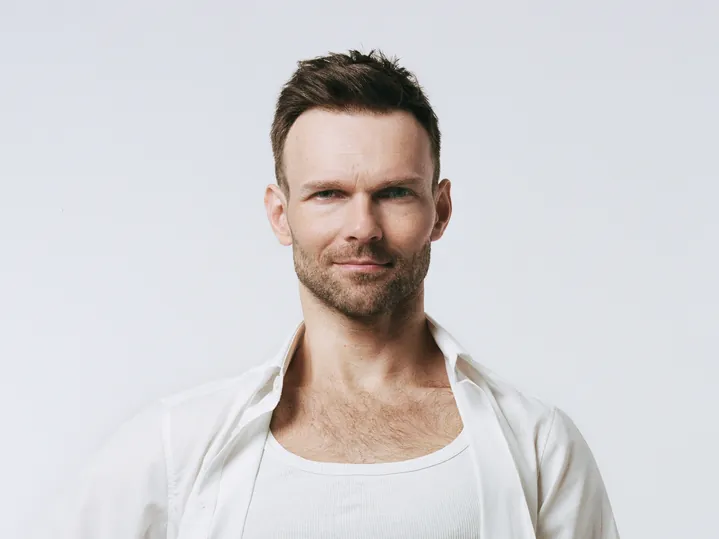
at first
12 months since
2,800 grafts
FUE method
City Medical Centre
FUE · DHI
from $2,200
Work-up and a number — $0.
A real case
at first
12 months since
FUE, without a single cut or stitch. Graft count and forecast free of charge — before you decide.
Free online consultation · Reply within 15 minutes
With no fee, no surgery booking required
Message our coordinator
Free online consultation · Reply within 15 minutes
Message us on TelegramMessage us on WhatsAppBy messaging us, you agree to our Privacy Policy
Hair transplant for patients from Vienna at City Medical Centre starts at €2,000 (from $2,200). The first online consultation is free; the doctor names the final price and it is fixed in the contract.
How it works · Hair transplant prices
Information current as of 5 November 2026
results
Results shown were all achieved at CMC.
at first
12 months since
2,800 grafts
FUE method

at first
12 months since
3,500 grafts
FUE method

at first
12 months since
2,600 grafts
FUE method

at first
12 months since
3,000 grafts
FUE method

at first
12 months since
2,700 grafts
FUE method

at first
12 months since
3,300 grafts
FUE method

at first
12 months since
2,900 grafts
FUE method

at first
12 months since
2,500 grafts
FUE method

at first
12 months since
3,400 grafts
FUE method

at first
12 months since
2,500 grafts
FUE method

at first
12 months since
3,100 grafts
FUE method

at first
12 months since
3,600 grafts
FUE method

at first
12 months since
4,000 grafts
FUE method

at first
12 months since
3,200 grafts
FUE method

at first
12 months since
3,000 grafts
FUE method

at first
12 months since
3,700 grafts
FUE method

at first
12 months since
2,700 grafts
FUE method

at first
12 months since
3,800 grafts
FUE method

at first
12 months since
3,300 grafts
FUE method

at first
12 months since
2,800 grafts
FUE method

at first
12 months since
2,500 grafts
FUE method

at first
12 months since
3,900 grafts
FUE method

at first
12 months since
3,500 grafts
FUE method

at first
12 months since
3,800 grafts
FUE method

at first
12 months since
2,900 grafts
FUE method

at first
12 months since
3,600 grafts
FUE method

at first
12 months since
2,600 grafts
FUE method

at first
12 months since
2,700 grafts
FUE method

at first
12 months since
3,700 grafts
FUE method

at first
12 months since
3,200 grafts
FUE method

at first
12 months since
3,000 grafts
FUE method

at first
12 months since
2,800 grafts
FUE method

at first
12 months since
4,000 grafts
FUE method

at first
12 months since
3,400 grafts
FUE method

at first
12 months since
2,900 grafts
FUE method

at first
12 months since
3,100 grafts
FUE method

at first
12 months since
2,600 grafts
FUE method

at first
12 months since
3,300 grafts
FUE method

at first
12 months since
3,900 grafts
FUE method

at first
12 months since
3,500 grafts
FUE method

at first
12 months since
2,700 grafts
FUE method

at first
12 months since
3,800 grafts
FUE method

at first
12 months since
3,200 grafts
FUE method

at first
12 months since
3,000 grafts
FUE method

at first
12 months since
2,800 grafts
FUE method

at first
12 months since
3,100 grafts
FUE method

at first
12 months since
3,600 grafts
FUE method
Comparison
We use three technologies to transfer grafts: classic FUE, suture-free DHI and a combined protocol. Compare the implantation technique, the tissue trauma and the graft survival, and choose knowingly.
Classic technique without incisions or stitches

$2,200
$2,700
Graft implantation technique
ForcepsGraft trauma
MinimalNatural hair growth angle
NaturalGraft survival
98–100%Suitable for
Androgenetic alopeciaSuture-free placement with a Choi pen

$2,500
$2,900
Graft implantation technique
DHI pen (Choi implanter)Graft trauma
MinimalNatural hair growth angle
NaturalGraft survival
98–100%Suitable for
DensificationFUE extraction, DHI pen implant

$2,700
$2,900
Graft implantation technique
FUE extraction with DHI implantGraft trauma
MinimalNatural hair growth angle
NaturalGraft survival
98–100%Suitable for
Androgenetic alopecia and densificationSurvival and trauma figures are averaged for each method and given as a guide: the exact numbers depend on the transplant area and the patient's individual features, and the doctor clarifies them at the consultation.
Speak to a specialist


















about the clinic
Proper equipment, a calm room and attention for each patient

We will go through your questions and find a convenient time to consult
TelegramMessage us on TelegramMessage us on Telegram Message us on WhatsApp Ask us a questionNot every case needs surgery, and you will hear so at the consultation, so no money is wasted. Below are the situations in which a transplant genuinely helps.
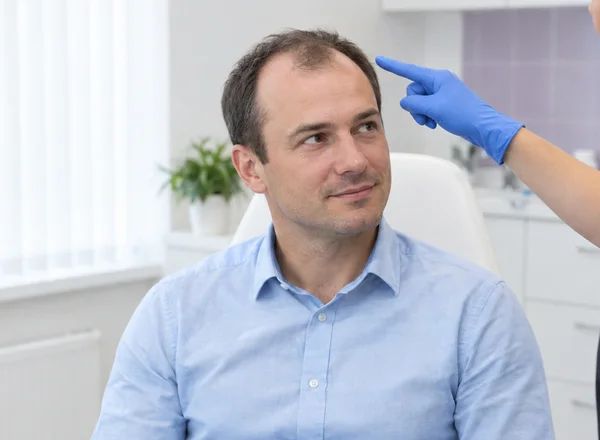

Leave a phone number and we take it from there: the coordinator asks for photos of the thinning area in a messenger, then a doctor tells you whether a transplant would help. Free, no operation booked.

services
The cost is quoted after the grafts are counted at the free consultation, and fixed in the contract.
suture-free graft extraction

$2,200$2,700
Work-up and a number — $0.
Keep the cost as isimplantation without channels

$2,500$2,900
Work-up and a number — $0.
Keep the cost as iscombined technique

$2,700$2,900
Work-up and a number — $0.
Keep the cost as is| The opening review | Free |
|---|---|
| Eyebrow transplant, FUE | |
| Beard transplant, FUE | |
| Hair trichopigmentation | |
| PRP therapy / session | $200 |
all included
Preparation for surgery through 12 months of follow-up.
Surgery day adds no new line to the bill.
two further zones
The scalp is not the only option. Same grafts from the back of the head, same FUE method — only the area changes.
FUE method, no incisions or stitches

Grafts are taken from the back of the head, the donor area, and moved through micro-punctures of about 1 mm, so no scars are left. The doctor discusses the shape with you before the operation, taking your facial features into account. Transplanted hair grows for life: trim and style the beard as usual.
$2,800$3,000
Work-up and a number — $0.
Keep the cost as isFUE method, no incisions or stitches

At the initial consultation the surgeon draws the eyebrow shape: you go through references together and the design accounts for your facial features. The hairs are set at the right angle, so the eyebrows look natural. It also helps where hairs stopped growing after years of plucking.
$1,600$1,700
a walk-in, walk-out op under local anaesthesia
Keep the cost as isThe doctor examines the donor zone, counts what can be taken from it and describes a realistic outcome. Price is named during the consultation and carried into the contract.

Message our coordinator
Free online consultation · Reply within 15 minutes
Message us on TelegramMessage us on WhatsAppBy messaging us, you agree to our Privacy Policy
Process
From consultation to going home — all in one day

During the initial consultation, the doctor explains how the FUE and DHI methods work, answers all your questions, and puts together an individual plan for the surgery. This consultation is free.

For patients in Vienna, booking the surgery date means placing a deposit by card at the clinic or online, with terms set in a medical services contract.

This step covers the tests needed before the procedure, with the clinic providing the full list and guidance for each one.

The operation is painless thanks to the local anaesthesia administered at this stage.

Grafts are taken from the donor area at the back of the head or the temples, and the process leaves no stitches.

During this stage of surgery the grafts are implanted into the balding area.
For patients in Vienna, the clinic supplies everything necessary plus complete instructions to recover quickly.

Crusts clear, swelling recedes, the treated skin slowly mends

A normal stage. Only the hairs fall out, the follicles stay in place

Hair returns little by little, and the change is obvious

The hair becomes fuller, the main volume and contour are visible

Full thickness arrives, with a natural-looking hairline

Free, before surgery and leaving you free to decide.
Speak to a specialistdoctors

Hair transplant doctor, trichologist, surgeon

Dermatovenereologist, trichologist, surgeon
11 years in practice

Plastic surgeon
9 years in practice

Plastic surgeon
9 years in practice

Assistant
9 years in practice
The doctor gauges the donor zone, puts a number on the grafts and describes the outcome you can reach.
Speak to a specialistcoordinators
A personal coordinator stays with you from your first enquiry through to recovery.
Your point of contact
Stays with you through the whole process
Takes care of the forms and of scheduling
Your point of contact
Stays with you through the whole process
Takes care of the forms and of scheduling
Your point of contact
Stays with you through the whole process
Takes care of the forms and of scheduling
Your point of contact
Stays with you through the whole process
Takes care of the forms and of scheduling













We will go through your questions and find a convenient time to consult
TelegramMessage us on TelegramMessage us on Telegram Message us on WhatsApp Ask us a questionReviews
I was having trouble with my hair. I came here and got a hair transplant. The results was awesome thank you
Review on Google
І experienced hair loss due to COVID and turned to this clinic; they helped me and performed a hair transplant, moving hair from the back of my head to my temples. Thank you.
Review on Google
I traveled to City Medical Centre, where they helped me overcome hair loss through a transplant to the balding areas of my scalp. I am grateful to the doctors for performing the procedure painlessly.
Review on Google
I am sharing my experience, because before the operation I went through a pile of reviews myself and was looking for real stories. I had a beard transplant six months ago. Honestly, in the first days after the procedure I felt a little jittery: my face looked unfamiliar, there was slight swelling and small scabs. In the first couple of months the hair partly fell out, as the doctor had warned. But now the result truly makes me very happy) From about the 4th month active, even growth began. The transplanted hair took very well, the beard now looks as natural as possible, no bald patches are left. The beard became much thicker and denser, with the shape I had thought about for a long time. All in all, I recommend the clinic, the doctor was polite and explained everything 👍 The result is definitely worth it!
Review on Google
I traveled to this clinic and do hair transplant, very good quality and cheap. Good doctors
Review on Google
I do hair transplant here very good doctors!!
Review on Google
Typical queries
People often say hair implants, but no artificial hair is used. In a hair transplant the doctor moves your own follicles (grafts) from the donor area to thinning or bald areas using FUE or DHI.

Yes. City Medical Centre accepts patients from other cities and countries, and an online consultation is available before you decide.
FUE is $2,200 (≈ €2,000), DHI is $2,500 (≈ €2,250), combined DHI+FUE is $2,700 (≈ €2,450). A free consultation with a graft count gives you the exact, contract-fixed price.
The whole operation is completed in one day, with no overnight stay needed.
It helps with stable pattern hair loss and a receding hairline when there are enough donor grafts. Some types of alopecia need treatment first; the doctor checks this at the consultation.
It isn't painful: local anaesthesia is used throughout the surgery.
In FUE, grafts are harvested with a tweezer, no cuts or stitches involved. In DHI, a Choi pen implants grafts without opening channels first. The combined method pairs FUE harvesting with DHI implantation.
A doctor determines the graft number at a free consultation, looking at your donor area's capacity.
First comes 0–10 days of healing, then shedding at 2–4 weeks (a normal stage). Growth starts at 3–4 months, density is clear by 6–9 months, and the final outcome shows at 12–18 months.
A contract-backed, lifetime guarantee of hair growth comes with every procedure.
We hold a medical licence, and care is provided to the standards and clinical guidelines
per Ministry of Health.

Look through the diplomas before trusting anyone with surgery
Look at the papersAKC POMOSHCH LLC
the clinic's legal name
1057746096924
OGRN
7728536872
INN
What makes FUE and DHI right for a patient in Vienna is how gentle they are: no incisions, no stitches, only local anaesthesia, and one day from the first graft to the last.
The beginning is remote and free for a patient in Vienna: photographs of the area, a look from the doctor, and a clear word on whether a transplant will help. The clinic responds 24/7.
Expect healing inside 0-10 days. The transplanted hairs shed at 2-4 weeks, which is normal and passes on its own. From 3-4 months the growth begins, and the difference grows clearer with every passing week.
Prices are in US dollars; the amount in brackets is an approximate conversion to EUR at the rate of 02.10.2026. The final price is fixed in your contract.
By messaging us, you agree to our Privacy Policy
Well-known people who spoke openly about this operation, in their own words.
Written by Anastasia A. Kolesnik, plastic surgeon, hair transplant doctor
Medically reviewed by Ellina V. Goncharova, dermatovenereologist, trichologist, surgeon. Review date:
How we prepare and review medical content · Medical disclaimer
Vienna counted 2,040,914 residents at the start of 2026, according to the city's own statistics, and among that many people you will hear plenty of confident claims about who does what. A transplant is a day of surgery, so give it the paperwork discipline you would give any operation. Before dates come up, ask in writing for four items: the medical licence, the name of the company that actually delivers the care, proof of each doctor's training, and the text of the medical services contract. All of it is shown to you before any money moves, so a courteous request should meet no resistance.
Then check the person rather than the logo. The Austrian Medical Chamber runs a doctor search organised by federal state, and a separate page on aesthetic operations narrows the search by type of operation as well. Take the surname and first name of whoever would harvest your grafts and compare how the entries read. Anything unclear goes back to the coordinator as a written question, and the reply joins your folder with its date.
Three kinds of specialist handle hair work: a trichologist who is also a transplant surgeon, a dermatovenereologist trained in trichology, and a plastic surgeon. Find out who will examine your scalp, and have the plan name that person. The house rule is that whoever sees you at the consultation also operates, and seeing it in writing costs nothing.
Money belongs on the same list, though no figures are needed yet. The official Austrian health portal states that social health insurance does not pay for aesthetic operations lacking a medical indication, and it names breast and nose operations as examples. Hair restoration is not mentioned, so assume nothing in either direction: ask your own insurer, and expect the contract to state what you pay and what the arrangement covers.
Picture FUE, DHI and the combined protocol as three rows in one spec sheet. FUE needs no cuts and no sutures. Forceps lift each graft, the grafts are barely traumatised, they keep their natural growth angle, and survival is listed at 98–100 per cent. The indication named for it is androgenetic alopecia.
DHI shifts the effort to placement. A Choi implanter, the DHI pen, sets each graft directly, so channels are never cut beforehand and nothing is stitched. The hybrid takes its grafts by FUE and sets them by DHI; it is aimed at densification in androgenetic alopecia.
Those percentages are averages. Your transplant area and your own features move them, and you receive your numbers from the doctor during the consultation. Take that as a reason to ask for your own figures rather than to repeat the average back.
Three questions turn the sheet into a decision. Which row does the doctor choose for your pattern of loss, summed up in one sentence? How many grafts does that choice require? What finding would flip the recommendation? The count comes only after the doctor studies your donor zone, at the back of the head or the temples, where grafts are taken with a scarless technique. Insist on seeing the number in writing beside the plan, because a figure spoken once cannot be set against what you later receive.
Facial hair borrows from the same donor reserve at the back of the head. A beard is built through micro-punctures of about 1 mm, and its outline is talked through beforehand against your face. Eyebrows start on paper: at the opening consultation the surgeon draws the line and reviews reference photographs with you, so the design is agreed before any hair is placed.
The free online consultation begins with very little: a phone number and pictures of the thinning areas. A coordinator receives them in WhatsApp or Telegram, a doctor looks them over and says whether a transplant would help. Coordinators answer round the clock, and the first reply usually comes within 15 minutes. Sending photographs books nothing.
A good set takes ten careful minutes. Use daylight, dry hair parted as usual, a plain wall and no flash. Capture the crown, the front, both temples and the back, plus a sharp close-up of the donor zone. An older photograph that shows how dense you used to be is a welcome extra.
Beneath the pictures, write four plain lines: when thinning began, how fast it moved, whether close relatives share it, and what you tried. Add one sentence on your health and any medicines. That sentence carries real weight, since the next section shows how many conditions alter the doctor's answer.
State your aim in a single sentence too. A fuller front, a covered crown, a denser beard and stronger brows need different quantities of grafts, and an adviser can answer only the goal you name.
Finally, keep your own record. Plan, method, graft count, every reply and the contract go into one folder, each file named with its date. When two replies disagree, the folder shows which came first and what exactly was said.
Nobody benefits from sending you into theatre needlessly, and the doctor will tell you so, which also spares your wallet. A transplant earns its place with androgenetic or diffuse alopecia, with bald patches, and with a receded front of the scalp.
The cautionary list runs longer: trichotillomania, body dysmorphic disorder, cancer, age under 18, intolerance to anaesthetics, epilepsy, serious heart conditions, diabetes mellitus, a pacemaker, AIDS or HIV, hepatitis B or C, pulmonary embolism and patchy alopecia. Insufficient hair density, inherited growth traits, burn or injury damage, shedding after an illness and shedding from a hormonal imbalance each deserve a frank conversation before any planning begins.
A refusal that arrives with a reason marks a careful team. When surgery would not help, ask what does suit you and ask for that reply in writing too.
You need not be certain of qualifying before you write. Photographs first, verdict second, decision last. If you doubt whether a medicine or a diagnosis matters, mention it anyway: the doctor can give a plain yes or no only with the whole picture, and an omitted sentence cannot be weighed.
The operation is a day-case procedure under local anaesthesia, and you go home the same day. Beforehand you get a list of the tests required and directions for completing them. A deposit secures the date, payable by card at the clinic or online, and the terms are set out in the medical services contract.
After that, hair keeps its own slow clock, so a log helps. In the first 0–10 days the crusts shed, the swelling goes down and the skin settles. In weeks 2–4 the transplanted hairs fall out. This is expected, since the follicles themselves remain in place. New hairs fill in from 3–4 months. Thickness returns at 6–9 months, and the full volume with a natural edge shows at 12–18 months.
Check-ups fall at 1, 3, 6, 9 and 12 months. Enter them in your calendar on operation day, take matching photographs under matching light before each one, and pass them to your personal coordinator, who accompanies you from the first message to the close of recovery.
The arrangement also includes dressings and healing checks, a care plan for both transplanted and donor areas, guidance on shampooing, sleeping and headwear, and a schedule for getting back to sport and normal hair care. Request each as written instructions so the first fortnight does not depend on memory.
If month five looks unchanged, the log answers calmly: new growth is still in its waiting stage, and the next dated entry is the next check-up.
The Austrian Medical Chamber offers a doctor search by federal state, and a page on aesthetic operations narrows it by operation. Get the full name from the clinic and compare.
The official health portal says social health insurance does not pay for aesthetic operations without a medical indication. Hair is not named there, so check with your own insurer.
The medical licence, the company providing care, the doctors' diplomas and certificates, and the contract text.
Daylight pictures of crown, front, both temples and back, one of the donor zone, and an older photo showing earlier density.
The doctor, after studying the donor zone; ask for the figure in writing.
It uses the same FUE method and the same donor area at the back of the head; only the destination differs.

 Forceps
 Minimal